
















What Is Wicker? Wicker vs Rattan Explained
In the 1850s an American named Cyrus Wakefield started building furniture from rattan that ships had been carrying as ballast, and his Massachusetts company became one of the biggest names in wicker. Even then the two words were tangled together. They still are.
In short: wicker is a weave and rattan is a palm. Natural fiber suits dry rooms indoors, and PE or resin wicker suits open patios.
What Is Wicker?

Underneath every wicker chair is a frame of bent wood, rattan pole or aluminum tube, and the strands go on last, over one upright and under the next. That weaving is the wicker part. Basket makers call the simplest version randing, and it's the pattern you'll see on most chairs.
The technique is old. Very old. Woven reed pieces turn up in ancient Egyptian tombs. A collection record at The Met for a Heywood Brothers and Wakefield étagère dates wicker's peak popularity to 1890 through 1910 and names rattan, cane, reed and peel as its main materials.
What has changed since then is the strand.
|
Strand |
Type |
Where you see it |
Best placement |
|
Rattan cane and core |
Natural |
Chair seats, headboards, drawer fronts |
Indoors |
|
Willow |
Natural |
Baskets, light chairs |
Indoors |
|
Reed and seagrass |
Natural |
Baskets, accent pieces |
Indoors |
|
Twisted paper fiber |
Manufactured |
Lloyd Loom style chairs |
Dry indoor rooms |
|
PE or resin strand |
Synthetic |
Patio sofas, dining sets |
Outdoors |
What Is Rattan?

Rattan isn't a tree. It's a climbing palm, and Royal Botanic Gardens, Kew counts almost 500 species of it, most growing in tropical forests in Asia and Africa. The stems are solid all the way through, which is why furniture makers like them: heat bends the thick stems into chair frames, and the glossy outer skin (that's the cane) gets stripped off and cut for weaving. We go into grades and care in our full guide to rattan furniture.
Wicker vs Rattan: What's the Difference?
One word names a process. The other names a plant. That is the whole difference, but it shows up in a few practical ways when you shop.
|
Question |
Wicker |
Rattan |
|
What the word describes |
A weaving method |
A natural material from climbing palms |
|
Can it be synthetic? |
Yes, PE, resin or vinyl strand |
No. "Synthetic rattan" is plastic made to look like it |
|
Needs a woven surface? |
Always |
No. Bent rattan poles can form a frame with no weave |
|
What to check on a listing |
The strand material |
Natural rattan or PE rattan |
Can a Piece Be Both?
Yes, and plenty of good old pieces are. A Victorian rocker with a bent rattan frame and a seat woven from rattan cane counts twice, as rattan for its material and wicker for its construction. It works the other way too. A resin patio sofa is wicker with no rattan in it anywhere. And an old bent pole rattan chair with a fat upholstered cushion isn't wicker, because nobody wove anything.
Natural vs Synthetic Wicker: Indoors or Outdoors?

Here the strand decides nearly everything.
Rattan and willow swell on a muggy day and shrink on a dry one. Indoors that cycle is gentle. On a deck it happens daily, and a few seasons of it will loosen joints. According to the Canadian Conservation Institute, mold can take hold once relative humidity passes 65%, and fibers kept under 40% turn brittle. Light fades and weakens them as well. None of that matters much in a bedroom. On an open deck it matters a lot.
Synthetic wicker sidesteps most of this. Most of it is polyethylene or resin strand over an aluminum or steel frame, so rain runs off instead of soaking in, and the better strand has UV stabilizers in the mix. We'd be wary of budget strand, though. Ask what grade it is before trusting an all weather tag.
|
Feature |
Natural wicker |
Synthetic (PE or resin) wicker |
|
Strand |
Rattan, willow, reed, cane |
Polyethylene, resin, vinyl |
|
Rain |
Can warp or mildew if left wet |
Sheds water; cushions and frame still need to dry |
|
Sun |
Fades and dries out |
Holds up if UV stabilized |
|
Best spot |
Bedrooms, living rooms, enclosed sunrooms |
Patios, decks, poolside |
Porches: sideways rain in a storm, morning dew and a sticky August all reach chairs under a roof. We'd only put natural wicker out there if the porch is fully enclosed. Otherwise go synthetic.
How to Tell Real Wicker From Synthetic

Up close, four checks usually settle it.
1. Look at the cut ends. Plant fiber shows grain or tiny splits. Plastic ends are smooth and identical.
2. Run a finger along a row. Real cane wanders a bit in width and has a grain you can feel. Plastic doesn't.
3. Flip it over. The underside of a seat is rarely painted, so you see the bare strand and frame.
4. Read the material line, not the title. Look for the fiber by name: natural rattan, cane, PE or resin.
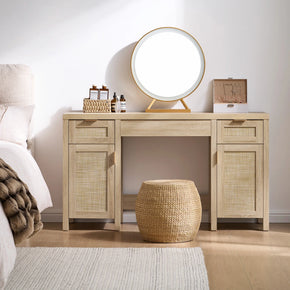
We'll use our own listing as the example. The Savanna Rattan Night Table has rattan right in the name, but scroll to the specs and the material reads Engineered Wood. Nobody's hiding anything. The cabinet is engineered wood and the rattan is a woven panel on the drawer front, which is a completely different thing from a woven patio chair, and the spec line is what tells you so.
Where Wicker and Rattan Work in a Bedroom

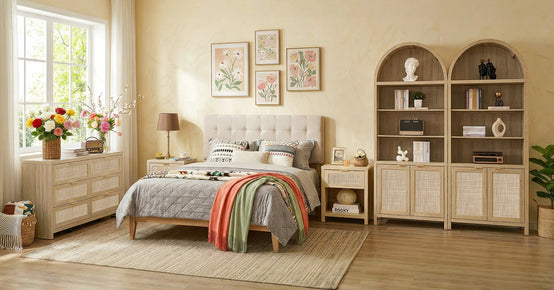
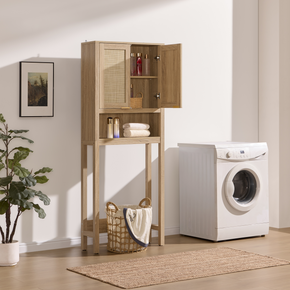
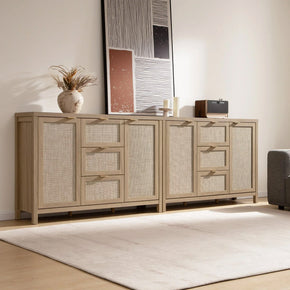
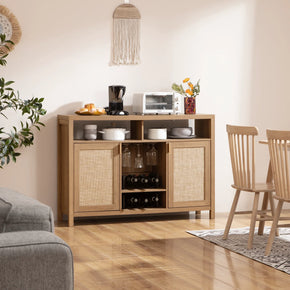
Indoors, woven texture lasts longest where nobody sits on it. Drawer fronts. Headboards. Cabinet doors. You get the texture without the wear a chair seat takes.
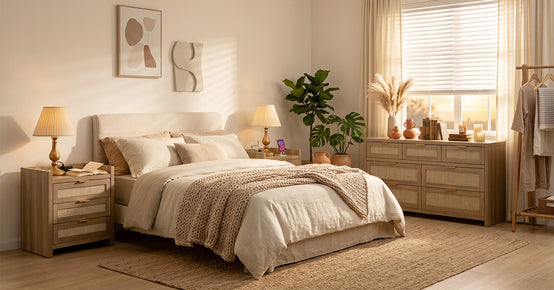
That is the idea behind most of our rattan furniture: engineered wood cases with rattan panels set into the fronts. The Savanna rattan nightstand is a compact one, 25.2 inches high, 19.7 wide and 15 deep, with a single drawer that's 16.3 inches across inside and slides on metal roller glides. If you're doing a whole wall, the Savanna dresser and nightstands set puts a 56.85 inch, six drawer dresser with matching 24.8 inch nightstands, listed in Reclaimed Light Oak.
Care is about as easy as it gets. The listings just say to wipe with a dry or damp cloth, and we'd add a soft brush now and then to get dust out of the weave.
Is Wicker Furniture Good Quality?
It can be, but the word on the tag won't tell you. The build will. In a showroom we'd press the weave in three or four places to feel for soft spots, look hard at the seat edge and the arms where frayed ends show up first, then sit down and rock side to side. A good frame stays quiet. Last, ask what the strand actually is. A seller who can't say is telling you something too.
Final Thoughts
Most of the decision comes down to where the piece will live. Natural fiber does well in dry rooms, PE or resin wicker is the one for anything that gets rained on, and the material line on the listing settles any argument. If you're after woven texture for a bedroom, have a look around SICOTAS.
FAQs About Wicker and Rattan
Can wicker furniture get wet?
Synthetic wicker can take it. With natural wicker, a little water is fine and a lot is a problem.
PE strand sheds water. After a storm, the cushions and the frame joints are the only things you're waiting on. Plant fiber drinks it. A rattan chair that gets rained on now and then will swell and shrink with each soaking, and over a season or two that loosens the joints and lets mildew settle into the gaps. A damp cloth won't cause that. A garden hose can. And if a natural chair does get soaked, leave it empty until it's bone dry, or the seat stretches out.
Can bed bugs live in wicker furniture?
They can hide in it, yes, though wicker doesn't attract them any more than other furniture does. The trouble is the number of hiding spots. By the EPA credit card test, any gap you could slide a card into is big enough for one, and a woven seat is mostly gaps.
Joints, the underside and the spots where the weave meets the frame are where we'd look first. That said, an old wood headboard or the seams on a sofa are just as likely a spot. Wicker just takes longer to check.
For anything secondhand, go over it outside in daylight with a flashlight and a thin card, and keep it out of the bedroom until you're satisfied.
How long does wicker furniture last?
There's a huge range. Plenty of wicker from the 1890s and early 1900s still sells at estate sales, almost all of it pieces that never lived outdoors.
Outdoor sets age faster. Low grade PE in full sun can turn brittle after only a few summers. Better strand, with UV stabilizers, lasts far longer. Check the frame as well. Powder coated aluminum won't rust, but chipped steel will, and a frame that rusts through at the welds is the end of the set.
A winter cover, or a corner of the garage, adds years. So does fixing a loose strand the week you notice it.
What is fake wicker called?
Most sellers call it synthetic wicker, resin wicker, PE wicker or all weather wicker. Under all four names you'll usually find polyethylene strand, colored and textured to pass for rattan or reed. "Synthetic rattan" and "PE rattan" turn up too, which muddies things, since there's no rattan in either.
There is an older manufactured version too. Lloyd Loom chairs, one of which sits in the V&A collection, are woven from twisted paper over bentwood, and the museum notes they took over from wicker that cost more and didn't last as long.
Fake undersells most of it, and on a patio it's usually the better pick. Ask for the strand and frame metal by name if the spec sheet leaves them out.
Which is stronger, wicker or rattan?
Rattan, if you have to pick. But it's a strange question, because wicker isn't a material you can test.
Unlike bamboo, a rattan stem isn't hollow, so a thick one can be bent into a frame strong enough for an adult to sit on. Willow and reed are too thin for that job. Wicker made from any of them is only as strong as the strand, the tightness of the weave and the frame behind it.
So in a store, lean on it. Press down on the front of the seat and on each arm. If it creaks, the weave or the frame is already loose.
Is wicker furniture still popular today?
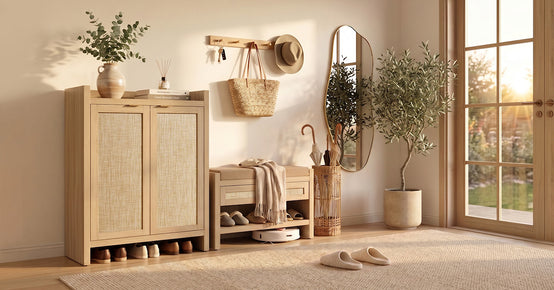
Yes, and not only on porches. These days a lot of the woven texture has moved inside, onto headboards, cabinet doors, nightstands and dresser fronts, where it softens a room that's otherwise all flat walls and smooth wood.
It isn't just a boho thing either. Coastal rooms are the obvious home for it, though a weave on a plain, straight lined dresser looks just as right in a modern or Japandi bedroom. Outside, all weather wicker is still everywhere.
People just use less of it at once now. One woven nightstand in a bedroom looks right at home. Add a woven headboard, a woven chair and a few baskets, though, and it starts to feel like a theme room. We'd go one piece at a time.
Is wicker furniture expensive?
It ranges widely. Resin patio chairs sit at the cheap end. Handwoven rattan armchairs and big PE sectionals on aluminum frames sit at the top, often at several times the price.
Price tends to follow labor, fiber grade and frame. Weaving natural cane by hand is slow, skilled work, and you pay for those hours. Thicker strand and a frame that won't rust push the price up on outdoor sets, and usually buy you more years too.
Price alone won't settle it. Compare the strand, the frame, the weave and the warranty, since two chairs at one price can differ a lot.


Looking for something else?

How to Choose a Shoe Cabinet for Wet Shoes and Muddy Entryways
LEARN MORE
Freestanding vs. Wall-Mounted Shoe Cabinets: Which Is Safer and Easier to Install?
LEARN MORE
Shoe Cabinet Base Clearance: Will Your Robot Vacuum Fit Under It?
LEARN MORE
How to Choose a Nightstand for a Rental: Small Footprint, Easy Moving, and Useful Storage
LEARN MORELooking for something else?

How to Match a Nightstand to Your Bedside Lamp Size and Weight
LEARN MORE
Nightstand Leg Height for Robot Vacuums: A Bedside Clearance Guide
LEARN MORE
How to Choose a Buffet Cabinet for a Coffee Bar: Heat, Cords, and Spill Protection
LEARN MORE


Further reading

Attic Bedroom Ideas: Furniture for Sloped Ceilings
What Is Wicker? Wicker vs Rattan Explained


