
















How to Choose a Shoe Cabinet for Wet Shoes and Muddy Entryways
You hear it before you see it — that wet squelch. Picture it: November rain, kids home from school, sneakers abandoned mid-hallway like shipwreck survivors. By morning there's a dark ring on the hardwood and a smell climbing out of the shoe cabinet.
Here's what the listing photos never say: your shoe cabinet was hired to store shoes. Dry ones. Wet shoes are a different shift — and one piece of furniture doing both jobs never ends well.
Flip the order — the cabinet is the last stop, not the first. Everything in this guide hangs on that sentence.
The Two-Stage System: Landing Zone First, Cabinet Second

Stop hunting for a single hero piece. Start building a relay team.
Station one lives by the door and takes the hit — a boot tray, a waterproof mat, or an open bottom bay on the cabinet itself. Muddy shoes land here to drip, breathe, and dry. Station two is the enclosed cabinet, which runs a strict admissions policy — surface-dry shoes only.
Why two stations? Dampness is a bully with a fake ID. Seal a single wet pair in a closed cabinet and it shares moisture with every other pair inside. And "waterproof shoe cabinet" is marketing fiction: what survives mud season is the system, not the box. Accept the tray-and-cabinet split and everything downstream gets simple.
Stage One: A Landing Zone That Doesn't Mind Mud
Your landing zone has one job description, and it's short: do not care about water.
The workhorse is a rigid boot tray — molded polypropylene, raised ridges so soles sit above the runoff, a lip about 1.25 inches deep to keep the puddle honest. It fills with brown water? Tip it into the sink, wipe, ten seconds, done. Boring. Perfect.
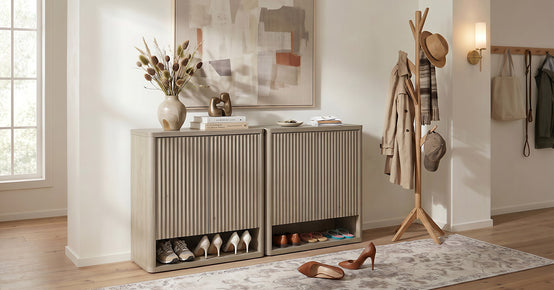
Too utilitarian for the foyer? Two honest swaps: a washable low-pile mat — thin, quick-drying weave. Just know the trap: a thick plush mat that holds puddles is a sponge in a rug costume. Third option: leave the cabinet's lowest compartment open — daily shoes get a ventilated perch, plus robot-vacuum clearance underneath as a bonus.
Location is half the gear. Park the zone a step or two inside the door, not on the coldest strip by the threshold where condensation stages its little ambushes. And leave a finger of air between the tray and the baseboard — dampness adores seams.
Stage Two: Ventilation That Moves Air, Not Just Implies It
Once the surface water's gone, shoes graduate to the cabinet. But here's the lie your hands tell you: "feels dry" is not dry. A shoe that seems fine keeps exhaling moisture for hours. The cabinet's actual job is eviction — moving that air out. Looking airy doesn't count.
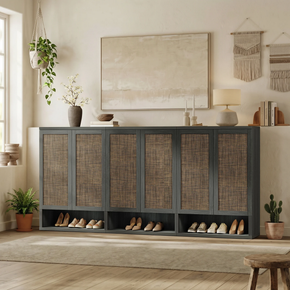
The rattan weave is the heavyweight: air passes straight through — pound for pound the highest-impact feature on this page — and it still hides the clutter. Not your aesthetic? Louvred slats and perforated panels pull the same weight. With solid doors, back vents top and bottom are a must. Rising warm air pulls fresh air in low. Allow side-or-back clearance per shelf for vertical airflow, and avoid cramming. At roughly 80 percent full, air keeps moving. Pack it tight and it's a terrarium. Open the doors an hour on dry mornings, twice a week. It costs nothing and it works.
Surfaces That Survive Mud Season
Let's kill the myth first: no cabinet is waterproof. But materials are not created equal. The spread between best and worst is five good years versus a swollen carcass.
Moisture-resistant plywood is the pick for wood-based cabinets. Cross-laminated layers resist swelling, but edges must be sealed. Best budget pick for sheltered entryways: sealed melamine or foil over engineered core. It cleans with a wipe and handles everyday indoor humidity.
Now the rogues' gallery. Plain particleboard acts like a sponge with furniture ambitions — one wet edge and it puffs for good. Solid wood disappoints: lovely to look at, poor with moisture swings. Open porch or coastal home? Powder-coated aluminium stands up to both.
Most skip this: edge banding outranks face material, since water acts like a burglar and unsealed edges are open windows. Inspect edges, wipe spills quickly, keep water off joints. Matte or satin beats gloss — in mud season, concealing fingerprints and dried-mud marks is half the battle.
Get the Cabinet Off the Floor

A shoe cabinet's bottom sits in the splash zone. Mop water, melting snow, the occasional tipped boot — all of it obeys gravity and ends up at floor level. A raised base, short legs or a recessed plinth around 4 inches / 10 cm, lifts the carcass clear of the whole mess. You can now mop beneath the unit. That air gap aids ventilation, letting the robot vacuum earn its keep. With a flush-bottom cabinet, plan on a waterproof mat extending past its footprint.
Shelves You Can Pull Out and Wipe Down

Mud plays no favorites — sooner or later a shelf takes a direct hit. Five-minute cleanup versus permanent stain comes down to whether that shelf comes out. Removable shelves — lift off the pins, rinse in the sink, drop back in — the most underrated feature in the category.
Removable usually comes with adjustable, and you want both. Footwear isn't one height. Allow 6 to 8 inches for flats, 8 to 10 for sneakers, 16 to 20 for tall boots. Fixed shelves force a bad trade: a tall compartment wasted on sneakers, or boots folded sideways like a contortionist act. Adjustable pins create one tall boot bay plus snug rows for the rest, rearranged seasonally.
Protect the Floor Under Everything

The cabinet protects the shoes, but something has to protect the floor — and the cabinet won't do it alone.
Run a waterproof mat or washable runner underneath, extending past the footprint on the shoe side. The overhang catches the drips that miss the tray — with kids, plan on half of them missing. Favor thin, quick-drying mats over deep rubbery ones — standing water just relocates the puddle. Floor-saving habit: wipe visible water fast. Five seconds with a cloth outperforms refinishing hardwood.
Design for Cleaning Day, Not Delivery Day
Shop as the person who'll clean this cabinet next spring, not the one unboxing today. Will doors open wide enough for back corners? Can a cloth access each compartment tool-free? Any grit-trapping dead pockets?
In wet season, monthly pull shelves, wipe down, and check corners and shelf undersides for grey mould. Early catches wipe off; neglect lets them invade the board. Every year, tighten the hinges so the doors keep closing flush. One loose door silently wrecks ventilation.
Boots and Everyday Shoes Don't Belong in the Same Spot

Not all wet shoes are equally wet. Run triage.
Tall boots are the worst offenders — most mud, most water in the shafts, tallest clearance. They get the bottom of the system: the open bay or the tray, where drips fall a short distance and cleanup is a wipe.
Everyday sneakers and work shoes are the middle class: damp often, filthy sometimes. They earn the ventilated cabinet shelves — one shelf per person if you can swing it, so pairs stop cramming.
Dress shoes, heels, off-season pairs? Different closet. The entryway is for daily traffic, not your entire collection — and every pair you evict is more air for the ones that stay.
Two Cabinets That Handle Wet-Weather Duty

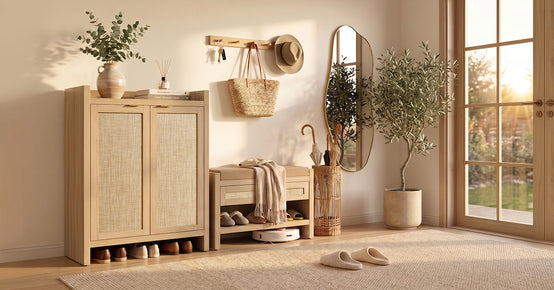
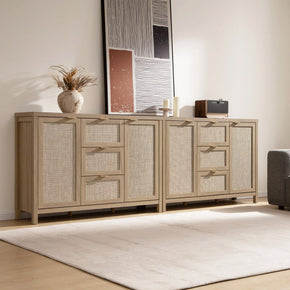
Two real cabinets built for a wet entryway, from the same rattan-front family. Woven doors breathe, shelves adjust, surfaces wipe clean — capacity and footprint differ.
The Savanna 24-Pair (32.4 x 41 x 14.8 in, 6 adjustable removable shelves) fits 1–2 people. The 30-Pair (47.24 x 40.94 x 14.76 in) covers 3–4, with its third door keeping the wide carcass rigid. Both live or die on one habit: wet pairs dry on the tray first, then go behind the rattan doors.
Your Wet-Shoe Buyer Checklist

Run this before you order — in this order:
● 1. Count every pair living by the door, then add 30 percent headroom.
● 2. Plan both stages — landing zone plus cabinet. Buying one thing? Make it the tray.
● 3. One medium tray (~23.75 x 15.5 in) per two heavy users.
● 4. Ventilated doors only — rattan, louvres, perforation, or back vents. Sealed boxes are disqualified.
● 5. Moisture-resistant board or sealed melamine, every edge banded. Plain particleboard is out.
● 6. Raised base around 4 inches, so mop water never touches the carcass.
● 7. Removable, adjustable shelves — including at least one 16–20 inch bay for tall boots.
● 8. Run a waterproof mat extending past the footprint on the shoe side.
● 9. Measure the entryway — cabinet width and depth, door swing, 30 inches of clear walking path.
● 10. Tape the dry-before-store rule inside the cabinet door, at least for the first month.
A shoe cabinet can't dry shoes by itself. But it can give every stage a home. Tray handles mud, air handles moisture, cabinet gets credit.
FAQs
Can I put wet shoes directly into a shoe cabinet?
No. That's the whole thesis here. Let them sit on a boot tray until all surface moisture is gone. One wet pair spikes the whole cabinet's humidity — that's the smell-and-mould saga's origin.
How do I stop my shoe cabinet from smelling?
Go after the cause, not the smell. Maintain ~80% fullness, ventilate with open doors a couple times weekly, keep damp shoes out. Charcoal or silica sachets assist; refresh in sun when saturated.
What is the best cabinet material for a rainy climate?
Moisture-resistant plywood or sealed melamine, every edge banded. Keep particleboard away from moisture. On a porch or in coastal air, powder-coated aluminium stays intact.
Should a shoe cabinet sit directly on the floor?
Avoid it. Roughly 4 inches (10 cm) of lift keeps mop water off the carcass, giving robot vacuum room. Flush base? Run a waterproof mat past the footprint.
How much shelf clearance do tall boots need?
Tall boots need 16 to 20 inches, sneakers 8 to 10, flats 6 to 8. That's exactly why adjustable shelves matter — one tall bay for boots, tighter rows for everything else.
Open rack or closed cabinet for a muddy entryway?
Both are needed, sequentially. An open tray by the door — stage one — contains the mud and lets shoes drip dry. A ventilated closed cabinet — stage two — stores dry pairs dust-free. Bypass stage one and the cabinet fails.
How do I protect hardwood floors under a shoe cabinet?
Slide a thin, quick-drying waterproof mat under the cabinet so it extends past the footprint on the shoe side. Wipe up water promptly, and avoid deep trays that hold standing water.
How often should I clean a shoe cabinet that holds wet-weather shoes?
Through the wet season, do this monthly: pull the shelves, wipe them down, check the corners for grey mould speckles. Every year, tighten the hinges so the doors keep closing flush.


Looking for something else?

10 Simple Ways to Style Modern Coastal Furniture at Home
LEARN MORE
21 Room Divider Ideas to Split a Space Without Building a Wall
LEARN MORE
16 Bedroom Bench Ideas That Actually Fit Your Room
LEARN MORE
Guest Room Furniture: How to Choose It Plus 10 Ideas That Work
LEARN MORELooking for something else?

21 Hallway Mirror Ideas to Brighten a Dark, Narrow Space
LEARN MORE
How to Clean Wood Furniture and Keep the Finish Intact
LEARN MORE
Furniture Distance From a Fireplace: How Far Is Safe?
LEARN MORE


Further reading

Shoe Cabinet Base Clearance: Will Your Robot Vacuum Fit Under It?

Freestanding vs. Wall-Mounted Shoe Cabinets: Which Is Safer and Easier to Install?


