









What Is Rattan Furniture? A Buyer Guide to Types and Care
Rattan furniture begins as a vine. Long stems get cut from climbing palms in tropical forests. They dry out, then someone bends and weaves them into the pieces sitting in a showroom.
People ask what rattan furniture is because shops stick the word on three different things. Solid poles. Woven cane panels. Plastic weave sold for the garden. Not the same product. Not the same lifespan either.
This guide keeps things plain. Rattan vs wicker. Rattan vs cane. Natural rattan against synthetic rattan. Then the lifespan of each one, and the checks worth making before you hand over money.
What Is Rattan?

Rattan is neither a tree nor a grass. The word covers a big family of spiny climbing palms. Their stems stay thin but run on and on, sometimes for more than 100 feet. Little hooks along the stem catch nearby trees and drag the plant upward.
The terms get mixed up constantly. Sorting them out first helps. Rattan is the vine itself. Cane is the glossy outer skin peeled off it. Reed is the softer inner pith underneath.
Each part does a different job. The peeled skin becomescane strands and webbing for chair seats, while the inner pith is porous and takes stain well. That is why reed shows up in woven furniture and baskets.
Wicker is not a material at all. It names the weaving method, and you can do it in reed, cane, or synthetic strands.
Bamboo sits outside the group. Rattan grows solid all the way through. Bamboo is hollow, which is the quickest way to tell them apart.
Where Does Rattan Grow?
Most of the supply comes out of Southeast Asia. Indonesia, Malaysia, and the Philippines supply most of it. Smaller amounts come out of Africa and South Asia.
Harvest crews still cut by hand. They take mature stems down at ground level, then drag them out of the forest in long coils.
Roughly 600 rattan species carry a name so far. Furniture factories use only a few.
Why Rattan Suits Furniture Making
Rattan bends. Add heat and steam and a pole goes soft so that you can pull it into an arch or a chair back. It keeps that curve once it cools. Try the same with most natural materials, and they split.
Weight is the other advantage. Rattan pieces are easy to move, which matters if you rearrange often or live somewhere with stairs.
Light does not mean strong, though. Strength comes from the frame and joints, not the material alone. A well-built rattan chair is made to seat an adult. A poorly joined one flexes, no matter what it's made of.
Check the listed weight capacity before you buy. Check how the frame is joined, whether it has a hardwood core under the weave, and what the warranty covers. Follow the maker's instructions for using the piece.
What Is Rattan Furniture Made From?
Rattan furniture isn't made from a single build. The label covers several builds, and the difference shows up in price, weight, and lifespan. Knowing which build you are looking at is the single most useful skill when shopping.
Solid Rattan Poles and Frames
Thicker stems become the skeleton: legs, arms, chair frames, table bases, and bed rails. Look for visible growth nodes, the faint rings spaced along the pole. Real rattan has them. Perfectly smooth tubes usually do not.
Rattan Cane and Woven Panels

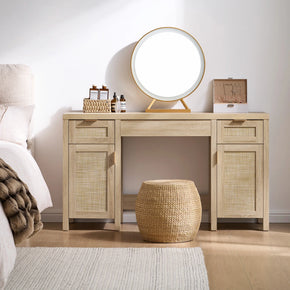
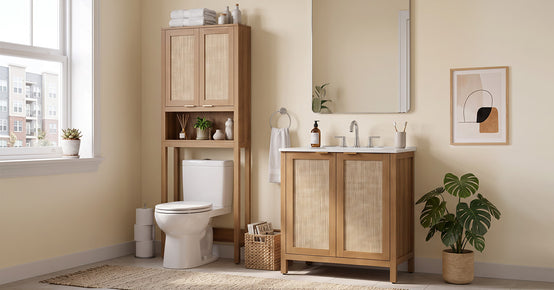
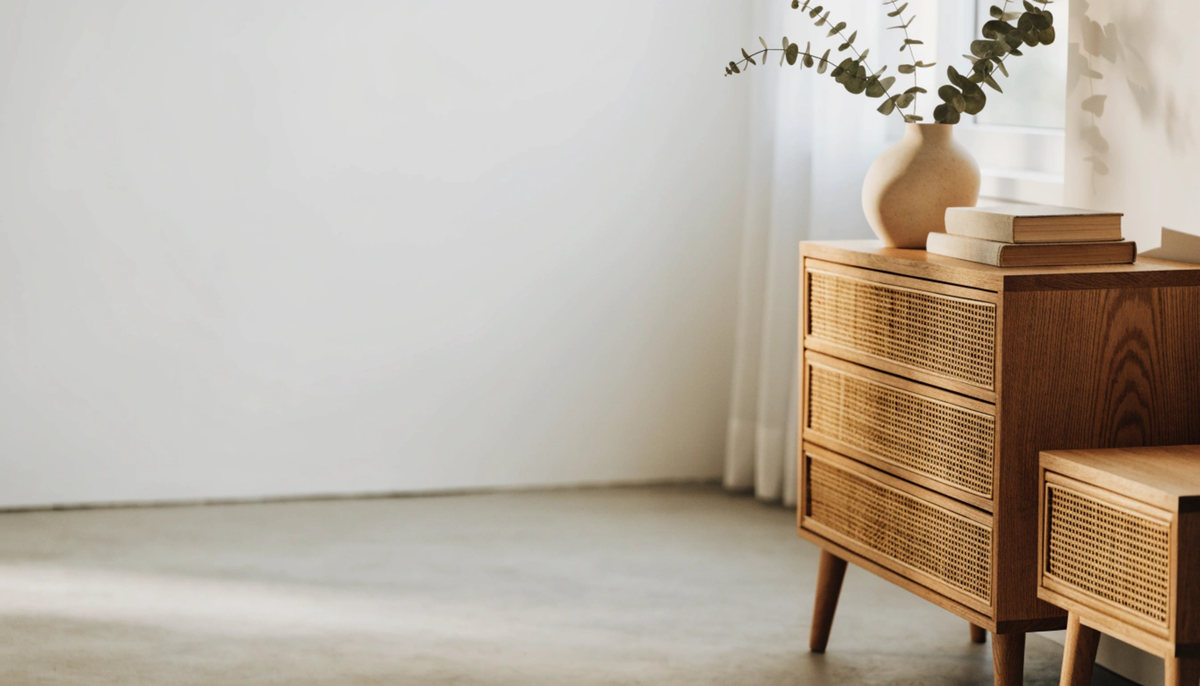
Thinner strips get woven into flat sheets called cane webbing. That webbing shows up on chair seats, headboards, and cabinet fronts. Sicotas uses the same idea on a rattan-front bedside table, where the woven drawer face breaks up a plain wood box.
Woven panels let air move through. They also make a big piece read lighter in a small room.
Rattan Veneer and Rattan-Look Fronts

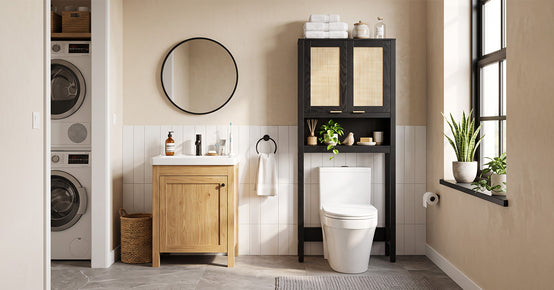
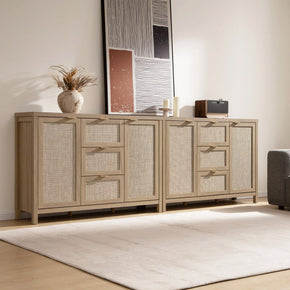
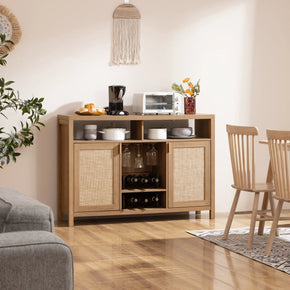
Walk a showroom today, and most rattan furniture turns out to be a hybrid build. Engineered wood or timber makes the box. Real weave shows up only on the doors, the drawer fronts, or one side panel.
On budget lines, that panel is a rattan-look print or an embossed sheet with no weave in it at all.
None of that is a scam. It is often more stable in a dry, heated home than an all-rattan piece. Just read the material spec, so you know what you are paying for.
Rattan vs Cane vs Wicker Explained Simply

These three words get treated as one. They are not. Shops mix them freely, which is why buyers end up confused at checkout.
Rattan Is the Material
Rattan is the plant. It arrives as poles or strips and can be used for structure, weave, or both.
Cane Comes From Rattan
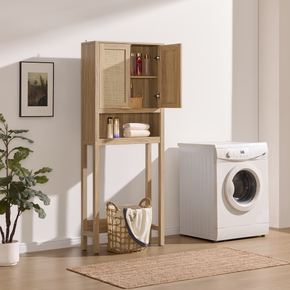
Peel the shiny skin off a rattan stem and slice it into ribbons, and that is cane. It's tough but thin, so it goes on surfaces rather than into anything that carries weight. Cane webbing set into a cabinet door is the everyday example.
Wicker Is a Weaving Method
Wicker is not a plant. It is a method for weaving bendy strands over a frame. A wicker basket could be rattan—or willow, reed, seagrass, or plastic cord.
Short version: rattan is the material. Cane comes out of rattan. Wicker is the weaving.
How Rattan Furniture Gets Made

The work takes longer than people assume. Much of it is still done by hand.
From Forest Cut to Graded Pole
Cut stems get cleaned first. Then they dry, either in the sun or in a kiln, until the moisture drops out. Skip that step and mold shows up later.
Dry poles are sorted by thickness and by how straight and clean they run. A chair frame needs a far better grade than a woven insert does.
Bending the Frame and Weaving the Panels
Steam or dry heat softens a pole enough to bend it. It goes into a jig and stays clamped until the curve holds. After that, pieces are joined with dowels, screws, or tight binding wraps.
Cane strips get woven straight onto that frame. Some are pressed into flat sheet webbing first.
Binding is worth a close look. Tight, even wraps at every joint signal careful work.
Sanding and Sealing
Raw rattan gets sanded down. After that, it is stained, lacquered, or left pale under a clear sealer. The finish is not decoration. It slows moisture pickup and keeps dust from settling into open fibers.
Natural Rattan vs Synthetic Rattan: Which Is Which?

This choice decides which rooms a piece can handle. Neither option wins across the board.
Natural Rattan
Natural rattan is the real plant. No two poles match. The color shifts from pole to pole, the grain wanders, and the surface deepens in tone over the years. It belongs indoors or under a solid roof.
- Warm, uneven, handmade look that synthetic weave cannot copy
- Very light for its strength, so pieces are easy to move
- Dislikes standing water, steady damp, and hard direct sun
- Repairable by a caner if a woven panel loosens
Synthetic Rattan
Synthetic rattan is plastic cord woven over an aluminum or steel frame. Polyethylene and resin are the usual cords. You will see it listed as PE rattan, resin rattan, or all-weather rattan. Nearly all rattan garden furniture falls in this group.
- Outdoor-rated synthetic weave may resist moisture and UV better than natural cane.
- Every strand the same shade and spacing so that it can look flat close up
- A coated cord and a bare extruded one sit worlds apart in quality
- Frame and hardware fail before the weave does on budget sets
Not all synthetic weave is built for outside. PE and PVC formulations behave differently, and UV stabilizers are what keep a weave from going brittle in the sun. Check the maker's outdoor rating rather than assuming the material carries one.
The frame decides as much as the weave. Rust-resistant hardware and an outdoor-rated frame matter, and so does webbing thickness. Cushions almost always need separate storage.
Read the warranty for what it excludes. Many outdoor warranties depend on covering the furniture or storing it over winter, and most assume the piece drains rather than sitting in standing water.
Which One Belongs in Your Room
Natural rattan does well in bedrooms, living rooms, hallways and covered porches. Open patios and balconies are a different story. Anywhere a sprinkler reaches, go synthetic. A conservatory sits in between, so keep natural pieces off the hottest glass.
|
Factor |
Natural Rattan |
Synthetic Rattan |
|
Made from |
Stems of a climbing palm |
Plastic cord, polyethylene or resin |
|
Best spot |
Inside, or fully under cover |
Open patios and gardens |
|
Rain and damp |
Handles it poorly |
Copes well |
|
Direct sun |
Color fades, fiber dries |
Good UV grades hold color |
|
Feel |
Warm and uneven to touch |
Even, and a bit plastic |
|
Repairs |
A caner can re-weave a panel |
Usually swapped out, not fixed |
The Real Benefits of Rattan Furniture

The appeal is not only visual. Rattan solves a few real problems that heavy furniture creates.
Light to Lift, Strong to Sit On
A rattan pole has no knots and no joints in it. The fiber runs straight through. That is why a slim frame carries far more than it looks capable of, and why you can move a rattan chair with one hand while you vacuum.
Texture That Does Not Crowd a Room
Your eye travels through an open weave. A solid slab of wood stops it dead. In a studio or a narrow bedroom, that matters more than a few spare inches of floor.
It Suits More Styles Than You Would Guess
Coastal and bohemian rooms are the easy ones. Rattan also sits well in organic modern, Japandi, mid-century, farmhouse and plain contemporary rooms. Stop pairing it only with jute and dried grass, and the range opens up.
A Renewable Forest Material
Rattan regrows faster than most timber. Many species are cut on a cycle of several years rather than decades. Fast regrowth is a plus. That doesn't make every rattan piece low-impact.
The rest of the chain decides the outcome. Harvesting method matters, and so does whether the forest is managed at all. Shipping distance counts. Coatings count. A piece that fails in three years costs more in the end than a durable one.
Ask for specifics, not a label. Find out where it was grown and harvested. Check for third-party certification such as FSC. Ask whether the seller can show the harvest was legal. Vague talk of natural materials is not an answer.
Certified rattan is not easy to find. Take the honest answer over the confident one, and treat a seller who cannot trace the material as a seller who never asked.
Rattan Furniture Disadvantages Worth Knowing

Plenty of guides leave this bit out. Worth reading anyway.
Damp Is the Big One
Natural fiber soaks up water. Leave it damp, and it swells, then stains, then softens as mold sets in. Basements are a bad home for it, and so are stuffy bathrooms and rainy porches.
Hard Sun Dries It Out
Months of direct light bleach the color out. It also pulls moisture from the cane. Dry cane goes brittle, and brittle cane snaps where the weave bends.
Woven Areas Can Loosen
A cane seat spreads your weight across thin strands. Thin material or slack tension gives way sooner. Even good weave sags after years of daily sitting. Structural frames rarely fail first.
The Word Rattan Proves Nothing
A listing that says rattan might mean solid poles. It might mean one cane panel the size of a postcard. It might mean printed film glued to particleboard. If a description stays vague, ask the seller for a full material breakdown.
How to Judge Quality in Rattan Furniture

The tag tells you nothing. Construction tells you everything. Run through this before you commit.
- Check for growth nodes. Growth nodes are a clue, not a test. Faint rings along a pole can point to real rattan. Sanding, staining, and a heavy coating can also hide them completely, and good synthetics copy the texture well.
Written details settle it faster than looking does. Read the material specification on the listing. Check whether the seller names the material outright or leaves it vague. Look for a label or tag on the piece itself.
Cut ends and joints give more away than a polished surface. Look at where a pole meets the frame, or where a leg has been cut. Natural fiber and a molded synthetic look different there, even when the outside matches. Ask if the listing does not say. A seller who cannot answer has told you something.
- Press the frame. Good rattan feels light but rigid. Creaking or visible flex means thin poles or weak joints.
- Look at the bindings. Wraps at each junction should be tight, even, and free of glue smears.
- Test the weave tension. Cane webbing should spring back under a thumb press, not stay dented.
- Open every drawer. On mixed-material pieces, the glides and hinges fail long before the rattan does.
- Read the material list. Solid rattan, cane panel, veneer, and rattan-look print are four separate products.
- Ask about anti-tip hardware. Tall woven storage still needs wall anchoring, and safety agencies are clear on that.
How Long Does Rattan Furniture Last in Real Use?
No single number exists for this. Anyone who does is guessing. Four things decide it: the material, the build, the spot it lives in, and how hard the piece gets used.
Put a well-made natural rattan piece indoors, clear of radiators and bright windows, and decades of use is normal. Cane chairs from a century ago still show up at auction in working order. Outdoors and unprotected, the same chair may look tired inside two seasons.
Synthetic sets follow their frame. A UV-stable weave on powder-coated aluminum still looks fine long after a low-grade set with a rusting steel frame has gone to the curb.
Upkeep shifts that number more than age ever does. Catch a loose binding early, and the piece carries on. Leave it alone, and the panel unravels.
Can Rattan Furniture Get Wet?
Natural rattan is not waterproof. The plant grows in a rainforest, true. That doesn't make a dried, sealed cane pole weather-resistant. The claim shows up online far too often.
When Natural Rattan Gets Soaked
Wipe a spill up straight away and nothing happens. A soaking is another matter. Wet cane swells, then shrinks back unevenly as it dries, and that loosens the weave a little more each time. With no air moving, mold turns up within days.
Move a soaked piece somewhere airy and let it dry at its own pace. Museum guidance on water-damaged furniture says the same thing. Force it with heat and the material splits.
And Synthetic Rattan?
Outdoor-grade synthetic weave handles rain without complaint. The weak points are elsewhere. Check the frame for rust protection. Check the cushions use quick-dry foam. Check there are real drain holes in the seat pan.
How to Clean Rattan Furniture and Keep It Well

Care is light work. Doing it on a schedule beats a deep rescue later.
Dust the Weave Often
Grit works its way into every gap and grinds away at the fiber. A soft brush sorts it, and so does a dry microfiber cloth or the vacuum brush head, once every week or two.
Use as Little Water as You Can
Wring the cloth out until it is barely damp. Add one drop of mild soap if the weave is grubby. Wipe along the strands, then dry it off with a towel right away.
Leave the bleach, ammonia, and steam cleaners in the cupboard. They eat the finish and swell the fiber.
Watch the Light and the Damp
Keep pieces out of long spells of direct sun. Keep them off heating vents too. Indoor humidity of 40 to 60 percent suits natural fiber, and museums hold wooden collections in much the same range.
A dehumidifier in a damp room protects rattan the same way it protects books.
Deal With Small Damage Early
- Re-glue or re-wrap a loose binding before the joint starts moving
- Tighten a sagging cane seat with a professional caner rather than DIY glue
- Treat mold as more than a surface problem, since rattan is porous
- Touch up worn sealer on high-contact edges once a year
Mold needs more care than a wipe. Rattan is porous, and mold can settle into the crevices where it is hard to remove completely. Dry the piece fully and fix whatever is keeping the room damp, or it comes back.
Work outdoors or with windows open. EPA guidance on mold in the home advises gloves, goggles, and an N-95 respirator for cleanup, and warns against mixing bleach with cleaners containing ammonia.
Call someone in if it is bigger than a small patch, keeps returning, or if anyone in the house has asthma or a weak immune system. Porous items that cannot be cleaned and dried sometimes have to go.
Rattan vs Wood, Bamboo and Seagrass

Few buyers weigh rattan against only one other material. Four usually make the shortlist. The differences are below.
Rattan vs Wood
Solid wood is heavier and can support a heavier load. That is why dining tables and large cabinets get built from it. Rattan is lighter, curves easily, and keeps a room feeling open. Many good pieces use both, like a wood box fitted with woven fronts.
Rattan vs Bamboo
Bamboo is a grass. Its culm is hollow and segmented. Rattan is a palm, and its stem is solid. Bend a hollow tube hard, and it cracks, so bamboo works best in straight runs while rattan takes the curves. Bamboo does grow back quicker.
Rattan vs Seagrass
Seagrass is a sea plant twisted into rope. You see it in rugs, baskets, and small stools. It feels rougher, and it fades faster in sunlight. Rattan keeps its color and shape longer, which is why frames are made from rattan, not seagrass.
|
Material |
Structure |
Best Used For |
Weak Point |
|
Rattan |
Solid palm stem |
Curved frames and woven panels |
Damp air and hard sun |
|
Wood |
Solid timber or engineered board |
Heavy tables and cabinets |
Weight and cost |
|
Bamboo |
Hollow segmented culm |
Straight legs and slats |
Splits when bent |
|
Seagrass |
Twisted sea fiber |
Rugs, baskets, stools |
Fades and feels rough |
Where Rattan Furniture Works Best at Home
Rattan is not just patio stuff. It lasts longest indoors in any case.
Bedrooms

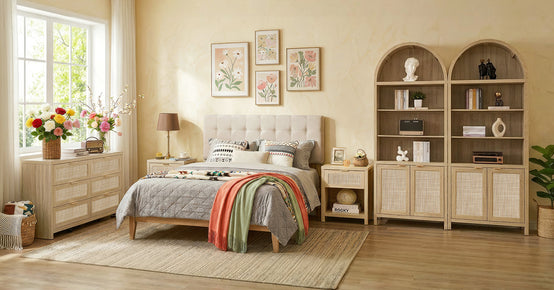
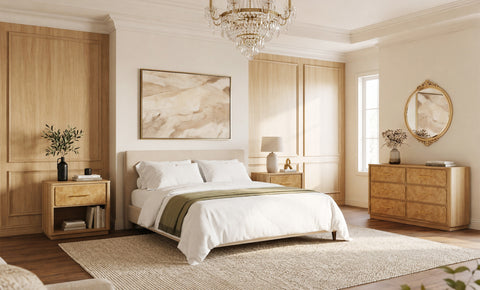
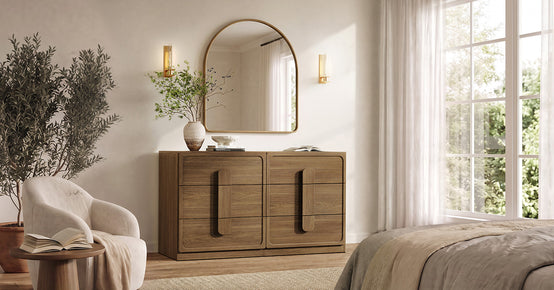
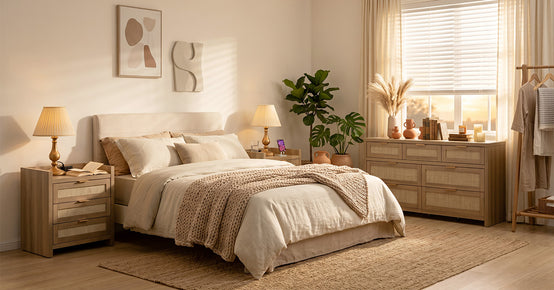
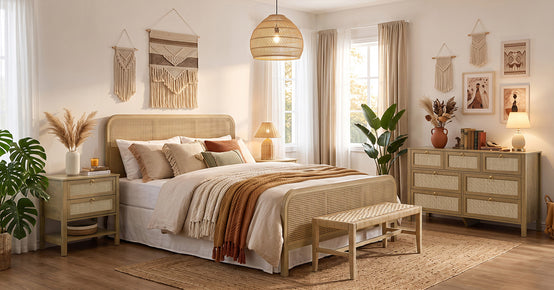
Bedrooms are the easiest win: stable temperature, no splashing, soft light. Woven drawer fronts warm up a wall of storage, and a four-drawer rattan dresseradds texture without sacrificing space for folded clothes.
Headboards, benches, and cane-front wardrobes work on the same logic.
Entryways and Hallways

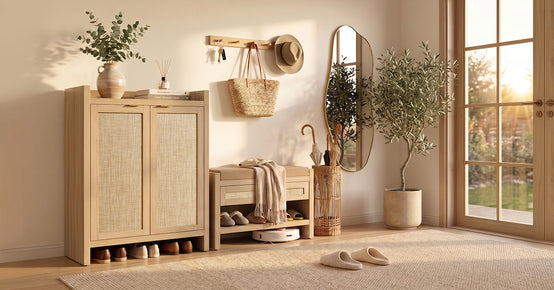
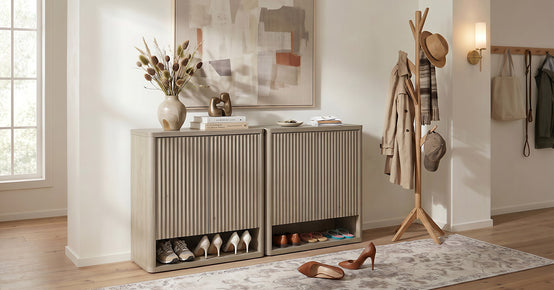
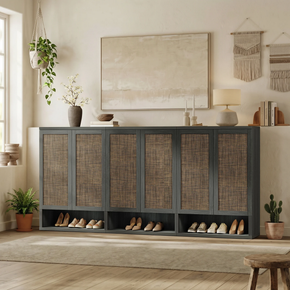
Entryways collect shoes, keys, and mail within four square feet. A closed cabinet hides the pile, and a woven-door shoe cabinet keeps air moving through the weave so damp shoes are not sealed in a wooden box.
Living Rooms and Home Offices

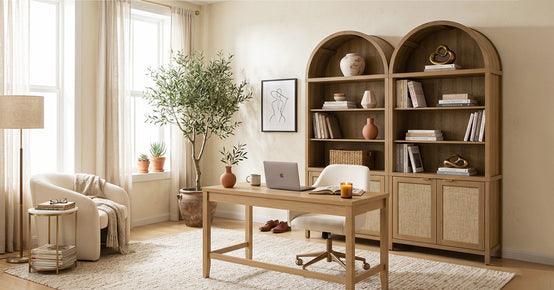
Tall storage is where open weave pays off most, because a solid unit that size reads like a wall. A 71-inch rattan bookcase holds books and files while letting light through the frame.
Anchor anything tall to the wall. Anti-tip brackets take five minutes.
Dining Areas and Sunrooms
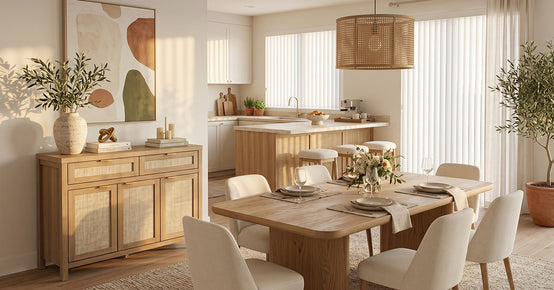
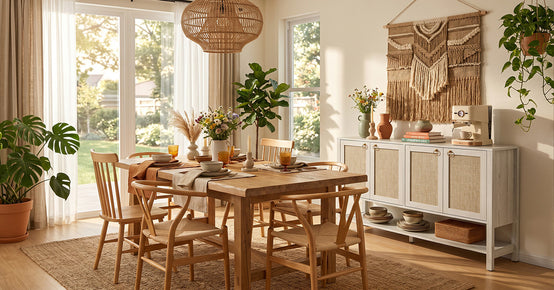
Cane dining chairs go well with wood, stone, or metal tables. Sunrooms look the part but need care. Keep natural pieces back from the hottest glass and crack a vent open on humid days.
How to Use Rattan Without a Full Boho Look
The worry makes sense. Too much weave in one room and the place reads like a beach rental.
Use It as an Accent, Not a Theme

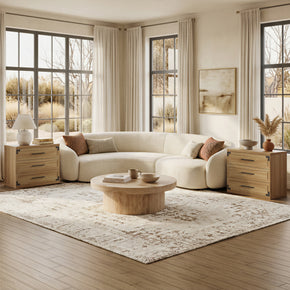
One or two woven pieces are enough to carry a whole room. Set woven bedroom storage pieces against painted walls and flat-front furniture, and the result stays modern rather than themed.
Pair It With Clean Lines
Put rattan next to straight-edged cabinets, a boucle chair, or a metal frame. That contrast is what makes the weave look chosen rather than random.
Control the Color Story
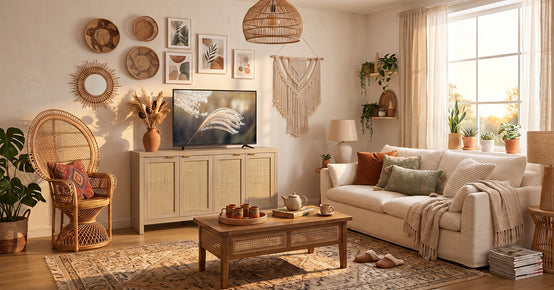
Warm neutrals pull rattan toward contemporary, and black accents, deep greens, and darker woods do the same. Pile on jute, macrame and terracotta, and it swings the other way fast.
Is Rattan Furniture Still in Style in 2026?

Yes. The styling has moved on though. Rattan turns up in smaller doses now. Cane fronts, woven inserts, one accent piece, rather than a full matching set.
Mixing materials is what keeps it current. Wood body, woven face, plain hardware. You will see that combination across this season's natural-texture arrivals and through most organic modern rooms right now.
Rattan itself is old. How it's used keeps changing.
Final Takeaway
Rattan furniture comes from a solid-stemmed palm, shaped into frames or woven into panels, and it earns its keep indoors more than out. Natural rattan brings warmth, low weight, and real character. Synthetic weave takes weather that natural fiber cannot.
Work out where the piece will live first. Then check the build. Look for node marks and a rigid frame. Check the bindings, material spec, and hardware. Keep it dry, dust it, and keep it well away from strong sun.
Do that and a good rattan piece outlives most of what sits beside it.
FAQs
What are the disadvantages of rattan furniture?
Natural rattan has four weak spots:
- Damp damage, meaning swelling, staining and mold in humid rooms
- Fading and brittle cane after long spells in direct sun
- Woven seats and panels that slacken or sag under heavy daily use
- Big quality gaps, since the word covers solid poles, thin cane and printed lookalike panels
Synthetic rattan dodges the weather problems. It tends to fail at the frame, the hardware, or the cushions instead.
Is rattan furniture good quality?
It can be excellent. The material name on its own guarantees nothing. Quality comes from poles thick enough for the job, rigid joints, tight binding, even weave tension, and a properly sealed finish.
A well-built rattan chair takes daily use for years, and a caner can re-weave the panel when it finally goes. A thin frame with glued wraps starts creaking inside a few months.
Is rattan better than wood?
Neither wins overall. They solve different problems. Wood carries heavy loads, so builders use it for large tables and cabinets. Rattan is lighter, bends into curves, and adds open texture that solid panels cannot. Many good designs use both, with a wood body and woven fronts.
How long does rattan furniture last?
Anywhere from a couple of seasons to several decades. Indoors, out of direct sun and away from damp, good natural rattan lasts a very long time. Outdoors with no cover, it goes downhill fast.
Synthetic sets live or die on the frame material and the UV grade of the weave. Dusting and early repairs stretch all of those numbers.
Which is better, rattan or bamboo?
The shape you need decides it:
- Choose rattan for curved frames, chair backs and woven panels, since a solid stem bends without cracking
- Choose bamboo for straight legs, slats and flat surfaces, where the hollow culm does the job well
- Bamboo grows back faster, while rattan looks warmer and takes trickier shapes
What happens to rattan if it gets wet?
A small spill dried right away does no harm. A real soaking is another matter. The fiber takes on water and swells, then shrinks back unevenly as it dries, loosening joints and slackening the weave.
Mold can show up inside a few days in still air. Dry a soaked piece slowly in an airy spot, not with a heater.
Is rattan out of style in 2026?
No. Rattan is still common in organic modern, coastal, Japandi, and mid-century-inspired rooms. The dose is what changed. Full matching rattan sets have given way to single accent pieces and cane-front cabinets mixed with wood, metal, and painted finishes.
Is rattan plastic or wood?
Neither one. Natural rattan is the stem of a climbing palm, so it counts as a plant fiber rather than timber or plastic.
Anything sold as synthetic rattan, PE rattan, resin rattan, or all-weather rattan is a made polymer cord shaped to look woven. Read the material spec, because many listings put both words side by side.
Sources
- Encyclopedia Britannica – Calamus, the Rattan Palm Genus
- Food and Agriculture Organization of the United Nations – Rattan Taxonomy, Ecology and Research Priorities
- Food and Agriculture Organization of the United Nations – Sustainable Supply and Management of Rattan Resources
- Global Landscapes Forum – Bamboo, Rattan and Forest Biodiversity
- US Environmental Protection Agency – Mold and Moisture Control in the Home
- National Park Service – Emergency Treatment for Water-Soaked Furniture and Wooden Objects
- American Museum of Natural History – Impact of Temperature and Relative Humidity on Collections
- US Consumer Product Safety Commission – Anchor It, Furniture Tip-Over Prevention


Looking for something else?

Burl Wood Furniture: The Complete Buying Guide
LEARN MORE
What Is a Hope Chest? Meaning, History, and Modern Uses
LEARN MORE
What Is a Foyer? Meaning, Purpose and Design Guide
LEARN MORE
GREENGUARD Gold Certified Furniture: What It Really Means for Your Home
LEARN MORELooking for something else?

How to Clean a Mirror Without Streaks: Simple Step-by-Step Guide
LEARN MORE
21 Above-Bed Decor Ideas for a Stylish Bedroom Wall
LEARN MORE
Furniture Materials Guide: Picking the Right Material Room by Room
LEARN MORE


Further reading

18 Decorative Storage Box Ideas That Hide Clutter Well

How to Store Comforters Without Losing Space or Loft


