



















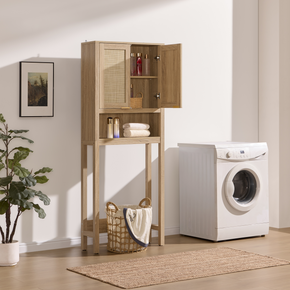









How to Clean Wicker and Rattan Furniture Safely
We'd guess most wicker damage happens on cleaning day rather than in normal use. A cloth that wasn't wrung out properly, a brush stiffer than expected, or a cover put back on a damp frame is usually all it takes.
How much water is safe really comes down to the material. Natural rattan and cane get by on very little, whereas resin wicker out on the patio won't mind a hose at all. Rattan drawer fronts on an indoor dresser fall somewhere in the middle, since the weave is fitted onto engineered wood that doesn't like water either.
The short version is to get the dust out while it's dry, clean with soap suds on a cloth you've wrung out well, wipe off with plain water and dry it straight away. A hose is only for resin wicker, and a pressure washer isn't for any of it.
Know What Your Wicker Is Made Of

You can't go by the pattern, since wicker only describes the weave and two identical looking chairs might be rattan and plastic. Willow and paper fiber get woven the same way too, and we'd treat every one of them a little differently once water is involved.
|
Material |
Water it tolerates |
Clean it with |
Watch for |
|
Natural rattan or cane |
Very little |
Dry brush, barely damp cloth |
Swelling, mildew, brittle strands |
|
Paper fiber |
None |
Dry brush and vacuum only |
Strands soften and break |
|
Resin or PE wicker |
Gentle hose spray |
Mild soap, soft brush, rinse |
Water trapped under cushions |
|
Painted or antique |
Test first |
Dry methods, spot cleaning |
Peeling paint, loose joints |
|
Rattan fronts on engineered wood |
Damp cloth only |
Brush, wipe, dry at once |
Swollen edges, water rings |
Without a label, we tip the piece back and compare a few strands near the bottom, where nobody looks. You'll usually see natural ones change a little from one to the next, but resin strands come out identical and are normally wrapped around aluminum. If we still can't tell, we clean it as if it were natural.
The Basic Method for Indoor Wicker

On a single chair the cleaning takes around 20 minutes, and the drying takes longer.
1. Start by taking off the cushions and throws, and anything else sitting on it.
2. Get the dust out while everything is still dry. We use a soft brush to work it out of the weave toward a vacuum nozzle on low suction, which is how the Canadian Conservation Institute cleans woven objects too.
3. For the wash, we'd stir a few drops of mild dish soap into a bowl of lukewarm water and use only the foam on top, picked up with a cloth that's been wrung out hard, working along the weave instead of across it.
4. A second cloth, only just damp with plain water, takes the soap off, and we towel each section dry before moving to the next one.
5. After that it just needs moving air, so a fan or an open window is ideal, though we'd keep the hair dryer out of it. The cushions can go back on once every strand feels dry to the touch.
Museum conservators never put basketry in water. They'll try a barely damp cotton swab on a hidden spot first and wait for it to dry before going any further, and it's a good habit to borrow at home.
Cleaning Rattan Drawer Fronts on Dressers and Nightstands
These days a lot of indoor rattan comes as a woven panel set into a wooden drawer front. Dust collects in the weave like anywhere else, but some of it also falls straight through into the drawer.
Open the Drawer and Work From the Front
We pull the drawer out until it reaches the stop, keep one hand on it so it doesn't wobble, and brush the panel downward from the top. Then run the vacuum over the drawer floor, where the fallen dust ends up. Once a week is plenty in most bedrooms, more often with pets.
Keep Water Off the Wood Edges
Engineered wood can swell at the edges if water is left to sit, which is why we dry the frame and the top as soon as the panel's been wiped.
What the Savanna Care Line Says
We checked two pieces from the Savanna rattan collection, and both have rattan fronts on an engineered wood body with a matte finish. Their product pages give a single care instruction, and it's simply to wipe them clean with a dry or damp cloth.

is 60.82 in wide, and each main drawer measures 26.58 in across on the inside. The Savanna rattan nightstand

is smaller at 19.7 in wide, with a single drawer. Both use metal roller glides with a drawer safety stop, so we'd clean each drawer at its stop rather than trying to force it off the runners.
Tip: We keep a soft, dry brush tucked in the top drawer for this. A quick pass over the fronts every week means the damp cloth hardly ever comes out.
Outdoor Resin Wicker Can Take a Hose

Outdoor wicker is a different story. We'd give it a quick brush first to clear leaves and pollen, because pollen turns to paste once it's wet, and then a gentle rinse with the garden hose. Mild soap on a soft brush handles the rest, followed by one more rinse. That works because most patio wicker today is PE or resin strands over metal, which water doesn't hurt.
We wouldn't bring out the pressure washer, even for resin. It's strong enough to pull strands off the frame and push water into joints that don't drain. Leave the frame in the shade to dry before the cushions or the cover go back on.
Stains, Mildew and Pet Hair
|
Problem |
First step |
Then |
|
Fresh spill |
Blot with a dry cloth |
Suds on a wrung cloth, then dry |
|
Grease or sunscreen |
Dab on dish soap suds |
Repeat before anything stronger |
|
Sticky residue |
Hold a warm damp cloth on it |
Lift it with a soft brush |
|
Mildew spots |
Move the piece into dry, moving air |
Mild soap, then dry within 24 to 48 hours |
|
Pet hair or lint |
Dry paintbrush |
Vacuum on low suction |
Watch out: The EPA is clear that chlorine bleach should never be mixed with cleaners containing ammonia, because the fumes are toxic. We'd go easy with vinegar and peroxide as well and try them on the underside first, since either can lighten a finish.
Control Humidity So You Clean Less
In our experience, moisture causes more wicker problems than dirt does. The Canadian Conservation Institute says mold can start to grow once relative humidity passes 65%, and plant materials get brittle when it falls below 40%.
The EPA's own advice is to keep indoor humidity under 60%, ideally somewhere from 30 to 50%. Put those together and a rattan room is happiest around 40 to 50%, which is easy enough to check with a basic humidity meter for $10 to $50. We'd also keep woven pieces out of hard direct sun and well away from heating vents.
Final Thoughts
We'd sum it all up as dry first, then damp, and wet almost never. If you've only got a few minutes in a week, we'd use them on a dry brush across the drawer fronts and a look under any cushions. Keep the room at roughly 40 to 50% humidity and you'll find most deep cleaning just isn't needed. When a mark does show up, deal with it that day using suds on a wrung cloth, not a spray.
For wood, leather and fabric pieces, our furniture cleaning and care tips go through the rest, and you'll find care details on every product page across the full SICOTAS range.
FAQs
How Can You Tell the Difference Between Wicker and Rattan?
People use the two words as if they meant the same thing, but they don't.
According to Royal Botanic Gardens, Kew, rattans are climbing palms from tropical rainforests, almost 500 species of them. Wicker only tells you how something was made, and it could just as easily be willow, paper or resin.
So we'd always read the label before cleaning anything woven.
Can You Use Murphy's Oil Soap on Wicker?
Yes on natural wicker, so long as you dilute it and keep the cloth only just damp.
Cathryn Peters, a restorer who goes by The Wicker Woman, says spills can be wiped up with light detergent or Murphy's Oil Soap in water. Paper fiber shouldn't get wet at all, and Savanna fronts only need a dry or damp cloth.
We'd still test a little on the back of a leg.
Can You Pressure Wash Wicker Furniture?
We wouldn't, whether the wicker is natural or resin.
It's tempting with a grubby patio set, we know, but the spray hits a woven surface far harder than it was ever built for, so natural rattan ends up soaked and can split as it dries, while resin can lose strands from the frame.
An ordinary garden hose gets the same dirt off.
What Happens to Wicker When It Gets Wet?
That depends on whether the strands are natural or resin, because only the natural kind soaks water in.
According to the Canadian Conservation Institute, plant fibers swell when they get wet and shrink back as they dry, and over time that cracks the thinner strands. Paper fiber is worse off and tends to go soft and sag. Resin copes with rain, but lift the cushions afterward.
If a natural piece gets soaked, we'd leave it near a fan for two or three days.
How Do You Make Wicker Look New Again?
It's usually just dirt, and a careful clean takes care of most of it.
The gray, tired look on old rattan tends to be grime stuck in the weave, so we'd brush, vacuum and wash it with suds, then wait until it's dry before judging, because wet fiber always looks darker. Then tuck or glue down loose strand ends.
We'd skip heavy oil polish, which turns tacky.
Can Bed Bugs Live in Wicker Furniture?
Unfortunately yes, if they've come in on a secondhand piece.
They like narrow cracks and seams, and a tight weave has plenty. The EPA's first step is checking secondhand furniture for signs of bed bugs before it comes inside, and after that it suggests cutting clutter and vacuuming often.
If you do find some, it's a job for a licensed pest professional rather than a bucket of water.
What Can You Spray on Wicker to Make It Waterproof?
Not one that really works on natural wicker, no.
Clear sealers can slow down how quickly rattan picks up moisture, and some outdoor sprays add UV protection to resin, but we still wouldn't leave an indoor chair outside after using either. The wrong one can also trap moisture or fight the factory finish.
Savanna pieces list only a dry or damp cloth, with no sealer.


Looking for something else?

How to Choose a Shoe Cabinet for Wet Shoes and Muddy Entryways
LEARN MORE
Freestanding vs. Wall-Mounted Shoe Cabinets: Which Is Safer and Easier to Install?
LEARN MORE
Shoe Cabinet Base Clearance: Will Your Robot Vacuum Fit Under It?
LEARN MORE
How to Choose a Nightstand for a Rental: Small Footprint, Easy Moving, and Useful Storage
LEARN MORELooking for something else?

How to Match a Nightstand to Your Bedside Lamp Size and Weight
LEARN MORE
Nightstand Leg Height for Robot Vacuums: A Bedside Clearance Guide
LEARN MORE
How to Choose a Buffet Cabinet for a Coffee Bar: Heat, Cords, and Spill Protection
LEARN MORE


Further reading

Attic Bedroom Ideas: Furniture for Sloped Ceilings

What Is Wicker? Wicker vs Rattan Explained


