



How to Choose a Buffet Cabinet for a Coffee Bar: Heat, Cords, and Spill Protection
Start With the Machine, Not the Cabinet
Everyone measures the cabinet — width, depth, done — and writes down nothing about the machine going on it. Backwards. The machine is the tenant; the cabinet is the landlord. Measure the tenant first.
● Three numbers, from the actual machine, not the spec sheet. First, the footprint: width by depth with everything attached. Portafilter handle out? Counts. Drip tray in working position? Counts. "Looks about twelve inches" is how cabinets end up in the returns queue.
● Second, rear clearance. The machine vents heat out the back and the cord exits there too — leave at least 2 inches of breathing room. On a 14-inch-deep top, a 12-inch-deep machine plus breathing room eats the whole depth. Arithmetic decides your layout, not aesthetics. And decide now whether the cord drops through the cabinet, not after you've drilled the wrong hole.
● Third, the mug landing zone: a clear patch beside or in front of the machine for a hot cup while you steam milk or tamp the next shot. When the machine swallows the full depth, that patch comes from width — a 48- to 72-inch buffet separates a brew zone from a serving zone instead of one crowded crime scene.
The Lid Nobody Measures
Height is where drip brewers ambush people. A 12-cup drip machine stands 13 to 15 inches tall — and the reservoir lid hinges back another 4 to 6 inches at fill time. Semi-auto espresso machines run 13 to 16 inches, and yanking the tank straight out needs about 17 inches above the top. Superautomatics are tallest and nearly all fill from the top.

So if the cabinet sits under a shelf or in a hutch bay, measure from the cabinet top to the shelf underside with the lid fully open — fully, not "mostly." Many hutches space shelves 12 to 14 inches apart: fine for a pod machine, dead on arrival for espresso. You want a first bay of 17 inches or more, or adjustable shelves. Bare wall? The lid question evaporates.
Weight: Your Cabinet Is Now a Workbench
A prosumer espresso machine weighs 20 to 30 pounds; a grinder adds 6 to 10. Then beans, tamper, knock box, daily mugs — a two-machine setup blows past 45 pounds on one patch of top without trying. Workbench weight, not decor weight.
The ugly truth about ready-to-assemble shelving: often rated 35 to 50 pounds per shelf, and a particleboard shelf spanning more than 30 inches bows under a machine within a year. Solid construction or a shorter span is the only fix.

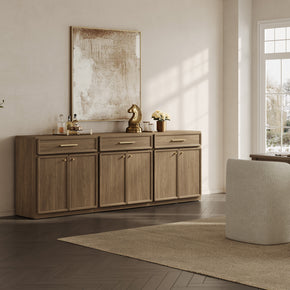
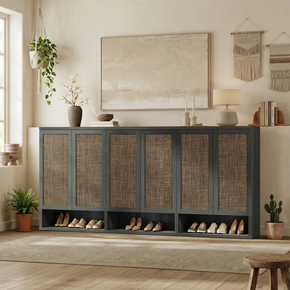
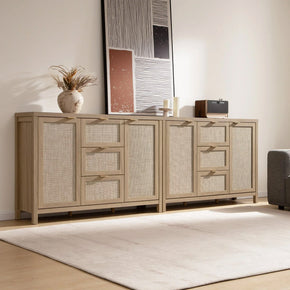
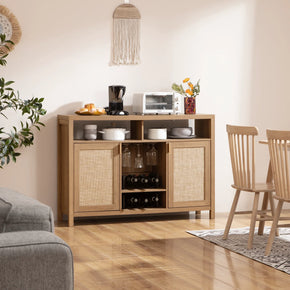
The top carries everything, so it must be a real structural panel. Engineered wood with a protective veneer — like the Savanna Sideboard Cabinets at 105 pounds with a 51.57-inch-wide top — just sits there and takes it. The lighter Savanna Sideboard with Doors at 84 pounds is still a genuine cabinet; its 43.5-inch top fits a single-machine setup with the grinder beside it.
And the check everyone skips: stability with the drawers open. You'll yank them every morning, half-awake, with a hot machine on top. Set the levelers. Run an anti-tip strap into a stud.
Heat and Steam Will Find the Weak Finish
Steam is the slow killer — no announcement, just quiet work over months. A machine brewing inside a closed cabinet dumps moisture into a sealed box: particleboard swells at the edges, finishes cloud. The rule is simple — the machine breathes in the open. On top with clear air around it, or brew with the doors open. Never trap a running machine in a closed box.
Direct heat is the fast killer. Portafilters and kettles hit the top at temperatures that soften cheap finishes on contact. Both SICOTAS sideboards wipe clean with a dry or damp cloth — fine for daily life, but daily life isn't standing heat. A trivet or thick silicone mat under the hot zone, permanently. Not "when you remember."

Then the wall behind the machine — checked by nobody until it's too late. Steam condenses on a cold wall, runs down behind the cabinet, invisible for months, until it's a science project. A wipeable backsplash behind the brew zone costs almost nothing.
Spills Are a Schedule, Not an Accident
Stop designing for the careful version of yourself. Month one, you wipe every drip instantly. Month three, you park the portafilter on the bare top while you answer the door. Design for month-three you.
The move: a spill tray under the machine. A low-lipped sheet pan works — catches daily drips, rinses in the sink in ten seconds. That's the system.

Under the grinder, a non-slip shelf liner. Grinders vibrate, and vibration walks a grinder toward the edge over weeks. The liner stops the march and catches escaped grounds.
For the top itself, speed beats products. Wipe a spill the same day and the matte finish shrugs; leave it a long afternoon and the acids work on the finish. Keep a dedicated bar towel on the station — within arm's reach, not in a drawer.
The Outlet Decides Everything
Electricity first, styling second. Wrong order emotionally; right order practically.
A standard 15-amp circuit tops out at 1,800 watts, ceiling near 1,440. Drip brewers pull 900 to 1,500 watts, kettles 1,000 to 1,500, espresso boilers about the same. Two heating elements plus the microwave on one circuit, and you'll meet your breaker panel personally. Test it on purpose once — machine plus kettle together, on Saturday, when a tripped breaker is an anecdote.

Placement matters as much as capacity. Kitchen outlets sit around 44 inches off the floor; general-room outlets near 16 — so the cord travels up through the cabinet. The clean fix: a 2- or 2.5-inch hole in the back panel, a cord grommet, and a low-profile surge strip mounted inside with flat-plug ends. Beware the bulky plug — one chunky adapter can hold the whole cabinet three inches off the wall.
Cabinet on legs? Run the cord down a back leg with adhesive clips, not across open floor. And never use an extension cord as permanent wiring for a heating appliance.
Where the Mugs and Beans Actually Live
Closed base for backstock and the ugly tier; open top for the six mugs in rotation. Daily mugs earn the open spot. Backstock, spare filters, descaler — behind doors, out of sight.
Beans deserve better than the countertop. Coffee degrades fast in heat and light, and the top beside a steaming machine is the warmest, brightest spot in the room. Decant into airtight canisters inside the cabinet. A shallow drawer with dividers handles tampers, brushes, and filters — the Savanna Sideboard Cabinets gives you three drawers across 51.57 inches for this. Adjustable shelves in both models take canisters and stacked saucers.
Lay Out Your Workflow Zones
Beans to grinder to machine to cup — one direction, no backtracking. Right-handed? Left to right: beans and grinder left, machine center, mugs and serving right. Grind left, pull right, step back: a dance routine. Add clutter-hunting for a clean mug: a blooper reel.
Give every zone a hard edge. Tray under the grinder catches grounds; the spill tray defines the brew zone; a second tray marks serving. Without edges the zones drift together, and within a month you're working in half the space you planned.

Keep the waste path short. Near the kitchen sink? Already won. Dining room? A small lidded bin inside the cabinet for grounds and spent filters.
Two Buffets That Handle the Job
Numbers beat adjectives. Both are SICOTAS sideboards with published dimensions, adjustable shelves, and drawers.
|
|
Savanna Sideboard Cabinets |
Savanna Sideboard with Doors |
|
Overall size |
35.43" H x 51.57" W x 14.02" D |
33.9" H x 43.5" W x 14" D |
|
Working width |
51.57 in: full three-zone layout |
43.5 in: two zones or compact three-zone |
|
Height |
35.43 in, just under 36 in counter height |
33.9 in, good for drip/pod, low for espresso tamping |
|
Drawers / shelves |
3 drawers, adjustable shelves |
2 drawers, adjustable shelves |
|
Cabinet weight |
105 lb |
84 lb |
|
Best for |
Espresso + grinder + serving zone |
Drip or pod + grinder, tighter rooms |
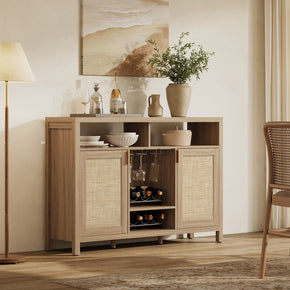
Savanna Sideboard Cabinets: the full workstation. At 51.57 inches wide, the whole left-to-right workflow fits — grinder, brew, and serving zones each get real estate. At 35.43 inches — just under counter height — tamping and pouring stay at a natural height. Daily espresso plus a grinder? The width decides it.
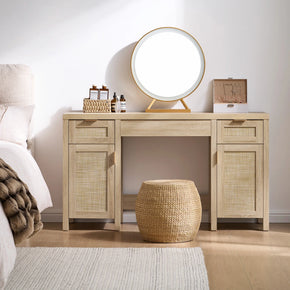
Savanna Sideboard with Doors: the compact station. At 43.5 inches: a drip-or-pod setup with a grinder beside it, or a single-machine espresso station. At 33.9 inches, drip and pod brewing sit exactly right; espresso tamping is a touch low but workable.
The Safety Checklist
Weight, heat, water, and live electricity in one piece of furniture — run this before the first brew: anchor the cabinet to a stud with an anti-tip strap; confirm the circuit by running the machine and kettle together once; keep cords off the floor and away from hot surfaces; with kids around, hot machine at the back, mugs up high, locks on drawers holding descaler.
FAQs
Can you put an espresso machine on a buffet cabinet?
Yes — if the numbers check out. The top must fit the machine plus 2 inches of rear clearance, the cabinet must carry 40-plus pounds without wandering, and the finish must survive daily heat and wiping.
How deep does a coffee bar cabinet need to be?
Fourteen inches of top depth handles most drip and espresso machines with breathing room; 12 inches only suits compact pod machines and slim grinders. Measure with the tank handle raised and the portafilter attached, add your 2 inches, and shop to that number.
Will steam from the coffee machine damage the cabinet?
Only if you trap it. Never run a machine inside a closed cabinet — brew with the doors open or roll it past the cabinet face. With air moving around it, steam is harmless; sealed in a box, it swells edges and clouds finishes.
How do I run power to a buffet coffee bar without visible cords?
Cut a 2 to 2.5-inch hole in the back panel, add a cord grommet, and mount a low-profile surge strip inside with flat-plug ends. Never use an extension cord as permanent wiring for a heating appliance.
Can a buffet cabinet hold the weight of an espresso setup?
A full setup puts 40 to 50 pounds on one patch of top — so demand real cabinet mass, a structural top, and honest shelf ratings, since long particleboard spans bow within a year. Park the machine over a supported section, never mid-span.
Where should I store coffee beans at a coffee bar?
In airtight canisters inside the closed cabinet — away from the machine's heat, out of direct light. Only the day's canister lives on top; the sealed backstock stays in the dark.
What is the best height for a coffee bar cabinet?
Just under 36-inch counter height is the sweet spot for tamping and pouring; under 32 inches and tamping becomes a stoop. The Savanna Sideboard Cabinets at 35.43 inches tall lands right in it.
Do I need to protect the top of the cabinet?
Yes — from day one: a spill tray under the machine, a trivet or silicone mat under anything hot, a non-slip liner under the grinder. Wipe spills the same day — coffee is acidic, and an afternoon-old spill is how a stain becomes permanent.


Looking for something else?
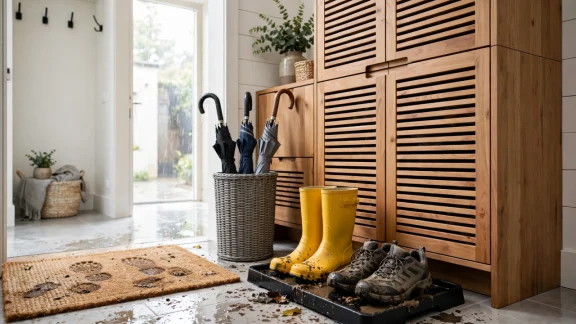
How to Choose a Shoe Cabinet for Wet Shoes and Muddy Entryways
LEARN MORE
Freestanding vs. Wall-Mounted Shoe Cabinets: Which Is Safer and Easier to Install?
LEARN MORE
Shoe Cabinet Base Clearance: Will Your Robot Vacuum Fit Under It?
LEARN MORE
How to Choose a Nightstand for a Rental: Small Footprint, Easy Moving, and Useful Storage
LEARN MORELooking for something else?
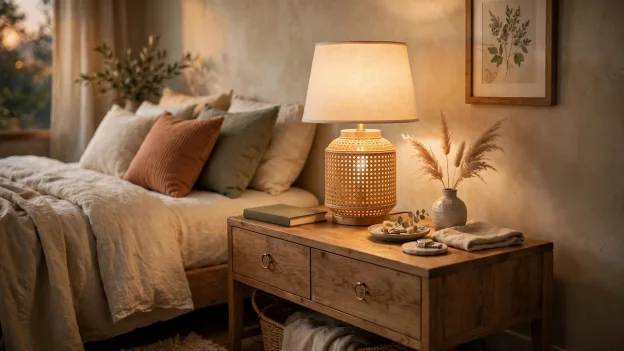
How to Match a Nightstand to Your Bedside Lamp Size and Weight
LEARN MORE
Nightstand Leg Height for Robot Vacuums: A Bedside Clearance Guide
LEARN MORE
How to Choose a Buffet Cabinet for a Coffee Bar: Heat, Cords, and Spill Protection
LEARN MORE


Further reading

Attic Bedroom Ideas: Furniture for Sloped Ceilings

What Is Wicker? Wicker vs Rattan Explained


