



How to Organize Dresser Drawers So Every Drawer Has a Job
The top drawer of my dresser used to be a lost-and-found department: one sock whose partner had clearly joined the circus, a couple of lip balms old enough to vote, and a T-shirt I stopped wearing back when I had a different haircut. Nothing in there was exactly filthy. Nothing had a home either.
Then a friend who organizes closets for a living said the sentence that changed everything: the problem is not your drawers. Nobody ever gave a single one of them a job.
Here is the method, worked out on two actual SICOTAS dressers: empty and measure first, zone by your morning routine, fold so things stay folded, keep it going with a five-minute habit.
Every drawer with a job: file-folded clothes standing upright in visible rows.
Empty It First (and Bring a Tape Measure)

This is the part nobody wants to do, which is why it comes first. Take every drawer out and pile all of it on the bed. All of it. Yes, including the drawer you think is fine. It's not fine. You know it, I know it, let's get it over with.
Now run Chicago organizer Jessica Litman's keep test: pick up each item and ask three questions — does it fit, is it in good shape, have I worn it in the last year? One no and it goes. Donate pile, trash pile, no "maybe" pile. A maybe pile is just another drawer somewhere else with extra steps.
Drawers empty? Wipe them down, let them dry. Then the step everyone skips: measure the inside of every drawer — width, depth, height. Save the numbers in your phone. Real Homes' editors call this the line between organizers that fit and ones that rattle like loose change. Dividers are sold by dimension. Not by vibes.
Exteriors lie: the Savanna Dresser with 7 Drawers is 56.88 inches wide outside — impressive, meaningless. Each drawer interior is 24.61 wide, 15.16 deep, 6.88 tall. Buy dividers for the interior numbers.
Measure interior width, depth, and height before buying organizers.
Give Every Drawer a Job: The Zoning Method

Here is the core idea: don't fill drawers until they're full. Give each drawer a category and let the category set the boundary. One drawer for underwear and socks. One for T-shirts. One for workout gear. Organizer Michelle Urban says it best — a defined space is a natural limit. Zone full? Time to purge. Not time to buy a bigger dresser.
Two rules do the rest. First: follow your body. Katrina Hassan tells clients to treat the dresser as a mirror of getting dressed — top drawers hold whatever goes on first, then work downward. Second: match depth to contents. Shallow drawers are for small things in dividers — underwear, accessories, skincare. Deep drawers are for folded clothes. Small loose items in a deep drawer get swallowed by the corners until you move house.
Stylist Cynthia Kennedy's six-drawer map is a good template:

● Top left — underwear plus socks; rolled or folded, everything visible at a glance.
● Top right — bralettes, shapewear, pajamas, thermals; folded, grouped by sub-type.
● Middle left — T-shirts plus tanks; file-folded with graphics facing up.
● Middle right — leggings, sports bras, joggers; matching sets kept together.
● Bottom left — jeans plus casual pants; file-folded in neat rows.
● Bottom right — lightweight sweaters plus overflow; least-used items toward the back.
A six-drawer zoning map: top drawers for first-on items, bottom drawers for last-on.
Only four drawers? Merge: underwear and socks share the top, tees and workout gear take the middle, pants get the bottom. Nine drawers — like the Crescent Modular 9-Drawer Dresser , three 3-drawer units side by side — and each unit becomes its own zone: one per person, or sleep, work, weekend.
The worksheet version: 1. Empty every drawer; run the keep test. 2. Measure each interior — width by depth by height. 3. List your clothing categories in dressing order. 4. One category per drawer; folded clothes go deepest. 5. Buy dividers to interior numbers, never exterior ones.
Match the Fold to the Drawer

The drawer-killer nobody warns you about is the horizontal stack. You dig for the bottom shirt, every pull topples the pile, and the drawer is wrecked in three days.
Nearly every pro lands on the same fix: file folding. Fold each garment to drawer height, stand the pieces upright like files. NEAT Method founders Ashley Murphy and Marissa Hagmeyer call it the single highest-leverage change you can make, and the real win is visibility — you see everything at a glance, so nothing gets "lost" and re-bought.
Rolling takes second: fold lengthwise, roll tight. Best for underwear and socks. The folks at organizing.tv tested all four methods: vertical file-folding first, rolling second, flat stacking a distant third — fine for three or four items, a mess-maker beyond that.
The practical answer is a mix: file-fold the T-shirts, roll the socks into a honeycomb organizer, stack the two sweaters you kept. Match the method to the garment.
File folding: fold to drawer height, stand garments upright like files.
Dividers, Boxes, and the One-Inch Rule

A wide drawer without dividers is a junk drawer with a head start. Clothes shift every time it opens, stacks lean, and within a week the front half is chaos. Rashelle Isip of The Order Expert recommends three to four sections per extra-wide drawer — enough structure that folded clothes can't migrate.
Keep the toolkit small: adjustable bamboo dividers for the big zones; a honeycomb organizer — dozens of little cells in one tray — for socks, underwear, ties, belts. Prefer layers? Steal Katrina Hassan's trick: out-of-season clothes in lidded acrylic boxes at the bottom of a deep drawer, daily clothes on top, swap the boxes when seasons change.
One rule runs it all — Isip's: leave at least an inch of clearance between folded clothes and the drawer sides. Cramming jams drawers shut and wedges a sock behind the dresser, where it lives until you move house.
What Doesn't Earn a Drawer

Heavy, dense fabrics top the list — Laura Kinsella is blunt: thick sweaters and jeans don't breathe in drawers, they're hard to pull out, and they eat the space lighter pieces need. Got closet room? Shelves or hangers for the heavy stuff. Drawers are for the light, flexible crowd: T-shirts, leggings, pajamas.
Off-season clothes are the other eviction notice. Wardrobe outgrowing the dresser? Isip's answer: airtight containers under the bed — not a second, worse system crammed into the same drawers. Your drawers hold this season. Nothing else.
Bulky sweaters and jeans breathe better — and grab easier — on a closet shelf.
Two Dressers, Two Drawer Maps

Drawer count shapes everything. Here is how zoning lands on two very different dressers.
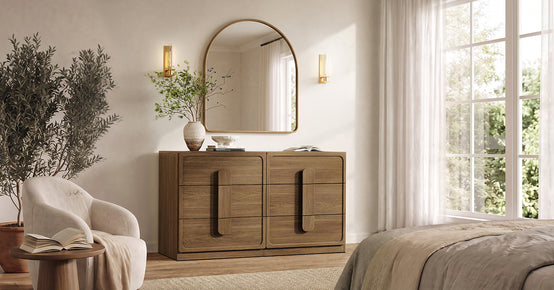
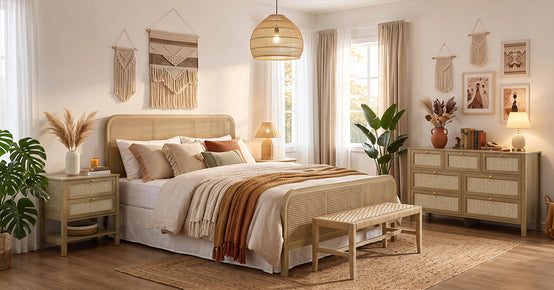
The Savanna Dresser with 7 Drawers (31.34″ H × 56.88″ W × 17.72″ D) is the classic wide dresser — seven roomy drawers, each interior 24.61 wide and 15.16 deep, exactly where three-to-four divider sections earn their keep. A workable map: top row for underwear and socks in a honeycomb organizer, second row for file-folded tees, third for workout gear, bottom rows for pants plus surviving sweaters.
The Savanna: seven wide drawers, each with 24.61 inches of dividable width.
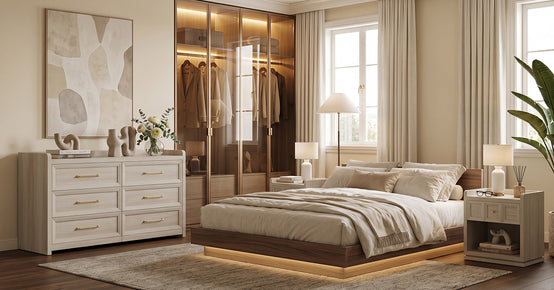
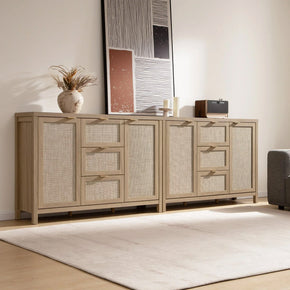
The Crescent Modular 9-Drawer Dresser (26.6″ H × 31.3″ W × 16.3″ D per unit) takes the opposite route: three 3-drawer units side by side, nine smaller drawers instead of seven big ones. One unit per category cluster, or one unit per person in a shared bedroom. Smaller drawers barely need dividers; the cabinet walls divide for you.
The Crescent Modular: three 3-drawer units that zone themselves.
● Drawer count — Savanna 7-Drawer: 7 wide drawers; Crescent Modular 9-Drawer: 9 drawers across 3 units
● Overall size — Savanna 7-Drawer: 31.34" H x 56.88" W x 17.72" D; Crescent Modular 9-Drawer: 26.6" H x 31.3" W x 16.3" D per unit
● Drawer interior — Savanna 7-Drawer: 24.61" W x 15.16" D x 6.88" H; Crescent Modular 9-Drawer: 3 drawers per unit; see PDP for interiors
● Zoning style — Savanna 7-Drawer: divider sections inside each drawer; Crescent Modular 9-Drawer: one unit = one zone
● Best for — Savanna 7-Drawer: maximum folded storage; Crescent Modular 9-Drawer: couples, shared rooms, flexible layouts
Browse the full dressers collection and hold every candidate against your sketched map — drawer count first, interior dimensions second. And if you're comparing how deep different styles run, our guide to standard drawer depths translates those numbers into what actually fits.
The Five-Minute Reset That Keeps It Working

The system is the easy half; keeping it is the job. Isip's advice: pick one method and stop auditioning new ones.
Build one habit: a five-minute reset every time laundry goes away. Refold the strays, return them to their zones, check the one-inch gap. In a shared dresser, label the dividers — the drawer should literally say "socks."
And the quiet rule that makes every other rule unnecessary: one in, one out. New T-shirt in, old one donated. Drawers don't expand, so the volume stays constant.
The five-minute reset: refold the migrants every time laundry goes away.
FAQs
What is the best way to organize dresser drawers?
Give every drawer exactly one job, arranged in the order you get dressed — first-on items up top. File-fold so you can see everything at a glance, divide the wide drawers so stacks can't migrate, and measure the drawer interiors before you buy a single organizer.
How do I decide what goes in each dresser drawer?
Dressing order and drawer depth — that's the whole decision. Top drawers get whatever goes on first and you work downward; shallow drawers are for small things in dividers, deep drawers are for folded clothes. The stuff you grab daily goes front, the occasional stuff goes back.
Should I buy drawer dividers?
For any wide drawer, yes — three or four sections will keep folded clothes from sliding around. Just measure the interior first (the Savanna's interiors run 24.61 by 15.16 inches, for reference). Dividers are sold by dimension, and guessing is how you end up with organizers that rattle.
Is file folding really better than rolling clothes?
For most garments, yes — file folding wins on both space and visibility, because you can see every item without digging. Rolling is the right call for underwear, socks, and filling odd gaps. Flat stacking only survives for piles of three or four; any more and it becomes a mess-maker.
How do I organize very deep dresser drawers?
Use the two-drawers-in-one trick: rarely worn clothes go in lidded acrylic boxes at the bottom, daily clothes on top, and you swap the boxes when the seasons change. And never put small loose items in a deep drawer without containers — the corners will eat them, guaranteed.
What should I never store in a dresser?
Bulky, dense fabrics — thick sweaters and jeans don't breathe in drawers, they're hard to pull out, and they hog the space lighter pieces need. Give those to closet shelves or hangers. Off-season clothes belong in airtight containers under the bed, not in your daily drawers.
How do I keep my dresser drawers organized long term?
Stop switching systems and pick one — then do a five-minute reset every time the laundry goes away: refold the strays, return everything to its zone, check the one-inch gap. Label the dividers in a shared dresser, and follow one-in-one-out: a new item means an old one leaves.
What size organizers fit a standard dresser drawer?
There is no standard size, so measure the interior first, every time. For reference, the Savanna 7-drawer's drawer interiors are 24.61 wide, 15.16 deep, 6.88 tall. Buy dividers for the interior numbers — never the exterior ones.


Looking for something else?
TV Stand With Doors vs. Drawers: Which Storage Works Better
LEARN MORE
Bookcase With Doors vs. Open Shelves: Which One Should You Buy?
LEARN MORE
Buffet Cabinet With Drawers vs. Doors: Which Storage Mix Should You Choose?
LEARN MORE
Tilt-Out vs. Shelf Shoe Cabinets: Which Fits More in a Narrow Entryway?
LEARN MORELooking for something else?

Nightstand With Drawers vs. Open Shelf: Which Storage Layout Should You Buy?
LEARN MORE
How Much Weight Can a Dresser Hold? What to Check Before You Buy
LEARN MORE
How to Buy a Rattan Buffet Cabinet That Will Hold Up to Daily Use
LEARN MORE


Further reading
How to Organize Dresser Drawers So Every Drawer Has a Job

Bureau vs Dresser: Names, Sizes and What to Buy Today


