



Bureau vs Dresser: Names, Sizes and What to Buy Today
Go ahead — type "bureau" into a furniture search bar. I'll wait.
See that? Same chest of drawers. Same photo. Same price. One tab calls it a dresser, the other a bureau — and suddenly you're cross-eyed, wondering which listing is lying.
Neither. In modern retail those two words usually mean the exact same piece. Different costume, same drawers. The confusion is real — but it comes from history and marketing, not some hidden mechanism. Here's where the word came from, what stores signal when they use it, and the measurements that matter. Then two SICOTAS dressers with numbers you can verify tonight.
Where the Word "Bureau" Comes From

France, originally — and it never fully left.
Back in the 1700s, the bureau plat was a flat writing table and the bureau à cylindre was the famous roll-top — the word itself could mean the whole office. It crossed into English furniture-making and landed on a chest of drawers with a fold-down writing flap.
Then America got hold of the word — antique dealers started calling basically any old bedroom chest a "bureau," and in corners of the trade that habit never died. That's how an auction listing calls a low, wide bedroom dresser a bureau while a British seller lists the identical piece as a chest of drawers. Same wood, same drawers. Three different passports.
And it keeps branching. A lowboy — a low table with drawers — is the direct ancestor of the modern dresser. A highboy (or tallboy) stacks two chests into one tall piece; some say the name comes from "tallboi," meaning chest-on-chest. Dealers have been loose with every one of these words for literally centuries.
What Stores Mean When They Say "Bureau" Today

Open a modern catalog and watch what the word "bureau" actually does on the page. It's never doing the same job twice, which is half the problem.
Sometimes it's pure seasoning. A seller calls a perfectly ordinary six-drawer chest a bureau for that antique, European aura "dresser" can't touch. The piece itself? Nothing special — the word's doing all the marketing. That's fine, as long as you can see the strings.
Other times it's a hint about the room, and this one's actually useful. As the design marketplace Chairish puts it — a dresser tends to live in the bedroom or closet, while a bureau often lands in an office, a library, the end of a hallway. Same bones, different suggested address — which tells you the seller pictured it holding office supplies or books. Not socks.
Then there's the rarest case — and the only one where the word earns its keep: shape. A few sellers reserve "bureau" for taller, narrower chests with vertically stacked drawers and keep "dresser" for the wide, low silhouette with a usable top. If a store sticks to that, respect it — most don't. Until you've read the actual dimensions, assume the word told you nothing at all.
The Names, Decoded

Seven labels you'll keep bumping into. Here's the messy truth about each.
"Dresser" in a modern listing almost always means bedroom storage — wide, low, the top doing double duty for a mirror, a lamp, folded clothes. "Bureau"? Usually the exact same thing. Unless it's an antique listing, where it can signal a chest of drawers, sometimes one with a fold-down writing flap.
"Chest of drawers" runs taller and narrower than a standard dresser — vertical storage when floor space is tight. "Tallboy" and "highboy" are the stacked ones: two chests in one tall piece, maximum drawers for minimum floor. The "lowboy" is the low, wide antique the modern dresser grew out of. A "combo dresser" mixes drawers with doors, shelves lurking behind the doors for the bulky stuff. And a "lingerie" or "jewelry" chest goes slim and tall, narrow drawers for small things.
Fuzzy at the edges — all of them.
The Numbers Matter More Than the Name

Words lie — tape measures don't.
Retailers can call a piece whatever they want, but they all publish the same three numbers. And those numbers decode any listing in about ten seconds flat.
A standard dresser lands around 54 to 60 inches wide, 32 to 36 tall, roughly 18 deep. Double dressers stretch out to 60–72 wide. A tall dresser or chest of drawers squeezes into 30 to 40 inches wide and climbs 42 to 56 high. A lowboy sits low and wide — 28 to 30 tall, 50 to 56 wide. These bands come from industry dimension charts — and they hold across brands far better than any name ever will.
Drawers want 2 to 3 feet of clear floor in front to open all the way. The old buying rule still works — dressers belong on walls 4 to 6 feet wide, chests on walls 2 to 3 feet. Keep 30 to 36 inches of walkway anywhere people pass. Not one of these numbers cares about the listing title.
The number most shoppers skip (the one I'd check first) is the drawer interior. Overall dimensions tell you whether the piece fits the room. Interior dimensions tell you whether your sweaters actually fit the drawers. Two dressers can share the same overall height yet swallow wildly different wardrobes. A 7-inch-tall interior handles folded sweaters. A 4-inch one is mostly t-shirts and accessories. And 22 to 25 inches of side-to-side width? That's the sweet spot for folded stacks.
The 10-Minute Buying Checklist

Name sorted, numbers in hand. Ten minutes with a tape measure now prevents nearly every buyer regret.
I'd start with the path, not the wall. Measure where the piece will live, then walk the route from the front door to that wall — every doorway, every stair turn. A 78-inch dresser that can't make the staircase turn becomes a story instead of furniture.
Then — what's the job, and where? Bedroom clothes storage wants a wide dresser and a usable top. An office or hallway takes whatever footprint fits — bureau-labeled or not. Let the room decide — not the listing title.
Drawers: count by wardrobe, not by hope. One person with folded basics does fine on six. A couple sharing one piece should look at nine or more.
Read the drawer interiors — not just the overall size. Under 5 inches means shallow drawers: accessories, tees. Six to 8 inches handles jeans and sweaters. Listing hides the interior numbers? Ask before you order. Fair question.
Glides matter too. Metal roller glides outlast plastic center tracks by years — and a drawer safety stop keeps an overstuffed drawer from sliding clean out onto the floor.
And the safety one — anchor anything tall. A narrow, tall piece, whatever the tag says, gets fastened to the wall. Gravity doesn't read labels, and a chest is most dangerous with the top drawers open and full.
When the Label Actually Matters
For most new furniture, the name is decoration. But three situations deserve a second look:
Antique shopping. A dealer listing a piece as a "bureau" might be signaling its age, its origin — or a fold-down writing flap you'd never guess from the photos. Before you bid, ask the seller what they mean by the word. Takes thirty seconds.
Resale flips the whole thing around. If you ever sell the piece, listing it under both names doubles the buyers who find it. The confusion that annoyed you as a shopper becomes free visibility as a seller.
And international stores — watch out. A British retailer calling something a "dresser" may be selling a kitchen hutch, while an American one means bedroom storage. When a store ships across borders, trust the photos and the dimensions — not your home-country definition. The words travel worse than the furniture does.
Two SICOTAS Picks That End the Debate
If the naming fog has you reaching for something solid — good. Here are two dressers that show what the numbers look like on real pieces — engineered wood, matte finishes, metal roller glides, drawer safety stops. They differ the way all dressers differ: footprint and drawer count, not whatever some site decided to call them.
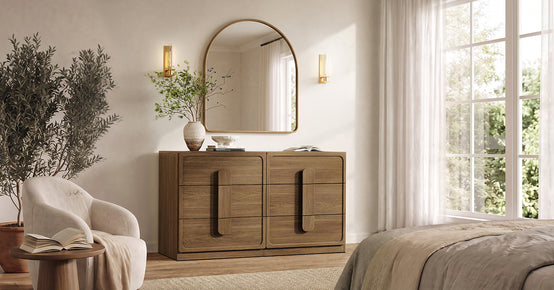
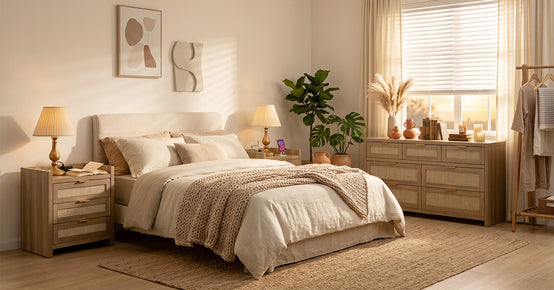
The classic answer to the whole bureau question is the Savanna Dresser, 7 Drawers: 31.34 inches high, 56.88 wide, 17.72 deep — a standard-dresser footprint with seven drawers. The main drawer interiors run 6.88 tall by 15.16 deep with 24.61 inches of side-to-side room for folded stacks, and at 137.3 pounds it's a solid, stay-put bedroom piece. Call it a bureau or a dresser — the tape measure says it's the piece most bedrooms want.
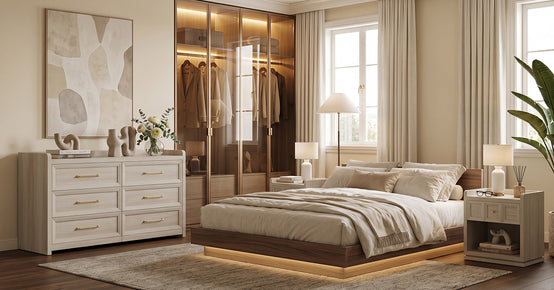
Then there's the Stria Modular Tall Dresser, for a long wall or a shared room: 33.7 high, 77.7 wide, 15.6 deep, nine drawers, interiors 7.1 tall and 13.8 deep. The modular design means the units sit side by side — put two or three together for one long storage wall instead of three separate purchases. At 177 pounds it isn't wandering anywhere, and it comes in White Alder, Grey Alder, and Dark Grey Alder with FSC-certified wood.
|
Feature |
Savanna Dresser, 7 Drawers |
Stria Modular Tall Dresser |
|
Overall dimensions |
31.34 in H x 56.88 in W x 17.72 in D |
33.7 in H x 77.7 in W x 15.6 in D |
|
Drawers |
7 |
9 |
|
Main drawer interior |
6.88 in H x 15.16 in D, 24.61 in wide |
7.1 in H x 13.8 in D, 22.8 in wide |
|
Weight |
137.3 lb |
177 lb |
|
Layout |
One wide piece |
Modular, units sit side by side |
|
Finishes |
Matte engineered wood |
White Alder, Grey Alder, Dark Grey Alder |
|
Best for |
Main bedroom, the classic dresser job |
Long walls, couples, shared rooms |
Ready to stop guessing for good?
Browse the full dresser collectionand compare real dimensions side by side. Once every listing shows the same three numbers, the name on top stops mattering.
FAQs
Is a bureau the same as a dresser?
In modern listings — pretty much. Both describe a chest of drawers used for storage, plain and simple. The history is messier — "bureau" started as the French word for a writing desk; in British usage it can still mean a chest of drawers with a fold-down writing flap. When a modern retailer calls a chest of drawers a bureau, treat it as a dresser and check the dimensions anyway. The tape never lies.
Why is a dresser sometimes called a bureau?
Blame the antique dealers — American dealers started calling bedroom chests of drawers "bureaus" generations back, and the habit stuck. These days the word also lends a listing that vintage, European flavor — it's the seller's styling, not a different piece of furniture.
Is a bureau bigger than a dresser?
No rule whatsoever. Some sellers use "bureau" for taller, narrower pieces and "dresser" for wide, low ones. Plenty do the opposite or swap the words freely. Skip the label. Compare the width, height, and depth on the listing instead.
What do the British call a dresser?
A chest of drawers — with a twist. In the UK, "dresser" more often means a kitchen hutch with open shelves over a cupboard base. One more reason naming gets messy across borders.
Can I use a bureau in the bedroom?
Absolutely. What belongs in a room is decided by size and drawer layout — never by the name on the listing. A 56-inch-wide bureau with seven drawers is a bedroom dresser by every measurement that actually counts.
What is the difference between a bureau and a chest of drawers?
In strict antique terms, a bureau might include a writing flap, while a chest of drawers is drawers only. In modern stores, both usually describe the same tall storage piece though. The dimension line settles it — chests run tall and narrow, roughly 42 to 56 inches high and 32 to 40 wide.
What dresser width actually fits a master bedroom wall?
Somewhere in the 54-to-72-inch range works for most master bedrooms. The Savanna at 56.88 inches wide fits a standard wall, while the Stria Modular at 77.7 inches suits a long wall or a couple sharing one piece. Leave 2 to 3 feet of clear floor in front of the drawers.
Which is better for a small room, a bureau or a dresser?
Whichever has the smaller footprint — the name genuinely doesn't factor in. In tight rooms, a tall narrow chest (sometimes labeled a bureau) uses just 2 to 3 feet of wall width — a wide dresser needs 4 to 6 feet. Measure the wall and the drawer clearance — and let the numbers decide.


Looking for something else?
TV Stand With Doors vs. Drawers: Which Storage Works Better
LEARN MORE
Bookcase With Doors vs. Open Shelves: Which One Should You Buy?
LEARN MORE
Buffet Cabinet With Drawers vs. Doors: Which Storage Mix Should You Choose?
LEARN MORE
Tilt-Out vs. Shelf Shoe Cabinets: Which Fits More in a Narrow Entryway?
LEARN MORELooking for something else?

Nightstand With Drawers vs. Open Shelf: Which Storage Layout Should You Buy?
LEARN MORE
How Much Weight Can a Dresser Hold? What to Check Before You Buy
LEARN MORE
How to Buy a Rattan Buffet Cabinet That Will Hold Up to Daily Use
LEARN MORE


Further reading

How to Organize Dresser Drawers So Every Drawer Has a Job
Bureau vs Dresser: Names, Sizes and What to Buy Today


