The Short Answer
Get doors for the stuff you use but don't want to stare at — paperwork, cables, board games, toys, printer paper. Get open shelves for what you reach for every day: favorite books, a plant, framed photos. And honestly? Your home has both kinds of things. So buy the hybrid — open or glass up top for display, solid doors down below for the mess. Make that one call and eighty percent of this debate evaporates.
|
At a Glance
Open shelves charge you in dust. Doors charge you in access. Pick your tax.
|

Same room, two answers: glass doors protect the display while open shelves keep daily books in reach.
What nobody tells you at the store: most people shop with their eyes and suffer with their hands. The open shelf looks breezy — then six months in, you're pulling every object off, wiping it down, wiping the shelf, putting it all back. The closed case? You wipe the door fronts and walk away. This guide judges the choice the way year two does: dust, how often you reach in, kids, money, and whether the door can actually swing.
The Real Tradeoff: Maintenance vs Access
Open shelves are frictionless. One hand, grab the book, done. The price is dust — on everything, constantly — and the fact that every single object is on show, whether it earned the stage or not. That stack of mail you haven't dealt with? It's décor now.
Doors flip the bargain. Dust exposure drops hard — not to zero (dust always sneaks in), but to a fraction of the open-shelf situation. The room calms down because the clutter vanishes behind a panel. The cost is friction. Two hands for one book. A swing arc you have to feed with floor space. Hinges that loosen a decade in and start to sag.

Dust on open shelves isn't a monthly chore — it's weekly. Doors don't banish dust, but they shrink the problem to a fraction of itself.
The tiebreaker is simpler than you'd think: how often do you touch it? Split your stuff into “weekly” and “monthly-or-less.” The weekly pile earns open or glass-fronted shelves. Everything else goes behind solid doors. And here's the funny part — most households discover the weekly pile is twenty or thirty books, not two hundred. That's why the hybrid layout below keeps winning.
Glass vs Solid Doors: Different Jobs
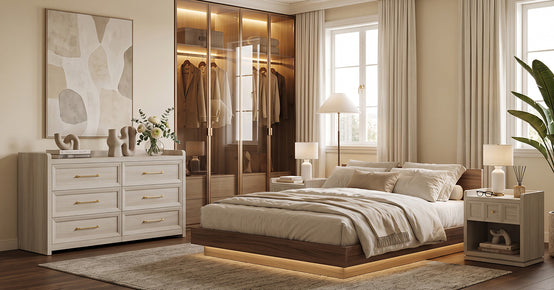
Glass doors are the compromise the internet keeps falling in love with. Your styling still shows — those clothbound sets, the art books with covers that are basically décor — and the dust problem collapses. Looks like open shelves. Maintains like closed ones. The catch is blunt: glass shows everything, mess included. A jumbled shelf behind glass reads worse than behind a solid door, because now the mess is in a frame.

Glass doors: the display stays visible, the dust stays out. Best for collections worth looking at.
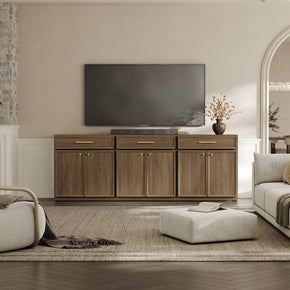
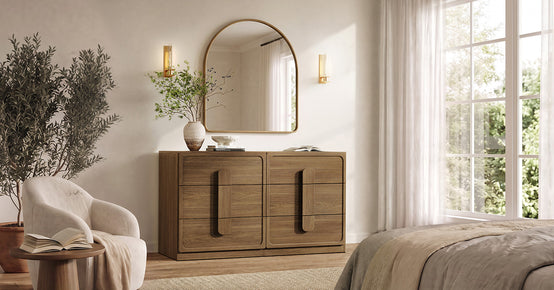
Solid doors are for hiding, full stop. Paperwork stacks. The charging-cable tangle. Board games with the dented boxes. Kids' craft supplies. Behind solid fronts, all of it becomes one calm piece of furniture. Solid doors also block the UV that bleaches book spines and prints, keep curious hands and paws off the contents, and make a rental look presentable in the seconds before the landlord knocks.

Solid doors turn paperwork, cables, and toy overflow into one calm furniture front.
The Hybrid: Display Up Top, Hidden Below
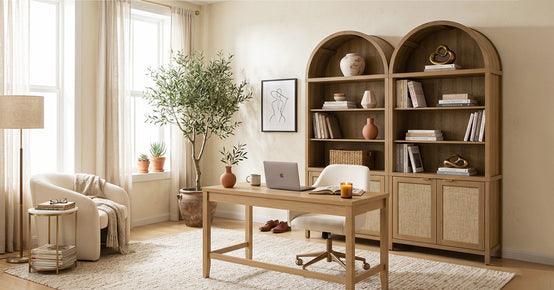
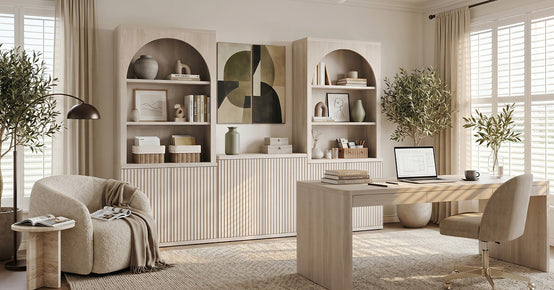
Steal this layout: open or glass-fronted shelves at eye level for the books and objects you actually love, solid doors across the bottom half for everything else. It mirrors how real households work — the beautiful twenty percent of your collection gets the stage, the functional eighty percent gets the closet.
It also kills the worst complaint about each pure option. Yes, dust still lands on the open top shelves — but now it's two or three shelves to wipe, not six. Only the bottom doors swing, and they open into floor space your feet already use. One caveat: shop for cases designed this way from the start. Retrofitting a split layout is a project you won't finish.

The winning layout in real homes: display up top where eyes land, doors below where mess lives.
Door Swing and Small Rooms
A hinged door sweeps an arc roughly as wide as the door itself. Take a 30-inch-wide case with two doors — each door wants about 15 inches of clear floor in front of the case to open fully. In a tight bedroom or a hallway nook, that arc eats beds, desks, radiators, and eventually your shins.
Tape measure, thirty seconds: stretch it from the front edge outward one door-width and see what lives in that arc. If the answer is “my desk,” buy open shelves — or hunt down sliding doors, which need zero swing space. One more thing people forget: doors steal a little usable depth. On a 28 cm-deep case, a deep box file can stick out just enough that the doors won't close. Measure your bulkiest item against the interior depth with doors in mind, not just the shelf depth.

Each hinged door needs its own width of clear floor in front of the case. Measure the arc, not just the case.
Home Office: The Work Boundary
Doors win on psychology too, not just storage. If your office is really a corner of the living room or bedroom, closed doors let you clock out. The paperwork, the label printer, the charger tangle — behind solid doors, they stop existing at 6 p.m. Behind open shelves they hover in your peripheral vision all evening, quietly insisting you're still at work.
The setup that works: daily reference books on open or glazed shelves at arm's reach, supplies behind solid doors below. During working hours the open shelves keep tools handy. After hours, the closed lower half lets the room feel like home again.

Doors draw the line between work and home: supplies disappear at 6 p.m., the room feels like a living room again.
Kids, Pets, and Renters
Small children convert open shelves into a distribution system — books migrate to the floor, then to the mouth, then under the sofa. Solid doors with a simple catch keep the collection intact and stop little climbers from scaling the thing. And either way: anchor a tall bookcase to the wall. The climbing risk doesn't care about doors. Pets are the lighter version — a cat napping on the third shelf will restyle everything it sleeps on.

Closed doors plus a wall anchor: the kid-and-pet-proof combination for tall bookcases.
Renters play a different game. Most tenancy agreements tolerate small wall fixings and side-eye heavy anchoring — read yours before you fall for the 84-inch arched case, because a tall bookcase without its anti-tip kit is a risk you can't hand off to the landlord. Also walk your delivery route before you buy: doors make a case bulkier and less forgiving around tight stair corners. Move a lot? A doored case that disassembles cleanly beats a beautiful one that doesn't.
Ventilation: The Electronics Exception
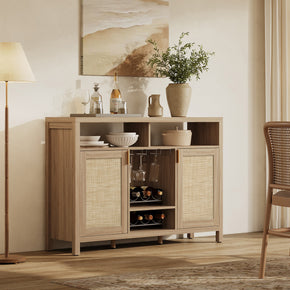
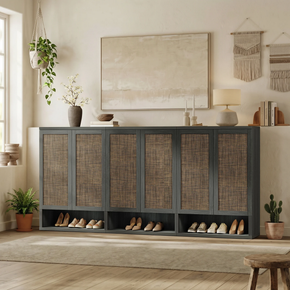
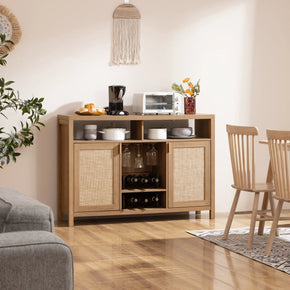
One category of contents flips the whole decision: anything that makes heat. Routers, game consoles, amplifiers, chargers — they need airflow, and solid doors trap heat. If your bookcase doubles as a media console, keep those shelves open, pick glass or cane fronts that breathe, or confirm the doored section has ventilation cutouts at the back. The home-theater rule of thumb: if the device has a fan, it doesn't live behind a solid door. Cane and rattan fronts — like the woven doors on the SICOTAS arched models — hide the boxes while air keeps moving. Decide this one first: every heat-generating device goes on the open-or-breathing list, because the wrong door choice can genuinely damage what's inside.
Cost, Hardware, and Adding Doors Later
Doors cost more, and the reasons are honest — extra panels, hinges, handles, and the labor of hanging them straight. A doored bookcase runs noticeably more than the same carcass open; the hardware alone (soft-close hinges, magnetic catches, pulls) adds up fast. Worth it when doors solve dust, hiding, or kid problems. Wasted when they just decorate a shelf of books you grab daily.
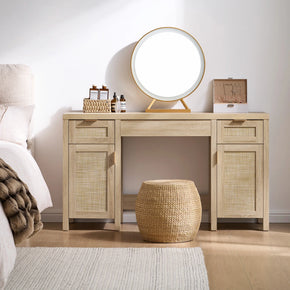
Check the hardware before you hand over money — that's where cheap doored cases die. Hinges should feel solid and sit flush. Doors should close without the push-and-hope. Magnetic catches should hold against a gentle tug. Rattan-front doors, like the SICOTAS arched models, add one more check: the weave should be tight and even, because a loose cane panel rattles every time the door moves.

The hardware tells the truth: solid hinges, flush fit, and catches that hold. Check before you buy.
Can you add doors later? Sometimes. If the manufacturer sells matching door kits for your exact model, it's a clean upgrade — start open while the budget's tight, add doors when the dust wins. No factory kit means measuring, hinge mortises, and alignment by hand. Buy the doors with the case unless you actually enjoy that kind of weekend.
Doors vs Open: The Side-by-Side
|
Factor
|
Bookcase with doors
|
Open shelves
|
|
Dust and cleaning
|
Low: wipe door fronts; interiors stay clean for months
|
High: every object must be moved, wiped, and replaced
|
|
Access speed
|
Slower: open door, then reach
|
Instant: grab with one hand
|
|
Visual calm
|
High: clutter disappears behind fronts
|
Low: everything is on display, styled or not
|
|
Best contents
|
Paperwork, cables, games, toys, supplies
|
Daily books, plants, framed photos, decor
|
|
Kids and pets
|
Safer: contents protected, climbing discouraged
|
Exposed: books migrate, shelves become ladders
|
|
Cost
|
Higher: panels, hinges, handles, hardware
|
Lower: fewer parts, simpler build
|
|
Small rooms
|
Needs door-swing clearance in front
|
Needs none — better for tight arcs
|

Two honest answers side by side: doors for what you store, open for what you show.
Which SICOTAS Models Fit Which Answer
FAQs
Q. Is a bookcase with doors better than open shelves?
Depends on your contents. Doors win for dust control, hiding clutter, kids, and home-office boundaries. Open shelves win for daily access, display, tight rooms with no swing space, and lower cost. Most homes land happiest with the hybrid: open or glass up top, solid doors below.
Q. Do bookcases with doors collect less dust than open shelves?
Yes — dramatically. Doors cut dust exposure to a fraction of the open-shelf situation, though they don't eliminate it; dust still works in around the edges. Open shelves mean pulling every object off, wiping it and the shelf, and putting everything back. Behind doors, interiors stay clean for months.
Q. Should I get glass doors or solid doors on a bookcase?
Glass when you want the collection visible with less dust. Solid when you want to hide the contents — paperwork, cables, toys, supplies — or block UV and little hands. Remember: glass frames your mess, so only pick it for shelves you'll actually keep tidy.
Q. Are open shelves or bookcases with doors better for a small room?
Open shelves, usually. Hinged doors sweep an arc roughly as wide as the door itself, and tight rooms can't spare it. If you need doors in a small room, look at sliding doors, or a hybrid with doors only on the lower half — the swing zone overlaps floor space your feet already use.
Q. Which is better for a home office: a bookcase with doors or open shelves?
Doors, for most people. Closed doors let you end the workday — the paperwork and chargers disappear at 6 p.m. instead of hovering in your peripheral vision all evening. Keep daily reference books on open or glazed shelves at arm's reach, supplies behind solid doors below.
Q. How much clearance do you need in front of a bookcase with doors?
Roughly one door's width of clear floor per hinged door — on a 30-inch case with two doors, about 15 inches per door. Run a tape measure through the arc before you buy, and check for beds, desks, and radiators. Arc blocked? Choose open shelves or sliding doors.
Q. Is a bookcase with doors worth the extra cost over open shelves?
Usually: you're paying for extra panels, hinges, handles, and the labor of hanging them straight. The premium pays off when doors solve dust, clutter-hiding, or kid problems. It's wasted on a shelf of daily-use books, where doors only add friction. And check the hinge and catch quality before you pay — that's where cheap doored cases fail.
Q. Can you add doors to an open bookcase later, or should you buy one with doors?
Only if the manufacturer sells a matching door kit for your exact model — then it's a clean upgrade path: start open, add doors when the dust wins. Without a factory kit, you're into measuring, hinge mortises, and hand alignment. Unless that sounds like fun, buy the doors with the case.