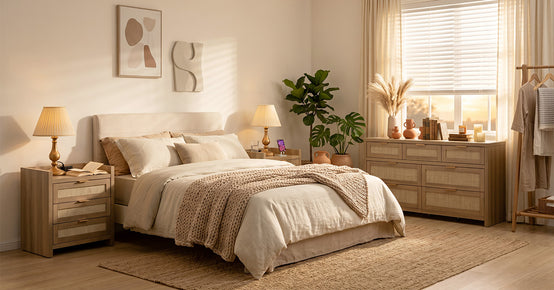
Google "nightstand drawers vs. open shelf" and prepare for a fight. Team Drawer treats a visible clutter pile like a character flaw. Team Shelf treats drawers like graveyards where things go to die. Both are right — they're just answering different questions.
Forget "which is better." The question that actually matters is simpler: what do your hands do at 2 a.m. in the dark? Reach for glasses and a novel without sitting up? That's a shelf job. Hiding medication, a charger nest, and the remote from a curious toddler? Drawers. This guide refuses to take sides — it matches the layout to your habits, including the hybrid setup where most people land once they're honest with themselves.
Audit Your Bedside First
Before shopping, write down everything that actually lives beside your bed — not the Pinterest fantasy, the real nightly lineup: glasses, phone, water, book, remote, medication, hand cream, charger. Then force each item into one of three buckets: grab-in-the-dark, must-stay-hidden, or doesn't-matter.
The dark-grab bucket belongs on an open shelf or the tabletop — one hand, no hunting for a pull in the dark. The hidden bucket — medication, personal stuff, tangled cables — belongs behind a drawer front. The third bucket can go anywhere. Almost everyone's audit comes out mixed. That's not indecision; it's exactly why hybrids exist. One warning: be ruthless with the hidden bucket. If you'd blush when a guest sees it, or a kid shouldn't touch it, it goes in a drawer.
|
The 3-minute bedside audit
List every bedside item. Mark each: DARK (grab without looking), HIDDEN (out of sight), or EITHER. If DARK wins, lean shelf. If HIDDEN wins, lean drawers. If it's close, you want the hybrid.
|
The Case for Drawers
Here's what drawers do that no open shelf ever will. First, they make clutter vanish — the surface stays calm no matter how chaotic the drawer gets. Second, they keep dust off everything, and dust matters more at the bedside than most people realize. Third, private items finally get a home: medication, personal electronics, anything you don't want a guest or a kid stumbling across.
Drawers also win when the nightstand doubles as a charging station. Power bricks, adapters, and cable nests disappear behind a drawer front instead of hanging across a shelf like laundry. A unit with built-in charging plus drawers — the
Savanna Nightstand with Charger packs a Type-C, USB, and outlet — makes the entire electrical situation disappear. And the multiplier: a $10 organizer tray turns a single drawer into four or five compartments, so small items stop migrating and it stays as tidy as the day you set it up.

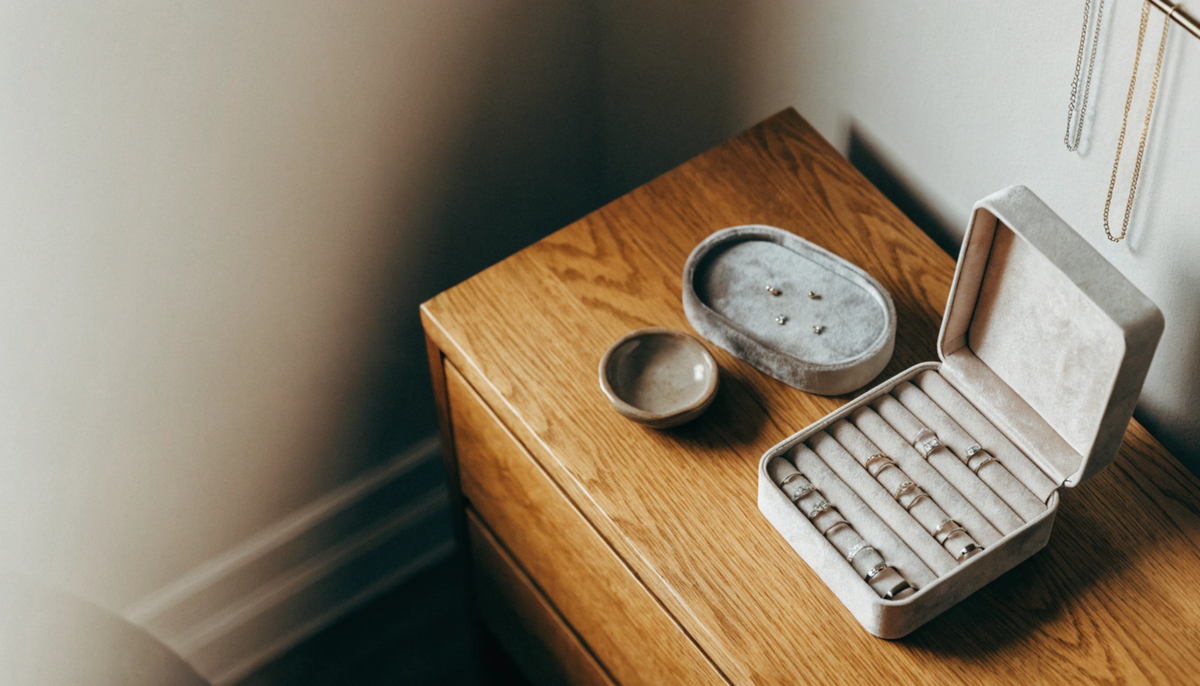
Closed drawers, calm top: the visual-order argument in one photo.

Medication, remotes, cable nests — drawers give private items a home.
The Case for Open Shelves
Shelves win the access battle, and it isn't close. No pull to find. No drawer to slide. No second hand required. You reach, you grab, done. Half-asleep at 2 a.m., that half-second difference feels like a mile. Books, glasses, water — they all sit there visible, one motion away.
They change the whole feel of the room, too. Park an open-shelf nightstand next to a drawer box of the same size in a small bedroom and the shelf reads lighter — your eye travels through it instead of slamming into a front panel. Bonus: nothing swings out toward the bed or your shins, so no clearance to plan around. Designers call this visual weight, and at the bedside — the thing you see last at night and first in the morning — it punches above its weight.

One hand, no fumbling: the shelf's case, made at 2 a.m.

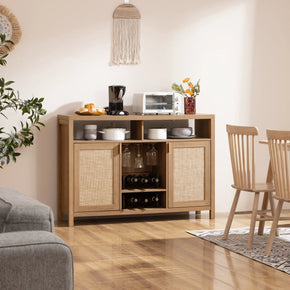
Open shelves keep small bedrooms feeling open — the eye travels through.

Books live happily on a shelf: visible, reachable, one motion away.
The Honest Downsides
What drawers cost you
Nothing's free. Drawers demand opening clearance — figure 10 to 14 inches of runway past the front edge — and in a tight bedside gap that can mean clunking the bed frame every morning. Deep drawers also turn into archaeology digs: items sink, migrate, and vanish into the strata. And let's be honest — opening a drawer by feel in the dark is slower than grabbing off a shelf, every single time.
What shelves cost you
Shelves have their own price tag. Dust, for starters — it lands on the books, the shelf surface, the items themselves, which means a regular wipe-down if you're at all sensitive to it. Then there's the clutter problem: a shelf looks great exactly as long as you maintain it, and "maintain it" is a chore most of us quietly abandon by month three. And privacy? Zero. Everything on a shelf is on display, full stop.

The shelf's tax: dust, and it always comes due.
Cables Change the Math
Charging is the number-one job of the modern nightstand, and it punishes both layouts — just differently. Drawers swallow the cable mess whole, but they slow you down: every night you're opening a drawer to plug in, and wireless chargers don't work through wood anyway. Shelves keep the phone within reach but put the cable spaghetti on full display — unless the unit has a real cable gap or rear cutout. That one detail is the line between a nightstand designed for modern life and one designed before it.
Charging two or more devices at the bed? This section counts double. Built-in charging ports sidestep the whole argument: the
Prelude Nightstand with Charger Station puts an AC outlet and a USB port at the back of a two-drawer unit, so cables stay short — whether you live out of the drawers or the top surface.

Two phones, one watch, zero cable plan: this is where layouts get tested.
The Hybrid: Why Not Both
Know what the shouting match misses? The answer most people actually pick: both. A drawer plus an open shelf matches the mixed audit most of us genuinely have — the private stuff disappears into the drawer, the daily stuff lives on the shelf. You keep the 2 a.m. reach and the calm surface. Most charts score hybrids dead center on every axis, which honestly undersells them. A hybrid isn't a compromise. It's assigning each job to the layout that does it best.
The
Terra White Nightstand follows this formula: two drawers plus an open shelf at about 25.6 inches high. Chargers and personal items vanish into the drawers; the book and the glasses live on the shelf. If your audit came out anywhere close, stop agonizing and buy the hybrid.

Drawer for the private stuff, shelf for the daily stuff — the crowd favorite.
Match the Layout to the Room
Different rooms, different answers. In the primary bedroom — the place holding your most personal stuff: medication, journals, chargers — drawers usually win on privacy alone. In a guest room, one drawer is the sweet spot: enough privacy for a wallet and keys, without buying storage a guest will never fill.
Kids' rooms vote drawer, too — different reason, same answer. Small objects vanish into little hands, and a closed drawer is the only defense that actually works. And if kids or pets share the space, put anti-tip hardware on the shopping list no matter which layout you pick. It's the single most overlooked bedside safety item there is.
The natural shelf people? Readers, and the ruthlessly organized. A small bedside library on an open shelf is genuinely pleasant to use every single night. And in a tight bedroom, shelves keep the room feeling airy where a drawer box would land with a visual thud. Match the layout to whoever sleeps there — not to the catalog photo.
|
A quick terminology note
in US English, “nightstand” usually implies drawers, while “bedside table” is the broader term covering both layouts. Shopping UK or international stores? Search both terms — the same piece of furniture might be listed either way.
|
The Decision Table
|
You care about…
|
Pick drawers
|
Pick open shelf
|
|
Grabbing things in the dark
|
|
✓
|
|
Hiding clutter
|
✓
|
|
|
Dust control
|
✓
|
|
|
Small-room airiness
|
|
✓
|
|
Charging-cable hiding
|
✓
|
|
|
No drawer clearance needed
|
|
✓
|
|
Privacy (meds, personal items)
|
✓
|
|
|
Displaying books and decor
|
|
✓
|
|
Mixed needs
|
Consider the hybrid
|
Consider the hybrid
|
Care and Longevity
Both layouts last — they just age differently. Open shelves demand regular dusting, the surface and everything on it, plus coasters under every single glass, because there's no drawer front hiding the water rings. Drawers ask for a yearly glide check: a drawer that sticks or sags is usually a loose screw or a worn glide, and both are cheap fixes if you catch them early.
Solid wood earns its reputation at the bedside. Pulls get yanked daily. Water rings happen. Books pile up. A well-built piece develops a patina; a cheap one develops a wobble. Whichever layout you choose, buy the best-built version your budget allows — this is high-touch furniture.
Try This Before You Buy
-
Run the 3-minute audit: tag every bedside item DARK, HIDDEN, or EITHER.
-
Spend three nights with your DARK items on your current nightstand's top or shelf. Pay attention to what you reach for.
-
Already own drawers? Track which ones you open daily — and which sit untouched for a month.
-
Measure your clearance: open your current drawers all the way and check what they'd hit in the new spot.
-
Audit came out split? Shortlist hybrids before committing to a pure layout.
What Drawers Cost (Beyond Clearance)
Drawers cost money, not just clearance: every drawer means hardware — glides, pulls, a drawer box — and that shows up in the price tag. A three-drawer nightstand typically runs more than an open-shelf unit the same size, and cheap glides are the first thing to die on budget furniture. Same price, but one has drawers? Ask where the savings came from — thin drawer bottoms and wobbly glides will irritate you for years.
Open-shelf units are the simple machine of the nightstand world: fewer moving parts, nothing to break, lighter to carry. That's a real advantage in a kid's room or a rental where furniture gets dragged across floors. The tradeoff you already know — nowhere to hide anything.
The Five-Year Test
Now fast-forward five years. Drawer interiors collect their own species of clutter — yes, the junk drawer migrates here too — but the outside always looks tidy. Shelves start out gorgeous and drift toward chaos unless you're genuinely the maintaining type. Be honest about which person you actually are, not the one you aspire to be on furniture-shopping day.
Kids and pets vote drawer, every time: small objects vanish into little hands and mouths, and a closed drawer is the only real defense. Hot sleepers and heavy readers vote shelf: nothing standing between them and the water glass. And when the nightstand is mostly decorative in a guest room, a single drawer plus an open top — like the
Helio 1-Drawer Nightstand Set of 2 — covers guests' needs without paying for storage nobody will use.
Compare by Layout
|
Nightstand
|
Layout
|
Height
|
Charging
|
|
|
3 drawers
|
26.6 in
|
—
|
|
|
3 drawers
|
26.57 in
|
Type-C + USB + outlet
|
|
|
2 drawers
|
25.3 in
|
AC outlet + USB
|
|
Terra White Nightstand
|
2 drawers + open shelf
|
25.6 in
|
—
|
|
|
1 drawer + open top
|
25 in
|
—
|

Two layouts, one bed — plenty of couples split the difference.
Frequently Asked Questions
Is a nightstand with drawers better than one with an open shelf?
Honestly? Neither — it comes down to your habits. Drawers win at hiding clutter and private items; open shelves win at one-handed access in the dark. Run the bedside audit in this guide and let your stuff make the call.
Do open shelf nightstands collect more dust?
Yes — noticeably so. Everything on an open shelf gathers dust and wants regular wiping. Inside a drawer, contents stay essentially dust-free. If dust bothers you, that alone is a strong vote for drawers.
Which is better for a small bedroom: drawers or open shelves?
Usually open shelves. They read lighter, they make cramped rooms feel airier, and there's no drawer clearance to plan around. Just be honest with yourself about whether you'll actually maintain that visible shelf.
Can I mix a nightstand with drawers on one side and an open-shelf one on the other?
Absolutely. Plenty of couples run exactly this setup. No rule says both sides have to match, and it's the perfect compromise when one of you is a drawer person and the other isn't.
How tall should a nightstand with drawers be?
Close to your mattress top — typically 24 to 28 inches, whatever the layout. The storage configuration doesn't change the height rule one bit.
What should I store in nightstand drawers vs. on an open shelf?
Drawers get the medication, chargers and cables, remotes, personal items — anything you want hidden or dust-free. The open shelf gets tonight's book, your glasses, water — the things you grab in the dark.
Do open shelf nightstands look messy?
Only when they get abandoned. A curated shelf with a few books reads intentional and calm. A shelf that's become a drop zone looks messy — but then, so does a cluttered tabletop on any layout.
Which nightstand layout is best for charging phones and cable management?
Drawers with a cable gap — or better still, a nightstand with charging ports built in. Drawers hide the whole mess; open shelves need a rear cutout or proper cable management so the spaghetti never goes on display.