



What Is Veneer Wood? A Simple Guide for Furniture Buyers
I'm going to start with something that's genuinely useful before getting into definitions. Some of the oldest and most valuable furniture ever made was veneered. King Tut's tomb — opened in 1922, furniture buried around 1323 BC — contained pieces with thin, precious-wood surfaces applied over a cheaper timber base. That's what is veneer wood, in ancient Egypt, four thousand years before the word 'cheap' got attached to it.
The cheap association came much later. Specifically, it came from the plastics era — from printed foil and paper laminate being sold under the same word. Laminate isn't veneer. Veneer is real wood. But the confusion stuck, and now 'veneer' sounds to many people like a warning rather than a description.
This guide clears that up. What veneer actually is, how it's made, how it sits alongside or against solid wood, laminate, MDF, and plywood, and — the part I think matters most — how to tell a well-made veneered piece from a poorly made one.
What Is Veneer Wood?

Veneer is thin slices of natural wood — usually around 1/40 of an inch, not much thicker than a piece of card stock — glued to a core board. The top face is genuine wood. Same grain, same texture, same response to stain and finish as any lumber board. The difference from solid wood is the thickness of the wood layer and what it's sitting on, not the material itself.
The core underneath is almost always an engineered board — plywood, MDF, or particle board. These boards provide structural stability. The veneer provides the appearance. That pairing is by design, not compromise.
No — It's Not Fake Wood

The number of times I've heard this. 'Oh, it's just veneer,' said, like you've discovered the piece is secretly made of cardboard. Veneer is real wood. Actual slices from actual trees. The grain in a veneered surface comes from the same log as solid boards, just cut thinner.
What isn't real wood: laminate. Laminate is a printed plastic or paper surface made to look like wood. Some laminates are called veneer in showrooms, which is wrong and annoying, and where the confusion originates. If you're looking at a piece and wondering whether it's real wood veneer or printed laminate, look closely at the grain. Real veneer varies naturally — no two sections look the same. Laminate repeats, because it's a photograph applied in a loop.
How Wood Veneer Is Made

The Part That Surprises People
Only the top 1 to 2% of harvested logs go to veneer production — the ones with the best grain and fewest defects. Before slicing, those logs are submerged in hot water for days, sometimes weeks. The soaking softens the wood fibers so the blade can pass through cleanly. A dry hardwood log sliced cold would crack and tear. Pre-soaked, it yields thin, continuous leaves without damage.
Then the cutting happens — not with a saw, but with a knife blade. No kerf. Kerf is the material the saw blade removes as it cuts through the log; it is wasted wood. A veneer blade doesn't have that waste. The math: a log sliced at 1/40 inch produces roughly 40 times more decorative wood surface than the same log cut into standard lumber boards. That's not an approximation. That's actual arithmetic — and it's why veneer exists, it's more wood for the same log.
The Cut Determines the Look
Flat cut (plain sawn) slices lengthwise down through the log, producing the wide cathedral-arch grain most people recognize as classic wood grain. A quarter cut runs at right angles to the growth rings, giving tighter, straighter lines. Rift cut produces the most uniform stripe — popular in contemporary furniture. Rotary cut peels the log like a paper roll, mostly for plywood sheets rather than furniture faces, because the grain it produces doesn't look deliberate.
These patterns aren't chosen later by a designer. They're the direct result of the blade angle as it passes through the log. Change the angle, change the entire character of the surface.
Bonded to the Core

After slicing and drying, veneer leaves are trimmed, joined edge-to-edge into larger sheets, and pressed to the core board under heat and adhesive. The quality of that bond is what separates a veneer surface that lasts 30 years from one that starts lifting at a corner in 3. Specifically: the moisture content of both materials at the time of pressing, the quality and coverage of the adhesive, and whether the core surface was properly flat and clean before bonding.
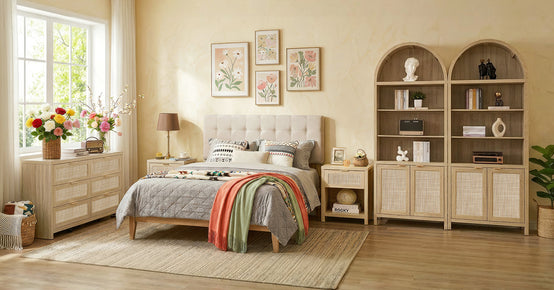
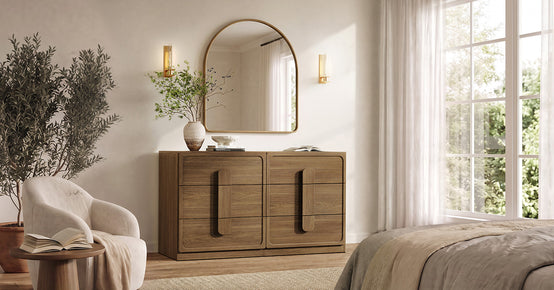
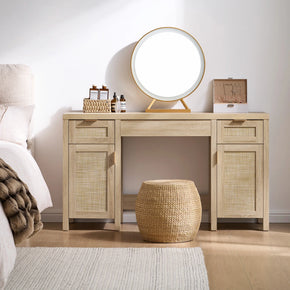
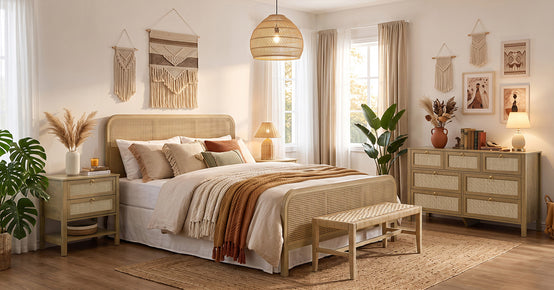
A well-constructed piece like the Savanna 6-Drawer Wood Dresser shows in the finished result what that kind of construction produces: drawers that run true, surfaces that don't shift under daily use, a piece that holds together over years rather than seasons.
Veneer Wood vs Solid Wood

The Humidity Problem Nobody Warns You About
Wood is hygroscopic. It takes on moisture when humidity rises and releases it when the air dries. The result: solid wood expands and contracts. Every year. In every climate that isn't temperature and humidity-controlled year-round, so everywhere most people live.
Good furniture design accounts for wood movement. Floating panels, specific joinery, and gaps are built intentionally into the construction. When well designed, a solid wood piece lasts a century. When it isn't — boards split, drawers stick in August, panels cup and gap at the joins. I've seen it in pieces that weren't cheap. The problem isn't solid wood. It's solid wood used in places where movement is the enemy.
Why Veneered Panels Hold Tighter
Thin veneer bonded to a plywood or MDF core sits still in ways solid boards don't. The core doesn't react to humidity the way solid timber does, and the veneer is held flat by the bond rather than free to move. Net effect: dimensionally more stable across seasonal changes.
This is why kitchen cabinet doors, drawer fronts, and any precision-tolerance panel work is almost always veneered. A solid wood drawer front can swell enough during a wet summer to stop closing properly. A veneered panel over a stable core won't do that — or won't do it nearly as much.
Which Is Actually Better?
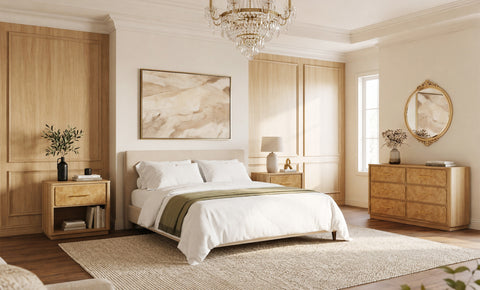
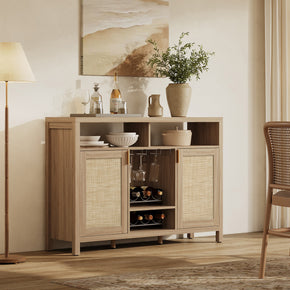
For pieces you plan to strip and refinish down to bare wood repeatedly, solid wood has more material to work with. For flat panels, drawer fronts, built-ins, and furniture where staying dimensionally consistent under variable conditions matters more than the potential for deep sanding: veneered construction performs better in practice. The Terra 6-Drawer Horizontal Dresser is a piece where construction quality — not the material label — determines how well it holds up.
Neither is universally better. That's the honest answer, and I'd be skeptical of any guide that tells you differently.
Veneer vs Laminate, MDF, and Plywood
Veneer vs Laminate

Different materials. Not the same category at all.
Veneer is wood — a physical slice from a tree. Laminate is plastic, paper, or foil printed with a wood-grain image. They both get applied to board surfaces. They look similar from across a room. In a photograph, almost indistinguishable. Up close, laminate repeats — you'll see the same grain motif tiling across the surface because it's a photograph in a loop. Real wood veneer doesn't repeat because it comes from a tree that grew in one specific direction, with its own unique growth rings.
Laminate handles scratches and moisture better than most veneers. That's a genuine advantage. What laminate can't do: take stain, age naturally, or be lightly refinished. Those are trade-offs, not a fraud.
Veneer vs MDF
Not the same thing, and not a choice between them.
MDF — medium-density fiberboard — is a core board. Compressed wood fiber and resin are pressed flat. Very consistent surface, doesn't warp the way plywood occasionally does, and machines cleanly. Veneer is what goes on top of MDF as the decorative face. A piece of furniture described as 'MDF with real wood veneer' has an engineered base for structure and a genuine wood surface for appearance. Both are present, doing different jobs.
Veneer vs Plywood
Plywood is actually built from veneer — multiple thin wood layers cross-bonded for strength. So calling something 'plywood versus veneer' is a bit odd, technically. What people usually mean is: plywood core (structural) vs. decorative veneer face (surface appearance). Both can be present in the same piece, and often are.
Particle Board
Wood chips, sawdust, and adhesive are compressed into panels. Lowest-cost core option. Works reasonably well when edges are sealed, and the veneer bond is solid. Fails at unprotected edges when moisture or impact gets in — soft, porous material; damage spreads once it starts. This is the combination behind most 'cheap veneer furniture' stories: thin veneer over particle board with unsealed edges. The veneer gets blamed. The construction is the problem.
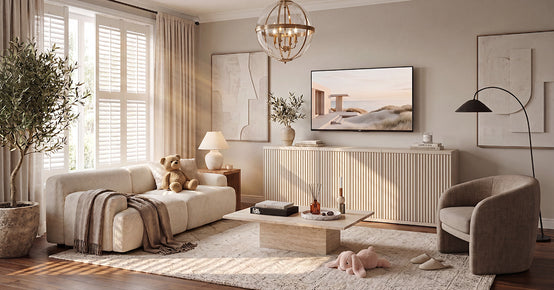
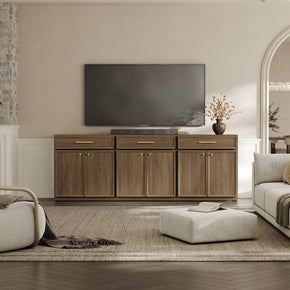
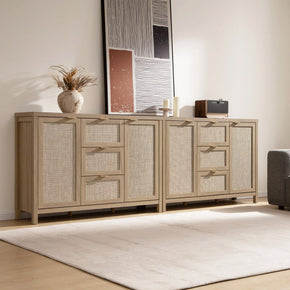
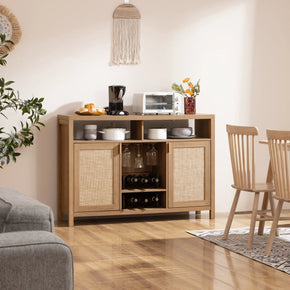
A sideboard like the Stria Sideboard with 2 Doors is a reference point for what quality wood furniture construction looks like at the furniture level — sealed edges, solid finish, the kind of surface that holds up to everyday living room use over the years.
The Four Types of Wood Veneer

Raw Veneer
No backing. Straight off the slicer. Used by woodworkers who apply and join it themselves. Both sides of the leaf are usable, though they look slightly different once finished because of how the blade opened the wood cells.
Paper-Backed Veneer
Individual veneer pieces are joined and backed with paper to form large, stable sheets. The paper backing makes it available in large sizes and is less likely to crack when applied to curved surfaces. Standard in architectural paneling and production cabinetry.
Wood-on-Wood (2-Ply) Veneer
Decorative veneer face bonded to a utility-grade wood backer layer. More stable in handling, better production performance. Common in quality furniture. The backer improves how the face layer behaves — it's not just a support structure, it actively reduces movement in the face.
Reconstituted or Engineered Veneer

Real wood fiber — fast-growing, sustainably sourced timber — dyed, laminated, compressed, and sliced to produce specific grain patterns. Some replicate exotic or rare species that'd be environmentally or financially impractical as a natural veneer. Still wood throughout. Not synthetic. Just heavily processed.
Why Veneer Wood Actually Makes Sense

The resource argument is old, as old as Egyptian woodworking. One log at 1/40-inch slices produces 40 times more decorative surface than the same log sawn into boards. That math doesn't change. It's why veneer existed in 1323 BC and why it exists now.
The stability argument is the modern one. In real homes with heating systems, seasonal humidity swings, coastal air — veneer over a stable core holds its shape better than solid wood in most furniture applications. Cabinets, drawer fronts, built-ins, anything that needs to stay flat and true over years of use.
The access argument matters for buyers of good furniture. Brazilian rosewood. Highly figured walnut burl. Quarter-sawn white oak with exceptional ray fleck. These species exist, they're beautiful, and some are ecologically limited or genuinely expensive in volume. As natural veneer, they're accessible in furniture. As solid wood rooms and suites, they'd be extraordinarily costly. There are exotic veneer sheets — from particularly rare sourced timber — that sell individually for thousands of dollars. The solid-wood version of a room paneled in that material simply wouldn't be built.
The design argument: bookmatching — opening two sequential veneer leaves from the same log like a book to mirror the grain — is only achievable with veneer. You'll never find solid wood planks with perfectly mirrored grain. Marquetry inlays, parquetry floor patterns, matched panel runs — all of these are veneer techniques without a solid-wood equivalent.
The Real Limitations — Honestly
Refinishing Has a Ceiling
Sand a solid wood table down to bare material, and you've exposed a full board's thickness of fresh wood. Sand veneer that aggressively, and you cut through the face layer into the core underneath. The face is thin — around 1/40 inch in most modern furniture — and that leaves little room for hard sanding.
You can refinish veneer. Strip the old finish, use fine grit, and recoat. Just not as many times or as deeply as solid wood. If you specifically want a piece you'll sand back and refinish yourself every ten years, solid wood gives you more runway.
Edges Are the Tell

I've said this before, and I'll say it again: the face panel of a well-made veneered piece is not where failures start. It's always the edges and corners. Moisture is working under a poorly bonded edge. Impact chipping the thin face at a corner. Once the veneer starts lifting at an edge, it tends to keep going — the glue line continues to fail outward.
This is nearly always a construction problem, not a material problem. Proper edge sealing, high-quality adhesive, and good core materials: these prevent it from happening. Budget furniture with particle board cores and unsealed edges is where it starts. The veneer takes the blame for choices made before it ever got applied.
Moisture and Heat Are Less Forgiving
Same basic care rules as solid wood, but less margin for error. A wet glass on sealed solid oak for a few hours leaves a ring you can often buff out. The same glass on veneer can do the same — or worse, if moisture gets under the finish through a scratch or an unsealed edge, causing the face to bubble or lift. Heat from vents pointed directly at cabinet fronts, steam from a humidifier, anything that creates sustained heat or moisture contact: these are harder on veneer than on solid wood and harder to repair when the damage happens.
How to Actually Tell Good Veneer From Bad

Run your fingers along the edges before you look at anything else. Quality veneer should be smooth, sealed, and continuous all the way around — face to edge, edge to back, all corners clean. Any lifting, rough seam, or visible gap between the face layer and the core constitutes a construction failure that worsens over time.
Look at the grain across the whole surface. Natural variation means every section should look slightly different from every other section. If the pattern tiles — the same grain image repeating at regular intervals — that's laminate. The repetition is the tell, and it's visible without any tools.
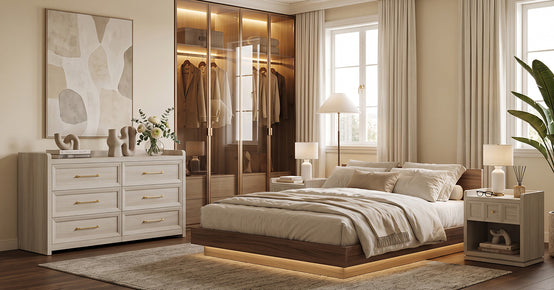
Ask about the core. Plywood and furniture-grade MDF are the quality markers. Low-grade particle board is the budget marker. This question matters because the core is roughly half of what determines how long the piece holds up. The Savanna 7-Drawer Tall Dresser and the broader Sicotas wood furniture range are worth considering as practical reference points for what quality wood construction delivers — where the core, the bond, the edge treatment, and the finish all do their jobs.
Check the finish last. Evenness across the whole surface, especially at edges. Rough patches, thin spots, and visible brush marks at corners mean the finishing was rushed. An inadequately finished edge is effectively an unsealed edge. Moisture finds those spots first.
FAQs
What are the disadvantages of wood veneer?
Three real ones. First, refinishing has a ceiling — the face is thin, and you can't sand as aggressively or as many times as with solid wood. Second, edges and corners are vulnerable: moisture beneath a poorly bonded edge or an impact at a corner initiates a failure that tends to spread. Third, standing moisture and direct heat are harder on veneer surfaces than on solid wood, and the damage is harder to reverse. All three are mostly construction-quality problems rather than material problems — well-made veneer furniture handles all three significantly better than the category's reputation suggests.
Are veneer and MDF the same?
No. MDF is a core board — compressed wood fiber, used as a structural base. Veneer is a thin layer of real wood applied on top. One is the inside of the piece, one is the face. A single piece of furniture can have MDF inside and real wood veneer on the outside at the same time. That's a common and reasonable combination in quality furniture.
Is veneer expensive wood?
Entirely depends on the species. Standard oak or maple veneer in production furniture — not particularly. Highly figured walnut, rare burl cuts, quarter-sawn species with exceptional grain — genuinely expensive. Some specialty sheets from particularly rare sourced timber sell for several thousand dollars each. 'Veneer' isn't a price category. It's a production method. The tree species and grade underneath set the cost.
What's the difference between laminate and veneer wood?
One is wood, one isn't. Veneer is sliced from a real log — actual wood fiber, real grain. Laminate is printed plastic or foil made to look like wood grain but containing none. Laminate is more resistant to scratches and stains in daily use. Veneer has real texture, natural variation, and can be lightly refinished. The confusion between them persisted for decades because cheap laminate was sold under the word 'veneer.' That's a labeling problem, not a material equivalence.
What are the 4 types of veneers?
Raw veneer: no backing; used directly by skilled woodworkers. Paper-backed veneer: joined into large sheets with paper backing for stability and curved-surface application. Wood-on-wood or 2-ply veneer: decorative face bonded to a wood backer layer for improved stability in production. Reconstituted or engineered veneer: real wood fiber processed to produce specific, consistent grain patterns, often replicating rare or expensive species.
Is plywood better than veneer?
They're not alternatives — different materials doing different jobs. Plywood is a structural panel built from veneer layers cross-bonded for strength. Decorative veneer is a surface finish. Plywood can be the core on which decorative veneer is applied. 'Better' only has meaning if you specify the function you're asking about.
Is plywood a veneer?
Technically, yes — plywood is constructed from thin wood layers, which are veneer sheets. But in everyday furniture language, 'real wood veneer' refers to the decorative surface face on the outside of the piece — not the internal cross-bonded construction underneath it. Same thin wood material, two different functions. A piece can have a plywood core and decorative veneer on the face simultaneously; both statements are accurate.
Which is better: laminate or MDF?
Not the same category of thing — MDF is a core board, laminate is a surface finish. You can have both in a single piece of furniture: MDF inside, laminate on the outside. The better question is always what the whole piece is made of and how it's constructed. Quality MDF with quality veneer is a good combination. Budget MDF with cheap laminate and unsealed edges is the combination that earns the 'cheap furniture' label. Neither material is inherently bad — the quality of execution is what matters.
Sources
- WiseWood Veneer:What Is Wood Veneer?
- Decospan,What Is Wood Veneer?
- UV Group,Wood Veneer vs Solid Wood
- McElheran's,Solid Wood vs Veneered Wood
- Architectural Digest,The Truth About Wood Veneers
- Wikipedia,Wood Veneer
- AWI QCP:What Is Wood Veneer?


Looking for something else?

Furniture Materials Guide: Picking the Right Material Room by Room
LEARN MORE
How to Mix Wood Tones Without Making a Room Look Mismatched
LEARN MORE
18 College Apartment Furniture Ideas That Save Space and Money
LEARN MORE
Types of Entertainment Centers: 11 Designs and How to Pick One
LEARN MORELooking for something else?

Curio Cabinet Decor Ideas: How to Style a Display Cabinet Without the Clutter
LEARN MORE
Curved Furniture: How to Style, Measure, and Buy It in 2026
LEARN MORE
What Is Rattan Furniture? A Buyer Guide to Types and Care
LEARN MORE


Further reading

How to Choose a Nightstand for a CPAP Machine

How to Choose a Shoe Cabinet for Men's Sizes, High-Tops, and Bulky Shoes


