




Curved Furniture: How to Style, Measure, and Buy It in 2026
Curved furniture keeps turning up in 2026 rooms. Rounded sofas. Oval tables. Arched cabinets and bow-front dressers. Almost every home is built from straight lines, and a curve is the quickest way to break that up.
You will learn what counts as a curve, which rounded pieces work in which room, and how to mix curved and square shapes so the place still looks lived in.
You also get the part most articles skip. How to measure an arc before you order, and why a bowed piece can swallow more floor than a rectangle of the same width. Design editors tracking 2026 furniture trends report curves have moved past seating into cabinetry.
What Counts as Curved Furniture
Shops use the term loosely. A curved sofa and a barely bowed console both get sold as curved furniture. In a real room, they behave nothing alike. Split them into three groups and shopping gets much simpler.
The Three Levels of Curve

A full curve shapes the whole piece. Crescent sofas belong here. Drum tables, round dining tables and half-round sectionals sit in the same group. Big shapes. They eat floor space, and you have to plan for that.
A single curve softens one element. A rounded sofa back with straight arms. An arched cabinet door on a square carcass. A demilune console. These are the easiest curves to live with.
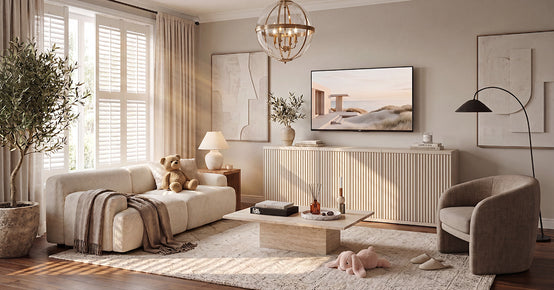
Micro-curves live on the surface: fluted panels, reeded drawer fronts, wavy grooves, softened corners. The box behind them is still a box. Your eye still reads soft.
The Words You Will See on Product Pages
Retail listings use their own vocabulary for organic shapes. Knowing it saves guesswork:
- Bow front: the face of a dresser or chest pushes out toward you.
- Demi-lune: a half-moon shape, usually a console or a side table.
- Arched: a rounded top edge. Most common on bookcases and cabinet doors.
- Barrel: a tub-shaped chair with a continuous wrapping back.
- Radiused: sharp corners rounded off into a small curve.
- Fluted or reeded: vertical grooves that leave a ribbed face with a soft curve to it.
Why Curved Furniture Is Everywhere in 2026
Curves are not new attention seekers. They solve four problems at once, which is why the trend keeps outlasting the forecasts that call it over.
Curves Break Up Rooms Full of Straight Lines

Look around any room. Walls meet at right angles. Windows are rectangles: doors, rugs, kitchen cabinets, the TV, the picture frames. Every one is a straight-edged box.
Drop one rounded shape into that grid and the whole composition relaxes. Your eye finally has somewhere soft to land. That single contrast does more work than a wall of new paint.
Soft Edges Feel Calmer to Live With
Rounded forms read as less severe than sharp corners. Designers describe curved rooms as calmer, and most people notice it without being able to name why.
The practical side matters too. Rounded edges may reduce sharp-corner impacts, which families with toddlers tend to notice first. Anyone squeezing past furniture in a narrow room feels it, too.
Shape is only part of the picture. A drum table can still be walked into, tripped over, or knocked sideways. Pedestal bases tip more readily than four legs when weight lands on one edge, so check how wide the base sits and how heavy the piece is before you buy.
Placement does the rest. Keep tables out of the direct path between a door and a seat. Leave room to walk around rather than sideways past a corner.
Curved Seating Gets People Talking
A straight sofa lines everyone up shoulder to shoulder, all facing the same direction. A curved one angles people slightly inward.
The effect is subtle, and it changes conversation. Round dining tables do the same thing by removing the head of the table, so nobody sits in the position of authority.
The Trend Has Real Market Weight
Curved pieces are no longer confined to high-end showrooms. Mainstream retailers now carry rounded sofas, arched mirrors and drum tables across a range of prices. Availability is the practical change for most shoppers.
Treat that as what it is. Wider stock makes the look easier to buy into. It says nothing about whether curves suit your room.
Curved Furniture Is Not a New Trend
Every few years, a magazine announces the return of the curve. The shape never actually left. It has been in production for nearly two centuries.
Bentwood Made Curves Affordable

An Austrian cabinetmaker called Michael Thonet cracked it in the 1850s. He used pressurized steam to bend solid beech rods. Bentwood furniture made curves cheap to build for the first time. His cafe chairs were then sold by the million across Europe and America.
Before that, every curve had to be carved by hand. Curators at the V&A point out that Thonet's steam-bending patents handed the family something close to a monopoly, with output running into millions of pieces a year.
Why Curves Keep Coming Back
Art Deco leaned on sweeping arcs. Mid-century designers built biomorphic sofas and kidney-shaped tables. The 1970s went conversation pit. Each revival looked different but solved the same three things.
Curves group people, soften hard architecture, and let a piece work as sculpture. Those needs do not expire. The styling around them changes, so the shape returns wearing new upholstery.
How Curved Furniture Changes Flow and Function
Most articles claim curved furniture saves space. That is only sometimes true, and the exceptions cost people money. Break it into three honest parts.
Rounded Edges Help in Tight Walkways

A rectangular coffee table has four corners projecting into the room. A round one of the same surface area has none. You can walk past it without turning your body.
Main walkways and the gaps between furniture are not the same measurement. A path you actually walk needs real width. The space between a sofa and a coffee table does not.
For main routes, thestandard for accessible walking surfaces sets a clear width of 36 inches. That rule governs public buildings rather than homes, though it is the firmest benchmark available for a path someone uses every day. Local building rules may also apply.
Keep tighter gaps between pieces, not across a route. Eighteen inches works between a sofa and a coffee table because that gap is for reaching, not walking. Treat it as furniture spacing, and do not narrow a main path to reach it.
Add space for anything that swings or slides. Doors, drawers, and cabinet fronts need their full travel plus room to stand. Wheelchairs and walkers need more again, including turning room of about 60 inches where the route changes direction.
Rounded edges do not buy you clearance. They soften a bump, nothing more.
Curves Can Zone an Open Plan

The back of a curved sofa works like a soft wall. Put one between the living and dining sides. The two areas split apart on their own. No screen or tall shelf needed.
Rounded shapes cut a room without closing it, because sightlines carry over the arc. Pairing a curved anchor piece with living room furniture that softens a hard layout gives you zoning that still feels open.
Curved Does Not Always Mean Space Saving
A deep crescent sofa pushed against a straight wall leaves two triangles of dead floor behind the ends. Nothing useful fits there. A bowed console pulls the same trick in miniature.
A half-round sectional can swallow more usable floor than an L-shape seating the same number. The fix is measurement rather than avoidance, covered further down.
Types of Curved Furniture Worth Buying
Every curve suits a different room and a different budget. Start with the piece that fits your real layout. Not the one that photographs best.
Curved Sofas
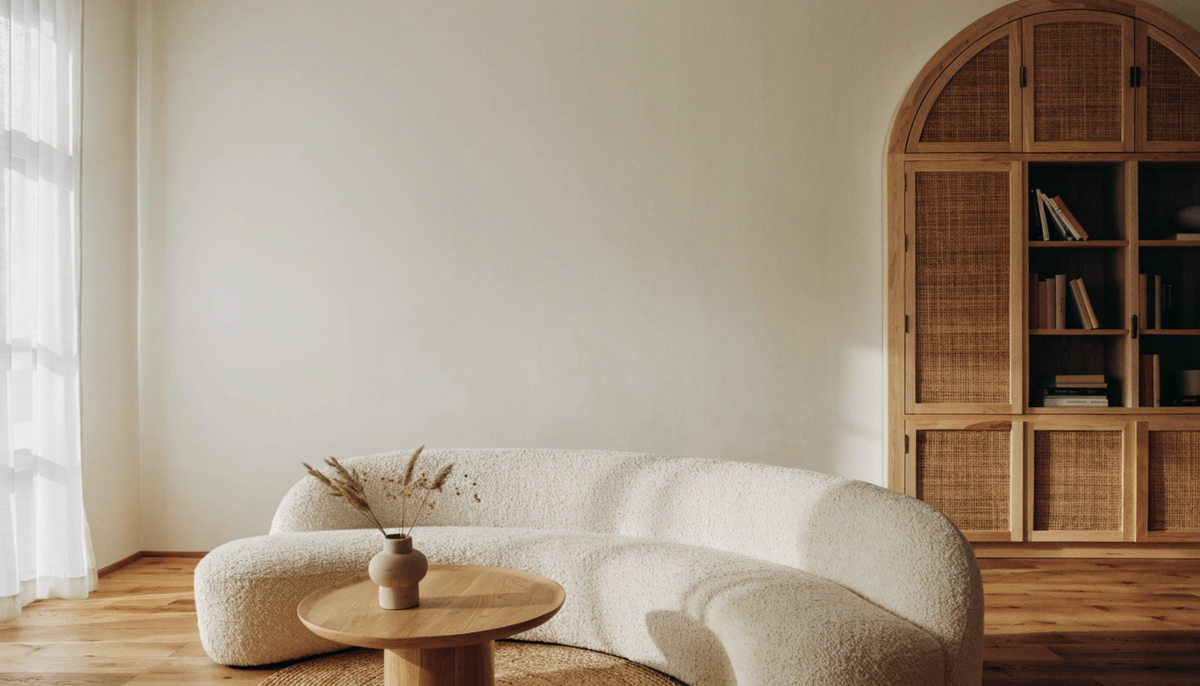
The boldest option, and the trickiest to place. A curved sofa needs to be seen from more than one side. Pull it away from the wall or the shape goes to waste.
Measure the deepest part of the arc, not just the width. A 90-inch curved sofa might run 40 inches deep in the middle and only 28 at the ends.
Curved Sectional Sofas
A curved sectional suits open-plan rooms far better than closed square ones. Leave eight to ten inches behind the arc. Any tighter and the piece looks jammed in rather than chosen.
Give it a round coffee table that every seat can reach. A rectangle sitting inside an arc just looks wrong.
Curved Accent Chairs

The cheapest way in, and the safest. Barrel chairs, swivel tub chairs, and rounded lounge chairs give you the look without touching your big furniture.
Leave open floor on at least one side of the chair. Shove it into a corner, and the curve vanishes. You have paid for a shape nobody will notice.
Round and Oval Coffee Tables
A round coffee table earns its keep in tight walkways and in front of any curved seating. In a long narrow room, an oval or kidney shape beats a circle.
Leave 14 to 18 inches between the table edge and the sofa seat. Put square-edged things on top for contrast: books, a square tray, tall candles.
Curved Dining Tables

Dinner feels less formal at a round table because everyone sits the same distance from the middle. A six-seat round dining table also kills the corner problem in a square dining room, where two guests always end up squashed.
Circles do need room, though. A 60-inch round table wants about 10 feet of clear space so chairs can pull out all the way around.
Arched Storage and Bookcases

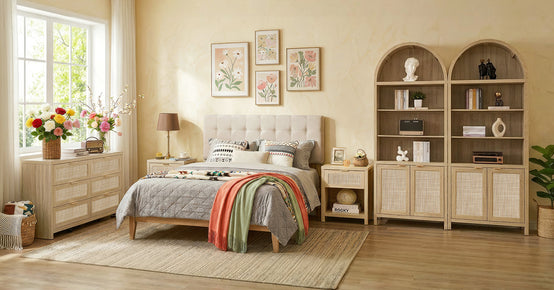
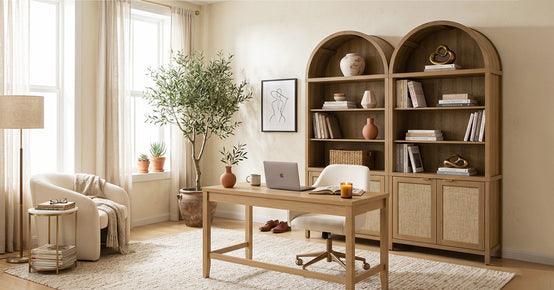
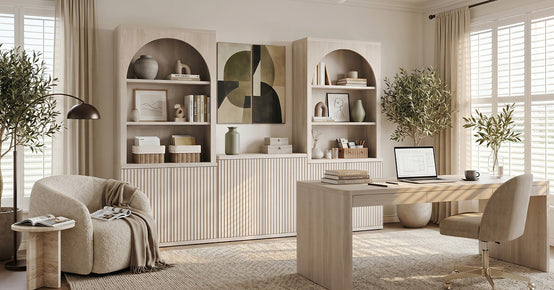
Arched fronts are the fastest-growing part of this trend, and the part competitors barely mention. An arch reads soft while the carcass behind it stays a practical rectangle.
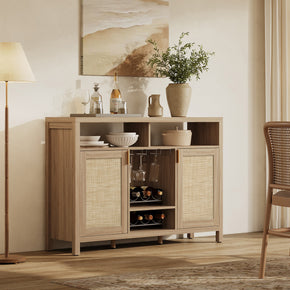
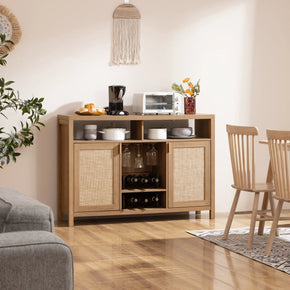
A tall arched bookcase pulls your eye up and breaks a flat wall. Lower down, a two-door arched buffet cabinet softens a dining wall. Plates, linens, and serving pieces still stay hidden behind solid doors.
Curved Dressers and Chests

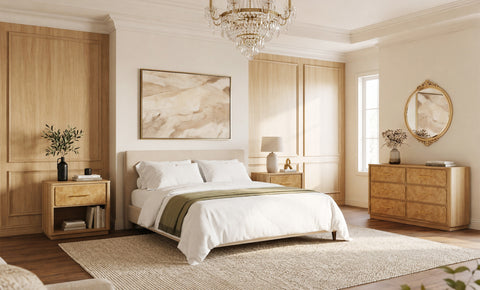
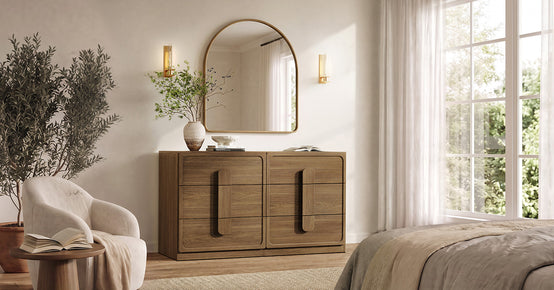
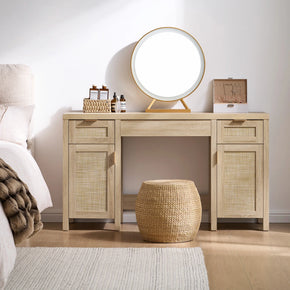
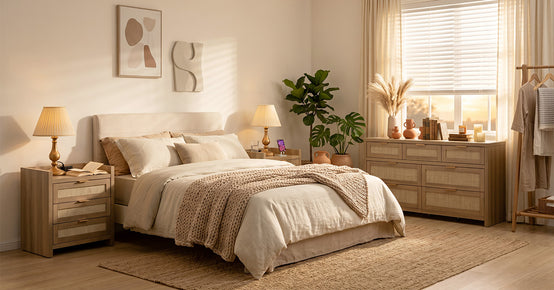
Bedroom curves get ignored. Most bedrooms have one long wall holding a flat rectangle. A bow-front chest, or one with rounded edges, turns that wall into something worth looking at.
Rounded pulls soften how a piece reads without changing its shape. A true curved front is a different build. Listings blur the two.
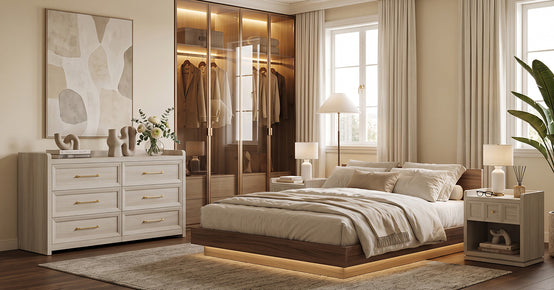
Check storage rather than assume. Bow fronts and curved drawer boxes can narrow the usable width inside. Compare internal drawer dimensions and opening sizes across the pieces you are weighing, whether that is a sharp-cornered chest ora nine-drawer dresser in the softened modern style.
The bedroom stops looking like a pile of stacked boxes either way.
Curved Nightstands and Bedside Pieces
Nearly every bedside table is a rectangle. A rounded one stands out straight away. Match the top to your mattress height so the lamp lands at reading level.
A curved nightstand looks best when the headboard has some arc, too. The two shapes then read as one line across the bed wall.
How to Style Curved Furniture Without Overdoing It
The failure mode is not too few curves. It is too many, all competing, none winning. Four rules keep a room balanced.
Let One Curve Lead
Pick one big rounded piece and build around it. A sofa. A dining table. Maybe a statement chest. Everything else plays backup.
Two large curves in one room fight each other. Your eye has nowhere to rest, and the room feels busy instead of calm.
Mix Curved and Straight Furniture
Contrast is what makes a curve visible. Pair a rounded sofa with a linear console. Set straight-backed chairs around an oval table.
Ignore rigid percentage formulas. A room does not need exactly 30 percent curves. It needs one clear focal shape with angular pieces framing it.
Echo the Shape in Small Ways
Repeat the curve at a much smaller scale so the main piece looks intentional. A round mirror. A domed lamp. Rounded cushions. An arched niche.
Odd numbers are a starting point, not a rule. Groups of three or five give you something to arrange around when a shelf feels stuck. Designers often reach foran odd-number approach to arranging shelves, and it is worth trying. Plenty of even groupings look fine too.
What settles a grouping is mostly everything except the count. Vary the heights so the eye moves across the shelf. Leave real space between clusters rather than spreading objects evenly. Repeat a material or a color so the pieces read as related.
Count the objects last. Three items at identical heights, evenly spaced, in three unrelated materials will look worse than four pieces that share something. Curved objects follow the same logic as anything else on a shelf.
Give the Arc Some Space
A curve you cannot see is money wasted. Pushing a rounded sofa flat against a wall flattens the silhouette and creates the dead crescent behind it.
Float sculptural pieces where you can. Even four inches of gap lets the shape read properly from across the room.
Rugs, Lighting and Decor for Curved Rooms
Most people get stuck right after the big piece arrives. Three choices carry the weight.
Match or Contrast the Rug Geometry
Round and oval rugs reinforce a curve. Rectangular rugs anchor a curved sofa against a rectangular room, which often looks more settled.
Scale matters more than shape. A rectangular rug under a curved sofa must extend past both ends of the arc, or the curve looks cut off.
Match the Lighting to the Curve
Globe pendants, dome shades, drum shades, and arched floor lamps all repeat the theme. A straight-lined fixture does the opposite and adds tension on purpose.
Over a round dining table, hang the light dead center. The pool of light then follows the edge of the top.
Keep Surface Styling Restrained
Sculptural furniture needs very little on top. Square-edged objects give the best contrast: hardback books, a rectangular tray, a squared vase.
Materials and Finishes That Suit Curved Shapes
The material changes how loud a curve feels. One silhouette can read as plush or architectural. It depends entirely on what covers it.
Soft Fabric Makes the Curve Pop

Boucle, velvet, chenille, and wool blends wrap a curve cleanly and catch the light along the bend. Boucle in particular exaggerates roundness.
Heavy woven fabrics can pucker on a tight radius. Check the seams in product photos before you order.
Wood, Rattan, Glass, and Metal Change the Mood

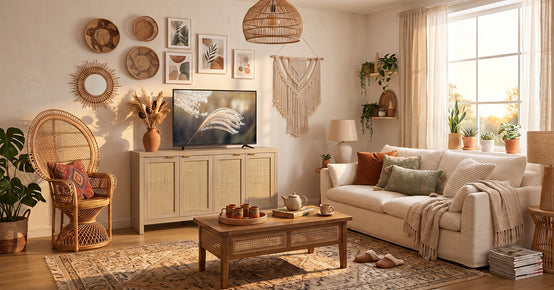
Curved wood and rattan feel warm and organic. That suits boho and Japandi rooms. Browsing bedroom storage in warm wood tones shows how a softened wood finish reads gentler than a lacquered one,even in the same shape.
Check Sustainability on Its Own
A curve is not green just because the ad copy says so. Look for certified or responsibly sourced wood. Check recycled content, low-emission finishes, and whether you can replace worn parts.
How to Use Curved Furniture in a Small Room
Small rooms handle curves fine. Large curves are the problem. Scale is the whole game.
Pick Small-Footprint Curves

Round side tables, small barrel chairs, ottomans, and oval coffee tables give you the softness without eating your floor.
In a tight bedroom, start beside the bed. A three-drawer bedside table with rounded edges takes up no more space than a boxy one. The whole bed wall feels different.
Keep Major Walkways Clear
Map your doors, windows, and daily paths before you shop. Anything under 30 inches of clearance turns into single file, and that is where curves genuinely help.
Watch the Space Behind the Curve
In a room under roughly 12 by 12 feet, skip the crescent sofa. The dead area behind a bowed piece costs more than a small room can spare.
Measure the Arc Before You Buy
This step separates a piece that fits from an expensive return. Curved furniture cannot be measured like a box, and product listings rarely make that clear.
Measure the Deepest Point, Not the Width

Listed width has no fixed definition. Most retailers give the maximum outer width, meaning the widest point overall. Some measure differently. Assume nothing from the number alone.
Find the dimension drawing on the product page. That is where a curved piece gives itself away. Look for maximum width, maximum depth at the deepest point, and how far the curve pushes forward into the room.
Getting it into the room is a separate problem. Check the boxed dimensions against your doorways, hallway turns, and any stairwell. A curved frame that arrives in one piece is harder to angle than a straight one.
Tape it out if the fit looks tight. Mark the deepest point on the floor and live with it for a day.
Tape the Footprint on the Floor
String and painter's tape make a decent compass. Pin one end of the string at the center of the arc. Hold a pencil at the radius length and sweep the curve onto the floor.
Walk the room afterward. Carry a laundry basket through the gap you left. If you turn sideways, the piece is too big.
Read the Product Photos Carefully
A straight-on front photo hides depth completely. A gentle bow and a deep barrel look almost the same from there.
Look for a top-down shot, a three-quarter angle, or a dimension diagram. If none exists, ask the retailer for the center depth before ordering.
Why Curved Furniture Often Costs More
Rounded pieces usually cost more than square equivalents at the same quality level. The reasons are clear.
Solid wood has to be steamed, bent around a form, and held until it sets. The bending process itself relaxes the fibers under pressurized steam, and any piece that cracks becomes waste.
Curved upholstery also needs tailored panels, not flat rectangles. More cutting, more seams, more skilled labor per unit.
Molded plywood, CNC-cut frames, and shaped foam have brought costs down a lot. Budget curved accent pieces are now genuinely good, which was not true ten years ago.
Curved Furniture Mistakes to Avoid
Most regrets come from a handful of repeat errors:
- Buying the curve before measuring the arc depth.
- Pushing a rounded sofa flat against a wall and losing the silhouette.
- Filling one room with three or four competing curves.
- Pairing a curved sectional with a rectangular coffee table.
- Choosing a deep barrel chair for a room with one narrow walkway.
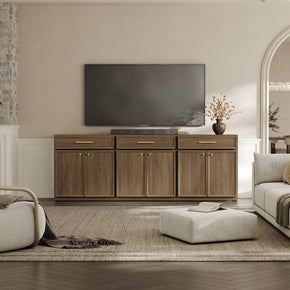
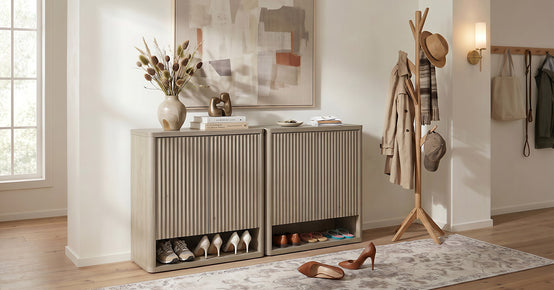
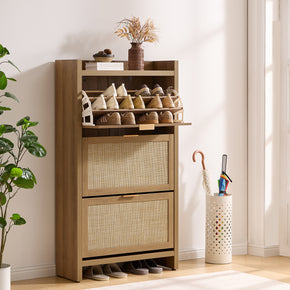
- Curving something that needs to sit flush, like a TV console in a shallow alcove or a shoe cabinet in a tight hallway.
The last one deserves attention. Not every piece should be rounded. Storage that has to fit tight against a wall or inside a recess works better with square edges.
Care and Cleaning for Curved Pieces
Curves collect dust in different places than flat furniture, and tight radii show wear sooner.
Vacuum along curved seams where lint gathers. Check the upholstery cleaning code on the tag before any liquid touches the fabric, because a W, S, WS, or X code changes what is safe to use.
Rotate loose cushions on curved seating so the arc wears evenly. Dust arched rattan panels with a soft brush rather than a damp cloth.
Keep curved wood out of direct sun. Bent components can move slightly with heat and humidity, and uneven fading follows the curve unevenly.
Is Curved Furniture Still in Style in 2026?
Yes, though the look has matured. The exaggerated cloud sofas that defined the early wave are giving way to cleaner, more architectural arcs.
Designers report curves appearing in cabinetry, joinery, and built-in details, not just seating. Bases are stronger. Silhouettes are tighter.
Rounded forms also sit comfortably inside organic modern, warm minimalist, Japandi, transitional, and eclectic schemes. That range is why the trend keeps holding.
The safest approach has not changed. Buy for proportion and function, keep the count low, and the piece will outlast the forecast cycle.
Final Takeaway
Curved furniture works when the shape does a job. It can soften a boxy room, group people for conversation, ease a tight walkway, or give a flat wall something sculptural.
Start with one piece. Measure the deepest point of the arc, not the listed width. Tape the footprint and walk the room before ordering.
Mix that curve with straight-lined pieces so it stands out, echo it in a few small details, and leave enough clear floor for the shape to be seen. A curve chosen that way stops looking like a trend and starts looking like your home.
FAQs
Is curved furniture in style in 2026?
Yes. Rounded sofas, oval tables, arched cabinets, and softly radiused case goods remain prominent. The difference is refinement. Exaggerated blob shapes have faded, replaced by cleaner arcs with stronger bases, often combined with stone, timber, or metal.
How do you make curves in furniture?
Manufacturers use several methods depending on the material:
- Steam bending, where solid wood is softened with pressurized steam and bent around a form.
- Laminating or molded plywood, where thin layers are glued and pressed into a curve.
- CNC cutting, which shapes curved frame parts from sheet stock.
- Shaped foam over a frame, then tailored upholstery panels stitched to follow the arc.
- Metal forming or molded plastics for lighter modern pieces.
What style of furniture has curved legs?
Curved legs show up across several traditions. Cabriole legs, which flare out at the knee and taper inward at the ankle, are associated with Queen Anne and Rococo-influenced furniture. Saber legs, which sweep outward in a single shallow arc, appear on Regency and Empire pieces.
Why is curved furniture popular?
Four reasons stack up. Curves contrast with the straight lines that dominate most rooms; soft edges feel calmer. They are physically safer; curved seating angles people toward each other, and rounded edges ease movement in tight walkways. The look also fits several current design styles.
What type of furniture is in style for 2026?
Curved and softened silhouettes lead, alongside modular seating, tactile upholstery like boucle and chenille, warm and darker woods, mixed-material pieces, vintage-influenced designs, and furniture that serves more than one purpose. No single style dominates year-round.
What is the 3-5-7 rule in interior design?
Group decorative objects in odd numbers, usually three, five, or seven. Odd groupings read as more natural than pairs, which can feel stiff. Vary height and size within the group. Treat it as a styling guideline for accessories, not a rule for furniture layout or curves.
What design style is popular in 2026?
Warm minimalism, organic modern, updated traditional, and Japandi-influenced interiors continue to lead, along with more personal eclectic rooms: natural materials and layered texture run through all of them. Curves fit naturally into every one of these looks.
What type of furniture is trending right now?
Rounded seating, modular sofas, sculptural accent chairs, oval and irregular tables, arched storage, tactile fabrics, natural wood, and multifunctional pieces. Practicality and longevity matter more than catching every trend, so choose what suits your layout.
Does curved furniture work in a small living room?
Yes, at the right scale. Round side tables, oval coffee tables, and compact barrel chairs improve movement in tight rooms because there are no corners to navigate. Large crescent sofas are the exception, since the dead floor behind the arc is costly in a small space.
Sources
- Homes & Gardens – 6 Furniture Trends for 2026 Designers Are Loving
- Homes & Gardens – I Tried the 3-5-7 Styling Rule
- Encyclopedia Britannica – Bentwood Furniture
- Victoria and Albert Museum – Thonet and the Invention of Bentwood Furniture
- Thonet – A Material That Is Both Classic and Contemporary: Thonet and Bentwood
- Grand View Research – Sofa Market Size, Share and Trends Report
- Style by Emily Henderson – How to Design a Living Room: Our Go-To Rules
- Sailrite – Understanding Upholstery Fabric Cleaning Codes


Looking for something else?
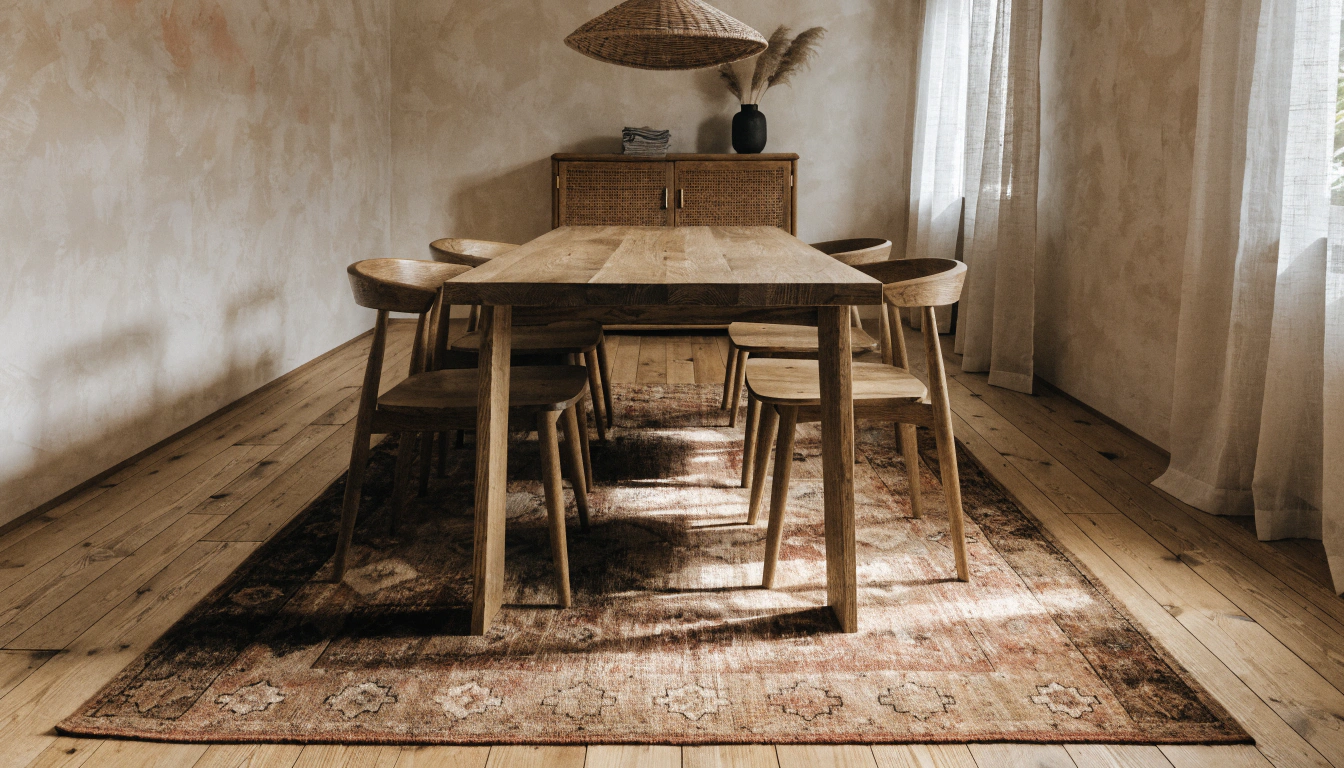
How to Choose the Perfect Rug for Your Dining Room (Size, Shape, and Placement Under the Table)
LEARN MORE
A Guide to the Best Luxury Bath Towels: GSM, Cotton Types, and How to Choose Hotel-Quality Towels
LEARN MORE
How to Put on a Sofa Slipcover: A Simple Step-by-Step Guide to Sofa and Couch Slipcovers
LEARN MORE
HowChoose the Right Entryway Rug: Entryway Rug Size, Material, and Foyer Placement Guide
LEARN MORELooking for something else?
How to Remodel and Organize Your Laundry Room: Laundry Room Layout, Storage, and Organization Ideas
LEARN MORE
Melamine vs. Ceramic Outdoor Dinnerware: A Practical Comparison Guide
LEARN MORE
Smart Solutions: Fabric Pilling on Sofas, Clothes, and More
LEARN MORE


Further reading
Curved Furniture: How to Style, Measure, and Buy It in 2026

Curio Cabinet Decor Ideas: How to Style a Display Cabinet Without the Clutter


