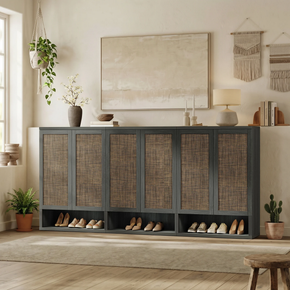
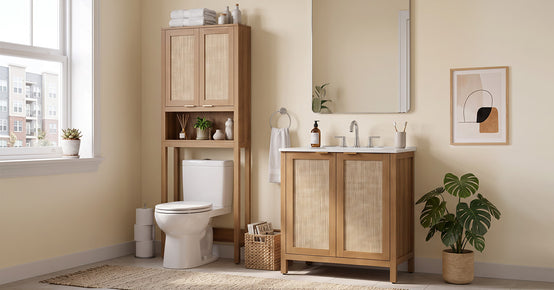
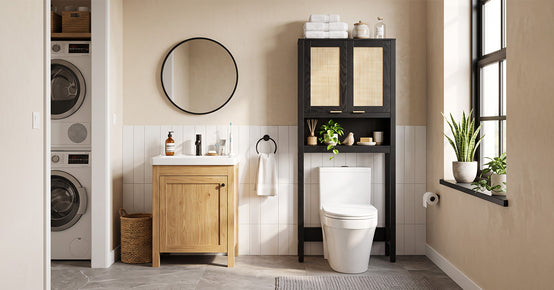
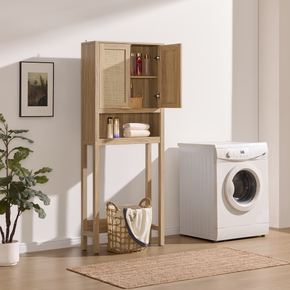
A cabinet can advertise room for thirty pairs and still refuse your largest shoe. The pair count on a product card was calculated with some shoe in mind, and if that shoe was an average low-profile sneaker, the number tells you almost nothing about a size 14 high-top or a pair of work boots.
Large footwear fails in three directions. Length, when the toe hits the back panel or hangs out the front. Width, when a pair crowds its neighbor. Height, when the collar of a high-top catches the shelf above it. Any one of those can sink an otherwise good cabinet, which is why the starting point is your own largest pair rather than a capacity claim.
Quick Answer: What Makes a Shoe Cabinet Work for Large Shoes?
Measure your largest pair first, then compare it against the cabinet’s usable internal depth, opening height, shelf spacing and divider layout. A shoe cabinet for large shoes works when the longest pair sits flat without bending or protruding, a high-top clears the shelf above, wide pairs are not forced side by side, and the door or drawer closes without pressing on anything. Advertised pair capacity is only accurate for the footwear type it was counted with.
Measure Your Largest Pair Before Comparing Cabinets

Not your average pair. The largest one. If it does not fit, the cabinet does not fit your household, however well the rest of the collection would sit. Get those numbers before you start browsing
furniture for organized entryways.
Measure Length, Width, and Height
Take four measurements off the actual shoe, not the box:
-
Length. Heel to the furthest point of the toe or outsole, whichever sticks out more.
-
Width. Across the widest point, usually the forefoot.
-
Height. Floor to the top of the collar. For a high-top or basketball shoe this is the number that decides everything.
-
Boot shaft. Full height for boots, plus the footprint of a chunky outsole.
Leave inserts, shoe trees or boot shapers in place if that is how the shoes will be stored. They add size.
Do Not Use Shoe Size Alone
A size number describes the foot, not the finished shoe. Nike’s
men’s footwear size chart puts a men’s 13 at roughly 11 11/16 inches of foot length and a 14 at about 12 inches, and Adidas’s
men’s footwear size guide lands in the same range. The shoe built around that foot is longer, and how much longer depends on the model, the toe shape and the outsole. The
Brannock fitting instructions make the same point about fit varying with construction and styling.
So treat any listing that promises to fit a specific size as unverified unless the seller states how it was measured. Your tape measure is the authority here.
Apply the Largest-Pair Rule
Write the three numbers down and carry them into every product page you open. Every other decision in this guide is a comparison against them.
Measure the Cabinet’s Usable Interior, Not Its Exterior

Usable Depth vs Exterior Depth
The depth on a listing is the outside of the box. Your shoe gets what is left after the back panel, the door thickness, any internal framing, a shelf lip, hinge hardware and, in a tilt-out design, the mechanism and the angle of the bin. None of that is published, which is the real problem with shopping this category online.
Work backwards instead. If your longest shoe is 13 inches and the cabinet is 14.5 inches deep on the outside, the margin is under an inch and a half before any of those losses are counted. That is tight, not impossible, and it is the question to put to the seller.
Measure Opening Height
Shelf spacing is what high-tops run into. A basketball shoe can clear the depth comfortably and still catch its collar on the shelf above, and the fix is either a taller opening or one fewer shelf. Exterior cabinet height does not answer this. Shelf-to-shelf opening does.
Measure Usable Width
Wide shoes reduce real capacity even when they fit front to back. Two size 14 sneakers side by side may need more shelf width than two size 9s, so a bay that holds two average pairs might hold one and a half of yours. Fixed dividers make this worse by locking in a width that was chosen for a smaller shoe.
Why Pair Count Is Not a Large-Shoe Fit Test

Capacity claims are conditional rather than false. They assume a shoe, an orientation and a shelf arrangement, and a household with large or bulky footwear breaks all three assumptions at once.
A cabinet listed for 30 pairs may hold fewer than 30 when the collection is mostly wide sneakers, high-tops and boots. Same cabinet, same shelves, different footwear. That is arithmetic, not a defect.
Better Homes & Gardens found the gap in practice when
testing shoe racks, reporting larger shoes hanging over shelf edges on a high-capacity unit. Capacity and physical fit are separate questions.
|
Product claim
|
What the shopper should verify
|
|
"Holds 24 pairs"
|
Which shoe size and type was used to reach the count
|
|
"Large capacity"
|
Interior width, depth, height and the number of usable levels
|
|
"Fits boots"
|
Tallest usable opening and the shelf adjustment range
|
|
"Deep storage"
|
Actual internal shelf or bin depth, not exterior depth
|
|
"Slim shoe cabinet"
|
Whether the reduced depth still accepts the longest pair
|
|
"Adjustable shelves"
|
Adjustment positions and the opening heights they create
|
|
"Tilt-out storage"
|
Bin depth, tilt angle, divider removal and closing clearance
|
Choose the Right Cabinet Format for Large Shoes
|
Format
|
Better starting point for
|
Main large-shoe risk
|
Verify
|
|
Hinged-door shelves
|
Wide sneakers, mixed footwear
|
Shelves too shallow or spaced too close
|
Internal depth and shelf spacing
|
|
Adjustable-shelf cabinet
|
High-tops, mixed household footwear
|
Adjustment holes may not create a tall enough opening
|
Shelf positions and resulting heights
|
|
Tilt-out or flip drawer
|
Narrow hallways, low-profile shoes
|
The angled bin reduces usable depth and height
|
Bin geometry and divider removal
|
|
Shoe bench with open storage
|
Bulky shoes worn daily
|
Less enclosed capacity, dust exposure
|
Opening dimensions and seating rating
|
|
Open shoe rack
|
Oversized shoes and boots
|
Visual clutter, stability
|
Shelf depth and anchoring
|
|
Modular shoe storage
|
Growing or mixed collections
|
Modules can look uniform but differ inside
|
Each module’s own openings
|
Hinged-Door Cabinets
The straightforward option when the shelf depth is genuinely there. Nothing angles the shoe, nothing reduces the opening, and you can see the whole shelf when the door is open. The catch is that the door has to close over your longest pair, so measure the toe clearance rather than assuming it.
Adjustable-Shelf Cabinets
The most useful format for a mixed household, because you can give boots and high-tops a tall bay and leave the flats in tighter spacing. Adjustment does not create depth, though. It only redistributes height.
Shoe Benches and Open Storage
Worth considering for the two or three pairs worn every day, especially bulky ones. Open storage sidesteps the door-clearance question entirely and makes the fit visible. You trade concealment and dust protection for that.
Tilt-Out and Flip Cabinets
These save floor depth by holding shoes at an angle, which is why they suit narrow hallways. The same geometry is what makes them unpredictable for bulky footwear: the toe lands somewhere inside the bin rather than flat against a shelf, and a fixed divider may sit exactly where a wide shoe needs room.
Check Depth, Opening Height, and Divider Layout

Usable Depth Beats Exterior Depth
If a product page publishes only exterior depth, the most important number for a large-shoe shopper is missing. Ask for it before ordering rather than after.
High-Tops Need More Than Toe Room
The collar and lacing area is the failure point. A high-top that clears the shelf depth by two inches can still refuse to go in because the opening is an inch too short, and turning the shoe sideways is the workaround people fall back on when the height is wrong.
Dividers Can Reduce Large-Shoe Capacity
A divider that keeps flats tidy can make a bulky pair impossible to store. Find out whether it is fixed, adjustable or fully removable, because that single detail can change a cabinet from unusable to workable. Do not assume removable.
Can a Tilt-Out Shoe Cabinet Work for Large Feet?
It can. It depends more heavily on verified bin geometry than any other format, so there is less room for guessing.
Five things to establish before buying one:
-
Interior bin dimensions, not the cabinet’s exterior depth
-
The tilt angle, and where the toe ends up inside the bin
-
Whether the internal divider comes out
-
How a high-top sits when the bin closes
-
The opening envelope, since a fully open bin projects into the hallway
Where the answers are not published, a hinged door or an open shelf gives large footwear unrestricted depth and height instead.
Plan Different Zones for Sneakers, High-Tops, and Boots

Large Sneakers and Wide Running Shoes
Depth first, then shelf width. These usually fit a standard shoe cabinet if the depth is honest, but they eat more width per pair than the capacity claim assumes.
High-Tops and Basketball Shoes
Vertical spacing first. Look for adjustable or removable shelves and accept that giving one bay extra height costs you a row of pairs elsewhere.
Hiking and Work Boots
The full footprint matters, not just the length: shaft height, outsole bulk and the way a boot flops when it is not laced. A tall adjustable section or an open lower shelf handles these better than a standard closed bay.
Mixed Household Footwear
Zone it rather than buying one layout for everything. A tall section for boots and high-tops, standard spacing for sneakers, tight spacing for flats and kids’ shoes, and an
open shoe bench for daily footwear near the door for the pairs in constant rotation.
Match the Cabinet Format to Your Entryway
Narrow Hallway
A slim cabinet only helps if the reduced depth still takes your longest shoe. Depth is the one dimension you cannot trade away, so in a tight hallway the answer is usually a taller cabinet rather than a shallower one.
Door Swing and Walkway
Measure the furniture while it is open, not closed. A hinged door, a tilt-out bin and a drawer all project, and in an entryway that projection competes with the front door and the walking path. Compare
entryway furniture options by their open footprint as well as their closed one.
Tall Cabinets
Tall shoe storage is top-heavy when the upper shelves are loaded. Follow the assembly instructions for anchoring, and use the supplied hardware. The CPSC’s
Anchor It guidance is to follow the manufacturer’s instructions for securing furniture against tip-over.
Compare SICOTAS Shoe Storage for Large-Shoe Households

Running the measurements against real listings produces one finding worth leading with. Across the featured formats in the
shoe cabinets for entryway storage range, published exterior depth clusters between 14.5 and 14.8 inches. Depth is not what separates these models. Width, door count and shelf count are.
That matters for a large-shoe shopper. It means the choice between them is a question of how many pairs and how they are zoned, while the depth question has to be settled the same way for all of them: by asking for the usable internal figure.
|
SICOTAS option
|
Published data
|
Useful for
|
Still needs verification
|
|
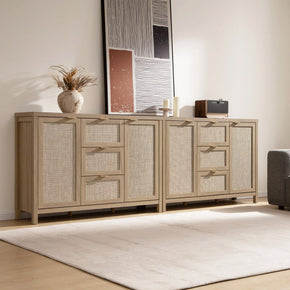
Savanna Shoe Cabinet, 24 Pairs
|
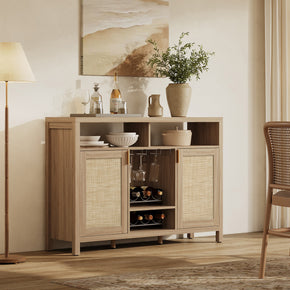
32.4"W × 41"H × 14.8"D; 2 doors; 6 adjustable shelves; FSC-engineered wood with wicker
|
One or two people with large sneakers and mixed footwear
|
Internal depth, shelf-to-shelf opening heights, adjustment positions
|
|
Savanna Shoe Cabinet, 30 Pairs
|
47.24"W × 40.94"H × 14.76"D; 3 doors; adjustable shelves
|
Three or four people, zoned by footwear type
|
Internal depth and the opening height each shelf position creates
|
|
Cas Shoe Cabinet with Doors
|
65.6"W × 44.5"H × 14.5"D; 4 doors; adjustable shelves; listed at 50 pairs
|
Larger household with many shoe types
|
Internal bay width, usable depth, tall-shoe configuration
|
|
Savanna Shoe Bench with Storage
|
Approx. 31"W × 19.7"H × 14.8"D; open shelf plus one drawer
|
Daily bulky pairs that need fast access
|
Open-shelf opening height and depth, seating load rating
|
The
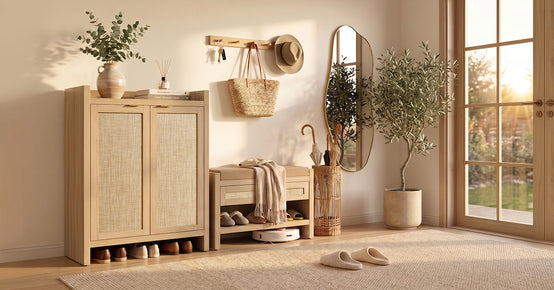
shoe cabinet with adjustable shelving is the most interesting of these for high-tops, for a reason that is not obvious. Six adjustable shelves inside a 41-inch cabinet means the standard configuration divides the interior into fairly shallow openings. Removing or raising a shelf is how you create height for a high-top or a boot, and doing so costs you a row of pairs. The adjustability is the feature, not the shelf count.
The
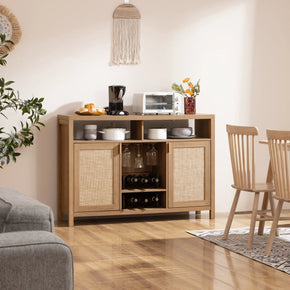
wide shoe cabinet for mixed footwear takes a similar approach across three doors and 47 inches of width, which gives more room to run separate zones. Neither model publishes the internal depth or the opening heights, so neither can be called a size 14 fit yet. Ask for those two numbers and the answer becomes straightforward.
Large-Shoe Cabinet Checklist Before Buying
-
Measured the longest pair, heel to toe
-
Measured the widest pair at its widest point
-
Measured the tallest high-top, floor to collar
-
Measured boot shaft height where relevant
-
Asked for internal depth rather than relying on exterior depth
-
Checked shelf-to-shelf opening height
-
Confirmed the shelf adjustment positions
-
Established whether dividers are fixed, adjustable or removable
-
Checked the door or tilt-bin opening path
-
Measured the entryway clearance with the cabinet open
-
Confirmed the largest pair can sit flat without bending
-
Confirmed the cabinet closes without pressing on a shoe
-
Treated the pair count as an estimate, not a fit claim
-
Reviewed the assembly and anchoring instructions
Find a SICOTAS Shoe Cabinet That Fits Your Largest Pair
Start with the dimensions of your largest shoes, then
compare SICOTAS shoe cabinets by shelf layout, adjustable storage, exterior footprint and door style, and ask for the internal depth on whichever shortlist you land on. The right starting point is a cabinet that takes your largest pair comfortably, not the one with the highest advertised pair count.
FAQs
What size shoe cabinet do I need for large shoes?
One whose usable internal depth exceeds your longest shoe with room for the door to close. Width and shelf count then decide how many pairs you get, and opening height decides whether high-tops and boots can go in at all. Measure your longest, widest and tallest pair, carry those three numbers to the product page, and compare them against internal dimensions rather than the exterior footprint.
Will a shoe cabinet fit men’s size 13 or size 14 shoes?
Often, but the size number cannot answer it. Nike and Adidas put a men’s 13 foot at roughly 11.7 inches and a 14 at about 12 inches, and the shoe built around that foot is longer by an amount that varies with the model. Measure the actual pair. Then ask the seller for usable internal depth, because a cabinet with 14.5 inches of exterior depth has less than that inside.
How deep should a shoe cabinet be for large shoes?
Deeper than your longest shoe, measured inside the cabinet. Build the figure up:
-
Longest shoe, heel to furthest toe or outsole point
-
Plus clearance for the door or drawer to close
-
Plus whatever the back panel, framing and any shelf lip consume
Exterior depths around 14 to 15 inches are common in this category. Whether that is enough depends entirely on how much of it survives on the inside.
Are tilt-out shoe cabinets good for large feet?
They can work, but they carry the most uncertainty. The angled bin is what saves floor depth, and it is also what makes the fit hard to predict for a long or bulky shoe. Check the bin’s interior dimensions, the tilt angle, whether the divider comes out, and how a high-top sits when the bin closes. If those figures are not published, a hinged-door cabinet or open shelf is the safer buy for large footwear.
Can high-top sneakers fit in a shoe cabinet?
Yes, when the opening is tall enough. High-tops usually fail on height rather than length, because the collar catches the shelf above while the outsole has depth to spare. Adjustable or removable shelves solve it, at the cost of a row of pairs. Measure from the floor to the top of the collar and compare that against the shelf-to-shelf opening, not the cabinet’s overall height.
Can a shoe cabinet fit work boots or hiking boots?
Some can, with the shelves reconfigured. Boots need the full footprint accounted for: shaft height, outsole bulk, and the way an unlaced boot slumps sideways. A tall adjustable bay or an open lower shelf handles them better than a standard closed compartment. Do not read a pair-count claim as including boots unless the seller says the count was measured with them.
Are adjustable shelves better for large shoes?
For a mixed household, yes. They let you create one tall zone for boots and high-tops while keeping tighter spacing for flats, which a fixed layout cannot do. What adjustment cannot fix is depth. If the cabinet is too shallow for your longest pair, moving shelves around will not help, so treat adjustability as a height solution only.
How do I know whether a shoe cabinet’s pair count is realistic?
Ask what shoe the count was based on. A capacity figure assumes a size, a shoe type and a shelf arrangement, so a 30-pair cabinet holds fewer than 30 when the collection runs to wide sneakers, high-tops and boots. Testing by Better Homes & Gardens found larger shoes overhanging shelf edges even on high-capacity racks. Use the count to narrow your shortlist, then settle the fit with your own measurements.