







How to Mix Wood Tones Without Making a Room Look Mismatched
Figuring out how to mix wood tones gets easier the moment you stop chasing a perfect match. Look around your own place. You probably already have three or four wood finishes. The floor. Door trim. A dresser from your parents. A coffee table you picked up last year.
None of them agree. That is normal, and it does not need fixing. What helps is a working order, not a rule. Find the wood that covers the most surface area. Check its undertone. Add a finish that clearly differs. Bring each tone back somewhere else.
Undertone is the step people skip. Homes and Gardens describesa designer trick for mixing wood tones in a kitchen that starts there. Test it in your own room. Hold two samples together in the light you actually live with, morning and evening, then decide.
The rest of this guide walks it room by room.
Why Wood Tones Do Not Need to Match

A room where every wood surface matches can feel oddly dull, because your eye has nowhere to land. Floor, table, shelves. They all blur into one brown block, and the place starts to look like a store display instead of a home.
Mixing wood tones pulls that flatness apart. It is also how homes end up over time: you buy a piece this year and something else the year after.
Different finishes add depth, and depth is what makes a space feel lived in rather than bought in a single trip. You also get more freedom when you shop, because you are no longer hunting for an exact color twin.
Matching Versus Coordinating Wood Finishes

Matching wood furniture means copying one finish onto all your big pieces. Coordinating is looser, and the woods only need to relate through undertone, contrast, and repetition. In a real home, that is the easier path by a long way.
Exact matching barely works anyway. Stain batches shift. Screens lie. A floor laid in 2015 will never equal a dresser built in 2026. Both can still say natural oak on the label.
What Makes a Mixed Wood Room Look Deliberate
Three things carry most of the weight in mixed-wood furniture. One tone leads the room. The other tones share a compatible undertone, and every tone shows up more than once so nothing looks accidental.
Skip those and a room gets noisy fast. Cover them, and nobody counts how many finishes you actually used.
Step 1: Find the Dominant Wood Tone in the Room

Most beginners benefit from picking one dominant wood tone. Call it the anchor. Usually it is the biggest wood surface in the room, or the one you cannot easily rip out. Find it first, and the rest of the choices get easier.
This is a starting point, not a rule. Open-plan rooms often run two dominant tones across separate zones. Antique mixes and eclectic rooms can too. The anchor is not always the piece you like most. It is the piece you have to work around.
What Usually Becomes the Anchor Piece

Flooring usually takes this job because it covers more surface area than anything else in the room. In a kitchen, the cabinets do the same work. In a bedroom, it might be the bed frame or a wide dresser instead.
- Hardwood or engineered wood flooring
- Cabinetry, built-ins, and joinery
- Window and door trim, plus stair rails
- A large dining table or a long media wall
- A bed frame, a wardrobe, or a tall chest of drawers
There is a quick test when two pieces compete. Ask which one you would replace last. That is your anchor. Once the floor becomes your starting point, picking living room furniture in mixed wood finishes stops being guesswork.
What to Do When You Dislike the Existing Wood
Plenty of people are stuck with orange oak cabinets or a yellowed floor from the nineties. Do not build a whole palette around something you plan to rip out.
Treat it as temporary. Buy neutral pieces for now, and use rugs and paint to soften the clash while you wait. Hold off on costly furniture until the anchor actually changes.
Step 2: Read the Undertone Before You Judge Light or Dark

Wood undertones are the faint colors sitting under the main finish. They tell you whether a wood reads warm, cool, or neutral. Two woods can be the same darkness and still fight. Their undertones pull in opposite directions.
Undertone beats light versus dark. A pale oak and a deep walnut can look great side by side when both lean warm. Reading wood undertones is really the whole skill.
Warm Wood Tones
Warm woods show honey, gold, orange, and a little red. Cherry sits here—mahogany too, along with golden oak, teak, and plenty of maple. Warm finishes make a room feel cozier, and most furniture showrooms use them for exactly that reason.
Species notes back that up. Walnut heartwood ranges from light brown to dark chocolate brown. It sometimes carries a gray, purple, or reddish cast. That cast is the undertone you want to catch.
Cool Wood Tones

Cool woods lean gray, smoky, or slightly blue. Gray-washed oak belongs here, and so do smoked finishes, weathered barn wood, and most espresso stains. They read modern and a bit quieter than the warm group.
Cool woods are usually a stain, not a species. Worth remembering. A stain can drag a naturally warm board straight into the cool group.
Neutral Wood Tones
Neutral woods look even. Beige, blonde, soft tan, or plain brown with no loud red or gray pulling at it. Birch and ash land here, and a lot of natural white oak sits in the same group once you see it in daylight.
White oak makes the point well. Its heartwood runs light to medium brown with an olive cast. That olive note is why white oak bridges warm and cool finishes so easily.
A Two-Minute Undertone Test You Can Do at Home

Undertones are hard to hold in your head, and much easier to see side by side. Carry a drawer front, sample board, or daylight photo with you, then hold it against the wood you already own.
- Check it in daylight near a window with the lamps off
- Hold the two finishes close together, then back up a few feet
- Ask one thing: does this look yellow, red, gray or beige next to the other?
- Move away from bold walls, rugs and curtains that throw your eye off
- Look again later in the day. Afternoon light warms almost everything.
Step 3: Use Contrast on Purpose
Light and dark wood furniture can share a room without trouble. Clear contrast tends to look more deliberate than a careful near-match. Your eye stops trying to read the two pieces as a pair.
Why an Almost-Match Looks Worse Than a Clear Contrast

Picture a medium brown floor under a medium brown coffee table that sits one shade off. Your eye reads it as a failed match. Swap in something clearly lighter or clearly darker and the room looks styled again.
The rule is short. If two woods cannot match, let them differ. Over a walnut or espresso floor, a light oak coffee table with a warm undertone looks like a choice, not a miss.
Light, Medium, and Dark Values in One Room
Value is how light or dark a wood is, while tone is how warm or cool it is. Keep those two ideas apart, and a lot of confusion disappears. Most clashes come from tone, not value.
A safe starting mix runs one dominant value, one clear contrast, and one small accent. Dark pieces carry more visual weight, so they ground a room quickly. Keep heavy finishes apart.
How Many Wood Tones Can You Mix in One Room?
Two or three wood tones suit most rooms. People call it the rule of threes. Treat it as a rule of thumb, not a count. It works because it forces a hierarchy instead of a pile.
Room size shifts the number. A big open-plan space borrows tones from the next zone whether you planned for it or not. Fixed flooring and cabinets spend part of the budget before you buy a single piece. Strong light-and-dark contrast changes the math again.
Counting individual items is the wrong move. Small repeating pieces in one color family read as a single tone. Three walnut frames and a walnut tray are not four tones. They are one tone doing its job.
Two or Three Is the Easy Starting Point
Give every tone a job. The base tone covers the largest surfaces, and the contrast tone lands on one or two key pieces of furniture. The accent tone shows up only in small stuff: frames, bowls, trays, a lamp base.
When a Fourth Wood Tone Still Works
Four can work in a big layered room, though the extra tone needs help to earn its place. Shared undertones. Plenty of repeats, and enough surface that is not wood to break up the field.
- The room is large or open-plan with natural breaks
- All four finishes sit in one undertone family
- Rugs, upholstery and paint separate the wood surfaces
- At least one wood shows up only in small accents
The warning was never really about the number four. Unrelated finishes with no hierarchy are what make a room feel scattered.
Step 4: Repeat Every Wood Tone at Least Twice

A finish that shows up once reads like an accident, while the same finish twice reads like a plan. Repetition is the cheapest fix in this whole guide, because you rarely need new furniture to pull it off.
Small Ways to Echo a Finish

Echoes can be tiny—a picture frame. A tray or a lamp base will do it, and so will a wooden bowl, a mirror surround, or the legs of a chair sitting across the room.
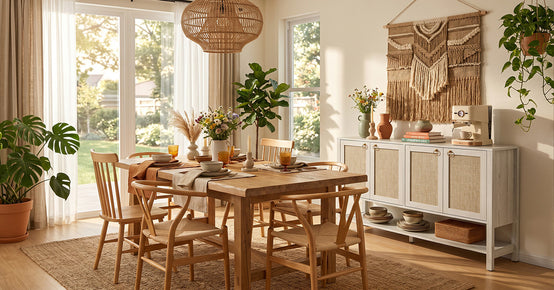
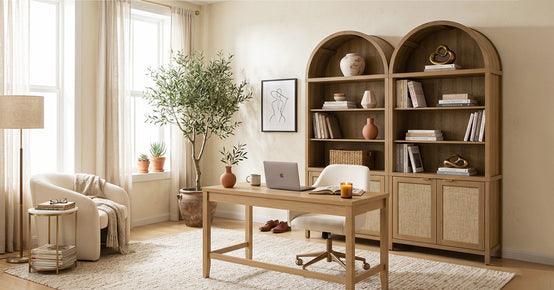
Tall pieces do this well. They sit at eye level, where you actually notice them. A brown oak bookcase with arched doors can pick up the tone of a dark dining table on the far wall. That ties both ends of an open room together.
Spread Tones Out Instead of Clustering Them

Do not park every matching finish in one corner. Spread them. Walnut in the middle of the room. Walnut again on the far side. Walnut once more in a small detail by the window.
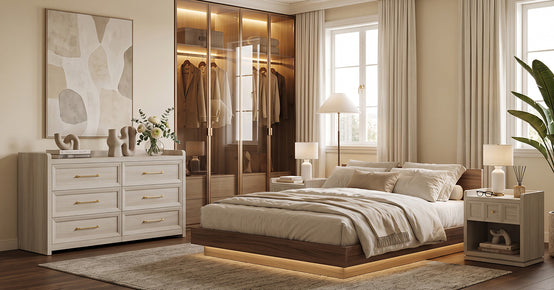
The bedroom version is simple. Say the bed reads warm. Put a cherry-toned bedside table on one side and a wooden mirror frame across the room. That carries the warmth without turning the space into a matched set.
Wood Grain and Texture: The Detail Most Guides Skip

Grain changes how a wood reads before color even registers. Broad open grain feels rustic and casual, while fine tight grain feels cleaner and more formal. Mixing the two is fine as long as the tones agree.
Grain carries figure too. Walnut shows straight grain that sometimes turns curly or burled. That figure reads as pattern, not only color. Two woods with a similar grain size often look connected even when their tones differ.
Sheen gets forgotten. A glossy finish throws light back at you and looks lighter than it is, while a matte one soaks up light and looks deeper. Keeping sheen levels close calms a busy mix fast.
Use Rugs, Metal, and Paint as Bridges Between Woods
When two finishes refuse to get along, put something non-wood between them. Bridges buy breathing room. They also cost far less than new furniture.
Area Rugs and Textiles

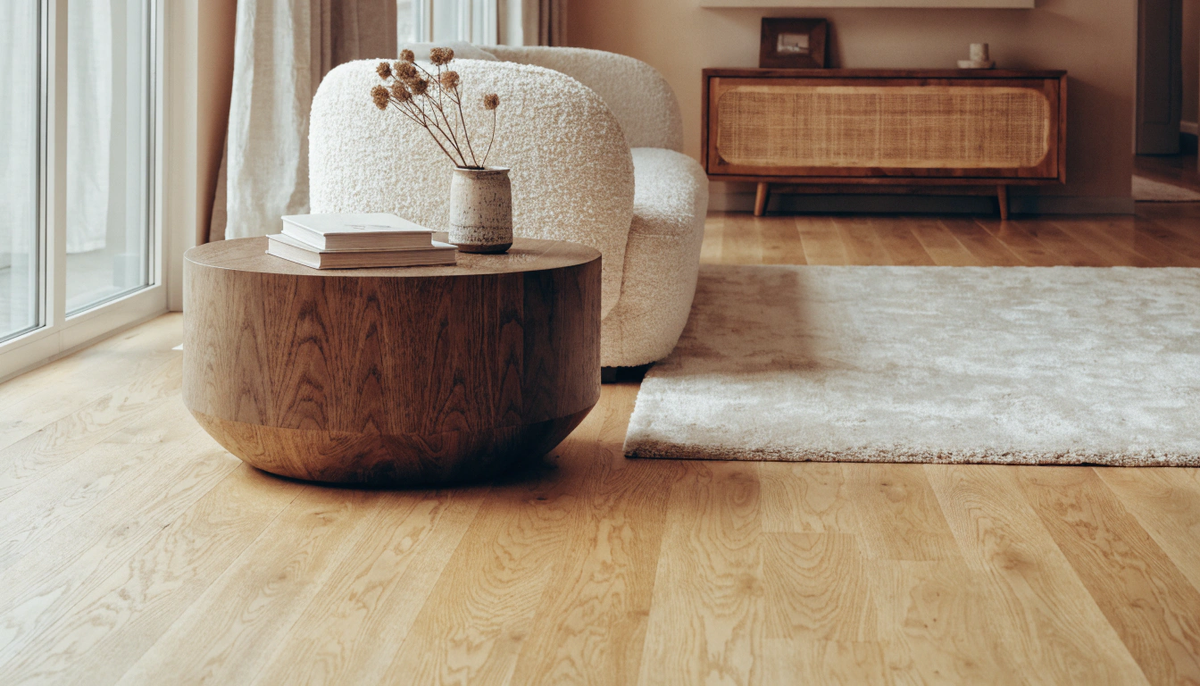
A rug puts real distance between a wood floor and a wood table. Your eye stops comparing them. Linen, wool, cotton, and boucle soften a room that feels hard and wood-heavy.
Black, White, and Painted Surfaces
Black and white work as pauses—a black-stained side table. A painted island or a set of white bedding will do the same, giving your eye a rest between competing browns. Painted trim works on a wall.
Metal, Stone, Glass, and Rattan
Brass pushes warm woods warmer. Black steel and chrome cool a room down without adding another wood color to the count. Stone, glass, and woven rattan bring texture, which keeps a wood-rich room from feeling packed.
How Lighting Changes the Wood Tones You See
Lighting shifts what you see more than most people expect. That's why a finish that looked right in the store can look wrong at home.
Daylight Versus Warm Bulbs

North-facing daylight cools everything down and afternoon sun warms it back up. Bulb color temperature matters, too. Warm bulbs near 2700K tend to pull wood toward orange. Cooler 4000K bulbs tend to reduce that warmth. Neither number decides the result alone.
Color rendering index matters too, as does the bulb's actual spectrum. Light bouncing off a colored wall reaches the wood before your eye does. A glossy finish reflects the light source, while a matte one absorbs it.
Layered lighting smooths most of this out, which is whymodern rooms built around neutral palettes rarely rely on a single ceiling fixture.
One test settles the rest. Photograph the same wood sample three ways: in daylight, at night under your current lamps, and under the fixtures you plan to install. Put the three photos side by side. Differences show up on screen far more clearly than in memory.
Judge a new finish in the room it will actually live in. Store lighting rarely matches home lighting.
Wood Color Also Shifts Over Time
Wood does not hold its color forever. Ultraviolet light breaks down lignin at the surface, and research on hardwood photodegradation shows measurable color change from ordinary sun exposure.
Direction is not something you can call from the species alone. The cut surface matters. The stain and the clear coat matter more. Sun exposure and the room itself push the result further. Some woods deepen with age. Others fade or pull yellow.
When a finish match really matters, ask the seller for an aged sample instead of a fresh offcut. A new board tells you very little about where that color lands in five years.
How to Mix Different Wood Species
Species names are a rough guide at best. The finish decides what you get. Compare the actual color of the furniture instead of trusting the label.
Finish Matters More Than the Species Name

One white oak piece might arrive blonde. Another arrives honey, smoked, gray-washed, or nearly black. Walnut swings just as wide, which is why two things both sold as oak can land in completely different undertone families.
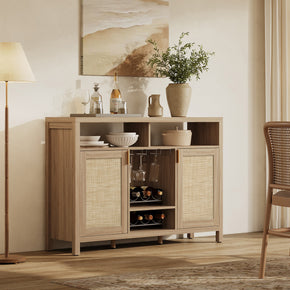
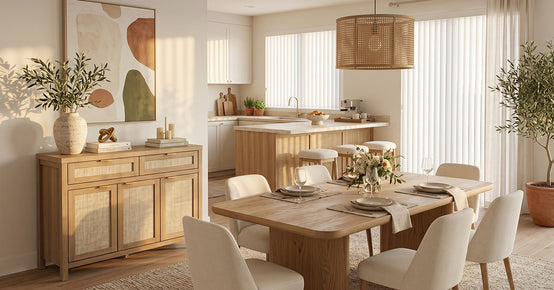
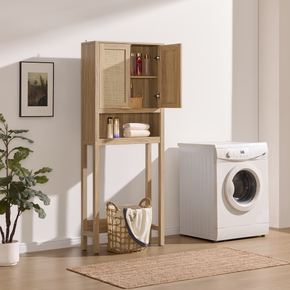
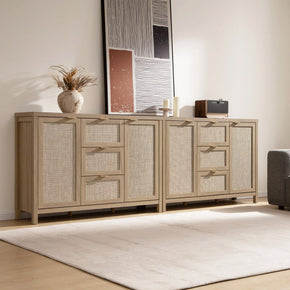
Read the finish name and study the daylight photos. A warm amber oak dresser with rattan drawer fronts will pair more easily with cherry and golden oak than a gray-washed piece of the same species.
Wood Pairings That Usually Work
- White oak with walnut. One neutral, one warm.
- Natural oak with a dark-stained wood, for clean value contrast.
- Maple with walnut. Warmth on both ends.
- Golden oak with cherry. The red and yellow notes agree.
- Pine with darker warm woods, once the pine has yellowed a little.
- Ash with smoked oak. A steady cool-on-cool pair.
Treat these wood tone combinations as examples, not rules. A heavy stain can move any species into another group overnight. Check the piece, not the label.
Can Walnut and Cherry Wood Be Mixed?
Yes. Walnut and cherry usually work together, because both carry warm undertones most of the time. The pair rarely fights.
Give one of them the lead. Walnut brings deeper brown contrast and cherry brings red warmth. Repeat each finish once more in something smaller, and avoid dropping a gray-washed piece in between them.
Cherry darkens as it ages. A new cherry piece will not match an older one for a year or two. Plan around that rather than fighting it.
How to Mix Wood Tones Room by Room
The method stays the same from room to room. Anchor, undertone, contrast, repeat. Only the anchor swaps.
Living Room
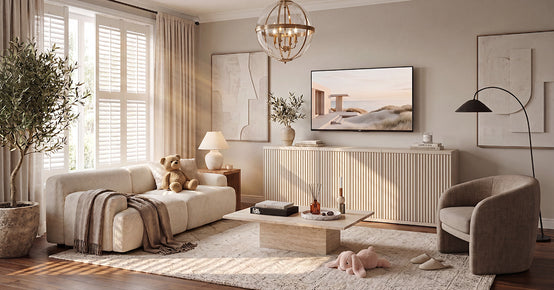
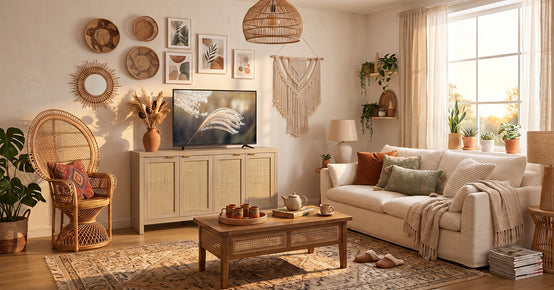
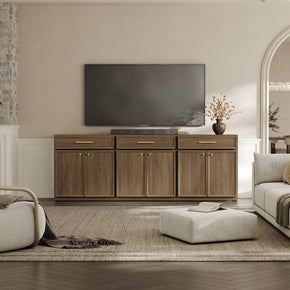
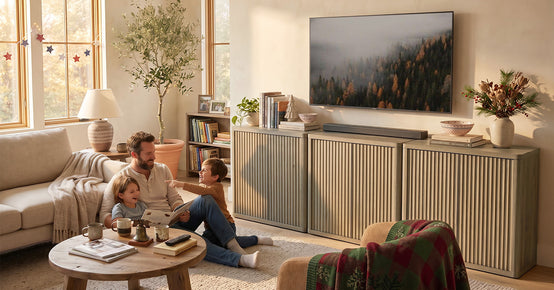
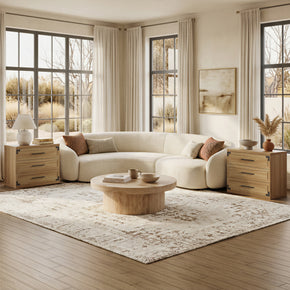
Flooring usually leads here. A darker coffee table or media console brings the contrast. A rug and an upholstered sofa stop the room turning into a lumber yard. Repeat that darker tone in a frame or a shelf.
Bedroom

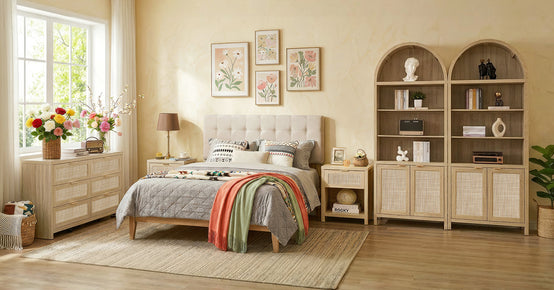
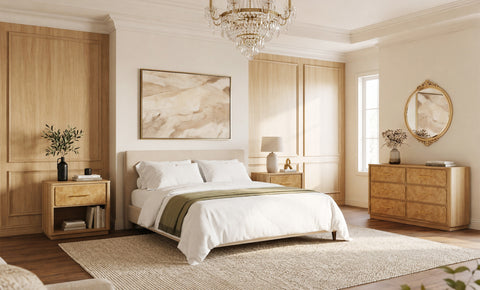
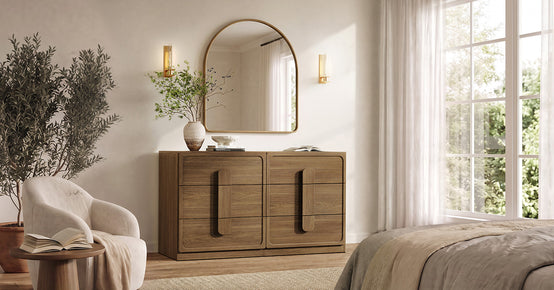
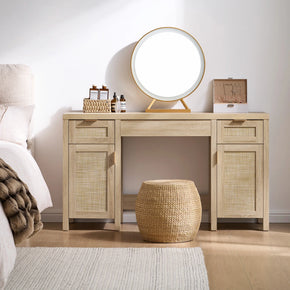
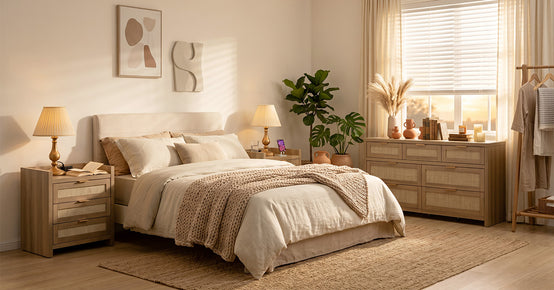
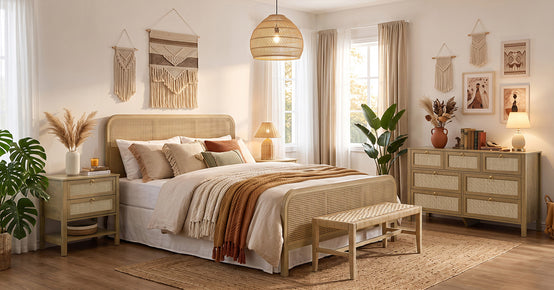
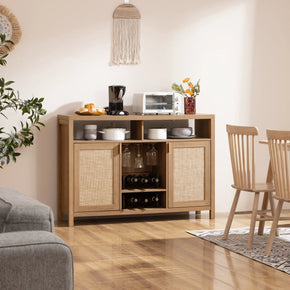
The bed frame or the dresser sets the tone here. Nightstands do not have to match either one, as long as the undertones agree and that finish appears again somewhere. Coordinated bedroom furniture in warm oak and rattan makes that undertone step easier when you are buying more than one piece.
Dining Room
The table leads, because it is the biggest visual block in the room. Chairs can contrast when their undertones make sense, and a sideboard or wall frame can then repeat the chair tone. Two tones is plenty here.
Kitchen and Open-Plan Spaces
Cabinets, flooring, bar stools and a dining table often sit in one sightline. Countertops, a painted island and a rug act as separators. Repeat one finish across the zones and the whole level ties together.
Home Office and Hallways
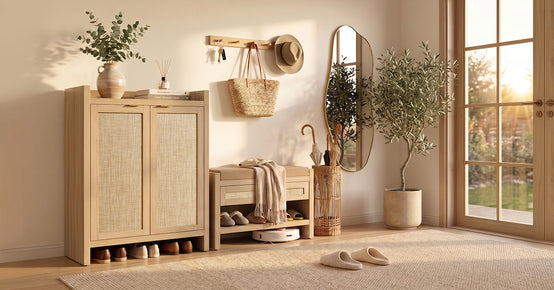
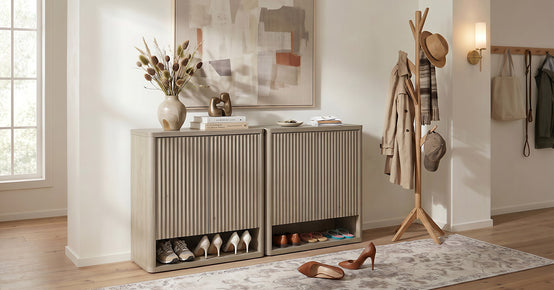
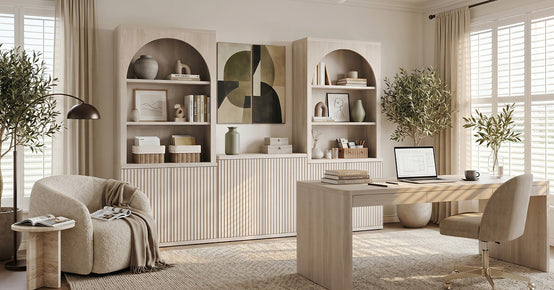
Small rooms hold fewer tones comfortably. A desk usually anchors an office, with shelving supplying the contrast. In a narrow hallway, stick to two finishes and let a runner break up the floor.
How to Judge Wood Tones When Shopping Online
Online photos get edited and screens are calibrated differently, so a finish can turn up warmer or grayer than you expected. A few habits cut the risk.
- Look at every photo, not only the styled hero shot
- Trust daylight room images over studio renders
- Zoom into the grain, the edges and the drawer fronts
- Read the finish name. Words like caramel or alder hint at undertone.
- Order a sample when one is offered. Check the return window.
Natural, oak, honey and walnut are marketing words rather than standard colors. That's another reason clear contrast beats an attempted match.
Mistakes That Make Mixed Wood Tones Look Messy
Most rooms that fail share a few common errors. Each one is fixable without replacing furniture.
- Filling a room with several near-identical mid-brown pieces
- Pairing clashing undertones with nothing neutral in between
- Bringing in a new wood tone once and never again
- Buying a matched furniture set, which flattens the room
- Bunching every similar finish into one corner
- Judging a finish under lamps only, then seeing it in daylight
- Ignoring sheen. A glossy piece next to a matte one will jar.
Try the cheap fixes first. Add a rug. Bring in black or white, or repeat the newest tone in a small object nearby. Pulling one competing finish out of the room works too.
A Quick Checklist Before You Buy a New Wood Piece
Run through these before another wood finish enters the room.
- Which wood tone currently dominates the space?
- Is the new piece warm, cool, or neutral?
- Does it contrast clearly, or is it an awkward near-match?
- How many wood tones are already in there?
- Can this tone be repeated somewhere else?
- Would a rug, textile, metal, or painted surface help separate them?
- Have I checked the finish in daylight and under lamps?
- Am I coordinating, or still trying to force a match?
Final Takeaway
Mixing wood tones comes down to one shift in thinking. Exact matching is not the goal, and chasing it usually makes a room look worse than leaving it alone.
Work the order instead—Anchor, undertone, contrast, repetition, balance. Coordinating wood tones beats matching them. Sort out undertones before you worry about species names. Pick obvious contrast over a near-match. Repeat every important tone at least twice.
Do that and a room can hold an old chest, a new dresser, tired floors and painted trim, and it will still look like somebody planned the whole thing.
FAQs
How do you mix and match wood tones?
Start with the wood that dominates the room. Decide whether its undertone is warm, cool, or neutral. Then add one or two tones that clearly differ but sit in the same undertone family. Repeat each secondary finish somewhere else. Rugs, textiles, metal, and paint keep competing woods apart.
How many wood tones can you mix in a room?
Two or three is the comfortable range for most rooms. One leads. One contrasts. A third can appear only in small accents. Bigger open-plan spaces handle a fourth when the undertones agree, and every finish repeats around the room.
What wood colors go well together?
The strongest pairs usually mix different depths with related undertones:
- Light oak with walnut
- White oak with a dark brown or black-stained wood
- Maple with walnut
- Golden oak with warm cherry
- Natural ash with smoked oak
Stain changes any species, so judge the finish in front of you rather than the species name.
Can walnut and cherry wood be mixed?
Yes, and it is one of the easier warm-on-warm pairs. Both species normally carry warm undertones. They sit together without clashing. Let walnut lead for depth or cherry lead for warmth. Then repeat each finish once more in something smaller so the pairing looks deliberate.
What are some examples of neutral wood tones?
Neutral woods look beige, blonde, tan, or plainly brown, with no strong red, yellow, or gray pull. Common ones include:
- White oak and natural oak
- Birch
- Maple in an unstained finish
- Ash
Lighting and stain still push any of these warmer or cooler. Judge the piece in daylight.
How do you mix different types of wood?
Compare finishes, not species labels. Pick one dominant wood. Add a second with clear contrast. Check that both undertones sit in the same family. Then repeat each secondary finish elsewhere. Once the tones are settled, loosely matching grain size and sheen is worth the effort.
How can I tell whether a wood finish has a warm, cool, or neutral undertone?
Lay the finish on a sheet of white paper by a window with the lamps off. White strips away guesswork. A yellow or red pull means warm. Gray or smoky means cool. Beige with no clear pull means neutral. Then check it against trim or flooring you cannot change.
Do wood floors and furniture have to match?
No, and forcing it often backfires. Floors and furniture rarely come from the same batch, so a near-match is far more likely than a true one. Treat the floor as your anchor tone. Then choose furniture that contrasts clearly while keeping a compatible undertone.
Sources
- Homes & Gardens – The Designer Trick for Mixing Wood Tones in a Kitchen
- American Hardwood Information Center – White Oak Species Guide
- The Wood Database – Black Walnut Color and Appearance
- Purdue University Arboretum Explorer – FNR Hardwood Profile: Black Walnut
- BioResources, North Carolina State University – Photodegradation of Three Hardwood Species by Sunlight and Xenon Light Sources
- HGTV – 25 Modern Living Room Design Ideas With Timeless Appeal
- Tarkett – Mixing Wood Tones: Interior Design Tips


Looking for something else?

Burl Wood Furniture: The Complete Buying Guide
LEARN MORE
What Is a Hope Chest? Meaning, History, and Modern Uses
LEARN MORE
What Is a Foyer? Meaning, Purpose and Design Guide
LEARN MORE
GREENGUARD Gold Certified Furniture: What It Really Means for Your Home
LEARN MORELooking for something else?

How to Clean a Mirror Without Streaks: Simple Step-by-Step Guide
LEARN MORE
21 Above-Bed Decor Ideas for a Stylish Bedroom Wall
LEARN MORE
Furniture Materials Guide: Picking the Right Material Room by Room
LEARN MORE


Further reading

18 Decorative Storage Box Ideas That Hide Clutter Well

How to Store Comforters Without Losing Space or Loft


