

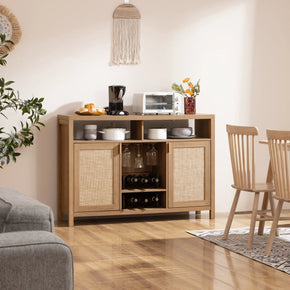
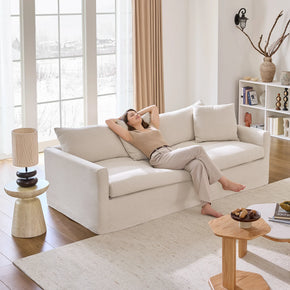


Furniture Materials Guide: Picking the Right Material Room by Room
The label tells you what a piece is made of. It does not tell you what that piece can take. Wood behaves nothing like engineered board. Glass behaves nothing like rattan. Put any of them in a room with kids, spills, and damp air, and they start to act differently.
Grade and construction matter as much as the material name. Two pieces sold as the same board, the same leather, or the same glass can perform nothing alike once you factor in how each was made, sealed, and tested.
Some hold weight for decades. Some swell in one wet summer. Wood keeps trading moisture with the air around it. TheUSDA Forest Products Laboratory has measured that swelling and shrinking, and that movement explains a lot of the joint gaps and warped panels people write off as bad luck.
Below, you'll find the most common home furniture materials, how each one tends to hold up, and where it lets you down. Which pieces it suits best. Read it as a starting point, not a guarantee, and check the manufacturer's care instructions and tested load ratings before you buy. Not every board, coating, and finish makes the list, and this guide focuses on home furniture.
Judging a Furniture Material Before You Buy It

No material wins everywhere. A dining table and a hallway shelf want opposite things from a board. Four things decide it. Weight, moisture resistance, cleaning, and how many years you want the piece to last. Sort those four first. Style comes after.
Strength and How Much Weight It Holds
Structural parts carry weight. Surface parts only have to look right. Bed rails, sofa frames, and table legs land in the first group. They need dense material and joints that don't shift. Drawer fronts and door panels fall into the second group. Staying flat matters more there than raw strength.
A shelf that sags is usually too long for the board holding it up. The board itself may be fine. Thickness and support matter as much as the species name on the label.
Moisture, Heat and Direct Sun

Wood pulls water from the air and releases it later. Drawers stick in July. The same drawers rattle in January. Engineered boards swell at raw edges. Chip the coating on a metal leg, and rust starts there. Sunny windows pull color out of fabric and finish alike.
Climate changes the answer. A board that behaves in a dry inland house can give trouble in a flat near the sea.
Cleaning and Day-to-Day Upkeep

One pass of a cloth over glass or coated metal and you are done. Sealed wood wants a damp cloth and no standing water. Below, you'll find the most common home furniture materials and how each one holds up, where it lets you down. Which pieces it suits best. Not every board, coating, and finish makes the list, and this guide focuses on home furniture. Untreated stone drinks oil and wine. Match the material to the effort you will really spend.
Comfort and Everyday Feel
Hardness, temperature, and texture matter on anything you touch daily. Metal chairs feel cold in winter. Leather sticks to skin in summer heat. Woven cane breathes. For seating and beds, feel outranks the spec sheet every time.
Cost Against Lifespan
Work it out per year. Four years out of a low-cost piece costs you more annually than fifteen years out of a solid one. Ask if it can be repaired, refinished, or re-covered. Anything you can fix keeps paying you back.
Furniture Materials Side by Side

This table narrows the field before you get into the details. Find the job you need done, then read the matching section.
|
Material |
Main Strength |
Main Limitation |
Works Best For |
|
Solid wood |
Sands back to new |
Heavy and moves with damp |
Beds, dining tables, chairs |
|
MDF |
Takes paint beautifully |
Raw edges swell |
Doors, drawer fronts, painted cabinets |
|
Plywood |
Grips screws and stays flat |
Grades differ a lot |
Cabinet boxes, sofa frames, shelving |
|
Particleboard |
Light on the wallet |
Weak edges, hates water |
Light shelving, dry cabinets |
|
Steel |
Strong at thin sizes |
Rusts once chipped |
Frames, legs, desks, shelving |
|
Aluminum |
No rust and low weight |
Bends under real load |
Outdoor frames, slim bases |
|
Glass |
Opens up a small room |
Chips and shows prints |
Table tops, cabinet doors |
|
Plastic and acrylic |
Light and easy to wipe |
Scratches and fades in sun |
Casual chairs, kids' rooms |
|
Rattan and cane |
Breathes and feels warm |
Damp loosens the weave |
Chair backs, door panels |
|
Bamboo |
Grows back fast |
Hardness varies by batch |
Panels, shelving, accents |
|
Marble and stone |
Hard top, real veining |
Heavy and stains |
Table tops, console tops |
|
Leather |
Wipes down, ages well |
Costs more, needs care |
Sofas, armchairs, benches |
|
Fabric |
Widest choice by far |
Wear depends on weave |
Sofas, chairs, headboards |
Solid Wood Furniture: The One You Can Sand Back

Solid wood comes straight off the lumber. Grain runs right through the board, top to bottom. Sand it, refinish it, then do the same again in ten years. Dents can be steamed out. Scratches blend in. Very few materials give you that second chance.
Hardwood and Softwood Do Not Mean What You Think
Hardwood grows on broadleaf trees—oak, maple, walnut, teak. Softwood grows on conifers like pine and fir. The words point at the tree. They say nothing about strength. Some hardwoods dent easily. Some softwoods hold up fine.
Density is the number that actually matters. Heavier woods take a knock better. They cost more too, and they weigh more to shift. Oak and maple sit high on that scale. Pine sits low. Drop a fork on a pine table, and the table remembers it.
When Solid Wood Is Worth the Money

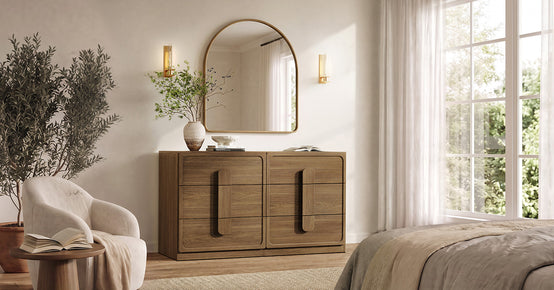
Bed frames, dining tables, chairs and dressers take a beating. Solid wood copes with it. If you plan to move house twice with the same piece, the extra weight pays for itself.
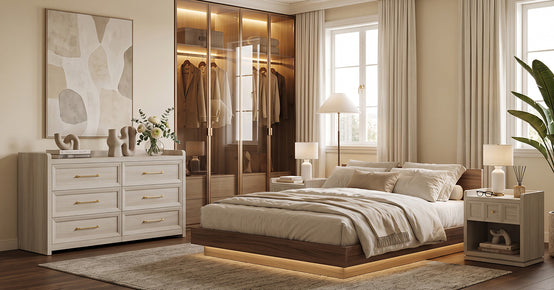
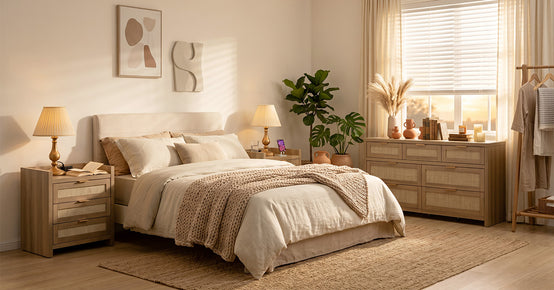
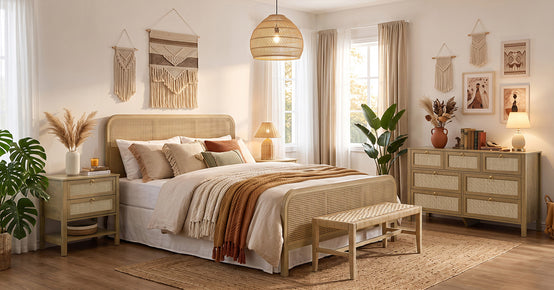
Set a three-drawer nightstand with a warm woodgrain beside a printed panel, and the difference in grain jumps out.
The Downsides Sellers Skip
Solid wood never stops moving with a room's humidity. Wide panels can cup or split when the air swings from wet to dry. It is heavy to move. You pay more for it.
Leave it in direct sun, and the color shifts unevenly over the years. None of this rules it out.
Engineered Wood Explained: MDF, Plywood, Particleboard and HDF
Engineered wood starts life as real wood. It gets broken down and pressed back into flat panels. Most shoppers lump the whole family together as the budget option. That is the mistake. Strength, screw grip, and water tolerance swing wildly from one board to the next.

MDF
MDF is wood fiber squeezed with resin into a dense, even panel. No grain on the face. No knots either. Paint sits on it beautifully, and a router cuts clean profiles. The Composite Panel Association puts that down to how evenly the panel is packed.
Weight is the trade. Let water sit on a raw edge, and it will swell. Weight is the trade. Let water sit on a raw edge, and it will swell—sealed edges and banding handle a quick wipe-up, nothing more. Cut lines, drill points, and chipped banding still drink water.
For a bathroom or kitchen wall, splash protection isn't enough. Ask three things. Is the core board moisture-resistant? Are all edges sealed, including cutouts and screw holes? Does the maker approve the piece for damp rooms?
Plywood
Plywood is thin wood veneers glued with the grain running in alternate directions. Screws bite hard into it. It fights warping. Cabinet boxes and sofa frames lean on it for those two reasons alone. APA, the Engineered Wood Association, adds that the layered build rides out humidity swings well.
Grades vary a lot. Decent furniture-grade plywood beats many solid panels on wide, flat parts.
Particleboard
Particleboard is wood chips glued together with resin. Laminate or melamine usually hides it. Light shelving and dry cabinets are its comfort zone. Edges and screw points are its weak spots. Standing water is the real enemy.
HDF and Hardboard
HDF is packed tighter than MDF. You will find it in thin panels, cabinet backs, and drawer bottoms. Thin as it is, it stays stiff. It is not built to carry structural load on its own.
Veneer and Laminate Are Surfaces, Not Cores

Veneer is a thin slice of real wood laid over a core. Laminate and melamine are printed surfaces with no wood on the face at all. Neither one tells you what sits underneath, so ask about the core.
Real veneer over MDF is a different animal from printed film over particleboard.
Emissions rules apply to all of these boards. In the United States, the EPA sets formaldehyde limits on hardwood plywood, MDF and particleboard. Check imported storage furniture for that compliance label.
Metal Furniture: Steel, Aluminum and Brass Trim

Metal has two roles in furniture. It can be the structure or the accent. Slim legs, drawer runners, handles, and frames all lean on it. Metal stays strong even when it is thin.
Steel
Steel is the strongest option at normal prices. Designers use it to keep frames narrow. Bed frames, shelving, desks, and table bases all rely on it. Powder coating guards the surface. Chip that coating in a damp room and rust begins at the scratch.
Aluminum
Aluminum weighs about a third as much as steel. It does not rust. Patio and balcony furniture uses it for both of those reasons. Under heavy load, it bends sooner than steel. Makers answer that with thicker sections.
Brass, Bronze and Gold-Tone Trim
Brass and bronze usually turn up as pulls, feet, inlays and edging. Solid brass dulls into a patina over the years. Polish brings it back. Plating wears through where hands land most. Check whether a warm gold handle is solid metal or a coating.
Glass Furniture and the Tempering Question

Glass makes a room feel bigger. Your eye travels straight through it instead of stopping at a solid front. Coffee tables, dining tops, cabinet doors and shelves all use that trick. Nothing else in the house wipes clean faster.
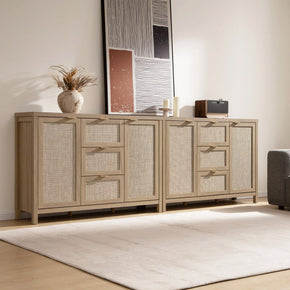
Display storage earns its place twice over. A glass-front sideboard cabinet shows whatyou store while still keeping dust off it.
Ask for safety glazing on any furniture glass. Ask for safety glazing on any furniture glass. Tempered glass usually breaks into small pieces instead of long shards, though small pieces still cut and still hurt on impact. Federal glazing rules apply to doors and enclosures, not a tabletop. Furniture glass is a separate question.
Push the seller on three things: glass type, the safety standard it meets, and whether documentation exists. Check the edges for chips. That is where a panel starts to fail. Do all of it before a glass top enters a home with young children.
Plastic and Acrylic Furniture
Plastic furniture is not automatically flimsy. Three things decide it. The polymer used, how thick the walls are, and whether there is ribbing inside. Polypropylene chairs shrug off daily abuse. Polycarbonate takes a hit. Acrylic passes for glass at a fraction of the weight.
Sun, heat, and scratches are the weak spots. A few seasons of UV can leave some plastics chalky and brittle. Scratches stay put. Sanding is not an option. It still earns a place in casual seating, kids' rooms, and utility storage.
Rattan, Wicker, Cane and Bamboo
Shoppers mix these four words up all the time and pay for it later. Two of them are materials. One is a way of weaving. One is a grass.
Rattan, Wicker and Cane Are Not the Same

Rattan is a climbing palm. Growers harvest it for the solid stems. Britannica points to the Calamus genus as the main commercial source. Wicker is not a material at all. Wicker is the weave itself. You can do it in rattan, reed, paper cord, or plastic.
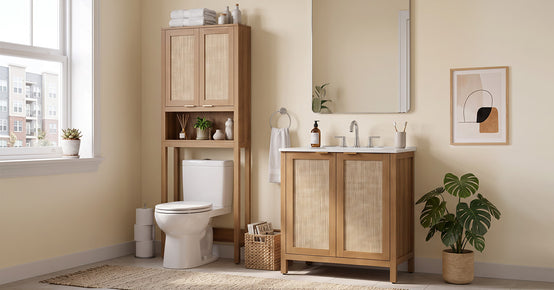
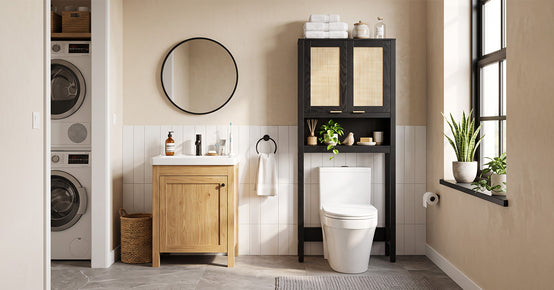
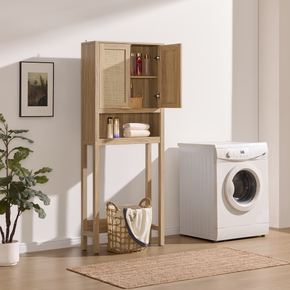
Cane is the outer skin peeled off rattan. Woven, it becomes the open webbing on chair backs and cabinet doors. Air passes through it. It looks light. It screens what is inside without shutting it away.
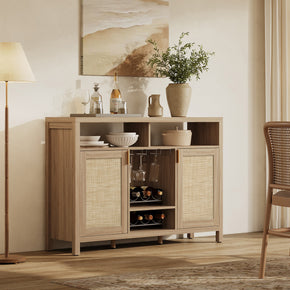
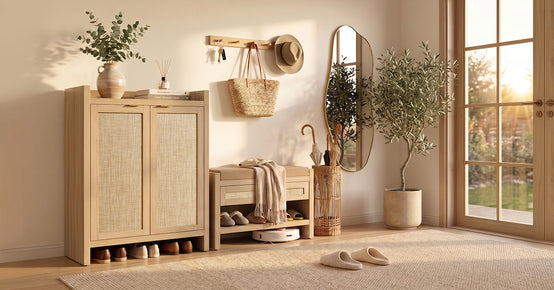
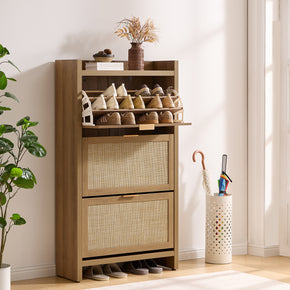
Airflow is the practical benefit. Put a woven rattan shoe cabinet for a busy entryway by the door, and the air keeps moving. Closed storage packed with shoes goes stale fast.
Bamboo
Bamboo is a grass, not a tree. It grows back in a handful of years. Strips get glued into panels that come out stiff and light. Treatment changes the color and the hardness. Two bamboo pieces can feel nothing alike.
Where Woven Furniture Gives Up
Leave woven furniture in damp air long enough, and the weave slackens. Strong sun dries the fibers until they crack. Keep natural rattan indoors, or under a covered porch. Synthetic resin wicker copes with weather far better. It never quite feels like the real thing.
Marble, Stone and Concrete Surfaces
Treat these as tops, not whole pieces. Weight alone rules them out for anything that moves often.
Marble and Natural Stone

Marble is porous, and it reacts to acid. Stains and dull etch marks follow. Leave a lemon slice on it overnight, and you will see one. Sealing helps. Bulletproof it is not. Granite and quartzite put up more of a fight. Check what the frame underneath is rated to carry.
Concrete
Concrete tops bring an industrial look. Seal them against oil and wine. Concrete tops bring an industrial look. Seal them against oil and wine. Fine hairline cracks turn up in cast pieces. Some are surface only. Others come from stress, a bad install, temperature swings, or a flaw in the mix.
You cannot tell which from looking. Take the weight off, photograph the crack, and ask the maker or a qualified repairer before using it again. Do that every time on a load-bearing top, seat, or bracket. Weight is the real planning problem, especially above the ground floor.
Upholstery Materials: Fabric or Leather
A sofa is never one material. Frame, springs, foam, and cover each do a separate job. Judge the cover on wear and cleaning. Judge the frame on strength. Blur those two, and you end up unhappy.
Not All Leather Is the Same Leather
Full-grain keeps the natural surface. It ages best of the lot. Top-grain gets sanded and coated for even color. Corrected leather sits below that. Bonded is leather scrap stuck to a backing. All four get sold under one word.
Cotton and Linen
Both breathe well and feel natural against skin. Both wrinkle. Both stain sooner than synthetics do. Blends fix most of that and keep the hand feel. That's why plenty of sofa covers are part natural fiber, part polyester.
Polyester, Microfiber and Performance Fabrics
Polyester holds its color. It shrugs off rubbing. It cleans up without a fuss. Family sofas lean on it heavily. The Association for Contract Textiles publishes an abrasion guideline for high-traffic seating. It also warns that a higher number doesn't guarantee a longer life.
Read the care code, not the marketing word. Performance is a claim until the cleaning instructions back it up.
Velvet and Chenille
Both are pile fabrics, meaning the surface stands up like short fur. Pressure marks and shading are normal there, not defects. They feel wonderful, and they show pet hair. Cleaning rules change with the backing, so check the tag.
Best Furniture Material for Each Situation
Material choice gets easy once you name the job the piece has to do.
Long-Term Structural Pieces

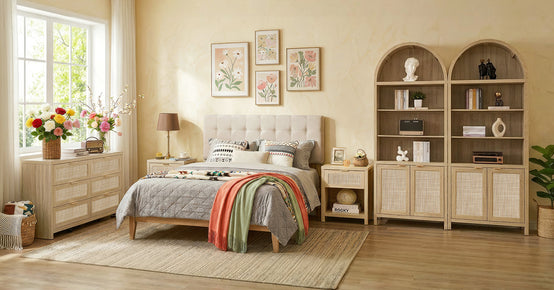
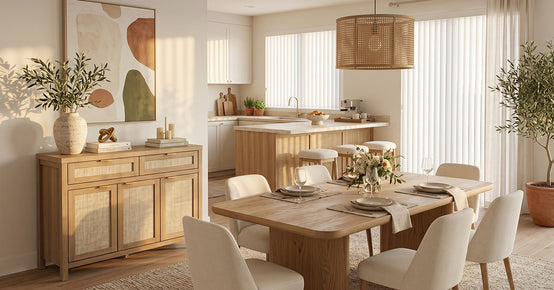
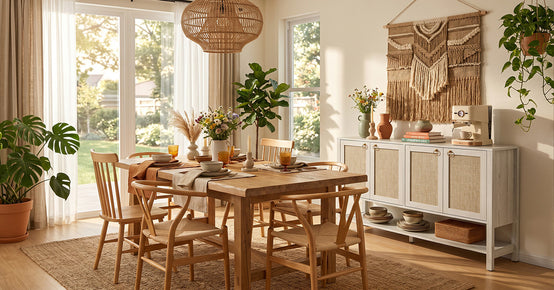
Solid hardwood, furniture-grade plywood, and steel all handle sustained load. Beds, dining tables, and chairs belong in this group. Browsing bedroom furniture in wood and rattan finishes side by side makes the weight difference obvious quickly.
Budget-Friendly Storage
MDF and laminated board work well for cabinets and drawer boxes when the edges are sealed and the hardware is decent. Board thickness tells you more than the material name does.
Homes With Children or Pets
Choose washable covers, rounded edges, and finishes that hide scratches. Anchor tall storage to the wall as well. The Consumer Product Safety Commission runs an ongoing campaign on tip-over prevention because dressers and bookcases cause real injuries every year.
Humid Rooms and Coastal Homes
Powder-coated metal, aluminum, sealed solid wood, and moisture-rated panels all cope. Standard particleboard does not. Raw edges are where the damage starts, so check the back panel and the drawer bottoms.
Outdoor and Covered Spaces
Aluminum, teak, synthetic wicker, and outdoor-rated fabric handle weather. Outdoor suitability comes from the whole build, including the fasteners and the finish, not from the visible surface alone.
Mixed-Material Furniture: One Piece, Several Materials

The best pieces rarely use one material throughout. Wood top over a steel base. Stone top on a metal frame. Plywood sofa frame with foam and a woven cover. MDF doors on a plywood carcass.
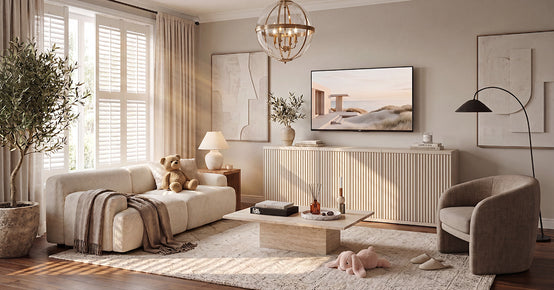
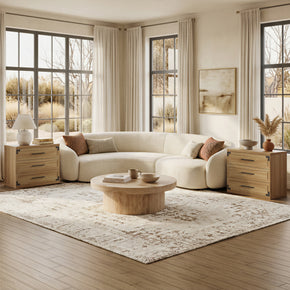
Most living room furniture built from mixed materials follows the same logic, since each part is chosen for the job it does rather than the label on the tag.
Judge each component separately. A material that is wrong for a leg can be perfect for a drawer front.
How to Tell If Furniture Is Well Made
Construction decides lifespan as much as material does. Four checks catch most problems before you pay.
Check the Joints and the Frame

Gently push the piece from one corner. Racking means loose joints. Look for corner blocks on seating, dowels or mortise joints on frames, and metal brackets where load concentrates. Staples alone in a structural joint are a warning sign.
Look at Edges and Hidden Areas
Back panels, drawer bottoms and undersides tell the truth. Sealed edge banding, solid drawer bottoms and a real back panel signal care. Exposed raw board along an edge signals corner cutting.
Test Drawers, Doors and Slides

Open every drawer fully. Full-extension runners with soft close cost more, but price doesn't prove lifespan. Ask what load each drawer is rated for, which hardware brand it uses, and how many open-close cycles it was tested to. Check the runners' warranty too.
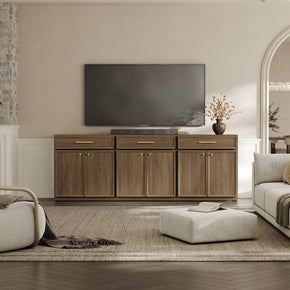
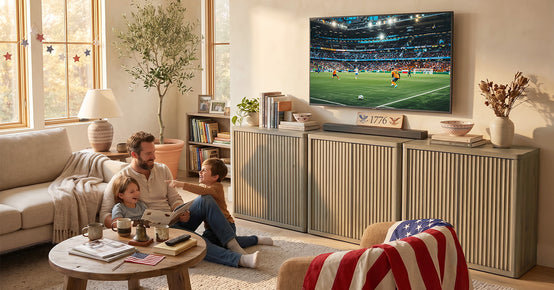
Then load the drawer with what it will really hold and slide it. It should move smoothly at full weight, with no sag. Doors should sit flush with even gaps, and a tall black TV stand with a wipe-clean finish shows how doors line up on a wide cabinet.
Doors should sit flush with even gaps, and a tall black TV stand with a wipe-clean finish is a fair place to check how doors line up on a wide cabinet.
Ask What Sits Under the Finish
Ask four questions before you pay. What is the core board? Is the visible wood veneer or print? What is the sofa frame made of? Is the metal coated for the room it will live in?
Common Furniture Material Mistakes
Buying on looks alone tops the list, because showroom lighting flatters everything. The second most common error is treating all wood as equal, since a pine frame and an oak frame behave nothing alike under the same load.
Other repeat offenders show up constantly. People confuse veneer with solid wood. They write off every MDF piece as poor quality. They put indoor rattan on an open balcony. They pick a pale, delicate cover for a room where people eat.
One more is worth naming. People obsess over material names and skip the joints, the hardware, and the finish, which is usually what fails first.
A Short Checklist Before You Buy
Run through these ten questions before you commit to a piece.
- What weight must this piece carry?
- How often will it be used, and by how many people?
- Will it be exposed to moisture, steam, or direct sun?
- Are children or pets using the same room?
- How much upkeep am I willing to do each year?
- Can it be repaired, refinished, or re-covered later?
- Is the weight a problem for my floor or my stairs?
- What is the actual core material under the finish?
- Are the exposed edges sealed and the joints reinforced?
- Does the material suit the room, not just the mood board?
Final Takeaway
No single material is best for furniture. The only good match fits the job, the room, and the upkeep you will realistically do. Name the load first. Name the moisture second. Style and budget follow after those two.
Well-built engineered board beats badly built solid wood on most days. Construction quality, appropriate materials, and a proper finish together determine how long a piece lasts, which is why the label alone never settles the question.
FAQs
What are 10 different types of furniture?
That phrase usually means furniture pieces rather than materials. Ten common ones are:
- Sofa
- Armchair
- Bed
- Dining table
- Dining chair
- Dresser
- Wardrobe
- Desk
- Coffee table
- Bookcase
You can also group furniture by material, function, or the room it lives in.
What are the four types of furniture?
There is no single official four-part system. A practical grouping is seating furniture, sleeping furniture, work surfaces, and storage furniture.
Chairs and sofas fall in the first group. Beds and daybeds fall in the second. Dining tables and desks fall in the third. Wardrobes, dressers, and cabinets fall in the fourth group.
What material is best for furniture?
No material is best for every use. Solid hardwood suits structural pieces that need to last. Plywood and MDF suit cabinet boxes and painted panels. Steel suits slim frames; aluminum and synthetic wicker suit outdoor use. For upholstery, choose a cover based on how it wears and cleans in your household.
What are the 7 major categories of furniture?
Categories differ by retailer, though a useful seven-part split looks like this:
- Living room furniture
- Bedroom furniture
- Dining furniture
- Home office furniture
- Storage furniture
- Entryway furniture
- Outdoor and accent furniture
Treat it as a shopping structure rather than a formal industry standard.
What are the two types of furniture?
Furniture splits two ways depending on the context. By construction, the split is freestanding against built-in. By location, the split is indoor against outdoor. Both divisions are useful, and neither one is more correct than the other.
What are 5 examples of furniture?
Chair, table, sofa, bed, and wardrobe are the five most widely recognized examples. Each one covers a different daily need. Sitting, working, sleeping, and storing cover almost every room in the house.
What is another word for furniture?
Furnishings is the closest everyday alternative. The two words are not identical. Furniture usually means movable functional pieces, while furnishings can also cover rugs, curtains, lighting, and decorative objects in the same room.
Sources
- USDA Forest Products Laboratory – Wood Handbook: Wood as an Engineering Material
- U.S. Environmental Protection Agency – Formaldehyde Emission Standards for Composite Wood Products
- Composite Panel Association – MDF Panels: Medium Density Fiberboard
- APA, The Engineered Wood Association – Plywood
- U.S. Consumer Product Safety Commission – Anchor It! Tip-Over Prevention
- Encyclopedia Britannica – Calamus, the Rattan Palm
- Association for Contract Textiles – Abrasion Guidelines for High-Traffic Woven Fabrics
- U.S. Code of Federal Regulations – 16 CFR Part 1201: Safety Standard for Architectural Glazing Materials


Looking for something else?

Burl Wood Furniture: The Complete Buying Guide
LEARN MORE
What Is a Hope Chest? Meaning, History, and Modern Uses
LEARN MORE
What Is a Foyer? Meaning, Purpose and Design Guide
LEARN MORE
GREENGUARD Gold Certified Furniture: What It Really Means for Your Home
LEARN MORELooking for something else?

How to Clean a Mirror Without Streaks: Simple Step-by-Step Guide
LEARN MORE
21 Above-Bed Decor Ideas for a Stylish Bedroom Wall
LEARN MORE
Furniture Materials Guide: Picking the Right Material Room by Room
LEARN MORE


Further reading

18 Decorative Storage Box Ideas That Hide Clutter Well

How to Store Comforters Without Losing Space or Loft


