

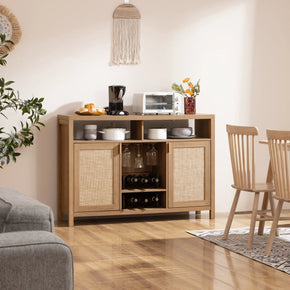


Curio Cabinet Decor Ideas: How to Style a Display Cabinet Without the Clutter
Most curio cabinet decor ideas skip the first step. Empty the thing. Glass hides nothing, and a cabinet packed to the edges looks messy from the other side of the room. More decor will not save it. Fewer pieces, different heights, and a bit of gap will. Below you will find what to display, how to arrange it, how to light it, and how to keep fragile things safe behind the glass. People have been doing this for a long time. The habit goes back to the collector cabinets of 16th-century Europe. People kept art, shells, and oddities together in one case. The biggest of thosecollections shaped some early European museums. Hans Sloane's collection became the seed of the British Museum.
What Is a Curio Cabinet?

Picture a tall glass case with open shelves inside and a pair of doors on the front. The frame is usually wood, sometimes metal. Drawers are rare, and the odd one you find sits low and shallow.
You are meant to see everything. That is the whole point. Glass often runs down the sides too, so light gets in from more than one direction. Scroll through a range of glass display cabinets for collectibles and the shape stands out fast.
Curio Cabinet vs Display Cabinet
Display cabinet is the umbrella term. It covers low units, wall boxes, and just about anything with a glass front. Curio is narrower.
A curio is really a display case built for collections. Taller. Slimmer. More glass, fewer solid panels. Plenty of display cabinets lean toward everyday storage with a bit of show on top.
Curio Cabinet vs China Cabinet
China cabinets have one job. Plates, glassware, and the good tableware. They tend to be wide, with real drawers or a closed base for linens and serving pieces.
A curio takes whatever you want to look at. Shells. Books. Ceramics, carvings, souvenirs from a trip. Glass runs further down, and the base is hardly ever closed off.
Are Curio Cabinets Back in Style?
Curio cabinets never left the market, and retailers still sell them in volume. What has changed is the styling that gets photographed and recommended.
Older versions leaned dark and heavy, often a carved hutch filled corner to corner. Newer ones tend to run slimmer, with black or brass frames, arched tops, and mixed finishes. Both are available right now, to be honest.
The other shift is how much goes inside. Contemporary styling favors fewer objects with space around them, rather than filling every shelf. Whether that counts as back in style depends on which version you mean.
What Looks Good in a Curio Cabinet?
Almost anything works, as long as the pieces share a visual thread. Meaning matters, and so does variety in height, texture, and material. Layered decor always beats a matched set.
Ceramics, vases, and small pottery hold up well behind glass. Vintage books do too, mixed with a couple you are actually reading. Small sculptures, carved objects, and framed photographs add height without bulk.
Travel souvenirs, maps, and postcards suit the format. Family heirlooms, wedding china, and handwritten cards belong here too. Shells, stones, and dried flowers add natural texture, and jewelry or watches work well if the shelves sit near eye level.
Start With Objects That Carry a Story
Do not go shopping yet. Walk around your house and pull out things you already own and like. A shell off a beach beats a matching decor set from a big box store.
That is the original idea behind this furniture. Early collectors packed wonder rooms with objects meant to start conversations, not to match the wallpaper.
Mix Decorative and Personal Pieces
Go all sentimental, and the cabinet turns into a memory box. Go all decorative, and it starts to look like a shop window instead of a home. A mix of the two is what makes it read as collected.
12 Curio Cabinet Decor Ideas to Try
Pick two or three of these. Trying all twelve at once will only land you back at a crowded cabinet.
1. Build a Modern Cabinet of Curiosities

Put odd finds next to natural specimens, old objects, and a few books. Run one loose thread through the lot, maybe a color or a material, and the mix reads as a choice instead of a pile.
2. Style It With Vintage Books and Small Objects

Lay three or four books flat and set something small on top. Books make free risers. Mix flat stacks with a couple of upright spines so the shelf is not one straight line of nothing.
3. Give Family Heirlooms Their Own Shelf

Wedding china. An inherited clock. A bundle of old letters. Give them space rather than wedging them between newer things. One shelf with four pieces that mean something beats four crowded shelves.
4. Add Plants and Dried Botanicals

Greenery takes the edge off all that glass and metal. Dried stems, preserved eucalyptus, and good artificial pieces are the safer picks, and they ask nothing of the cabinet.
Live plants inside a display case are harder than they look. Most cabinets sit too far from a window for anything to thrive. Air exchange stays low behind glass. Water has to go somewhere, and an overflowing saucer sits directly on wood or metal.
Keep live plants to open shelving if you want them. Set them on a waterproof tray, on a shelf away from anything you would hate to lose, and pick something that suits the light the spot actually gets. Lifting the pot out to water it at the sink saves a lot of trouble.
5. Group Ceramics, Glassware and Sculptural Pieces

Work with shape, not color. Set a smooth glazed vase beside a rough stoneware bowl and one piece of clear glass, then let the difference in surface carry the group. Texture does more here than people expect.
6. Try a One-Color Display

Keep everything cream. Or black. Or blue. Shapes and materials can be wildly different. A tight palette makes a mixed collection look deliberate with barely any effort.
7. Create a Travel Shelf

Gather souvenirs, small ceramics, a folded map, and two or three photos from one trip. Give each destination its own shelf. Edit hard, because a souvenir dump helps nobody.
8. Keep a Modern Curio Cabinet Minimal

Fewer objects and more air. Use three or four sculptural pieces per shelf in neutral tones, none touching. This is the quickest way to make an older cabinet feel current.
9. Give Each Shelf a Theme

Books on one shelf. Ceramics on the next. Natural finds below that. Themes stop unrelated objects from fighting each other. Carry one color through every level, and the cabinet still reads as a whole.
10. Mix Old Pieces With New Ones

Stand an antique brass candlestick beside a plain modern vase. Old with new keeps a traditional cabinet from looking dated, and it stops a modern one from looking cold.
11. Style the Back Panel

Nearly every guide ignores this. Whatever sits behind your objects changes how they all read. Peel-and-stick wallpaper works—a coat of deep paint works. A piece of linen taped inside will do the job, too.
Pale ceramics jump forward against a dark back panel. Dark objects need the opposite. Mirrored backs need less help, but they do double whatever clutter is already in there.
12. Change a Few Pieces With the Season

Swap three or four objects instead of restyling the lot. Dried stems in autumn. Pale ceramics come spring. Small changes keep the display alive without eating a whole weekend.
How to Arrange a Curio Cabinet Without the Clutter

The objects matter less than the placement. Good shelf styling is mostly restraint, and these five moves clear up nearly every crowded-cabinet problem.
Vary the Heights
A row of same-height objects falls flat. Lift a few pieces with book stacks, small boxes, or risers, and try to land one tall item, one medium, and one short on every shelf.
Group in Odd Numbers
Threes and fives sit better than pairs. Your eye goes hunting for a third piece when it only finds two. Treat it as a habit and not a law.
Leave Negative Space
Negative space is the real trick with glass cabinets. Your eye needs somewhere to rest between objects.
Filling roughly two-thirds of a shelf is a decent starting point. It is not a fixed ratio. Large pieces eat the space fast, clear glass reads lighter than it measures, and a dark backing panel changes the whole balance again.
Photograph the shelf straight on when you think it is done. A phone photo flattens the depth your eye keeps correcting for, and gaps that looked fine in person show up as either too tight or too empty. Adjust from the photo, not the ratio.
Viewing distance matters too. A cabinet you walk past holds more than one you sit across from.
Layer Objects From Back to Front
Lean a small framed print or a tray against the back panel. Set medium pieces in front of it and something small right at the edge. Depth is what turns a shelf into a scene.
Repeat a Color, Material or Shape
Three brass pieces spread across different shelves will pull the whole cabinet together. A repeated blue does the same, and so will three round shapes or one wooden object on every level. Quiet curio cabinet organization, really.
Curio Cabinet Lighting Ideas

Lighting is the biggest single upgrade for a display cabinet. It matters most in a dark corner or when the shelves run deep.
Built-In and Puck Lighting
Light inside turns the cabinet into a focal point once the sun goes down. Battery puck lights stick under each shelf and skip the wiring entirely. A glass-door cabinet with built-in lighting saves you the retrofit.

Warm Versus Cool Bulbs
Warm light near 2700K flatters wood, brass, and ceramics. Cool white flattens them and can leave a warm display looking grey. Keep it dim. Bright cabinet lights fight the objects rather than showing them off.
How Much Light Is Too Much
Light damage stacks up and never reverses. Conservators point out that exposure builds over time and has to be limited. Put the lights on a timer. Choose LEDs over halogen, which throws heat as well as light.
How to Protect What You Display

Competitors leave this out, which is strange. Most people load these cabinets with things they could never replace.
Keep Sunlight Off Fragile Pieces
Direct sun ruins a display faster than anything else. Photographs, paper and fabric fade badly, and museum guidance flagsphotos as especially vulnerable to light.
Window direction is not a simple rule. South-facing windows get the strongest sun in the northern hemisphere, and north-facing ones do in the southern. Buildings, trees and awnings change it again. Watch where the light actually lands across a day.
UV film helps but doesn't solve it. Visible light fades pigments on its own, and heat from a sunny spot does its own damage. Keep the cabinet out of direct sun rather than relying on the glass.
Total exposure matters, since fading adds up over years. Rotate fragile pieces in and out rather than leaving one photograph on display forever. Anything valuable is worth a conversation with a conservator about protective glazing or proper storage.
Damp is the other problem. Paper and fabric react to it. A bathroom or a cold hallway makes a poor home for letters, books, or a christening gown.
Dust, Glass and Cleaning
Glass doors cut down on dust a lot. They do not stop it. Wipe the panes with a microfiber cloth and plain water. Spray the cloth, and never the glass, or the liquid runs straight down onto your shelves.
For the objects, a soft brush handles carved or fragile surfaces better than any cloth. The Smithsonian publishes solid guidelines for caring for heirlooms at home.
Weight Limits and Anti-Tip Safety
Glass shelves come with a load limit printed in the manual. Put heavy stoneware and book stacks on the bottom shelf or on a solid shelf. Check before you load the top.
Tall cabinets tip over. Use the anti-tip strap from the box and fix it into a stud. This matters far more once the shelves hold something breakable.
What Can I Put on Top of a Curio Cabinet?

Weight comes before styling here. Anything on top raises the center of gravity, and a tall cabinet is already the piece most likely to go over. Check the manual for a top-load rating, and anchor the unit before you put anything on it.
Some objects belong somewhere else entirely. A planter full of wet soil is heavier than it looks. Glass, ceramics, and anything breakable turn a tip-over into a worse one. Keep both away from tops a child can reach and away from anything that shakes when a door closes.
Two or three pieces at proper scale look right to most eyes. Treat that as a styling preference, not a limit. Whatever goes up there should back up the display inside rather than compete with it.
Add One Statement Piece
A big vase. An oversized bowl. A woven basket or one sculptural object. Something with real presence beats five small things elbowing each other.
Use Greenery to Add Height
A trailing plant, tall branches, or dried stems will stretch the cabinet up toward the ceiling. This helps most when the cabinet sits lower than the surrounding furniture.
Keep the Top Visually Light
Leave real gaps around whatever you put up there. Two objects and some space look considered. Six little pieces in a row look like an overflow shelf, which defeats the whole idea.
Where Is the Best Place to Put a Curio Cabinet?
Two things decide this first: what you plan to display. Second, how much floor space you can give a tall cabinet.
Living Room

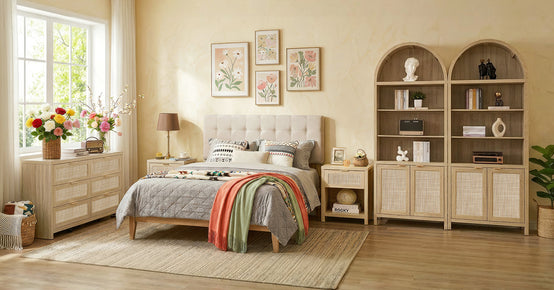
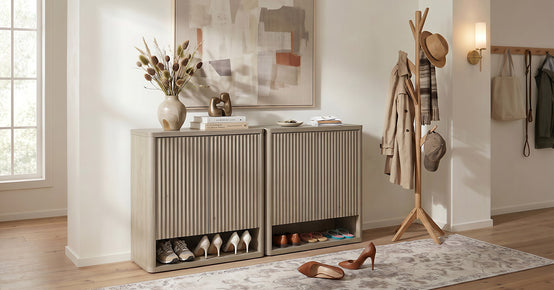
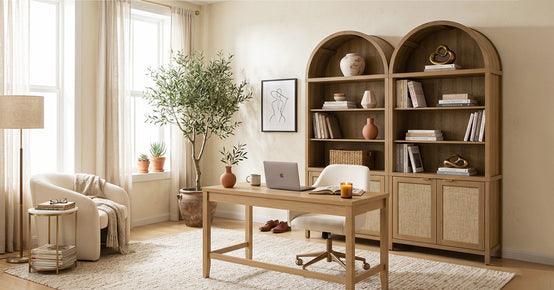
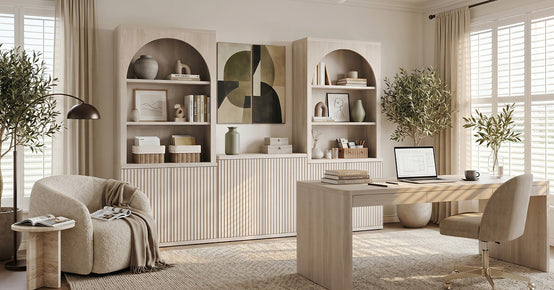
A curio does well beside a sofa or in the corner that never quite fills up. Books, art, ceramics, and travel finds all suit the room. A fluted arched cabinet with two doors gives you open display on top and closed storage underneath.
Dining Room

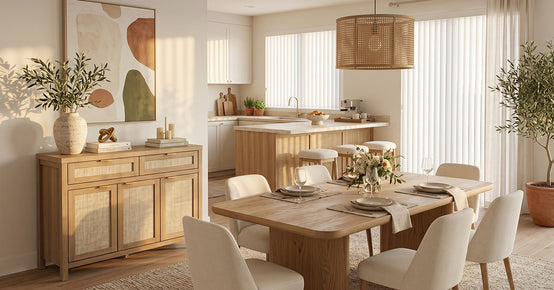
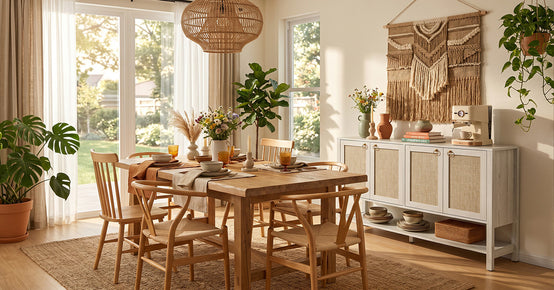
The traditional spot. Glassware, serving pieces, heirloom plates, and decanters all earn shelf space here. Matching the cabinet to the rest of your dining room storage and serving furniture keeps the finishes from clashing.
Hallway or Entryway

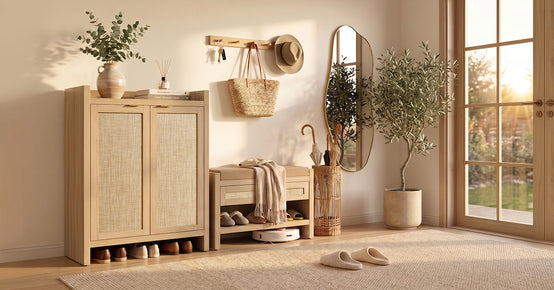
The end of a hallway is usually wasted. Put a narrow cabinet there, and it pulls the eye upward, turning a pass-through into something worth a second look. A tall three-tier arched display shelf does that job on almost no floor space.
Bedroom or Home Office
Smaller cabinets suit jewelry, perfume, stationery, photos or a book collection. In an office, a display case keeps a hobby visible and stops it creeping across the desk.
Small-Space Options
Short on floor? A tabletop case, a wall-mounted glass box, a corner curio cabinet or one glass-front section inside a shelving unit all give you the same effect on a fraction of the footprint.
Curio Cabinet Styling by Interior Style
One cabinet can suit very different rooms. The contents change, the palette changes, and so does how full you keep it.
Modern and Contemporary

Fewer objects, clean shapes, neutral ceramics and plenty of gaps. Leave the ornate frames alone. A slim glass-door cabinet in brown oak or black fits this look, particularly with the lighting kept low and warm.
Traditional and Classic
China, antiques, brass, leather books and framed family photographs. Symmetry helps here. Matching pieces at either end of a shelf feel right in a traditional room and stiff in a modern one.
Farmhouse and Organic
Stoneware, woven baskets, wood boards, dried botanicals, and old books. Rough texture carries the whole look. Stick to creams, browns, and soft green.
Eclectic and Maximalist
More color. More pattern. Stranger objects. This lands closest to a real cabinet of curiosities. Keep one visual thread running through it, or the display quietly turns into storage.
Curio Cabinet Decorating Mistakes to Avoid
Cluttered cabinets nearly always come from the same short list of errors. You can fix each one in an afternoon without buying a thing.
Filling every shelf edge to edge is the big one, and using objects that all stand at the same height is close behind. Tiny items get lost in a large cabinet. Too many unrelated colors with nothing to connect them will do the same damage.
Ignoring the back panel leaves pale objects vanishing into a pale backing. Lining everything up along the front edge kills the depth. Photographs and paper left in the afternoon sun will fade whether the rest looks good or not.
None of these need money. Take out a quarter of the objects. Add one riser. Paint the back panel. Shift the cabinet a few feet from the window.
7 Quick Rules for Better Curio Cabinet Styling
Keep these in mind while you arrange.
- Start with pieces you actually love, not decor bought to fill a gap
- Pick a loose color palette and hold to it
- Put a tall, a medium, and a small object on every shelf
- Combine at least two textures, such as ceramic with wood
- Group similar things together instead of scattering them
- Use book stacks as free risers
- Leave one shelf noticeably emptier than the rest
Final Takeaway
A curio cabinet works best when it holds less than you first assume. Take it all out. Keep the pieces that mean something. Vary the heights and leave gaps between them.
Add warm light, watch the sun, and read the shelf load before you stack the top. Change three or four objects a couple of times a year, and the display never goes stale.
Do that, and the cabinet stops being storage. It becomes the thing guests walk over to look at.
FAQs
What looks good in a curio cabinet?
Ceramics, vintage books, small sculptures, glassware, travel souvenirs, family heirlooms, framed photos, natural finds and small plants all display well. The mix counts for more than any single piece. Vary the height, texture and material, then carry one color across the shelves so the cabinet reads as one arrangement.
What can I put on top of a curio cabinet?
Stick to two or three larger pieces. Good options:
- One large vase or planter
- Tall branches or a dried arrangement
- A framed print leaning on the wall
- A decorative bowl or woven basket
Leave clear space around them. Small clustered accessories turn the top into overflow storage.
What is the difference between a curio and display cabinet?
A display cabinet is the broad category and covers nearly any glass-front piece. A curio sits inside that group. Curios run taller and slimmer, carry glass on more than one side, and exist to show collections rather than store everyday things.
Are curio cabinets back in style?
Yes, in a reworked form. New versions have slim frames, arched tops, black or brass metal, and far more restrained displays. The dated feeling came from overcrowding, not from the furniture. An edited cabinet suits a modern room with no trouble.
Where is the best place to put a curio cabinet?
Living rooms, dining rooms, hallways, entryways, bedrooms and offices all work. Match the room to what goes inside. Glassware and plates suit a dining room. Books and art suit a living room. The end of a hallway is often the most wasted wall in the house.
What are some good things to put in a display cabinet?
Options that work in most homes:
- Books, ceramics and glassware
- Collectibles and small antiques
- Artwork, prints and photographs
- Heirlooms, jewelry and keepsakes
- Plants, shells, stones and dried flowers
Choose things you enjoy seeing daily. A glass cabinet puts them on permanent view.
What goes in a curio?
No fixed collection is required. The best contents are objects that mean something to you, or simply look interesting. The thread tying them together can be a color, a material, a theme or a personal link. Anything meeting one of those belongs in there.
What are some creative ways to decorate a cabinet?
Try a one-color display, a shelf-by-shelf theme, a travel collection or a mix of vintage and modern pieces. Painting the back panel is another easy shift. The long history of collecting behind these cabinets is a good place to look when you feel stuck.
Sources
- Smithsonian magazine – Cabinets of Curiosities and the Origin of Collecting
- Sotheby's – Collecting the Curious: The Odd Fascination of Wunderkammers
- Smithsonian American Art Museum – How to Care for Your Collections
- Conservation Center for Art & Historic Artifacts – Light Exposure for Artifacts on Exhibition
- The National WWII Museum – Preservation of Artifacts
- Columbia University Libraries, Avery – Cabinets of Curiosities


Looking for something else?
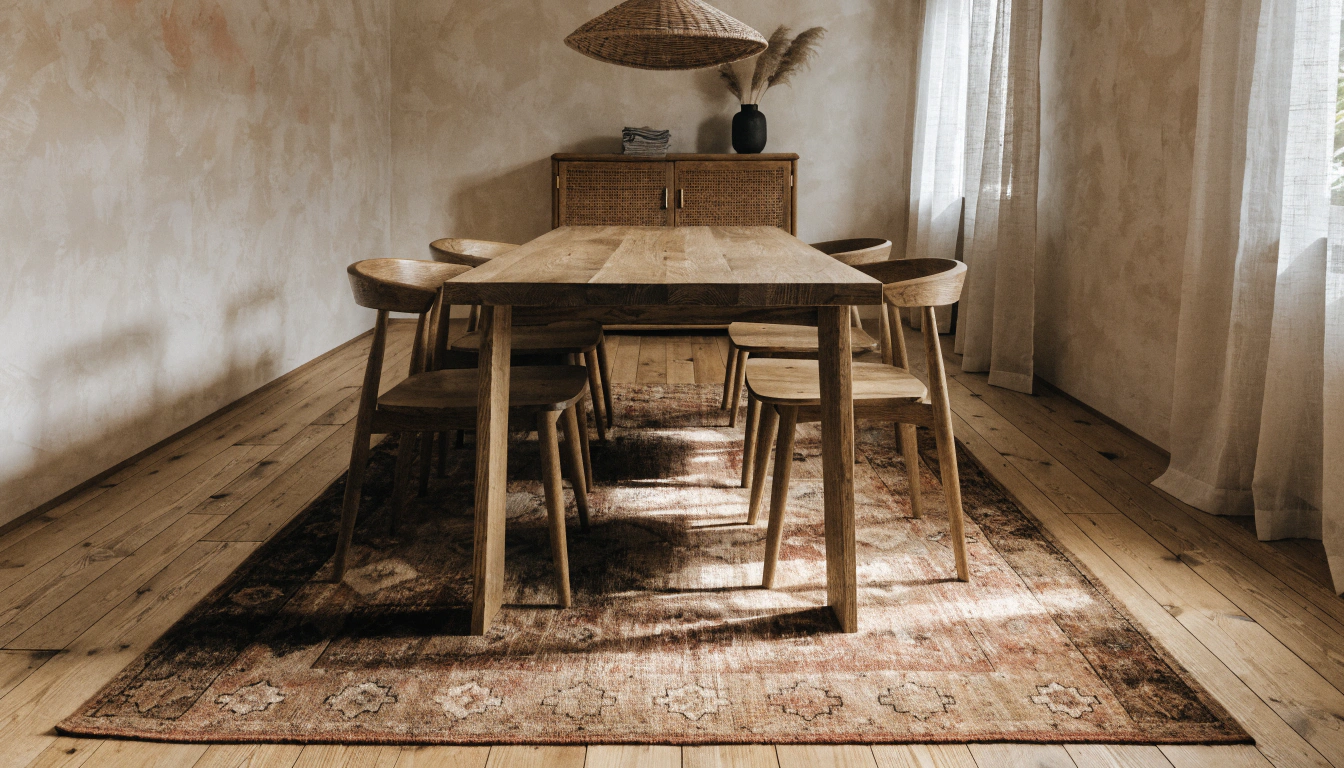
How to Choose the Perfect Rug for Your Dining Room (Size, Shape, and Placement Under the Table)
LEARN MORE
A Guide to the Best Luxury Bath Towels: GSM, Cotton Types, and How to Choose Hotel-Quality Towels
LEARN MORE
How to Put on a Sofa Slipcover: A Simple Step-by-Step Guide to Sofa and Couch Slipcovers
LEARN MORE
HowChoose the Right Entryway Rug: Entryway Rug Size, Material, and Foyer Placement Guide
LEARN MORELooking for something else?
How to Remodel and Organize Your Laundry Room: Laundry Room Layout, Storage, and Organization Ideas
LEARN MORE
Melamine vs. Ceramic Outdoor Dinnerware: A Practical Comparison Guide
LEARN MORE
Smart Solutions: Fabric Pilling on Sofas, Clothes, and More
LEARN MORE


Further reading
Curved Furniture: How to Style, Measure, and Buy It in 2026
Curio Cabinet Decor Ideas: How to Style a Display Cabinet Without the Clutter


