




What Is Acacia Wood? A Complete Guide to Its Uses, Pros, and Care
Acacia is on half the floor tags in furniture stores right now. Dining tables, coffee tables, outdoor benches, cutting boards — it keeps appearing. And not by accident. What is acacia wood in practical terms: a dense tropical hardwood with natural oil content, dramatic grain, and genuine durability that doesn’t require careful handling to maintain. Grown across Australia, Africa, and Southeast Asia. More geographic coverage than almost any other commercial timber genus. That range is part of why it’s widely available and competitively priced against hardwoods; it genuinely matches them in performance.
Here’s what this covers: what acacia actually is, where it comes from, how it looks, how it holds up, and where it earns its reputation versus where it doesn’t. Oak, teak, and sheesham comparisons included.
What Is Acacia Wood?

Acacia wood comes from the acacia tree — a genus with over 1,000 species of hardwood trees and shrubs spread across warm climates worldwide. Three things define the timber: density, dramatic grain, and natural moisture resistance. None of that is marketing language. It comes from the tree’s biology. Acacia grows in harsh, dry environments and builds a tight grain structure as a result.
Buy acacia furniture, and you’re getting real hardwood. Not composite. Not veneer over softwood. Actual dense timber. Heavy. Built to take contact without denting through.
Most of the acacia in furniture stores comes from plantation-grown trees in Thailand, Vietnam, Indonesia, and India. Fast-growing for a hardwood. Available in real supply. That’s why acacia is priced more accessibly than teak or walnut, despite its genuine performance credentials — not because its quality is compromised.
Where Does Acacia Wood Come From?

Where It Grows
Australia has close to 1,000 native acacia species. Africa runs its own distinct population across savannahs and arid regions. Central and South America have a variety of tropical and dry climates. Southeast Asia is where the bulk of commercial furniture-grade acacia comes from today. The trees favor warm, often harsh conditions. They reach harvestable size in ten to fifteen years. Teak takes twenty-five.
Common Species of Acacia Used for Wood
Not all acacia timber performs the same. Species vary in color, density, and grain character:
- Acacia mangium — widely farmed in Southeast Asia, common in mid-range furniture
- Acacia melanoxylon (Australian Blackwood) — darker, denser, considered a premium species
- Acacia nilotica (Babul) — used across South Asia and Africa, with a tighter grain structure
When a product says “acacia wood” without specifying further, it’s usually a plantation variety from Asia—solid performance for everyday furniture. Premium pieces often specify the exact species.
What Does Acacia Wood Look Like?
Acacia Wood Color

Acacia doesn’t have a single color. Pale honey gold at one end, deep chocolate brown at the other, with warm amber and reddish-brown in between. Within a single plank, you’ll often see lighter sapwood sitting right next to darker heartwood. That contrast is a feature, not a flaw.
Every piece comes out of the kiln looking like it made its own decisions. Either that’s exactly what you want, or it’s too much. Know which camp you’re in before buying a large piece.
Acacia Wood Grain Pattern

Grain is where acacia earns its visual reputation. Wavy, interlocked, sometimes irregular — more movement than oak or maple. Some pieces look like a topographic map. Others have bold tiger-stripe variation that reads as exotic. No two boards look the same.
Put an acacia dining table in a minimal room,m and it still reads as a focal point. The grain does the design work without anything elaborate around it.
Is Acacia a Hardwood?
Yes. Actually, it's a hardwood, not just marketed as one.
The Janka hardness scale measures the force needed to embed a steel ball into wood. Most commercial acacia scores within the hardwood range, comparable to oak. Some species score significantly higher. Practical result: acacia resists dents and scratches under daily use in ways softer furniture woods don’t.
A cutting board handles actual cutting without the surface degrading quickly. A dining table doesn’t show knife marks from plates being dragged across it. Dense grain also holds fasteners and joints well — acacia doesn’t split at screws the way softer woods sometimes do. That matters more for furniture longevity than most buyers realize when they’re shopping.
Why Does Acacia Keep Showing Up Everywhere?
It Handles Daily Use
A dining table that survives children, dinner parties, and someone’s habit of sliding plates across the surface without thinking — acacia handles that. The density absorbs impact without showing visible damage. It doesn’t scratch easily. And if something does happen after years of use, it responds well to refinishing.
For categories that take direct daily contact — dining tables, benches, sideboards, cutting boards — acacia performs where softer woods begin to show wear within a year or two.
Natural Water Resistance

Natural oils in the wood fibers reduce moisture absorption on contact—meaningful water resistance without added treatment. Spills, steam, regular humidity — handled better than untreated pine or many mid-range furniture woods.
Water resistance isn’t waterproofing. Standing water for extended periods eventually causes swelling or warping. Wipe spills quickly. Don’t leave wet cloths or plant pots sitting on acacia for days. It handles contact. Not absorption.
The Look
No two pieces look identical. The grain works with metal hardware, natural linen, stone, and most neutral palettes. Rustic, farmhouse, modern organic, contemporary — acacia adapts without demanding everything else match.
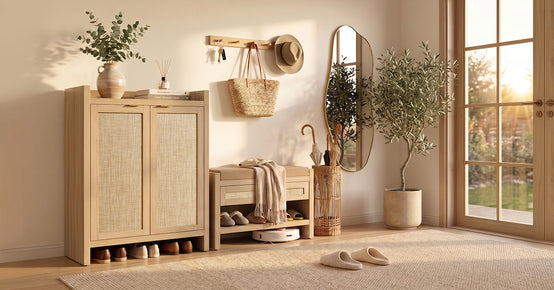
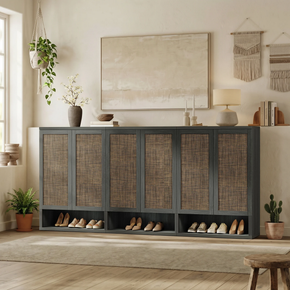
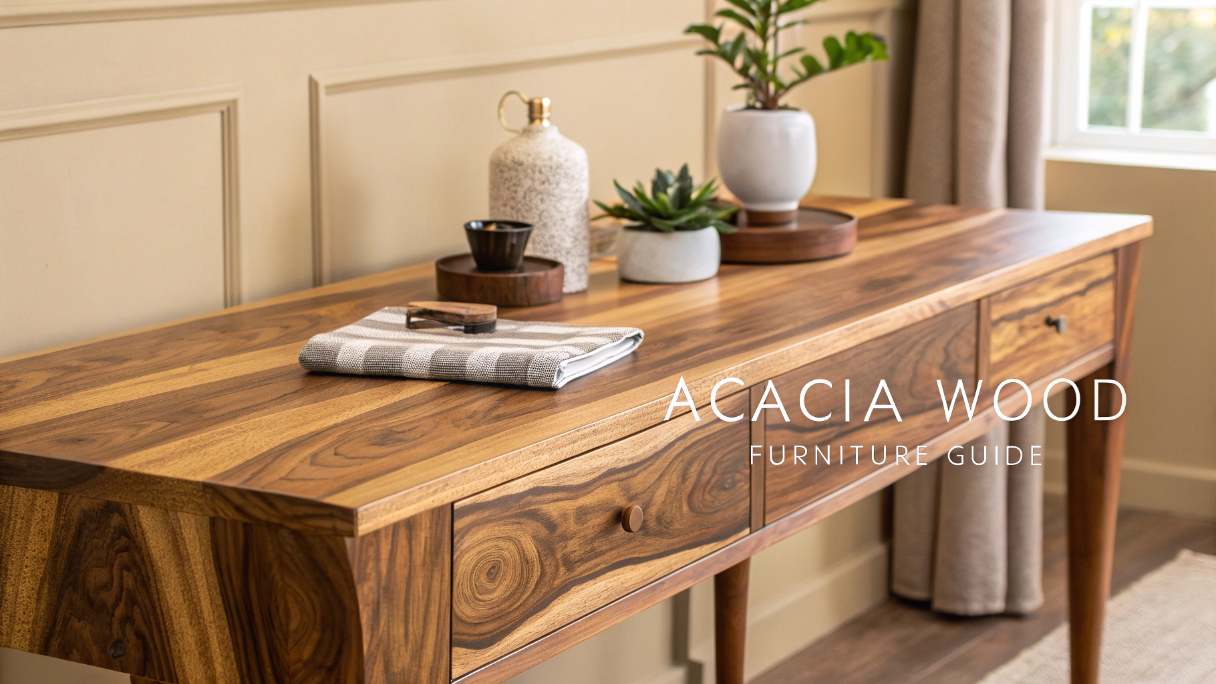
For an entry or living space where a wood focal point anchors the room, the Savanna Console Table does that job cleanly — with structured proportions, drawer storage to keep the surface clear, and a silhouette that holds a room together without competing with what surrounds it.
The Price Point
Acacia costs less than teak, walnut, or rosewood — three hardwoods it genuinely competes with on durability. Grows faster, grows in more places, and plantation farming is well established. Not paying for slow-grown imported timber with a limited supply chain.
Large, solid acacia pieces still carry a real price, though. The affordable reputation applies to Acacia versus premium competitors. Not to acacia versus budget furniture generally.
What Acacia Wood Gets Used For
Indoor Furniture

The most common application by a wide margin. Dining tables, coffee tables, benches, sideboards, dressers, chairs — acacia suits all of these. Pairs genuine strength with visual character. The grain makes it a natural focal point without requiring much styling.
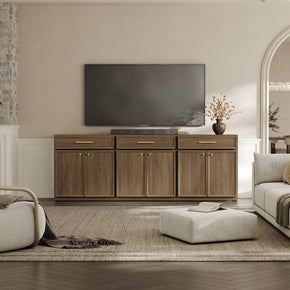
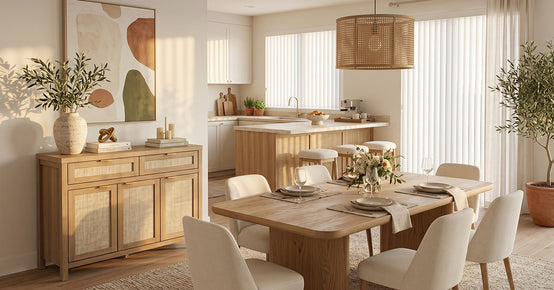
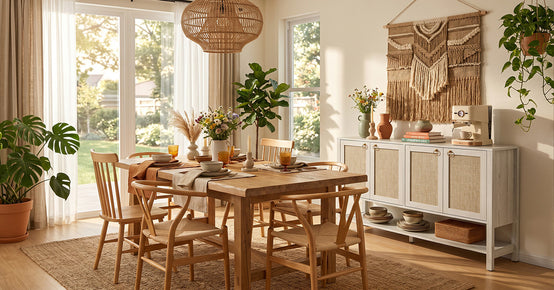
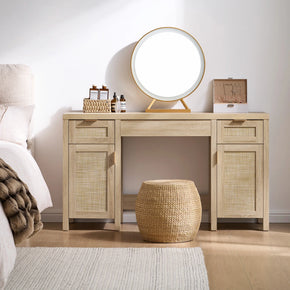
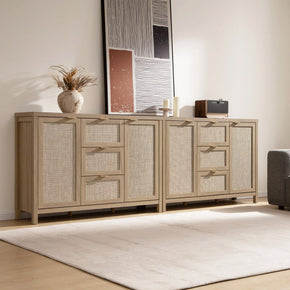
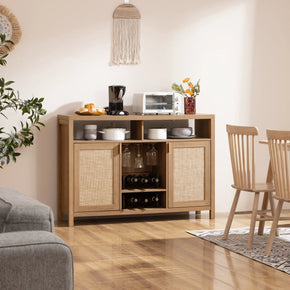
For dining rooms specifically, acacia is one of the stronger choices in its price range. It handles daily contact with plates, cutlery, and regular wiping without quickly losing surface integrity. A sideboard in the dining room takes the same kind of contact. The Savanna Sideboard 3 Drawers and 2 Doors is built for that role — structured, wide-format, real storage depth, profile that reads as considered rather than filler.
Outdoor Furniture

Acacia works outdoors. But with conditions that actually matter.
In covered outdoor spaces — a shaded deck, a protected patio, a screened porch — it performs well. The natural oils reduce moisture uptake. Annual oiling keeps the surface intact.
In fully exposed settings — direct rain, harsh sun, coastal humidity — acacia needs significantly more maintenance than teak, and without it, it fails faster. Not the right choice for furniture that gets rained on and left uncovered. For those conditions, teak. Simple as that.
Cutting Boards and Kitchen Items

Acacia cutting boards have gotten popular for good reasons. Harder boards resist knife marks longer than softer boards. Natural oils, tannins, and flavonoids in the wood give the surface antibacterial and antimicrobial properties, which actually matter when you’re preparing raw meat regularly.
Hand washes only, dry immediately, and oil with food-safe mineral oil regularly. Never put an acacia cutting board in the dishwasher. The heat and prolonged moisture will cause it to crack and warp within a few cycles. Not an exaggeration — it happens fast.
Flooring and Countertops
Acacia flooring works. Hard enough for foot traffic, grain variation creates a more interesting floor than uniform species. Engineered acacia handles humidity movement better than solid planks — worth knowing for kitchens and bathrooms.
For countertops: seal all sides, not just the show surface. Avoid standing water near seams. Plan for seasonal wood movement — all solid wood expands and contracts with changes in humidity. Countertops installed without allowing for that movement eventually crack. Not an acacia issue specifically. A solid wood issue generally.
Pros and Cons of Acacia Wood

What It Gets Right
- Dense hardwood that resists daily wear better than most mid-range furniture woods.
- Dramatic natural grain — each piece looks different
- Naturally resistant to moisture, bacteria, and insects
- Works indoors and in covered outdoor settings
- Generally more affordable than teak, walnut, and rosewood
- Fast-growing, plantation-sourced acacia can be responsibly produced
- Takes a wide range of finishes well
Where It Lets You Down
- Not waterproof — standing water causes damage over time
- Needs oiling or sealing for any outdoor use
- Direct sun dries and fades it faster than some other hardwoods
- Grain variation can be too dramatic for buyers wanting uniform furniture
- Large premium pieces still carry a high price
- Hardness varies significantly between species
- More maintenance-intensive outdoors than teak
Acacia Wood vs Oak
Both are genuine hardwoods—both last well. The differences are almost entirely about appearance.
Oak has an even, predictable grain — classic and consistent. The same surface character repeats throughout the piece of furniture—a right choice for traditional, transitional, and Scandinavian-influenced interiors where consistency matters.
Acacia has more movement, more color contrast, and more visual irregularity. Put both side by side, and the acacia draws more attention. Whether that’s good depends entirely on what the room is doing.
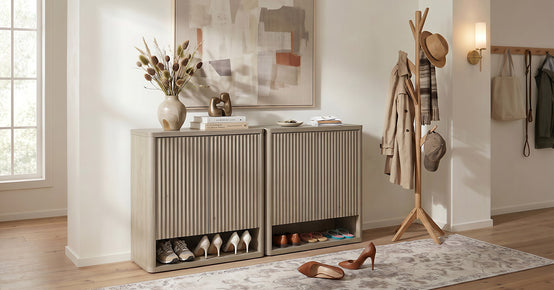
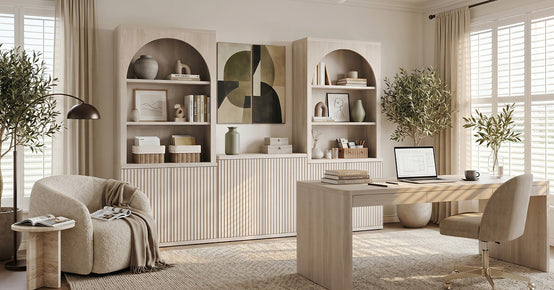
Durability: comparable. Price: Acacia often wins. Visual character: completely different answers depending on the buyer. The Stria Sideboard with 2 Doors has that kind of character in furniture terms — structural, low-profile, enough visual weight to ground a room without demanding attention.
Acacia Wood vs Teak

Teak is the benchmark for outdoor hardwood. High natural oil content, silica in the grain structure, tight cell walls — handles rain, coastal humidity, UV exposure, and temperature swings better than almost any commercially available timber. That performance comes at a price. Teak costs significantly more per board foot than acacia.
For indoor furniture and covered outdoor settings, acacia is genuinely competitive. The performance gap is narrow in those conditions. The price gap is not.
For harsh outdoor exposure — full rain, direct sun, coastal salt air — teak is the better long-term choice. For dining rooms, covered patios, and indoor living spaces, acacia offers comparable performance at a lower cost. Most buyers choosing acacia for indoor use are making a rational decision, not a compromise.
Acacia Wood vs Sheesham
Sheesham — Indian rosewood — is a South Asian hardwood widely used in Indian furniture manufacturing and is frequently exported to Europe and North America. Strong material. Genuinely durable.
The color is typically darker and more uniform than acacia,with a warmer reddish-brown tone that reads as traditional or colonial in styling terms. It doesn’t have acacia’s dramatic grain variation. More predictable visually. Some buyers prefer exactly that.
Where acacia has the edge: wider availability, more species options, and a more flexible color range. Where sheesham has the edge: a classic, consistent look for traditional furniture aesthetics.
Neither is a poor quality choice. It comes down to what the room is doing. Modern-natural or rustic feel: acacia. Traditional and colonial aesthetics: sheesham.
Is Acacia an Eco-Friendly Wood?

Acacia can be eco-friendly. That qualifier does real work.
Many commercial acacia species reach harvestable size in ten to fifteen years, versus teak’s twenty-five to thirty. They grow in plantations that, when managed responsibly, don’t deplete natural forests. Some leftover material from processing gets converted to biomass rather than discarded.
But fast-growing plantation wood doesn’t automatically mean responsible sourcing. Poorly managed plantations exist. Species displacement and habitat concerns are real in some growing regions.
Practical check: FSC certification on the specific product. Forest Stewardship Council. Third-party verification of responsible sourcing. Vague “sustainable” tags without certification aren’t verification of anything. Sicotas Furniture offers modern furniture,sourced and produced in ways that align with responsible production standards.
How to Care for Acacia Wood
Clean With Mild Soap and Water
Warm water, mild dish soap, soft cloth — that’s the full cleaning kit. Wipe, rinse, and dry immediately. No silicone cleaners, no alcohol-based products, no ammonia. These strip away the natural oils, leaving the surface more vulnerable to cracking over time.
Wipe Spills Immediately, Avoid Standing Water
Acacia is water-resistant. Not waterproof. A glass was knocked over and wiped up in ten seconds: no problem. A wet tablecloth left on the surface for two days: a problem. Moisture finds its way into grain at joints and edges before it shows up on the main surface. The wood handles contact. Not absorption.
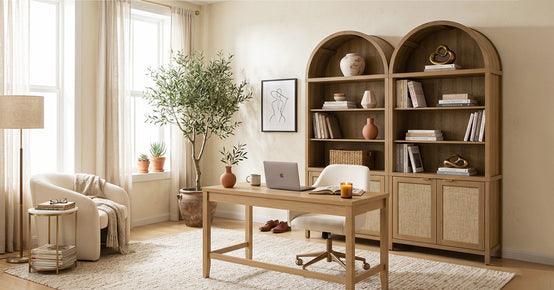
A bookshelf near an acacia surface keeps the rest of the room organized and prevents clutter from piling up on wooden furniture. The Zura Bookcase with 2 Doors handles that storage role well — clean lines, enclosed lower storage, and enough shelf space to keep surfaces clear.
Oil and Seal Regularly

Indoor acacia needs oiling once or twice a year. Mineral oil for cutting boards and kitchen items — food-safe, cheap, available anywhere. Furniture oil for tables and chairs. The point is to keep wood fibers supplied so the surface stays flexible rather than drying out and cracking at the edges.
Outdoor acacia needs sealing with proper wood oil or sealant before the first season and annually after. This isn’t optional. It’s the reason outdoor acacia either lasts a decade or starts failing within two years. The difference is almost entirely in whether the sealing gets done.
Keep It Out of Harsh Direct Sun
Direct sun bleaches and dries acacia faster than most hardwoods. Outdoor pieces should go under a pergola, shade sail, or awning rather than in full unshaded sun. Indoor pieces should stay away from south-facing windows, where prolonged daily sun hits the same spot on the surface.
Bring the outdoor acacia inside or cover it properly during winter and heat waves. Hard frost and intense heat both cause cracking more quickly than seasonal humidity changes. Don’t leave it outside and hope for the best.
FAQs
Is acacia wood of good quality?
Yes, good quality for its price range: dense hardwood, genuine durability, distinctive grain. Quality varies between species and manufacturing — check the species where possible, and be cautious of very cheap acacia that may use low-grade plantation wood covered by a heavy finish.
What is so special about acacia wood?
The combination of hardness, visual character, and accessible pricing. Very few hardwoods deliver dramatic natural grain variation and genuine durability at a price point that’s within reach outside the premium market. Acacia fills a real gap.
Is acacia better than oak?
Not better — different. Acacia has more dramatic grain and often costs less. Oak has a more classic, uniform appearance with a longer history in Western furniture traditions. The better choice depends on the style and the room.
Is acacia better than teak?
For outdoor use in wet or coastal climates, teak wins. Higher oil content, stronger weather resistance, and more durable in the long term without intensive maintenance. For indoor furniture and covered patios, acacia is genuinely competitive at a lower price. The gap in outdoor performance is real. The gap in indoor performance is narrow.
Is acacia wood expensive?
Depends on the piece. Basic acacia items — cutting boards, small side tables, simple benches — are genuinely affordable. Large solid acacia dining tables or full bedroom sets carry significant prices. Acacia is cheaper than teak and walnut. Not necessarily cheap in absolute terms.
Which is better, sheesham or acacia?
Sheesham has a darker, more traditional look. Acacia has a bolder color variation and more visual drama. Both are strong hardwoods. Choose based on the room's aesthetic direction. Neither is a poor quality choice.
What are the disadvantages of acacia wood?
Not waterproof; can warp or crack from standing water or sustained harsh sun; needs regular oiling, especially outdoors; grain variation doesn’t suit everyone; some commercial species are softer than others; large, high-quality pieces still cost real money.
Why is acacia so cheap?
It grows quickly and in large quantities in plantation farming across Asia: shorter growing time, greater availability, and simpler sourcing than slow-growing premium hardwoods. Lower price reflects production economics, not timber quality.
How long will acacia wood last?
Indoor acacia furniture, when properly maintained, lasts for decades. Outdoor acacia in covered conditions, with annual oiling, typically lasts 10 to 20 years without significant problems. Left untreated in harsh outdoor conditions, serious wear begins to appear within a few years.
Final Thoughts
Acacia is a real hardwood with real credentials — dense, durable, naturally resistant, dramatic grain that’s hard to replicate at the price point. It doesn’t demand careful handling. Just basic upkeep: keep it dry, oil it annually, keep it out of harsh direct sun.
For dining rooms, living spaces, covered patios, and kitchen items where wood character matters, acacia is one of the more rational choices in its price range. It’s not precious. It just needs the basics.
Sources
- The Spruce — What Is Acacia Wood Furniture? — Properties, hardness, buying tips, and maintenance guidance.
- Castlery — What Is Acacia Wood and Is It Good? — Characteristics, benefits, species, and furniture applications.
- Woodworkers Institute — The Charms of Acacia Wood — History, habitat, grain properties, and workshop applications.
- VT Industries — What Is Acacia Wood? — Butcher block applications, moisture management, and finish guidance.
- CuttingBoard.com — Why Acacia Is Becoming Popular for Cutting Boards — Kitchen uses, construction, and comparison with traditional hardwoods.
- Wikipedia — Acacia — Taxonomy, species distribution, ecology, and historical uses.
- Grillio — Teak vs Acacia for Outdoor Furniture — Durability, weather resistance, maintenance, and cost comparison.
- Sunwise Panel — What Is Acacia Wood? — Properties, applications, and sustainability overview.


Looking for something else?

Furniture Materials Guide: Picking the Right Material Room by Room
LEARN MORE
How to Mix Wood Tones Without Making a Room Look Mismatched
LEARN MORE
18 College Apartment Furniture Ideas That Save Space and Money
LEARN MORE
Types of Entertainment Centers: 11 Designs and How to Pick One
LEARN MORELooking for something else?

Curio Cabinet Decor Ideas: How to Style a Display Cabinet Without the Clutter
LEARN MORE
Curved Furniture: How to Style, Measure, and Buy It in 2026
LEARN MORE
What Is Rattan Furniture? A Buyer Guide to Types and Care
LEARN MORE


Further reading

How to Choose a Nightstand for a CPAP Machine

How to Choose a Shoe Cabinet for Men's Sizes, High-Tops, and Bulky Shoes


