




Mid Century Modern Exterior Guide: 12 Design Ideas for American Homes
Chasing that clean, low-slung look on an American home? This mid-century modern exterior guide shows you how to get there. Mid-century modern exteriors, developed in the 1940s through the 1960s, favor flat roofs, long horizontal lines, glass walls, and natural materials. You see flat roofs and long flat lines. You see big sheets of glass. And you see real materials left plain and honest. The result is a house that feels calm and open. It looks like it was always meant to sit there. Up next are 12 mid-century modern exterior design ideas. You also get the features, the materials, and the paint colors that make the look work. Curious about the backstory first? Britannica explains the movement's roots. Now, let us look at what works at the curb.
|
Quick answer: It comes down to a few things. A flat or low-slope roof. Deep overhangs. Strong flat lines and walls of glass. Almost no trim. And real materials like wood, stone, and stucco. One bold front door usually finishes it off. |
Key Features of a Mid-Century Modern Exterior
Start by knowing what you want. The key characteristics of a mid-century modern exterior come down to a short list of features. Land most of them, and you have got the real thing. Miss them, and it reads as a knockoff.
- Flat or low-slope roof: usually a flat plane or a gentle pitch. Now and then, you get a bold butterfly roof that sinks in the middle.
- Deep overhangs: wide eaves that cast shade and stretch the eye sideways. They make the home look longer and lower.
- Strong horizontal lines: the house runs long and low. It hugs rather than standing up tall and boxy.
- Floor-to-ceiling glass: big windows and clerestory windows pull in daylight. They also soften the line between inside and out.
- Minimal ornament: no fussy trim anywhere. The contrast between materials does all the decorating.
- Natural materials: wood siding, stone, brick, and stucco, often left raw and honest.
- A bold front door: just one strong color. It is usually the brightest spot on the whole front of the house.
All of it traces back to the post-war originals. The Chicago Architecture Center notes the era's lack of ornament and expressed structure. That plain, no-frills honesty is what gives these homes their quiet, sure-footed look.
How to Identify a Mid-Century Modern Home
A quick reality check: not every old house is mid-century modern, and plenty of ranches are not either. The easiest test is to cross the street and read the whole shape of the place.
Is it one story, sitting low and flat, with barely any shingle showing, deep eaves, and long runs of windows? Good odds it is a modern. Two stories, a steep shingled roof, or a split-level usually mean a ranch or something else. So count up the features. Three of the seven traits above, and the mid-century modern look, will sit right at home on your house.
Materials Used in Mid-Century Modern Exteriors

Honest materials are the whole point of the style. These few show up over and over. Here is each one and why it earns a spot.
What materials are used in mid-century modern exteriors? Think wood siding, brick, stone veneer, and stucco. Then, the breeze block, glass, and framing in steel or aluminum. That's the short list. The table below gets into why each one works and where it tends to turn up.
|
Material |
Why It Works |
Where It Shows Up |
|
Wood siding |
Warm and natural, holds up over time |
Horizontal or vertical runs, soffits, beams |
|
Brick |
Texture and warmth |
Accent walls, chimneys, and low planters |
|
Stone veneer |
Grounds the home |
Entry walls, fireplace mass |
|
Stucco |
Clean, smooth, reflects the sun |
Main siding in desert climates |
|
Breeze block |
Light and privacy at once |
Screens, carport walls, courtyards |
|
Glass |
Light and indoor-outdoor flow |
Window walls, clerestory bands |
|
Steel and aluminum |
Slim, strong frames |
Window frames, posts, railings |
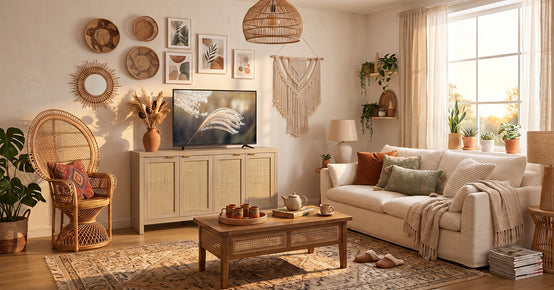
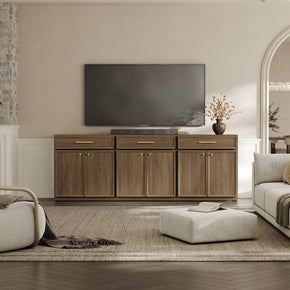
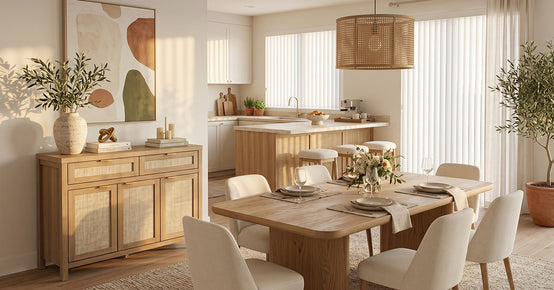
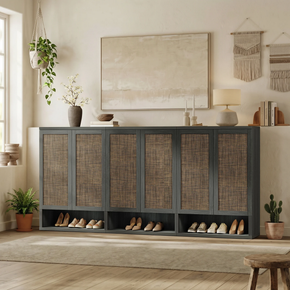
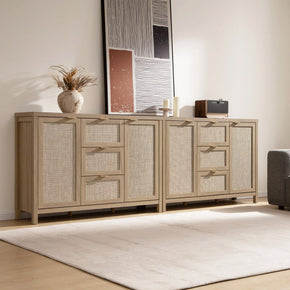
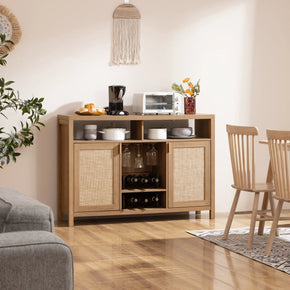
Inside, those same honest materials carry right over. Warm wood storage, like amid-century style rattan media console with cable management, picks up the wood tones from outside. That keeps the indoor and outdoor look on the same page.
12 Mid Century Modern Exterior Design Ideas
Below are 12 mid-century modern exterior ideas for curb appeal. Borrow them, mix them, tweak them to fit your own home and your climate.
1. Palm Springs Desert Style

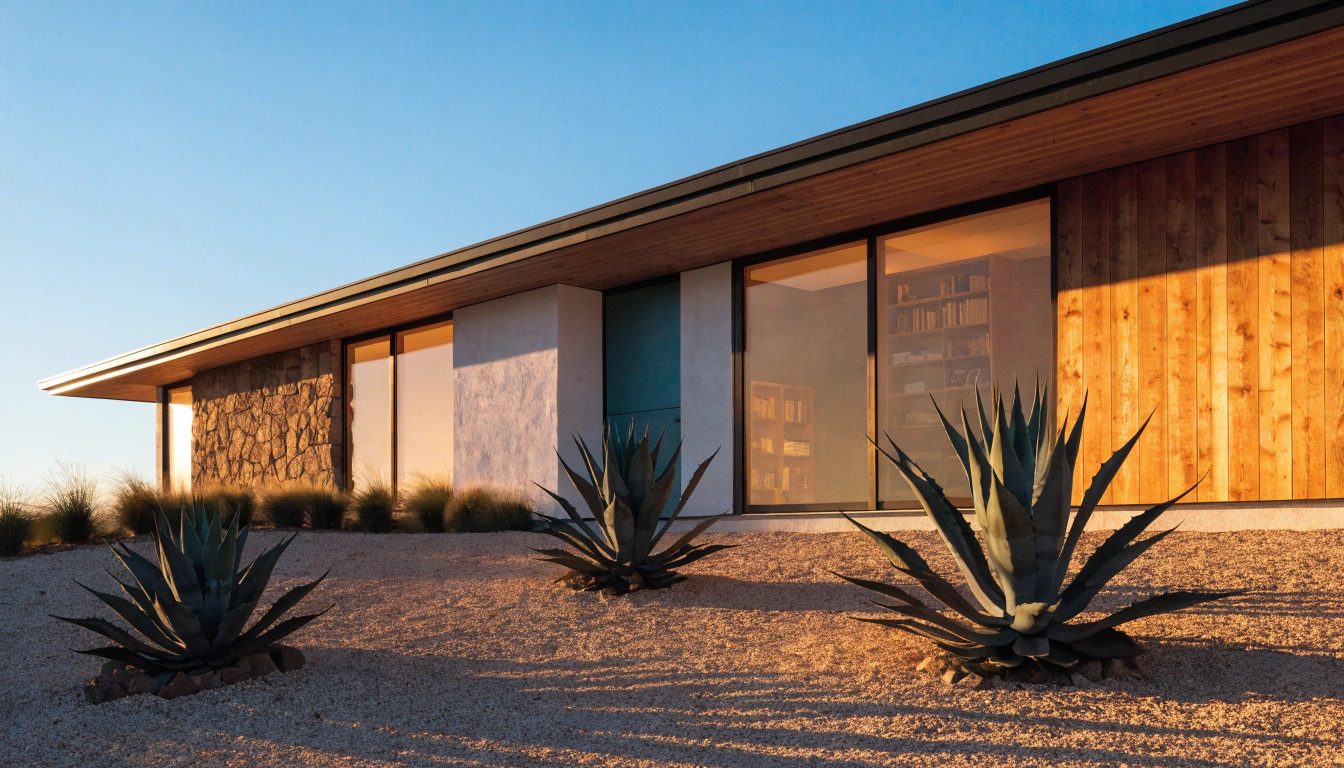
Smooth white stucco. A flat roof. Now hang a front door in some color that actually grabs you, and set out a few sculptural cacti over a raked bed of gravel. That's the Palm Springs look right there, and the sun barely fazes it. The architecture and the planting work as a pair, sipping water while they stand up to all that desert glare.
2. White Stucco With a Bold Door

Keep the walls clean and bright. Then go loud right at the door. A turquoise or mustard door against white reads mid-century in a second: one move, and the whole front of the house lifts.
3. Warm Wood With Black Trim

Pair horizontal wood siding with black-framed windows and fascia. The contrast is crisp and current, and it still stays true to the era.
4. Mixed Stone and Wood Facade

Set stone veneer next to vertical wood panels for real depth. The two textures bounce off each other, and the wide eaves overhead pull them into one look.
5. Butterfly Roof Statement

A butterfly roof that dips toward the center is pure mid-century drama. It plays beautifully against tall glass and a low, grounded base. National Geographic notes the same roof on classic Mission 66 buildings.
6. Floor-to-Ceiling Glass Walls

Walls of glass pour light into the home and tie it straight to the yard. Deep overhangs do the quiet work of keeping glare and heat in check.
7. Horizontal Wood Siding

Long, low runs of wood siding stretch the home out and lean into that ground-hugging mid-century line. Prefer less upkeep? Composite wood pulls off the same effect.
8. Minimalist Garage Doors

Trade a busy paneled door for a flush or horizontal-groove garage door. Match it to the siding, and it slips into the background, leaving the entry as the star.
9. Decorative Breeze Block Screens

Breeze block hands you privacy and pattern without shutting out the light. Put it to work as a carport wall, a courtyard screen, or a divider for a planter.
10. Courtyard Entry Design

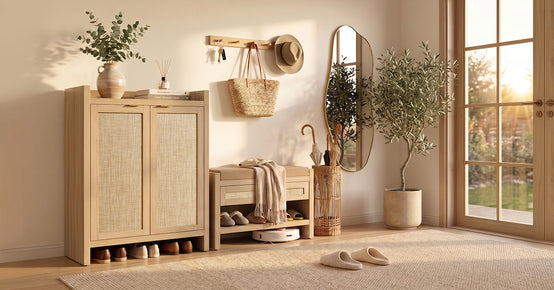
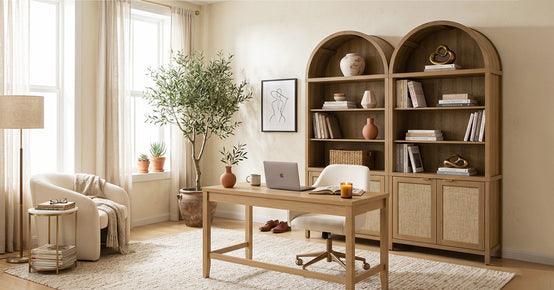
A walled courtyard makes for a calm, private arrival. It's a signature of Eichler homes, and it gives the front of the house some real personality. Carry that mood indoors with anarched rattan bookcase with doors near the entry, warm and ready to show things off.
11. Indoor-Outdoor Patio Integration

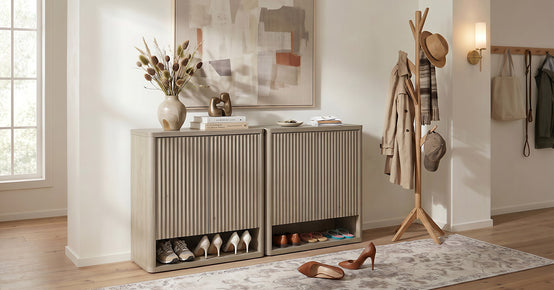
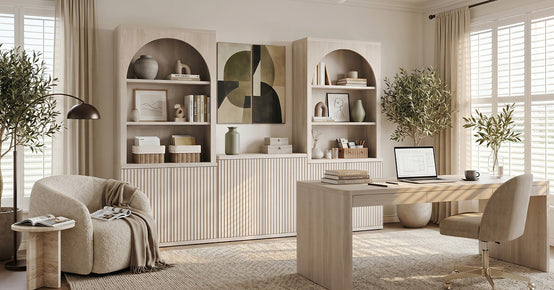
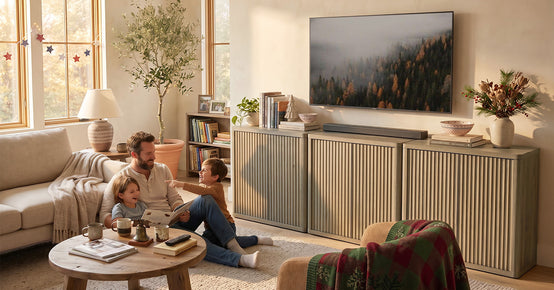
Push the living space outdoors with a covered patio that flows straight off a glass wall. Keep the furniture simple, then echo the warm-wood theme inside with a fluted sideboardnear the entry.
12. Sculptural Desert Landscaping

Agave, yucca, and ornamental grasses set in gravel beds match the home's clean shapes. Keep the lawn small. Let the architecture do the talking.
Mid Century Modern Exterior Paint Colors

Color is never an accident in this style. The palette leans on calm, warm neutrals with a single bold accent, almost always saved for the door. Here are combinations that hold up.
|
Base / Siding |
Accent |
Reads As |
|
Warm white |
Teal door |
Classic Palm Springs |
|
Charcoal |
Mustard door |
Moody and modern |
|
Desert tan |
Turquoise door |
Sun-friendly and retro |
|
Walnut wood |
Burnt orange door |
Eichler-inspired |
|
Olive green |
Warm white trim |
Earthy and grounded |
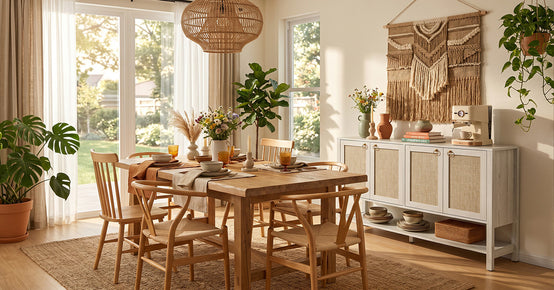
Stick to one strong accent per house front so the clean lines stay clean. To build a palette that all works together, browse a mid-century buffet and sideboard collection for wood tones that match your outside wood and your door color.
Common Mid-Century Modern Exterior Mistakes
A handful of slip-ups quietly undo the whole look. Steer clear of these, and the home reads authentic.
- Too many colors. Two plus one accent is the rule. Add a third siding shade, and the horizontal line falls apart.
- Fake shutters. Those belong on colonials, not a post-and-beam ranch. Pull them off.
- Painting over natural stone or original wood. Clean or reseal it instead. That raw material is the real asset.
- Traditional raised-panel garage doors. They fight the clean lines. Go flush or grooved instead.
Fix these, and the clean lines that make the style work stay intact. A lot of homeowners are mixing mid-century modern with contemporary or Scandinavian touches these days, so if you're asking what's replacing it, the honest answer is it isn't, it's just shifting into those softer, hybrid looks.
Tying the Look Together Inside and Out

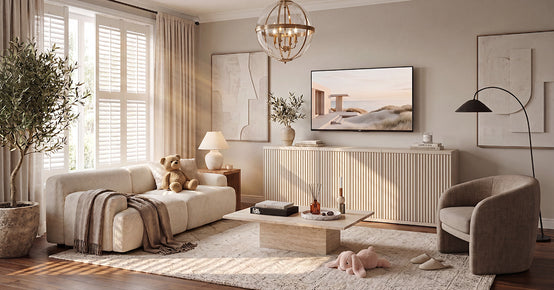
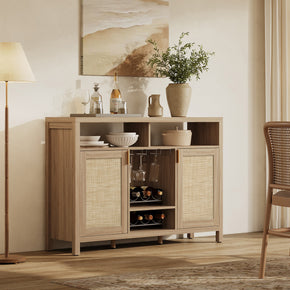
Mid-century modern curb appeal works best when the inside matches the outside. Warm woods, clean lines, and low profiles should travel across the threshold. A rattan sideboard cabinet for modern storage is an easy way to bring that exterior-material story indoors.

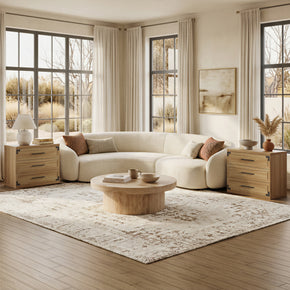
In the entryway or the living room, reach for pieces with tapered legs and honest finishes. Aset of mid-century coffee tables can anchor a sunlit, glass-walled room without crowding it.
Final Takeaway
In the end, a mid-century modern exterior rewards holding. The roof is low and flat. Lare ines long and horizontal. Materials natural. Trim you can barely spot. Then pick one bold door color and let it do the talking. Ditch the fake shutters and that fussy garage door, too. A house that nails this doesn't wear mid-century modern like a costume; it just looks the part, with curb appeal still holding up ten, twenty years from now. Want the place to feel whole? Take those clean lines and warm woods through the front door with you. A few coordinating pieces from ourliving room furniture lineup, and the outside and the inside finally tell the same story
FAQs
What are the characteristics of a mid-century modern exterior?
A few clear traits give it away:
- A flat or low-slope roof, usually with deep overhangs.
- Strong horizontal lines that keep the place hugging the ground.
- Floor-to-ceiling glass and clerestory windows for light and that indoor-outdoor flow.
- Barely any trim, natural materials, and a single bold front door.
What materials are used in mid-century modern?
Most get left natural, so the texture shows through:
- Wood siding, brick, and stone veneer. They add warmth and root the home to the ground.
- Stucco with concrete or breeze block. These give you clean walls that handle the sun.
- Glass walls held by slim steel or aluminum frames, for light and a strong shape.
What are the key features of mid-century modern?
At heart it's simplicity, function, clean shapes, lots of daylight, and almost nothing in the way of ornament. The shape and the material do the work. Nothing decorative is stuck on top.
How do I identify a mid-century modern home?
Run these checks one at a time:
- Step across the street and see if the place sits low and flat on one level.
- Look at the roof. Flat or very low slope, deep eaves, hardly any shingle showing?
- Hunt for long rows of windows, an off-balance front, and a door that grabs the eye.
- Check off three of these, and your home is most likely the style.
What colors are common in mid-century modern?
It splits cleanly into calm siding and one loud accent:
- Siding tones: warm white, charcoal, desert tan, walnut brown, and olive green.
- Accent tones: mustard yellow, teal, turquoise, terracotta, and burnt orange. These nearly always land on the door.
When did mid-century modern begin?
It took off in the mid-1940s and ran into the late 1960s. A few sources push the wider movement back to the 1930s. Either way, it really took hold during the post-war housing boom.
Who are the famous mid-century modern architects?
The big names are Joseph Eichler, Richard Neutra, Albert Frey, Charles and Ray Eames, Eero Saarinen, and George Nelson. Eichler and Neutra especially shaped the American home.
What metal is mid-century modern?
Walk up to a mid-century modern house, and the metalwork carrying the load is almost always aluminum or steel. Look closer and there they are, in the window frames, the railings, the posts, even the beams and fascia holding things together. The reason they belong is simple: they stay slim enough that the lines never lose their crispness. Brass and chrome show up on hardware and lighting, though these days they often come in a black powder-coated finish.
Sources
- Britannica – What Is Mid-Century Modern Design?
- Chicago Architecture Center – Mid-Century Modernism
- MasterClass – Mid-Century Modern Architecture Guide
- a2modern – Characteristics of Mid-Century Modern
- National Geographic – Modernist Architecture in National Parks
- The Curb Appeal Co. – Everything About Mid-Century Architecture


Looking for something else?

Burl Wood Furniture: The Complete Buying Guide
LEARN MORE
What Is a Hope Chest? Meaning, History, and Modern Uses
LEARN MORE
What Is a Foyer? Meaning, Purpose and Design Guide
LEARN MORE
GREENGUARD Gold Certified Furniture: What It Really Means for Your Home
LEARN MORELooking for something else?

How to Clean a Mirror Without Streaks: Simple Step-by-Step Guide
LEARN MORE
21 Above-Bed Decor Ideas for a Stylish Bedroom Wall
LEARN MORE
Furniture Materials Guide: Picking the Right Material Room by Room
LEARN MORE


Further reading

18 Decorative Storage Box Ideas That Hide Clutter Well

How to Store Comforters Without Losing Space or Loft


