







Bed Sizes Guide: Dimensions From Twin to King
Buying a bed should be easy. Then you actually walk into the store, six mattresses lined up in front of you, and suddenly you're doing math about your bedroom in your head. Will the king even fit? Is a full big enough for two? That's exactly the mess this guide clears up. You'll find every bed size laid out in both inches and centimeters, how much floor space each one really eats up, and which one makes sense for your situation, whether you're shopping for a couple, a kid who keeps growing, a tall sleeper, or the guest room nobody uses much. We get into mattress types, frame width, and the total cost once you've added sheets and a comforter. For the full breakdown of standard dimensions, the team atSleep Foundation's mattress size guide is a solid reference too. Read this once, and you won't be guessing at checkout. I've seen people cram a king into a tiny room and end up edging past it sideways every single day.At that point, the mattress isn't doing you any favors; it's just in the way.
Standard Bed Sizes and Dimensions Chart

Let's start with the numbers, since that's what everyone wants first anyway. The chart below puts every standard size, plus the oversized ones, side by side. Glance at it now, then read on for the parts the table can't tell you.
Bed Size Chart in Inches and Centimeters
|
Bed Size |
Inches (W x L) |
Centimeters (W x L) |
Best For |
|
Twin (Single) |
38" x 75" |
96.5 x 190.5 |
Kids, small rooms, bunk beds |
|
Twin XL |
38" x 80" |
96.5 x 203 |
Tall teens, dorms |
|
Full (Double) |
54" x 75" |
137 x 190.5 |
Solo adults, small bedrooms |
|
Queen |
60" x 80" |
152.5 x 203 |
Couples, guest rooms |
|
King |
76" x 80" |
193 x 203 |
Couples with kids or pets |
|
California King |
72" x 84" |
183 x 213.5 |
Tall sleepers, long rooms |
|
Split King |
Two 38" x 80" |
Two 96.5 x 203 |
Adjustable bases, dual firmness |
|
Olympic Queen |
66" x 80" |
167.5 x 203 |
Couples wanting extra width |
|
Alaskan King |
108" x 108" |
274 x 274 |
Large rooms, family co-sleeping |
A Quick Rule Before You Choose

One thing to keep in mind before anything else. A bed has to leave you room to sleep and room actually to move around the rest of the night and morning. Bigger doesn't win by default. I've watched people force a king into a room that clearly couldn't handle it, then spend every morning shuffling past it sideways just to reach the door. By then, the mattress isn't helping anyone. It's basically furniture you have to dodge.
What Are the Most Common Bed Sizes?
Walk into any mattress store, and you'll mostly see six sizes. The differences sound small on paper, but they change how the bed feels every night. So here's the honest rundown, what each one is like to sleep on, who it's right for, and the spot where it tends to disappoint.
Twin Bed Size

The Twin is the small one, 38 by 75 inches, and nothing standard goes smaller. Kids love it. Bunk beds and daybeds rely on it. A tall adult, though, ends up with their feet over the edge. Reach for a Twin when the room is short on space, and so is the person sleeping in it.
Twin XL Bed Size

Take a Twin, keep the 38-inch width, and stretch it 5 inches longer to 80 inches. That's the Twin XL, and those five inches are the entire reason it exists. College dorms are full of them. So are the rooms of tall teenagers and single adults who'd rather not give up floor space for a wider bed.
Full or Double Bed Size

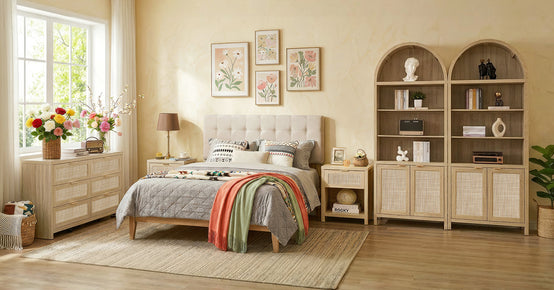
A Full runs 54 by 75 inches, so you're getting 16 inches more width than a Twin. One adult who likes room to stretch out? More than enough. Squeeze two people on there, and it turns cozy quick, and not the good kind of cozy. Where the Full really earns its spot is in guest rooms and smaller apartments. Tuck a slim modern nightstand with a charging station beside it, and even a tight bedside stays neat.
Queen Bed Size

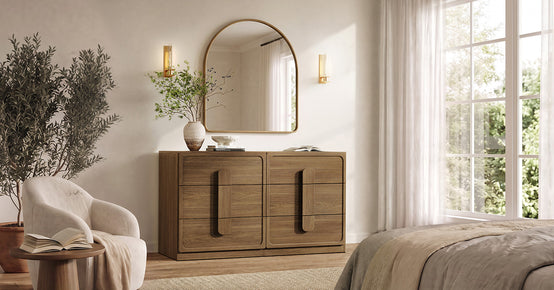
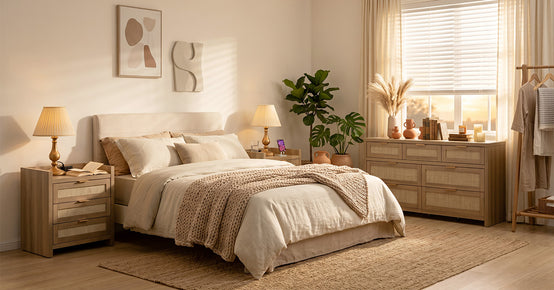
If there's a default adult bed, it's the Queen, 60 by 80 inches. There's a reason it ends up in so many homes. The price is fair, the bedding is everywhere, and it handles couples and solo sleepers alike. Most rooms even have space left for a 6-drawer wood dresser against the wall. Guest rooms and first apartments lean on the Queen for exactly these reasons.
King Bed Size

The King stretches to 76 by 80 inches, wider than anything else on the standard list. Couples who don't want to feel each other roll over love it, and so does anyone sharing the bed with a kid or a dog who's claimed the middle. The one rule: give it a proper room. Squeeze a King into a small space, and you'll lose the floor around it.
California King Bed Size

Here's the mix-up worth clearing up. People assume a California King is the bigger one. It isn't, at least not in width. It loses four inches there and gains four inches in length, ending up at 72 by 84 inches. That trade makes it the bed for tall sleepers and for those long, narrow rooms where a regular King would feel boxed in.
Uncommon Bed Sizes: When Standard Is Not Enough
These are harder to track down, and honestly, most people never need them. But if no standard mattress has ever felt quite right, one of these could be the answer.
Split King Bed

A Split King is really two Twin XL mattresses side by side, which adds up to a King-sized footprint. What you're buying is independence. Put it on an adjustable base, and one of you can prop up with a book while the other lies flat, each on the exact firmness they want. Couples with different sleep styles swear by it.
Olympic Queen Bed

Imagine a Queen that's been given six more inches across. That's the Olympic Queen at 66 by 80 inches. Couples get noticeably more elbow room without having to find a King-sized bedroom. The catch is finding the bits to go with it, because sheets and frames in this size aren't on every store shelf. Order ahead, and you'll be fine.
Alaskan King Bed

Then there's the Alaskan King, a perfect square at 108 by 108 inches, and just about the biggest bed you can put in a house. It's the move for huge bedrooms, families who all pile in together, or anyone chasing a no-limits luxury setup. Be ready, though, the mattress, the frame, and the bedding all cost more, and custom sheets are pretty much a given.
Bed Sizes by Sleeper Type
Measurements only get you halfway. The rest comes down to who's actually in the bed.
Best Bed Size for Kids
A Twin is the go-to for younger kids. For older children and teens still shooting up, a Twin XL buys length they won't outgrow next year.
Best Bed Size for Single Adults

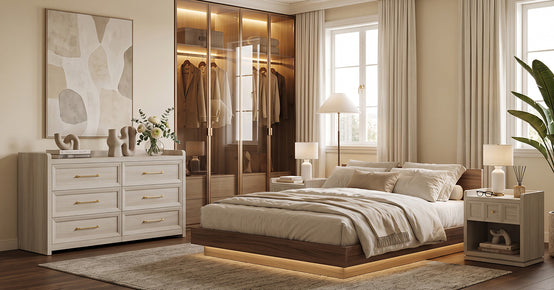
Most solo adults are happy on a Full. If you toss, turn, or starfish, jump to a Queen. Either way, keep your clothes off the floor with a tall 7-drawer dresser that stacks storage upward instead of eating up square footage.
Best Bed Size for Couples
For couples, the Queen is the obvious starting point. If you want a little buffer between you, or you've got kids and pets joining at night, step up to a King. And tall couples often go for a California King just for those extra inches down at the foot of the bed.
Best Bed Size for Tall Sleepers
If you're over six feet, look at anything 80 inches or longer. That's Twin XL, Queen, and King. A California King measures 84 inches and offers the most legroom of any common size.
Best Bed Size for Families With Kids or Pets
When the room and the budget cooperate, a King or California King makes morning cartoons and sleepy toddlers a lot easier to handle. Need even more? The oversized sizes take it from there.
Best Bed Size for Guest Rooms

A Queen is the safe guest-room bet, since it covers couples and solo visitors equally well. A Full works in tighter rooms. Finish it off with a Crescent nightstand with 3 drawers so guests have somewhere to set a phone, a book, and their glasses.
Room Size vs Bed Size: How Much Space Do You Need?
Honestly, this is where most of the regret comes from. People get the mattress size exactly right and completely forget about the room wrapped around it. Don't make that mistake. Run through the guidance below before you buy anything.
Recommended Room Sizes

|
Room Size |
Bed Sizes That Fit |
|
7' x 10' |
Twin |
|
8' x 10' |
Twin XL or Full |
|
10' x 10' |
Full or Queen, depending on furniture |
|
10' x 12' |
Queen |
|
12' x 12' or larger |
King |
|
12' x 14' or larger |
King or California King |
Walking Clearance Around the Bed
Give yourself at least 24 inches of clear space on any side you actually walk past. Thirty feels better, and it means two people can cross paths without that awkward sideways shuffle. Skip this part, and even a perfect mattress will leave the whole room feeling boxed in.
Don't Forget the Furniture

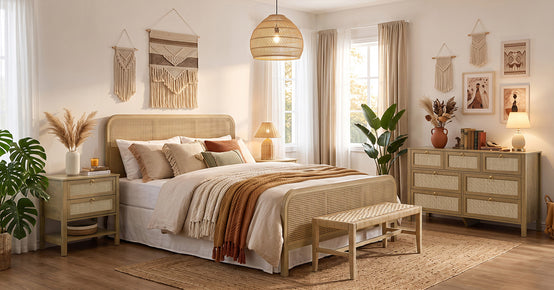
The bed isn't the only thing in the room. Measure for the dresser, the nightstands, the closet doors, the door swing, the drawers, and a bench at the foot. A wall of Sicotas bedroom furniture should still leave you a clean path from the door to the bed.
How to Test Bed Size Before Buying
Cheap trick that works: tape the bed's outline onto the floor with painter's tape. Walk it. Open the closet. Pull a drawer. In about five minutes, you'll know whether the King fits or whether a Queen is the smarter call.
How to Calculate the Right Bed Size
Five quick steps keep this practical and stop you from ending up with a bed that doesn't fit.
Step 1: Measure Your Room
Write down the length and width. Mark where the doors swing, where the closet opens, and where the windows are. Those spots decide where the bed can actually sit.
Step 2: Measure the Bed Area
Don't stop at the mattress. The frame adds width. So does the headboard. And you'll want a little breathing room along the sides, too. Add it all up, because the space a bed really takes up is always more than the mattress number on the box.
Step 3: Match Bed Length to Your Height
Here's a trick that saves a lot of grief. Whatever your height, add six inches and shop for a mattress at least that long. So a 5'9" person? An 80-inch bed does the job. But once you're up past six feet, that's when a California King earns its keep.
Step 4: Match Width to Sleeping Style
Side sleepers, sprawlers, couples, and anyone sharing with a pet all want more width. Lie down side by side and stick your elbows out. If they touch, size up.
Step 5: Check Bedding and Frame Availability
Standard sizes are cheaper to dress in and easier to shop for. Uncommon ones, like the Olympic Queen, usually mean special-order sheets and frames. Worth knowing before you commit.
Bed Size vs Mattress Size: Are They the Same?
People mix these two up all the time, and the gap between them can decide whether a bed fits.
Mattress Dimensions
Mattress size is the sleeping surface, plain and simple, the width and length you lie on. That's the figure stores quote first.
Bed Frame Dimensions

A frame is usually bigger than the mattress, thanks to the headboard, side rails, footboard, or built-in storage. Shop bedroom storage solutions with the frame size in mind, not just the number of mattresses.
Why This Matters Before Buying
On paper, a King mattress might fit your room. Add a chunky storage frame, and you've quietly gained several inches on every side. So measure the frame, not only the mattress, before you click order.
What Are the Three Main Types of Mattresses?

Size sets the footprint. Type sets the feel. Three options cover most beds you'll see.
Innerspring Mattresses
Innerspring beds run on steel coils. They feel bouncy and sleep cool, since air moves right through the coil layer.
Memory Foam Mattresses
Memory foam molds to your body and soaks up movement. That last part matters for couples; one person rolling over rarely wakes the other.
Hybrid Mattresses
A hybrid stack of foam on top of coils, splitting the difference between support and pressure relief. Good pick if you can't decide between spring and foam.
Which Mattress Type Works Best by Bed Size?
Once you're on something big like a King or California King, two things start to matter more than anything: edge support and motion isolation. For couples, memory foam or a hybrid tends to win out here, since both keep nights steadier and much quieter.
What Are the Four Types of Beds?

When people say "types of beds," they usually mean frame styles, not mattress sizes. Four show up the most.
Platform Beds
Platform beds sit low with a clean line. The slatted base often skips the box spring, which saves you money and a few inches of height.
Storage Beds

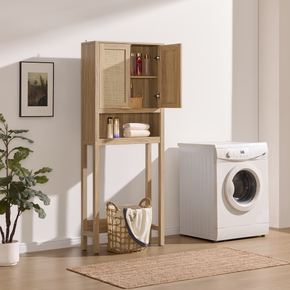
Storage beds hide drawers or a lift-up base underneath, which is gold in a small room. Move the overflow elsewhere, too. An entryway storage cabinet keeps clutter from ever reaching the bedroom.
Upholstered Beds
Upholstered beds wrap the headboard in padded fabric. They feel soft and warm, and they're far kinder to lean on for late-night reading or scrolling.
Adjustable Beds
Adjustable beds tilt the head or the foot for a custom position. They pair naturally with a Split King, so each side moves on its own.
Budget: Bigger Beds Cost More Than the Mattress
The mattress is one line on the receipt. Size nudges nearly every other cost up with it.
Mattress Cost
More material, higher price. A King costs more than a Queen in the same model: no surprise there, but worth budgeting for.
Frame and Foundation Cost
Kings, California Kings, and the oversized sizes often need stronger center support and a sturdier frame, which adds to the total.
Bedding Cost
Sheets, duvets, comforters, pillows, protectors, toppers, all of it climbs as the bed grows. Uncommon sizes climb fastest, since you've got fewer options to choose from.
Delivery and Setup
Big beds fight with stairs, narrow halls, and apartment doors. Measure your access points before a large frame turns up on the doorstep.
How Often Should You Replace a Bed?
A mattress and a frame don't wear out at the same pace, so judge them separately.
Mattress Replacement Timeline
Most mattresses give you seven to ten years. Material quality, body weight, daily use, and proper support all shift that number one way or the other.
Bed Frame Replacement Timeline
A good frame easily outlasts the mattress, as long as it stays stable, quiet, and solid under weight year after year.
Signs You Need a New Mattress or Bed
- Sagging, or a dip shaped like your body
- Lumps and uneven support
- A frame that creaks or shifts when you move
- Waking up sore or stiff
- Allergies that flare overnight
- The bed suddenly feels too small after a partner, pet, or baby arrives
Common Bed Size Mistakes to Avoid
The same handful of slip-ups come up over and over. Dodge these, and you'll be glad you did for years.
Buying a King Without Measuring the Room
A King can turn a decent bedroom into an obstacle course. Measure the walking space first, every time.
Choosing a Full Bed for Two Adults
A full work for a while. But 27 inches per person is tight, and most couples feel it within a few weeks.
Forgetting About Bed Frame Size
That frame adds inches on every side. Plan around the full footprint, not just the part you sleep on.
Choosing an Uncommon Size Without Checking Bedding
Olympic Queen and Alaskan King sheets are hard to find and cost more. Sort the bedding out before you buy the bed.
Ignoring Future Needs
A move, a new partner, a pet, a baby, any of these can change what you need. A size that fits today should still make sense a couple of years out.
Quick Bed Size Recommendation Guide
Short on time? Run down this list and pick fast.
- Choose Twin: kids, bunk beds, and very small rooms.
- Choose Twin XL: tall single sleepers, teens, and dorm rooms.
- Choose Full: solo adults who want more room than a Twin.
- Choose Queen: most couples, guest rooms, and average bedrooms.
- Choose King: couples who want width, or who share with kids and pets.
- Choose California King: tall sleepers and long, narrow bedrooms.
- Choose Split King adjustable bases for couples with different firmness needs.
Final Takeaway
In the end, bed sizes are about comfort, space, and the way you live, not just a row of inches. A Queen fits most homes. A King or California King serves couples, tall sleepers, and growing families better. And smaller beds still make plenty of sense for kids, guests, and tight rooms. Before you buy, measure the room, leave yourself walking clearance, and remember the frame and bedding add up too. Match the size to real life, and you'll sleep better in a room that still feels open.
FAQs
How many types of bed sizes are there?
There are six standard ones: Twin, Twin XL, Full, Queen, King, and California King. Beyond those, you'll find uncommon sizes like the Split King, Olympic Queen, and Alaskan King for special needs.
What's a normal bed size?
A Queen, 60 by 80 inches, is the most common adult bed. It suits couples and solo sleepers and fits most average rooms without crowding the floor.
What are the three different bed sizes?
The simplest way is small, medium, and large. In real-world terms, that aligns with Twin, Queen, and King, the three sizes most people actually buy.
How do you calculate bed size?
Measure the room, take off about 24 inches for walking clearance, and leave space for furniture. Then pick a mattress at least six inches longer than your height.
What are the four types of beds?
Four frame styles come up most: platform, storage, upholstered, and adjustable. Each one strikes its own balance of looks, storage, and support.
What's the biggest type of bed size?
Among oversized beds, the Alaskan King is one of the largest at 108 by 108 inches. It needs a big room and custom bedding to match.
What are the three types of mattresses?
The three main types are innerspring, memory foam, and hybrid. Each balances support, comfort, and motion control in its own way.
How often should you replace a bed?
Most mattresses last seven to ten years. Swap sooner if the bed sags, feels uncomfortable, or stops supporting your sleep.
Sources
- Sleep Foundation – Mattress Sizes 101: Finding Your Perfect Fit
- Amerisleep – Mattress Sizes Chart and Dimensions Guide
- Casper – Mattress Sizes and Bed Dimensions Guide
- Saatva – Guide to Mattress Dimensions and Bed Sizes
- Mattress Firm – Matty Asks: Mattress Sizes
- Better Homes & Gardens – Bedroom Layout Ideas and Furniture Planning
- Sicotas – Bedroom Furniture Collection


Looking for something else?

Furniture Materials Guide: Picking the Right Material Room by Room
LEARN MORE
How to Mix Wood Tones Without Making a Room Look Mismatched
LEARN MORE
18 College Apartment Furniture Ideas That Save Space and Money
LEARN MORE
Types of Entertainment Centers: 11 Designs and How to Pick One
LEARN MORELooking for something else?

Curio Cabinet Decor Ideas: How to Style a Display Cabinet Without the Clutter
LEARN MORE
Curved Furniture: How to Style, Measure, and Buy It in 2026
LEARN MORE
What Is Rattan Furniture? A Buyer Guide to Types and Care
LEARN MORE


Further reading

How to Choose a Nightstand for a CPAP Machine

How to Choose a Shoe Cabinet for Men's Sizes, High-Tops, and Bulky Shoes


