




What Is a Drum Coffee Table? 15 Best Design Ideas
Walk into most living rooms, and your eye lands on the coffee table first. What is a drum coffee table? A drum coffee table makes that job easy. The drum table's meaning is right there in the name: it is the round one with a solid, barrel-shaped base and no legs underneath. A cylindrical, round drum coffee table works as much like a sculpture as it does furniture, anchoring the seating area while holding your coffee. Picture a sculpture you can set a mug on, and you are close. That bold cylindrical shape is the reason it keeps showing up in design feeds and real homes alike. The round top is easy to crowd around when friends come over.
The weight of the base settles the whole room down. And it comes in wood, marble, metal, even leather, so finding one that suits your space is rarely the hard part. The coffee table itself goes back further than you might guess, all the way to 17th-century coffee houses. We will cover what a drum coffee table actually is, then run through 15 design ideas you can borrow.
What Is a Drum Coffee Table?
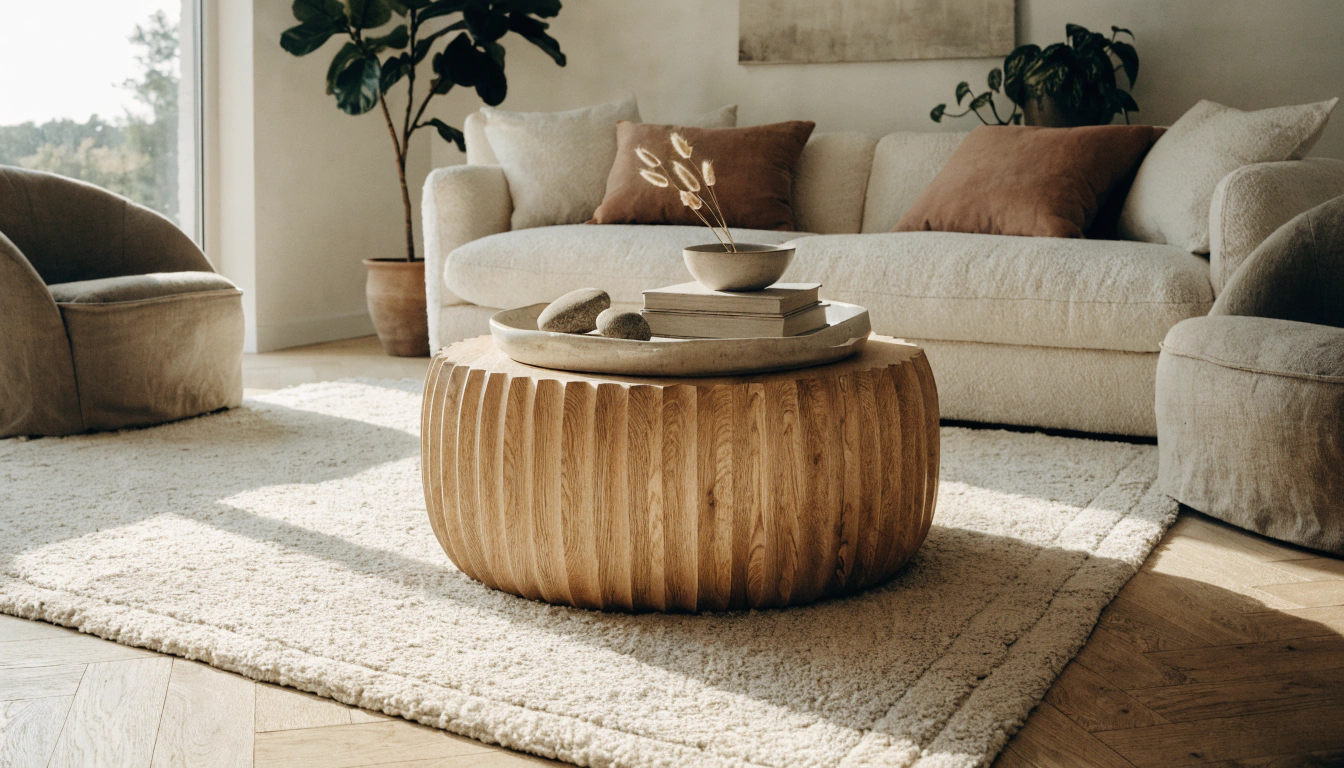
Picture a drum. Now make it a table. You have got the idea. The top is round, the base is round, and side by side they read like a real drum. Plenty of them carve fluted grooves or wrap banded rings around the body, and that detail makes the drum shape read even louder.
The Simple Definition
A drum coffee table is a round table with a solid, cylindrical base that supports the top without visible legs. Round top. Cylindrical base. No visible legs on most of them. On a drum table, the base is the design, not some stand propping up the top. That is the source of its clean, solid, sculpted feel. A few stand straight. Others pinch in at the waist or flare out like a bowl.
Drum Table vs Regular Coffee Table
Look underneath, and the difference is obvious—four legs or a skinny pedestal on a regular table, with open floor showing through. On a drum, that gap is gone, replaced by one solid body. Legged tables read light and airy. A drum reads grounded, like the choice was deliberate. Go with whichever look you are after.
Why People Love Them

- The round shape softens a room packed with square sofas and straight TV stands.
- No sharp corners, so moving past it in a tight seating area is safer and easier.
- That solid base feels stable, and a wood drum coffee table brings warmth along with it. No wobble, no knocked knees.
- Even bare, it works as a quiet piece of art. Pick a drum coffee table with storage, and the hollow base hides remotes and blankets, too.
Afluted round center table shows a well-made look, the grooved sides adding depth to a plain cylinder.
What Is a Drum Table Used For?
Day to day, it does what any coffee table does, just with more presence in the room. The usual jobs:
- Holding drinks, snacks, books, candles, and the remote.
- Anchoring a seating group, say a sofa and two chairs.
- Hidden storage. Some drum tables have a lift top or a hollow inside.
- In smaller sizes, it doubles as an accent table next to a chair or bed.
15 Drum Coffee Table Design Ideas

This is the fun part. Below are 15 drum coffee table design ideas, grouped by material and style, so you can find one that matches your room.For more shapes and finishes to compare, the coffee tables collection is a good place to start.
1. Fluted Wood Drum Table

Vertical grooves down the side catch the light and throw soft shadows. That texture is the whole appeal. A fluted wood drum table reads warm, and it slips into modern, minimalist, and transitional rooms without a fight. Light oak or white alder keeps it from feeling heavy in a small space.
2. Solid Walnut Drum Table

Walnut runs deep and rich. The dark grain alone turns a plain cylinder into a statement, no extra detailing needed. It leans mid-century. Pair it with cream or boucle seating, and the wood does all the talking.
3. Mango Wood Drum Table

Bold grain, lots of character, and no two pieces are quite alike. That is mango wood. The handmade, collected look it gives off is exactly why boho and organic modern rooms reach for it so often.
4. Marble-Top Drum Table

Drop a stone on the drum, and it climbs into luxury territory. Calacatta or Marquina veining grabs the eye before anything else in the room does. Cool, premium, the works. One catch: it wants sealing and fast spill cleanup, so go in knowing that.
5. Sintered Stone Drum Table

You get the marble look with a lot less worry. Stains, heat, scratches, sintered stone takes them all far better than the real stone does. Families who still want that high-end surface tend to land here.
6. Brass or Gold Metal Drum

Brass throws light around the room and slips in a little glamour. Drop one into a plain, neutral space, and that single hit of warm metal is usually what makes the whole thing click.
7. Matte Black Metal Drum

Bold and graphic. Industrial and modern rooms suit it, and it sits naturally with leather seating, concrete floors, and brick. Got a pale sofa? The dark base anchors it.
After that, black centerpiece? A sleek black coffee table lands the same grounded, graphic punch, just in a fluted shape.
8. Hammered Metal Drum

Light hits a hammered surface from every angle, so the piece reads handcrafted, not factory-made. No color added, just texture, which is handy in a room that already has a lot going on.
9. Leather-Wrapped Drum Table

Nobody expects this one. Wrap the base in leather, real or faux, and it turns warm and tailored in a way no hard surface manages. Set a stone or glass top on it, and the soft-meets-hard mix gets rich.
10. White Fiberglass Drum

Smooth, glossy, sculptural. An all-white fiberglass drum belongs in clean, modern rooms, where it lets the art and lighting take the lead. Some come with a hollow cut-out base, which lightens the look.
11. Rattan or Woven Drum

Wrap the drum in rattan or water hyacinth for instant texture and an easy coastal feel. Boho rooms, love it. So do relaxed family spaces that do not want anything too precious.
12. Travertine Drum Table

Travertine is everywhere right now, and for good reason. Its soft, sandy tone and natural pits give a drum an earthy, organic-modern look. Set it against warm neutrals, and it sings.
13. Drum Table With Storage

Some drums hide a lift top or a hollow body. Stash blankets, remotes, board games, magazines, whatever clutters the room. For a small living room, that hidden space earns its keep fast.
Short on floor space instead? When a drum coffee table is too wide and would block the walkway, aspace-saving rectangular coffee table is a slim alternative.
14. Nesting Drum Set

Two or three drums at different heights that tuck into each other. Slide them apart when guests come over. Push them back when you need the floor. Flexible rooms get the most out of these.
15. Outdoor-Safe Drum Table

Concrete-look composite, MgO cement, teak, or powder-coated metal. Those handle rain and sun. Put one on a patio or covered porch beside lounge chairs, add a weather-safe tray, and you are set.
How to Choose the Right Drum Coffee Table
Looks pull you in. Fit keeps you happy. Run these checks before you buy.
Follow the 2/3 Rule
The 2/3 rule for coffee tables is the place to start. Shoot for a table around two-thirds of your sofa length. Designers at J.L. Coates argue that this ratio keeps the sofa ends from looking stranded and prevents the table from vanishing into the room. With a round drum, set the diameter near two-thirds of the seating width.
Get the Height Right
The top wants to land level with the sofa seat, give or take an inch or two below. That puts most of them in the 14- to 18-inch range. Go taller, and it bullies the room. Go lower, and it drifts away from where you actually sit.
Leave Enough Clearance
Give legs somewhere to go, 16 to 18 inches between sofa and table. Walkways want 30 to 36 inches. Remember, a solid drum base looks heavier than open legs, so hand it a bit more room than your gut says.
Watch the Visual Weight
Two drums, same diameter, can land worlds apart. Set a solid stone base next to a slim metal one, and the stone looks far heavier. Tight room? Go lighter or grab a cutout base so the table does not swallow the floor.
Match It to the Room

Tie the finish to your sofa, rug, and storage pieces. It is far easier to keep wood and metal tones aligned when you shop for a living room furniture set instead of mixing five pieces.
How to Style a Drum Coffee Table
The shape is already doing a lot of work, so go easy on the styling. A few simple moves are plenty.
- A tray goes down first. Round or square, it pens in remotes, candles, and odds and ends.
- Two or three books, stacked, for a little height and structure.
- Then one natural touch to close it out, a low bowl, dried branches, or a small vase.
- Keep it all low. Tall objects block sightlines across the seating area.
- Play the shapes off each other. A round drum looks great against a straight sofa or a square rug.
Got fluted or hammered sides? Leave the lower half clear so the texture still shows.
Pros and Cons of Drum Coffee Tables
A quick, honest look at both sides before you commit.
The Upsides
- Strong sculptural style that serves as a focal point in a room.
- Soft edges, which means safer around kids and easier to walk past.
- Solid and stable, with no wobble to deal with.
- Materials run the full range, from warm wood to cool stone.
The Trade-Offs
- In a tight room, that solid base can feel visually heavy.
- No open legroom underneath, so you cannot tuck a stool below it.
- Stone and concrete versions get very heavy to move.
- Less flexible than a nesting or lift-top design, unless you pick those features.
When Were Drum Tables Popular?

Round, sculptural tables go back a long way. Their roots sit in mid-century modern design, the era when Isamu Noguchi and Eero Saarinen dragged organic, rounded shapes into the mainstream. Belaré Home notes that the mid-century era prized clean lines and organic form over heavy ornament. The drum runs straight off that lineage. Why is it back? Curved furniture, warm materials, and cozy layered rooms are all having a moment. A two-tier console with open storage sits well with a drum when you want that grounded look carried across the room.
Can Drum Coffee Tables Be Used Outdoors?
Yes, but pick carefully. For outdoor use, safe materials include concrete-look composite, MgO cement, teak, or powder-coated metal. Stay away from untreated wood, thin veneer, indoor leather, and unsealed stone. Rain and sun wreck those fast. Set an outdoor drum beside lounge chairs, add a planter and a weather-safe tray, and the patio has its centerpiece.
Final Takeaway
The whole thing in plain terms: a drum coffee table is round with a solid cylinder base, and it pulls double duty as both a surface and a piece of sculpture. The shape softens the room. The base grounds it. Material is what sets the mood: warm wood, cool marble, or rich leather, take your pick. Size it by the 2/3 rule, keep the height level with the sofa, and leave a path to walk around it. Get that right and the living room more or less arranges itself around the table. That, in a sentence, is what a drum coffee table is, and if the shape suits your room, it is worth browsing thecoffee tables collection for drum-style options that fit your space.
FAQs
What is a drum table used for?
As a coffee table, mostly. Also, a display surface, and sometimes hidden storage. In smaller sizes, it works as an accent table beside a chair or bed.
What are the types of coffee tables?
The common ones:
- Rectangular, round, oval, and square.
- Nesting and lift-top.
- Storage, ottoman, and drum coffee tables.
How do you style a drum coffee table?
Keep it simple:
- Add a tray for the small stuff.
- Stack a couple of books.
- Finish with one vase or a low bowl.
What is the 2/3 rule for coffee tables?
Two-thirds the length of your sofa. That is the target. It keeps the proportions balanced and the table within easy reach.
What is a table drum?
A table drum is just another way of saying a drum coffee table: a table with a round, cylindrical base shaped like a drum.
When were drum tables popular?
First in classic furniture. Then they got tied to mid-century modern sculptural design. And now they are back in a big way.
Are drum coffee tables worth the cost?
Yes, when the size, material, and style suit your room, and you actually use it daily. The right one pulls its weight as a centerpiece.
Can drum coffee tables be used outdoors?
Only the weather-safe ones. Go for concrete-look composite, outdoor metal, teak, or sealed outdoor-rated finishes for the patio.
Sources
- J.L. Coates – The 2/3's Living Room Rule for Layouts That Work
- United Furniture Group – Living Room Furniture Proportions: The 2/3 Rule Explained
- Flowyline – Coffee Table Dimensions: Standard Size, Shape, and Space Guidelines
- Petra Madalena – What's the Perfect Coffee Table Height for Your Sofa?
- Expand Furniture – The History and Evolution of the Coffee Table
- Belaré Home – The Evolution of the Modern Coffee Table
- Sentient Furniture – Coffee Table Design: History of Practical and Aesthetic Evolution


Looking for something else?

Burl Wood Furniture: The Complete Buying Guide
LEARN MORE
What Is a Hope Chest? Meaning, History, and Modern Uses
LEARN MORE
What Is a Foyer? Meaning, Purpose and Design Guide
LEARN MORE
GREENGUARD Gold Certified Furniture: What It Really Means for Your Home
LEARN MORELooking for something else?

How to Clean a Mirror Without Streaks: Simple Step-by-Step Guide
LEARN MORE
21 Above-Bed Decor Ideas for a Stylish Bedroom Wall
LEARN MORE
Furniture Materials Guide: Picking the Right Material Room by Room
LEARN MORE


Further reading

18 Decorative Storage Box Ideas That Hide Clutter Well

How to Store Comforters Without Losing Space or Loft


