

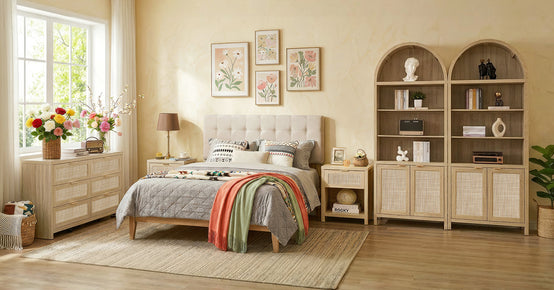
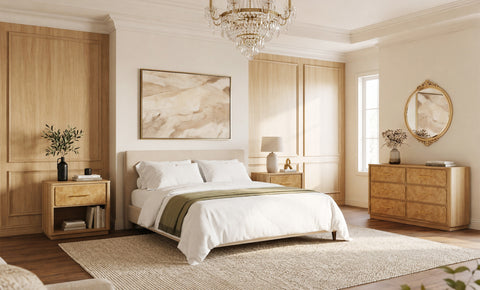



Upholstered vs Wood Bed: Which Bed Frame Is Right for You?
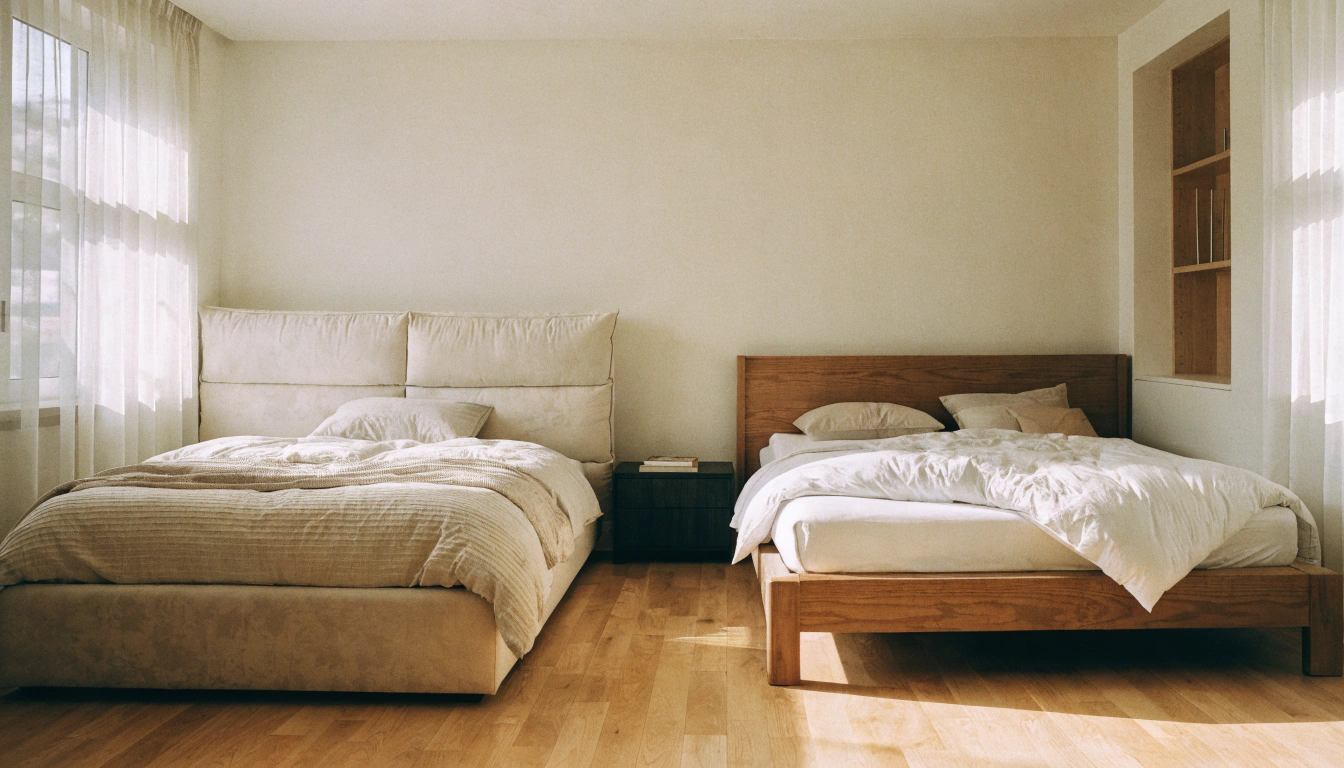
The upholstered vs wood bed debate really comes down to four things: comfort, cleaning, durability, and price—upholstered frames give you padded softness and a cozy headboard, while wood frames win on easy wiping, long-haul toughness, and usually a friendlier price tag. A padded fabric bed practically dares you to flop down and stay there. A wooden frame skips the cuddle but pays you back with warmth you can wipe clean in about ten seconds. And really, there's no trophy for either one.
What decides it is your actual life, the late-night reading, the cat that sheds on everything, the hope that this frame outlives the next three mattresses. Below, I'll put both side by side on comfort, cleaning, durability, looks, and money, so the right choice for your room gets obvious. For more on upholstered vs wood bed frames, thisfurniture buying guide walks you through it.
Upholstered vs Wood Bed: The Short Answer
Pressed for time? The whole thing fits in a breath. If you're after something plush and textured, with a bit of that five-star-hotel softness, fabric is the way to go. Just know that comfort isn't cheap and the price tag tends to show it. Wood plays a different game. It doesn't ask much of you; it sticks around for years and happily sits there while you redo everything around it, again and again. The folks who read or binge shows propped up in bed usually end up on team upholstered. And anyone juggling pets, allergies, or a deep dislike of fussing over furniture? They lean wood, almost every time. The rest of this guide just helps you figure out which of those two people you are, or whether you're a bit of both.
What Is an Upholstered Bed?

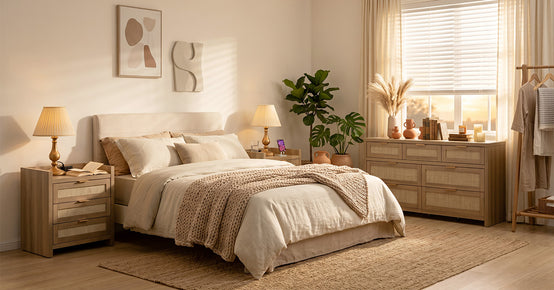
An upholstered bed is, at heart, a frame that's been padded and then dressed in fabric, leather, velvet, linen, boucle, or one of the hard-wearing performance fabrics. That padding is the whole trick. That's the reasonupholstered bed frames feel softer than a bare wooden one, and it sneakily makes the headboard into something you'd actually want to lean back on. The range surprises people, too. You've got the plain padded headboard, the tall wingback that curls in at the sides, the low upholstered platform bed that ditches the box spring, and even a wood-framed bed where only the headboard gets the padding.
Who Should Buy an Upholstered Bed Frame?
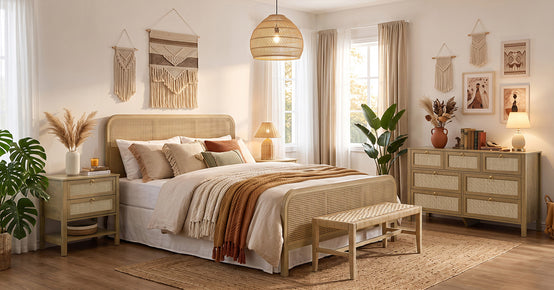
So who should buy one? If you read in bed, scroll before sleep, or just like something soft against your back, a padded frame earns its keep. It's also a quiet fix for rooms that feel a little too hard-edged, all glass and lacquer, warming the place up without you lifting much more than a credit card. If that sounds like your space, theSavanna Queen Bed Frame with Headboard is a good place to start.
What Is a Wood Bed?

A wood bed is more or less what you'd expect: timber or wood-based panels, sold either as a chunky solid wood bed frame or a slatted platform base. We've been sleeping on wood for thousands of years, long before anyone folded a mattress into a box, and it still gives a room that warm, settled, like-it 's-always-been-there feel. Shapes? Take your pick: a big solid frame, a low platform bed, a plain panel headboard, or a four-poster that's basically begging for a canopy draped over it. Taste is hardly ever the thing holding you back.
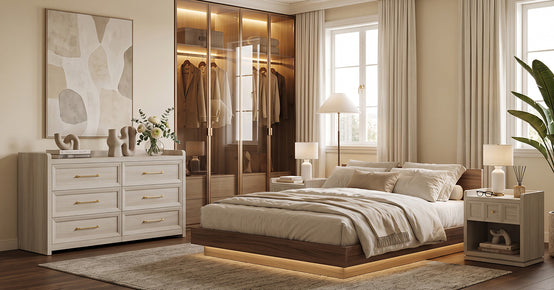
So when does wood make sense? When you'd rather not fuss over your furniture. When you actually care that it's the real thing, not a lookalike. And when the frame has to put up with pets, kids, and your tendency to repaint the walls every other season. Doing the whole room in one shot? The modern bedroom furniture range pairs wooden beds with matching storage, so the finished room doesn't look like it was stitched together from three different stores.
Comfort: Which Bed Feels Better?

Comfort is usually the first thing you notice, and this is where the two materials really part ways. When it comes to wood vs upholstered bed comfort, an upholstered headboard wins for anyone who actually sits up in bed — the padding cushions your back the moment you lean in. A wood headboard feels firmer and more structured, which some people prefer, but it asks for a few pillows before it's truly comfortable to lean against. Lean back against an upholstered headboard and all those slow, lazy moments — reading a few pages, scrolling your phone, sipping a Sunday coffee — just feel better. The padding does the work and holds you up on its own. No piling four or five throw pillows behind your back to get comfortable.
A wooden headboard? Solid, dependable, but a bit unforgiving if you lean on it bare. Two or three pillows sort that out, and you still keep those clean lines. Want firm underneath but soft where your shoulders land? TheSavanna Queen Bed Frame with Headboard lands right in the middle. You get a wood base with a soft, padded headboard. Honestly that mix is what most couples end up agreeing on — the wood keeps things sturdy, and the padded headboard makes it comfortable to lean against.
Cleaning and Maintenance

For many shoppers, this section settles the whole debate so I won't sugarcoat it. Fabric has one quiet habit: it holds onto everything. Dust settles in, pet hair clings on, your skin leaves a little oil behind every time you lean back, and don't get me started on crumbs, or that coffee splash nobody admits to. Over time, it all works into the weave. That means an upholstered frame needs a bit of looking after, a vacuum every so often, a lint roll, and dealing with spills fast before they set. Pick a darker fabric or a performance one, and most of that worry pretty much disappears.
Wood, though? You'll barely lift a finger. Give it a wipe with a soft cloth, a dab of mild cleaner once in a while, and that's really it. Spills just sit on top rather than sink in, so a low-dust bedroom comes a whole lot more easily with timber.
Durability and Long-Term Value

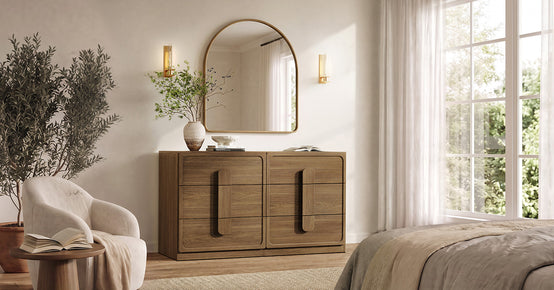
Both can go the distance, but how it's built matters way more than the word on the label. Upholstered beds hold up nicely when the inner frame is solid, and the fabric is rated for real wear, yet fabric does what fabric does: it fades in a sunny spot, flattens where you always lean, and frays faster once pets and snacks enter the picture. A well-made, solid wood bed frame tends to grow old more gracefully, and here's the part people forget: you can sand it, refinish it, repaint it so that a single frame can ride out three or four decor phases without complaint. A Savanna 6-drawer wood dresser slots in nicely if you'd like the whole room to age together as one set.
One word of caution before you judge anything by fabric versus timber. Look at the bones instead: the joinery, the slat support and weight rating, the actual grade of the fabric or the species of wood, and whether the base cradles your mattress evenly or lets it dip. A cheap version of either will disappoint you within a year. A solid version of either will quietly outlast whatever trend talked you into buying it.
Style: Cozy Upholstery vs Timeless Wood

The better-looking bed is just the one that suits your room and the feeling you're after, full stop. Fabric beds look their best in soft modern, luxe, or hotel-inspired spaces, and in those flat neutral rooms that are begging for a hit of texture; they also take the hard edge off a place full of sharp corners. Wood pretty much covers the rooms' upholstery tends to miss, your Scandinavian, rustic, mid-century, Japandi, coastal, and traditional looks, and you can take the finish anywhere from pale oak to a walnut so dark it's nearly black. Need one practical thing to settle it? Wood usually gets the nod. A timber frame goes along with whatever bedding, paint, rug, or art you rotate through over the years, while an upholstered one waves a bigger flag and tends to set the mood for the whole room.
Pets, Kids, and Real-Life Use

How a bed survives daily life matters more than how it looks in the listing photo. Live with a cat or a dog and an upholstered frame can quietly become a hair magnet, or, on a bad day, a scratching post, whereas a smooth wooden bed just wipes down and shrugs the claws off. Throw young kids into the mix, and it tilts back a touch, since padded edges are kinder to running toddlers and the shins of anyone navigating the room at 2 a.m., even if wood is faster to clean after sticky fingers. A coordinated Savanna 4-piece bedroom set keeps a kid's room from descending into chaos, with matching storage baked right in.

And then there's the breakfast-in-bed brigade. Coffee, lotions, hair oils, none of them are kind to fabric over the years, so if you eat or get ready in bed, wood is simply the more forgiving surface to live with. Parking a wipe-clean Stria nightstand beside the bed helps too, since it keeps the mugs and bottles off the frame and spares the upholstery a few spills it was never going to win.
Price: Which Bed Frame Costs More?
Prices are all over the place, but a couple of patterns hold up across most stores. Fabric beds usually sit a notch higher, and fair enough, you're paying for the padding, the upholstery labor, and the finishing touches, and a performance fabric pushes that a little further while quietly repaying you every time cleanup is easy. Wood is the wider swing. Engineered-wood and slatted platform beds hold down the budget end, while a chunk of solid hardwood can climb well past that. Here's where the math gets interesting, because a solid wood frame can last 20 years or more, while an upholstered bed often shows wear on the fabric in 7 to 10 years, even if the frame underneath is still sound.
So if you spread the cost across the years you'll actually own it, a pricier hardwood bed can work out cheaper per year than a mid-range fabric one that needs replacing sooner. Stretch the math over years instead of one checkout screen, and wood keeps handing back time and effort on cleaning, whereas an upholstered bed earns its premium the moment softness and that cocooned feeling top your list.
Which Material Is Best for a Bed Frame?

There's no outright champion, just the right fit for whatever you weigh most heavily—chasing pure comfort? Upholstered. Want a frame you can mostly forget about between cleans? Wood. If you need it standing strong fifteen years from now, a well-built, solid wood bed frame is genuinely hard to beat, and for that soft, wrapped-up bedroom look, a padded headboard or a fully upholstered frame is the call to make. Metal hangs around as the quiet third pick, light and gentle on the wallet, though it tends to feel chilly and may squeak as the years pass. And once it comes down to metal or wood, the warmth seekers nearly always head home with timber.
Healthiest Bed Frame Material: What to Look For
A healthy bed isn't about the name on the material. It's about what's packed inside. Whichever way you go, look for low-VOC finishes and nontoxic glues. Try to pick wood that's certified or responsibly sourced when you can.
Wood has a small edge in a bedroom where dust and allergies are a worry, mainly because you can just wipe it down. But if you've got your heart set on upholstery, a strong washable fabric works fine too. You just have to vacuum it regularly.
The big thing to check is the frame itself. Make sure it actually supports the mattress and lets some air move underneath. A beautiful finish means nothing if the base sags in the middle.
Should You Get a Wood or Upholstered Bed?

Go upholstered if your evenings get spent sitting up in bed with a book or your phone. If you like a soft headboard to lean back into. If a warm, cozy room makes you happy, and you won't gripe about the occasional vacuum or wiping away a spill.
Go with wood if you'd rather not deal with much upkeep. If pets or dust allergies are part of your everyday. If you're drawn to natural materials and a frame that holds up over the years. Or if you're someone who likes to move things around and repaint every now and then.
Caught in the middle? Then have both. A wooden frame with an upholstered headboard gives you the firm base of timber and the soft touch of fabric. See how it looks for yourself across thebed frames collection.
Common Mistakes to Avoid

Most regrets about a bed have nothing to do with wood or fabric and everything to do with a few avoidable slip-ups. People fall hard for a frame in a photo and forget their own reality, the shedding dog, the tiny bedroom, the fact that they never actually dust.
They ignore headboard comfort, then spend every night leaning against something that fights back. They lowball the upkeep, not clocking that fabric and wood age on completely different timelines, and they get the scale wrong, letting a hulking wood frame eat a small room alive or a puffy upholstered one crowd it to the walls. Biggest miss of all? Skipping the boring bit, the mattress supports, so check the slats and the weight rating before a pretty finish ever gets a chance to charm you.
Final Takeaway

Upholstered beds are all about softness and that warm, cozy, pull-the-covers-up feeling. Wood is the opposite kind of win — easy to clean, built to last, and simple to redecorate around whenever the mood hits.
But honestly, none of that matters if the bed is made badly. Push on the frame. Wiggle the slats. Sit down and feel how it holds you before some good-looking finish wins you over.
Can't make up your mind? Go halfway with a wood-and-upholstered hybrid. You won't lie there at night wishing you'd picked the other one.
Buy for the life you really live, not the one in some staged showroom photo. Do that and the right bed kind of points to itself. Ready to put that to the test? Browse Sicotas'bedroom collection to compare wood, upholstered, and hybrid frames in one place—and see which one points to itself.
FAQs
Should I get a wood or upholstered bed?
Reach for wood if easy cleaning, a long life, and a frame that never dates sit at the top of your list. Reach for upholstered if comfort, softness, and a headboard you can actually lean on win out. In the end, your pets, your allergies, and the way you really use the bed will settle it for you.
Are wooden beds better than fabric?
When it comes to cleaning and longevity, wooden beds usually have the edge. Fabric beds, though, feel softer and are far nicer to prop yourself up against. Which one is better really just hangs on what you happen to value.
Is an upholstered bed good?
It is, for anyone after comfort, warmth, and a room that instantly feels put together. Where it gets tricky is a house with shedding pets, dust allergies, or simply no patience for keeping fabric clean.
Which material is best for a bed frame?
Solid wood usually pulls ahead on durability and low upkeep, while upholstery owns the comfort side. Metal can take the crown when price and ease of movement are what you're chasing. Really, the best bed frame material is whichever one suits the way you live.
Why do people like upholstered beds?
It comes down to feel, upholstered beds are soft, cozy, and easy to lean back into for an hour with a book. They also throw in instant texture and a hotel-like polish that warms up a plain bedroom in one move.
Do upholstered beds get dirty?
They do, since fabric slowly draws in dust, pet hair, body oils, and the occasional stain. Stay on top of it with a regular vacuum and a quick spot clean, though, and the frame keeps looking fresh.
Do upholstered beds last long?
Built well and wrapped in durable fabric, one can easily go years without trouble. The catch is that fabric tends to show its age sooner than wood once kids and pets are part of the household.
What is the healthiest material for a bed frame?
For a clean, low-maintenance bedroom, a solid wood frame finished with low-VOC coatings is a strong shout. Set on upholstery instead? Choose a durable, easy-to-clean fabric and run the vacuum over it regularly.
Sources
-
Casper, Upholstered vs. Wood Bed Frame: A Buying Guide (2021)
-
The Inside, Wood vs. Upholstered Bed: Which Type Is Better
-
Castlery, The Bed Frame Face-Off: Upholstered vs Wood vs Metal (2025)
-
Living Spaces, Wood vs. Upholstered Bed Frames: Which One Should You Choose? (2025)
-
FlexiSpot, Don't Buy a Bed Frame Until You Read This: Upholstered, Metal, or Wood? (2025)
-
Max & Lily, Upholstered vs Solid Wood Beds for Kids


Looking for something else?
What Is Rattan Furniture? A Buyer Guide to Types and Care
LEARN MORE
21 Nightstand Alternatives That Work in Real Bedrooms
LEARN MORE
26 Reading Nook Ideas for Adults That You Will Actually Sit In
LEARN MORE
Liquid error (snippets/recommend-article line 11): invalid url input
Biophilic Furniture: What It Is and How to Pick It
LEARN MORELooking for something else?
Color Coordinated Bookshelf: How to Arrange Books by Color Without Losing Track of Them
LEARN MORE
New Home Furniture Essentials: What to Buy First, Room by Room
LEARN MORE
26 Bedroom Coffee Bar Ideas That Actually Work at Home
LEARN MORE


Further reading

Why Adjustable Shelves Matter When Buying a Shoe Cabinet
“Holds 24 pairs” looks like a promise on the listing. Unbox it, stand your knee-highs upright, and not one slot clears them. So the boots camp on the floor beside it. Clutter: officially back.
Tho...

Best Nightstand Height and Placement for an Adjustable Bed
A regular bed never moves, so its nightstand math is simple. An adjustable bed rewrites that math every time you press the button. That nightstand height that feels perfect flat on your back? It tu...

Are Soft-Close Dresser Drawers Worth It? A Practical Buying Guide
Past midnight. The baby next door finally dropped off an hour ago, and you're on tiptoe for one thing in the dresser. You nurse the drawer shut like it's eggshell — and it slams anyway. At 2 a.m.,...


