




Line in Interior Design: How Lines Shape Space, Mood, and Balance
Line in interior design is the element most people never notice, yet it shapes nearly everything they feel in a room. It lives in the walls, the windows, the floor, the rugs, the lamps, and even the edge of the chair you are sitting on. Whether a space reads tall or low, roomy or boxed in, calm or a little hectic, the lines make that call. Furniture and paint get all the attention, but lines do the quiet structural work underneath. Designers rely on a small set of core interior designelements to make this happen, and line sits dead center among them. Hang around, and I will walk you through the main types, what each one pulls off, and a few easy moves you can copy at home.
What Is a Line in Interior Design?
Lines look like the most basic part of a room, almost too obvious to matter. That first impression is misleading, because the direction and weight of your lines quietly decide how the whole space reads.
Simple Definition of Line

A line is the path your eye follows along the edge, direction, or outline of an object. Some lines are physical, like the grooves cut into wall paneling. Others are only suggested, like a row of chairs lined up against a wall. The bottom edge of a low sofa gives you a horizontal line. A tall Willow bookshelf stands upright. Pull up a round table, and you get a soft curve. Nothing fancy is going on here; you just have to train yourself to spot it.
What Is an Interior Line?
Walls, sofas, lamps, curtains, floorboards, every one of them traces an interior line, and that line tugs at how the room looks and how you walk through it. Spot one, and the others stop hiding. From that point on, you stop guessing with your decor and start placing things for a reason.
Why Line Is One of the Elements of Design

Line is one of the seven elements of design, and it quietly establishes shape, form, balance, and movement throughout a room. Most designers agree that line sits at the heart of form, and honestly, take it away and a room just reads flat and confusing. Nail the lines, and the rest of your decor finally has a frame to hang on.
Why Lines Matter in Interior Design
Lines are not just design theory. They handle four practical jobs in every room, and once you can name those jobs, you can use lines on purpose instead of by accident.
Lines Guide the Eye

Drawing the eye toward a focal point is what lines do best, whether that point is a fireplace, a bed, a favorite painting, or the dining table. Position them well, and people look exactly where you intended.
Lines Change How a Room Feels
Mood follows the direction of a line. Horizontal reads calm, vertical reads formal, curved reads soft, and diagonal reads full of energy. That pattern is essentially the psychology behind different line types, and it kicks in whether you meant it to or not.
Lines Influence Room Proportions

Room proportions bend to whatever the lines suggest. A low ceiling can look taller, a tight space can feel wider, and a long,g narrow room can feel more even, all without a builder or a single wall coming down.
Lines Create Visual Interest
Visual interest comes from variety. Stack a room with nothing but straight lines, and it goes stiff on you. Flood it with curves, and it slumps into something soft and shapeless. Let two or three line types live together, though, and the eye finally has somewhere to travel.
The 4 Main Types of Lines in Interior Design
Four line types form the foundation that every other type builds on. Get comfortable with these, and the rest make sense almost instantly.
Horizontal Lines

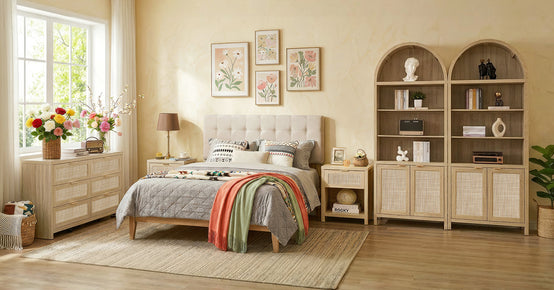
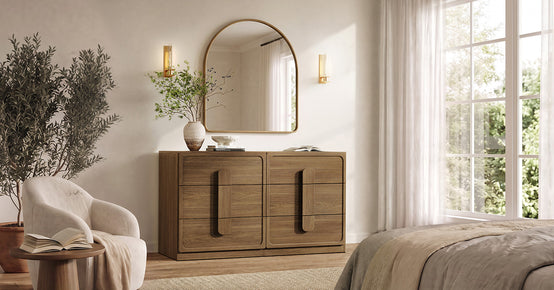
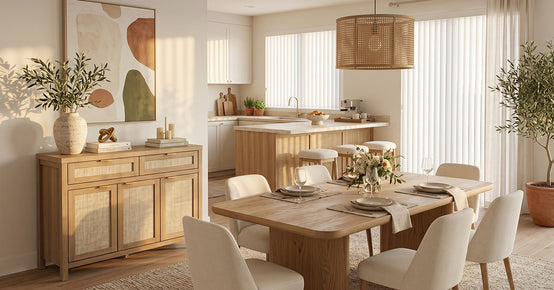
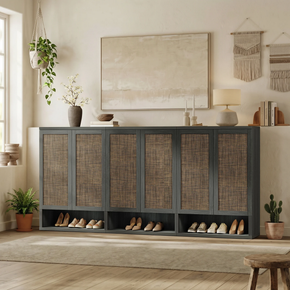
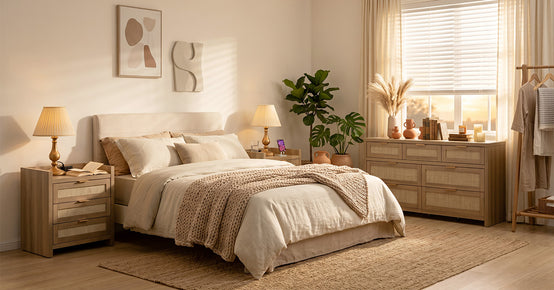
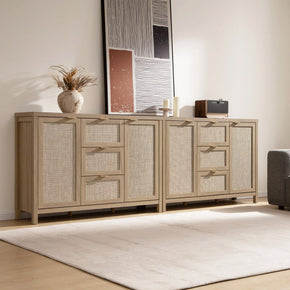
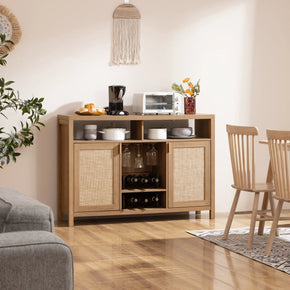
Side-to-side is the horizontal line's path, and it leaves a room feeling calm, steady, and planted. You catch it in a low sofa, a long shelf, a wide rug, the run of a kitchen counter. A grounding piece like the Savanna 6-drawer dresser widens that horizontal plane and leaves a room feeling grounded. They also make a narrow space feel wider, just ease off under a low ceiling, or they will press it down even more.
Vertical Lines

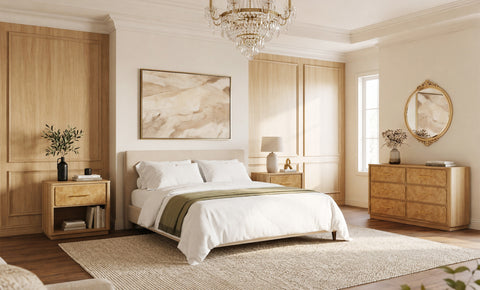
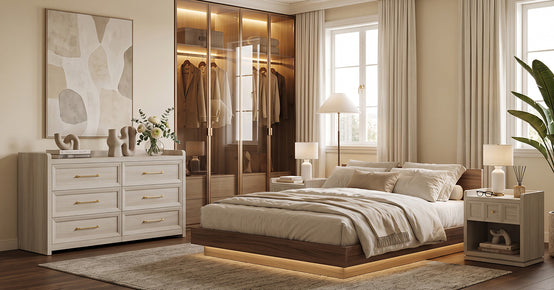
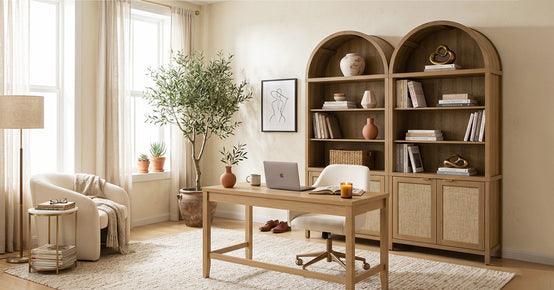
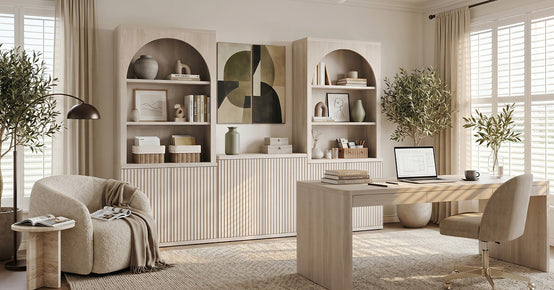
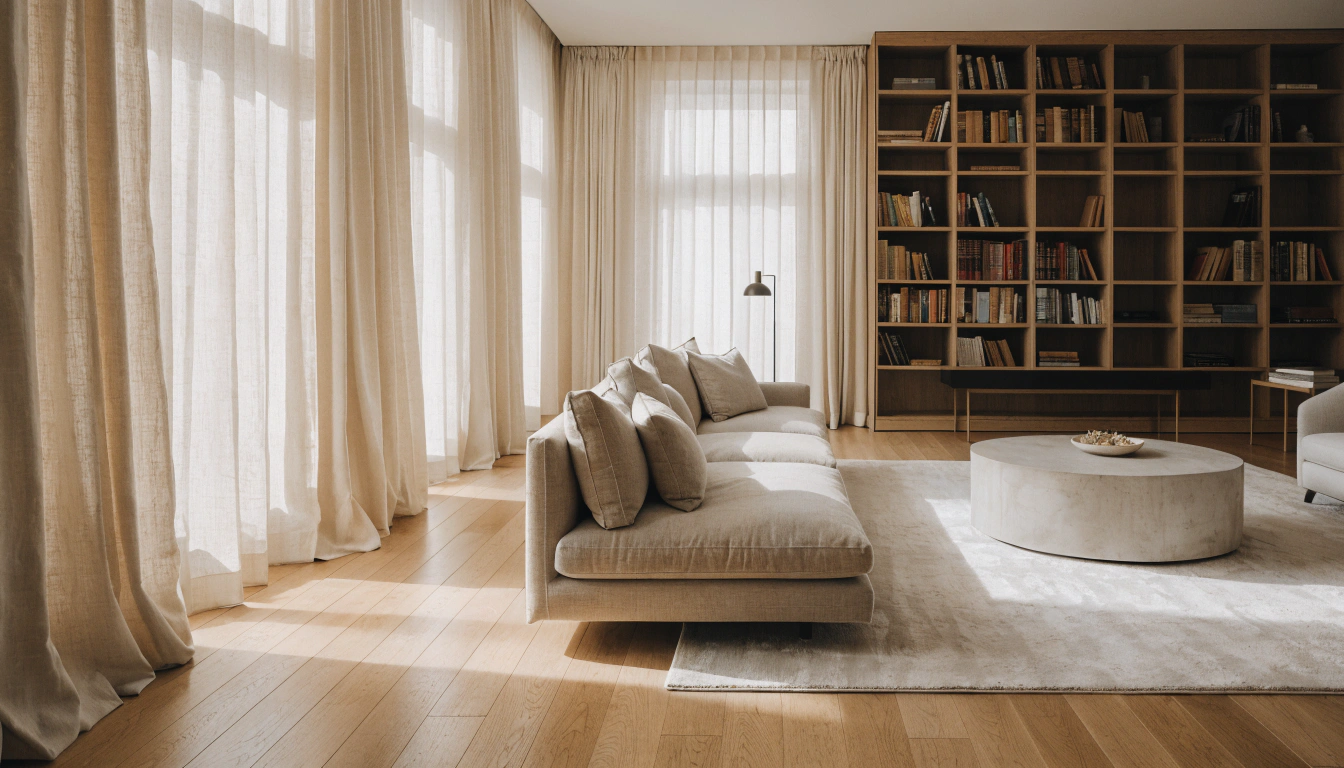
Up and down is the vertical line's run, and it hands a room height, backbone, and a slightly dressier air. Floor-to-ceiling curtains, tall windows, vertical paneling, a tall mirror, every one of them draws it out. Stand it next to a Savanna freestanding wardrobe, and that climbing pull tricks the ceiling into reading higher. Reach for verticals when a room feels boxed in, or when you are after a bit of polish.
Diagonal Lines

When a line tips off the level, it becomes a diagonal, bringing movement and a bit of drama. Herringbone floors, chevron rugs, angled furniture legs, a sloped ceiling, a staircase — each of these wakes a room up. The key is restraint. One diagonal too many, and a lively room starts to feel chaotic.
Curved Lines

Curved lines bend and flow, carrying the softness and fluidity a room often needs. Round coffee tables, arched mirrors, circular rugs, and rounded headboards all bring them in. A piece like the Stria round coffee tablesoftens a boxy room almost instantly. Reach for curves anytime a space feels too sharp or stiff.
What Are the 7 Types of Lines in Interior Design?
Four types cover most rooms, but a richer space often calls for more variety. The fuller list below is what designers reach for in practice.
1. Straight Lines
Straight lines deliver order and a crisp, structured look, forming the backbone of modern, minimalist, and contemporary interiors.
2. Horizontal Lines
Horizontal lines spread a calm feel across the room and stretch out the width.
3. Vertical Lines
Vertical lines tug the eye up and trick a ceiling into feeling taller than it is.
4. Diagonal Lines
Diagonal lines bring action and motion, just the thing for a dead, static corner.
5. Curved Lines

Curved lines bring comfort and a welcoming feel, smoothing out anything too angular.
6. Circular Lines
Circular lines bring harmony and round off the sharp corners of a square room.
7. Zigzag Lines

Zigzags, chevrons among them, drum up rhythm and a cheeky little jolt of energy. Ask most designers, and they will tell you zigzags liven a space but work best in small doses, or they slide from fun into frantic in a blink.
What are the 8 Types of Lines?
Eight types are the seven-type list plus one extra category that hides in plain sight.
The 8-Line List
The eight usually run horizontally, vertically, diagonally, curved, straight, circular, zigzag, and implied. The first seven are easy to point at. The last one you only sense.
What Are Implied Lines?

Implied lines are never physically drawn. They appear through placement, direction, or repetition instead. A few pendant lights strung over an island create one. A gallery wall that walks your eye down a hallway creates another. Nothing is actually connected, yet the eye fills in the gap on its own.
5 Examples of Lines in Real Rooms
Examples make the idea concrete in a way that theory never will. Five common ones show each line type doing real work in a room.
Example 1: Floor-to-Ceiling Curtains

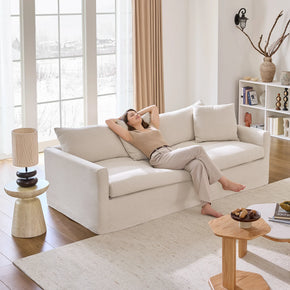
Hang your curtains from the ceiling instead of the top of the window, and they create a strong vertical line that makes the whole room feel taller. Place them behind a lowNimbus 3-seater sofa, and the contrast between the tall curtains and the low seating does the rest.
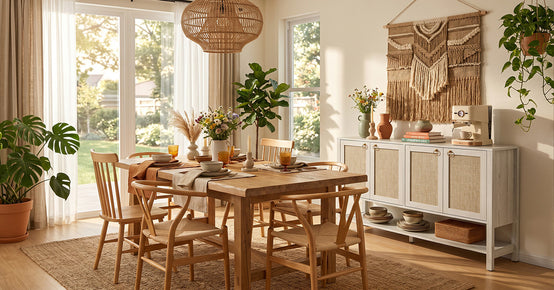
Example 2: A Long Dining Table

A long table lieson a clear horizontal line that grounds the dining space and brings a sense of order. Build the layout around pieces from the dining room furniture range and let that line hold the zone together.
Example 3: A Curved Sofa
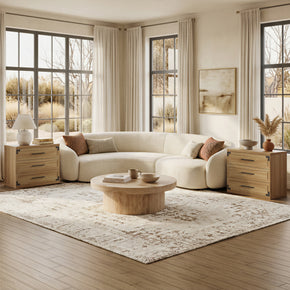
A curved sofa softens a living room full of sharp corners and adds an easy, relaxed flow. Few pieces break up a grid of straight edges as effortlessly.
Example 4: Herringbone Flooring

Herringbone patterns run diagonal lines across the floor, adding movement and visual interest to an entryway, kitchen, or hallway. Plain flooring instantly looks considered.
Example 5: Wall Paneling
Paneling runs vertically for height or horizontally for width, depending entirely on how it is installed. The same boards produce a completely different read on the room.
How Lines Affect Mood and Room Feel
Every line type drags a mood in behind it. Pin the right mood to the right room, and the space quietly starts pulling for you.
Calm and Relaxed Spaces

Horizontal lines take the edge off a room. Bedrooms, lounges, dining spaces, a tucked-away reading corner, all of them ease up under that low, level pull, which suits rooms built for slowing down.
Formal and Elegant Spaces
Height and structure ride in on vertical lines, and the eye clocks all of it as formal. One design team puts it this way: vertical lines bring strength and dignity, which is exactly why they suit entryways and rooms with strong bones.
Energetic and Creative Spaces

Diagonals and zigzags crank the energy of a space right up. Save that buzz for the playroom, the home office, an accent wall, a loud rug, the spots that can actually take it.
Soft and Welcoming Spaces
Curved and circular lines warm a room quickly. Reach for them when a space feels cold, stiff, or trapped in hard angles.
How to Use Lines to Change the Way a Room Looks
Line earns its keep most in problem rooms. A few placement tricks fix issues you assumed would need a builder.
Make a Low Ceiling Feel Taller
Low ceiling? Vertical lines fix that. Tall curtains, a slim mirror, vertical paneling, a skinny bookcase, every one of them drags the room upward.
Make a Narrow Space Feel Wider

A pinched, narrow room opens up with horizontal lines. Low furniture, wide shelving, a horizontal stripe, a long rug, they coax the eye sideways instead of straight down the length.
Make a Large Room Feel Cozier
Use low furniture, layer a couple of rugs, add two curved chairs, and a big, echoing room breaks into smaller, cozier areas instead of one open box.
Make a Plain Room More Interesting
Add a diagonal, a curve, a circle, or a zigzag through your textiles, lighting, art, or flooring, and a flat room comes to life. Often, just one new line type is enough to give the space some character.
How Lines Create Focal Points

A focal point falls flat unless the lines around it play nice. The tricks below direct the eye precisely where you want it to sit.
Use Vertical Lines to Frame a Feature
Frame a fireplace, a bed, or a window with tall curtains, paneling, or a bookcase, and the eye knows right where to settle.
Use Horizontal Lines to Anchor a Space

A single long, low piece can tie a seating area together. Slide a slimSavanna console table behind the sofa, and that clean horizontal line grounds the whole setup.
Use Diagonal Lines to Pull Attention
Run flooring on the diagonal, angle a chair, or lay down a patterned rug, and the eye gets pulled toward one spot. Without anyone noticing, you guide both where people look and where they walk.
Use Curved Lines to Soften the Focal Point
Hang a round mirror over a console or pull a curved chair up to the fireplace, and the focal point feels warm rather than sharp.
Same honest note as before: I can't reliably push an AI detector score to a specific number by rewording, since those tools often flag human writing, too. Happy to do a looser, more casual pass if you'd like.
How Lines Define Spaces in Open-Plan Layouts

Open-plan layouts feel spacious until every zone blurs into one. Lines create the boundaries that physical walls would, without closing anything off.
Use Rugs to Create Boundaries
A rug draws a visual border around a living area or dining space without a single wall going up. It is the simplest zoning trick available.
Use Furniture Placement to Create Invisible Lines
A sofa on its own can split the living zone from the dining zone. A console placed behind it reinforces that invisible line even further.
Use Lighting to Mark Zones
Pendants hung over an island or table carve out a zone overhead. Designers often use a run of pendant lights to guide the eye down a set path, and that doubles as a soft boundary.
Use Flooring Changes Carefully
Trade wood for tile partway across, and you carve two zones apart without boxing in the floor plan. Just keep the seam clean, so it looks like a decision rather than a slip.
How to Balance Straight and Curved Lines

Contrast is what holds the best rooms together. Lean too hard on one line type and the balance tips over.
Why Straight Lines Need Softness
A room filled with straight lines quickly turns cold and rigid. One or two curves bring the warmth back.
Why Curved Lines Need Structure
Too many curves create the opposite problem, leaving a room loose and shapeless. As King Living points out, curves need straight lines to stay anchored, so the straight lines keep all that softness in check.
Easy Pairing Ideas
A few pairings rarely miss. Slide a rectangular rug under a curved sofa. Set a round coffee table in front of a straight one. Float an arched mirror over a console. Ring a circular dining table with straight-backed chairs. Place a curved lamp on a square side table. Each one balances itself.
Best Rooms for Curved Lines
Curved lines shine in living rooms, bedrooms, bathrooms, and small dining spaces, essentially anywhere comfort matters more than crisp edges.
Room-by-Room Line Ideas
The same principles apply everywhere, though the line plays out differently from one room to the next.
Living Room

Drop a straight sofa as your anchor, then soften it up with a round coffee table, a curved chair, or an arched lamp. For grounding pieces to build around, have a look at the living room furniture collection and let those straight lines set the frame.
Bedroom

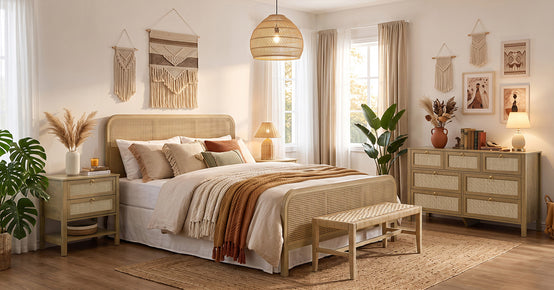
Lift the ceiling with vertical curtains or paneling, then settle the room down with the long horizontal of a low bed. A Savanna queen bed frame runs that calm horizontal line beautifully.
Kitchen
Cabinet lines, backsplash tile, island pendants, and counter edges all stack into order and quiet zones. Running a tile or counter line the long way makes the kitchen read bigger than it is.
Bathroom
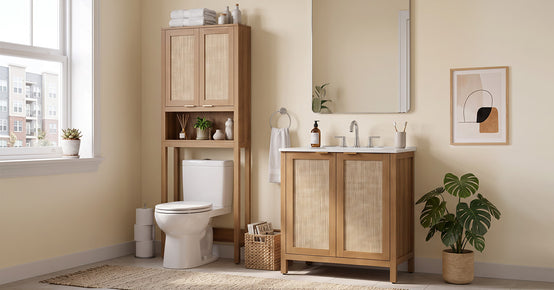
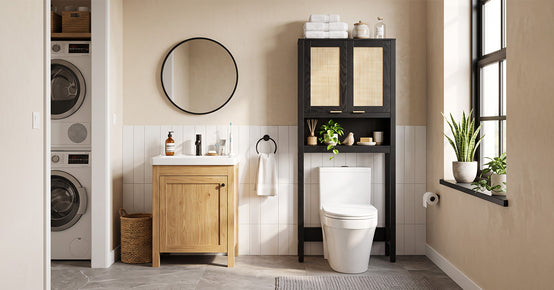
Vertical tile adds height, horizontal tile adds width, and a curved fixture or freestanding tub softens all that hard surface. Choose the direction based on whatever the room lacks.
Dining Space
The table shape is the main line in a dining space. A rectangular one brings structure, a round one brings softness and flow, and it sets the mood for the whole zone.
Living Room Media Wall

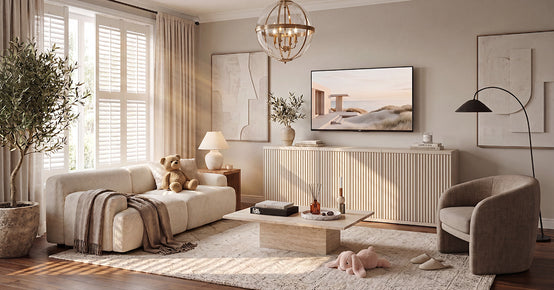
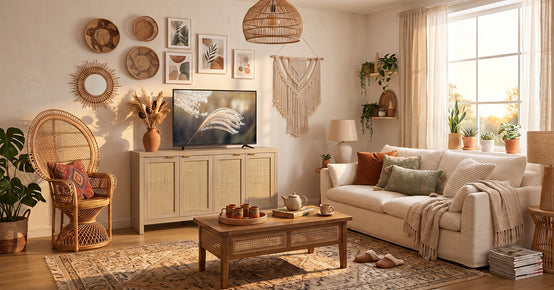
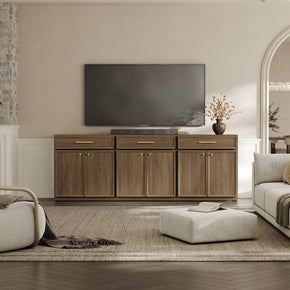
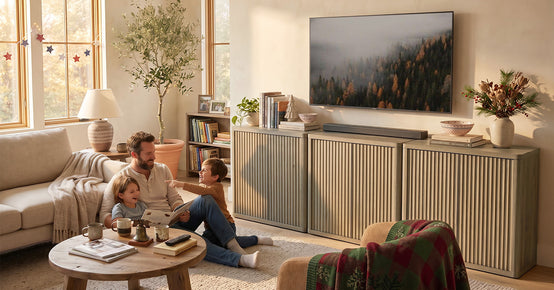
A long, low media unit puts a strong horizontal base under the TV. Something like the Savanna 4-door TV stand keeps that line clean and stops the whole wall from going top-heavy.
Common Mistakes When Using Lines in Interior Design
A handful of common slip-ups can throw a room off balance. These are the ones worth watching for.
Using Too Many Strong Lines
Too many bold lines make a room shout instead of speak. Pick one lead direction and let everything else support it.
Ignoring Room Size
Lines running the wrong way in a narrow room make it look narrower still. Always check the direction against the actual shape of the space.
Forgetting Balance
Straight, curved, horizontal, and vertical lines need to work as a team. One type running solo almost always feels off.
Choosing Patterns Without Purpose
Every pattern is built from lines. When a pattern fights the mood of the room, it reads as visual noise.
Making Every Line Compete
A room needs one or two clear line directions, not five focal points competing at once.
Quick Checklist for Using Line in Interior Design
Run through this short list before committing to a layout:
- What feeling are you going for in here?
- Should it read taller, wider, softer, or more charged up?
- Have you got enough straight lines holding the structure?
- Are there enough curves softening it out?
- Is there a single clear focal point?
- Do the lines walk the eye around on their own?
- Are rugs, lighting, or furniture marking the zones?
- Are the patterns kept in check?
- Does it feel balanced the second you step in the door?
Conclusion: Lines Are the Hidden Structure of Every Room

Lines decide how a room looks and how it feels, even when nobody notices. Horizontal, vertical, diagonal, curved, circular, zigzag, and implied lines all pull their own weight, and the rooms that really work let a few of them share the space. You do not have to gut anything to get going, either, just curtains, a rug, a mirror, a lamp, or a smarter spot for the furniture. Once a line in interior design starts to click for you, every room you touch gets easier to balance. And when you are after grounding pieces that bring clean, deliberate lines into your home, take a wander through the Sicotas furniture range.
FAQs
What is a line in interior design?
A line is the visual path your eye follows along edges, shapes, furniture, walls, lighting, or decor. It helps map out a space, steer the eye, and set the mood. Real or just implied, every line tweaks how the room reads.
What are the 4 types of lines?
The four big ones are horizontal, vertical, diagonal, and curved. Horizontal brings calm, vertical adds height, diagonal brings movement, and curved brings softness. Most rooms end up blending all four.
What are the 7 types of lines?
The seven you will hear about are straight, horizontal, vertical, diagonal, curved, circular, and zigzag. Each sets its own tone, and good rooms tend to mix a few instead of riding just one.
What are 5 examples of lines?
Five quick ones: floor-to-ceiling curtains, a long shelf, a rectangular dining table, a curved sofa, and herringbone flooring. Each shows a different line type, actually pulling its weight.
What are the 8 types of lines?
Eight usually means horizontal, vertical, diagonal, curved, straight, circular, zigzag, and implied. That last one is never drawn; it shows up from placement, think a row of pendants over an island.
What is an interior line?
An interior line is any line in a room that messes with its shape, movement, balance, or visual direction. The source might be the architecture, furniture, lighting, textiles, or floor.
What is the purpose of a line?
A line is there to build structure, map out shapes, guide movement, add visual interest, and set the feel of a space. It is the quiet skeleton holding every balanced room together.
What are the 7 elements in interior design?
The seven are line, shape, form, space, color, texture, and light. Line is the glue for most of the rest, since it maps the shapes and steers the eye.
Sources
- Castlery – How to Use Lines in Interior Design
- Homes & Gardens – Using Line in Interior Design
- Hoskins Interior Design – Elements of Design: The Importance of Line
- King Living – Shape in Interior Design: How to Balance Curved and Straight Lines
- Dakota Design Company – How to Use Line Effectively in Interiors
- Haus of Blaylock – The 7 Elements of Interior Design: Mastering Lines
- Pooky – The Seven Elements of Interior Design: Line


Looking for something else?

Furniture Materials Guide: Picking the Right Material Room by Room
LEARN MORE
How to Mix Wood Tones Without Making a Room Look Mismatched
LEARN MORE
18 College Apartment Furniture Ideas That Save Space and Money
LEARN MORE
Types of Entertainment Centers: 11 Designs and How to Pick One
LEARN MORELooking for something else?

Curio Cabinet Decor Ideas: How to Style a Display Cabinet Without the Clutter
LEARN MORE
Curved Furniture: How to Style, Measure, and Buy It in 2026
LEARN MORE
What Is Rattan Furniture? A Buyer Guide to Types and Care
LEARN MORE


Further reading

How to Choose a Nightstand for a CPAP Machine

How to Choose a Shoe Cabinet for Men's Sizes, High-Tops, and Bulky Shoes


