




















Best TV Stand Height: How to Choose the Right Size for Comfortable Viewing
The best TV stand height puts the middle of your screen at eye level when you sit down. Simple as that. Get it right, and you barely think about it. Get it wrong, and you finish a show rubbing your neck and wondering what feels off. My first apartment taught me this. The console looked great in the store, but it stood too tall, and every movie left me peering up at the screen like a kid in the front row. The right height is never the same for two homes. It rides on your TV, your couch, and the way you really settle in to watch. Ergonomics people keep the comfortable zone within a gentle tilt of your level gaze, a point Crutchfield's TV placement guide backs up. Below, you get a quick answer, a height chart by TV size, a one-minute formula, and the safety tips most guides skip.
Quick Answer: What Is the Best TV Stand Height?

The best TV stand height is the one that puts your screen's center at eye level when you are seated, usually 40 to 42 inches off the floor for most sofas.
General TV Stand Height Range
Most living rooms settle into a fairly narrow band. Where you land in it comes down to two things. Your TV size and how high your sofa sits. Bigger screens want a lower stand. Smaller ones can ride a touch higher without any fuss. The chart below has the exact ranges if you want a quick number.
The Golden Rule: Screen Center at Seated Eye Level
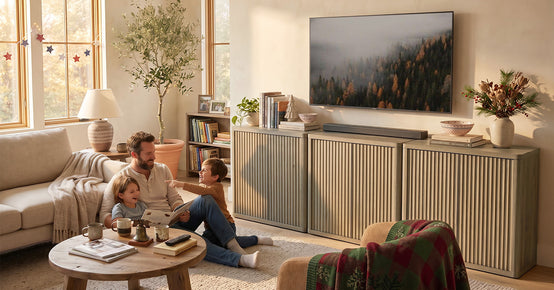
One rule beats every chart out there, and it doubles as the ideal TV stand height formula: the center of your TV should sit at, or just below, your eye level when you are seated. For most adults, on a normal sofa, that works out to roughly 40 to 42 inches off the floor. Hit that mark, and your neck never has to crane up or drop down to follow the show.
Best TV Stand Height Chart by TV Size

Use this TV stand height chart by TV size as your fast starting point. The numbers assume a standard sofa with the seat about 18 inches off the floor. Sit higher or lower than that, and you nudge the stand height to match.
|
TV Size |
Screen Height |
Best Stand Height |
Stand Type |
|
43-inch |
~21 inches |
28 to 32 inches |
Standard |
|
50 to 55-inch |
~27 inches |
24 to 30 inches |
Standard |
|
65-inch |
~32 inches |
20 to 26 inches |
Low to standard |
|
75-inch and up |
~37 inches |
16 to 24 inches |
Low-profile |
Recommended TV Stand Height for 43-Inch TVs
A 43-inch TV is on the short side. That means it can ride a taller stand and still keep its center near your eye line. Peek at the chart for the range I would pick.
Recommended TV Stand Height for 50 to 55-Inch TVs
This size fits in most living rooms and pairs well with an average sofa. Set the middle of the screen to meet your eyes, then grab a starting height from the chart.
Recommended TV Stand Height for 65-Inch TVs
A 65-inch TV stands taller, so the stand has to come down to keep the center comfy. Set it too high and a 65-inch TV stand shoves the screen above your easy viewing zone. The chart points you to the sweet spot.
Recommended TV Stand Height for 75-Inch TVs and Larger

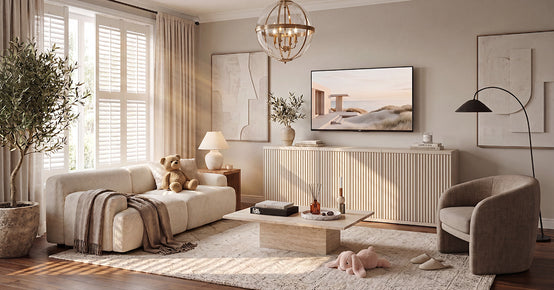
Big screens need low stands, full stop. The screen itself is already pretty tall, so a low-profile base is the only way to keep the center near eye level. You can see how that low silhouette reads in a room across the media console range. The chart above lists the height range for these.
How to Calculate Your Ideal TV Stand Height

Charts are just a guide. Your own setup is the real answer, and the math takes about a minute with a tape measure.
Step 1: Measure Your Seated Eye Level
Sit on your main sofa the way you normally watch, and have someone measure from the floor to your eyes. For most people, this is about 42 inches.
Step 2: Measure Your TV Screen Height
Measure the actual screen height, not the diagonal, and skip the TV feet. Your set's spec sheet lists this if you would rather not pull out the tape.
Step 3: Use the Formula
Take your seated eye level and subtract half the TV screen height. Whatever you land on is your ideal stand height. That really is the whole formula, and there is no trigonometry hiding in it.
Example Calculation for a 65-Inch TV
Say you measure your seated eye level at 42 inches. A 65-inch screen? The figure is about 32 inches top to bottom. Half of 32 is 16. So 42 minus that 16 puts you at 26. So a stand near that mark drops the screen center right onto your eye line.
Low, Standard, or Tall TV Stand: Which One Is Right?

Stands sort into three rough groups by height. Each one suits a different room and a different way of kicking back.
Low-Profile TV Stands
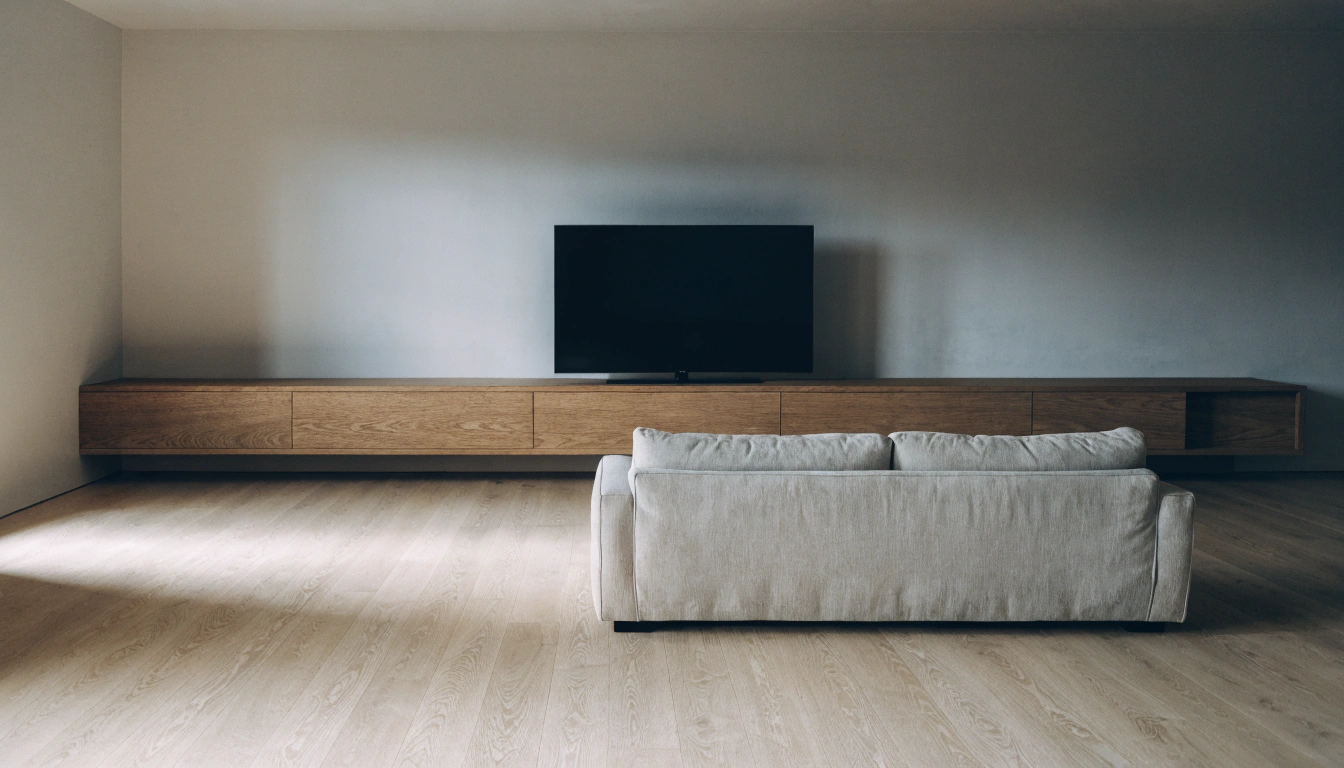
These sit low to the floor. They fit large TVs, modern rooms, low sofas, and wall-mounted setups. A low-profile TV stand exists for one reason: to keep a big screen from floating up too high above your eyes.
Standard TV Stands

Standard stands sit in the middle height range. This is the group that fits most sofas and mid-size TVs. A piece like thelow-profile TV console at a comfortable height keeps the screen where you want it while holding all your gear.
Tall TV Stands
Tall stands are the high ones. They earn their place in bedrooms, in rooms with high seating, or anywhere you watch from a raised spot. The idea is to keep your downward gaze gentle, so a taller stand pairs naturally with a higher seat.
How Sofa Height Changes TV Stand Height

Your sofa quietly decides your stand height, and most charts skip right over this. Two homes with the same TV can need very different stands, all because of the couch.
Low Sofas and Lounge Seating
Bean bags, floor cushions, and low modern sofas drop your eye level way down, so you want a low stand to match. Go any taller, and you end up staring up at the screen all night.
Standard Sofas
A normal sofa puts your eyes at the height at which most stands are built. A mid-height stand fits most of these rooms. Sit down, find your eye line, and match the screen center to it.
Recliners and High Sofas
Recline a lot? Your gaze drifts higher up the wall, so a slightly higher screen center actually works better. Tall or firm seating can take a taller stand, too. It all comes back to where your eyes land when you settle in.
TV Stand Width Matters Too

Height keeps you comfortable. Width keeps the TV safe and looking balanced. Height is the main focus of this guide, but width is the secondary sizing factor worth a quick look, since people search both at once. Below is the short version of the width rule.
Why Your Stand Should Be Wider Than Your TV
Go narrower than the TV, and the whole thing looks top-heavy. One bump and it can go over. Got kids or pets around? Then it's a safety problem, not just a look you don't like. A wider base sits there solid and on purpose, like the spot was made for it.
TV Stand Width Chart by TV Size
A good rule of thumb is to let the stand run a little past the TV on each side. Here are quick width targets by TV size:
- 43-inch TV: stands about 44 to 50 inches wide
- 55-inch TV: stands about 54 to 62 inches wide
- 65-inch TV: stands about 69 to 75 inches wide
- 75-inch TV: stands about 79 to 84 inches wide
Can the TV Be Wider Than the Stand?
Better not to. A TV that pokes out past the edges looks off-balance and topples with the slightest bump. The lone exception is a wall-mounted TV above a smaller console you keep just for storage.
Depth, Storage, and Cable Management

Once height and width are nailed down, the small stuff determines how easy the stand is to live with day-to-day.
How Deep Should a TV Stand Be?
Give it enough depth to support the TV base, fit a soundbar or console, and still leave a gap for cables and airflow. Go too shallow, and the cords get crushed against the wall. A medium depth covers most setups.
Open Shelves vs Closed Cabinets

Open shelves let devices breathe. Closed cabinets hide the clutter and the wires. Plenty of people want both, and a 4-door entertainment center offers closed storage and a clean front for a tidy media wall.
Cable Cutouts and Ventilation
Look for rear cutouts and cord holes that keep wires out of sight. Airflow matters just as much because media boxes run hot. Cram a shelf full, and the trapped heat slowly shortens your gear's lifespan.
Best TV Stand Height for Wall-Mounted TVs

Get your wall-mounted TV height right first, and the console or media unit beneath it takes on a whole new role, shifting from screen support to storage and proportion.
How High Should a Wall-Mounted TV Be?
That eye-level rule carries straight over to the wall. Line the screen center up with your seated eye level, and you are good. Mark it out before the drill comes out, since holes are no fun to patch.
Should You Still Use a TV Stand Under a Mounted TV?
Yes. A console below a mounted TV grounds the wall, hides the cables, and gives your devices a home. Just keep it wider than the screen so the whole wall stays balanced.
Floating TV Stands

A floating stand mounts to the wall and frees the floor. It looks clean in small or modern rooms. A modern option like the Helio media cabinet pairs well under a mounted screen.
Best TV Stand Height for Different Rooms

The right height shifts from one room to the next, because the way you sit changes with the room.
Living Room TV Stand Height
Living room viewing is mostly from a sofa, so 24 to 30 inches is ideal for an average seat. Then double-check it against your own eye level before you buy.
Bedroom TV Stand Height
Beds sit higher than sofas, plain and simple. So a bedroom TV usually wants a taller stand or a higher mount. A common bedroom mount sits around 60 inches from the center, set up for watching while propped up on pillows.
Gaming Room TV Stand Height
Gamers often sit for hours and watch. A lower, eye-level setup keeps your neck happy through long sessions.
Open-Concept Rooms
Open layouts mean people watch from the sofa and from the dining area. Split the difference between the two spots, or fit a swivel mount so the screen simply turns to face wherever you are.
Common TV Height Mistakes to Avoid
These slip-ups cause most of the discomfort and returns.
- Buying a stand before measuring the sofa, then guessing the height
- Choosing a stand that is too tall, which lifts a big screen above eye level
- Choosing a stand that is too narrow, which looks top-heavy and tips easily
- Ignoring the TV feet, which need to land fully on the surface
- Forgetting soundbar clearance below or in front of the screen
- Mounting the TV too high above the stand is a classic neck-strain mistake
Safety Tips for Kids and Pets

A heavy TV on a tall, skinny stand is a tip-over waiting for the wrong nudge. The CPSC'sAnchor It! campaign recommends anchoring both the TV and the furniture to the wall. Anti-tip straps and a lower, deeper stand are the two changes that bring the risk down most:
- Use anti-tip straps to secure both the TV and the stand to the wall, since they stop a screen from pitching forward even if it gets bumped
- Choose a lower, deeper stand that drops the center of gravity and gives the TV a solid, stable footing
- Avoid tall, narrow consoles with a large screen on top
- Keep cords hidden so they do not tempt little hands or pets
How to Choose the Best TV Stand

Treat this as your TV stand height and size guide checklist. Walk through it before any money leaves your pocket, and lock in height first, then move on to width, depth, and storage.
- Measure your TV width, screen height, and depth
- Match the stand height to your seated eye level
- Check the weight capacity against your TV and gear
- Plan for storage, whether open shelves or closed cabinets
- Match the style and finish to your room
- Pick a fully assembled or easy-assembly option to save time
For a low media look that doubles as display storage, a 3-drawer console table can work under a smaller screen or a mounted TV. There are more shapes and finishes to dig through in the console table collection.
Final Takeaway

The best TV stand height is never a single magic number. Keep the best TV stand height in mind as you shop, and run the formula against your own couch before you commit to aTV stand or media console that will sit right for years. It is whatever height drops your screen center onto your eye line when you sit. Start with the chart for your TV size. Then run the quick formula off your real couch, not some textbook average. Bigger screens want lower stands. Higher seats want taller ones. Toss in a wider base and a couple of anti-tip straps for added safety. Measure first, buy second, and your setup will look balanced, be easy to watch, and hold up for years.
FAQs
What is the ideal TV stand height?
The ideal height drops the center of your TV onto your seated eye level. For most folks, that sits a little above three feet off the floor. Here is how the pieces shake out:
- Seated eye level: about 40 to 42 inches for most adults
- Stand height itself: usually 18 to 30 inches
- The deciding factors: your TV size and your sofa height
Is 30 inches too high for a TV stand?
Not always. Thirty inches sits fine under a smaller TV, a high sofa, or a bedroom screen. It only starts to feel tall once you park a big screen on a normal couch.
Is 36 too high for a TV stand?
In most living rooms, yes. A stand that tall lifts a large screen well over eye level and leaves you craning up. It can still suit a bedroom or a high-seat spot, though.
Is 32 inches too tall for a TV stand?
Depends on the TV size and your seat. With a larger TV and a standard sofa, that height tends to feel high unless your seating sits up off the floor.
Can I put a 50-inch TV on a 40-inch stand?
It can sit there, since a 50-inch TV is roughly 44 inches wide. Trouble is, the stand comes out narrower than the TV, so it looks off and wobbles more. A wider stand is the safer pick and just looks cleaner.
Can you put a 65-inch TV on a 60-inch stand?
Yes, more often than not. Here is why it lines up:
- A 65-inch TV is only about 57 inches wide
- That clears a 60-inch stand with room to spare
- A wider stand still looks more grounded and fits a soundbar
How to choose a TV stand?
Work through it in order:
- Measure your TV width, screen height, and seated eye level
- Check the TV feet depth and your room layout
- Confirm the weight rating against your TV and gear
- Match the height to eye level, and the width wider than the TV
What are common TV height mistakes?
The repeat offenders are easy to spot once you know them:
- Mounting the TV too high above the stand
- Pairing a tall console with a large screen
- Ignoring how high the sofa actually sits
- Forgetting clearance for a soundbar
Is 18 inches too low for a TV stand?
No. Eighteen inches is ideal for large TVs, low sofas, wall-mounted screens, and modern low-profile setups. It keeps a big screen centered, sitting right near eye level.
Sources
- THX – Viewing Guide
- U.S. CPSC – Anchor It! Tip-Over Prevention
- Crutchfield – TV Placement and Viewing Height
- RTINGS – TV Size to Distance Calculator
- Acoustic Frontiers – Home Theater Viewing Angles and Sightlines
- Kaleidescape – Screen Size and Viewing Distance Guide


Looking for something else?

Burl Wood Furniture: The Complete Buying Guide
LEARN MORE
What Is a Hope Chest? Meaning, History, and Modern Uses
LEARN MORE
What Is a Foyer? Meaning, Purpose and Design Guide
LEARN MORE
GREENGUARD Gold Certified Furniture: What It Really Means for Your Home
LEARN MORELooking for something else?

How to Clean a Mirror Without Streaks: Simple Step-by-Step Guide
LEARN MORE
21 Above-Bed Decor Ideas for a Stylish Bedroom Wall
LEARN MORE
Furniture Materials Guide: Picking the Right Material Room by Room
LEARN MORE


Further reading

18 Decorative Storage Box Ideas That Hide Clutter Well

How to Store Comforters Without Losing Space or Loft


