




What Is a Console Table? Uses, Sizes, and Styling Ideas

A console table is a long, narrow table — usually 28 to 36 inches tall and 12 to 18 inches deep — built to sit flat against a wall. Entryways, hallways, behind sofas, dining rooms. Part display surface, part storage. Doesn’t crowd a room. Does more work than it looks.
Walk into any nicely put-together home, and you’ll find one somewhere—the slim table against the entryway wall. The piece was tucked behind the sofa. The surface sits under a framed mirror in the hallway. All console tables. All quietly doing exactly what they’re built for.
So what actually makes a console table different from every other table? Where does it go, how big should it be, and how do you style one without it turning into a junk shelf? That’s what this guide is for.
What Is a Console Table?
Long. Narrow. Wall-adjacent. That’s the short version.
A console table is a narrow table made to sit against a wall. It’s slimmer than a dining table, shallower than a sideboard, and shorter than a bookcase. Standard height runs 28 to 36 inches. Standard depth: 12 to 18 inches. Width varies — anywhere from 30 to 72 inches, depending on the wall it’s going on.
Some console tables are just a tabletop and four legs. Others come with built-in drawers, shelves, or cabinet doors. The style can go anywhere from raw wood and black metal to polished lacquer and marble. But the slim profile? That’s always there. That’s what makes it a console table.
Why Is It Called a Console Table?
The name doesn’t come from the table’s shape. It comes from how the first versions were held up.Early console tables — dating back to 17th-century France — were literally bolted to the wall—no back legs. The tabletop sat on decorative wall brackets called consoles. The wall did the structural work, not the furniture itself. More shelf than table, really. You can read more about the history over at Wikipedia’s console table entry.
Eventually, the brackets disappeared. Designers added legs, made them freestanding, and made them movable. The name stayed. Which is why today’s console table has nothing structurally to do with a wall — it just tends to live next to one.
What Is a Console Table Used For?

More than most people expect. This is the piece of furniture that quietly solves problems all over the house.
In the Entryway
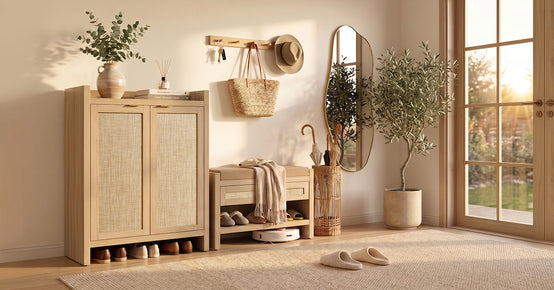
This is the home base for most console tables. You walk in the door — there it is. Somewhere to land your keys, drop your bag, and sort through the mail without setting it all down on the kitchen counter.

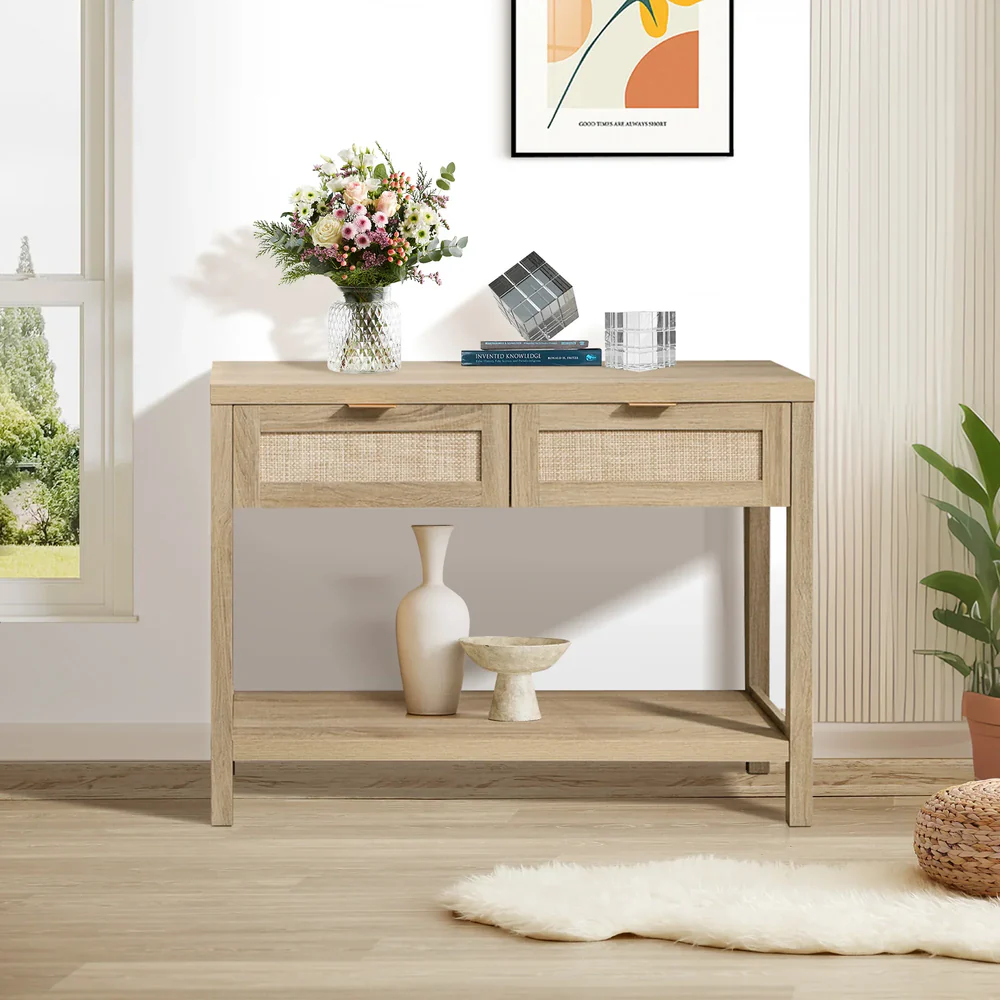
The version with drawers is the smarter pick here. Top surface for a lamp, a small plant, whatever looks nice—drawer for everything else. Add a mirror above it, and the whole entry reads intentional — not staged, just put together. Takes about twenty minutes to get right. Makes a difference you notice every single day.
The Savanna 3-Drawer Console Table is a good example of this done well — three full drawers in a clean modern frame that keeps the surface clear and the clutter out of sight.
In the Living Room

Here’s one that surprises people: put a console table directly behind your sofa.
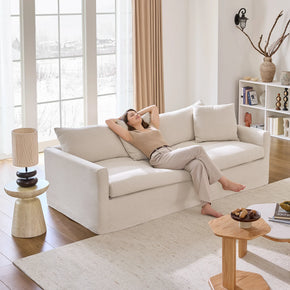
A sofa floating in the middle of a room always looks slightly unfinished. A console table behind it connects it to the wall, gives the arrangement a back edge, and makes the whole setup feel deliberate. It’s not a dramatic change. But the room just looks better.
It’s useful, too. A pair of lamps. A tray for the remotes. A spot to charge phones that would otherwise be snaking across the sofa cushions. One hard rule: the console should never be taller than the back of the sofa. Level with it, or one to two inches shorter. Any taller and you’ll see it from across the room, and it will bother you every time.

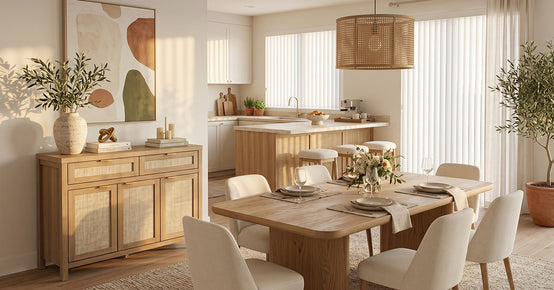
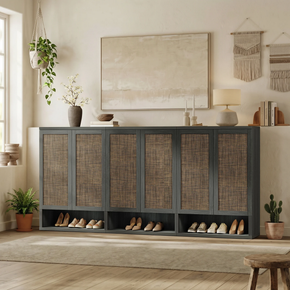
For a living room wall that needs more than just a slim table — something with visual presence and actual storage behind it — the Helio Decorative Sideboard Cabinet is worth considering. Wider frame, enclosed storage, still sits flat against the wall.
In the Hallway

Long hallways are genuinely awkward to furnish. A full cabinet blocks traffic. Nothing on the wall looks cold. A console table is the answer that actually works — slim enough to keep the path clear, substantial enough to feel like a real design decision.
Twelve to fourteen inches deep is the ceiling for most hallways. One or two things on top. A vase, a framed print. That’s it. Don’t overload it. The narrow surface is part of what makes the space feel right.
In the Dining Room

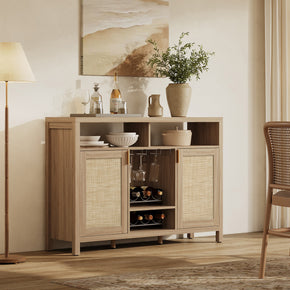
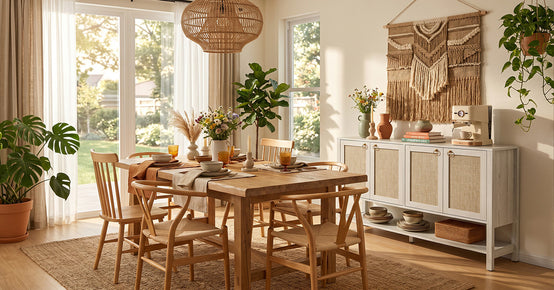
Not where people think of first, but it works surprisingly well. A console table along the dining room wall functions as a slim sideboard — serving dishes during dinner, bottles and glasses when you’re having people over, and a display surface the rest of the time.
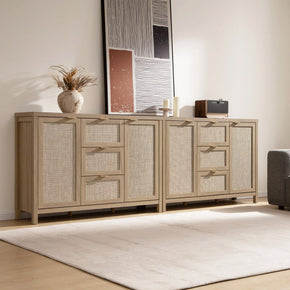
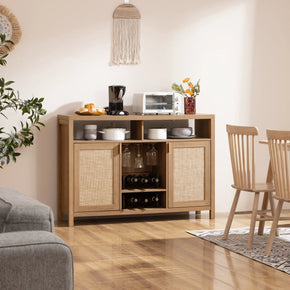
The Savanna Storage Sideboard with Doors sits right in this space. Three drawers plus two cabinet doors in a modern frame — useful enough for a dining room, clean-lined enough not to overpower it.
In the Bedroom
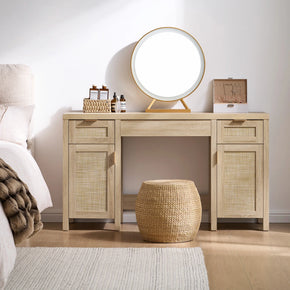
A console table can pull off a compact vanity setup in bedrooms where a full dressing table would take up too much floor space. Mirror above, stool underneath, lamp to one side. Done. Some people also place one at the foot of the bed for folded throws or a bit of decorative styling. Either way, it earns its spot without asking for much room in return.
Console Table vs. Side Table: What’s Actually the Difference?
They look similar. They’re not the same piece.
|
Feature |
Console Table |
Side Table |
|
Typical width |
36–72 inches |
16–28 inches |
|
Typical depth |
12–18 inches |
16–24 inches |
|
Placement |
Against walls, behind sofas |
Besides sofas, chairs, beds |
|
Primary role |
Display surface, accent piece, storage |
Easy-reach utility surface |
|
Decorative focus |
High — often a visual focal point |
Low — serves the furniture next to it |
Simplest split: a console table stands alone. It’s a room element in its own right. A side table leans on something else — its job is to hold a drink within arm’s reach of the sofa, or keep a lamp next to the bed. One is a destination. The other is support.
What’s Another Name for a Console Table?
Same piece. Different names depending on placement:
- Sofa table — placed directly behind a sofa
- Hall table — lives in a hallway
- Entryway table — near the front door
- Accent table — used loosely for any decorative narrow table
The proportions are the same across all of them. The name just tells you where it ended up.
How to Size a Console Table Correctly

Wrong size and nothing else works. The styling, the finish, whether it has drawers or not — none of that matters if the table is the wrong scale for the space. Measure before you look at anything.
Height
28 to 36 inches covers most situations. For hallways and entryways, anything in that range is fine. Behind a sofa, the table height should match the sofa back, or sit one to two inches below it. Never above. That’s the one rule in this section worth memorizing.
Depth
12 to 16 inches is the practical range. Shallower than 12, and the surface becomes almost unusable. Deeper than 18 and it starts to feel like a different piece of furniture entirely. Narrow hallway? Treat 12 inches as a hard ceiling.
Width
Against a wall, leave breathing room on each side. Don’t push the table edge-to-edge with the wall — it looks crammed. Behind a sofa, two-thirds of the sofa’s length is the guideline. The console doesn’t need to be an exact match, but it should feel proportional rather than like it was dropped in from a different room.
What Are the Rules for Styling a Console Table?
There aren’t many. But the ones that exist are worth knowing before you start placing things.
Rule 1: Anchor the wall above it
A console table without anything above it looks like it’s waiting for something. A mirror, a framed print, a gallery wall arrangement — it doesn’t have to be elaborate. Hang it 6 to 8 inches above the table surface. That gap is what makes the wall and the table feel connected instead of just near each other.
Rule 2: Work in three height levels

Something tall. Something mid-height. Something low. A lamp or tall vase at the top. A stack of books or a sculptural bowl in the middle. A tray or small plant at the base. That staggered arrangement is what separates a styled console from one that just has stuff on it.
Rule 3: Leave the surface empty on purpose
Not a mistake — a decision. 30-40% of the top should remain clear. The open surface creates visual rest between objects. Without it, even a well-chosen collection of items reads as clutter.
Rule 4: Make high-traffic spots do actual work

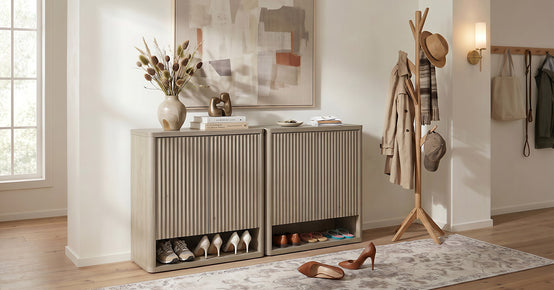
An entryway or hallway console that’s purely decorative will last about a week before it’s covered in keys, unopened mail, and things that were supposed to go somewhere else. Plan for it. A tray on top. A drawer underneath. Something that makes the chaos manageable.
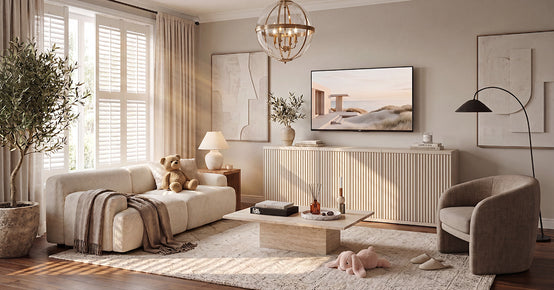
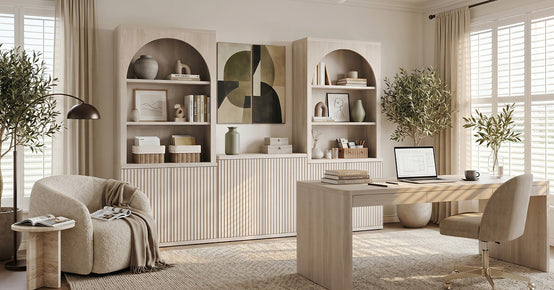
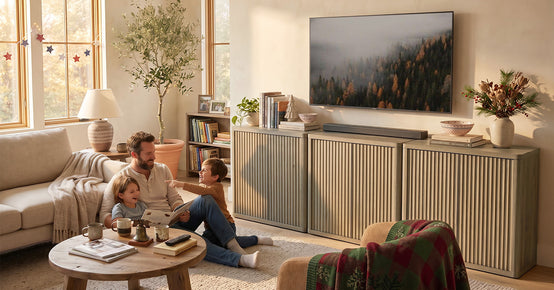
The Stria 2-Door Sideboard handles this cleanly — two cabinet doors behind a fluted front panel keep everything out of sight so the surface stays clear without any ongoing effort.
Can a Console Table Be Used as a TV Stand?

Yes. With conditions.The table needs to be wide enough for the TV’s base, deep enough for the TV’s feet, and rated to handle the weight. Most console tables run 12 to 18 inches deep. That works fine for flat-screen TVs. But if your TV has a wider base that extends past 15 inches — check before you buy.
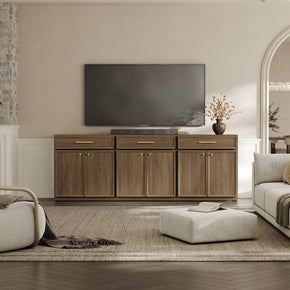
Best case for this setup: a wall-mounted TV with the console running underneath. Mount the screen, use the table surface for a media box, a streaming stick, or a soundbar. It’s cleaner than a media unit, takes up less visual space, and works particularly well in smaller rooms or bedrooms where a full entertainment center would feel like too much.
How to Choose the Right Console Table

Start with the function.
What does this table actually need to do? Pure display, open shelving, hidden storage with drawers or doors? If you have young kids or pets, an open bottom shelf will collect everything within reach. Closed storage keeps things where you put them.
Then pick the material.

Solid wood is warm, durable, and refinishable — scratches aren’t permanent. Engineered wood is stable and more affordable,e but can’t be refinished once damaged. Metal and glass read as light and modern but show fingerprints. Matte finishes hide daily wear better than gloss. Your actual lifestyle matters more here than what photographs well.
Match the style to the room.
An ornate console in a clear,n minimal room will always look like it wandered in from somewhere else. The table should share the visual weight and proportions of the furniture already there. Same finish family helps. The same rough era of design helps more.

Sicotas has a solid range of modern console and accent options in their console and entryway furniture collection — clean lines, matte finishes, warm wood tones. Worth browsing if modern minimal is what you’re after.
Check placement and clearance.
Before you buy anything, tape the footprint out on the floor. Sounds excessive. It saves a return. Make sure you have at least 36 inches of walkway clearance in hallways and entryways. A tight squeeze,e and the table becomes an obstacle, not an accent.
For a broader look at accent furniture and storage options across the whole home, the Sicotas modern furniture range covers everything from bedroom sets to living room pieces.
FAQs
What is the difference between a table and a console table?
“Table” is a category. A console table is one type within it — long, narrow, shallow, wall-adjacent. The difference is purpose: a console table is an accent piece, not a primary work or dining surface. A dining table is designed to sit around. A console table is designed to sit against something.
What is the difference between a console table and a side table?
Scale and placement. Console tables are long — often 36 to 72 inches — and shallow, made to run along walls or behind sofas. Side tables are compact, usually square or round, and placed right beside a sofa, armchair, or bed. One is a room anchor. The other is a utility surface within arm’s reach.
What is the rule for a console table?
Never taller than the sofa back if it’s going behind one. Proportional to the wall it’s sitting against. Anchored with something above it — art or a mirror, and styled with height variation, not uniform objects. And thirty to forty percent of the surface is left open. Those are the five rules that cover most situations.
Can a console table be used as a TV stand?
Yes — especially under a wall-mounted TV. Check that the table is deep enough for any equipment on it and that its weight capacity supports what you’re placing on it. For TVs with wide or deep stands, a proper media unit may support things more safely.
Why is it called a console table?
The name comes from the decorative wall brackets — called consoles — that supported the original tabletops in 17th-century French interiors. Those early pieces were attached to the wall with no back legs. The brackets gave the piece its name. Modern versions are freestanding, but the name is carried forward anyway.
What is another name for a console table?
A sofa table is behind a sofa. A hall table when it’s in a hallway. Entryway table near the front door. An accent table is a general term. Different names, same proportions — the name just reflects where the piece ended up.
What exactly is a console table?
A long, narrow accent table, typically 28 to 36 inches tall and 12 to 18 inches deep, designed to sit against walls, behind sofas, in hallways, or near entryways. It can hold lamps, decorative objects, trays, books, or storage. It’s one of the more versatile pieces in a home precisely because of how little floor space it uses.
What are the four types of furniture?
A practical grouping: seating furniture (sofas, chairs, stools), surface furniture (tables, consoles, desks), storage furniture (dressers, wardrobes, sideboards, cabinets), and sleeping furniture (beds, daybeds). Console tables fall into the surface category — their job is to provide a functional or decorative horizontal plane in a room.
The Bottom Line
A console table doesn’t demand attention. It sits against the wall, holds what needs holding, and makes the room feel more finished without doing anything obvious. But take it out, and you notice. The wall looks bare. The sofa looks like it’s floating. The hallway goes back to feeling like a corridor again, and nothing more.
Measure the space before you buy. Decide what job the table actually needs to do. Get the proportions right. After that — the styling, the accessories, the finish — the rest genuinely takes care of itself.
Sources
- Wikipedia: Console Table — History and Definition — Historical definition of console furniture, etymology, and early design from the 17th century onward.
- Guynn Furniture: What Is a Console Table Used For? — Room-by-room breakdown of console table uses, including living room, entryway, and dining room placements.
- Hernest: What Is a Console Table? Complete Guide to Size, Use & Styling — In-depth guide covering standard dimensions, placement options, and the difference between console tables and similar furniture.
- Rose & Grey: A Guide to Console Tables: What They Are and How to Dress Them — Styling guide covering symmetrical and asymmetrical arrangements, layering, and room-by-room decorating ideas.
- Tom Faulkner: What Is a Console Table? — Design-focused guide on placement, proportion, and choosing console tables for different interior styles.
- Bel Furniture: Entryway Table vs. Console Table: What’s the Difference? — Side-by-side comparison of entryway tables and console tables covering size, function, placement, and styling.
- Home Stratosphere: Furniture Placement and Room Styling Tips — Practical furniture placement guidance for living rooms, hallways, and accent piece selection.


Looking for something else?

Furniture Materials Guide: Picking the Right Material Room by Room
LEARN MORE
How to Mix Wood Tones Without Making a Room Look Mismatched
LEARN MORE
18 College Apartment Furniture Ideas That Save Space and Money
LEARN MORE
Types of Entertainment Centers: 11 Designs and How to Pick One
LEARN MORELooking for something else?

Curio Cabinet Decor Ideas: How to Style a Display Cabinet Without the Clutter
LEARN MORE
Curved Furniture: How to Style, Measure, and Buy It in 2026
LEARN MORE
What Is Rattan Furniture? A Buyer Guide to Types and Care
LEARN MORE


Further reading

How to Choose a Nightstand for a CPAP Machine

How to Choose a Shoe Cabinet for Men's Sizes, High-Tops, and Bulky Shoes


