




23 Storage Ideas for Small Spaces That Actually Work
If you've ever stood in the middle of a small room and thought, "There's just no space for any of this," that feeling is usually lying to you. Most compact homes have far more storage potential than their owners realize. The real problem isn't the square footage. It's that the space isn't being used properly. The right storage ideas for small spaces can completely change how a cramped bedroom, a chaotic hallway, or a kitchen with nowhere to put anything actually feels to live in.
These 23 ideas cover every room. Some you can set up tonight. Some need a new furniture piece. But none of them require a renovation, a big budget, or the tearing out of anything.
Bedroom Storage Ideas
1. The Space Under Your Bed Is Doing Nothing — Fix That

Walk past your bed right now. That clearance underneath? Probably empty. Or crammed with random stuff that slid under there two years ago and never came back out.
Depending on your frame, you've got anywhere from six to fourteen inches of space down there. That's genuinely useful. Flat boxes with lids, vacuum-compression bags, rolling drawers that pull out from either side — all of it fits. Ski jackets in July, the spare duvet, pillows nobody uses during the summer — it belongs under the bed, not taking up half your closet.
If your frame already has built-in drawers, actually use them properly. Don't just shove things in. Sort by category. It takes twenty minutes to set up right and saves you from that whole "I know it's in here somewhere" problem every single morning.
2. A Wide Dresser in a Small Bedroom Is Almost Always a Mistake

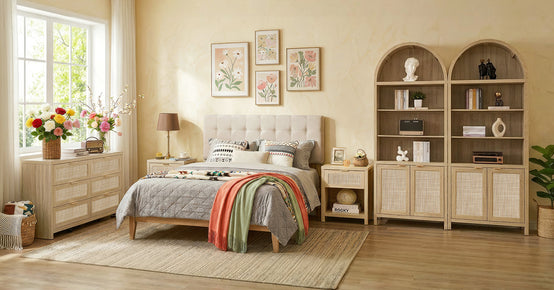
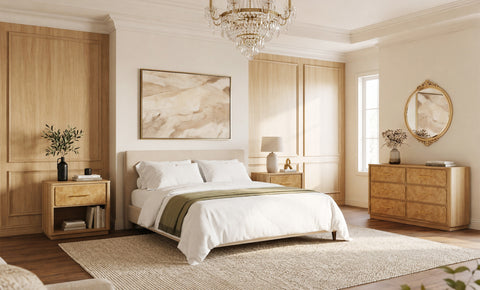
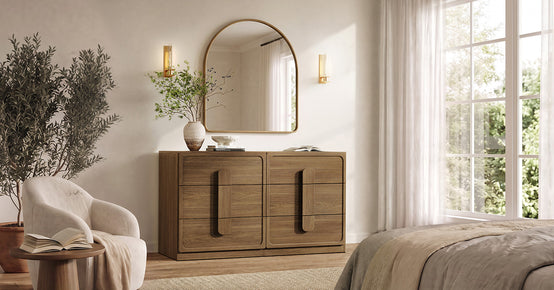
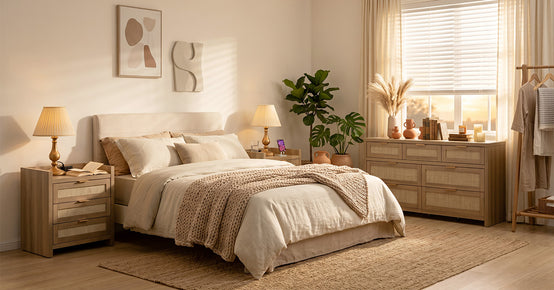
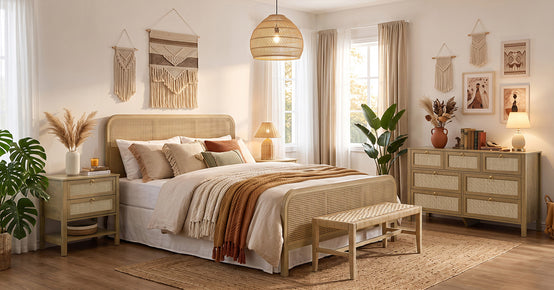
Floor space in a compact bedroom is currency. Wide dressers spend a lot of it — and they don't always give you more storage than a taller, narrower option would. A tall dresser uses the same footprint, or smaller, but stacks drawers upward instead of outward. The Savanna 7-Drawer Tall Dresser is worth looking at here — seven drawers is enough to actually separate categories without cramming three things into one space and losing track of everything. The vertical height also pulls the eye up, which makes a small room feel taller than it is.
3. If Your Closet Is Too Small, Stop Fighting It — Get a Wardrobe

Some bedroom closets are genuinely too small to be useful. And in older apartments especially, there just isn't one at all. Trying to work with a closet that doesn't have enough hanging space or shelving is a losing battle.
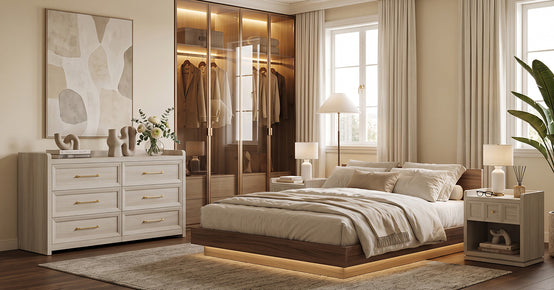
A freestanding wardrobe solves this. Rails for hanging, shelves for folded items, drawers at the bottom if you need them. Everything goes behind doors, the room looks clean, and you stop opening a closet that stresses you out. The wardrobe collection has options built for compact spaces — taller and narrower than what most people picture when they think "wardrobe," so they don't eat the whole room.
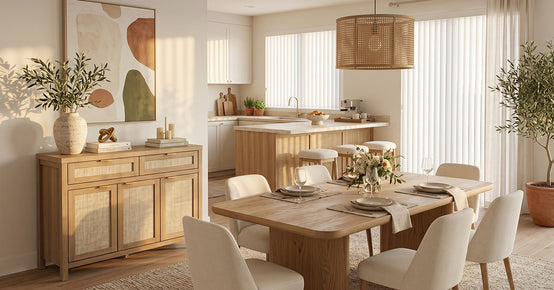
4. Headboards with Built-In Storage Are Worth Every Penny

If your bedroom is tight enough that nightstands don't fit on both sides of the bed — or either side — a storage headboard fixes that problem entirely. Shelves, cubbies, sometimes small drawers built right into the headboard. Books, glasses, your phone, a lamp. All of it lives above the mattress rather than competing for floor space you don't have.
Worth it even if you do have room for nightstands, honestly. One less piece of furniture is one less thing to work around.
5. Vacuum-Seal Your Seasonal Clothes — Seriously

Winter coats are enormous. I don't mean that as a judgment — they have to be, that's the point. But storing a heavy puffer jacket inside a bedroom closet during the months you'll never wear it is just wasting prime storage real estate. Same for thick sweaters, ski gear, heavyweight blankets.
Vacuum-seal bags are cheap and they work. A coat that normally takes up half a shelf compresses down to something about the size of a thick magazine. Slide it under the bed, stack it on the top wardrobe shelf — wherever there's dead space. Label the bags. You'll thank yourself when November comes and you can't remember which bag the gloves are in.
6. Open Nightstands Look Great in Showrooms. Drawers Win at Home.

An open nightstand shelf stays organized for maybe a week. Then it's a charger, a book, something you found in your pocket, a glass that needs to go to the kitchen, and an inexplicable pen. Drawers hide all of that. Surface stays clear, room looks calm, no guilt spiral when you walk in. The Savanna Nightstand with 3 Drawers adds a built-in charging station as well — which means the cable doesn't live on the surface either. That single detail makes a bigger visual difference than it should.
7. Baskets: Not Just Decorative, Actually Useful

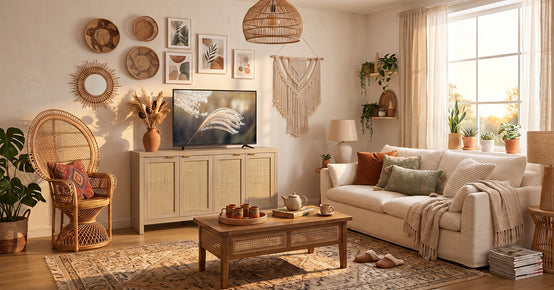
Woven baskets get written off as décor. They're not — or they don't have to be. A good basket holds a lot: folded throws, extra pillows that don't fit on the bed, laundry waiting to be dealt with, and accessories that don't have another home. And unlike a plastic bin, a basket doesn't make a shelf look like a storage unit.
The thing that matters most: matching. Doesn't have to be expensive. But two baskets in the same material and color look intentional on a shelf. Two baskets that are clearly from different decades look like stuff that got left behind.
Entryway Storage Ideas
8. A Shoe Cabinet Changes an Entryway Completely

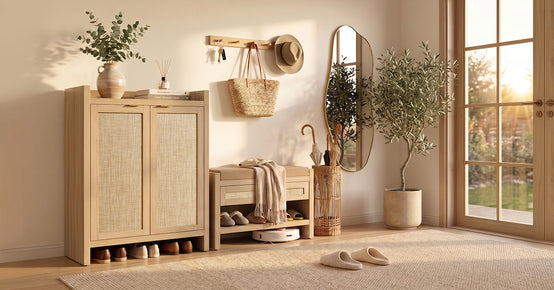
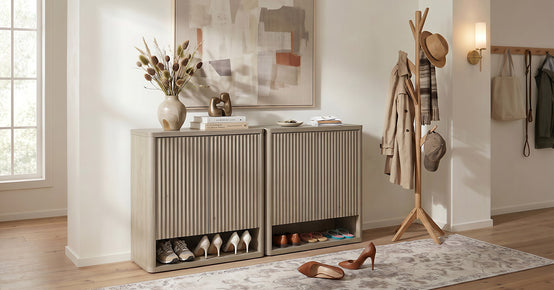
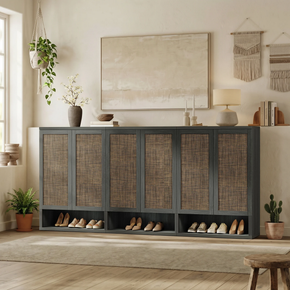
You'd be surprised what a pile of shoes near the door does to the feel of a home. Even if everything else is tidy, scattered footwear makes a space look lived-in in the wrong way. A slim shoe cabinet moves all of that behind closed doors — instantly. The Cas Black Shoe Cabinet sits flush against most walls without blocking the walkway. Everyday shoes go in, door closes, and the entryway suddenly looks like a deliberate space rather than a dropping-off zone.
9. Wall Hooks: The Fastest Entryway Upgrade There Is

This takes about forty minutes to do properly and makes an immediate difference. A row of wall hooks near the door gives coats, bags, the dog lead, and the umbrella a home that isn't a dining chair or the floor.
Add a small shelf or tray above the hooks — keys, sunglasses, mail goes there. Now everything that usually gets lost on the way out the door has a dedicated spot. Morning routine gets easier. You stop doing the "where are my keys" panic at 8am.
10. Console Tables with Drawers Pull Double Duty in Hallways

A console table on its own gives you a surface. One with drawers gives you a surface plus somewhere to put the chargers, the random batteries, the scissors that migrate through the house, and anything else that ends up in an entryway because it doesn't technically belong anywhere.
Works in narrow hallways where a bigger piece of furniture wouldn't fit. Works behind a sofa too, in open-plan spaces where you want a visual break between zones.
11. A Storage Bench by the Door Earns Its Space

Sitting down to put your shoes on is genuinely more pleasant than standing. And if the bench you're sitting on has a shelf or hinged compartment underneath? You've got hidden storage that takes up zero visual space in the room.
Especially useful when there are kids in the house. One place for school bags, shoes, whatever got pulled in from outside. Not the hallway floor, not the kitchen counter — the bench.
Living Room Storage Ideas
12. Floor Space Is Gone? Go Up the Wall Instead

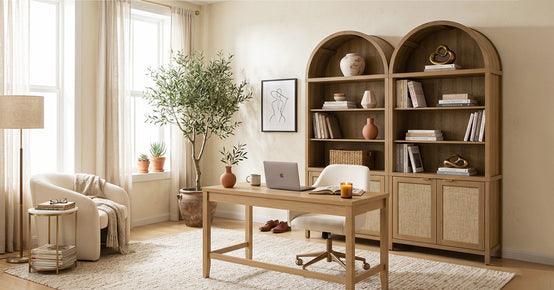
The floor plan in a small living room runs out fast. The walls don't. A tall bookshelf uses vertical height rather than footprint — you get real storage without losing the area you actually sit and move around in. The Willow 75-Inch Tall Bookshelf goes high enough to genuinely maximize the wall space, and the multiple shelf tiers give you room for books, baskets, plants, and smaller objects all in one place. Wirecutter's organizing team has consistently ranked tall vertical shelving among the highest-return changes you can make in a compact living space — it also makes the ceiling look higher, which is a nice side effect.
13. A Sideboard Hides What Shouldn't Be on Display

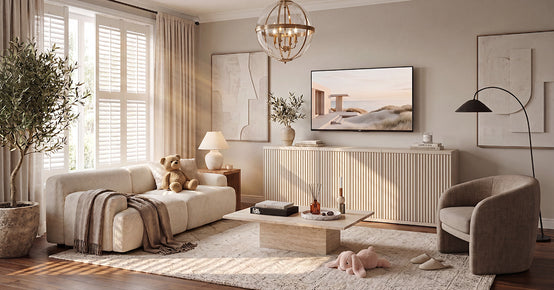
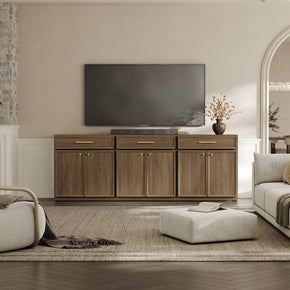
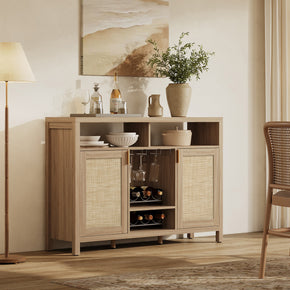
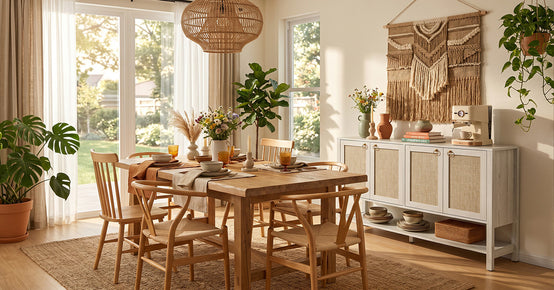
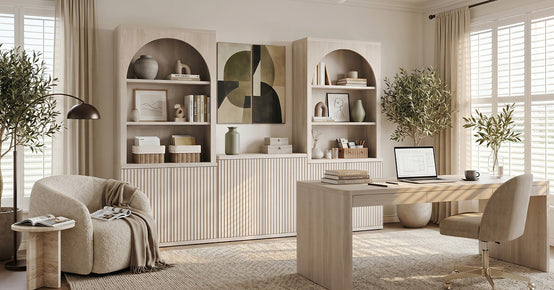
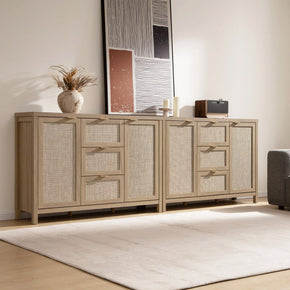
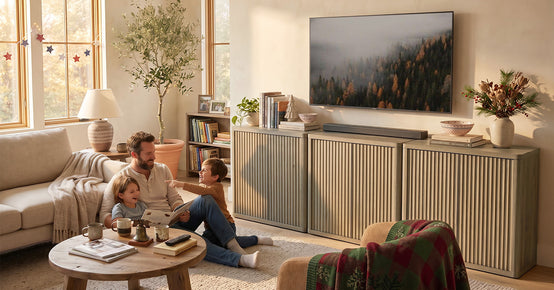
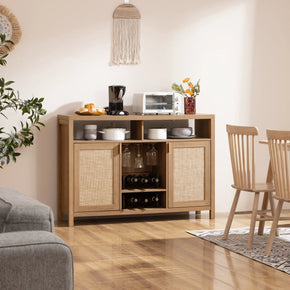
Board games. Extra candles. The TV remote collection. All the cables you need but never want to look at. A sideboard takes all of that and puts it behind closed doors — and the top becomes useful surface space for a lamp, a plant, or a display that actually looks considered.
They sit low enough that they don't block windows or light. They don't dominate a wall the way a tall unit would. For a small living room that needs to look calm, a sideboard does a lot of quiet work.
14. Floating Shelves on Empty Walls — All of Them

Most living rooms have several feet of empty wall space that's being used for nothing except holding paint. Floating shelves fix that. They're not expensive. Most are renter-friendly. Mount them above the sofa, beside the TV, over a doorway — anywhere there's a blank stretch.
Don't overfill them. That's the one trap people fall into. A shelf that's crammed edge to edge looks messier than no shelf at all. Leave breathing room between things.
15. Matching Baskets on Open Shelves Are the Easiest Visual Fix

Open shelving shows everything — the books and the box of cables from 2019 and the receipt you never threw away. The quickest way to fix that without closing off the whole shelf is baskets. A uniform set of woven baskets — same color, same size — makes mixed content look organized because your eye sees the system, not the stuff inside.
Label them if you want. Remotes. Magazines. Stuff that needs to go upstairs. The labels are actually useful, not just aesthetic.
16. Modular Shelving Units Adapt as You Do

Fixed shelving is permanent. Modular units aren't — which is useful when you move, rearrange, or your storage needs change between seasons. Stack them as high as the room allows in one corner, or spread them along a wall. Add units. Remove them. Split them between rooms.
Particularly good in studios where the "bedroom" and "living room" are separated by about three feet of carpet and a shared understanding.
Kitchen Storage Ideas
17. Get the Pots Off the Cabinet Shelves and onto the Wall

A wall rail with S-hooks is not a complicated solution. But the amount of cabinet space it frees up is genuinely surprising. Pots and pans are the worst offenders in a small kitchen — they're heavy, awkward to stack, and impossible to access when something is piled on top of them. Move them to the wall. The cabinet space that opens up can handle the things that actually need to be enclosed.
Every kitchen photo you've ever admired with good light and clean counters probably has hanging pots somewhere. Not a coincidence.
18. A Rolling Cart Gives Small Kitchens a Second Surface

There's usually a gap in a small kitchen — beside the fridge, between the counter end and the wall, somewhere. A rolling cart fills it. Use the top as prep space when you're cooking, the lower shelves for spices, oils, dry goods, or cleaning supplies. When you need the floor space back, it rolls out of the way.
Cheap to buy. Actually changes how the kitchen functions. Not many storage ideas deliver that combination.
19. Double Your Cabinet Space with Stackable Bins

Here's something that's hard to appreciate until you see it in your own kitchen: the shelf inside a standard cabinet is usually twice as tall as whatever's sitting on it. The air above your soup cans is doing nothing. Stackable bins build a second layer in that space — suddenly the same cabinet holds twice as much, and everything is still findable.
Clear bins over opaque, every time. You're not going to remember which bin has the stock cubes in it. Clear ones mean you can see at a glance without pulling everything out onto the counter.
Universal Storage Ideas for Any Room
20. The Back of a Door Is Free Storage. Use It.

Count the interior doors in your home. Each one has a back that probably has nothing on it right now. Over-the-door organizers — pockets, hooks, small shelves — work in every room. Shoes behind the bedroom door. Toiletries behind the bathroom door. Cleaning supplies behind the utility closet. Hair tools and accessories in the hallway.
Not glamorous. Genuinely useful. And it costs almost nothing to set up compared to any other storage solution on this list.
21. A Pegboard Turns Empty Wall Space into Flexible Storage

Garages started using pegboards because they work. A pegboard in a kitchen handles utensils and spice jars. In a home office, it holds cables, stationery, notebooks. In a craft room it holds scissors, thread, tools — and the layout changes in five minutes when your needs do. Everything on the wall means nothing on the surface.
One of those things that feels slightly industrial until you have one. Then you wonder why it took you so long.
22. Declutter First. Storage Second. Not the Other Way Around.

This probably should have been number one, not number twenty-two. Before you buy anything — not a basket, not a shelf unit, not a single organizer — go through what you own. Actually do it.
The clutter problem in most small homes isn't really a storage problem. It's a too-much-stuff problem. Buying new storage to contain the same amount of stuff is just rearranging the issue. And it usually leads to spending money on the wrong sizes, wrong types, wrong amounts — because you didn't know what you actually needed to store before you started buying.
Declutter. Assess. Then buy. That order is not optional.
23. Corners and Under-Stair Spaces Are Wasted in Most Homes
How many corners in your home are currently used for nothing? Corners are awkward but they're not useless. A corner shelf unit fits into dead space without blocking walkways. Under-stair cavities can hold custom shelving, pull-out drawers, a small cabinet — anything that fits the geometry. The bedroom dresser collection is worth browsing if you're already rethinking a bedroom layout — pairing the right dresser with a fitted corner unit can change how much a small bedroom actually holds without it ever feeling cramped.
FAQs
What are the best storage ideas for small spaces?
Depends on where the problem is worst. In bedrooms, a tall dresser plus real under-bed storage handles most of it. In living rooms, a floor-to-ceiling bookshelf and a closed sideboard. In kitchens, wall rails and stackable bins inside cabinets. The honest answer is: pick the room that's driving you the most crazy, fix that one first, then move on. Trying to reorganize everything at once usually means nothing gets finished properly.
How do I create storage in a small apartment?
Vertical is where most apartments have room to grow. Wall shelves, tall narrow bookcases, hooks — none of that eats floor space. After that, replace furniture that only does one thing with furniture that does two: a bed with under-bed drawers instead of a regular frame, a bench with a storage lid instead of an open one. Behind-the-door organizers handle the overflow. The goal is that everything has a home — not a "pile it here for now" home, an actual home.
What furniture works best for small space storage?
Anything that earns its square footage by doing more than one job. A console table with drawers. A bed frame with built-in storage. A bench with a hidden compartment. A tall dresser rather than a low, wide one. The furniture to avoid in a small room is anything that's purely decorative — takes up space, holds nothing, contributes nothing except to look at. Every piece in a tight room should justify being there.
How do I make the most of bedroom storage in a small room?
Think vertically rather than laterally. A tall wardrobe, a storage headboard, and under-bed boxes can together hold an enormous amount without taking a single extra square foot of floor space. Keep surfaces clear — a dresser top with nothing on it makes the whole room feel bigger and calmer. And in bedrooms especially, closed storage almost always beats open. The less visual noise, the more the room feels like somewhere you actually want to be.
How can I use wall space for storage?
Floating shelves are the fastest win. Mount them anywhere there's a blank stretch — above the sofa, beside the TV, over a doorway. Wall hooks in the entryway and hallway handle the coats and bags that always end up on chairs. Pegboards in kitchens and offices give you fully customizable storage that keeps everything off the counter. Walls are usually the most neglected storage surface in a home, which is strange given how much of them there are.
How do I keep a small bedroom clutter-free long-term?
The honest answer is: make putting things away easier than leaving them out. If your closet is hard to use, you'll leave clothes on the chair. If the drawer is too crammed to close, you'll leave things on the dresser. Fix the friction points and the tidying mostly takes care of itself. Beyond that, a five-minute reset before bed is genuinely all most people need. The two-hour Saturday tidying session only happens when the daily system broke down.
Is open or closed storage better for small spaces?
Closed, in most rooms. Especially bedrooms and living rooms — visual calm matters more than people give it credit for, and open shelves with functional stuff on them rarely look calm. Open storage is fine for things that look good and get used every day: books, plants, a nice basket of throw blankets. But cables, paperwork, cleaning supplies, toys, anything that's useful but not attractive — behind a door. Most well-organized small homes lean further toward closed storage than you'd think from looking at them.
What are quick storage ideas for a small entryway?
Three things: a slim shoe cabinet, wall hooks, and a small console table or storage bench. That combination handles shoes, coats, bags, keys, and the random daily clutter that accumulates near the door. Keep seasonal items and rarely used shoes elsewhere — the entryway only needs what you actually use every day. Most tight entryways can manage that setup without feeling crowded, and it solves the vast majority of the problem.
Sources
- Architectural Digest,Genius Storage Ideas for Small Spaces
- Wirecutter,The Best Gear for Small Apartments
- ShelfGenie,20 Brilliant Storage Ideas for Small Spaces
- Harbor Lifestyle,15 Bedroom Storage Ideas
- IKEA,Small Storage Ideas Across the Home
- Real Simple,Small Space Living Organization Tips


Looking for something else?

Furniture Materials Guide: Picking the Right Material Room by Room
LEARN MORE
How to Mix Wood Tones Without Making a Room Look Mismatched
LEARN MORE
18 College Apartment Furniture Ideas That Save Space and Money
LEARN MORE
Types of Entertainment Centers: 11 Designs and How to Pick One
LEARN MORELooking for something else?

Curio Cabinet Decor Ideas: How to Style a Display Cabinet Without the Clutter
LEARN MORE
Curved Furniture: How to Style, Measure, and Buy It in 2026
LEARN MORE
What Is Rattan Furniture? A Buyer Guide to Types and Care
LEARN MORE


Further reading

How to Choose a Nightstand for a CPAP Machine

How to Choose a Shoe Cabinet for Men's Sizes, High-Tops, and Bulky Shoes


