




Small Living Room Layout With TV: How to Choose the Right TV Stand
Two questions trip up most small living rooms with a TV: where exactly does the TV stand go, and how big should it actually be? Nail those, and the rest of the room follows. Miss them, and no amount of pretty styling fixes the layout. So here's the straight breakdown — how to pick a TV stand for a tight space, plus 22 layout ideas pulled from real apartments and small family rooms. Dimensions, materials, mounting, styling. Everything that keeps the room from feeling boxed in. For broader inspiration on small living room ideas with a TV, major design sites have plenty more —this Apartment Therapy small living room guide is a solid starting point if you want to see how others have laid out tight spaces around a screen. What follows below is the practical cut — built for rooms with no extra floor space to spare.
How to Choose the Right TV Stand for a Small Living Room
Four things to nail before you buy. Two are math. Two come down to taste.
Match the Width to Your TV Size

Always go wider than the TV. Add 4 to 6 inches of breathing room on each side — not 4 to 6 inches total. So for a 55-inch screen (about 49 inches wide), you'd want a stand at least 57 to 61 inches wide, and 60 to 65 inches is a comfortable sweet spot. Anything narrower and it looks like the TV is about to slide off the edge any second.
Get the Height Right for Comfortable Viewing

The center of the screen has to land at your eye level when you're sitting down, not standing. For most sofas, that means a stand somewhere between 24 and 30 inches tall. Too short, you're craning down all night. Too tall, your neck pays the price by the time the credits roll. Skip the guesswork — a modern living room furniture collection sized for standard sofa heights makes the math easy.
Plan for Storage and Cable Management

Clutter wrecks a small room faster than anything else. A TV stand with closed-door storage hides the remotes, the PS5, and the absolute mess of cables behind the screen. Open shelves work too — they just need more upkeep to stay looking clean. And cord cutouts in the back? Small thing. Huge payoff.
Pick a Style That Matches the Room

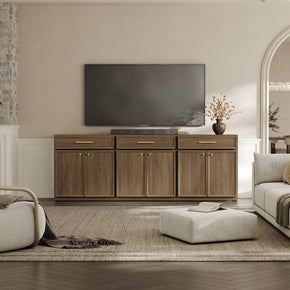
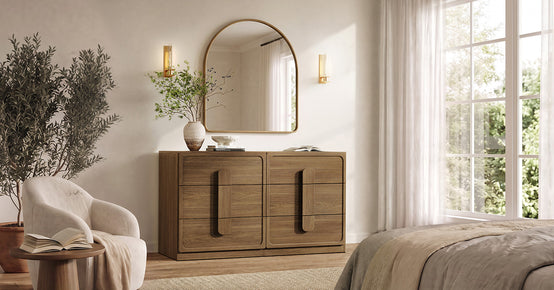
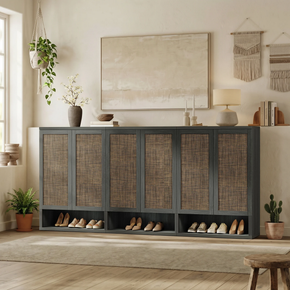
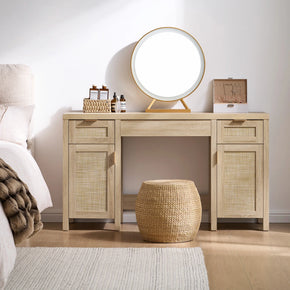
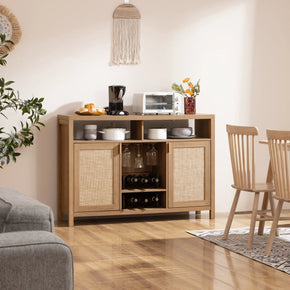
The stand has to read right with the rest of the room. Heavy dark wood in a bright minimal space looks like it wandered in from someone else's house. Light woods, rattan, fluted fronts — all read modern and clean. A Helio glass sideboard cabinet is a solid pick for contemporary rooms where light and openness matter most.
22 Small Living Room Layout Ideas With TV
Twenty-two ideas to work through. Steal whichever ones fit your room.
1. Mount the TV on the Wall

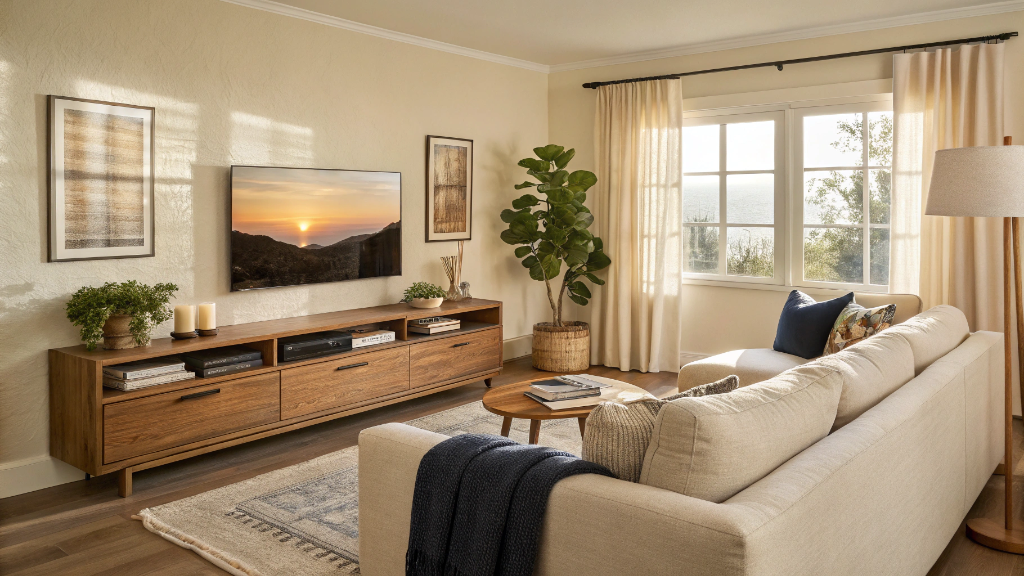
Wall-mounting frees up floor space — that's really the whole point. The TV sits flush against the wall. A slim console below holds the essentials. Best move in any room where every square foot has to do real work.
2. Use a Low-Profile TV Console

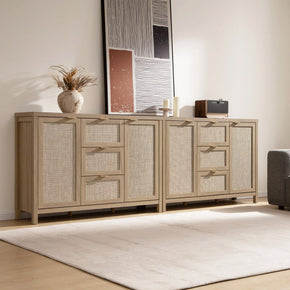
Low-profile media stands sit close to the ground. Side effect — the ceiling reads taller as a result. A Helio decorative sideboard cabinet does the job in rooms with short sofas or low ceilings.
3. Try a Corner TV Stand

Corner units grab the dead space most layouts forget about — perfect for a small living room layout with a TV, where every inch of floor matters. The TV angles into the room from the corner, and the unit handles all the storage you would otherwise need to buy a second piece of furniture for. In small TV rooms, that one piece often replaces a separate console plus a sideboard, which keeps the wall count low and the floor visible.
4. Place the TV Above the Fireplace

Above-the-fireplace setups pile the entertainment wall onto one surface. Just keep the screen at a reasonable height. Two hours into any movie, your neck reports back hard if the mount sits too high above the mantel.
5. Float the Media Console Off the Floor

Wall-mounted floating consoles leave the floor visible underneath. When the eye sees the floor under the unit, the room reads as bigger than it actually is. Vacuuming gets easier as well — a small but real bonus.
6. Build a Bookshelf-Style Media Wall

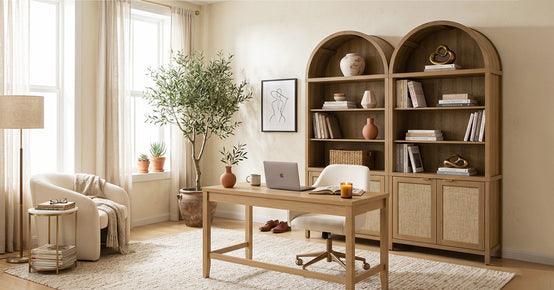
Bookshelves running on either side of the TV make the whole wall feel like architecture — not a screen slapped onto plaster. A Savanna arched bookcase beside a wall-mounted TV pulls the entire layout into a single composition.
7. Use Open Shelving Around the TV

Open shelves on either side of the TV give the eye somewhere else to land. Style them with books, a few plants, and small objects. Don't go overboard, though. Overfilled shelves wreck the clean look every single time.
8. Pick a Closed-Storage TV Cabinet

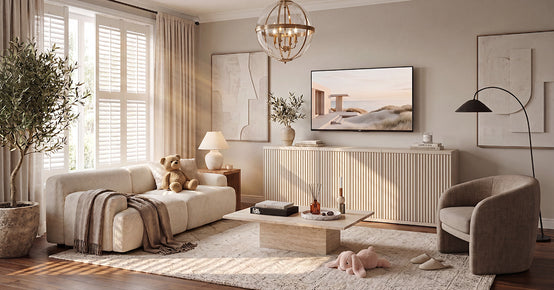
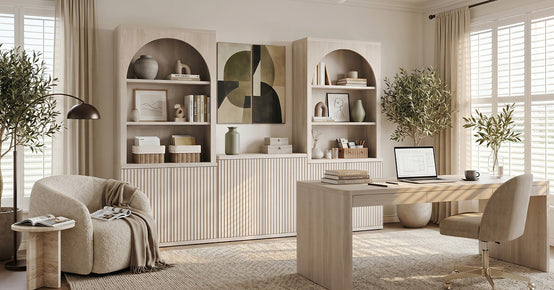
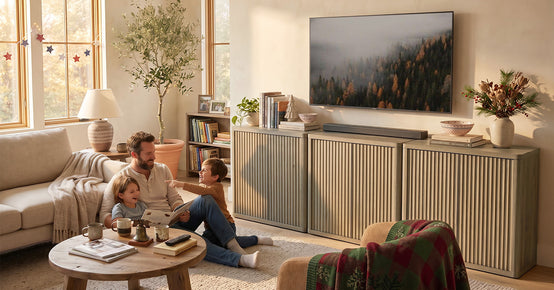
Closed cabinets bury everything you don't want on display. A fluted Stria sideboard under a wall-mounted TV pulls double duty — media storage plus clean visual anchor. Cables stay completely out of sight.
9. Add Behind-the-Sofa Storage

Slip a slim console table behind the sofa. Instant storage that doesn't take up new floor space at all. Lamp, books, remotes, half-eaten snacks — they all find a home there.
10. Slot the TV Into an Alcove

Got an alcove or a recessed section of wall? Drop the TV right inside it. The screen visually disappears into the architecture. No more black rectangle dominating the whole room.
11. Choose a Glass-Front Media Cabinet

Glass-front cabinets read clean and modern. Equipment stays dust-free behind the doors. Hidden bonus — IR remotes work straight through the glass, so the doors stay shut while you're using everything inside.
12. Use a Frame TV to Display Art

Frame TVs display artwork while they're off. The screen becomes part of a gallery wall rather than a black box mounted on the plaster. A wood-look bezel around the edge sells the illusion completely.
13. Color-Block the TV Wall

Paint the wall behind the TV a dark color. Black, deep navy, charcoal, hunter green — pick whichever fits, and the screen visually disappears when off —an old design trick. Still works every time.
14. Hang a Gallery Wall Around the TV

Surround the TV with framed prints, photos, and smaller art pieces. The eye starts reading the entire wall as a single composition. Suddenly, the screen stops shouting for attention as the only thing on the wall.
15. Add Sconces or Backlighting

Two sconces on either side of the TV do real work. They pull your eyes off the screen, add a warm glow to the wall, and balance the visual weight. LED strips stuck to the back of the TV help with eye fatigue, too — the dim halo cuts the contrast between a bright screen and a dark room.
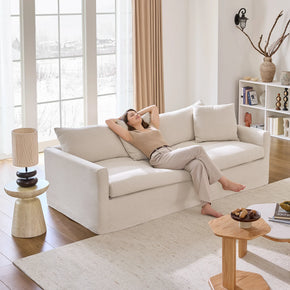
16. Pick an L-Shaped Sectional Sofa

L-shapes work better than people think in tight rooms. The chaise piece gives you a spot to stretch out without dragging in an extra ottoman or armchair. One thing — measure twice before buying. The chaise side typically adds 30 to 35 inches of depth, which eats up space fast in a narrow living room.
17. Use Two Armchairs Instead of a Sofa

Skip the sofa entirely sometimes. Two armchairs with a small table between them eat up way less visual space than a three-seater. Studio apartment? Narrow railroad layout? This is the move. Two chairs face the TV, plenty of floor space is visible, and the room actually breathes.
18. Try a Sofa Bed for Multi-Use Rooms

Does the living room double as a guest room? A sofa bed handles both jobs. The TV setup doesn't change. The couch you watch movies on during the day pulls out into a bed at night. Two functions, one piece of furniture, no compromise on the daytime layout.
19. Use Mirrors to Expand the Space

Mirrors are kind of a small-room cheat code. A big one across the room from a window throws daylight everywhere and tricks the eye into reading the room as twice the size. Just don't hang it directly opposite the TV. The reflection of the screen bouncing back at you mid-show? Maddening.
20. Hide the TV Behind Cabinet Doors

Not everyone wants the TV staring back when guests are over. Cabinet doors fix that. Pick a media cabinet with bi-fold or pocket doors. Screen off, doors closed, TV disappears. The room reads as a regular living room again — not a media room with the lights on.
21. Layer Rugs and Textiles for Warmth

A rug under the sofa visually pulls the seating area into a single zone. Layer a chunky throw on the arm. A couple of textured pillows. Maybe a wool blanket draped across the back. The textiles do the heavy lifting on warmth and personality. Sterile rooms feel even smaller — cozy ones feel intentional.
22. Keep the Layout Open With Floating Furniture

Push furniture an inch or two off the walls — even just that gap changes how the room reads. Rooms feel bigger when nothing is jammed flat against the perimeter. Bonus: floating chairs make conversation flow more easily instead of forcing everyone to crane their necks over a coffee table.
Final Takeaway

Every piece of furniture in a small living room has to earn its place. The TV stand carries more of that weight than most people realize — it sets the screen height, the storage, and the style for everything around it. Run through the four-step checklist to pick the right stand. Then pull from the 22 ideas above to make the layout actually work. The Sicotas furniture range covers TV stands, sideboards, and accent pieces that fit small rooms without skimping on style.
FAQs
How do you decorate a small living room with a TV?
Honestly? Start with the TV. Where it lands shapes every other choice. Wall mount works in around 90% of small rooms. A console under it works too if there's floor space. Above the fireplace can work — just watch the height. Once the TV spot is locked in, position the seating so every chair has a clear shot at the screen. Layered lighting matters more than people realize (one overhead light kills the vibe instantly). Add a rug to ground the seating area. Pick storage with doors so the clutter has somewhere to disappear. And the most underrated move? Cutting furniture instead of adding it. Small rooms need fewer pieces. Always. Even when it feels like there's nowhere for people to sit.
Where should I mount the TV in a small living room?
On the wall you actually face when you sit down. Sounds obvious — but people get this wrong all the time. The screen's center has to hit your eye level while you're seated on the couch, not standing in front of it. Roughly 42 inches off the floor works for most setups, though the height may shift depending on your sofa height. Above the fireplace? Tricky one. Works if the mantel sits low enough. Doesn't work if you're tilting your head up the whole time. Mount it, watch a movie for an hour, then check how your neck feels. That's the actual test.
Can I have a large TV in a small living room?
Yeah, in most rooms you can. A rough starting point for 4K TVs is screen size × 1.2 = viewing distance in inches, but treat it as a guide, not a rule. So a 55-inch wants about 5.5 feet of distance, a 65 around 6.5, and a 75 closer to 7.5. Most small living rooms handle the 55-65 range well. Push past 75 in a tight space, though, and the wall stops feeling like a living room — it feels like a media room.
What size TV stand do I need for a small living room?
Wider than the screen. That's the only rule that matters. Add 4 to 6 inches per side as the minimum buffer. A 50-inch TV — stand between 56 and 60 inches wide. Anything narrower than that just looks off. Height-wise, the range is 24 to 30 inches. That puts the screen's center at seated eye level for a standard sofa with a 30- to 36-inch back height. Shorter than that and you're looking down all night. Taller, and the TV starts to visually dominate the wall, instead of feeling like part of the room.
How do I hide the TV when it's not in use?
Three real options work here. Option one — Frame TV. Samsung makes these. The screen runs in art mode when off, displaying a painting or photograph instead of a black rectangle. Most people walking through can't tell it's a TV at all. Option two — paint the wall behind the TV a dark color: black, deep navy, espresso, hunter green. The screen fades into the wall when it's off. Option three — media cabinet with doors. Bi-fold doors. Pocket doors. Whichever style works for the room. Any of these strips the tech-showroom feel from the space. Small living rooms benefit the most — the TV stops being the loudest thing in the room.
How do I make a small living room cozy with a TV?
Lighting first. Forget the single overhead fixture — that one ceiling light is the enemy of cozy in any room. Bring in a floor lamp for the corner—a table lamp on a side table. Sconces flanking the TV if the wiring allows. Warm bulbs, not cool ones. Then layer the textiles. Rug under the sofa. Chunky throw across the arm. Pillows in mixed fabrics — linen, boucle, velvet, whatever pairs well. Add warm wood somewhere — a coffee table, a side table, a wood-framed mirror. Once the room has texture and warmth from the lighting and the fabrics, the TV stops being the focal point. The whole room becomes the focal point.
What is the 3-5-7 rule in interior design?
The cheat code for styling any shelf or surface. Items get grouped in odd numbers. Three. Five. Seven. Even-numbered pairings look posed — almost staged. Odd numbers feel natural, almost accidental. The eye relaxes around odd groupings instead of analyzing them. Use it on the bookshelves around the TV. On top of a media console. On the coffee table. The visual difference between a vignette styled in pairs and one styled in threes is bigger than you'd expect.
Sources
- The Spruce – 21 Small Living Rooms With TVs That Actually Look Good
- Havenly – 16 Elevated Ways to Style a TV in a Small Living Room
- Style by Emily Henderson – How to Make a Small Room Cozy + TV Room Reveal
- Apartment Therapy – 75 Small Living Room Ideas That Maximize Both Space and Style
- HGTV – Simple Living Room Layout Ideas
- Swyft Home – 15 Creative Small Living Room TV Ideas
- Houzz – Living Room With a Wall-Mounted TV Ideas


Looking for something else?

Furniture Materials Guide: Picking the Right Material Room by Room
LEARN MORE
How to Mix Wood Tones Without Making a Room Look Mismatched
LEARN MORE
18 College Apartment Furniture Ideas That Save Space and Money
LEARN MORE
Types of Entertainment Centers: 11 Designs and How to Pick One
LEARN MORELooking for something else?

Curio Cabinet Decor Ideas: How to Style a Display Cabinet Without the Clutter
LEARN MORE
Curved Furniture: How to Style, Measure, and Buy It in 2026
LEARN MORE
What Is Rattan Furniture? A Buyer Guide to Types and Care
LEARN MORE


Further reading

How to Choose a Nightstand for a CPAP Machine

How to Choose a Shoe Cabinet for Men's Sizes, High-Tops, and Bulky Shoes


