




Small Bedroom Organization: Smart Ideas for a Clutter-Free Room
My first apartment bedroom was about nine feet by ten, and for the first month, it was chaos — a chair that existed only to hold worn-once jeans, books in a pile by the bed because there was nowhere else, a nightstand with three things too many on it. A small bedroom turns on you fast like that. And after years of sorting out rooms exactly that size, I can tell you it is rarely a space problem. It is that nothing has a fixed home. Good small bedroom organization is not about buying more bins, whatever the shops want you to think. It is deciding what belongs in the room, losing what does not, and using what is left on purpose. Here is how I work through it.
Start With a Simple Declutter Plan

A small bedroom mid-declutter: three tidy piles of folded clothes on the bed sorted by use, a couple of donation boxes nearby, the floor clear. Honest, in-progress, daylight. Interior photography, no text.
Do not buy a single storage box yet. Edit first.
Walk the room and pull out everything that belongs somewhere else — the mugs, the paperwork, the gym bag that has lived on the floor since Tuesday. Then go through the clothes properly and be honest about what you actually wear, not what you think you might. Three piles: daily, seasonal, rarely. The test I give people sounds blunt, but it has never failed me — if a thing does not help you sleep, get dressed, or get through your morning, it has not really earned a spot in a small bedroom. Do this first, and you will buy storage for what you keep, rather than for clutter you were a week away from binning anyway.
Use the Space Under the Bed

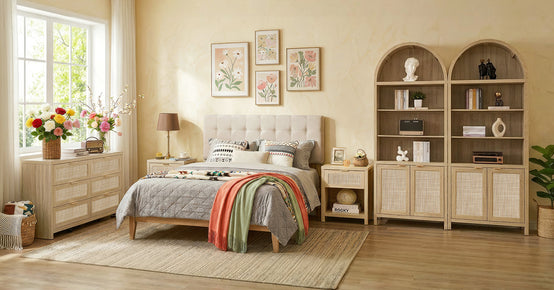
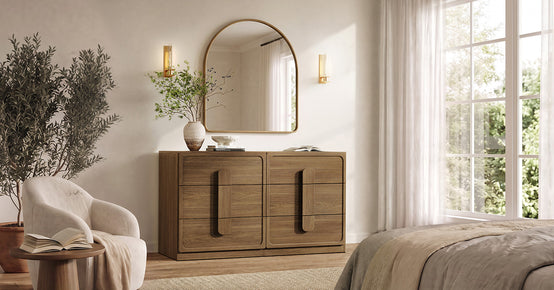
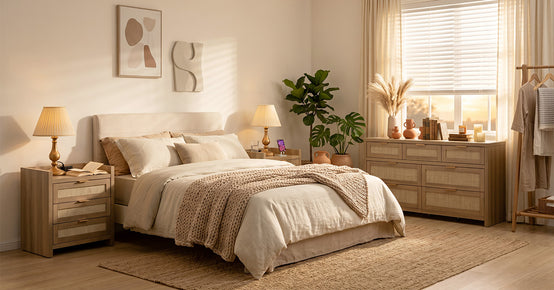
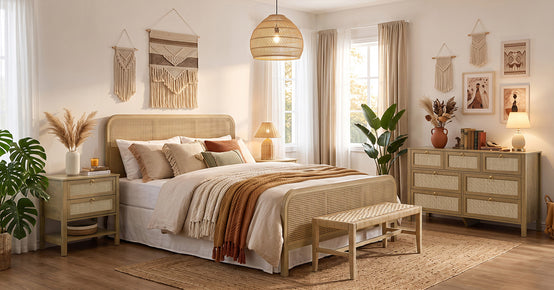
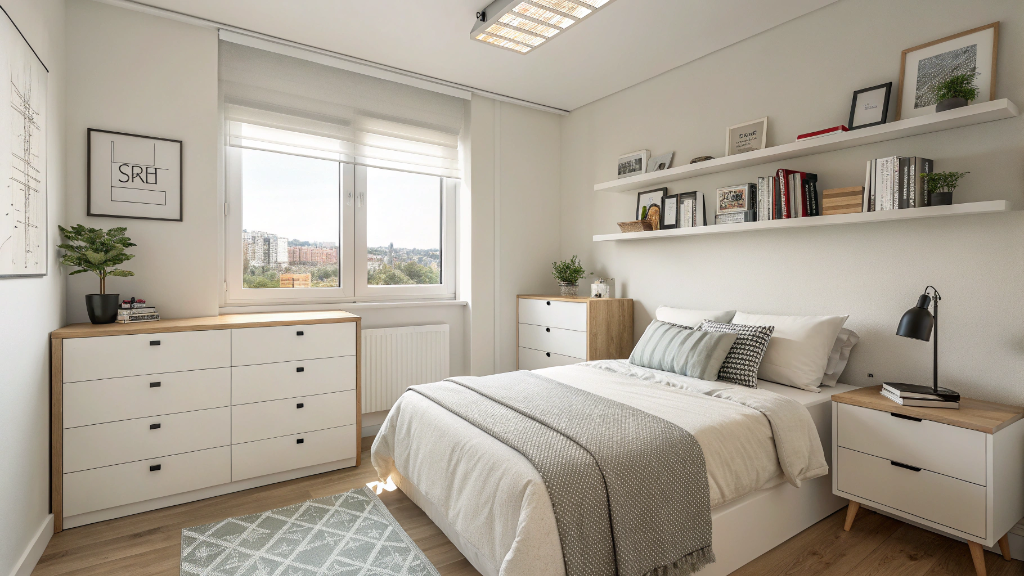
The bed is the biggest object in the room, which makes the space under it the most valuable storage you own — and most people waste it completely. NYT Wirecutter calls that under-bed area valuable real estate, and they are not wrong. Park your everyday clothes in something like a Savanna 7-Drawer Tall Dresser, and the under-bed zone is freed up for the bulkier, less-frequent stuff.
What goes down there is up to you, but the containers matter more than people think. Clear bins, fabric bags, rolling drawers, split-lid boxes — they all hold off-season clothes and shoes and spare linens fine, but the clear ones let you see in without opening anything, and the split-lid ones let you grab a jumper without hauling the whole box out from under the frame. Sounds like a tiny distinction. You feel it every single morning. And if your room is genuinely tight, skip the bins entirely and get a bed with built-in drawers or a lift-up base — that is a whole dresser you no longer have to find a wall for. One warning, and it is the mistake I see most: measure first. Side drawers on a bed have to clear the wall, the nightstand, and the closet door. A drawer that only opens halfway is half a drawer, and you will be annoyed by it for years.
Maximize Vertical Storage

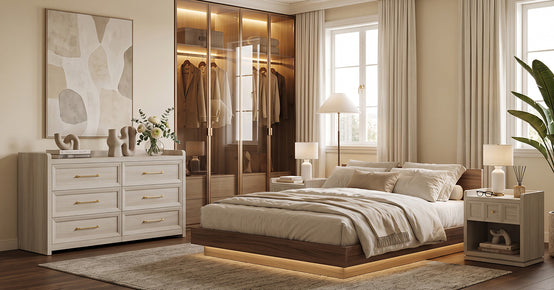
Small rooms run out of floor long before they run out of wall, so stop thinking sideways and start thinking up. A Savanna Wardrobe Closet is the clearest example of the idea — it stacks a hanging rod, shelves, and drawers into one tall footprint instead of letting all of that sprawl across the room.
From there, it is just a question of getting things off the ground. Floating shelves take books, baskets, plants, and whatever decor does not need to be at arm's reach. A tall dresser holds the same clothes as a long one in a fraction of the width — Architectural Digest makes that exact point, that small dressers look up instead of out and hand you back floor space, and it is hard to argue with. And then there is the back of the door, which is honestly the most wasted wall in most bedrooms. Hooks or a peg rail back there will catch all the stuff that usually lands on the chair: bags, robes, hats, the jeans you wore once and are not ready to wash yet. None of this is clever. It is just using surfaces nobody else bothers with.
Make Closet Organization Easier

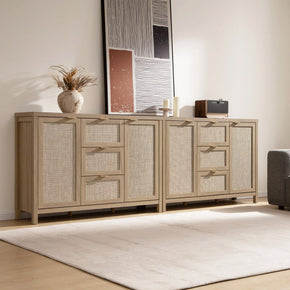
A small bedroom calms down the moment the clothes are out of sight and easy to find again. A few cheap systems do most of that. And for the folded knits and accessories that never hang well, a Cas Horizontal Chest adds drawer space without a tall piece looming over the room.
Start with the hangers. Swap whatever mismatched collection you have for matching slim velvet ones — they claw back real width on the rail, and as a bonus, clothes stop sliding off onto the floor. Then deal with the things that hang badly: scarves, belts, bags, folded sweaters all do better in a hanging closet organizer than crammed onto a rod. Inside the drawers, dividers earn their keep fast. Sock drawer, underwear, small bits — add dividers and one drawer suddenly behaves like three. Last, think in seasons. Label a couple of bins, rotate clothing so only what you actually wear right now is within reach, and send the rarely used items up to the high shelf. Loose clutter that has no obvious home goes in a basket. That is the whole system, and none of it is expensive.
Choose Multi-Functional Furniture
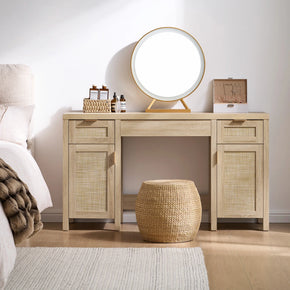
In a small bedroom, every piece has to earn its footprint twice over, so when you are buying, the question is never just “do I like it” — it is “what second job does this do.” A storage bed is the obvious one: clothes, bedding, shoes, all of it tucked under the spot where you already sleep, no added footprint at all. A nightstand with drawers keeps bedtime clutter hidden rather than stacked on an open top, where it just reads as a mess. A storage bench or ottoman at the foot of the bed gives you somewhere to perch while you pull socks on and swallows blankets inside — three jobs out of one piece. Suppose the room is also where you work or get ready: a desk that doubles as a vanity saves you from needing a whole separate surface. And then there is the Murphy bed, which folds away so the room can be an office or a guest room by day. House Beautiful keeps listing those among the smartest small-bedroom moves, and honestly, in a studio, a fold-away bed is sometimes the only thing that actually works.
Arrange Furniture for Better Flow

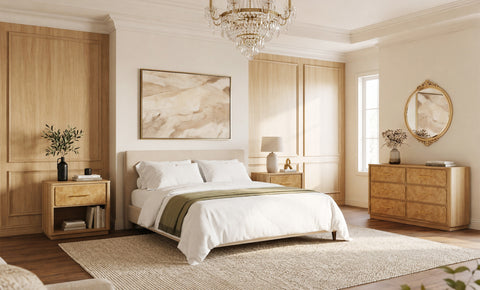
Storage is half the job. Placement is the other half, and where things sit in a small room matters as much as what they are. A slim piece like the Savanna 4-Drawer Chest sits flat against a wall and keeps walkways open, which, in a tight room, is the whole game. Homes & Gardens backs this up, flagging badly positioned beds, too much furniture, and oversized pieces as the layout mistakes that most often sink small rooms.
A few things I check on every tight room. Walkways first — you need enough room to get around the bed, open every drawer, and reach the closet without a fight; if you have to turn sideways to pass, something is too big and has to move. Scale next. One oversized piece will make the whole room feel cramped even when it is technically tidy, so scale beats quantity every single time. Then symmetry, or rather, letting go of it. A small room does not owe you two matching nightstands — one nightstand plus a wall sconce or a floating shelf on the other side often works better and quietly hands you back space. And keep the bed itself simple, because it is the visual anchor; a plain frame or a low-profile storage bed lets the room read calm, and a calm anchor makes everything around it look tidier than it really is.
Where Should a Bed Be Placed in a Small Bedroom?

Bed placement drives every other decision in here, so it is worth slowing down on. The default move is to push the bed against the longest unbroken wall — that usually opens the walkways up the most. Centering it works too, but only if both sides can still be reached without anyone having to climb over the mattress to get out. And in a really tight room used by one person, do not be afraid to shove the bed into a corner; it looks unconventional, but it frees up the most floor space you will get. Whatever you land on, keep it clear of the closet doors, the windows, the radiator, and the main path through the room. If there are drawers under the bed, leave the clearance actually to open them — obvious, but people forget. Shared room? Try to keep access on both sides. Tiny solo room? A wall-mounted shelf can stand in for an entire nightstand and save you a whole piece of furniture.
Use Small-Space Lighting Tricks

Lighting can be both functional and space-saving if you pick the right kind. The aim is light that doesn't eat away at the few surfaces you have. Wall sconces beat table lamps for exactly that reason — they light the room without claiming an inch of your nightstand — and plug-in versions exist if you rent and cannot hardwire anything. Near a desk or a shelf, a clamp lamp does the same trick, gripping the edge instead of sitting on top. If you do need bedside charging, skip the separate lamp-and-charger pile and get a small lamp with a USB port built into the base. And whatever you choose, go warm with the bulbs for a cozy feel, and keep the window treatments light so daylight actually gets into the room.
Organize Flat Surfaces Before They Become Clutter Zones

Dressers, nightstands, desks, windowsills. In a small bedroom, every flat surface is auditioning to become a clutter zone, and it happens fast. The dresser top stays under control if you give the small stuff — jewelry, perfume, loose bits — a single tray to live in. The nightstand needs a hard limit: lamp, book, phone, water, and glasses. That is the list. Anything past that and it has tipped into clutter. Inside the nightstand: drawer dividers again, plus cable clips or a little cord box so the chargers stop tangling across the top—same logic on the desk—one small organizer, nothing more. And honestly, the habit matters more than any product here: the one-touch rule, putting a thing back the first time instead of setting it down to deal with later. Later never comes.
Use Visual Tricks to Make the Room Feel Bigger

A room can be perfectly organized and still feel cramped if the color, the scale, and the light are working against you — organization and design are not two separate jobs in a small bedroom; they are the same job. Color is where I would start. The 60-30-10 rule (sixty percent of the room in one main color, thirty percent in a second, ten percent in an accent) sounds fussy written down, but all it really does is stop a small room from looking like three colors argued against it. Then mirrors: hang one opposite a window, and the room borrows the daylight twice and reads bigger than the tape measure says. Oldest trick going, still works. Keep the overall palette calm while you are at it — light neutrals and soft earthy tones let a dresser or a wardrobe half-disappear into the wall instead of standing there announcing itself. And if you are buying anything new, lean toward furniture with visible legs. A piece you can see the floor under feels lighter than one sitting flat on the ground; even two inches of daylight beneath it changes how heavy it looks. Small thing. Does a surprising amount.
Common Small Bedroom Organization Mistakes to Avoid

A handful of habits sink small-room organization again and again. Worth a quick scan before you start moving things around:
- Buying storage before decluttering. Now you are just storing things you should have let go of.
- Furniture that is too big for the room's real dimensions — measure, do not eyeball it.
- Blocked walkways, blocked closet doors, or no clearance to open the under-bed drawers.
- Ignoring the walls. Keeping everything down at floor level wastes the easiest storage you have.
- Nightstands and dressers are left to silt up with daily clutter until no surface is usable.
- Open storage used for messy categories that genuinely need a door or a lid to look tidy.
- Tangled cords everywhere because nobody dealt with the chargers.
- Forcing in two nightstands when one fits, then stashing daily items somewhere annoying to reach.
Final Thoughts

None of this is really about bins. It is about being honest about what belongs in the room, getting your storage off the floor and up the walls, placing the furniture so you can actually walk, and keeping the things you reach for daily within reach. Get those four right, and the room just feels different — calmer, bigger than it is. If you want a couple of warm, hardworking pieces to build around, the Sicotas bedroom furniture collection is a fair place to look. But the furniture is the last step, not the first. The decluttering is the part that actually changes the room.
FAQs
How to arrange furniture in a small bedroom?
Bed first. It is the biggest thing in the room, so everything else has to work around it — not the other way round. Once the bed is placed, add only what the room genuinely needs and nothing extra, keep the walkways properly clear, and lean on tall, vertical storage so you are not eating floor. One more thing people skip: measure the actual furniture against the actual room before you buy anything. Eyeballing it is how you end up with a dresser that blocks the door.
What is the 60-30-10 rule for bedroom design?
It is a color split — 60% dominant, 30% secondary, 10% accent. In a small room, it just keeps the palette from feeling random. Shades of a single color count, too, if you want it quieter.
What is the 2/3 rule for furniture?
Roughly: one thing looks right when it is about two-thirds the size of whatever it sits with. The classic example is art over a dresser — spanning about two-thirds of the dresser's width usually looks balanced, where a tiny frame floating up there looks lost. It is a proportion habit, not a measured rule, so do not get out a calculator over it.
What is the biggest mistake in the placement of furniture?
Not thinking about flow. People pick pieces they like, push them against whatever wall is free, and end up with a room that is technically organized but miserable to move through. Oversized furniture and a badly placed bed are the usual culprits — Homes & Gardens flags the same things.
What is the 3-5-7 rule in decorating?
Group your decor in odd numbers — three, five, seven. That is the whole rule. Odd-numbered groupings just look more relaxed than even ones, which keeps a shelf or a dresser top from looking stiff.
How to make a small bedroom look luxurious?
Fewer things, better things. That is most of it. Then: soft layered bedding, warm light instead of one cold overhead bulb, storage with doors so the clutter is out of sight, a calm and fairly tight color palette, a mirror to throw some light around, and one real focal point — a proper headboard, a good rug, a piece of art you actually like. Luxury in a small space is about restraint. A crowded room never reads as expensive, no matter what is in it.
What are the four rules in furniture arrangement?
Measure first. Keep the walkways clear. Match the scale of the furniture to the size of the room. And give every single piece a job. In a small bedroom, that last one is ruthless — if something only looks nice and does nothing useful, it probably has to go.
Where should a bed be placed in a small bedroom?
Longest clear wall, most of the time. The corner of the room is really tight, and only one person uses it. Just keep it off the doors, windows, and drawer clearance.
Sources
- NYT Wirecutter – The Best Ways to Maximize a Tiny Bedroom
- IKEA – A Bedroom Where Everything Is in Its Place
- Architectural Digest – The Best Small Dressers for Bedrooms
- House Beautiful – Small Bedroom Ideas to Make the Most of Your Space
- Homes & Gardens – The 60-30-10 Rule: How to Use It for a Balanced Color Palette
- Apartment Therapy – How to Use the 60-30-10 Rule to Decorate Your Home
- Real Simple – Small Bedroom Storage Ideas to Maximize Your Space


Looking for something else?

Furniture Materials Guide: Picking the Right Material Room by Room
LEARN MORE
How to Mix Wood Tones Without Making a Room Look Mismatched
LEARN MORE
18 College Apartment Furniture Ideas That Save Space and Money
LEARN MORE
Types of Entertainment Centers: 11 Designs and How to Pick One
LEARN MORELooking for something else?

Curio Cabinet Decor Ideas: How to Style a Display Cabinet Without the Clutter
LEARN MORE
Curved Furniture: How to Style, Measure, and Buy It in 2026
LEARN MORE
What Is Rattan Furniture? A Buyer Guide to Types and Care
LEARN MORE


Further reading

How to Choose a Nightstand for a CPAP Machine

How to Choose a Shoe Cabinet for Men's Sizes, High-Tops, and Bulky Shoes


