




Shoe Storage Ideas for a Cleaner, More Organized Home
Shoes pile up. By the door, in the closet, under the bed, in a sad heap in the corner — they breed faster than almost anything else in a home. And the reason's simple: most of us own way more pairs than we'd ever guess. I've spent more than ten years helping people sort out cluttered entryways, and the fix is never one single magic product. It's matching the right system to how many shoes you actually have and how you really live. That's what this guide is — 16 shoe storage ideas that genuinely work, plus the numbers that tell you which one is yours. Start with the count.
How Many Shoes Does the Average American Person Own?
This number trips people up. A 2023 KURU Footwear survey of 1,000 Americans found roughly 12 pairs per person. Four new pairs a year. Around $240 spent on footwear annually. And that's the average — split it by gender, and it stretches. Other data has US women up near 19 pairs, men closer to 12. Anyway. Count yours. I mean it — guess a number first, in your head, then walk around the house and actually count. You'll be wrong. Most people are, and not by a little. That gap, between the number in your head and the pairs genuinely crammed under the bed, is the whole reason this feels unwinnable.
How Many Shoes Does the Average Person Own?
Leave the US, and the figure jumps around. Footwear Magazine pegs the global average somewhere around 7 to 8 pairs per person. But the rich, fashion-led markets? They blow right past that. British women are at the top of the pile — you'll see them quoted anywhere from 24 to 35 pairs, depending on the survey—Germany's around 15. Canada hugs the US number, 10 to 12 or so. It's the same story everywhere: climate, money, fashion culture, all of it pushes the count up. But your country's average is kind of beside the point. Your number is the one that matters. And whatever it is — a heap by the door isn't a system. These 16 shoe storage ideas are.
16 Shoe Storage Ideas and Shoe Cabinets That Actually Work
These range from dead simple — a rack by the door — to fully built-in, like a floor-to-ceiling shoe wall. Skim down. Find the one that matches your space, your shoe count, and how much that pile of clutter is actually getting to you.
1. Sort Your Shoe Collection First

Before you buy a single shoe rack, sort what you've got. Daily shoes in one pile. Special-occasion pairs in another. Sneakers, boots, heels, sandals, work shoes, group them. The damaged ones, the never-worn ones? Let them go. Then clean what survives before it goes into storage. It's not a fun step, I'll grant you that. But it's the one that tells you how much storage you actually need. Skip it, and you'll buy the wrong-size cabinet. Happens constantly.
2. Use a Shoe Rack for Everyday Pairs

The shoe rack is the simplest thing there is, and for most homes, it's where you start — best for the pairs you're in and out of every day. Works anywhere—Entryway, closet, mudroom, bedroom. Go tiered, and it climbs up instead of sprawling across the floor. And it's open, so air actually reaches the shoes — they dry out between wears instead of sitting there damp. Metal if the room's modern, wood if you want a bit of warmth—low effort. Almost everybody needs one.
3. Choose a Shoe Cabinet for a Clean Entryway

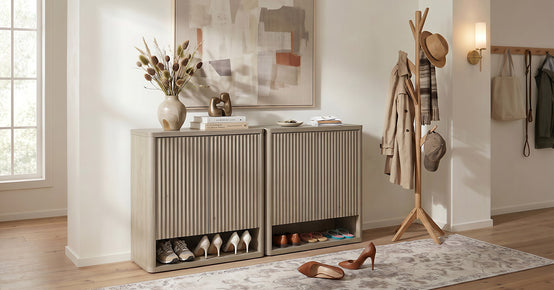
If it's the visible clutter that gets to you, a shoe cabinet handles it. Doors shut, shoes vanish, and suddenly the entryway looks like somebody planned it. A Cas shoe cabinet with adjustable internal shelves tucks it all away and still flexes to fit boots, sneakers, and flats. Put a little tray or bowl on top for keys and the daily junk — now it's working two jobs at once.
4. Go Tall: A 6-Tier Shoe Cabinet for Big Collections

When 12 pairs quietly become 30 — and it does — you want height, not width. A tall 6-tier shoe cabinet that holds 30 pairsof shoes grabs the vertical space a stubby little rack can't reach. Same patch of floor, far more shoes. The shelves adjust, so you leave one tall tier for boots and pack the flats in tight underneath. Growing collection, no spare floor? This is the move.
5. Pick a Mid-Size Cabinet With Rattan Doors

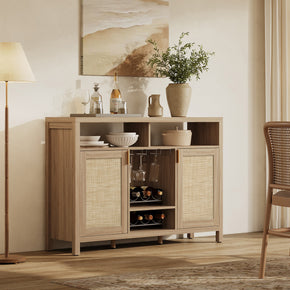
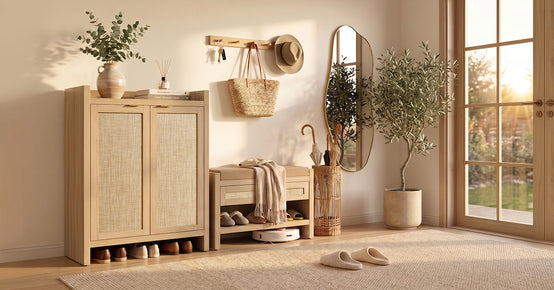
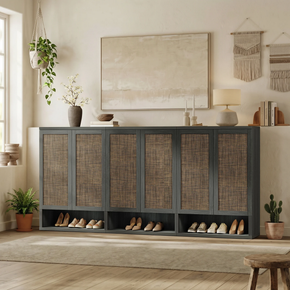
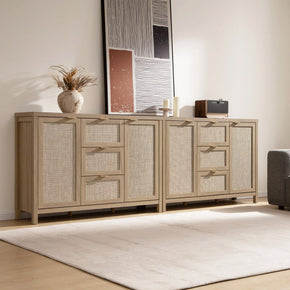
Not every entryway needs the biggest cabinet on the floor. A 24-pair rattan-door shoe cabinet sits right in the middle — enough for a couple, or a small family, and the woven rattan doors give you some texture instead of another plain box in the hall. Closed front keeps dust off, too. And that matters more than people give it credit for, especially on the shoes you only dig out once in a while.
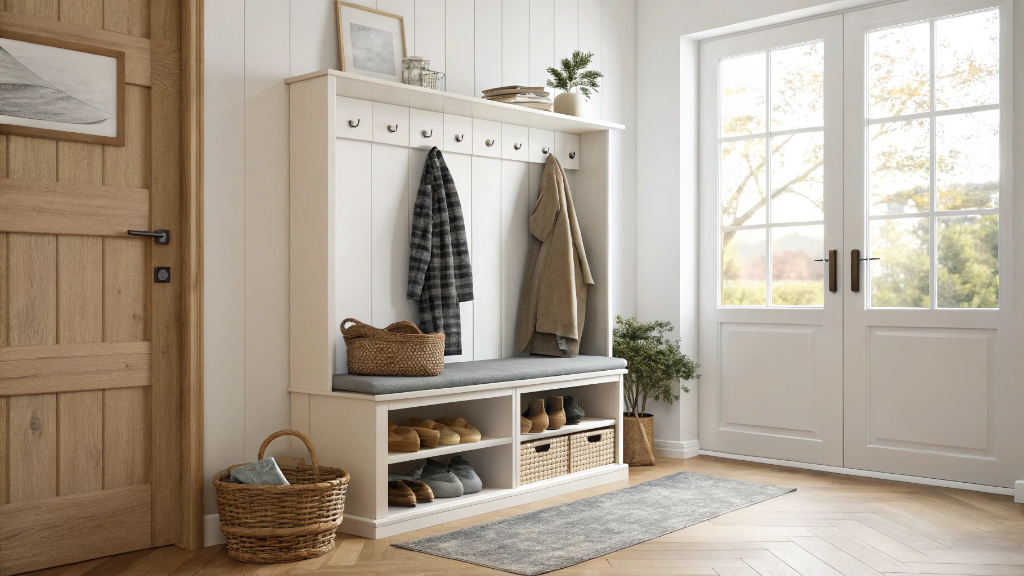
6. Add a Shoe Storage Bench

The best two-in-one entryway can get is a shoe bench. Seat on top, storage underneath. A shoe bench with a cushioned seat and concealed storage gives you somewhere to sit and actually wrestle your boots on — plus a hidden spot below for the pairs you grab the most. Families. Small apartment entryways. It's honestly hard to beat.
7. Slot in a Narrow Cabinet for a Tight Hallway

Skinny hallways need skinny furniture. Simple as that. A narrow 5-tier shoe cabinet for a tight hallway is made for the exact spot a normal cabinet won't go — shallow depth, tiers stacked up tall, doors that don't swing out and clip you in the walkway. It's the proof that getting organized isn't about floor space. It's about the right shape.
8. Try Over-the-Door Shoe Storage

An over-the-door shoe organizer takes space that's just... sitting there and doing nothing. The back of a closet or bedroom door. It's great for renters and dorms because you don't have to drill, and the pockets work for flats, sandals, slippers, and kids' shoes. Scarves and odd bits, too. But mostly it clears the closet floor — and in a small space, a clear floor is half the war won right there.
9. Use Stackable and Drop-Front Boxes for Sneakers

Sneakers, and the pairs you don't wear that often — clear stackable boxes make every single one easy to find. Drop-front boxes take it a step further. You pull a pair from the front without unstacking the whole tower, and anyone with a real sneaker collection will tell you that's not a small thing. They keep dust off, keep the stack looking sharp. Aren't boxes clear? Snap a photo of each pair, and tape it to the end—an old trick. Still works.
10. Slide Shoes Under the Bed

Under-bed storage is found in space. Nobody's using it. And it's perfect for seasonal shoes and the pairs you're not reaching for daily. Zippered fabric organizers, rolling bins, divided boxes — anything that stops the pairs collapsing into one sad jumble. Two rules, though. Clean the shoes first. And never, ever store them damp. Small bedroom, closet already bursting? This is the easiest extra capacity you will ever find.
11. Organize Shoes by Season

A seasonal system keeps the shoes you're actually wearing right where your hand lands. In-season pairs near the door, or up front in the closet. Winter boots boxed away come summer, sandals boxed away come winter, the off-season bin parked up on a high shelf. Label it. All of it. So next season you're not down on the floor digging through everything. It's barely even a product, this one — it's a habit. But it's the habit that makes every other idea here pull its weight.
12. Make Room for Boots

Boots get their own plan. They're tall, and they slump right out of shape the second something heavy lands on them. A boot rack takes the rain boots, the snow boots, the hiking pairs — stick a tray or mat under it for whatever they drag in. Boot inserts keep the tall ones standing upright; rolled-up magazines do the same job if you're improvising. Just — don't crush them under other shoes. That's exactly how a good pair gets wrecked.
13. Use Baskets for Casual Entryway Shoes

The grab-and-go pairs — slippers, flip-flops, the kids' shoes — a basket beats a pile every time. One big woven basket for the whole household. Or a smaller one per person, so nobody's standing there rummaging. Wicker and woven baskets throw in a bit of warmth and texture while they're at it, which is a nice bonus. Just keep the delicate heels and the pricey sneakers out of them. Baskets are for the casual stuff. Not the stuff you actually care about.
14. Build a Closet Shoe Wall

For a serious collection, a floor-to-ceiling shoe wall turns storage into something you'd actually show off. Adjustable shelves flex to accommodate boots, heels, sneakers, and flats. The pairs you wear most go at eye or waist height; everything else gets sent up high or down low. Run a strip of cabinet lighting along it, and the whole thing reads like a boutique. This is the answer for when one cabinet stopped cutting it a long, long time ago.
15. Float Shelves for Display-Worthy Pairs

Floating shelves are for the statement shoes. The heels. The limited-edition sneakers. The pairs that are basically decor at this point, let's be honest. They work in closets, bedrooms, dressing areas — and they get you that boutique look without committing to a full built-in. Keep the spacing tall enough to clear heels and boots. And don't overcrowd them. The whole point is display, and a crammed shelf displays nothing.
16. Create a Mudroom Shoe Zone

Kids, pets, sports gear, muddy outdoor shoes — give all of it a mudroom zone of its own: cubbies, a bench, baskets, and a boot tray for the wet days. Keep the dirty outdoor pairs out here so they never make it to the bedroom closet. Park the sports shoes next to the sports gear. Run hooks above for coats and bags. It's the catch-all. It's the thing that keeps the rest of the house from going feral.
How to Store Many Pairs of Shoes

Has the collection outgrown any one solution? Then the fix is a combination. Not one more rack. Count first — always count first — then group by type and by season. Daily shoes stay out, open, grab-able. Special-occasion pairs go in boxes. Vertical shelves or stackable containers handle the sheer volume; boots are stored separately so they hold their shape; and the pairs you'd rather not look at go behind closed doors. Big collection? Layer it. A rack for daily wear, a cabinet for the bulk, clear boxes for the rest. The full shoe cabinet and shoe bench collection is a solid place to find the closed-storage backbone that the whole thing hangs off.
Common Shoe Storage Mistakes to Avoid

Same handful of mistakes, again and again. Storing dirty shoes right up against clean ones and keeping every single pair by the front door. Buying a shoe rack before you've counted what you own — covered that already, but people still do it—sealing damp shoes in closed boxes. Hello, mildew. Crushing boots flat under everything else. Jamming delicate heels into a packed basket and ignoring vertical space and the backs of doors completely. Never rotating the seasonal stuff, so it's July, and you're tripping over snow boots and going open-storage when visible clutter genuinely stresses you out. And the big one — keeping pairs you haven't worn in years. Storage always, always works better when there's less to store.
Final Takeaway:
The best shoe storage ideas are simple, easy to get to, and honest about how you actually live — not how some catalog says you should. Small household? You might genuinely need nothing past a shoe rack and a basket. Big collection? Then it's the full layered setup: shelves, boxes, a cabinet or two, seasonal rotation, all of it. Either way, the starting point is the same. Sort what you own. Then pick storage that keeps the daily pairs grab-able and protects the ones you wear less. Do that, and the pile by the door finally goes — and stays gone. Not just till next Tuesday.
FAQs
How many pairs of shoes does an average American have?
A 2023 KURU Footwear survey found that people own around 12 pairs, with Americans buying maybe 4 new pairs a year. Women run higher — you'll often see 19 pairs quoted. Men lower. Honestly, treat it as “about a dozen” and move on; every survey measures it differently and lands somewhere different. The only count that actually means anything is the one in your own house.
What is the 3 shoe rule?
The “3 shoe rule” is a minimalist thing — the idea that three working categories cover most of life, everyday shoes. Dressier shoes. One activity-or-weather pair. It isn't a law; nobody's enforcing it. It's just a filter people reach for when they're trying to thin out a collection that's gotten away from them, or packing for a trip and refusing to overthink it.
What is the Japanese shoe rule?
In Japan, outdoor shoes come off before you step into a home — and into a lot of traditional spaces, especially rooms with tatami mats. They come off at the genkan, that slightly sunken entry area just inside the door, and indoor slippers usually take it from there. It's a cleanliness custom at its root. It's also a pretty good argument for taking entryway shoe storage seriously: the entry is where shoes are meant to stop.
How to store many pairs of shoes?

Mix your systems. Don't rely on one. Daily shoes on an open rack, seasonal pairs in labeled boxes, sneakers in clear drop-front containers, boots on a boot rack, and the rarely-worn stuff sent up high or under the bed. I got a big collection. A shoe cabinet or a built-in shoe wall gives you the closed-storage backbone, and everything else fills in around that. Layering beats buying yet another rack—every time.
Is 40 pairs of shoes a lot?
Against the roughly 12-pair average — yeah, 40 is well over the line. But “a lot” depends entirely on who you are. Sneaker collector? Fashion professional? Someone running separate shoes for work, sport, weather, and formal stuff? Then 40 is perfectly reasonable. The real question was never the number on the shelf anyway. It's whether you've actually got a system that stores all 40 properly.
What is the #1 selling shoe brand?
Nike. It's widely treated as the biggest footwear brand on the planet, and the company reported NIKE Brand revenue of $44.7 billion for fiscal 2025 — a scale no other single footwear brand really gets near. Now, “#1 selling” shifts depending on the market, the product category, and the data set you're looking at. But by global revenue? Nike's at the top, and it isn't especially close.
How often do Americans buy shoes?
KURU's 2023 survey put it at roughly 4 pairs per year, and broader market data show footwear demand holding steady year after year. Four pairs a year doesn't sound like a lot. Then you run the math over ten years. That's why a storage system that grows with the collection beats a rack you'll have outgrown before it's two years old.
Do shoes tell a lot about a person?
They drop hints — about style, about lifestyle, about how active someone is, about whether they care about a first impression. There's actually research on this: observers could make better-than-chance guesses about personality and demographics from nothing more than a photo of someone's shoes. But a hint is all it is. Plenty of thoughtful, careful people own one battered pair. Plenty of careless ones own forty.
Sources
- KURU Footwear, a footwear brand and consumer research publisher, KURU Footwear — American Footwear Spending: A 2023 Survey
- Footwear Magazine, a footwear industry news publication, Footwear Magazine — Average Number of Shoes Owned by Country
- RunRepeat, athletic footwear research and review site, RunRepeat — Shoe Ownership Statistics
- The Spruce, home and lifestyle publication, The Spruce — 36 Clever Shoe Storage Ideas to Tidy Up Small Spaces
- The Container Store, home organization and storage retailer, The Container Store — Shoe Racks and Storage Solutions
- NIKE, Inc., global footwear and athletic brand, NIKE Investor Relations — Fiscal 2025 Fourth Quarter and Full Year Results
- IKEA, global home furnishings retailer, IKEA — 7 Shoe Storage Ideas for a Tidy Hallway


Looking for something else?

Furniture Materials Guide: Picking the Right Material Room by Room
LEARN MORE
How to Mix Wood Tones Without Making a Room Look Mismatched
LEARN MORE
18 College Apartment Furniture Ideas That Save Space and Money
LEARN MORE
Types of Entertainment Centers: 11 Designs and How to Pick One
LEARN MORELooking for something else?

Curio Cabinet Decor Ideas: How to Style a Display Cabinet Without the Clutter
LEARN MORE
Curved Furniture: How to Style, Measure, and Buy It in 2026
LEARN MORE
What Is Rattan Furniture? A Buyer Guide to Types and Care
LEARN MORE


Further reading

How to Choose a Nightstand for a CPAP Machine

How to Choose a Shoe Cabinet for Men's Sizes, High-Tops, and Bulky Shoes


