



Settee vs Sofa: What's the Difference and Which One Should You Choose?
Most explanations of the settee vs sofa debate end in the same place: they're basically the same thing, so use whatever word feels natural and move on. Fine advice for a vocabulary question. Useless advice for someone trying to furnish a room. The words overlap. The objects don't — not entirely. A settee is smaller, more upright, more decorative, and built for rooms that are completely different from those of a sofa. Buying the wrong one because you treated them as interchangeable is the kind of mistake that announces itself every time you sit down.
So, what actually separates them?
What Is the Difference Between a Settee and a Sofa?
The Sofa

Arabic origin — the soffah, a raised cushioned platform built into the floor of a room, not a moveable piece of furniture, but part of the architecture, used for sitting during meetings and entertainment in Ottoman households. It traveled through trade routes into France and from France into England, arriving first in print in 1625 in a cleric's account of his travels in Arabia. He described elaborate cushioned seating in terms that his English readers had no domestic reference for. The word came loaded with foreign luxury from the start and has never fully shed that association, which is why sofa still sounds marginally more elevated than couch even when the two words describe the identical object in the same room.
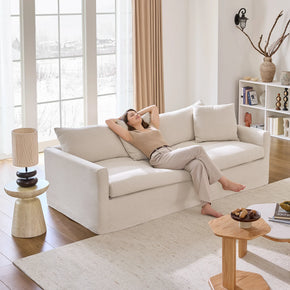
Wide. Deep. Designed to be the main seating piece in a living room and the object everything else responds to. The rug size follows it. The coffee table height follows it. The lamp positions follow it. Not supporting cast. The anchor.
The Settee

Old English. Setl — a long wooden bench, high-backed, usually oak, common in the great halls of Medieval England and the communal spaces of ordinary buildings. Hard. The settle (same root) still turns up in traditional British pubs: the wooden booth-seat beside a fireplace that everyone bypasses for the cushioned chairs. Padding arrived across the 1600s and 1700s. Upholstery followed. The design softened. The name stayed. What the name also carried forward was the essential character of the original — upright, formal-leaning, not built for the kind of horizontal sprawl a sofa quietly enables. Designers still reach for the same five-word summary: "a sofa meets a bench." Three hundred years of upholstery, and the bench is still in there. You can feel it after about ninety minutes.
Typically 50 to 70 inches wide. Shallower seat. Higher back. Visible legs, usually raised further from the floor than a sofa. Goes into rooms where a sofa would be overwhelming or simply wouldn't fit.
Side by Side

|
Feature |
Settee |
Sofa |
|
Typical Width |
50 – 70 inches |
72 – 96 inches |
|
Seats |
1 to 2 people |
2 to 4+ people |
|
Cushion Depth |
Shallow — upright posture |
Deep — built for lounging |
|
Character |
Decorative, formal accent |
Casual, everyday comfort |
|
Natural Room |
Bedroom, hallway, entryway |
Living room, family room |
|
Primary Role |
Accent or secondary seating |
Main seating anchor |
Where the Words Come From
Sofa

1625. Samuel Purchas, cleric and travel writer, described sitting arrangements in Arabia: cushioned platforms covered in sumptuous carpets, built into the floors of wealthy rooms, used for receiving guests. The word sofa arrived in English already attached to images of elaborate foreign comfort. By the 1700s, it was spreading into French, Italian, Spanish, and Portuguese. By Jane Austen's era, her letters mention a sofa cover — it was a recognized domestic object with upholstery that wore out and needed replacing. Ordinary, finally. But the faint luxury echo from 1625 never fully left.
Settee

The settle is the ancestor, and it's not extinct — find one in a pub in northern England, tucked beside a fireplace, solid oak, the kind of seating that prioritizes durability over generosity. The padded version, which evolved over two centuries, kept the name while modifying the experience. What it couldn't entirely shed was the posture the bench enforced. A settee holds you upright in a way a deep sofa doesn't. Not uncomfortable exactly. But attentive. You're sitting on a settee. On a sofa, you're occupying one.
Couch
French. Coucher — to lie down or sleep. The original couch was a recliner, closer to a daybed than to a living room sofa. Chaucer called it a sleeping place in the 1380s. By 1500, it had shifted toward sitting. Today, couch and sofa mean the same thing everywhere, and the distinction between them is entirely geographic: Americans say couch in conversation, sofa in furniture stores; Brits say sofa in both contexts; Australians default to couch. The debate about which is correct has no correct answer because the question has no stakes. They're the same piece of furniture.
When to Choose a Sofa
The Living Room Has Made the Decision for You

If your living room is the main gathering space in your home — where the family settles in the evening, where guests sit for hours, where weekend mornings happen — a sofa is the only answer. Not a preference. A practical requirement. A settee simply isn't built for this kind of sustained, daily, multi-person use. The shallower seat doesn't support prolonged sitting. The more upright back resists the kind of relaxed lounging that living rooms are designed for. The smaller overall size means two people are already crowded where a sofa comfortably seats four. None of that is a design flaw in the settee — it was never intended for the living room anchor role. That role belongs to the sofa, and the sofa handles it well.
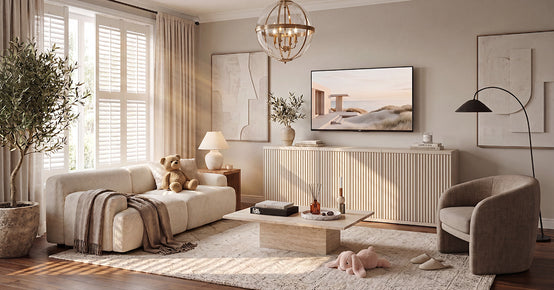
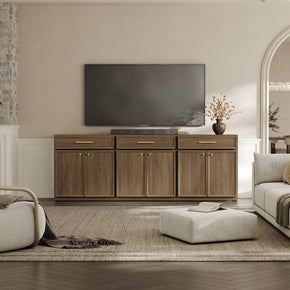
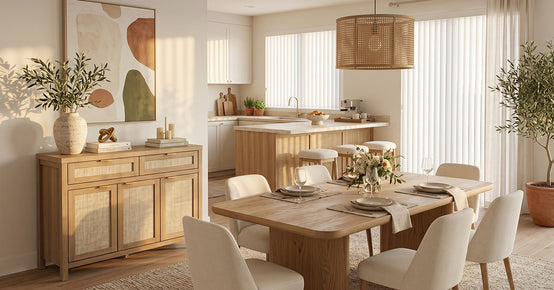
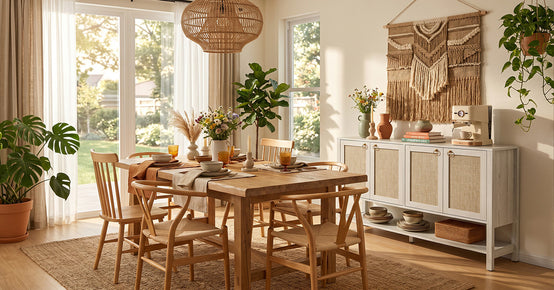
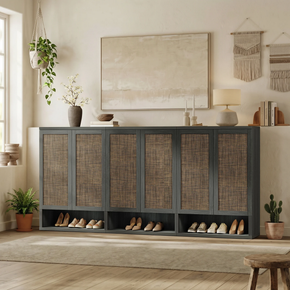
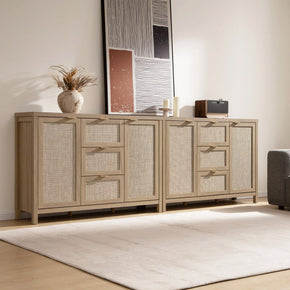
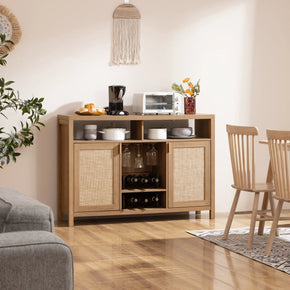
What sits alongside the sofa matters just as much. A genuinely used living room generates clutter every day — remote controls, cables, books, small objects that find their way onto every flat surface. A sideboard handles all of it quietly behind closed doors, leaving the room looking calm even when it isn't. TheStria 2-door modern sideboard cabinet does exactly this: two closed cabinet doors contain what they contain, a clean top surface holds a lamp and a plant, and nothing else, and the slim profile reads as furniture rather than storage infrastructure someone pushed against a wall. The sofa anchors the room. The sideboard hides how much it's actually used.
Lying Down Is Part of the Brief

Nobody includes this in the specs when they're shopping for a sofa, but it should be there. People lie down on sofas. Not always intentionally. Deep cushions, a long seat, a Sunday afternoon — it happens. The settee doesn't allow it. The proportions resist it, and the cushioning doesn't invite it. A family with young children who migrate horizontally through any piece of furniture within reach, a household where the post-dinner collapse is a weekly ritual, anyone who watches films lying down: these are sofa situations. A settee placed in a room with these needs is a daily small frustration, every day, for as long as it's there.
Sofa Configurations Are Broader Than One Standard Shape
Corner sofas and sectionals for rooms where seating needs to turn a corner or accommodate a large group in one connected piece. Sofa beds for rooms that also need to sleep guests without a dedicated guest room — the fold-out mechanism is the reason to own one. Loveseats for compact living rooms where a full three-seater leaves almost no floor to cross. Chaise sofas are positioned midway between a sofa and a daybed. None of these is a settee. They share a scale and a design tradition — large, upholstered, lounge-oriented — that the settee doesn't belong to.
When to Choose a Settee
The Rooms People Forget to Furnish Properly

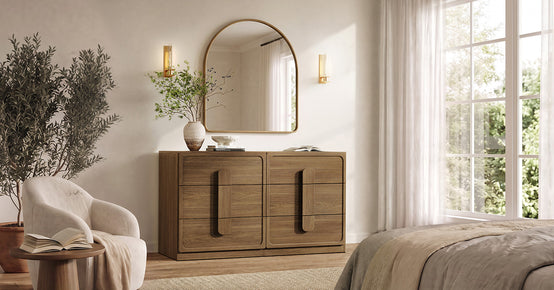
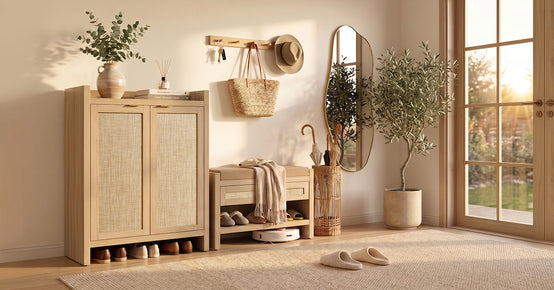
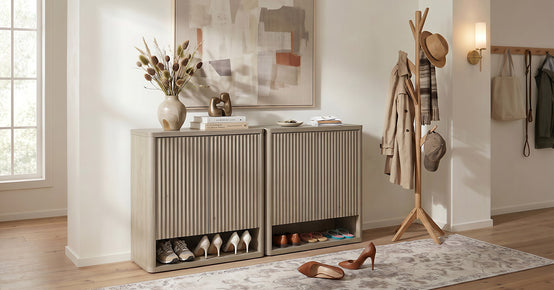
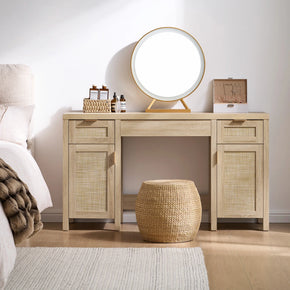
Bedroom reading corner — empty or with a chair that's too small. The hallway is wide enough to hold a seat but not a room. Entryway with nowhere to sit to put on shoes. A bay window that begs for something. The landing at the top of the stairs. These spaces exist in most homes, and almost all of them are either bare or contain something awkward because nobody thought about a settee. It fits. The scale is right. The upright posture suits a place where you sit briefly and purposefully, rather than spending an evening. And in an open-plan living arrangement, a console table at the back edge of the sofa zone solves a different but related problem — the Savanna 3-drawer console table marks the boundary between the living zone and whatever is behind it, absorbs the daily small objects that migrate toward the sofa, and gives the back of the sofa a surface to be behind rather than just facing nothing.
The Living Room Already Has a Sofa

A room with a sofa doesn't need another sofa. Two accent chairs, or one settee. The settee provides two seats in less floor space than two chairs and brings a different visual character — more upright, more formal, less lounge-ready — that contrasts with the sofa's relaxed depth. That contrast is valuable. Without it, the room reads as if someone bought everything at once from the same page of the same catalog and had it all delivered on the same day. With it, the room looks like it was assembled over time by someone who had preferences rather than just a budget.
The One Styling Rule for a Settee
One cushion. At most two if the settee is genuinely wide. One throw over one arm if the room is cold. Nothing else. This is the whole approach. A settee loaded with accessories looks like a small sofa that ran out of room for them — not like a deliberate accent piece placed with intention. The settee's own shape, the curve of its back, the height of its legs, the quality of its upholstery: those are the details of its styling. The placement is the rest of it. Morning light on it at a window. A framed print above it in a hallway with nothing competing on either side. That's what makes a settee look like a decision rather than a piece of furniture that arrived and stayed.
Settee, Sofa, Couch, and Loveseat
Sofa vs Couch — The Same Piece, Different Maps

There is no meaningful design distinction between a sofa and a couch in 2025. The words describe the same object. The difference between them is geographic: the UK uses sofa in both formal and retail contexts; the US uses couch in conversation and sofa in stores; Australia uses couch in daily speech. There was a class dimension in mid-twentieth-century Britain — sofa was the upper-middle-class term, settee the working- and lower-middle-class term — the reverse of what most people assume when they hear settee and think it sounds elevated — but that has dissolved. Word choice now reflects where you grew up and how you talk, not what your seating cost or what your parents did for work.
Settee vs Loveseat
Both are smaller than a standard sofa. Both seats hold two people. The experience is not the same. A loveseat is a scaled-down sofa — same deep cushioning, same design intention, same tendency to let you sink in and stay there. A settee seats two people who are sitting, not two people who are lounging. Suppose the brief is comfortable seating for two people for a long evening, then a loveseat. Suppose the brief is a smaller, more upright piece with a formal decorative character for a compact or accent space: settee. Same number of people. Different piece of furniture.
Settee vs Sofa Bed
A sofa bed has a mechanism. It converts into a sleeping surface, usually to accommodate a guest in a room that isn't a dedicated bedroom. That conversion is the reason to own one. A settee doesn't convert. It has no mechanism, no sleeping function, and the proportions don't support overnight use in any meaningful sense. These are not alternatives to each other. A sofa bed solves a guest accommodation problem. A settee solves a decorative seating problem. They don't compete because they don't apply to the same situation.
How to Style Each One
The Sofa: Organize the Room Around It, Not Over It

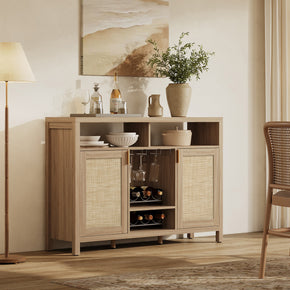
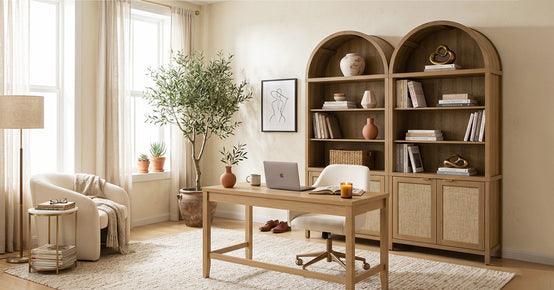
A sofa without the room organized around it is expensive furniture in an unthought-out room. Rug underneath — sized correctly, which means the front legs of every seat on it are at a minimum. Coffee table in proportion — two-thirds the sofa length. Every seat has a surface within reach. And storage along one wall for what a used living room generates every day. A glass-door sideboard handles the display-versus-clutter problem better than open shelving does: items visible and organized behind glass rather than scattered on surfaces or hidden behind solid doors. The Helio glass-door sideboard earns its wall space — glass panels showing organized contents, exterior that reads as furniture rather than infrastructure. It gives the room somewhere for its daily reality to go without showing it.
The Settee: Put It in the Right Place and Leave It Alone

The worst thing that happens to a settee is when someone tries to make it comfortable the way a sofa is comfortable — by layering cushions on it, draping a throw across it, pushing a side table and a lamp close to it, and placing a plant beside it. At some point, the settee disappears under the accessories, and the room looks like something from a styling shoot where nobody thought about what the individual pieces were doing. One cushion. One throw if the room is cold. The placement does the rest. A settee at a window with light on it doesn't need help. A settee under a framed print in a hallway is already styled. Let the piece be the piece.
Scale the Storage to Match
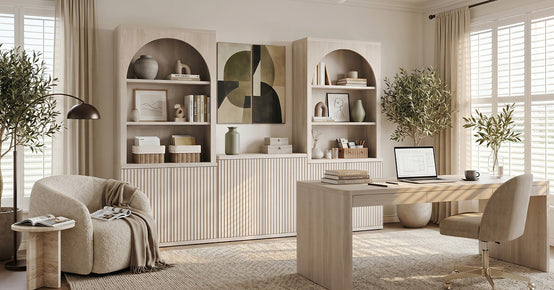
Whatever sits alongside the main seating piece needs to be in proportion to it. A sofa pairs with storage that matches its weight — the Helio decorative living room sideboard earns this: decorative panel doors that give it visual presence, real storage behind them, a top surface that holds a lamp and two objects, and stays that way. A settee in a bedroom or hallway pairs with lighter, slimmer pieces — a console rather than a full sideboard, something at the scale of the room and the piece rather than whatever happened to be available. Scale matching is not a design theory. It's just what stops a room from looking like pieces from different rooms got mixed up.
Which One Is Right for Your Room?

Sofa If
Living room. Multiple people, daily use, hours at a time. Comfort is non-negotiable, and horizontal is occasionally on the brief. The space accommodates furniture up to 72 inches wide without blocking all movement. These describe the main living rooms. The sofa is the obvious answer. It doesn't need more deliberation than that.
Settee If
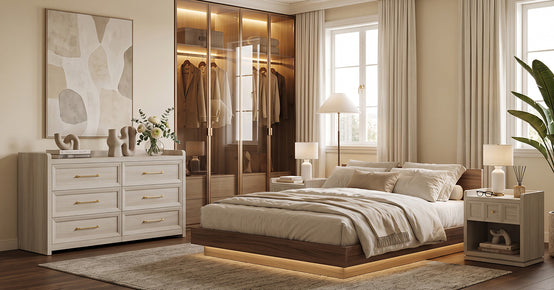
The room already has a sofa. Or it isn't a living room. Or the space is too small for a full sofa without the furniture crowding out the room. Or the function is decorative accent seating rather than daily comfort seating. Any of those: settee. And whichever piece goes in — sofa or settee — the storage alongside it needs to work. The Savanna sideboard with 3 drawers and 2 doors handles this without asking for attention: drawers absorb the small daily items, cabinet doors close over everything else, and the top stays clear. The room looks calm because the storage is doing its job. Not because someone tidied it before you arrived.
Measure the Delivery Path

Not just the room. The path from the front door to the final position: every doorway width, every stairwell clearance, every corridor angle. This is where sofa purchases most often fail. Two delivery men, a hallway, a tape measure, and the discovery that the turn from the stairs is three inches narrower than the sofa is deep. Settees have caught people out at bedroom doorframes, too. Measure the room and measure the path. In that order. Before anything gets ordered.
FAQs
What's the difference between a sofa and a settee?
Size and design intention. A sofa is 72 to 96 inches wide, deep-cushioned, and built for comfortable daily use by multiple people as the main seating piece in a living room. A settee is 50 to 70 inches wide, shallower in the seat, more upright in the back, and built for accent seating in smaller or more formal spaces — bedrooms, hallways, entryways, or as secondary seating alongside a sofa. The words are used interchangeably in everyday speech, and nobody will correct you for it. But the furniture, if you're choosing between them, is different enough to matter.
Is settee an Indian word?
Old English. Setl — a long wooden bench with a high back, common in Medieval England. The word arrived in Indian English through the British colonial period, when British English became the standard for formal communication across the subcontinent. Many British English terms remained after independence, including settee. The origin is English. The spread is a product of colonial history, not Indian etymology.
What is a settee?
Technically: an upholstered seat with a back and arms, smaller and more upright than a sofa, designed for one to two people. Historically, a wooden bench that gradually accumulated padding and upholstery over two centuries, while keeping its name and roughly the same posture. The character — upright, somewhat formal, not designed for sustained horizontal use — retains its bench origin, even in fully modern examples. You're sitting on a settee. Not occupying one.
Is a settee posher than a sofa?
This one goes backward from expectation. In mid-century British class linguistics, sofa was the upper-middle-class word. Settee was working-class and lower-middle. The assumption that "settee" sounds refined stems from its sound rather than its history. That class distinction has dissolved — current word choice reflects geography (settee is more common in northern England, less common in London, absent in the US) and generation. Nobody is reading the class from the furniture vocabulary in 2025. Use whichever word comes naturally.
Can you sit on a settee?
Yes — that is its specific purpose. What differs from a sofa is posture. A settee's higher back and shallower seat hold you more upright. This makes it well-suited to reading, to conversation, to sitting while getting ready in a bedroom. It makes it poorly suited to four hours of television on a Sunday. That's not a flaw. It's a design built for a different use. If the sitting will be prolonged and eventually horizontal: a sofa. If the sitting will be purposeful and brief, in a room where the piece also needs to look deliberate, a settee.
Is a settee lower-class?
According to documented British class linguistics from the mid-twentieth century, yes, and the opposite direction from what most people expect. Sofa was the higher-register term. Settee was the lower. Surveys of British speech patterns from the 1950s and 60s documented this. It has no practical social weight in current use. The relevant distinction now is geographic: "settee" is a northern English term, less used in the south and essentially absent in American English. Use whichever word sounds natural. Nobody is keeping track.
What do Americans call settees?
Sofa. Or couch. For a smaller two-person piece: loveseat. The word settee exists in American English and would be understood, but it reads as British or antique — something from a period drama or the vocabulary of someone's grandmother. In American furniture retail, it occasionally appears as a category label for decorative bench-style seats. In daily American speech, it hasn't taken hold, and probably won't. Describe a piece of furniture as a settee to an American, and they'll know what you mean. They won't use the word themselves.
What is the 2/3 rule for sofas?
The sofa should be approximately two-thirds the length of the wall it sits against — not filling the wall, not dwarfed by it. The coffee table in front should be approximately two-thirds of the sofa's own length. Both ratios encode the same principle: furniture in a consistent proportional relationship to its surroundings reads as chosen rather than placed by chance. A sofa filling a full wall is oppressive. One that takes up a third of the wall looks like it belongs somewhere else. The 2/3 proportion is where the arrangement settles into looking like it was actually decided upon.
Which type of sofa is better?
There is no universal answer. A standard three-seater works for most living rooms. A sectional works for large rooms or households that need substantial connected seating. A sofa bed works when the room doubles as guest accommodation. A loveseat works well in compact living rooms where a full sofa would take up too much space. For the storage that makes any of these arrangements function day-to-day, the Sicotas modern furniture collection covers sideboards, console tables, and display cabinets in styles that sit alongside contemporary sofa arrangements without needing to be matched or coordinated to a specific range.
Sources
- Swyft Home — What's the Difference Between Sofa, Couch, and Settee?
- The Spruce — What Is a Settee?
- Darlings of Chelsea — Sofa, Couch, or Settee: What's the Difference?
- POISON — Difference Between Couch and Sofa, Settee, Loveseat
- Living Spaces — Settees vs Sofas: 4 Key Differences
- Sofa.com — Why Do We Call It a Sofa, Couch, or Settee?


Looking for something else?

Furniture Materials Guide: Picking the Right Material Room by Room
LEARN MORE
How to Mix Wood Tones Without Making a Room Look Mismatched
LEARN MORE
18 College Apartment Furniture Ideas That Save Space and Money
LEARN MORE
Types of Entertainment Centers: 11 Designs and How to Pick One
LEARN MORELooking for something else?

Curio Cabinet Decor Ideas: How to Style a Display Cabinet Without the Clutter
LEARN MORE
Curved Furniture: How to Style, Measure, and Buy It in 2026
LEARN MORE
What Is Rattan Furniture? A Buyer Guide to Types and Care
LEARN MORE


Further reading

How to Choose a Nightstand for a CPAP Machine

How to Choose a Shoe Cabinet for Men's Sizes, High-Tops, and Bulky Shoes


