




15 Office Design Ideas for a Productive Modern Workspace

Walk into most offices, and you'll find the same thing. Rows of desks. One conference room with a long table and ten chairs, nobody wants to sit in. Fluorescent lights that make everyone look slightly unwell. A corner sofa that nobody uses because it's too far from anything.
The space was designed once — probably when the company moved in — and hasn't been thought about since. Meanwhile, the team changed, the work changed, and half the people now work from home three days a week. And everyone wonders why the office feels draining.
These 15 ideas cover the changes that actually make a difference. Some cost money. Some don't. All of them are about making the space work for the people in it rather than just looking like a workplace.
1. Figure Out What the Space Actually Needs to Do

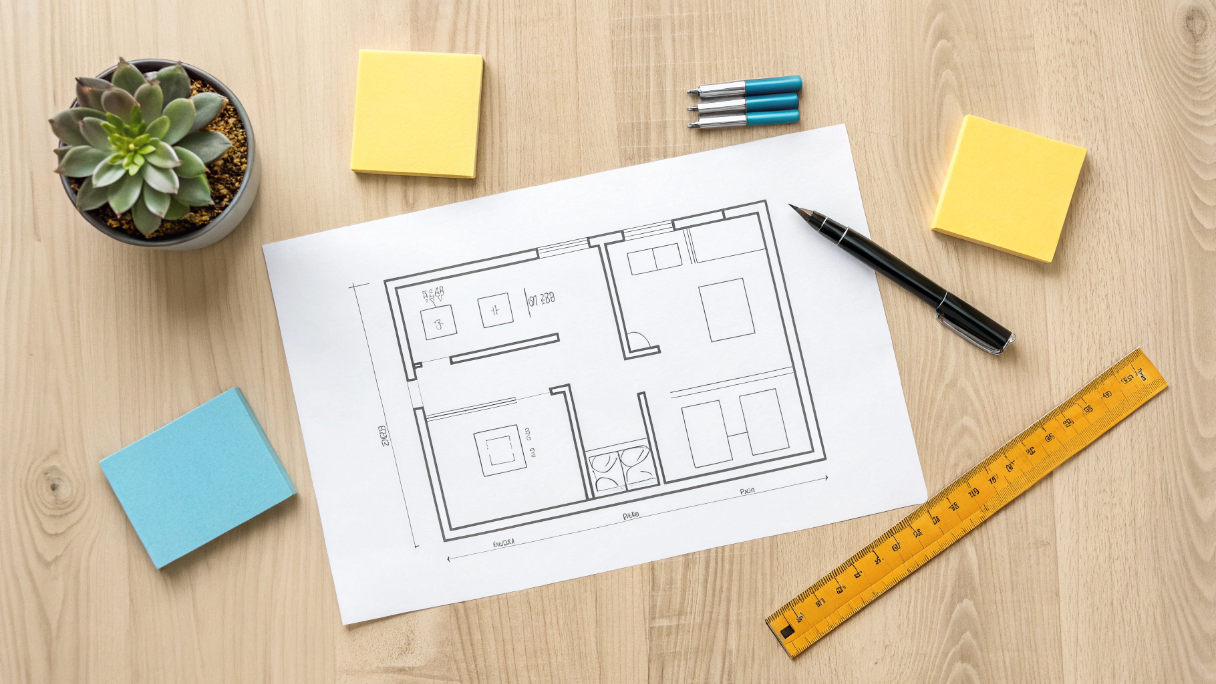
Zone planning sounds like designer jargon. It's really just asking: what kinds of work happen here, and does the layout support any of them?
Some teams need long stretches of quiet individual work. Others are constantly in motion — quick meetings, calls, whiteboard sessions, back-and-forth with teammates. A startup of six operates differently from a client services team of thirty. Designing for one and then wondering why the other isn't comfortable in it is where most office layouts go wrong.
Sketch the zones first. Focus desks—meeting area. Casual seating. Storage. Reception if needed. Only then figure out what furniture fills each one. Buying desks before knowing where they go is how you end up with a room that technically has everything and still doesn't work.
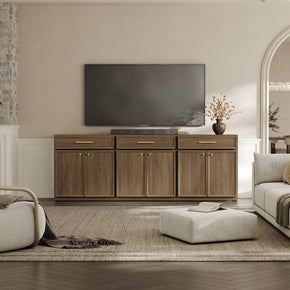
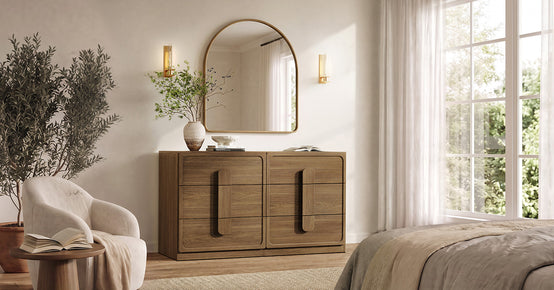
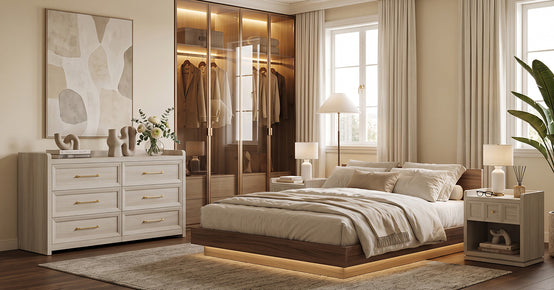
Sicotas furniture collections cover the full range — from compact task desks to modular storage — which is useful when you're building out zones one at a time rather than all at once.
2. Bad Lighting Is Quietly Ruining Your Office

Nobody ever complains about their office lighting. They complain about headaches, tired eyes, feeling drained by 3 pm, and needing a coffee after lunch. Those are the same complaints. The lighting is rarely identified as the cause.
Overhead fluorescents are the worst offenders. They flatten everything and buzz at a frequency that's not dangerous but isn't comfortable either. Windows directly behind monitors create glare that forces people into weird physical postures just to see the screen.
Natural light on the side is the goal. Desks should be angled so the window is beside the monitor, not behind it. Adjustable desk lamps for task work. LEDs in the 3000K to 4000K range feel warm rather than clinical. Circadian lighting systems — the kind that gradually shift in color temperature across the day — are worth serious consideration in any large office.
Radish Lab made the switch from overhead fluorescents to task-based lighting in their Bushwick loft and calls it one of the single best changes they made. Cost-wise, it was also one of the cheapest.
3. Ergonomics Isn't About Standing Desks — It's About the Whole Setup

Sit-stand desks get all the attention. They're genuinely useful — not because everyone should stand all day, but because having the option to shift breaks the physical monotony that makes long desk sessions uncomfortable. But a $1,200 sit-stand desk paired with a chair that doesn't fit the person sitting in it is mostly a waste of money.
Chair first. Adjustable seat height, real lumbar support, armrests that sit at the right level without forcing the shoulders up or in. Mesh backs breathe better than solid foam during long sessions. Screen at eye level, keyboard at elbow height when seated. Most workstations get both of these wrong, and nobody adjusts them because nobody has shown them they can.
The back problems, the wrist strain, the neck issues that office workers develop over the years — they're not mysteries. They're the predictable result of setups that nobody optimized past day one.
4. Open Plan Works Until It Doesn't — Give People Somewhere Quiet

Poor acoustics is the top complaint in modern offices. That's not an opinion — Office Principles puts it at number one in their workplace research. And it's gotten worse since hybrid working arrived, because now every desk is a potential Zoom room.
Three people on video calls. Two conversations are happening at adjacent desks. A presentation visible through the conference room's glass wall. Nobody can think it through, and, more importantly, nobody can hear their own call properly.
Rugs on hard floors. Curtains rather than blinds. Upholstered seating and fabric wall panels that absorb sound rather than bounce it. These aren't exotic solutions. They're inexpensive, and they work.
And then at least one enclosed space — a room with a door, a phone booth, even a partitioned corner with acoustic panels on three sides — where someone can go when the open office is actively working against them. This is not optional in a hybrid workplace. It's the difference between an office that functions and one that everyone avoids.
5. Plants. Seriously — Just Add Plants.

Every few years, someone publishes another study confirming that offices with plants make people feel better and perform better. And every year, most offices continue to have none. There's a gap there worth closing.
The practical case: plants reduce ambient stress, improve air quality in enclosed spaces, and make a room feel inhabited rather than sterile. The effect is real and doesn't require a designer or a budget. A snake plant on a desk tolerates low light and erratic watering. A large rubber plant in a corner with decent natural light makes a visual statement that costs $30 to $60.
Natural materials alongside the greenery compound the effect. A wooden desk surface. A jute or wool rug. A corkboard instead of a metal grid. The combination reads as grounded and human in a way that's hard to achieve through any other design choice at the same price point.
6. Color Needs a Purpose, Not Just a Palette

The worst office color mistake: picking a brand color — vivid blue, bright orange, whatever the logo uses — and painting it on every surface. It doesn't reinforce brand identity. It makes the space feel like the inside of a promotional brochure, which turns exhausting faster than you'd expect.
Blues and soft greens help people concentrate. Warm neutrals — beige, greige, a soft off-white — make the best background color for most workplaces because they don't compete with screens, furnishings, or natural light. Yellow and orange work as accent colors in places where energy is wanted: a reception area, a brainstorming space, a kitchen corner.
Brand colors belong in specific, strategic places. An accent wall. The upholstery on a few chairs. Artwork. Wayfinding signage. Applied that way, they feel intentional. Applied everywhere, they feel inescapable.
7. Meeting Rooms Shouldn't Feel Like Negotiations

Long rectangular table. Chairs are lined up on both sides. One screen at the far end. That layout is built for presentations and formal reporting — not for actual collaborative thinking. It creates a physical dynamic in which everyone faces each other across a divide, which is fine for quarterly reviews but terrible for creative sessions.
What actually helps: tables on wheels so the room can be reconfigured. A writable wall or standing whiteboard so ideas can go up and stay visible. Some kind of informal seating option alongside the main table. Good AV — camera at eye level, microphone that picks up the room, a screen position that doesn't require anyone to crane their neck.
Hybrid meetings in particular need thought. Half the participants in a room, half on a screen — the camera angle, audio quality, and screen placement either make remote attendees feel like part of the conversation or observers of it. Most hybrid setups, if tested honestly, land in the second category.
8. A Lounge Area Is Productive Space — Treat It That Way

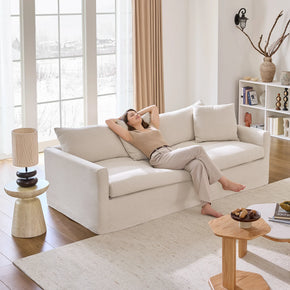
The office sofas that don't get used usually have two problems: they're positioned badly (next to the printer, in a corridor, facing a wall), and they're not comfortable enough for anyone to actually choose over a desk.
A properly designed lounge corner is worth the floor space it occupies. The most useful conversations often happen in informal settings — problems resolved, decisions made, tensions between colleagues quietly sorted — and those conversations require somewhere to sit that isn't a meeting room. Meeting rooms are for scheduled things. Sofas are for everything else.
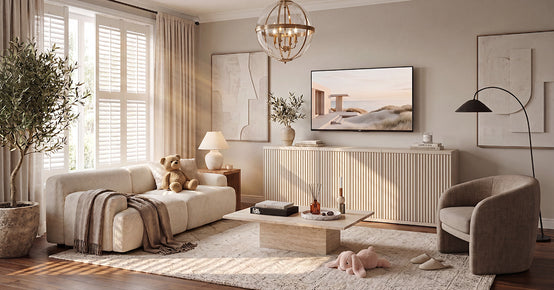
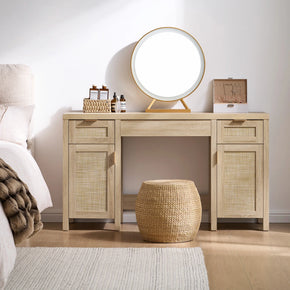
A narrow console behind the sofa ties the area together without cluttering it. The Savanna 3-Drawer Console Table holds a lamp and whatever small storage the corner needs — without turning the lounge area into an overflow storage point, which is what happens when there's no surface at all.
9. Storage Is a Focus Problem, Not Just an Organization Problem

Clutter drains attention. That's not a lifestyle observation — it's a measurable cognitive effect. A desk with visible piles of paper, tangled cords, and shared supplies left wherever they landed last takes a small but continuous toll on the ability to concentrate. Over an eight-hour day, it adds up.
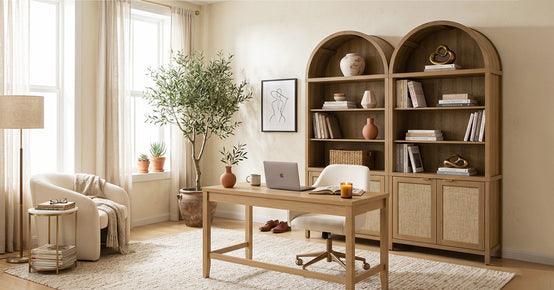
Closed storage keeps the visual field clean—drawers and cabinets for anything not actively in use. Open shelving only for items genuinely meant to be seen — books, plants, a few considered objects. The Zura Large Storage Bookcase with Doors handles both: open shelves above for display, closed doors below for the rest. It's a more functional split than all-open or all-closed.
Cords: A $15 cable tray under the desk and a handful of velcro cord ties sort out most of it. Not glamorous, not expensive, and the visual improvement is immediate.
10. Make the Space Feel Like People Actually Work There

Offices designed to look professional in photos often feel bleak to be in. Everything matching, walls blank, nothing personal, no texture, no warmth. It communicates that the company cares about appearances, not about the people spending eight hours inside it. That's not the message most companies want to send.
Art on the walls costs less than most people assume. A large canvas print from a print-on-demand service—a few framed photos of the team or the city. Something painted by someone who works there, framed properly and hung well. It doesn't need to be curated — it needs to feel like real people chose it.
Textiles warm a space in a way nothing else does for the cost. A rug under the desk clusters. Curtains. Cushions on the lounge seating. These things also absorb sound, which is a bonus in any open-plan office.
11. Design for Hybrid Work Before It Designs You

Hybrid work is settled now. Over a quarter of UK working adults were hybrid working in early 2025, and the number hasn't plateaued. What that means for office design: the space has to be worth choosing over the home setup. If the home setup is quieter, offers better lighting, and requires fewer interruptions, the commute no longer makes sense.
Fewer assigned desks. More meeting rooms. Lockers for personal items. Touchdown stations near windows for short, focused sessions. And AV equipment that actually works — camera at eye level, microphone that covers the room, a screen large enough to see remote participants without squinting. Most hybrid-ready meeting rooms still fail on at least two of those four.
The office needs to do things the home can't. Not better coffee — that's not it. Collaboration, culture, connection, energy. Design toward those things, and the commute justifies itself.
12. Create a Designated Focus Zone

Not everyone concentrates in the same conditions. Some people work well inside a busy open office. Others find it genuinely difficult to think clearly when there's movement and conversation in their peripheral vision. An office that assumes everyone is the same type will serve one group and frustrate the other.
A focus zone doesn't need walls. It needs a signal—a set of desks positioned away from the main thoroughfare. A bookshelf is between it and the louder collaboration area. A shared understanding — explicit, stated, held to — that the focus area means low voice, no drop-in conversations, phones on silent.
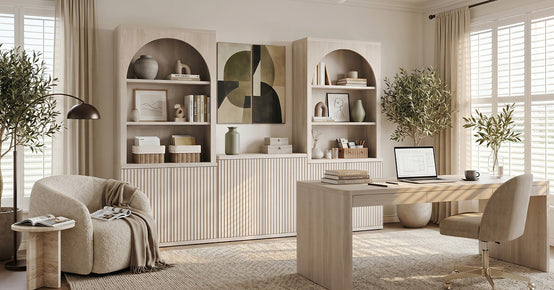
A tall bookshelf creates that kind of visual and acoustic separation without construction. The Willow 75-Inch Tall Bookshelf works as a room divider in an open office — it's tall enough to mark a zone clearly, provides useful storage on both sides, and doesn't require a landlord's permission.
13. Small Office? Think Vertically.

The floor runs out first. The wall goes all the way up. That's the rule in small offices, and most of them don't follow it — shelves stop at five feet, storage stays low, and the upper third of every wall is empty.
Vertical storage changes that. Floor-to-ceiling shelving. Wall-mounted cabinets above the desk. Pegboards for supplies and equipment at desk level. The floor stays clearer, the room breathes, and storage capacity roughly doubles without adding square footage.
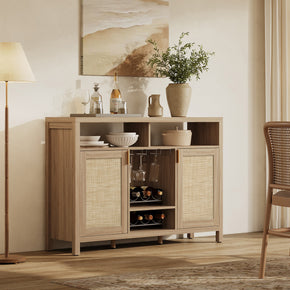
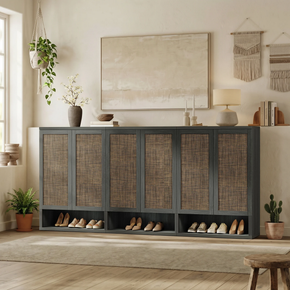
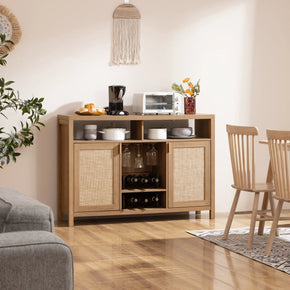
Along the main wall, a low sideboard keeps things organized at waist height. The Stria 2-Door Sideboard Cabinet holds files and supplies behind closed doors without blocking anything. Wall shelves above it complete the vertical run. Slim desks, compact task chairs, and light wall colors do the rest — same square footage, noticeably more room to move.
14. Use Technology Where It Helps — Not Where It Impresses

Smart office technology is worth using when it solves a real problem. Motion-activated lights in meeting rooms that people frequently leave on after leaving — useful. Occupancy sensors that track which spaces actually get used — genuinely valuable data for layout decisions. Room booking systems that prevent the same three rooms from being double-booked all day — yes.
Smart technology that nobody knows how to use, that requires IT support every second week, or that mostly exists to show visitors the office is modern — that's a different thing. Spend the budget on reliable AV equipment, reliable Wi-Fi coverage throughout the office, and power access at every desk before investing in anything that requires an app.
One of the most useful technologies in any hybrid office is also the simplest: a whiteboard. Digital whiteboards are fine. A standard writable wall surface that anyone can use without logging in, pairing a device, or finding the right marker costs nothing and gets used constantly.
15. You Don't Need a Big Budget — You Need the Right Target

Most office improvements fail not because of budget but because of priority. Money gets spent on things that photograph well — a statement wall, new reception furniture, a branded neon sign — while the chairs people sit in for eight hours remain uncomfortable, and the lighting gives everyone a headache.
Fix the highest-friction thing first. If the acoustics are making the open office unusable for calls, fix the acoustics. If storage is nonexistent and clutter is out of control, add storage. If the lighting is making everyone tired, change the lighting. Then move to the next thing.
Building out storage and workspace pieces gradually over time — rather than waiting for a full-budget renovation that may not arrive — is actually a better strategy than it sounds. Sicotas's full office and home range covers compact, modular pieces that work room by room without requiring a full-space commitment upfront.
Six Office Design Mistakes Worth Knowing About
- Full open plan with no quiet room — three people on hybrid calls at adjacent desks, and the whole office can't concentrate.
- Buying furniture before measuring: door widths, desk clearance, walking paths — happens more than it should
- Leaving cable management until it's out of control — $15 and an hour prevents weeks of visual chaos
- No closed storage in the layout — things pile up on every surface within a week
- Designing for photographs rather than for the people using the space daily
- Ignoring AV quality in meeting rooms used for hybrid calls — bad audio affects everyone on the call, in the room or not
FAQs
What are the best office design ideas for productivity?
Proper ergonomic seating, adjusted lighting (natural first, then task lamps), at least one quiet zone, and clear storage. Those four changes improve more offices than any trend or aesthetic decision. After that: plants, acoustic treatment, and a usable lounge area.
How do I make a small office look and feel bigger?
Three things work best. Light wall colors — warm white or soft gray — keep the room from feeling visually closed in. Vertical storage frees up floor space without reducing storage capacity. Furniture with raised legs lets light pass underneath, which makes any room read as more open than it is. Keep the floor clear of anything that doesn't need to be there.
What colors are best for an office workspace?
Blues and muted greens for focus-heavy areas. Warm neutrals — beige, greige, off-white — as background colors for most offices. Yellow and orange are used as small accents in kitchens, lounge areas, or reception spaces where energy is welcome. Brand colors should go on specific elements (artwork, chairs, one accent wall) rather than on every surface — that's where they read as intentional rather than overwhelming.
Does office design really affect employee performance?
Yes, consistently. Lighting affects energy and eye strain. Acoustics affects concentration and the quality of communication on calls. Ergonomics affects physical comfort and long-term health. Temperature affects alertness. Most of these aren't things people consciously identify as problems — they just notice they work better at home without being able to explain why. Usually, it's the environment.
What is biophilic office design?
Bringing natural elements into the workspace — plants, wood surfaces, natural stone, linen and jute textiles, natural light, views of the outside where possible. The research behind it is consistent: contact with natural elements in work environments reduces stress and improves cognitive performance. Doesn't require a major design intervention. A handful of plants and a wooden desk surface is a reasonable start.
How can I improve my office on a small budget?
Start with the thing causing the most friction. If it's lighting, a $40 desk lamp and repositioning desks toward the window cost almost nothing. If it's cable clutter, a cable tray is $15. If it's not a breakout area, a secondhand sofa and a floor lamp create one for under $200. Plants for the whole office can be under $100. Fix one thing at a time rather than spreading a small budget thin across everything.
What should every office have regardless of its size?
Good lighting. Seating with real lumbar support. A desk at the right height. Power access where it's needed — not just at the walls. Storage that keeps surfaces clear. At least one space for calls or focused work with some acoustic separation. A meeting area of some kind. Those cover the fundamentals. Everything built on top of that is improving a functional baseline, not fixing a broken one.
How do you deal with noise in an open-plan office without major changes?
Layer soft materials. A rug on the floor. Curtains rather than blinds. Upholstered seating in shared areas. Fabric panels on the walls where the echo is worst. These aren't expensive, and the acoustic improvement is real. Beyond materials: at least one enclosed space where calls happen — even a small booth or a partitioned corner. Open plan offices that have one of those are far more manageable than those that don't.
Last Thought
The offices that work best aren't the ones with the biggest budget or the most design attention. They're the ones where someone actually asked what the team needs and built around that answer — quiet for focus, open for collaboration, comfortable for long days, functional enough that work can actually happen without fighting the environment.
Start with the fundamentals. Fix the biggest problem first. Add personality once the basics work. That order produces a better result every time.
Sources
- Office Principles — Top 10 Office Design Trends for 2026–––Hybrid work, acoustic design, AI integration, biophilic elements, color psychology, and wellbeing for modern offices.
- Radish Lab — 10 Ideas for Great Office Design on the Cheap–––Practical budget upgrades: task lighting, plants, textiles, secondhand furniture, whiteboards, cord management.
- Peldon Rose — 10 Creative Office Design Ideas–––Collaboration spaces, color psychology, biophilic design, movement-based layouts, and ergonomic furniture.
- Luxesource — 20 Colorful Home Office Design Ideas–––Designer-led home office examples across bold color, pattern use, and personal workspace approaches.
- CDC / NIOSH — Ergonomics and Musculoskeletal Disorders–––Posture, equipment, lighting, and long-term injury prevention guidelines for office work environments.
- WELL Building Institute — WELL Building Standard–––Health-focused building standard covering workplace air quality, lighting, comfort, and mental well-being.


Looking for something else?

Furniture Materials Guide: Picking the Right Material Room by Room
LEARN MORE
How to Mix Wood Tones Without Making a Room Look Mismatched
LEARN MORE
18 College Apartment Furniture Ideas That Save Space and Money
LEARN MORE
Types of Entertainment Centers: 11 Designs and How to Pick One
LEARN MORELooking for something else?

Curio Cabinet Decor Ideas: How to Style a Display Cabinet Without the Clutter
LEARN MORE
Curved Furniture: How to Style, Measure, and Buy It in 2026
LEARN MORE
What Is Rattan Furniture? A Buyer Guide to Types and Care
LEARN MORE


Further reading

How to Choose a Nightstand for a CPAP Machine

How to Choose a Shoe Cabinet for Men's Sizes, High-Tops, and Bulky Shoes


