




New Home Furniture Checklist: What You Need Room by Room
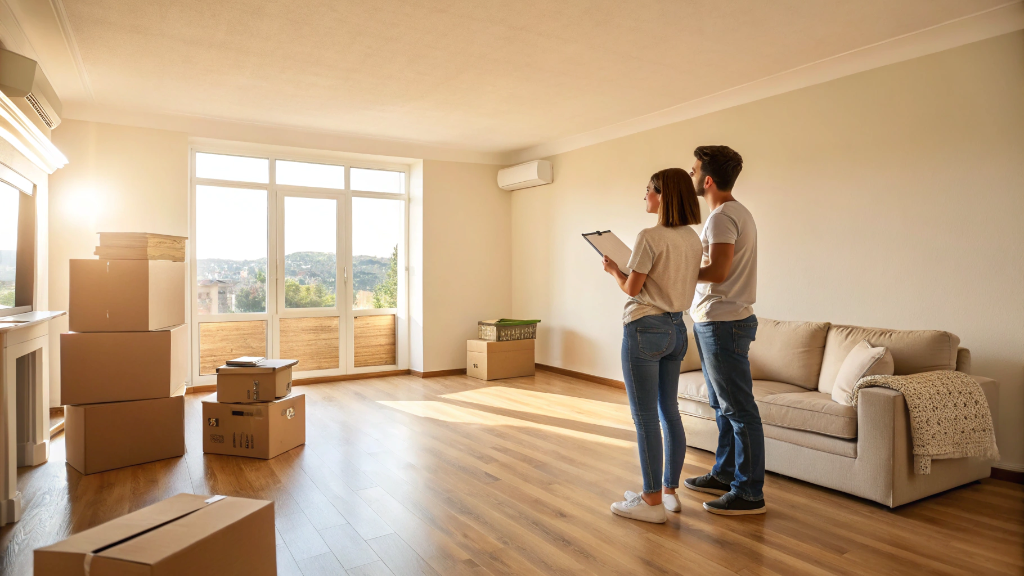
Look — moving into a new place is the best feeling, right up until about hour six. Which is roughly when the adrenaline wears off, and you realize you're sitting on a stack of cardboard boxes in an empty living room with absolutely no idea what to do next. That was me. In July of 2023, somewhere around 95 degrees outside, our Brooklyn building's elevator was broken (of course), and I'd been awake since 4 am because the cat decided 4 am was a normal time to start vocalizing. By 6 pm, I was just sitting there, looking at blank walls. My partner went out for Thai food. I had a Pinterest board on my phone. A half-written Notes app list. Zero clue how any of it was supposed to come together in real life. Then, over the next six weeks, I made every possible classic mistake. Bought a coffee table at HomeGoods before owning a sofa, because it was on sale. Ordered a wardrobe online without measuring the doorway — it sat under a blue tarp on our front lawn for six weeks. Lived without a real dining table for three months because I couldn't make up my mind. Anyway. Save yourself. A proper new home furniture checklist makes this whole thing infinitely less painful.This Wayfair first-apartment checklist covers a wide list of categories if you want a broad starting point, though most people end up trimming or expanding it once they walk through their actual rooms with a tape measure in hand. What follows is basically what I'd tell a friend who texted me asking what to buy.
How to Plan Your New Home Furniture Checklist

Before clicking buy on anything, give yourself thirty minutes of actual thought. Nobody enjoys this part. I get it. But the time saves you ten times over the next six months.
Measure Every Room Before You Buy
So the wardrobe thing. Quick recap because it shaped everything about how I shop for furniture now. I ordered a 71-inch wardrobe online back in August, didn't measure the awkward turn at the top of our second-floor staircase, and didn't think about it once. Two delivery guys showed up, spent maybe 45 minutes trying every conceivable angle to get the thing into our bedroom, and eventually one of them just kind of shrugged and said Yeah, this isn't happening.' We refunded, scheduled a return pickup, and that wardrobe sat under a blue tarp on our actual front lawn for six and a half weeks. The neighbors thought we were doing some kind of weird art installation. So now I measure everything literally. Rooms. Ceilings. Every single doorway. Every hallway turn. The staircase. Elevator, if there is one. Then I scribble the rooms onto whatever paper is near me — usually the back of a Con Edison bill. Doesn't have to look like architecture. Just has to be accurate enough.
Separate Must-Haves From Nice-to-Haves
Two columns on a piece of paper. Left side: stuff you genuinely can't live without. Bed. A place to sit. Place to eat. A place to put your clothes. Right side: stuff that would be nice eventually. Accent chair. Decorative mirror. Second nightstand. Framed art. The credenza you keep saving on Pinterest. Handle the left column first. The right can wait — honestly, no rush. I lived without a coffee table for six months and was perfectly fine. The dog was happy about the extra floor space.
Furnish in Phases, Not All at Once

Trying to furnish a whole house in one weekend is how most people end up with $3,000 worth of returns and a house full of pieces they don't actually like. I know because that's exactly what I did. Spent a Saturday at IKEA, an afternoon on Wayfair, and returned probably half of it within thirty days. Phased works infinitely better. Bedroom and living room first — your two daily-use rooms. Dining setup next. Then, the hallway, home office, and decor over the following months. Sicotas's complete home furniture lineup makes a useful one-page browse to compare beds, dressers, sideboards, and consoles before locking anything in.
First Things to Buy When You Move In

If you only buy five things in the first week — and honestly, the first week is chaos enough that five is plenty — make it these. Everything else can wait.
A Quality Mattress and Bed Frame
Spend the money here. I'm serious. For our first apartment, we bought a $400 mattress off Amazon to save cash, and my back hurt for six straight months. Eventually upgraded to a Casper hybrid, and the pain stopped within two weeks. The math on a cheap mattress is just not worth it. Frame can be basic — a simple platform frame is fine, a fancy headboard can come later, once you actually figure out what aesthetic you want. Side sleepers want medium-soft. Back sleepers want medium-firm. Stomach sleepers want firm. Test in person if you possibly can.
A Comfortable Sofa
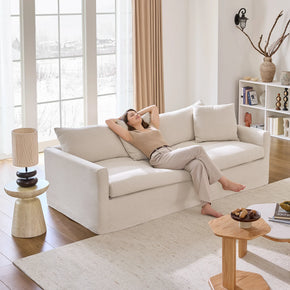
Sofa first. Everything else builds around it. We made the rookie mistake of buying a coffee table from HomeGoods first because it was on sale — looked fine sitting alone, looked weird as soon as the actual sofa got delivered. Scale matters way more than people think. A sectional in a 200-square-foot living room looks like a parked Buick. A loveseat in a big open-plan space basically disappears. Measure the wall you're putting it against, then add three feet of clearance for a walking path. Performance fabric is worth every penny of the upcharge if you've got pets or kids. Mine has survived three years of a 70-pound dog and still looks decent.
Dining Table and Chairs
Even if dinner is takeout most weeknights — guilty over here — a real dining table changes things. After three months without one, I started feeling like I lived in a college dorm. The table doesn't need to be perfect either. A cheap one from IKEA or Target is fine to start with, upgrade in eighteen months once you've actually decided what you want long-term. Round tables fit smaller rooms better. Rectangular ones suit longer dining rooms. The goal is just having somewhere to eat that isn't the kitchen counter or a packing box.
Basic Storage
Boxes pile up at a frankly alarming rate. Without a designated spot for stuff, the place will look chaotic within two days of moving in. Get a dresser or wardrobe for clothes. Small bookshelf for books. Shoe rack near the door. Even cheap plastic bins from the Container Store work for week one — upgrade later once you've figured out what you actually own.
Lighting and Window Coverings
Quick PSA about lighting because nobody ever warns you. Apartments come with overhead bulbs in maybe two rooms total — the kitchen and bathroom. Bedrooms? Nothing overhead. Living room? Usually nothing. Which means your first night in the place is going to be very, very dark unless you've planned for it. So before move-in day, grab a floor lamp for the living room and two cheap bedside lamps for the bedroom. Target works. Walmart works. Anywhere works. The nice lighting comes later, once you actually know what aesthetic you're going for. And — this part really matters — get curtains or blinds up in the bedroom before sleeping there. In my first apartment, I forgot about curtains entirely. There was a streetlight directly outside my bedroom window. I basically didn't sleep for ten days. Don't be that person.
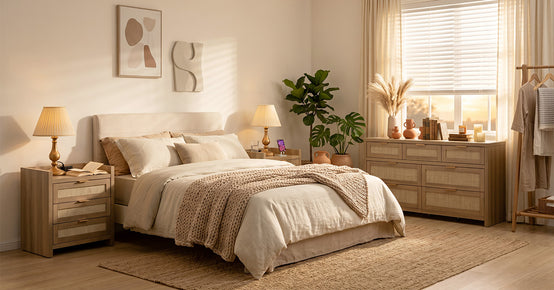
Bedroom Furniture Checklist

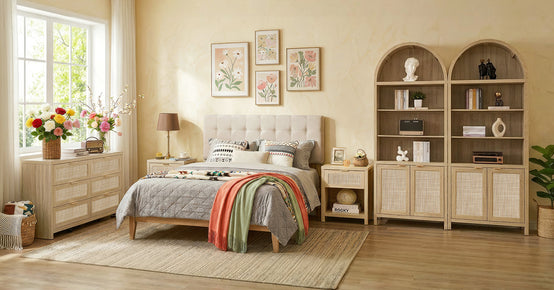
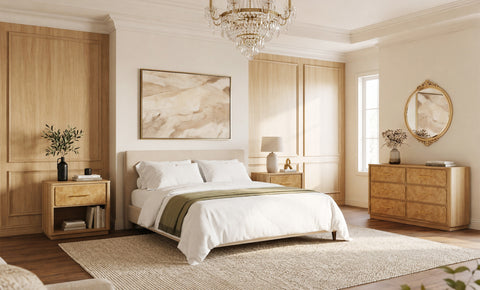
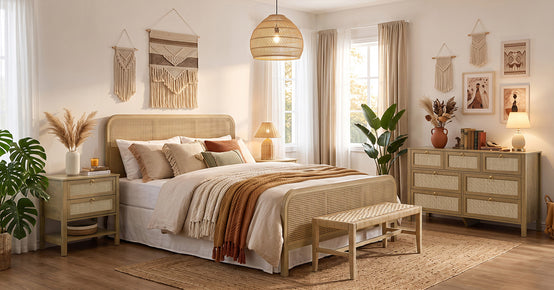
The bedroom comes second on my list, right after the living room. Not because it's less important — the opposite, actually — but because the living room is where you're going to spend the chaos of unpacking week, and you need somewhere to sit that isn't a packing box. Once you're a few days in, though, the bedroom suddenly starts mattering a lot. A couple of nights of bad sleep, episode, ep, and the whole move starts to feel impossible. And a cluttered bedroom, with clothes piled on chairs and unopened boxes in the corner, turns into a sleep-quality killer surprisingly fast.
Bed Frame and Mattress
Real talk: don't skimp on this one. Our first bed frame was a $90 IKEA thing that creaked every single time either of us moved. Six months in, we were both sleeping badly because every middle-of-the-night roll-over woke the other person. Upgraded to a solid frame two years ago, and the difference was honestly immediate. Mattress should match how you sleep — side sleepers want softer, back sleepers want medium-firm, stomach sleepers want firmer. Don't just guess. Test if you can. And give yourself walking room around the bed. We had ours pushed flat against one wall for an entire year, and changing the sheets turned into actual yoga. Two feet of clearance on each side, minimum. Less than that, and the whole room starts feeling like a coffin you decorated.
Nightstands or Bedside Tables

My old bedroom didn't have nightstands for the first year we lived there. The phone lay on the floor. Water glass lived on the floor. Books lived on the floor. Headphones lived on the floor. Reading glasses lived on the floor. Every single morning, I'd swing my legs out of bed and step on something cold or fragile. Honestly, it was transformative when I finally bought a couple of small bedside tables. The Crescent 3-Drawer Nightstand is one of those simple pieces that just does its job without any fuss — three drawers for the bedtime small stuff, a normal silhouette, and a height where your hand naturally falls when you're reaching for your phone in the dark.
Dresser or Chest of Drawers

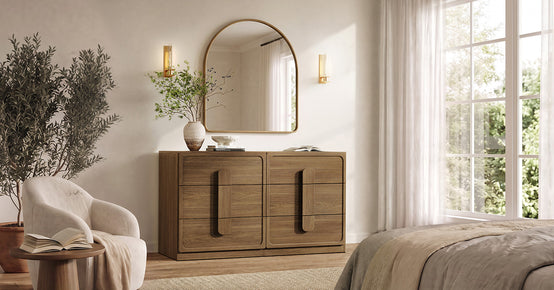
Ours is an old IKEA Hemnes from 2018. Bought it secondhand off Craigslist for $80, dragged it through three apartments since, and one cross-country move where it got bungee-corded into the back of a U-Haul next to a couch. It looks, honestly, a little rough by now — there's a chunk missing from one corner where I dropped a dumbbell on it once (don't ask) — but every time we've thought about replacing it, we open a drawer and just go: yeah, it works fine, leave it alone. Drawer layout actually matters way more than how the dresser looks. Big drawers for sweaters, jeans, and bulkier folded stuff. Smaller drawers up top for socks, underwear, and the random t-shirts that never seem to have a home. One deep drawer for backup bedding if you can swing it. TheSicotas's full dresser collection runs the gamut from compact 4-drawer units to larger 9-drawer modular setups.
Wardrobe or Clothing Rack

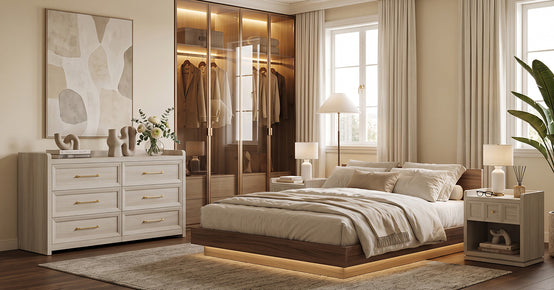
Pre-war Brooklyn buildings come with these comically tiny closets. Ours is something like 22 inches deep and fits maybe 12 hangers if you really jam them in, which means actual storage of clothes is basically impossible without external help. If that's your situation too, a freestanding wardrobe isn't really optional. The Savanna 71-Inch Wardrobe is the workhorse version of this kind of piece — hanging rod on one side, shelves on the other, tall enough to use the wall properly but not so tall that it dominates the room —a real decision to make: sliding doors versus hinged. Sliders are better in narrow bedrooms where a hinged door would smash into the bed every single time you opened it. Hinged lets you see your whole wardrobe at once, which honestly feels better when you have any aesthetic sense at all. Pick based on what your actual room can fit, not what looks better in showroom photos.
Mirror and Bedroom Seating
Honestly, I didn't realize how much I needed a full-length mirror until I lived without one for months. Outfit decisions got noticeably worse. Lean one against a wall, screw it into a closet door, mount it on the bedroom wall — any version works fine. Bedroom seating is optional. Small bench at the foot of the bed, an armchair tucked in a corner — useful for tying shoes or piling tomorrow's clothes on. Not strictly essential but genuinely helpful.
Soft Furnishings
All the soft stuff — curtains, throw pillows, blanket, area rug — comes last. After the actual furniture is in. I tried doing it the other way around once and ended up with mismatched chaos for about eight months. Lesson learned. Buy soft furnishings once you know your color palette, not before.
Living Room Furniture Checklist

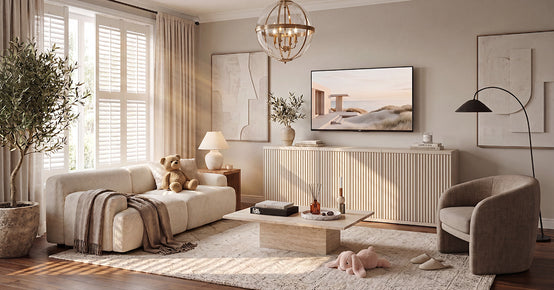
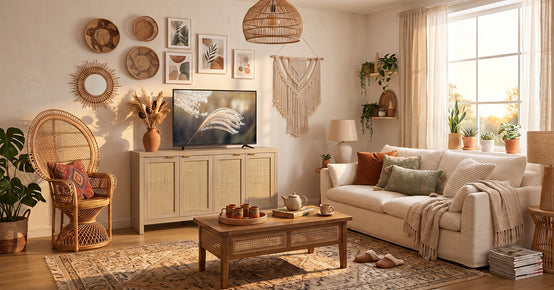
The living room is where you'll spend most of your awake time at home. Hosting people, decompressing after a long day, binge-watching whatever you're into this month. Comfort first, style second. Both matter.
Sofa or Sectional
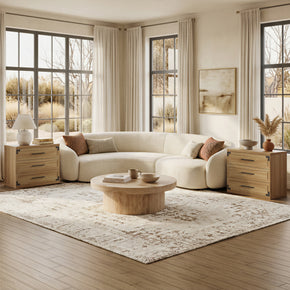
The biggest piece in the room. Most worth investing in. Also, the one most people get wrong. Three things to figure out: how many people are in your household, how much wall space you've got, and what you'll actually do on the sofa. Movie nights and Sunday afternoon naps? Sectional. Hosting friends and lots of conversation? Three-seater plus an accent chair. Performance fabric earns its upcharge every time if you've got pets, kids, or both. Mine has held up through three years of a Bernese and an actual toddler. Don't ask about the wine spill incident from last December.
Coffee Table
Rule of thumb: about two-thirds the length of your sofa. Sits directly in front of it. Tables with lower shelves or hidden drawers earn double their keep — extra storage hidden in plain sight. Lift-top designs are clever if you ever work from the sofa. Skip glass tops if you have toddlers. They will find a way. They always do.
TV Stand or Media Console
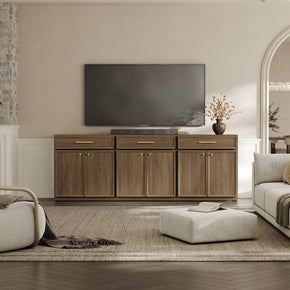
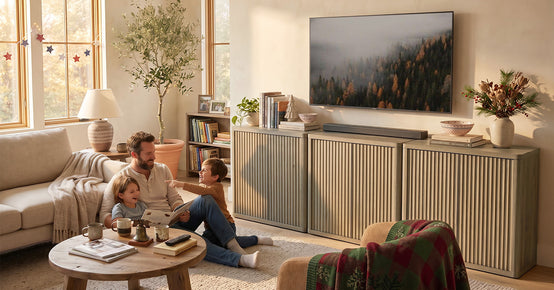
We mounted our TV, thinking we wouldn't need a console below it—bad call. The cable boxes, gaming consoles, sound bar, and approximately seventeen remotes ended up in a pile on the floor that looked like a yard sale. Bought a media console six months later, and the room immediately looked better. Choose one wider than the TV itself — looks more proportional. Sideboards work surprisingly well as TV consoles too, especially in homes without a separate dining room.
Bookcase or Shelving Unit

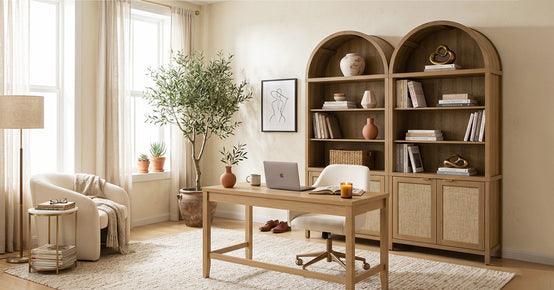
We had four moving boxes labeled 'BOOKS' sitting in our second bedroom for fourteen straight months before I finally caved and ordered a real bookshelf. Truly embarrassing. The novels just lived in boxes. So did the photos—the pottery from that class I took in 2021. The plants are in their little ceramic pots. The framed art I kept saying I was going to hang 'this weekend' for over a year. The Willow 75-Inch Tall Bookshelf is one of those tall pieces that genuinely does something special for a wall — one tall bookcase makes a room feel finished in a way two short ones never quite manage. The adjustable shelves matter more than you'd think, too. Half my books are normal-sized paperbacks. The other half are oversized art books and a couple of tax binders. Fixed shelves would have been a nightmare.
Rug, Lighting, and Decor
A rug under or in front of the sofa grounds the whole seating area. Front legs on the rug at minimum — back legs too if you've got the size for it. Layer your lighting — one overhead source plus floor and table lamps. Warm bulbs only, around 2700K. Cool white kills the mood instantly. The decor — art, plants, throw pillows — comes once you've actually lived in the space and figured out what's missing. There's no rush on this part.
Dining Room Furniture Checklist

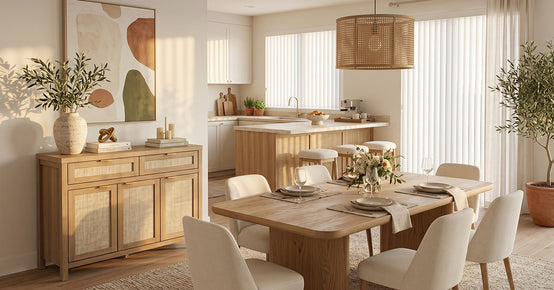
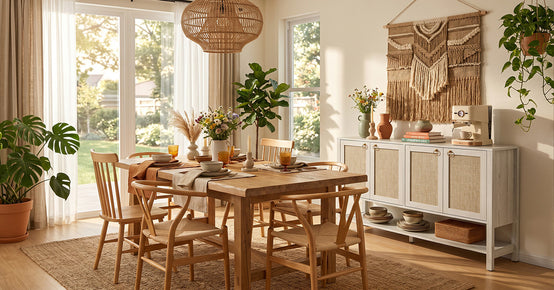
Formal dining room or small breakfast nook — either way, the dining space matters more than people give it credit for. Shared meals are what actually turn a house into a home over the years.
Dining Table
Size the table to the room and to how many people actually eat there regularly. Allow 24 inches of width per diner so chairs aren't bumping into each other. Round tables feel more conversational and slot into smaller rooms better. Rectangular tables host bigger crowds. Extendable tables give you both — useful for holidays without owning a giant half-empty table the other 50 weeks of the year. Materials matter a lot. Solid wood lasts decades. Particleboard tops dent within a year of normal use. Ask me how I know.
Dining Chairs
This is where most people cheap out and immediately regret it. Stiff wooden chairs ruin long dinners. Upholstered seats or even decent cushions make a huge difference once you're three hours into Christmas dinner and the conversation has finally gotten interesting. Easy-to-clean fabric helps a lot if you've got kids — specifically, performance fabrics. Mix-and-match looks intentional and a little personal. Matching sets feel more formal. Both work, just pick based on what vibe you're going for.
Sideboard or Buffet

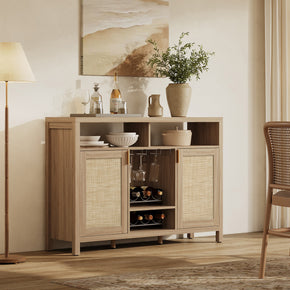
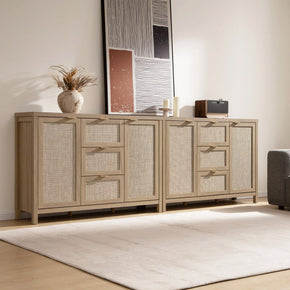
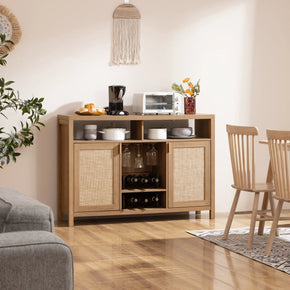
Holiday platters. Table linens. The good glassware that comes out twice a year. Candle stash. The fancy serving bowls. Where does any of it live without a sideboard? In our old apartment, we kept three different cabinets in three different rooms, which was an organizational nightmare every time we hosted. The Stria Buffet Cabinet with Large Drawers handles it all, with deep drawers and cabinet doors. Looks intentional, sitting next to a dining table, and holds genuinely usable amounts of stuff.
Dining Room Lighting
A pendant or small chandelier above the table defines the dining space, especially in open-plan layouts where one room blurs into the next visually. Hang it 30 to 36 inches above the table surface. A dimmer switch is genuinely worth the extra ten or fifteen dollars — bright while you're cooking and serving, dim for the actual meal. Trust me on this. The dim-lighting upgrade made our weeknight dinners feel infinitely better.
Hallway and Entryway Furniture Checklist

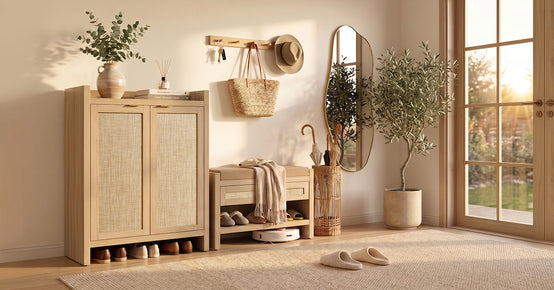
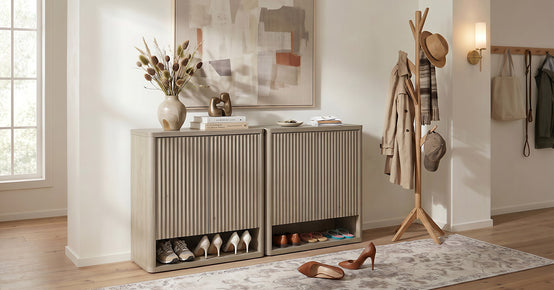
First impressions get formed in the first eight feet of your home. A messy entryway sets the tone for everything else. A tidy one makes the daily comings and goings so much less stressful. Mine is the area I've been most consistent about keeping organized — small wins matter here.
Shoe Rack or Shoe Cabinet

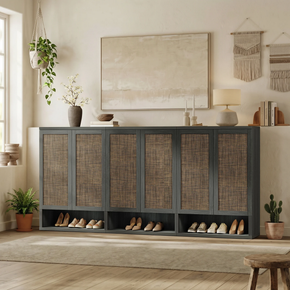
Without a dedicated spot, shoes migrate everywhere. Then your hallway looks like the inside of a high school locker room, and you can never find your other sneaker when you're already late. The Cas Shoe Storage Cabinet in black holds 24+ pairs without dominating the corridor. A closed cabinet beats an open rack — every single time. Keeps dust off the shoes. Keeps the entry tidy. Hides the chaos that lives inside.
Console Table

The slim console by the front door is where keys, mail, sunglasses, and wallets actually end up. Without one, those things scatter across the apartment within a week, and you spend ten minutes searching every morning. Sicotas's console table range covers depths from 10 to 14 inches — the sweet spot for most hallways—deeper than 14 starts crowding the walkway.
Entryway Bench and Coat Hooks
Even a tiny bench by the door earns its floor space. Somewhere to sit while pulling on boots in winter. Coat hooks above the bench at shoulder height handle jackets and bags. Skip the freestanding coat rack, though. They tip over with surprising frequency and look weirdly out of place in most modern apartments anyway.
Hallway Mirror
A mirror near the entry does two things: a last-minute look before walking out the door and bouncing light around what's typically the darkest part of the home. Mount one above the console table or beside the door. Bigger usually wins for the light-bouncing trick. Doesn't need to be fancy — a cheap one from Target works fine here.
Home Office Furniture Checklist

Working from home went from rare to standard in five years. If your job lets you work remotely even some of the time, a real workspace stops being optional and becomes a productivity tool. I worked from our coffee table for three months when we first moved in. My lower back is still mad about it.
Desk
Size it to your actual work. Laptop-only setup? 100 cm of width is plenty. Dual monitors and papers spread everywhere? 140 cm minimum. Push the desk close to a window if you can — natural light beats overhead bulbs by a wide margin. A console-style desk under a window doubles as a console table outside work hours, which is a smart move for studio apartments where everything has to multitask.
Ergonomic Chair
Don't cheap out here. Seriously, don't. A bad chair will wreck your lower back within six months of regular use, and the doctor visits will cost more than a decent chair would have. Look for adjustable seat height, lumbar support, armrests that actually move, and a tilt that locks at different angles. Test it in person if you can. A chair that feels fine for ten minutes in a showroom feels very different after eight hours.
Storage and Shelving
Files, books, supplies, the printer you swore you didn't need but somehow ended up owning anyway. A filing cabinet or bookshelf next to the desk helps contain work clutter. If the office shares a room with the bedroom or living room, closed storage is preferable to open storage. You want to be able to shut off work at the end of the day mentally, and visible work clutter prevents that.
Lighting and Cable Management
Adjustable desk lamp for those dark afternoon hours when the overhead bulb isn't cutting it. Run cables through a desk-mounted tray or hide them in one corner of the room. Visible cable spaghetti makes any workspace feel chaotic — a small detail with a surprisingly big effect on how the space reads.
Budget Tips for Furnishing a New Home

Furnishing an entire home in one go costs roughly 10 to 20 percent of the home's value. Big number, especially right after you've already drained your savings on the move itself. The trick is to spread it out and put the dollars in the right places.
Invest in High-Use Pieces
Mattress. Sofa. Dining table. Main storage pieces. These run every day for years. Spending more up front on quality saves you from having to replace them in three or four years. A solid wood dining table can last decades — it could end up being something your kids eventually inherit. Not a sales pitch, just genuinely true of well-built, solid wood furniture.
Save on Decor and Trendy Items
Cushions, throws, accent chairs, side tables, framed art. Easy to swap out as your taste changes — and it absolutely will change. Mine has shifted three times in five years. Budget brands work fine for accent decor. The whole point of those pieces is personality and seasonal swap-outs, not permanence.
Mix New and Secondhand Furniture
Facebook Marketplace, estate sales, vintage stores, and the local Goodwill — secondhand is where genuine character lives. A vintage dresser with real wood patina beats any flat-pack equivalent every single time, and usually costs half as much. ApartmentGuide's first-apartment checklist includes a solid section on secondhand sourcing, plus rough cost estimates by category. Worth reading before you start.
Use Flexible Financing Options Carefully
Most major furniture retailers offer flexible financing options spread over 12 to 60 months. Genuinely helpful if you need essentials immediately and don't have the cash upfront. Just read the fine print very carefully. A zero-interest promo only stays zero if you pay the balance in full before the promo window ends. Miss that deadline by a day? The deferred interest hits all at once, and it's brutal. Speaking from experience.
Buy Slowly and Intentionally
Biggest tip on this whole page. Live in the house for a few weeks before making any major furniture decisions. Notice where the morning sun hits. Which corners stay cold? Where the dog naturally lies down. These tiny observations ultimately make every subsequent furniture choice meaningfully better. Patience here pays out big time over the long run.
Furniture Placement Tips That Actually Work

Got everything? Now arrange it well. Most placement mistakes come from pushing everything flat against the walls or ignoring how people actually move through the room day to day.
Start with the Biggest Piece First
Place the bed, sofa, or dining table first. Arrange smaller furniture around it. The anchor piece dictates the whole room layout. Trying to position a coffee table before knowing where the sofa goes is backward thinking — which is, weirdly, what most people do. Start big. Work down. Simple but effective.
Follow Traffic Flow
Leave clear paths between rooms, around the bed, between the dining table and the kitchen entrance. Traffic paths need a minimum width of 30 inches, wider if it's a high-traffic route, such as the path from the front door to the living room. Furniture that forces awkward sidestepping makes the whole home feel cramped — and you don't even consciously notice why until someone visits and you watch them do the weird shuffle.
Use the 2/3 Rule for Furniture
Furniture and decor look balanced when they're roughly two-thirds the size of whatever they relate to. Art above a sofa? Aim for two-thirds of the sofa's width. Coffee table? Around two-thirds the length of the sofa.
Rugs under a dining table are the one place the 2/3 rule doesn't translate cleanly — they need their own measurement. The standard is 20 to 24 inches of rug extending past the table on all sides, so chairs stay fully on the rug even when pulled out for seating. That extra border is what keeps the dining area from looking cramped and prevents chair legs from catching on the edge of the rug every time someone sits down.
Otherwise, the 2/3 rule is a simple guideline — and surprisingly powerful once you start applying it across the rest of the room.
Don't Push Everything Against the Walls
Most common layout mistake in larger rooms. Pulling the sofa a couple of feet away from the wall and floating it creates a tighter conversation area and makes the room feel intentionally designed instead of accidentally arranged. Even six inches of breathing room behind the sofa changes how the whole space reads. Try it once — you'll see the difference immediately.
Check Door and Drawer Clearance
Wardrobes that can't fully open. Dressers blocking heater vents. Cabinet doors that smack the wall before fully opening. These mistakes happen when people focus on the floor footprint and forget that furniture occupies three-dimensional space. Always check what happens when a drawer or cabinet door opens fully. Always. The number of returned cabinets that hit walls is probably embarrassing.
Common Mistakes to Avoid When Furnishing a New Home

Same patterns show up over and over with first-time homeowners. Worth knowing about so you can sidestep them entirely.
- Buying everything before measuring — by far the number one cause of returned furniture and bad fits. Measure your rooms, doorways, hallways, and stairwells first. Click to buy the second.
- Trying to furnish every room in week one. This is matching-set syndrome, and the whole house ends up looking like a showroom rather than someone's actual home.
- Forgetting storage in the initial plan. New houses fill up fast. Without dedicated storage built in from day one, clutter shows up within two weeks.
- Picking pure style over comfort, especially on sofas and dining chairs. A gorgeous sofa you hate sitting on is unironically worse than an ugly one you love. Sit. Then buy.
- Skimping on lighting. Bad lighting makes great furniture look cheap. Good lighting makes mediocre furniture look intentional. Lighting is the single most underrated room element.
- Buying complete matching sets from one store. Looks like a furniture showroom. Feels like nobody actually lives there. Mix brands, mix eras, mix finishes — that's how genuine character builds over time.
FAQs
What furniture do you need in a new house?
Honestly, the basics first — bed and mattress, a comfortable sofa, a dining table with chairs, and some kind of clothes storage (dresser or wardrobe). Once those are sorted, add a TV stand, a couple of side tables, and lamps. Room-specific items come next: a desk and chair for the home office if you work remotely, a shoe cabinet plus a console for the entryway, and a sideboard for the dining room. Decor like rugs, art, and cushions save themselves for last — after you've lived in the space and figured out what's actually missing.
What are 10 common household items?
Ten pieces of furniture nearly every home benefits from: a sofa, a bed, a mattress, a dining table, dining chairs, a coffee table, a dresser, a wardrobe, a TV stand, and a few lamps. Outside furniture, every house also needs the basics — towels, cookware, plates and glasses, cleaning supplies, light bulbs, a small toolkit, and a smoke detector. Furniture comes first. The household basics are covered within the first month of moving.
What is the 2/3 rule for furniture?
Design guidelines are used to keep rooms feeling balanced. Roughly: any piece of furniture or decor looks proportional when it's about two-thirds the size of whatever it relates to. Artwork above a sofa should run two-thirds of the sofa's width. A coffee table should be two-thirds the length of the sofa in front of it. A rug under a dining table should extend two-thirds beyond the table edges so chairs stay on the rug when pulled out. Simple, but surprisingly powerful once you start applying it.
What do I need for a new house checklist?
Beyond just furniture: bedroom items (bedding, pillows, curtains), living room basics (rug, lamps, throws), dining (placemats, napkins, glassware), kitchen tools (cookware, knives, dish rack, kettle, toaster), bathroom essentials (towels, mats, storage bins), cleaning supplies (vacuum, mop, sponges), small toolkit, smoke and carbon monoxide detectors, first aid kit, extension cord or two. Furniture goes in first. The rest fills in over the next month.
What are 5 examples of furniture?
Five common pieces every home benefits from owning: a sofa for the living room, a bed for the bedroom, a dining table for shared meals, a dresser for clothing storage, and a coffee table for the seating area. Past those five, most homes also need accent chairs, wardrobes, bookshelves, TV stands, nightstands, and a desk, depending on whether you work from home.
What is the biggest mistake in the placement of furniture?
Ignoring scale and traffic flow. Putting an oversized sofa in a small room makes the space feel cramped and forces awkward walking paths around it. Tiny pieces in a large room look lost and underwhelming instead. The second-biggest mistake is pushing everything flat against the walls, which often makes rooms feel emptier rather than larger. Floating furniture away from walls and matching piece sizes to room dimensions fixes most placement problems.
What items should every house have?
Every home needs somewhere to sleep, somewhere to sit, somewhere to eat, somewhere to store clothes. Basic kitchen tools: towels and bedding. Cleaning supplies. Light bulbs and lamps. A toolkit. Smoke and CO detectors. First aid kit. Extension cord or two. Those are the absolute essentials. Once they're in, lifestyle-specific items like desks, gaming setups, and craft supplies come next.
How to furnish a home for the first time?
Slowly, and room by room. Start with the bedroom and the living room — your two daily-use spaces—dining furniture next, then hallway and home office pieces. Decor and accent items wait until last, after you've actually lived in the house for a few weeks and figured out what's really needed.—Measure before buying anything. Prioritize quality on high-use pieces. And don't be afraid to leave rooms half-finished while you decide what fits.
Sources
The furnishing guidance, room-by-room priorities, and budgeting advice throughout this article draw on the following published sources:
- Wayfair — First Apartment Checklist: The Essentials You Need. Room-by-room essentials for first-time renters and homeowners, including kitchen, bedroom, living, and dining furniture priorities.
- Apartment Guide — Your First Apartment Checklist: Essentials You Actually Need. Practical checklist with cost estimates, secondhand sourcing tips, and shopping strategies for new movers.
- Extra Space Storage — Apartment Essentials Checklist. Budget allocation guidance and category-by-category breakdowns for furnishing a first home.
- Moving Place — First Apartment Furniture Checklist: What You Actually Need. Phased furnishing approach focused on sleeping, sitting, and eating essentials before adding extras.
- Walker Edison — First Apartment Furniture Checklist: Start Smart, Not Stressed.: budgeting framework and room-by-room buying priorities with practical small-space considerations.
- Lenny Lane — First Apartment Essentials Checklist for New Renters. Detailed first-apartment essentials covering bedroom, bathroom, kitchen, and living spaces with practical sourcing tips.
- Cash and Kerry — Printable First Apartment Essentials Checklist. Downloadable room-by-room checklist with grouped categories for basic furniture, bedroom, bathroom, kitchen, and household essentials.


Looking for something else?

Furniture Materials Guide: Picking the Right Material Room by Room
LEARN MORE
How to Mix Wood Tones Without Making a Room Look Mismatched
LEARN MORE
18 College Apartment Furniture Ideas That Save Space and Money
LEARN MORE
Types of Entertainment Centers: 11 Designs and How to Pick One
LEARN MORELooking for something else?

Curio Cabinet Decor Ideas: How to Style a Display Cabinet Without the Clutter
LEARN MORE
Curved Furniture: How to Style, Measure, and Buy It in 2026
LEARN MORE
What Is Rattan Furniture? A Buyer Guide to Types and Care
LEARN MORE


Further reading

How to Choose a Nightstand for a CPAP Machine

How to Choose a Shoe Cabinet for Men's Sizes, High-Tops, and Bulky Shoes


