



10 Entryway Organization Ideas That Actually Work
You know that spot just inside your front door? Mine used to be a disaster. Three pairs of shoes kicked into a pile, my husband's jacket on the doorknob, and the keys, well, the keys were anybody's guess. I've sorted out a fair few of these over the years, friends' places, my own twice, and the thing I keep learning is that you don't need a proper foyer or some Pinterest mudroom to fix it. You just need a handful of systems that fit the way your house actually runs. So, ten entryway organization ideas below. They work in real homes. Even small ones. Promise.
1. Start by Decluttering, Not Buying

Nobody wants to hear this one first. I get it. But here's the trap: buy the bench before you declutter, and all you've done is give the mess a comfier seat. So do the boring part first. Pull everything out of that entry zone and actually look at it.
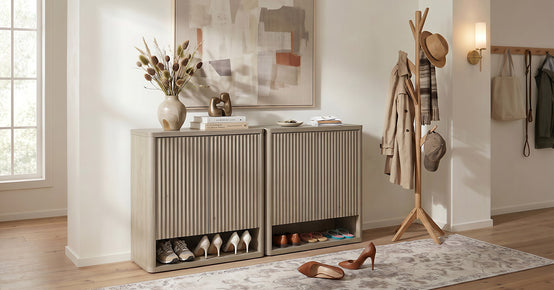
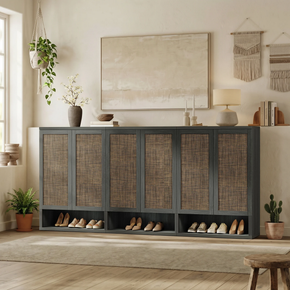
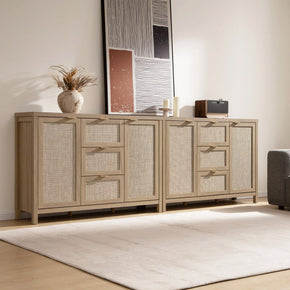
The stuff that earns a spot near the door is daily stuff: the coat you're wearing this week, the shoes you've got on rotation, your bag, keys, the leash, and an umbrella. The rest? The puffy winter coat in the middle of July, the heels you wore once to a wedding, send those off to a closet or a bin under the bed. There's really just one rule doing the heavy lifting here: every single thing needs a home. A hook. A basket. A tray. A shelf. Something. And if you need a sturdier piece nearby to catch the overflow, a Cas Horizontal Chest tucks a lot away without elbowing the doorway.
2. Put Your Walls to Work With Hooks and Peg Rails

In a small entryway, your floor fills up before you know it. So stop fighting over it. Go up the wall instead. The first thing I put in any entry is hooks, because nothing else gives you this much for so little. A pack of them is cheap. You need a drill and maybe ten minutes. And just like that, the coats and the bags and the scarves are off the ground.
A peg rail does roughly the same job, except it flexes. Today it's a tote bag. Tomorrow it might be a sun hat or the dog leash. Maybe those grocery bags you always mean to bring and never do. And if kids live here, put a second row of hooks low enough for them to reach. That sounds like a small thing, I know. It is not small. That low row is the whole reason a backpack ends up on a hook instead of being dumped on the floor by mid-afternoon.
3. Pick the Right Shoe Storage for Your Space

Most of the time, shoes are what's actually wrecking the entryway. Not the coats. The shoes. So take a beat on this one. What you want is storage that fits your space and the number of pairs that really end up by that door each day.
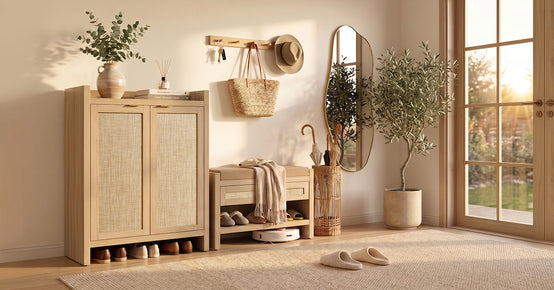
An open rack suits you if you're out the door fast in the mornings, and it lets a damp pair of shoes air out. A closed cabinet hides the lot behind a door labeled"cleaner" in a narrow hallway, or, honestly, anywhere a guest can see it. When you want the floor to look clear, a slim shoe cabinet is the pick. One rule, though, whatever you go with. Keep it to this season's shoes. The rest can wait in a closet till you need them.
4. Add a Bench or Stool You'll Actually Use

So many people just don't put a seat by the door. And then it's years of hopping on one foot, hand on the wall, fighting a boot on. You don't have to live like that.
A storage bench earns its keep twice over. You sit on it to deal with your shoes, and shoes or gloves go in the bit underneath. Tight hallway? A slim bench still gives you a perch without clogging the path. And in a really small apartment entry, a stool will do, and it can pull a second shift as a plant stand, or just somewhere to set your bag down while you hunt for your keys. One thing, though. Whatever you buy, make sure the door can still swing open past it. I found that out the annoying way.
5. Build a Grab-and-Go Drop Zone

Keys. Wallet. Sunglasses. The mail. Your charger. These are the things that vanish on you, always right when you're already running late. A drop zone fixes that. It's just one spot you've picked where all of it goes, so none of it wanders off again.
If there's a root, a console table with drawers near the door does the job well. You get a surface on top, and the drawers hide everything else. No space for a table? That's fine. A bowl or a small tray on a shelf will hold keys and loose change just as well. Put a mail sorter there, too; otherwise, the bills end up on the kitchen counter like they always do. And if the house is busy, hand everyone their own basket. Morning chaos drops by half.
6. Make a Small Entryway Feel Bigger

A small entryway shouldn't feel like a tight hallway you have to turn sideways for. And it doesn't have to. A few visual tricks change how the whole thing reads.
Start with a mirror. It throws light around the space, the room feels less boxed in, and you get a quick check before you walk out. After that, keep your furniture on the slim side. Narrow cabinets. Shallow benches. A wall shelf instead of something chunky on the floor. Build up the wall as well, with shelves and baskets stacked vertically, rather than letting everything sprawl across the ground. One more thing, and people underrate this. Leave as much bare floor showing as you can. The floor you can see feels open. The floor you can't see feels packed. It works that way every single time.
7. Squeeze More Out of an Entryway Closet

Got an entry closet? Lucky. Now make it work for a living. Most builder-grade ones are just a shelf, a rod, and a lot of dead air above. Tiered shoe racks on the floor sort out the pile-up. Up top, baskets take the gloves, the scarves, the hats, those grocery bags again. Matching hangers sound fussy, and yeah, they kind of are, but a crammed closet honestly looks twice as tidy with them. And use the door itself, over-door hooks are perfect for umbrellas and a spare bag. IKEA's easy hallway closet ideas take it further if you're keen.
8. Create Storage When There's No Closet

No entry closet at all? You're honestly fine, and if you're renting, there are plenty of no-drill ways through this.
A freestanding coat rack is a good option when wall-hanging isn't an option. Or build yourself a little mudroom along one wall, hooks up high, a narrow shelf, a few baskets, a shoe bench underneath. A rolling cart is weirdly useful in apartments, kids' stuff, seasonal odds and ends, whatever. And if you've got a nook, a curtain pulled across it gives you a soft, hidden closet for next to nothing. The DIY Playbook has good real-world examples of entryway storage without a closet if you want to see how people pull it off.
9. Make the Entryway Weather-Ready

Rain, snow, mud, your entryway catches all of it. So get ahead of the mess instead of mopping after it.
Use two doormats at every outside door. The one outside should be rough and bristly, the kind that scrapes off the worst of it. The one just inside can be softer, there to catch whatever still made it through. Get an umbrella stand too, so a wet umbrella doesn'tdrip onto your floor. And keep a small broom or a handheld vacuum within reach for quick cleanups. Then there's winter. You need a boot tray for that, full stop. It holds the melting slush and keeps it well off your floors and your rug.
10. Style It So It Feels Welcoming

Organization is the skeleton of it. But here's the thing: the entryway is what you see first walking in, and what a guest sees first, too. It can't feel like a utility closet.
Hang something on the wall, art or a mirror, whatever makes the corner look finished and not just useful. Put a rug or a runner down too. It warms the spot and quietly tells you where the entry starts and ends. Add a bit of green, maybe a few stems in a jar on the shelf, and suddenly the front entrance feels alive rather than purely practical. Lighting matters here as well. Even one small lamp, or a sconce, shifts the mood of the whole corner. And choose storage that's nice to look at while you're at it—woven baskets. Warm wood. A ceramic bowl you actually like. Browsing a dedicated entryway furniture collection makes it simpler to find pieces that match the rest of your place.
Quick Reference: Best Setup by Entryway Type

Every entryway is a bit different, so here's a quick cheat sheet. Find your layout, and match it to the ideas above.
|
Entryway Type |
What Works Best |
|
Small entryway |
Wall hooks, a slim shoe cabinet, a mirror, and one catch-all tray |
|
Narrow hallway |
Vertical storage, a runner rug, shallow furniture, and wall-mounted shelves |
|
No closet |
Coat rack, storage bench, baskets, a wall shelf with hooks |
|
Family entryway |
Labeled baskets, kid-height hooks, shoe cubbies, a sturdy bench |
|
Apartment entry |
No-drill hooks, a narrow rack, a small mirror, and multipurpose storage |
Common Entryway Organization Mistakes to Avoid

|
Keeping far too many shoes by the door, when really only the current-season pairs need to be there. Ignoring vertical space, a small entryway lives or dies on its walls, hooks, and tall storage. Buying storage before you declutter, so you end up hiding the clutter instead of clearing it. Blocking the door swing with a bench or cabinet that's just a bit too deep for the spot. Going all open storage, which can still look messy. Mix in some closed pieces. |
FAQs
How do I organize an entryway?
Declutter before you do anything else. Once that's done, set up zones for the things you grab on your way out: your shoes, coats, bags, keys, mail, and umbrellas. Then give each one a landing spot. Hooks on the wall. Shoe storage that suits your space. A bench. A few baskets. A tray for the small bits. Nothing should be homeless. And keep the whole thing simple, because a setup you'll actually stick with beats a perfect one you give up on by week two.
How do I make my entryway unique?
Let a bit of yourself into the space. Some wall art. A mirror with a bit of character. A rug with real color, warm lighting, a plant, and a bowl you genuinely like. The trick is pulling colors and materials from the rest of your home, so the entry feels like part of the house rather than something tacked on by the front door as an afterthought.
What should be in an entryway?
Most working entryways have a few common features. Hooks or a coat rack. Shoe storage of some kind. A mirror, a rug, a small bench or stool. A key tray, a mail organizer, a couple of baskets, and an umbrella stand. You won't need every single one of those, though. Just pick the pieces that fit how your household actually comes and goes.
What are the three basic types of entryways?
Usually it's the formal foyer, the hallway-style entryway, and the mudroom or utility entry. Although plenty of apartments have a fourth kind, really, the direct-to-living-room entry, where the front door opens straight into the main room, and there's no proper foyer at all.
How do I organize a small entrance?
Lean hard on your walls. Hooks, a slim shoe rack or cabinet, a small mirror, a narrow shelf, and steer clear of anything bulky. Keep only the daily stuff by the door. And leave as much floor visible as you can; that's what keeps a small entrance from feeling stuffed.
How do I beautify my front entrance?
Begin with a clean doormat and decent lighting. Then layer in plants, a mirror or some wall art, coordinating storage, and a tidy shoe spot. The main thing, though, is keeping the entrance uncluttered, because decor only looks good when it isn't competing with a heap of shoes and bags.
What do you put in an entryway for good luck?
In several traditions, the usual good-luck touches are healthy plants, a clean mirror placed with some thought, warm lighting, a welcoming mat, and fresh flowers. What ties it all together is the same idea, really: a clean, open, clutter-free entrance is said to let good energy in.
Build an Entryway That Works Every Day
The entryway organization ideas that stick aren't the pricey ones; they're the ones built around your actual routine. Clear out what doesn't belong. Get your walls working. Sort the shoes. Set up a drop zone. Add a couple of touches that make the space feel good to come home to. A great entryway was never about square footage. It's just a few smart systems quietly holding the line, day after day, so the rest of the house has a fighting chance.
Sources
- Apartment Therapy – I Sent a Pro Organizer a Photo of My Small Entryway, and Now It’s More Functional than Ever
- IKEA – Easy Entryway Makeover and Hallway Closet Ideas
- The DIY Playbook – Entryway Storage Without a Closet: 3 Smart Ideas
- NYT Wirecutter – The Slimmest, Hardest-Working Gear for Your Small Entryway
- HuffPost – 7 Entryway Ideas For A Stress-Free And Organized Home
- KonMari – How to Organize an Entryway
- EYA – Entryway Essentials: How to Style and Organize Your Home Like a Pro


Looking for something else?

Furniture Materials Guide: Picking the Right Material Room by Room
LEARN MORE
How to Mix Wood Tones Without Making a Room Look Mismatched
LEARN MORE
18 College Apartment Furniture Ideas That Save Space and Money
LEARN MORE
Types of Entertainment Centers: 11 Designs and How to Pick One
LEARN MORELooking for something else?

Curio Cabinet Decor Ideas: How to Style a Display Cabinet Without the Clutter
LEARN MORE
Curved Furniture: How to Style, Measure, and Buy It in 2026
LEARN MORE
What Is Rattan Furniture? A Buyer Guide to Types and Care
LEARN MORE


Further reading

How to Choose a Nightstand for a CPAP Machine

How to Choose a Shoe Cabinet for Men's Sizes, High-Tops, and Bulky Shoes


