




Living Room Rug Placement: How to Choose the Right Size and Rug Placement Layout
A living room rug does way more than cover the floor. It anchors the sofa, frames the coffee table, soaks up echoes, takes the chill off cold tile or wood, and quietly makes the whole room feel finished. Get it right, and everything clicks into place. Get it wrong, almost always by buying too small, and even pricey furniture ends up looking like it's drifting around the room with nothing tying it down.
That "too small" trap is the number one rug mistake in real homes, and designers say it's themost common decorating slip-up they see. It really is the biggest mistake people make when choosing a living room rug size. Get the size right, and most of the other rules fall into place.
Good news. It's easy to dodge once you know the rules. This guide covers rug sizes, where to place the rug under your sofa and coffee table, what to do about the TV stand, and the color and texture choices that pull the room together.
Start With the Right Living Room Rug Size
Treat this as your living room rug size guide — getting the size right is the foundation of good area rug placement. Size is the first call, and it beats color or pattern for importance. A good rug pulls your seating area together instead of marooning the coffee table on a little island in the middle of the floor. The quick rundown is below.
Small rugs (3x5, 4x6)
Think accent zones — a reading nook, a spot under a small coffee table. Put one in the main seating area, and it just looks lost, so I keep the small ones for layering or filling an odd corner.
Medium rugs (5x8, 6x9)
These pull the weight in apartments and smaller living rooms. A medium rug grounds a sofa and coffee table without trouble, and it loves the front-legs-on layout coming up next.
Large rugs (8x10, 9x12)
Right size for most full living rooms. Big enough that the sofa, the armchairs, and the coffee table all share one surface, so the group reads as a single zone instead of scattered pieces.
Extra-large rugs (10x14 and up)
Built for open-plan spaces and big sectionals — rooms where the living area needs a clear edge marking it off from everything else nearby.
The Main Rule for Living Room Rug Placement

The main rule on rugs in a living room is that the rug has to be big enough to connect your furniture. Designers reach for the two-thirds rule here — your sofa runs about two-thirds the length of the rug, and the rug catches at least the front legs of every seating piece in the group. A rug touching nothing but the coffee table just reads as an afterthought. Leave 12 to 18 inches of bare floor around the edges, too, so it looks like a chosen area rug and not wall-to-wall carpet. Match the shape to the room while you’re at it: rectangular for most living rooms, round to soften a square space, and organic shapes for movement. Got the rug sorted? Now browse modern Sicotas living room pieces and size the furniture against it.
Three Best Ways to Place a Living Room Rug
All furniture legs are on the rug.
This is the grounded, high-end look. Sofa, chairs, and coffee table all sit fully on the rug, and it shines in large rooms and open-plan spaces. You’ll need an extra-large rug, plus that 12- to 18-inch strip of floor showing around the edge.
Front legs on the rug

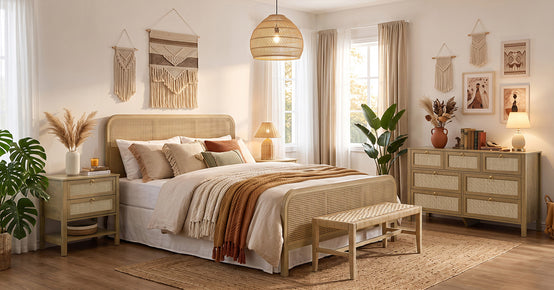
The practical favorite, and the one most living rooms end up using. Front legs of the sofa and chairs on the rug, back legs on the bare floor. It ties the group together without a giant rug — set a three-seater cushioned sofa with its front legs on the rug, and the whole thing snaps into place. One tip: leave a few inches of rug behind those front legs so it doesn’t look like the rug quit early.
Coffee table only on the rug
The small-space move. Rug under the coffee table, close to the sofa — but keep it near the seating, or the arrangement starts to float. This is the easiest layout to botch, so when in doubt, size up.
Layered rugs
Stack a smaller patterned or shag rug over a bigger flatweave base for texture and warmth. Works a treat in open-plan rooms, and it’s a sneaky way to get a shag rug’s softness without carpeting the entire floor in it.
How to Position a Rug in a Living Room With a TV
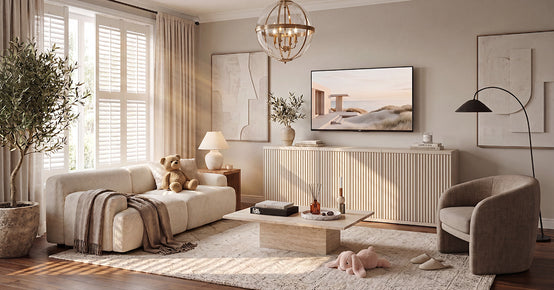
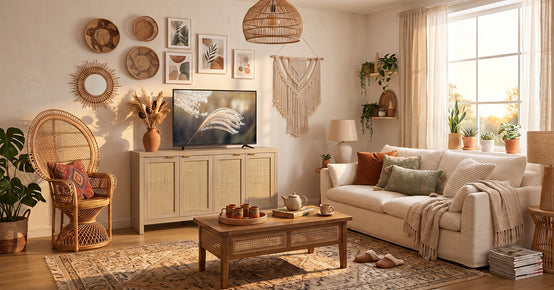
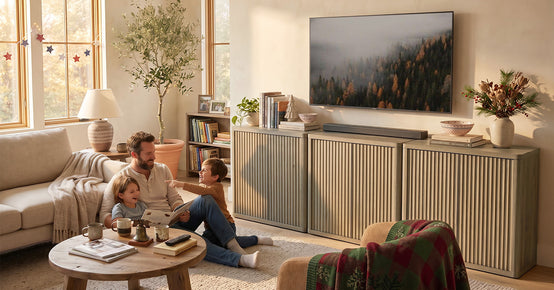
When you're positioning a rug in a living room with a TV, work from the seating, not the screen. The sofa and coffee table decide where the rug goes — the TV just sits at the end of the room. If the sofa faces the TV, center the rug on the sofa-and-coffee-table grouping so a clean path opens toward the TV wall. The media unit doesn’t need to touch the rug at all. What counts is that the rug, sofa, and TV wall feel connected by scale and spacing. And in an open-plan room, the rug alone can carve out the TV-watching zone — no wall, no divider needed.
Should a Living Room Rug Go Under a TV Stand?

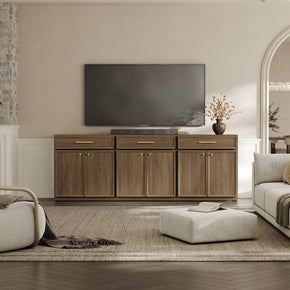
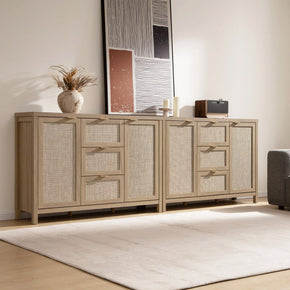
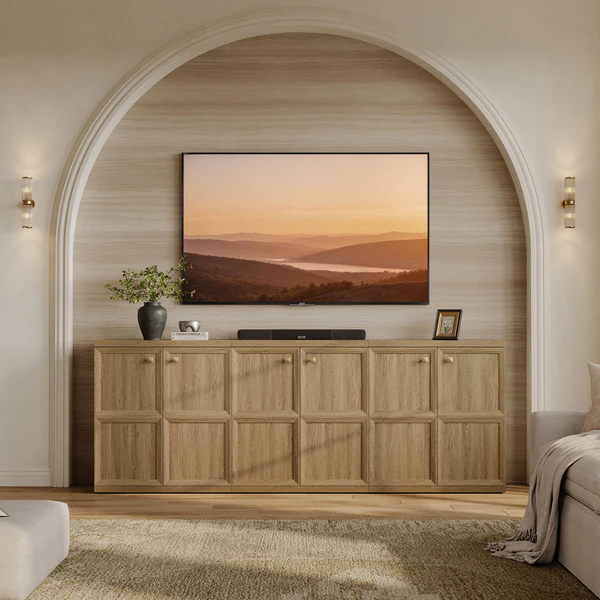
Whether a living room rug should go under a TV stand depends on the rug's size. With a large rug, slide the front edge or front legs of the stand onto it to link the media wall with the seating; with a smaller one, keep it in the sofa zone and let it stop before the stand, since stretching it awkwardly toward the wall always looks forced. A modular media console for the TV wall can sit just off the rug and still look completely intentional. Two warnings worth heeding: floating, wall-mounted stands look cleaner with the rug kept on the seating, and a heavy media unit parked on a thick shag rug will leave dents that don’t spring back. Low-pile rugs handle furniture like that far better.
How to Arrange Living Room Furniture With a TV and Rug

Sofa goes down first — it’s the anchor, facing the TV at a comfortable distance and connected to the rug. Center the coffee table on the rug with room to walk around it; a space-saving rectangular coffee table keeps a tight room from feeling jammed. Angle the armchairs toward both the sofa and the screen, front legs on the rug at a minimum. Keep the main walkway clear, because nobody enjoys squeezing between the sofa and table or catching a toe on a rug edge. Then check the visual weight — if the sofa wall feels heavy against a skinny TV stand, even it out with the rug’s width, a floor lamp, side tables, or some art.
Living Room Rug Placement by Room Shape
Small living room
Going tiny is the temptation, and it backfires. A medium rug pulls a small room together, whereas a postage-stamp one, stranded mid-floor, just makes it feel choppy.
Long and narrow living room
Lay a rectangular rug the long way. It walks the eye down the room and takes the edge off that hallway, tunnel-ish feeling these spaces get stuck with.
Square living room
Square rug to keep the symmetry, or a round one to crack the boxiness open and slip some softness into all those right angles.
Open-plan living room
One big rug for the living area, a second for the dining or reading zone. The catch: give them a shared color or texture, or the two end up reading like rooms that aren’t on speaking terms.
Living room with a sectional sofa

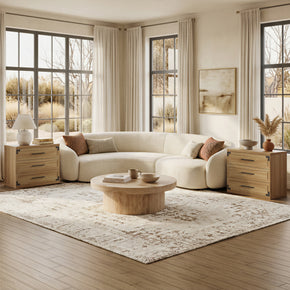
Size up so the rug tucks under the main section and the chaise together. An L-shaped sectional with an ottoman wants a rug that reaches both arms of the L — miss one, and the layout leans lopsided.
Choosing Rug Color, Pattern, and Texture
Color sets the mood, so don’t pick it on autopilot. A neutral rug calms a room already crowded with bold furniture or a loud TV wall. Flip side: a brightly colored rug wakes up a palette that’s been playing it safe. Patterned rugs do double duty — character on top, and they quietly swallow crumbs and daily wear, which earns its keep in a high-traffic living room.
Light rugs open up a small space, but they require more cleaning. Dark rugs ground a light sofa and forgive the spills. Texture’s the last call: a plush shag rug feels incredible underfoot but wrestles with heavy furniture and rolling chairs, so go low-pile or flatweave under coffee tables and media units.
A jute or wool rug pulls the opposite trick — that earthy roughness against smooth upholstery is what makes a room feel layered instead of flat.
Best Living Room Rug Materials

Wool rugs feel soft, run warm, and outlast almost everything — the refined, comfortable pick if you can swing it. Jute and sisal give you a natural texture and an easy, coastal feel that suits a casual room. Washable rugs are the honest choice when there are kids, pets, and spilled juice in the picture, because the whole thing goes through the wash. Synthetic rugs made of polyester or polypropylene are budget-friendly and easy to clean. And vintage or distressed rugs? They hide wear in a way a solid light rug never could, and they drop instant character into a room. Tuck a couple of spares into a horizontal chest with open drawers, and swapping throws or seasonal rugs turns into a two-minute job.
Common Living Room Rug Mistakes to Avoid
The biggest mistake in living room rug placement is choosing a rug that's too small — it cuts the furniture loose and shrinks the room at the same time. After that, watch for these:
-
Ignoring the sofa size. The rug should reach past the sofa width and never look skinnier than it is.
-
Floating the rug so it touches nothing. It instantly reads as an afterthought.
-
Parking a heavy media console or a narrow furniture leg on a thick rug. You'll get dents that never bounce back.
-
Skipping the rug pad. That's signing up for slipping, bunching, and a rug that wears out early, especially on hard floors.
-
Running the rug edge straight across a walkway. Somebody's catching a toe on it by Tuesday.
What to Put on the Floor Next to the TV Stand
Keep it simple so the media wall doesn’t look cluttered. The edge of a low-pile rug works if it extends that far. A woven floor basket swallows blankets, remotes, or the kids’ toys. A floor lamp adds height and softens the screen wall. A tall plant balances the TV and breathes some life into the corner. A pouf or small ottoman can earn a spot, too — just not where it blocks a walkway or crowds the stand.
Quick Living Room Rug Checklist
Run through this before you spend a dollar. Measure the room, then the sofa and the coffee table. Settle whether the sofa legs sit fully or partly on the rug. Pick one that's wider than the sofa if the budget allows. Leave a strip of bare floor around the edge. Rug pad on hard floors, always. Low-pile in the busy spots. Size up in small rooms, never down. Decide if the rug should touch the TV stand. And choose the color and texture based on how your house actually runs — not on how it looks in the catalog.
FAQs
How to position a rug in a living room with a TV?
Build it around the seating, not the screen. Center the rug on the sofa and coffee table so all the chairs connect to it. The TV stand can sit on the rug or just past it — size makes that call — as long as the rug, sofa, and media wall feel tied together.
Should a living room rug go under a TV stand?
It can, but it doesn’t have to. With a large rug, rest the stand's front edge or front legs on it. With a smaller one, keep it in the sofa zone and let it stop short. Floating, wall-mounted stands look best with the rug focused on the seating instead.
How to arrange living room furniture with a TV?
Sofa first, facing the TV at a comfortable distance. Coffee table centered on the rug. Chairs angled toward both the sofa and the screen. Keep the walkways open, and don’t let anything sit between you and the TV.
What is the rule on rugs in a living room?
Scale is the big one: the rug has to be large enough to anchor the seating area. In most layouts, that means at least the front legs of the sofa and chairs land on the rug, with the rug running about two-thirds the length of the sofa or wider.
What is the biggest mistake in the placement of furniture?
Ignoring scale and traffic flow. People grab a rug that’s too small or shove everything against the walls, and the room winds up feeling empty in the middle and cramped at the edges all at once. Measure first, then place.
Where should furniture be placed in a living room rug?
Three setups work: all furniture fully on the rug, front legs only, or the seating gathered around a rug that anchors the coffee table. For most living rooms, front legs are the ones to reach for.
What to put on the floor next to the TV stand?
A woven floor basket, a tall plant, a floor lamp, a pouf, or the edge of a low-pile rug — any of those work. Keep the corner uncluttered so the TV wall stays calm. Browse a living room furniture lineup if you want pieces that match the media unit.
Sources
-
Apartment Therapy – My Designer Friends Swear By the Two-Thirds Rule
-
King Living – Rug Placement: A Designer’s Guide to Layout and Size
-
Atlanta Designer Rugs – Rug Placement Guide: How to Place the Right Rug in Every Room
-
Homes & Gardens – 6 Area Rug Mistakes to Avoid, According to Experts
-
The Spruce – The Perfect Rules to Place Your Rug and Furniture


Looking for something else?

Burl Wood Furniture: The Complete Buying Guide
LEARN MORE
What Is a Hope Chest? Meaning, History, and Modern Uses
LEARN MORE
What Is a Foyer? Meaning, Purpose and Design Guide
LEARN MORE
GREENGUARD Gold Certified Furniture: What It Really Means for Your Home
LEARN MORELooking for something else?

How to Clean a Mirror Without Streaks: Simple Step-by-Step Guide
LEARN MORE
21 Above-Bed Decor Ideas for a Stylish Bedroom Wall
LEARN MORE
Furniture Materials Guide: Picking the Right Material Room by Room
LEARN MORE


Further reading

18 Decorative Storage Box Ideas That Hide Clutter Well
18 Decorative Storage Box Ideas That Hide Clutter Well
Decorative storage boxes do two jobs. They swallow the small clutter that piles up on every surface. They also add material and shape to a roo...

How to Store Comforters Without Losing Space or Loft
Storing comforters comes down to four things. Clean and bone dry. Loosely folded, and sitting in something that breathes. Miss any one, and next season you pull out something that smells like a dam...

Furniture Distance From a Fireplace: How Far Is Safe?
Furniture distance from a fireplace answers two questions with one number. Keep anything that can burn at least 3 feet from heat sources.The U.S. Fire Administration gives that message for fireplac...


