




Dining Room Rugs: How to Choose the Right Size, Shape, and Material
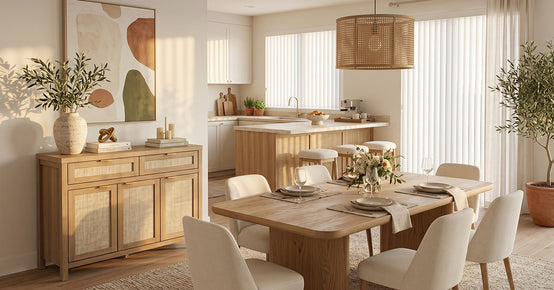
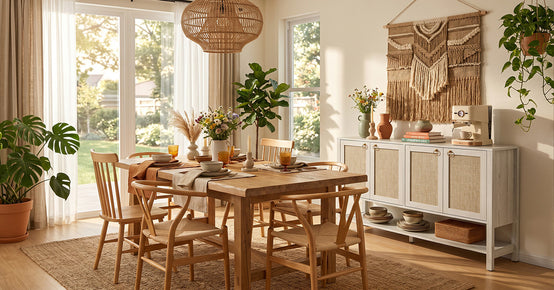
A dining room with nothing on the floor always looks like it’s waiting for something. That something is usually a rug. Dining room rugs warm the floor under your feet, they take the screech out of chairs at dinner, and in an open-plan place, they quietly fence off the dining area so it stops blending into the living room. The wrinkle is obvious once you think about it. You eat here. Crumbs scatter, somebody knocks a glass, and the chairs get shoved around all day. A rug that can’t handle that is a rug you’ll regret. The Spruce will tell you size is the thing people botch most often, and I’ve seen it enough times to nod along. Five things to get right: size, shape, material, color, and where you put it. Let’s take them one at a time.
Are Dining Room Rugs a Good Idea?

Honestly, yes, and I’d barely call it a debate. Push a rug under the dining table, and it starts pulling its weight immediately. The dining area suddenly has edges. The floor stops collecting chair scratches. A room that felt a bit cold and blank picks up some warmth and color. And then there’s the noise nobody talks about until it’s gone, that horrible squeal of chair legs on bare wood every time someone stands up. Keeping the rug clean is the one thing working against you, and even that mostly comes down to picking the right material, which is coming up.
What Size Rug for a Dining Room?

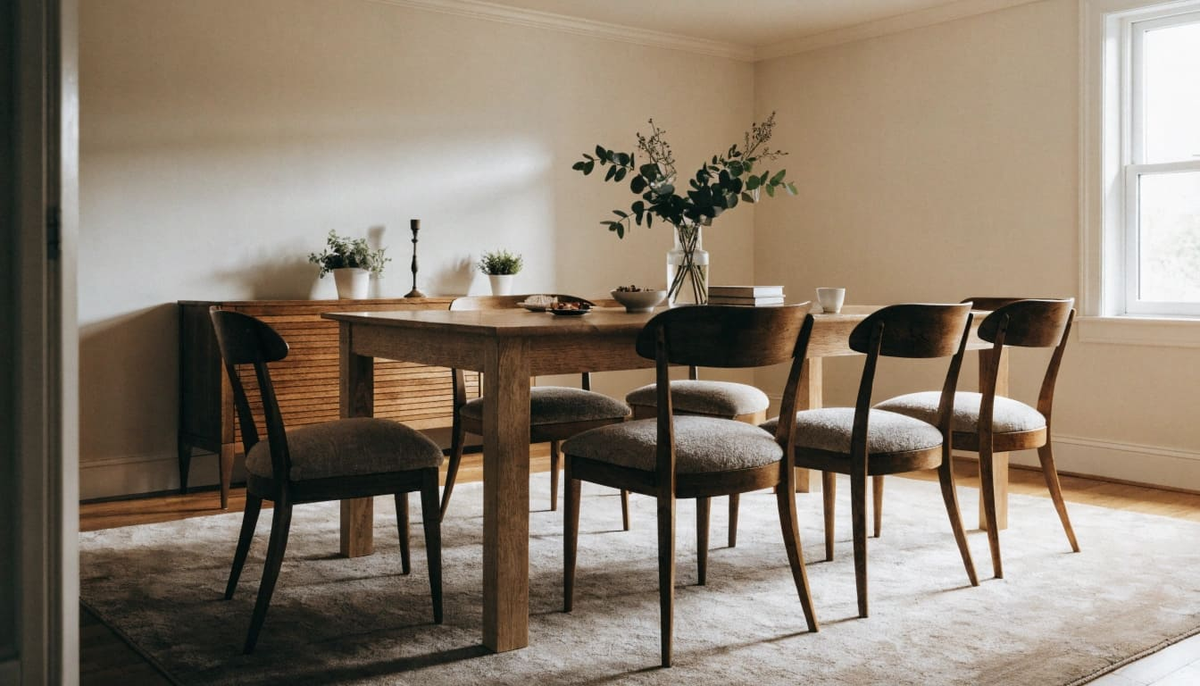
Size is the whole ballgame. Nail it, and the rest is downhill. Miss it, and you’ll feel it at every meal, because the chairs will keep catching on the edge as people sit. Give that a week, and you’ll be ready to bin the thing. There’s a fix everyone in the business swears by, the 24-inch rule, and Rugs Direct treats it as gospel. The idea is that the rug reaches a good two feet past the table on every side, so a chair stays planted on it even after someone slides it all the way back to sit down.
The Easy Math

Here’s the trick I use. Measure the table, then add two feet to each side in your head. That’s the rug you want, give or take. So a table that’s three feet by six puts you somewhere around seven by ten, and in practice, most people just grab the next size up and run with an eight by ten. No tape measure is required in the store.
Common Sizes That Work

We seat six most nights, and an eight-by-ten has been plenty under our table. Pack in more people on the regular, and you’ll feel the pinch, so I’d size up to a nine-by-twelve. Hosting eight or ten? That’s a whole other beast. You’re looking at something like ten-by-fourteen before it stops looking skimpy. And here’s the bit folks forget. Don’t run the rug right up to the walls. Leave maybe a foot of bare floor showing all the way around, or the room feels stuffed, and the rug looks like wall-to-wall carpet you forgot to glue down.
What Shape Rug Is Best for a Dining Table?
The rule here is almost too easy. Whatever shape your table is, get a rug that matches it. Something in your eye just settles when the two agree.
Rectangular Rugs

This is the one you reach for when in doubt. A rectangular rug sits beautifully under a rectangular or oval table and stretches out down a long room without looking awkward. It really does go with almost anything, which is why it pairs so easily with a modern dining room furniture setup built around a long table.
Round and Oval Rugs

Put a round rug under a round table, and honestly, it just works, the curve hugging the table and pulling your eye to the middle of it all. Oval rugs pull the same trick for oval and rounded tables, softening the hard edges and keeping things calm. Curve under curve. People walk in, sense the room looks pulled together, and couldn’t tell you the reason if you asked.
What Is the Best Material for a Dining Room Rug?

Here’s where the dining room gets demanding. The rug has to lie flat, take a beating, and wipe up fast. Because the spills aren’t a maybe. Someone will knock over a drink, a kid will fling spaghetti, and you want a rug that shrugs it off instead of soaking it in. So plan for the mess now, not after.
Go Low-Pile or Flatweave

Skip the deep, fluffy shag, tempting as it is. It looks amazing in the store, but it becomes a headache the second it lands under a table. Chairs catch on to it. Dropped food disappears into the pile and never comes back. Go with a low-pile or flatweave rug instead. Chairs glide right over it, and a quick wipe handles most messes. If you take nothing else from this section, take that.
Best Fibers for Daily Use

Nine times out of ten, I just tell people to get polypropylene and stop overthinking it. It’s cheap, it shrugs off red wine, and it takes a beating for years. Wool is the splurge if you want it, softer and prettier, but a fair bit fussier when you clean it. Nylon’s perfectly fine, too. Honestly, though, if there are kids in the house, buy a washable rug and save yourself the grief, because you just peel it up, run it through the machine, and carry on as if nothing happened.
Always Use a Rug Pad

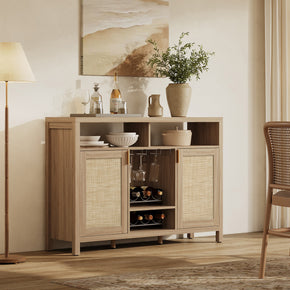
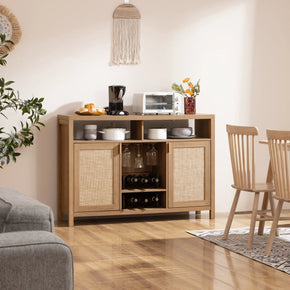
Get the pad. I skipped it once to save fifteen bucks, and the rug had crept halfway across the room by Christmas. It stops that wandering, gives you a little softness underfoot, and saves the floor from whatever the rug would rub against. While you’re thinking about the room as a whole, a buffet sideboard cabinet tucks away your linens and spare placemats, so the table stays clear, and the rug gets to be the thing people notice.
What Color Should a Dining Room Rug Be?

Lead with the practical, and let the pretty tag along behind. I’ll keep saying it, people eat in this room.
Should a Rug Be Lighter or Darker Than the Furniture?
Go darker than the table. Trust me on this one, I learned it the hard way with a pale rug that showed every single coffee ring. A darker rug grounds the space and hides the little crumbs and splashes, a light one would put on full display. Even better is a pattern, since the print does the camouflage work for you between cleanings. Those creamy ivory rugs everyone pins online? Gorgeous, sure, but save them for a room where no one’s ever reaching for the gravy.
Tie It to the Room

Borrow a color from something the room already owns. The wood of the table, the paint on the wall, the fabric on your chairs, any of them. Echo that one shade in the rug, and the space suddenly looks planned instead of pieced together by accident. Pull it through one more time onto a display cabinet or a nearby sideboard, and the whole dining area finally looks like one room someone designed on purpose, not a stack of things bought on different weekends.
How to Place a Rug Under a Dining Table

Center It on the Table, Not the Room
Line the rug up with the table itself, not with the surrounding walls. The table is the center of everything, so the rug wants to sit evenly around it. And if you’re in an open-plan setup, the rug earns extra credit by drawing the invisible line where the dining area ends, and the rest of the room begins.
Check Chair Clearance

Always run the test before money changes hands. Pull every chair out of the way so someone can sit down, and check that all four legs land on the rug instead of teetering half on and half off. A chair that tips at the edge is telling you the rug’s too small, and there’s no arguing with it. It’s the same kind of clearance you’d plan for with a console table along the wall, where people still have to move past without snagging on anything.
Common Dining Room Rug Mistakes to Avoid

The big one is buying too small, hands down the most common slip. The chairs catch, the rug looks stranded out there on its own, and the room just feels faintly wrong. Lean on the 24-inch rule, and you sidestep all of it.
Then there’s reaching for a high pile. Shag and a dining table really don’t get along, what with the snagging and the food vanishing into the fibers and the cleaning that swallows an afternoon. Keep it low-pile and your life stays simple.
Going too pale is another trap, because a white rug where people eat is basically asking for trouble. Darker or patterned, every single time.
And skipping the rug pad will cost you, since without one the rug slides, rumples up, and wears thin years before it should. A few dollars' worth of padding protects the whole thing.
Final Takeaway
Strip it all back, and a good dining room rug is just the basics handled with a bit of care. Size it by the 24-inch rule so the chairs glide. Match its shape to the table. Pick something low-pile and easy to clean in a color forgiving enough to hide the crumbs. Get a pad under it and center it on the table, not the walls. Do that much, and the rug looks great, takes years of abuse, and quietly ties the whole dining area together. Keep it simple and let the room handle the rest.
FAQs
Are dining room rugs a good idea?
They are. Beyond just framing the dining area and protecting the floor, a rug quiets the sound of scraping chairs and warms the whole room. The only thing to watch is the material, so go low-pile and easy-to-clean, and the spills and crumbs stop being a worry.
What size rug for a dining room?
Measure the table, add a couple of feet on each side, and it's done. The whole point is that a chair doesn’t slide off the rug when you pull it out to sit. For a typical table that seats four to six, an eight-by-ten fits right.
What kind of rug is best for a dining table?
Low-pile or flatweave, in a fiber that can take a beating, polypropylene, wool, and nylon all qualify. If the house is busy, a washable one is worth every penny. The thing to avoid is shag, which snags the chairs and hides food down in the pile.
Should a dining room rug be lighter or darker than the furniture?
Darker is the safer bet. Set against a paler rug, every crumb and splash shows up, whereas a darker or patterned one tucks them away, and that’s no small thing in a room built around eating.
What shape rug is best for a dining table?
Let the table call it. A rectangular table or an oval one wants a rectangular rug, a round table looks best on a round rug, and an oval or rounded table sits nicely on an oval rug.
Do I need a rug pad under a dining room rug?
Get the pad. It stops the rug from wandering when chairs are pushed back, softens it underfoot a little, and protects the floor below; on top of all that, it makes the rug last longer. I skipped it once and regretted it.
Can you put a rug under a dining table on carpet?
You can, no problem. A flat, low-pile rug laid over carpet still carves out the dining area and keeps spills off the carpet underneath. Just use a gripper pad meant for carpet, so the rug doesn’t drift around on you.
How much floor should show around a dining room rug?
Roughly a foot of bare floor between the rug and the walls is the sweet spot. That little margin keeps the room from feeling crammed and makes the rug look like a choice rather than an accident.
Sources
- Rugs Direct – What Size Rug for Dining Room: The 24-Inch Rule
- Ruggable – Dining Table Rug Size Guide: What Size Rug Do You Need?
- Driven by Decor – Dining Room Rug Size Guide
- Living Spaces – How to Choose a Rug Size: Tips for Styling with Rugs
- The Spruce – What Size Rug for a Dining Room
- FABLEROOM – How to Choose the Right Rug Size for Every Room


Looking for something else?

Burl Wood Furniture: The Complete Buying Guide
LEARN MORE
What Is a Hope Chest? Meaning, History, and Modern Uses
LEARN MORE
What Is a Foyer? Meaning, Purpose and Design Guide
LEARN MORE
GREENGUARD Gold Certified Furniture: What It Really Means for Your Home
LEARN MORELooking for something else?

How to Clean a Mirror Without Streaks: Simple Step-by-Step Guide
LEARN MORE
21 Above-Bed Decor Ideas for a Stylish Bedroom Wall
LEARN MORE
Furniture Materials Guide: Picking the Right Material Room by Room
LEARN MORE


Further reading

18 Decorative Storage Box Ideas That Hide Clutter Well
18 Decorative Storage Box Ideas That Hide Clutter Well
Decorative storage boxes do two jobs. They swallow the small clutter that piles up on every surface. They also add material and shape to a roo...

How to Store Comforters Without Losing Space or Loft
Storing comforters comes down to four things. Clean and bone dry. Loosely folded, and sitting in something that breathes. Miss any one, and next season you pull out something that smells like a dam...

Furniture Distance From a Fireplace: How Far Is Safe?
Furniture distance from a fireplace answers two questions with one number. Keep anything that can burn at least 3 feet from heat sources.The U.S. Fire Administration gives that message for fireplac...


