




Buffet vs Sideboard: What Is a Buffet Cabinet and Which One Do You Need?
Walk into any furniture store, and you’ll see four pieces lined up against the same wall. One is labeled “sideboard.” One is labeled “buffet.” Another’s a “credenza.” The fourth says “server.” They all look practically identical. The buffet vs sideboard confusion has been brewing for about two centuries, since these terms drifted across England, France, and Italy without ever agreeing on definitions.This guide from The Spruce walks through some of that historical overlap, though even today the two pieces are often used interchangeably in showrooms and online catalogs.
Here’s the real answer. A buffet is built for dining and serving. A sideboard does the same job but stretches across more of the house. The differences are real but smaller than the names make them sound.
Below: what each one actually is, what a buffet cabinet really means, and how to choose between them in about five minutes.
Buffet vs Sideboard: The Quick Answer

If you only read one section, a buffet is taller, dining-focused, and built around serving meals. A sideboard sits lower, works in more rooms, and adapts to whatever you need it for. Same family of furniture. Different jobs.
The Real Difference
Buffets sit higher — usually 34 to 38 inches off the floor — because that’s the comfortable height for setting out food while you’re standing. Sideboards run shorter, sometimes flush to the floor on stubby legs or no legs at all. Buffets provide deeper storage because dinner plates and serving platters need the extra space. Sideboards tend to be slimmer because they live in tighter spaces and often double as media stands, entryway pieces, or display surfaces.
Why the Terms Get Used Interchangeably
Most modern furniture brands use “buffet” and “sideboard” as near-synonyms — the same piece, two product titles. This isn’t sloppy retail. Furniture vocabulary evolved across multiple countries over 200 years and has never fully standardized. So when you’re shopping, ignore the label. Look at height, leg style, storage layout, and where you actually plan to put the thing.
What Is a Buffet Cabinet?

A buffet cabinet is a long, standing-height storage piece built for the dining room. The flat top sits at counter height, perfect for serving food during meals. The cabinets and drawers below hold plates, silverware, table linens, and serving pieces. That's the entire definition. Everything else is style and finish.
What a Buffet Cabinet Is Used For
Buffets have one main job — supporting how you eat and entertain. Set out a roasted turkey at Thanksgiving. Stack glasses for a dinner party. Hide the extra dinnerware that won’t fit in your kitchen cabinets. Some buffets pull double duty as bar carts — bottles up top, glassware tucked behind the doors. Versatile within the dining context, but always anchored to it.
Common Features of a Buffet Cabinet

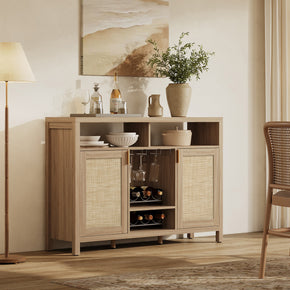
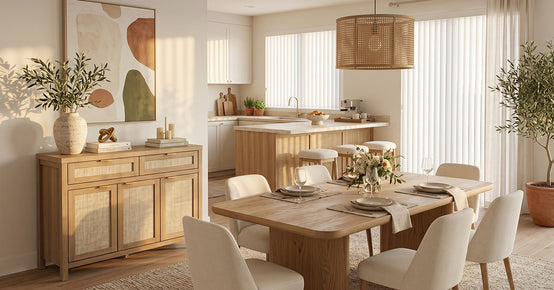
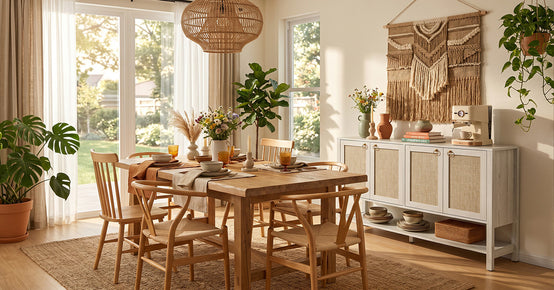
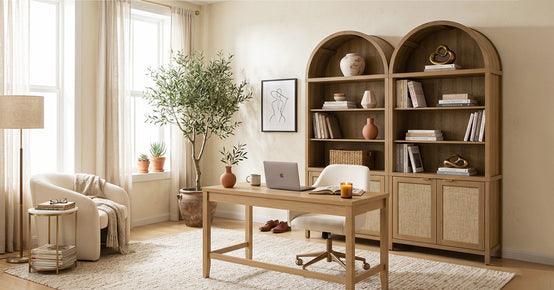
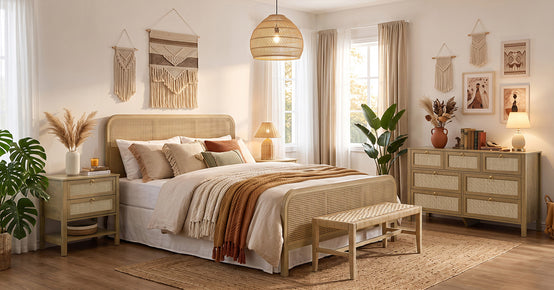
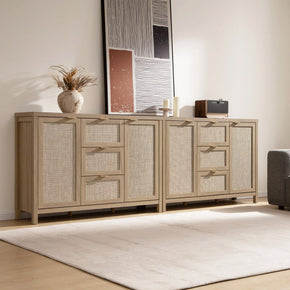
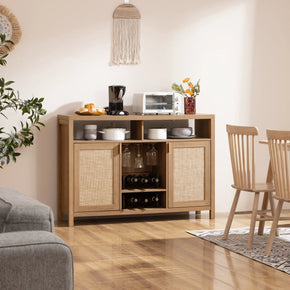
Most buffet cabinets share the same DNA. A wide flat top (at least 50 inches across). Cabinet doors at the bottom. Drawers in the middle. Short to medium-height legs. The better ones include adjustable interior shelves so you can fit anything from charger plates to tall serving pitchers. Glass-paneled doors appear when the piece is also intended to display china or fine glassware. A rattan-front Terra buffet cabinet leans into the texture-forward look that’s been having a moment in dining rooms — same proportions, but with hand-woven panels softening the cabinet fronts.
What Does Sideboard Cabinet Mean?
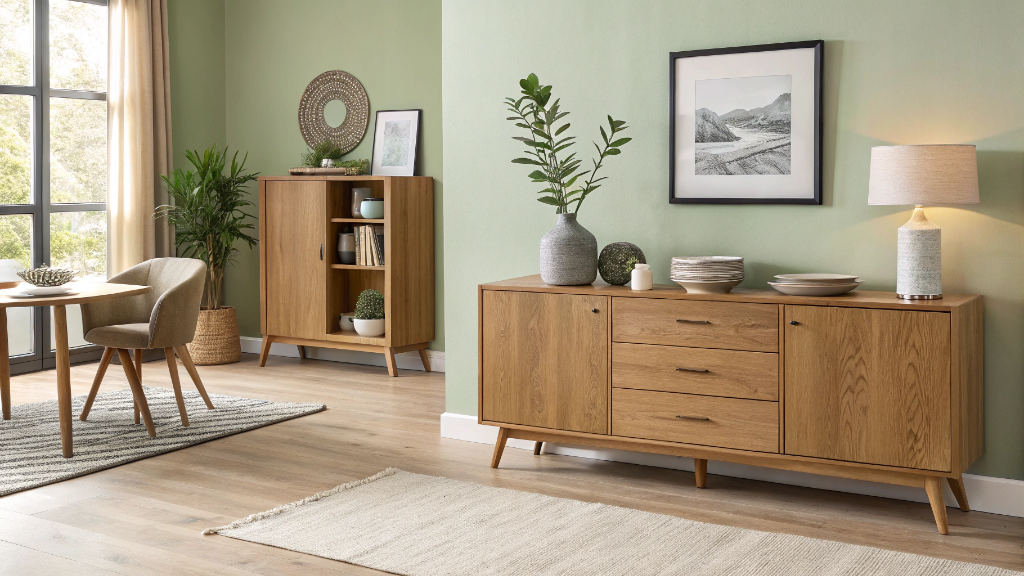
A sideboard cabinet is essentially a longer, lower version of a buffet — without the dining-only loyalty. The name comes from where it traditionally lived: at the side of the dining room. Today it lives anywhere. Living room. Entryway. Hallway. Bedroom. Anywhere a long, low, sturdy storage piece makes sense.
What a Sideboard Is Used For

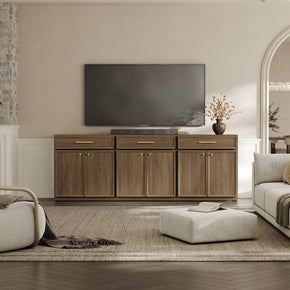
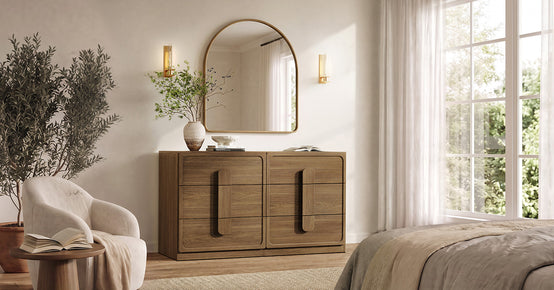
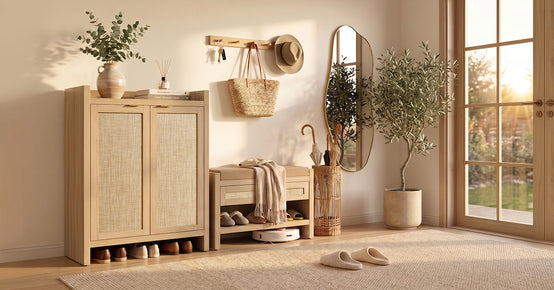
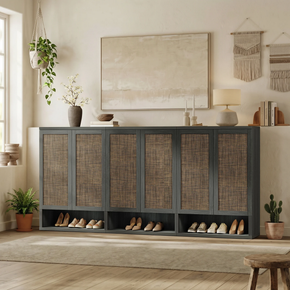
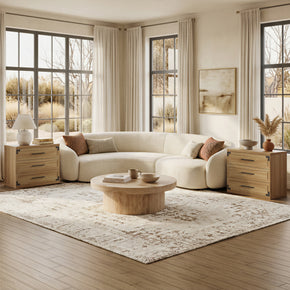
A sideboard’s job depends on the room. In the dining room, it is used to store tableware. In the living room, a sideboard holds books and games, with a TV on top. In the entryway, it’s a drop zone for keys, mail, and a small lamp. In the bedroom, it serves as an alternative to a long dresser. One piece. Five possible rooms. A slim Willow entryway sideboard is the kind of piece that excels at versatility — narrow enough for a hallway, with one drawer and two cabinet doors that can hold anything from shoes to seasonal decor.
Why It’s Called a Sideboard
The name is literal — it boarded the side of the dining room. In 18th-century English homes, the “sideboard” was a long table pushed against the dining wall where servants set down dishes between courses. Over time, drawers and doors got added, the legs got fancier, and the name stuck. Even after the piece migrated to living rooms and entryways, the label never updated.
Buffet vs Sideboard: 6 Key Differences

Once you cut through the marketing, the differences come down to six measurable things. Most retailers — including the Savanna dining storage collection — mix both types in the same category, which is part of why shoppers can’t tell them apart in the first place. Here’s how to actually spot the difference.
1. Height
Buffets sit higher — typically 34 to 38 inches. Sideboards are shorter, ranging from 28 to 34 inches. The four to ten inches matter more than you’d think. Standing-service height versus living-room height. That single measurement changes how the piece feels against the wall.
2. Legs and Base
Buffets stand on visible legs or a substantial base, raising the surface to a comfortable serving height. Sideboards often sit flush to the floor, on short stubby legs, or on a closed plinth. Lower bases read more modern. Taller legs read more traditional. Mid-century credenzas split the difference.
3. Storage Depth

Buffets go deeper — sometimes 18 to 22 inches front-to-back — because they need to swallow large platters and stacks of dinnerware. Sideboards stay slimmer at 14 to 18 inches, which is partly why they fit narrower walls and hallways without crowding the walkway.
4. Storage Style
Buffets lean heavily on closed cabinets — protected storage for the breakable stuff. Sideboards mix open shelves with closed compartments because the things they hold (books, decor, baskets, framed photos) often look better partly on display.
5. Room Placement

A buffet belongs in the dining room. Period. A sideboard goes anywhere — and “anywhere” is the entire reason people end up choosing one over the other. If you’re still deciding which room the piece lives in, you probably want a sideboard.
6. Top Surface Use
Buffet tops are working surfaces. Trays, platters, drink stations, and candles on holidays. Sideboard tops are showcase surfaces: lamps, framed photos, plants, books stacked in pairs. Different purposes shape different shopping choices.
Buffet vs Sideboard: Quick Comparison Chart

|
Feature |
Buffet |
Sideboard |
|
Main purpose |
Dining and serving |
Storage and display |
|
Best room |
Dining room — works well as a buffet cabinet for the dining room |
Anywhere — often used as a sideboard for the living room, entryway, or hallway |
|
Height |
34–38 inches |
28–34 inches |
|
Storage depth |
18–22 inches |
14–18 inches |
|
Storage style |
Mostly closed cabinets |
Mixed open and closed storage |
|
Top surface use |
Food and drinks during meals |
Decor, lamps, and everyday styling |
|
Best buyer |
Frequent host with formal dining needs |
Flexible everyday user across rooms |
Where to Use a Buffet
Three rooms make sense. Maybe four, if you stretch.
The Dining Room

This is what it was built for. Plates and bowls in the lower cabinets. Linens are stacked in the drawers. The top stays open for whatever the meal needs — a turkey on Thanksgiving, a salad bar for Easter, a row of side dishes on any random Sunday.
The Kitchen or Breakfast Nook

Buffets work surprisingly well in a kitchen, especially the smaller ones. Use them as a coffee station, an overflow pantry, or extra storage for drinkware. The closed cabinets keep things hidden, and the flat top doubles as a workspace for chopping or pouring.
An Open-Concept Entertaining Zone

In a true open-plan layout, a buffet visually anchors the dining area. It tells the eye where the eating happens, even when no walls divide the space. An arched-door buffet cabinet from Savanna earns the slot here because the silhouette draws attention without overpowering the room. Plus, you don’t have to walk back to the kitchen to refill drinks during a dinner party.
Where to Use a Sideboard
Four rooms, and possibly more. The flexibility is why Sicotas’s modern dining storage range includes so many sideboard options at different heights and widths — different rooms need different proportions.
The Living Room

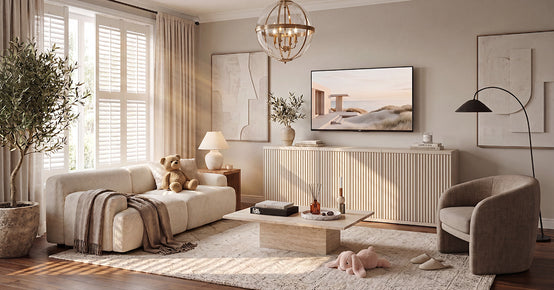
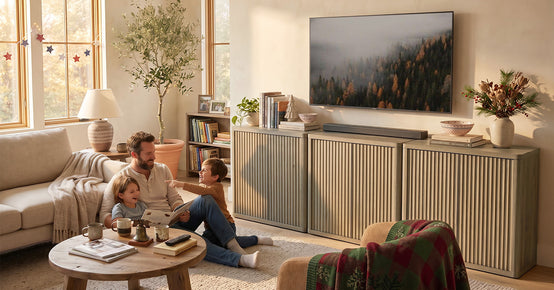
A long sideboard against a wall handles three jobs at once—TV stand. Storage for media gear, board games, throws. Display surface for lamps, art, and plants. The mixed open and closed storage makes it more flexible than a traditional media console.
The Entryway

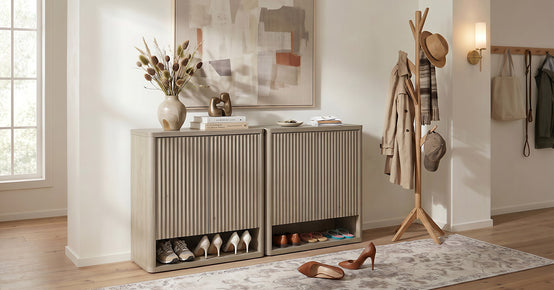
The most underrated sideboard use. Drop zone for keys, sunglasses, and mail. Hidden storage for shoes, dog leashes, and umbrellas. A flat top for a small lamp and a ceramic dish. Maybe a mirror above it. Functional, but reads as designed rather than purely practical.
The Dining Room

Sideboards still work in dining rooms — they just take up less space than buffets. Good for smaller dining nooks, breakfast rooms, or apartments where the dining area shares space with the living room.
The Bedroom or Home Office

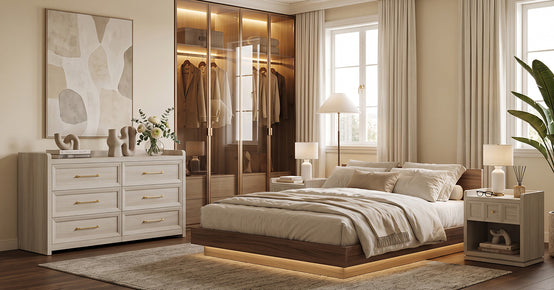
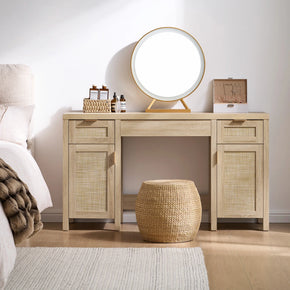
Less common but smart. A long sideboard in the bedroom holds folded sweaters, scarves, and accessories without the bulk of a traditional dresser. In a home office, it stores files, supplies, and even a printer behind closed doors — with a clean top surface for plants or a desk lamp.
Which Is Taller — Sideboard or Buffet?

A buffet, almost always. Buffets are designed for comfortable standing service, which puts them in the 34 to 38-inch range — about the height of a kitchen counter. Sideboards run shorter, typically 28 to 34 inches. The difference looks tiny on paper. In an actual room, it changes the entire feel of the wall.
Here’s the practical test. Stand next to the piece. If your wrist falls naturally on the top surface, it’s a buffet. If your hand hangs at your hip, it’s a sideboard.
The Three Types of Buffets You’ll See

Three main variations exist, and yes, all of them get called “buffets.”
1. The Standard Buffet Cabinet
Long, low, with cabinet doors and drawers below a flat top. The classic. About 60 inches wide, 36 inches tall, 20 inches deep. Holds tableware below, serves food on top. The Zura buffet cabinet with two doors and large interior storage is a textbook example — the proportions, the closed cabinetry, and the standing-height top all check the standard buffet boxes.
2. The Buffet With Hutch
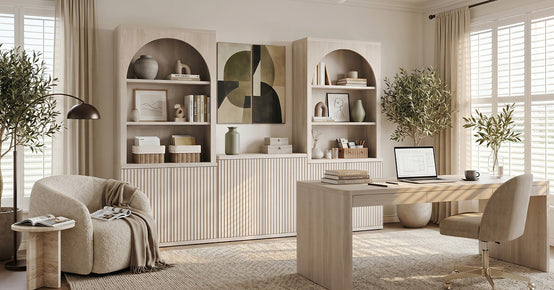
Add a tall display cabinet on top — open shelves, glass doors, or both. Now you have something that displays china and stores tableware in one footprint. Common in larger formal dining rooms. Tends to run six to seven feet tall total, which is why ceiling height matters here.
3. The Buffet Server
Smaller. Sometimes taller. Almost always narrower than a full buffet. Occasionally called a “server” outright. Built for tight dining nooks or as a dedicated drink station. Drawers, cabinets, and sometimes a wine rack. Best for apartments and breakfast rooms where a full-size buffet would overpower the space.
The Three Main Cabinet Types (Quick Glossary)

Cabinet terminology gets thrown around loosely. Here’s the simple version.
Base Cabinets
Sit on the floor. Provide lower-level storage. Most buffets and sideboards technically fall in this category.
Wall Cabinets
Mounted to the wall. Common in kitchens and built-in dining setups. Not relevant to most freestanding buffet vs sideboard decisions.
Tall Cabinets
Floor-to-ceiling pieces — hutches, china cabinets, armoires. When a buffet has a hutch attached on top, the whole combination becomes a tall cabinet.
How to Choose Between a Buffet and a Sideboard

Five questions answer it. Honestly.
1. Do you entertain often? — Buffet.
2. Do you need flexible storage that might work in multiple rooms? — Sideboard.
3. Is your space small or narrow? — Sideboard.
4. Do you need deep storage for large platters and tablecloths? — Buffet.
5. Are you choosing on style, not function? — Either. Pick the silhouette you’d rather live with.
Materials That Last

Buffet or sideboard, the material matters more than the label.
Solid Wood
The benchmark. Heavy, durable, ages beautifully. Costs more upfront. Worth it if you’re planning to keep the piece for fifteen-plus years — or pass it down.
Engineered Wood
The budget-friendly cousin. Looks fine for the first few years. Watch the edges. That’s where wear shows up first.
Rattan or Cane Panels
Adds texture and a soft, organic look. Best for coastal, boho, or warm-modern interiors. Slightly harder to clean inside the weave — use a soft brush, not a wet cloth.
Glass Doors
For display. Works best on hutches or upper sections. Costs more and requires more cleaning, but earns its place if you have china or glassware worth showing.
Metal Hardware or Frame
Adds visual contrast. Common on modern and industrial pieces. Brass reads warmer and more traditional. Black reads more contemporary. Match the hardware to the rest of the room’s fixtures.
Common Mistakes to Avoid

Five mistakes show up over and over.
Buying Based on the Name Alone
Two pieces labeled “buffet” can be wildly different sizes. Check height, depth, and width before committing. The product title is the least reliable piece of information.
Choosing a Buffet Too Deep for the Room
In a tight dining room, a 22-inch-deep buffet eats into walkway space fast. Allow at least 36 inches between the buffet and the dining table for chairs to pull out comfortably.
Ignoring Storage Capacity
Pretty doesn’t mean functional. Make sure the piece actually holds what you need to store, not what the catalog photo styled it with.
Skipping the Wall Anchor
Tall pieces — especially buffets with hutches — can tip. Anchor them. AnchorIt.gov, the CPSC’s tip-over safety campaign, walks through the installation in about five minutes. The bracket costs less than a takeout dinner. Worth it.
Overdecorating the Top Surface
A buffet top loaded with permanent decor stops working as a serving surface. Keep the top half-empty if you actually want to use it during meals. Otherwise, it’s just a fancy bookshelf with closed doors.
The Bottom Line

The buffet vs sideboard debate is mostly a vocabulary problem. Both are long, low storage pieces from the same furniture family. Both store and serve. What separates them comes down to purpose and height. A buffet stands taller and lives in the dining room, built around hosting. A sideboard sits lower and goes wherever you need it.
If you entertain often, pick a buffet. If you want one piece that handles dining storage today and turns into a TV stand next year, pick a sideboard. And if the perfect piece happens to carry the “wrong” label — buy it anyway. Function beats vocabulary every time.
FAQs
What is the difference between a sideboard and a buffet cabinet?
A buffet cabinet is taller (34 to 38 inches), deeper, dining-focused, and built around serving food and storing dinnerware. A sideboard cabinet is shorter (28 to 34 inches), slimmer, and versatile — it works in dining rooms, living rooms, hallways, and entryways — same family of furniture, different jobs and proportions.
What are the three types of buffets?
The standard buffet cabinet (long, low, with cabinets and drawers), the buffet with hutch (adds a tall display cabinet on top for china and glassware), and the buffet server (smaller and taller, ideal for compact dining areas or drink stations). All three serve food and store tableware — just at different scales.
What is a buffet cabinet?
A buffet cabinet is a long, low storage piece designed for the dining room. The flat top serves food during meals. The cabinets and drawers below hold plates, silverware, table linens, and serving pieces. Most are 34 to 38 inches tall and around 60 inches wide.
What does sideboard cabinet mean?
A sideboard cabinet is a long, low storage unit traditionally placed at the side of a dining room. Today it works in any room — living rooms, entryways, hallways, bedrooms — for storing tableware, displaying decor, or holding everyday essentials. It’s the more flexible cousin of the buffet.
Why is it called a sideboard cabinet?
Because it was originally a long board (table) placed at the side of the dining room, in 18th-century English homes, servants set dishes on it between courses. Over time, drawers and doors got added, and the name stuck — even after the piece moved into living rooms and entryways.
What are the three types of cabinets?
Base cabinets (sit on the floor, including most buffets and sideboards), wall cabinets (mounted to walls, common in kitchens), and tall cabinets (floor-to-ceiling pieces like hutches and armoires). A buffet with a hutch on top technically becomes a tall cabinet.
Which is taller — sideboard or buffet?
A buffet, almost always. Buffets sit 34 to 38 inches tall to support comfortable standing service—sideboards are shorter,r ranging from 28 to 34 inches. The difference looks small on paper. In a room, it noticeably changes how the piece feels against the wall.
Sources
- The Spruce — What Is a Dining Room Sideboard and Buffet?
- AnchorIt.gov (U.S. Consumer Product Safety Commission) — Furniture and TV Tip-Over Prevention
- HGTV — Tips for Styling Built-In Bookshelves
- CPSC News — Anchor It! Campaign Marks 10 Years
- Consumer Reports — Best Furniture Anchor Kits to Prevent Tip-Overs
- DutchCrafters — Buffet vs Sideboard vs Hutch
- La Maison — Difference Between Sideboard and Buffet


Looking for something else?

Furniture Materials Guide: Picking the Right Material Room by Room
LEARN MORE
How to Mix Wood Tones Without Making a Room Look Mismatched
LEARN MORE
18 College Apartment Furniture Ideas That Save Space and Money
LEARN MORE
Types of Entertainment Centers: 11 Designs and How to Pick One
LEARN MORELooking for something else?

Curio Cabinet Decor Ideas: How to Style a Display Cabinet Without the Clutter
LEARN MORE
Curved Furniture: How to Style, Measure, and Buy It in 2026
LEARN MORE
What Is Rattan Furniture? A Buyer Guide to Types and Care
LEARN MORE


Further reading

How to Choose a Nightstand for a CPAP Machine

How to Choose a Shoe Cabinet for Men's Sizes, High-Tops, and Bulky Shoes


