




Multifunctional Furniture: Smart Storage Ideas for Every Room

You know that stage of a move — not moving day itself, but two or three weeks after, when the boxes are finally gone, and the room still doesn't quite work? Everything's out. Nothing has a real home. The nightstand is covered in cables because there's nowhere else to put them. The dresser is technically holding clothes, but only if 'clothes' means t-shirts folded to a very specific width, because anything thicker just doesn't fit. The shoes are by the front door. You move them. They come back. They always come back.
Here's the actual problem: most furniture is built to do one thing. Most rooms need furniture to do three things. So the furniture loses—every time.
That's the gap that multifunctional furniture fills — and not the Instagram version where you unfold something from a wall for twenty minutes. The practical kind. A nightstand that charges your phone while handling bedside storage, so the cable loop on the floor stops being your problem. A shoe cabinet that closes completely and looks, from across the room, like a piece you chose for the design — not because you needed somewhere to hide seventeen pairs of shoes. A dresser deep enough that the seasonal switchover stops happening, because everything actually fits the first time.
And the impact isn't subtle, honestly. It's the kind of thing where you walk through the front door after a long day, and the entry just looks clean — shoes behind the cabinet doors, surfaces clear — and something in you settles a bit. Small effect. Happens every single day. That's what good storage furniture actually delivers. Not dramatic. Just consistently better than before.
What's in this guide: a room-by-room breakdown of which furniture types solve which problems — bedroom, entryway, living room, the 'home office' that's really just a corner. A buying checklist. A comparison table. Eight product recommendations with real links. And the FAQ answers that buyers search for but rarely find stated plainly. There's something specific here for each of those situations.
What Is Multifunctional Furniture, Actually?

Ask ten people, and you'll get ten different answers, ranging from 'a sofa bed' to 'that folding wall desk.' Both qualify. But the category is a lot broader — and significantly less dramatic — than most people expect.
Strip it down: multifunctional furniture is any piece that handles two or more distinct tasks without requiring separate items for each. A dresser that replaces a wardrobe. A nightstand that charges your devices. A shoe cabinet that functions as an entryway console at the same time. No mechanisms required. No three-hour assembly process. Just furniture designed around what a room actually needs to do — rather than a single product category label.
The Examples Worth Knowing
- Nightstand with a charging station — bedside organization plus USB power, the cable pile-up on the floor just stops.
- Shoe cabinet with fully closed doors — stores 20 to 30 pairs, serves as an entryway console surface on top, reads as a design choice from across the room.
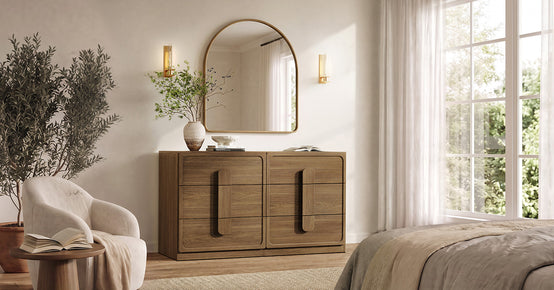
- Deep-drawer dresser — a folded winter sweater actually fits alongside the rest of your wardrobe, no seasonal rotation
- Console table with drawers — slim enough for any hallway, handles keys, remotes, chargers, and everything else that lands on flat surfaces.
- Modular dresser — scales to the room, can be split into two smaller units, and works differently year to year as the space changes.
Multifunctional vs. Modular — One Quick Clarification
These are used interchangeably,but they're not the same. Multifunctional: one piece, multiple purposes. Modular: the structure itself can be rearranged or expanded over time. Some furniture is both, which is helpful. But the labels don't matter. What matters is whether a specific piece solves a specific problem in the actual room you're dealing with.
Why Fewer, Smarter Pieces Beat a Room Full of Single-Purpose Furniture

There's a pattern to how most people furnish a new place. They make a list. Each item gets its own category. Five things get ordered. Two come in the wrong size. One goes back. The room still doesn't feel right. Four months later, they're buying two more pieces to compensate for the first wave — and the room is now crowded in a way that was never part of the plan.
Space-saving home furniture short-circuits this — not because it's clever, but because it starts from a different question: what does this room actually need to do every single day, and what's the minimum number of pieces that covers all of it? That question is worth sitting with before you open a browser tab.
Fewer Pieces, More Room to Move

One deep-drawer dresser quietly makes three other purchases unnecessary—the storage ottoman you were considering. The vacuum bags are under the bed. The corner shelving unit you'd been planning. Floor space is something you don't notice when you have it — but you notice the week it's gone. Getting it back doesn't require moving. It requires buying differently from the start.
It Works With a Work-From-Home Schedule
When you work from home, your furniture is doing double shifts whether you designed it that way or not. A console table manages cables and daily supplies without looking like a workstation at the end of the day. A charging nightstand means your phone is powered and off the floor without any active effort. These feel like minor upgrades in the first week. They stop feeling minor by the third.
Closing the Doors Changes How the Room Reads

Same square footage, same number of shoes, same wall — but a closed shoe cabinet and an open shoe rack feel entirely different to be around. The closed one makes the room feel bigger and calmer because the eye line is clear. This isn't staging or photography. It's just what happens when storage is hidden rather than displayed. A dresser with deep drawers does the same thing to a bedroom. Equal space. Completely different experience of being in it.
Room by Room: What Actually Works Where
The bedroom problem and the entryway problem aren't the same. Furniture that solves one problem doesn't automatically help with the other. Here's what actually works in each space — without the generic decluttering advice that fills most home organization guides.
Living Room: Running Five Jobs at Once

Most living rooms in apartments are simultaneously the seating area, the entertainment zone, the display surface, the storage unit, and sometimes someone's makeshift desk. The furniture needs to reflect that reality rather than being chosen because a single category looked good in a showroom.
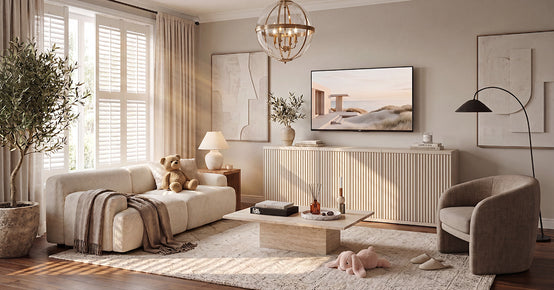
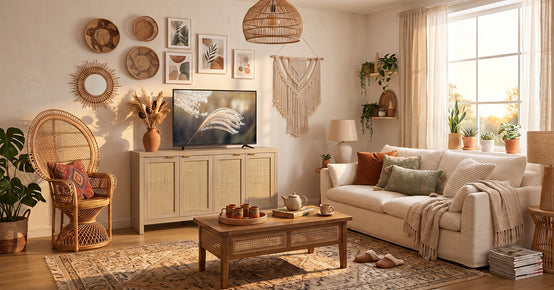
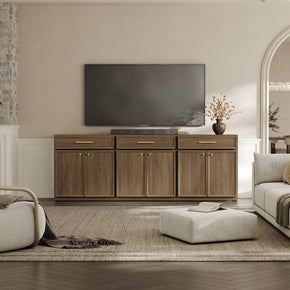
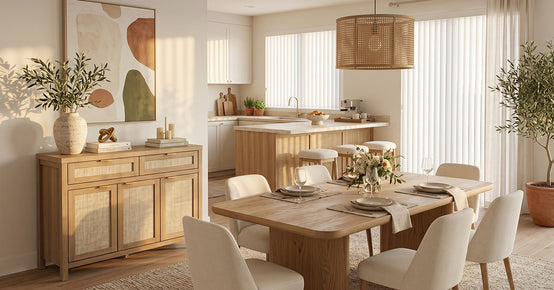
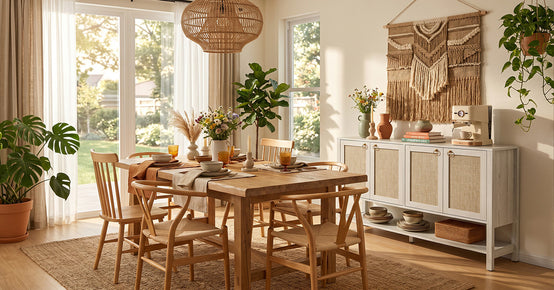
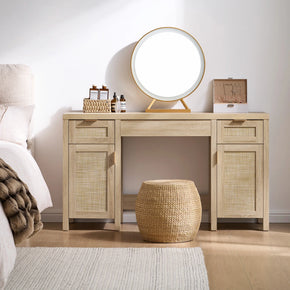
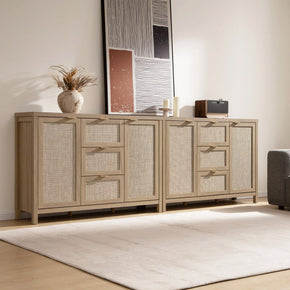
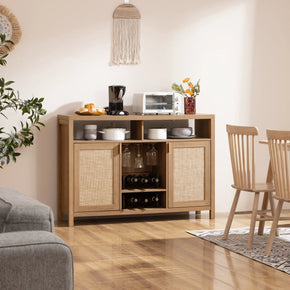
The piece that does the most work per square foot here is a slim console table with drawers. Handles daily clutter — remotes, chargers, notebooks — keeps a clean display surface on top, fits in the narrow spaces where a full sideboard doesn't. The Savanna Console Table with 3 Drawers works well for this: three deep drawers, a clean top surface, and a narrow profile that doesn't take over the room. It doesn't read as storage furniture when you walk in. That's half its value.
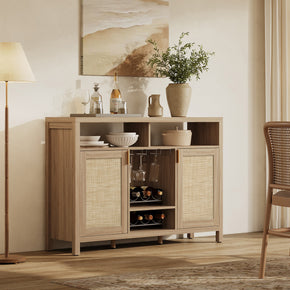
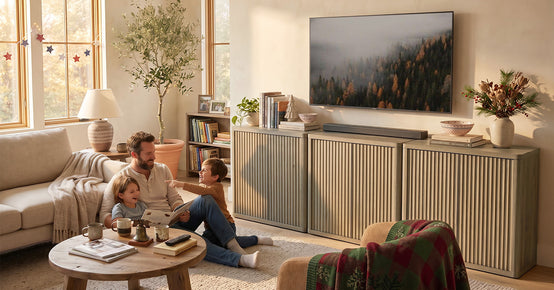
- A sideboard organizes media equipment, books, and display objects into one clean horizontal line rather than scattering them across five surfaces.
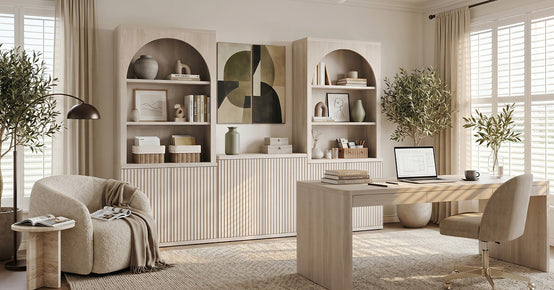
- A bookcase with closed lower doors: open shelving above for what you want visible, hidden cabinet below for what you don't — same column of space
Bedroom: Where Bad Furniture Decisions Compound the Fastest

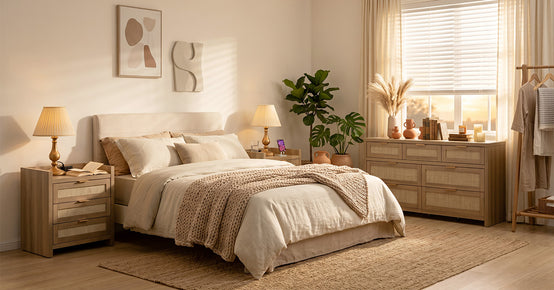
Spend a week in a bedroom where the dresser is too shallow, the nightstand has no storage, and the charging cable loops from the outlet to wherever the phone ended up. Then spend a week in one where everything has a home, and the surfaces stay clear. The rooms can be identical in size. The experience of being in them is genuinely different — and it repeats 365 mornings a year.
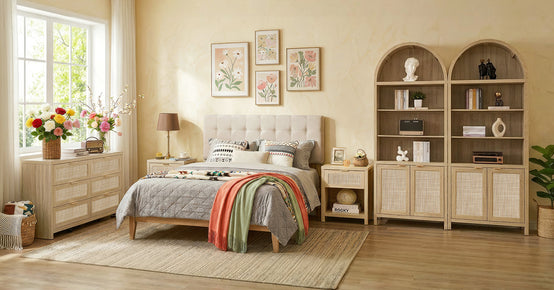
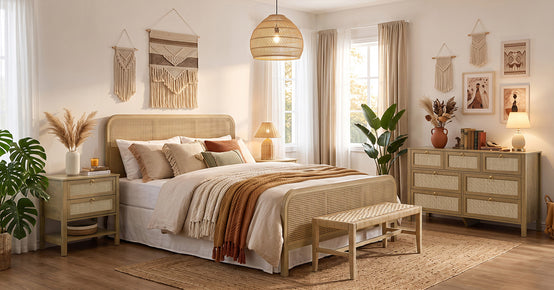
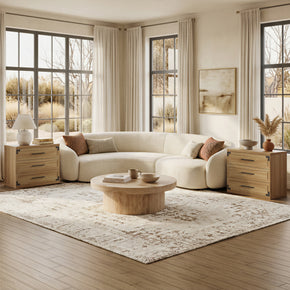
The nightstand is the most underestimated piece in any bedroom, honestly. Most people pick one that looks right with the bed frame and stop there. But a nightstand with a built-in USB port changes the bedside setup in a way that's hard to go back from. The Savanna Nightstand with 3 Drawers and Charging Station is a good example: three organized drawers, a built-in charging port, and a clean, modern shape that doesn't compete with anything else in the room.
- A built-in charging port removes the bedside cable problem at the source — small upgrade, daily improvement.t
- Check internal drawer depth — not total drawer count. Ten-inch internal depth handles a full wardrobe. Five-inch handles t-shirts—very different purchase.
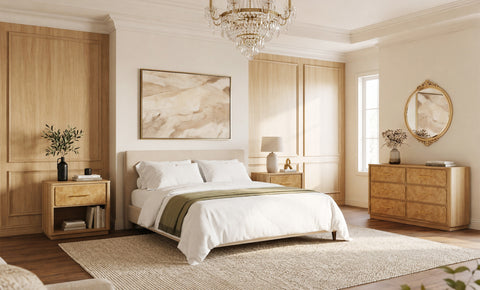
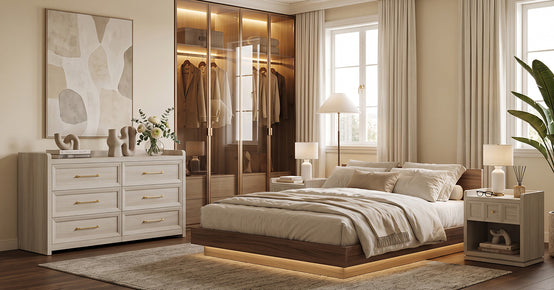
- Coordinated bedroom sets look finished in a way that individually sourced pieces rarely manage, because they are
Entryway: The Room That Touches Your Day More Than Any Other

Nobody thinks much about the entryway until it becomes a daily problem — and then it's a problem twice a day. Every morning on the way out. Every evening on the way back in. Shoes on the floor, bags dropped wherever there's space, keys somewhere vaguely near the door. It's a small room, but it's high-frequency. Fixing it has an outsized effect on how the whole apartment feels.
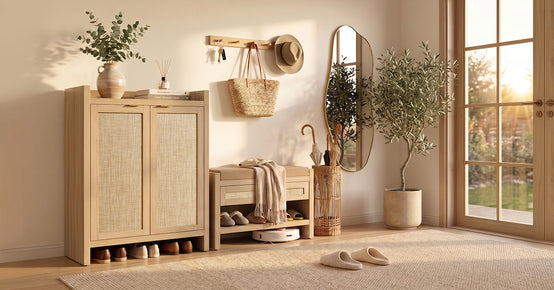
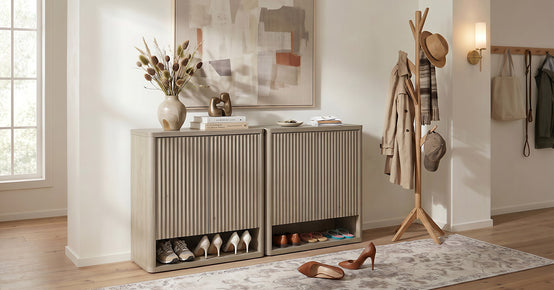
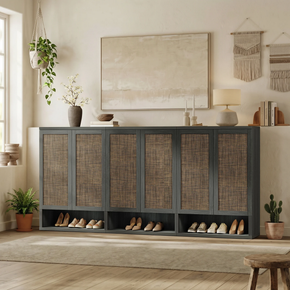
The highest-leverage change in most entryways is switching from an open shoe rack to a closed shoe cabinet. The Cas Black Shoe Cabinet is worth a look: solid construction, clean, modern lines, and genuine storage capacity for a real household's shoe collection. The entry stops looking like a storage area and starts looking like a room you chose to design.
- Closed cabinet doors do what an open rack literally can't: make the shoe problem invisible. The shoes are there. You just can't see them.
- An entryway bench with internal storage: seating for putting shoes on, a place to store them when you take them off. One piece, both covered.
No Built-In Closet — More Common Than People Expect

A lot of apartments don't come with built-in closets. This catches new renters off guard more often than it should. The solution is specific: a tall wardrobe or armoire that provides hanging space, shelf sections, and usually some drawer capacity — all without requiring any changes to the apartment itself beyond basic anchoring.
One well-proportioned wardrobe can replace a closet system and a separate dresser simultaneously, which means fewer total pieces and a room that looks deliberate rather than improvised. The wardrobe and armoire collection has multiple configurations — worth spending time on the actual internal dimensions before ordering, because being five or six inches off in a small bedroom genuinely matters.
The Home Office That Doesn’t Have a Room

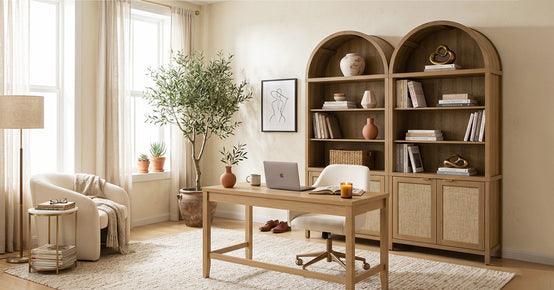
A corner and three pieces cover about 80% of a dedicated home office without needing a dedicated room. A console table for the desk function. A good chair. A bookcase with closed lower doors for files, supplies, and equipment — and when those doors close at 5 pm, the 'office' visually stops existing. If the corner is in the bedroom, that transition matters more than most people acknowledge going in.
Three Things to Check Before You Buy
Furniture regret is rarely about the style. Nine times out of ten, it comes down to one of three specific functional checks that didn't happen before the order went through.
Internal Drawer Depth — the Number Nobody Lists Prominently

Six shallow drawers hold less than four deep ones. That's obvious in retrospect and invisible in most product listings, which lead with total drawer count and overall product dimensions. The number that actually matters — internal drawer depth, front-to-back inside each drawer — is usually buried in the specs tab. Ten-inch depth handles sweaters, jeans, bedding, and towels stacked together. Five-inch depth handles t-shirts. That single number determines whether the dresser solves the storage problem or just looks like it might.
Hardware Quality — Nobody Talks About This Until It’s a Problem
Drawer glides, door hinges, and tracks get used every single day for years. Quality soft-close hardware feels smooth on day one and day 500. Budget hardware starts to catch somewhere around month three or four, then progressively gets worse — and by eighteen months, or so, you've got a piece that works technically but frustrates you every time you open it. Read reviews specifically for how pieces function after six months or a year of daily use, not the initial delivery impressions.
Open Dimensions vs. Closed Dimensions
The piece fits the wall when measured closed. Then every drawer opens, blocking the door. Or the wardrobe doors swing into the bed frame. Or the nightstand drawer can't extend fully because there's 12 inches of clearance, and the drawer needs f1.4. Measure the closed footprint and the full-open clearance — every drawer extended, every door at maximum swing, walking room on each side. This takes ten minutes. It prevents the most expensive furniture mistake.
Quick Comparison: Multifunctional Furniture by Type and Room
|
Furniture Type |
Primary Job |
Secondary Job |
Best Room |
|
Nightstand with Charging Station |
Bedside storage |
USB / device charging |
Bedroom |
|
Shoe Cabinet with Doors |
Concealed shoe storage |
Entryway console surface |
Entryway |
|
Console Table with Drawers |
Display surface |
Daily clutter + key storage |
Living Room / Hall |
|
Wardrobe / Armoire |
Hanging clothes + shelves |
Full closet replacement |
Bedroom |
|
Modular 9-Drawer Dresser |
Deep clothing storage |
Flexible room organization |
Bedroom |
|
Bookcase with Closed Doors |
Open display shelving |
Hidden cabinet storage |
Living Room / Office |
How to Make Storage Furniture Look Like a Design Choice

The main objection to buying storage-heavy furniture is that it'll make the space look utilitarian. Necessary rather than chosen. That's a fair concern — and it almost always describes the wrong type of storage furniture, not the concept itself.
Two or Three Finishes, Used Consistently
Look at any room that feels designed rather than assembled. There's an invisible rule running through it — the materials repeat. The walnut in the bed frame shows up in the nightstand. Matte black hardware echoes across pieces. White finishes the group. When your storage furniture shares a palette, individual pieces stop reading as separate objects and start reading as a room. Warm oak and white. Dark espresso and brushed brass: natural wood and matte black. Pick two. Stick to them. Buy nothing that breaks the rule.
The Function Stays Invisible When It’s Not in Use

A shoe cabinet that looks like a sideboard when closed. A nightstand that looks like a clean bedside piece with the drawer shut. A dresser that reads as a designed element of the bedroom, not a storage box with handles. This is the real aesthetic advantage of closed-storage furniture over open racks — worth weighing as heavily as price when comparing options. For more on this balance, Architectural Digest covers integrating storage pieces into modern interiors in a way that applies directly to these kinds of decisions.
Surfaces Are for Three Objects, Not Thirty
The surface of a nightstand, a console table, a dresser — these are part of the room's visual design, not an overflow zone. One lamp. One plant, maybe. A tray for keys. That's a designed surface. Once the storage furniture is in place, the discipline is to use it: putting things in the drawers, closing them, and treating the surfaces as intentional spaces rather than default landing zones.
Mistakes That Are Very Easy to Make
Not Checking the Open Dimensions (This Is Extremely Common)
You measured the wall. You measured the dresser. Numbers matched. The dresser arrived, and the bottom drawers hit the bed frame. Or the nightstand drawer can't extend because it's too close to the wall. These aren't edge cases — they come up constantly in buyer reviews. The piece fits when it's closed. The piece needs to function when it's open. These are not the same measurement.
Choosing Looks Over Build Quality
Budget furniture that photographs well and ships quickly has a known failure pattern: the hardware. The first few months feel fine. Somewhere around month four, a drawer starts catching. A hinge starts pulling at one corner. The frame is still solid,d but nothing opens correctly anymore — and you've started skipping certain drawers because they're annoying. Quality hardware upfront is almost always the cheaper five-year decision. You make it on, not twice.
Buying the Whole Room in One Weekend
Post-move trap. Empty apartment, you want it finished. Everything gets ordered over two days. Six weeks later: the wardrobe is two inches too wide for that wall, the console table would work better somewhere else, and two pieces are competing for the same corner. One piece at a time. Highest-friction room first. Let it settle. See what the room still needs. Then buy the next thing.
FAQ: Eight Questions Furniture Buyers Actually Search For
What is multifunctional furniture, in plain terms?
Any piece that handles two or more distinct functions in one structure. Nightstand with a charging station. A shoe cabinet that works as an entryway console. A dresser deep enough to replace a wardrobe. No folding mechanisms required — though those exist at the more dramatic end of the category.
Best multifunctional furniture for a small apartment?
Four pieces make the biggest difference: a deep-drawer dresser, a charging nightstand, a closed shoe cabinet, and a console table with drawers. Together, they cover the four most common daily friction points — bedroom storage, bedside organization, entryway clutter, and living room daily management — without requiring a dedicated storage room or eating up floor space.
Is it actually durable, or does it break faster?
Durability comes down to the quality of materials and hardware, not the category. A well-built charging nightstand lasts as long as any other well-built nightstand. The failure mode is cheap hardware in budget pieces, which is more annoying in furniture that you open frequently. Read reviews for how things function after six months of daily use. Not the first-week impressions.
What’s the difference between multifunctional and modular furniture?
Multifunctional: one piece, multiple jobs. Modular: the structure can be rearranged or expanded. Some furniture is both. The Zura Modular 9-Drawer Dresser handles nine drawers of bedroom storage and can be split into two separate units as the room changes. You don't have to choose between the two properties.
What should I measure before buying a dresser or wardrobe?
Four things: available wall space, door-swing clearance, full drawer-extension depth, and the walking path with all drawers open at once. The last two are what people skip. Both are what generate returns. Closed dimensions fit. Open clearance is what you live with every day.
Does it work in a large home, not just small apartments?
Yes — and often better, because there's room to do it right. A large primary bedroom with a matching wardrobe, charging nightstands, and a coordinated dresser doesn't just solve storage issues. It creates a bedroom that looks like a complete, considered design, which individually sourced pieces rarely achieve.
Does it save money?
Over five years, usually yes. One quality piece replacing three items costs less in total. The math breaks down if the hardware fails early, which is why mechanism quality is the one place not to cut corners.
Where to find well-designed multifunctional furniture?
Sicotas Furniture covers this overlap — charging nightstands, deep-drawer dressers, closed shoe cabinets, tall wardrobes, and modular storage pieces, all within the same design language. The functional choice and the good-looking choice turn out to be the same piece.
The Short Version

Good multifunctional furniture doesn't announce itself. It just quietly removes the daily friction — the cable on the floor, the shoes at the door, the sweater on the chair, because the dresser was never deep enough. The room doesn't look 'organized.' It just becomes easier to be in.
Start with the room that frustrates you most. One piece that addresses the main daily problem there. Buy it. Let it settle. See what changes. Then move on.The right furniture doesn't fill your home. It clears it.
Sources
- The Spruce Editorial, “Space-Saving Furniture Ideas for Every Room in Your Home”, The Spruce, 2025.
- Architectural Digest Editorial Team, “Small-Space Furniture Styling: How to Mix Function and Design”, Architectural Digest, 2025.
- Resource Furniture Editorial, “Multipurpose Furniture Collections, Wall Beds & Transforming Tables”, Resource Furniture, 2025.
- Woodensure Editorial, “Top 10 Best Space-Saving Multifunctional Furniture Ideas for 2026”, Woodensure, 2026.
- Peverelli Editorial, “Multifunctional Furniture and the Art of Dual-Function Interiors”, Peverelli, 2025.
- Living Spaces Editorial, “12 Multifunctional Furniture Pieces for Small Spaces”, Living Spaces, 2024.
- HGTV Editorial Team, “Smart Furniture Ideas for Small Spaces and Compact Rooms”, HGTV, 2025.
- Real Simple Editorial, “Best Multifunctional Furniture for Small Apartments”, Real Simple, 2025.


Looking for something else?

Furniture Materials Guide: Picking the Right Material Room by Room
LEARN MORE
How to Mix Wood Tones Without Making a Room Look Mismatched
LEARN MORE
18 College Apartment Furniture Ideas That Save Space and Money
LEARN MORE
Types of Entertainment Centers: 11 Designs and How to Pick One
LEARN MORELooking for something else?

Curio Cabinet Decor Ideas: How to Style a Display Cabinet Without the Clutter
LEARN MORE
Curved Furniture: How to Style, Measure, and Buy It in 2026
LEARN MORE
What Is Rattan Furniture? A Buyer Guide to Types and Care
LEARN MORE


Further reading

How to Choose a Nightstand for a CPAP Machine

How to Choose a Shoe Cabinet for Men's Sizes, High-Tops, and Bulky Shoes


