




Modern Gothic Living Room Ideas for a Dark, Elegant Home

Black walls got a bad reputation they don't deserve. So did modern gothic living room design ideas generally — they got filed under 'Halloween shorthand' when they're actually one of the more effective tools for making a living room feel genuinely worth sitting in. Warm. Layered. The kind of room that people compliment without being able to say exactly why.
The 'why' is usually some combination of dark paint, velvet, warm light, and a few well-chosen ornate details — things that together produce a cozy, enveloping quality that bright, neutral rooms often struggle to achieve, no matter how expensive the furniture is.
Before making specific purchases, it's worth looking at what's actually available. Browsing the full range of gothic-style furniture before committing to colors or layouts prevents the most common mistake in this style: buying the paint first and figuring out the furniture second.
What Modern Gothic Living Room Style Actually Is
Not What Most People Picture

When most people hear 'gothic living room,' they picture skulls, candles in abundance, maybe some theatrical drapery with fringe. That's a costume, not a design style. Modern gothic decor is closer to a private library or a well-aged hotel bar — dark walls, rich upholstery, brass hardware, books that look read, light that comes from multiple sources, and is all warm. The word that keeps coming up among people who do this well isn't 'spooky.' It's cozy.'
Where the Style Actually Comes From

Traditional Gothic was a medieval architectural movement — cathedrals, ribbed stone vaults, flying buttresses holding up stained-glass windows the size of a house. Modern gothic borrows the emotional qualities of that architecture (height, shadow, the way warm light catches on dark surfaces in a large cold space) and applies them at the scale of a regular room. Same mood. Completely different materials and budget.
The interesting thing is that modern gothic is also less rigidly defined than most design styles, which is partly why it works — it's more of a sensibility than a formula.
Why Living Rooms Are the Right Room for This

A kitchen needs to be functional and well-lit. A bedroom needs to be calm. A living room mostly just needs to be somewhere people want to spend time, which is a genuinely different brief — and one that gothic design is unusually well-suited for. The entire visual toolkit of the style (dark depth, warm layered light, tactile surfaces, the sense that the room has a backstory) produces exactly the quality that a living room needs and that bright, minimal spaces often don't quite achieve.
The Color Question — and Why the Usual Advice Is Too Cautious
Going Dark on All Four Walls Is Fine

The standard advice — one dark accent wall, three neutral nervous people. It's reasonable advice. But that undersells what dark paint can actually do to a small room. Paint the walls of a bathroom — all four of them — in deep charcoal, forest green, or near-black navy. Add warm-toned bulbs at a couple of different heights rather than a single overhead fixture. Then bring in something reflective: a brass tap, a glass pendant, a large mirror. The light bounces, the room glows, and the whole thing feels enclosed in the best possible way — cocooned rather than cramped. It's a completely different effect from what a single overhead can ever produce. The cocooning quality people describe when they love their dark living room usually comes from having more than one dark wall.
If you're worried about resale, dark walls in a living room tend to photograph well and make a room memorable in listings. They're not the liability most people assume.
The Colors Worth Knowing Beyond Black

Burgundy and oxblood are criminally underused in gothic living room design. They're warmer than black, they look extraordinary in low light, and a deep burgundy velvet sofa against a dark charcoal wall is —, and I say this without exaggeration — one of the better furniture decisions available in this style. Rich, warm, and dramatic without the coldness that fully black rooms sometimes carry.

Emerald green, midnight blue, and deep plum all deliver that Gothic richness without pushing a room into near-black territory. Each one carries enough depth and drama to feel intentional rather than just dark.
Emerald is the most interesting of the three. It reads as botanical first — lush, almost overgrown — which gives it a dual identity that the other two don't have. That tension between natural and dramatic is probably why it keeps appearing in high-end Gothic interiors. It feels considered rather than obvious.
What Keeps a Dark Room From Feeling Heavy

Cream curtains. Warm wood. Aged brass. These aren't concessions to safer taste — they're structural to how dark rooms work. Without something lighter and warmer to push against, the darkness becomes oppressive rather than enveloping. The relationship between the dark elements and the lighter ones is what creates depth. Take away the cream curtain, ais, and warm brass, and you've removed the contrast that makes the dark walls look chosen rather than just dark.
Furniture Choices That Actually Work in This Style
The Velvet Sofa — Yes, Really Non-Negotiable

Velvet in a dark room does something that linen, cotton, and most other upholstery can't. It absorbs and reflects light simultaneously, which may sound contradictory but is evident in practice. Under warm lamplight, velvet has a shifting quality, a depth that flat upholstery doesn't. A deep teal, burgundy, charcoal, or forest green velvet sofa establishes the room's register immediately and does more for the overall effect than almost any other single furniture choice. I'd buy the sofa first and let everything else respond to it.
One Statement Piece. Not Many.

The temptation in gothic decorating is to keep adding — more candles, more ornate details, more draped fabric, more fringe. It always ends the same way: a room that looks like a theater prop storage area rather than a place anyone lives. One genuinely excellent ornate piece — a carved-leg coffee table, a chandelier that means something, a mirror, and a frame that cost more than it should have — does far more work than five lesser ornate pieces competing with each other. The restraint around the statement is what makes it a statement.
Dark Finishes for Storage and Shelving

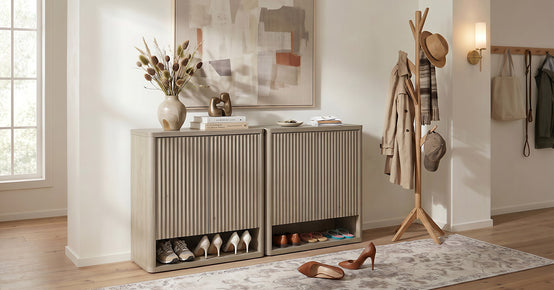
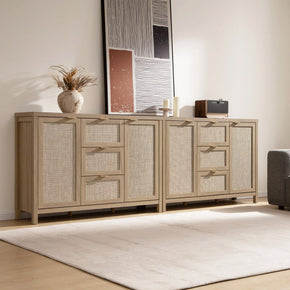
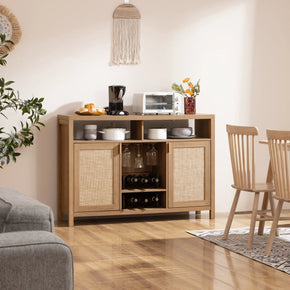
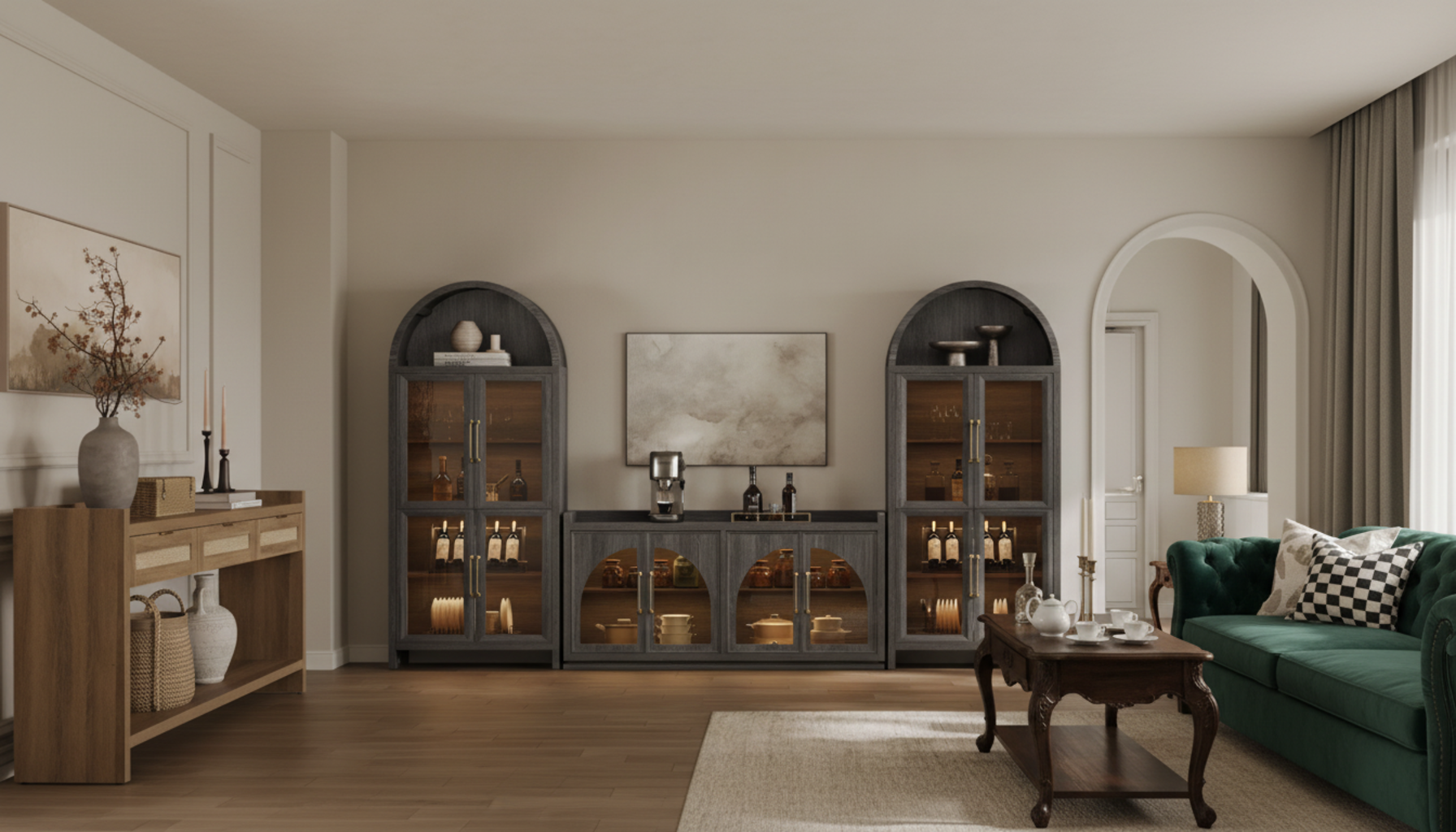
For the functional pieces — sideboards, shelving, console tables — dark-finished furniture in a gothic room becomes part of the room's depth rather than sitting on top of it. It looks like it belongs there rather than was placed there, which is a real distinction in a heavily styled space. The Stria Sideboard with 2 Doors handles this well — the fluted door detail reads as considered without being fussy, and the dark finish works with dark walls in a way that lighter furniture genuinely can't.
Height Is a Gothic Design Fundamental

Gothic architecture was built to draw the eye upward — every structural decision was about height and the vertical line. That same principle scales into living rooms. Tall bookshelves, floor-to-ceiling curtains, arched mirrors: the vertical quality adds weight and presence that shorter furniture can't. A Willow 75-inch Tall Bookshelf styled with books, trailing plants, and a few sculptural objects doesn't just store things — it changes how the wall reads. That's useful.
Texture — the Part Most Guides Cover Last and Should Cover First
Most gothic living room articles discuss color for four paragraphs and texture for one. That's the wrong ratio. Get the texture right — the material layering, the contrast between soft and hard surfaces — and the color becomes almost secondary. Get it wrong and no color palette fixes it.
The Material Mix That Actually Produces the Effect

Velvet sofa. Leather armchair. Jacquard throw. Linen ottoman. Woven rug. None of these looks gothic. Together, they produce that tactile richness the style depends on. Replace any one with a simpler equivalent — cotton instead of velvet, smooth ceramic instead of hammered brass — and the room loses some of its quality without saying why, easilyto say why easily. The layering of different weights and finishes is the work, not any single material choice.
The Rug Is Structural

In a gothic living room, the rug anchors the seating area, softens the visual weight of dark walls and dark furniture above the floor level, and adds warmth underfoot. Persian-style rugs in deep red and navy, vintage-inspired faded patterns, black-and-cream geometric designs — all work. Size it properly: the front legs of all major seating pieces should sit on the rug at a minimum. A rug that's too small for the furniture grouping makes the whole seating arrangement look like it's floating.
Matte Plus Reflective — the Formula

Dark matte walls absorb light. Brass, glass, mirrors, and actual candles reflect it. Both things at once in the same room is the operational formula for a gothic living room that reads as warm and dramatic rather than just dark.Remove the reflective elements and the room just becomes a cave. A mirror, a brass fixture, a glass shade — these aren't finishing touches you add at the end. They're doing real structural work, bouncing light around and keeping a dark room from collapsing in on itself.
Lighting — What Separates the Good Rooms From the Frustrating Ones
Multiple Sources at Different Heights. Always.

One ceiling fixture in a dark room creates flat, clinical light that makes everything look gray and washed out. A gothic living room needs ceiling light, accent light at mid-height (sconces, picture lights, table lamps), and at least one source low down (a floor lamp near a reading chair, a cluster of candles on the floor near the fireplace). The variety of heights creates shadow and visual depth — which is the quality you're actually trying to build in this style, and which single overhead lighting fundamentally cannot produce.
2700K. Not a Degree Warmer, Not a Degree Cooler.

2700K bulbs give off a warm, amber-leaning glow that makes velvet look richer, brass look like brass rather than hardware, and dark paint colors feel chosen rather than oppressive. Cool white bulbs at 4000K in a dark gothic room look like a mistake because they are one — the cool, clinical light quality is the opposite of what the room is trying to do. Swap the bulbs. It's the cheapest upgrade available,e and the change is visible the same evening.
The Fixture Matters as Much as the Bulb

A wrought-iron chandelier, a pair of brass wall sconces flanking a fireplace, a floor lamp with a dark fabric shade — in a gothic room, these are part of the room's composition, not accessories. Same principle that makes art a design element rather than decoration. Choose the light fixtures with the same seriousness as the sofa. Don't pick them last just because they're technically lighting rather than furniture.
Candlelight and Why Nothing Replicates It

Actual candles — taper candles in brass holders, pillar candles on a tray, hurricane lanterns on the floor — add a quality to a gothic room that electric light can't copy. The flicker, the multiple tiny warm sources, the way the glow catches on brass and glass from slightly different angles as the flame moves. Use them alongside electric light, not instead of it. A well-lit gothic room with candles is different from a well-lit gothic room without them, in a way that's hard to describe in advance but obvious once you experience it.
Gothic Architectural Details Without Structural Work
The Arched Mirror

One large arched mirror over a console table or fireplace — that's it. One arched mirror changes the visual language of a wall in a way that a rectangular mirror simply doesn't. It pointed-arch Gothic forms directly enough to shift the room's register without renovation, any present change, or any significant decision beyond where to hang it. It's the most Gothicible single Gothic design choice available and probably the most impactful per dollar spent.
Tall Bookshelves and What They Do to a Room

Gothic interiors draw the eye upward — the original move of the style — and tall bookshelves replicate the living-room effectat a living-room scale. A Savanna Arched Bookcase creates vertical drama while keeping the lower section enclosed for practical storage. The display shelves carry the styled elements (books, trailing plants, small sculptural objects), while the lower doors keep everyday items out of sight. Height and storage to Gothic, which, in a Gothic room, is a useful combination.
Colored Glass, Framing, and the Finishing Layer

Small stained-glass lamps, jewel-toned glass vases near a window, amber glass votives near candles — quiet references to Gothic stained glass that require no permanence and work in any room size. Oversized gilt frames, carved objects from antique stores, ornate mirror surrounds — these are the finishing layer, not the foundation. Get the color, the furniture, and the lighting right first. Then add these. They land very differently as the final layer than they do when they're the first thing placed.
Making This Work, whatever size your room is
Small Gothic Living Rooms

One dark accent wall. A velvet sofa in a jewel tone. A large arched mirror positioned to bounce light. Wall-mounted sconces to free up floor space completely. That's a completely small gothic living room, and the restraint is the point — a small room that commits to cozy and intimate rather than ambitious and dramatic is far more than one that tries to do too much in a limited space.
Large Gothic Living Rooms

Large spaces need multiple layers to avoid feeling empty rather than dramatic. A sectional sofa in dark velvet, an oversized rug, a chandelier with a physical presence, and tall shelving or cabinet pieces anchoring the walls. A statement sideboard — the Helio Decorative Sideboard works well here — adds visual weight and storage to a large wall that would otherwise feel bare. In a big gothic room, every significant wall should be doing something.
Apartment Gothic — No Permanent Changes Required

Dark curtains hung near the ceiling. Removable wallpaper on one wall. Black-framed art in a tight cluster. Velvet sofa cover over whatever you already own. Vintage lamps from second-hand stores. None of this requires a lease conversation, and all of it contributes to the effect. Gothic decor is actually unusually well-suited to rentals — most of what makes it work is movable.
Open-Plan Gothic Zones

In an open-plan space, use the rugand define the gothic area rather than relying on walls. Dark colors and heavy textures in the seating area create visual separation from an adjacent kitchen or dining space. A Savanna Console Table behind the sofa gives the seating zone a proper back edge — it defines where the living area ends and provides a surface for lamps and styled objects that reinforce the room's character.
Things That Usually Go Wrong
Dark Paint Without Anything to Push Against

Black walls with no velvet, no brass, no warm light, no candles, no layered texture — just dark paint and normal furniture — look oppressive rather than cozy. The darkness works because of the contrast around it. Without reflective surfaces and warm light, a dark room is just a dark room. Not gothic. Not dramatic. Just under-lit.
Treating It Like a Theme Instead of a Style

Ten plastic skulls, fringe on every surface, damask on every upholstered thing, a fog machine somewhere. It becomes a Halloween installation rather than a place anyone lives. The editing matters as much as the choosing. One genuinely beautiful ornate piece, Gothic-adjacent, gothic-adjacent ones. Restraint is what makes the style read as a design decision rather than a seasonal decoration.
The Room Still Has to Work as a Room

Seating that looks extraordinary, but nobody wants to sit in it for more than twenty minutes. The lightingis so dim that you can't read comfortably. A rug so visually complex it's exhausting. These are real problems that dark walls and velvet don't solve. Comfort and atmosphere aren't competing — the best gothic living rooms have both, without compromise on either.
Fighting the Natural Light Instead of Working With It

Mirrors near windows. Lighter accents on surfaces that catch daylight. Sheer panels that diffuse natural light rather than blocking it entirely. Even the most committed dark room benefits from handling natural light thoughtfully. Sealing it out entirely makes the room feel like a basement, not a study.
Where to Start
Pick one thing. That's the actual answer. A dark wall, or a velvet sofa, or an arched mirror — any one of these is enough to begin with. The rest of the room builds from it slowly, and that slow accumulation is why Gothic rooms look right when they do.
The ones that don't look ready almost always try to do everything at once. The rooms that actually work don't look assembled — they look accumulated. The books on the shelf have clearly been read. The brass candlestick wasn't ordered from a styled flat-lay; it came from a specific place, and it shows. The rug was chosen because it was beautiful, not because it matched a swatch. That sense of things gathered over time rather than selected all at once is exactly what separates a room that genuinely feels Gothic from one that just looks dark.
FAQs
Is Modern Gothic the same as the Gothic style?
Dark colors, rich textures, warm layered light, and old-world detail adapted for real homes. Less spooky than it sounds. More livable than most people expect. The defining quality isn't darkness — it's the relationship between the darkness and the warm things inside it.
How do you make a gothic living room?
One strong starting point first — a dark accent wall, a velvet sofa in a jewel tone, or a large, arched mirror. Then, layered lighting from at least three separate sources. Then the rug, the textile contrasts, and the warm brass accents. Then the finishing details. In that order, or something close to it. The mistake is trying to do it all at once.
What is trending in living room design?
Darker, more personal, more layered. Natural materials. Warm earthy tones. Pieces that feel like they were found or collected rather than purchased as a coordinated set. Modern gothic fits naturally within all of this — it was never really a trend, and it remains relevant because its underlying appeal doesn't date.
What are Gothic colors for living rooms?
Black and charcoal for walls and trim. Burgundy and oxblood for upholstery. Emerald, midnight blue, and deep plum for feature walls or accent pieces. Antique gold for hardware and frames. Cream, aged brass, and dark walnut as the neutrals that keep the dark shades from becoming oppressive.
What are the five Gothic elements?
Pointed arches, vertical lines, ornate detailing, dramatic shadow and light, and deep saturated color. In a living room, two or three of these create the effect. You don't need all five.
What is the 3-5-7 rule in interior design?
Decorative objects arranged in odd-numbered groups — 3, 5, or 7 — look more naturally balanced than even-numbered arrangements. A mantel with three candle holders, a sculpture, and a framed piece looks considered. A matching pair of anything on the same shelf, as if it were arranged rather than collected. In a gothic room where the styling is supposed to feel accumulated, the distinction matters.
What is the difference between modern Gothic and traditional Gothic?
Traditional Gothic built cathedrals — pointed stone arches, flying buttresses, stained-glass windows forty feet tall. Modern gothic decor borrows the mood and some of the vocabulary, applying them in homes without structural changes. The emotional register is similar. The practical approach is completely different.
What are the key characteristics of Gothic architecture?
Pointed arches, ribbed vaults, flying buttresses, large stained-glass windows, and strong vertical proportions. In living room terms: arched mirrors, tall bookshelves, decorative ceiling details, colored glass accents, and furniture with vertical lines that pull the eye upward.
Sources
- Clare — Modern Gothic Interior Design: Moody Paint Colors That Set the Scene: Dark color palettes, jewel tones, velvet textures, metallic accents, and gothic living room styling ideas.
- Lick — Interior Trends: Modern Gothic Decor Style: Gothic design history, vintage pieces, dark color palettes, wallpaper choices, and old-meets-new styling.
- Matt Camron Rugs & Tapestries — Modern Gothic Decor: What It Is and Isn't: Texture, dark colors, antique furniture, and the difference between modern gothic and Victorian gothic.
- Britannica — Gothic Architecture: Historical overview of pointed arches, ribbed vaults, flying buttresses, and stained glass.
- House Digest — The Best Way To Make The Most Of A Small Living Room
- Houzz — Gothic Living Room Ideas and Designs: Photo gallery with Gothic living room examples and furniture arrangements.


Looking for something else?

Furniture Materials Guide: Picking the Right Material Room by Room
LEARN MORE
How to Mix Wood Tones Without Making a Room Look Mismatched
LEARN MORE
18 College Apartment Furniture Ideas That Save Space and Money
LEARN MORE
Types of Entertainment Centers: 11 Designs and How to Pick One
LEARN MORELooking for something else?

Curio Cabinet Decor Ideas: How to Style a Display Cabinet Without the Clutter
LEARN MORE
Curved Furniture: How to Style, Measure, and Buy It in 2026
LEARN MORE
What Is Rattan Furniture? A Buyer Guide to Types and Care
LEARN MORE


Further reading

How to Choose a Nightstand for a CPAP Machine

How to Choose a Shoe Cabinet for Men's Sizes, High-Tops, and Bulky Shoes


