











Is Chenille Soft? What Chenille Fabric Really Feels Like

You've spent three weekends trying to pick a sofa. You've sat on more cushions than you can count. And then you sit on a chenille one — and something about it just makes sense. It's warm. It has this soft grip that keeps you from sliding around. You weren't planning to stay long, but suddenly you're rearranging your whole living room layout in your head.
That's not an accident. Chenille has been one of the most popular sofa fabrics for a very long time, and there's a reason people keep coming back to it.
But here's the thing nobody tells you when you start shopping: 'chenille' isn't one thing. Two sofas can both have that label and feel nothing alike. And whether it'll actually work in your home depends on a handful of details that most product pages gloss right over. So here's the actual breakdown — what chenille feels like, what changes based on how it's made, and what to check before you commit to anything.
What Even Is Chenille?

The word is French. It means caterpillar — which, once you see chenille yarn up close, makes a lot of sense. Short fiber ends stick out in every direction from a twisted core thread, kind of like a fuzzy pipe cleaner. When that yarn is woven into fabric, the protruding fibers form what's called a pile — a raised, textured surface that's responsible for the softness and warmth people associate with chenille.
It's been around since the 1700s. Developed in France, moved to Scotland in the early 1800s, wound its way into American homes through hand-tufted bedspreads in the early 1900s, and never really left. The machinery has changed, but the basic construction is the same: fuzzy yarn, a pile surface, and warm, cushioned fabric.
One thing worth knowing before you shop: Chenille isn't a material. It's a construction method. That pile can be made from cotton, polyester, rayon, acrylic, or blends of several of these. The fiber content changes how the finished product feels — sometimes more than you'd expect. If you want to go deep into the history and how it's actually made, Britannica's overview of chenille covers it well.
What Does Chenille Actually Feel Like?
Honest Texture Description

Soft. Warm. Fuzzy — but good fuzzy, not rough or scratchy fuzzy.
There's a grip to the surface. Your hand doesn't glide across chenille the way it does on velvet or smooth polyester. It rests on it instead. Stroke it one way, and it feels plush and even. Go the other direction, and you'll notice a little more texture — still totally comfortable, but different enough to feel. That's the pile responding.
Best comparison I can come up with: the inside of a bathrobe that's been washed about forty times. Soft, slightly fuzzy, warm in your hands, with just enough texture that you know it's there. Not smooth. Not rough. Somewhere in that comfortable middle ground that's weirdly hard to find in furniture fabrics.
For sitting on a sofa, the grip is actually a big deal. On slicker fabrics, you're constantly adjusting — sliding forward, repositioning. On chenille, you sit down and stay put. It's one of those things you don't consciously notice but definitely feel.
Cotton vs Polyester Chenille — They Feel Different

This is the part most shoppers miss, and it matters.
Cotton chenille has a softer, more natural feel. Slightly matte finish. Breathes better than synthetic blends. Feels organic rather than plasticky. The trade-off: it's less durable under heavy daily use and can shrink if washed warm.
Polyester chenille is firmer. Not uncomfortable — structured is maybe the better word. Handles friction and wear better, which is why most upholstery uses it or a poly-cotton blend. Still genuinely soft. Just different.
Rayon runs slightly silkier. Acrylic is warm and lightweight — close to wool in feel. Both mostly show up in throws and decorative cushions rather than actual sofa fabric.
And the actual takeaway here: get a swatch before you buy anything. The fiber label tells you what's in it, not what sitting on it feels like. Those two things don't always match.
Chenille vs Other Fabrics — Quick Comparisons

Chenille vs Velvet
People treat these as interchangeable, and they really aren't.
Velvet has a directional nap. Run your hand one way, and it's genuinely smooth — almost slippery, like petting a cat the right way. Brush it the other direction, and you get resistance, and the color visibly shifts. It looks polished. Formal. The kind of fabric that belongs in a room where you'd hesitate to put your feet up.
Chenille doesn't have any of that going on. No strong direction, no color shift, no formality to it. It just feels warm and inviting regardless of what angle you approach it from. For a sofa that sees actual family use — films on a Friday night, kids piling on, the occasional unplanned nap — chenille is the more comfortable everyday choice.
One area where velvet genuinely wins: cat households. The tight, smooth weave of velvet gives claws almost nothing to hook into. Chenille's pile can snag under sustained scratching, especially with a looser weave. If you have a dedicated scratcher at home, that's worth factoring in.
Chenille vs Cotton
Standard cotton upholstery is flat-woven. Light, smooth, cool. Practical for warm climates. But it just doesn't have that enveloping, cushioned quality that draws people to chenille. Sit on both, back-to-back, and the difference is obvious — cotton feels like a fabric; chenille feels like a destination.
Cotton chenille is its own category worth knowing about — that's cotton fiber used in chenille construction. You get the natural, breathable quality of cotton with the pile texture of chenille. Softer than polyester, more practical than delicate decorative cottons. Good middle ground for people who want natural fibers without sacrificing comfort.
Chenille vs Plain Polyester
This comparison gets a bit circular because polyester is often used to make chenille. Plain polyester upholstery — smooth, slightly shiny, practical — feels completely different from polyester chenille. It's the construction that creates the softness, not the fiber itself.
So if you see 'polyester chenille' on a sofa label, that's not a downgrade. That's a deliberate choice to get the soft, fuzzy texture of chenille alongside the durability and easier care that synthetic fiber provides. For a sofa that'll be lived on daily, that combination holds up well.
Is Chenille Actually Good for a Sofa?

Why It Has Stayed Popular for So Long
Chenille delivers what it promises. That sounds obvious, but it isn't — a lot of upholstery fabrics look inviting in photos and feel plasticky or stiff in person. Chenille doesn't have that gap between expectation and reality. If it looks soft, it feels soft.
And the textured surface is useful in ways people don't always think about. Pressure marks from your regular spot, slight flattening on the armrests, the natural wear pattern any sofa develops over time — on chenille, those signs of use are much less visible than on smooth or shiny upholstery. How it looks in year three matters just as much as how it looks on delivery day.
For Everyday Living

The pile grip makes extended sitting comfortable without fuss. You settle in, you stay there. Against bare skin, it's soft and non-irritating — not too warm, not rough around the edges.
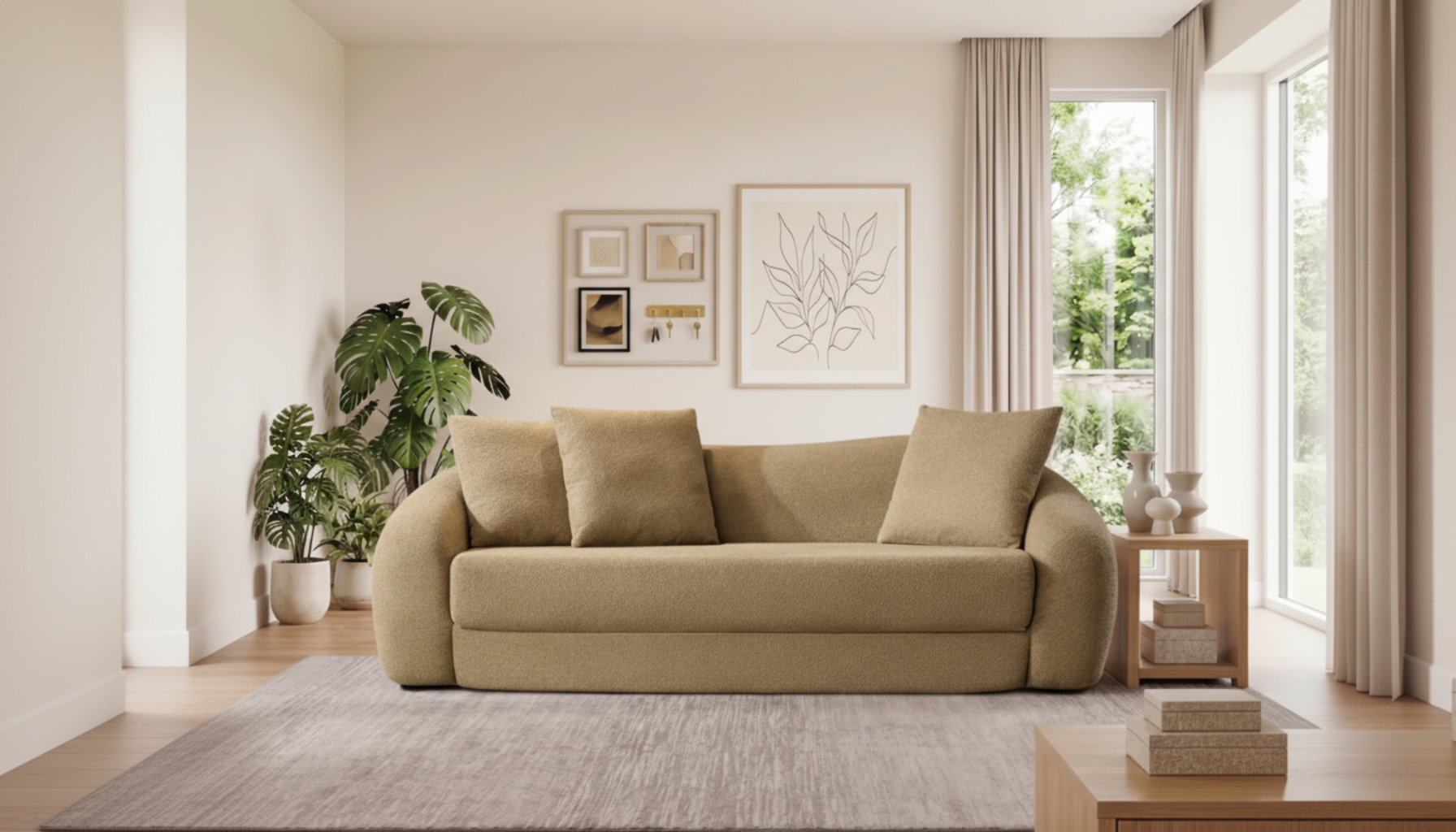
For a living room that actually gets used — not just photographed — chenille gives the space a warmth that cooler, more formal fabrics can't replicate. The Nimbus 3-seater sofa is designed exactly for that kind of room — comfort-first, built for everyday use.
The Heat Question
Fair question, and the answer is: sometimes.
The pile traps warmth — great in a cool room, less ideal in a poorly ventilated space in August. Cotton blends are more breathable than pure polyester and handle warm climates noticeably better. Lighter-weight and open-weave options also run cooler than a thick, dense pile.
Best way to actually check: order a swatch, put it on your current sofa, sit on it on a warm afternoon. Thirty minutes in your actual room is worth more than any product description.
Pets and Kids — The Real Story
Kids: fine, especially with a tighter weave in a colorway that doesn't show every smudge. Spills happen — blot fast, don't scrub, and check the care code before you do anything else.
Dogs: usually good. Hair buildup and muddy paws are common challenges, but both are manageable with regular vacuuming and prompt cleaning. A sofa color that blends with your dog's coat will save you a lot of lint-rolling.
Cats: depends on the specific cat. Heavy, dedicated scratchers will eventually do visible damage to the chenille pile. Velvet or microfiber typically holds up better if scratching is a serious habit. If your cat mostly ignores furniture, you're probably fine.
The Downsides — Not Hiding Them

It Snags
Sharp edges catch the pile. Cat claws are the most common culprit, but jewelry clasps, rough toy seams, and even a ragged fingernail can pull thread ends out of a chenille surface. Looser weaves and cheaper fabric are noticeably more vulnerable to this than tight, good-quality upholstery chenille.
For a sofa that'll see daily use, look for a rub count above 15,000 double rubs on the Wyzenbeek test. Higher rub count, tighter weave, fewer snagging problems. That spec should be in the product sheet — worth asking for if it's not visible.
Pet Hair Is an Ongoing Commitment
The fuzzy surface picks up fur, dust, and lint more readily than smooth fabrics. Not unique to chenille — most pile fabrics have this issue — but it's definitely real. Weekly vacuuming with a soft brush attachment keeps it manageable. Skipping a few weeks, and you'll know about it.
Color choice genuinely matters here. A pale chenille sofa with a dark dog, or a charcoal sofa with a golden retriever — you'll be lint-rolling constantly. Mid-tones and mixed-texture colorways hide daily hair accumulation much better.
The Cleaning Part

This is where people most often make expensive mistakes. Rubbing a spill aggressively into the chenille pile can permanently damage the surface — that worn, matted patch doesn't recover. The right move is always to blot: press a clean dry cloth down, let it absorb, then deal with it properly based on the care code tag under the cushion.
W means water-based cleaners are safe. S means solvent only. X means vacuum only — no liquids at all. Wrong product, wrong approach, and you're looking at water marks or permanent discoloration. This guide to cleaning upholstered furniture is worth bookmarking before you ever need it — not after.
Chenille in the Bedroom

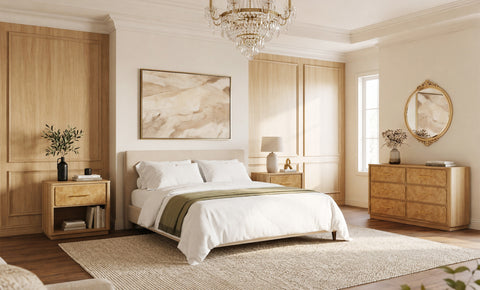
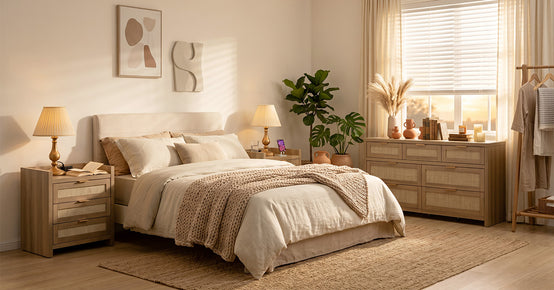
Throws, accent cushions, upholstered bench fabric — chenille works well in a bedroom built around warmth and texture.
The catch is that it reads best when the rest of the room is doing its job properly. Chenille is the soft accent. It needs organized, calm surroundings,actually,y to land as an intentional choice. A messy bedroom with a chenille throw on the chair doesn't feel cozy — it just feels messy.
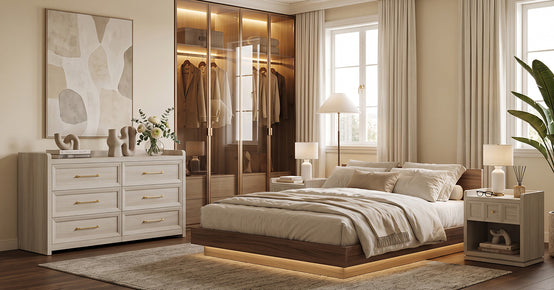
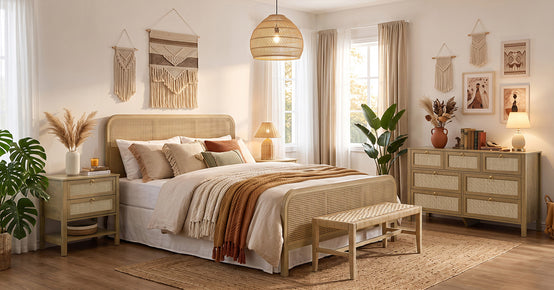
If you're building that kind of room, storage has to carry its weight. A dresser like the Savanna 6-Drawer Dresser keeps everything out of sight, surfaces clear, and gives the softer pieces in the room space to actually register.
The Bedside Problem

Here's something people underestimate: a cluttered nightstand can ruin the feel of an otherwise well-put-together room. You've got the lighting right, the bedding looks great, there's a chenille throw on the chair — and then there's a pile of stuff on the bedside table that visually cancels all of it.
The Stria Nightstand with Drawers handles the practical stuff — book, phone, charger, glass of water — behind the drawer fronts rather than on the surface. Clean bedside, better room, the chenille pieces get to do their job.
Building Around It

Chenille works best when it's the main texture in a room rather than competing with three others. The furniture around it should be clean, simple, and not pull visual focus.
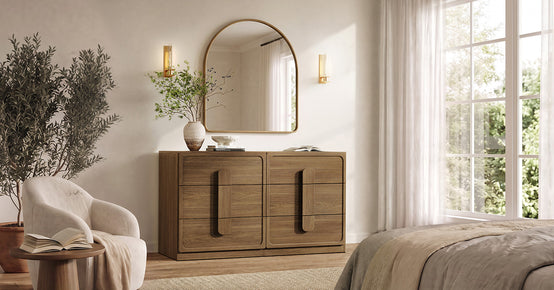
A dresser like the Terra 6-Drawer Dresser is a good example of what I mean — horizontal lines, solid construction, nothing unnecessary in the design. Put that in a room with a chenille piece nearby, and the combination feels considered. Add a bunch of competing textures and patterns instead, and even good chenille gets lost.
The same logic applies in a living room. Clean furniture alongside a chenille sofa creates warmth that feels intentional. Crowd the space with too much going on, and the fabric just blends into the background.
How to Keep Chenille Soft — The Actual Habits That Matter
Not complicated. But skipping any of these compounds fast.
- Vacuum weekly — soft brush attachment, direction of the pile. Never the beater bar.
- Blot spills, never rub — press a dry cloth down to absorb, then check the care code before doing anything else.
- Cold water only for washing — gentle cycle, air-dry. Heat works against both cotton and polyester pile over time.
- Rotate cushions every few weeks — your regular spot flattens faster than the rest. Moving them around evens it out.
- Lightly brush on flat spots — soft fabric brush, one direction. Works on early-stage crushing before it sets permanently.
FAQs
What does chenille feel like?
Warm, soft, and fuzzy — but in a good, intentional way, not a scratchy way. The surface has a gentle grip to it rather than a slippery glide. The closest thing I can compare it to is thick woven fabric for furniture. Run your hand in one direction, and it's plush and smooth. The other way, you get a little more texture. Cotton versions feel more natural and breathable; polyester versions are firmer and more structured. Either way, once you've touched it once, you know it immediately.
Is Chenillele soft or scratchy?
Good quality chenille is soft — that's the whole point of choosing it. If a chenille fabric feels scratchy, something's off: either it's low-grade material, the pile has worn down, or it's pilling from friction over time. Before buying any chenille piece, grab a swatch and test it against the inside of your wrist or inner arm. Showroom feels are quick and under fluorescent lights. Your actual skin contact at home is what counts.
Is Chenille better than cotton?
For sofa upholstery where comfort is the main goal, usually yes. Chenille is thicker, warmer, and far more enveloping than flat-woven cotton. But for a breathable fabric in a warm climate, or for easy-care everyday use where you need to throw covers in the wash regularly, plain cotton might actually suit you better. Cotton chenille sits usefully between the two options: a natural fiber, pile-constructed, more breathable than polyester, and more practical than delicate decorative cottons.
What are the main disadvantages of chenille?
Real ones, worth knowing: the pile can snag on sharp edges (most commonly cat claws, but also jewelry and rough surfaces). High-use areas can pill or flatten over time. The fuzzy surface collects pet hair and lint more than smooth fabrics, so regular vacuuming isn't optional. Cleaning requires care — scrub aggressively, and you permanently damage the pile. And in warm rooms or hot climates, the fabric can feel noticeably warm. None of these are dealbreakers by themselves, but knowing about them before you buy is a lot better than discovering them six months later.
Which is better — velvet or chenille?
Genuinely depends on the situation. Velvet is smoother, more polished, and holds up better in homes with cats because its tight surface gives claws almost nothing to catch on to. Chenille is warmer, fuzzier, and more practical for a sofa that sees real daily family-room use. For a formal accent piece that mostly needs to look beautiful, velvet makes sense. For a couch people are actually going to sit, slouch, and nap on, most people end up happier with chenille. Budget-wise, chenille is usually the more accessible option, too.
Does Chenillee get hot?
It can. The pile traps warmth — lovely in a cool room, less great on a humid summer evening. Cotton blends manage this better than pure polyester. Open-weave and lighter-weight chenille also run cooler than a thick, dense pile. If heat's a real concern, order a swatch and sit on it in your space on a warm afternoon. Thirty minutes tells you more than any spec sheet.
Is polyester chenille good quality?
Yes — for practical everyday use, it's a solid choice. Most sofa manufacturers deliberately use polyester chenille because it combines a genuinely soft texture with the durability that synthetic fibers offer. Better at resisting wear than cotton chenille, easier to clean, and holds color well. Some people can tell the tactile difference between polyester and cotton chenille; others honestly can't. For a high-traffic family room sofa that needs to look decent in a few years, polyester chenille is usually the right call.
Do cChenilleshrink when washed?
Cotton chenille can be especially prone to shrinking in hot water or a high-heat dryer. Polyester chenille is a lot more stable. The safe approach: check the care code tag before doing anything. Many chenille sofa covers are dry-clean or spot-clean only, meaning machine washing isn't recommended, regardless of the fiber. If machine washing is permitted, cold water and a gentle cycle only, then air dry rather than tumble drying.
References
- Britannica — Chenille — History and construction of chenille yarn and fabric.
- Schumacher — 7 Things to Know When Decorating With Chenille — Design context from a leading interior fabric authority.
- Ice Fabrics — What Is Chenille Fabric? — Full overview of chenille types, fiber blends, and upholstery applications.
- The Spruce — How to Clean Upholstered Furniture — Practical guide to care codes and cleaning methods.
- Good Housekeeping — Best Sofa Fabrics — Consumer-tested sofa fabric comparison for real households.
- Al Nassaj — Chenille Fabric vs Velvet — Side-by-side comparison on softness, durability, and maintenance.
- The Fabric Outlet — Everything You Need to Know About Chenille — Overview of chenille properties and home uses.


Looking for something else?

Furniture Materials Guide: Picking the Right Material Room by Room
LEARN MORE
How to Mix Wood Tones Without Making a Room Look Mismatched
LEARN MORE
18 College Apartment Furniture Ideas That Save Space and Money
LEARN MORE
Types of Entertainment Centers: 11 Designs and How to Pick One
LEARN MORELooking for something else?

Curio Cabinet Decor Ideas: How to Style a Display Cabinet Without the Clutter
LEARN MORE
Curved Furniture: How to Style, Measure, and Buy It in 2026
LEARN MORE
What Is Rattan Furniture? A Buyer Guide to Types and Care
LEARN MORE


Further reading

How to Choose a Nightstand for a CPAP Machine

How to Choose a Shoe Cabinet for Men's Sizes, High-Tops, and Bulky Shoes


