




46 Brilliant Bookshelf Ideas for Every Type of Space

Walk into a room with a well-styled bookshelf and something shifts. Hard to name exactly what. It's not "nice interior design." It's more thanjust someone clearly living there and having taste.
Most bookshelves are one of two disasters: crammed with everything the owner has ever owned, or weirdly empty because they bought the unit and then lost their nerve. Neither is hard to fix. You just need a starting point.
Here are 46 of them. Use what fits your space. Skip what doesn't. The same ideas work on a floor-to-ceiling built-in as they do on a small three-tier unit — and if you're still hunting for the right piece, Sicotas Furniture has a solid range of modern bookshelves and storage pieces worth browsing before you start.
Why It's Worth Getting Right
Here's the thing about bookshelves: they're the one piece of furniture you have total control over. A sofa is a sofa. A dining table stays put. But a shelf? Completely changeable. Reversible. Costs almost nothing to experiment with.
They're also one of the first things people notice walking into a room — not consciously, but a shelf that looks considered reads differently than one that got filled up and forgotten. The gap between the two isn't as wide as it looks.
Five Things to Know Before You Touch Anything
Not rules. More like shortcuts — the kind that save you from rearranging the same shelf three times in a weekend.
- Space isn't wasted space. Leave 20–30% of each shelf open.
- Odd numbers look more natural. Groups of three and five beat groups of two and four every time.
- Vary the heights. Tall next to short, with something filling the gap between them.
- Repeat at least one element — a color, a material, a shape — across the whole display. Twice is enough.
- Step back more than feels necessary. Editing from a distance is where the actual work happens.
COLOR
1. Sort Your Books by Spine Color

Divisive, this one. Some people find it insufferably shallow — can't find anything by author. Valid complaint. Others try it once and refuse to go back. Also valid.
Sort warm tones to one side, cool to the other. Leave a strip of whites or creams as a buffer between them. Takes an afternoon. Looks like a room you designed on purpose.
2. Build a Neutral Palette

Whites, creams, tans, natural wood. Sounds like it'd be boring. Isn't. A neutral shelf creates a calm backdrop — every object on it reads more clearly because nothing's competing.
The trap: making everything the same finish. Same tone, different textures is what keeps it alive. Rough ceramic next to smooth linen next to matte paper. Palette stays quiet. Surfaces don't.
3. Pick One Accent Color and Use It Three Times

Terracotta. Navy. Dusty sage. Doesn't matter which — pick something that already exists in the room and bring it onto the shelf in three different forms: a few book spines, a small vase, a frame.
Three appearances of the same color at different heights. That's the whole trick. The shelf stops looking random and starts looking like someone made deliberate choices.
4. Go Monochrome

White books on a white shelf. Sounds like a mistake. It's not.
What saves it from feeling empty: surface variation. Matte ceramic next to a glossy box, then a fabric-covered notebook. Keep the color consistent. Let the textures carry the visual interest.
5. Dark Spines, Light Shelf

Strong contrast. No sorting needed. Dark-spined books against pale wood or white paint read clearly from the other side of the room — each book distinct, nothing blurring together.
Works regardless of what books you actually own. No rearranging. No new purchases. Just put them there and see.
6. Let the Objects Carry the Color

Your books are a chaotic mix of colors, and you're not sorting them. Totally fine.
Leave the books alone and build the color story with objects instead. One cobalt vase. A terracotta pot. A bright ceramic pressed against the book spines. The books become a neutral backdrop. The objects do the work.
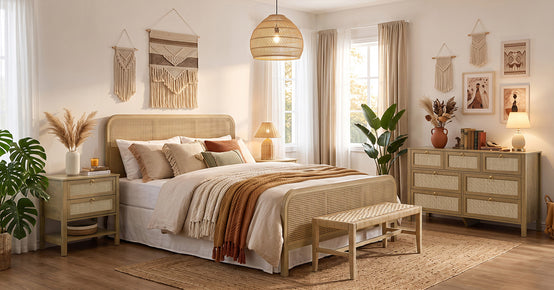
7. Pull Colors From Elsewhere in the Room

Before touching the shelf, look at the room. What's in the cushions? The rug? The curtains? Pull two of those tones onto the shelf, and the bookcase stops being a separate thing — it just becomes part of the room.
No new purchases required. Work with what's there.
8. Paint the Back Panel

One coat of paint on the inside back of the uni: deep navy, warm charcoal, dusty sage. Even the most ordinary objects look considered against a strong, colored backdrop.
Works on anything — freestanding units, flat-pack bookcases, built-ins. Totally reversible. Costs almost nothing. If you only try one thing from this whole guide, make it this.
LAYOUT
9. Mix In Horizontal Stacks

Standing every book upright is the default. It's also relentless, visually. Lay a small stack flat — two or three books on their side — and the rhythm of the shelf immediately changes.
Bonus: horizontal stacks become platforms. A candle on one. A plant on another. A small framed photo leaning against the books behind. Suddenly, the objects have somewhere to live.
10. Leave More Empty Space Than Feels Comfortable

This one's hard. It feels wrong. A shelf with open space looks intentional. A shelf packed to every edge looks like a storage problem disguised as a bookcase.
Try it anyway. Clear 20–30% of each shelf and sit with it for a week. What feels like absence starts to feel like breathing room. Everything that remains looks better for having space around it.
11. Vary the Book Heights

Tall, short, tall, short — with something filling the gap between them. The variation creates rhythm. The eye moves across the shelf instead of landing once and stopping.
Group same-sized books together, and you get a flat, unbroken line. Fine for storage. Not interesting to look at.
12. Replace Your Bookends

Most people's bookends are functional and nothing else. Good at keeping books upright. Actively unhelpful for how the shelf looks.
Marble bookends. Sculptural ceramic pieces. Chunky wooden brackets. Metal objects that look like they were actually chosen. The right bookends do two jobs simultaneously — hold things up and earn their spot. Swap yours before anything else.
13. Group in Threes and Fives

Interior designers say this constantly. It sounds made-up. It isn't.
Three books, one vase, and one small object together look balanced. Four books and two vases look slightly off — you just can't put your finger on why. Odd groups create a natural tension that even groups don't have. Try it before dismissing it.
14. Turn Some Books Face-Out

One or two books displayed cover-out — facing the room instead of showing spine — change the pace of the display. The eye slows down.
Art books, photography books, anything with a cover worth actually seeing. Best on a middle shelf at eye level, where people genuinely look.
15. Break It Into Zones

Stop treating the whole bookcase as one long surface. Divide it. One section is mostly books; the other,e mostly objects. One is a deliberate mix.
The contrast between zones gives the display structure. Makes re-styling simpler too — you're working one section at a time, not staring at the whole unit wondering where to start.
16. Align the Front Edges

Quiet trick. Align the front edges of books and objects so they sit just inside the shelf lip.
Everything immediately looks tidier. Not stiff. Not formal. Just intentional. Takes two minutes, and nobody can put their finger on what changed.
DECORATIVE OBJECTS
17. Get a Plant on There

Plants do something on a bookshelf that nothing else can replicate. The organic, irregular shape breaks up all those right angles. The green is fresh and real in a way a ceramic or frame simply isn't. Pothos trails beautifully. String of pearls looks quietly dramatic. Succulents fit anywhere.
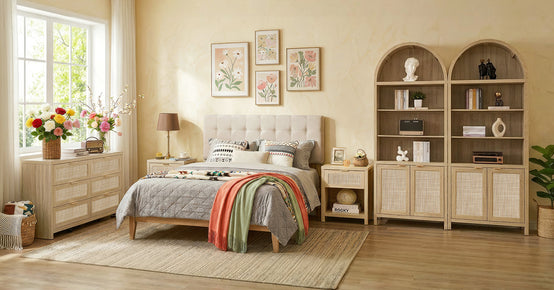
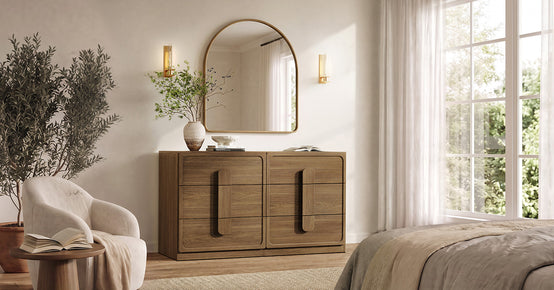
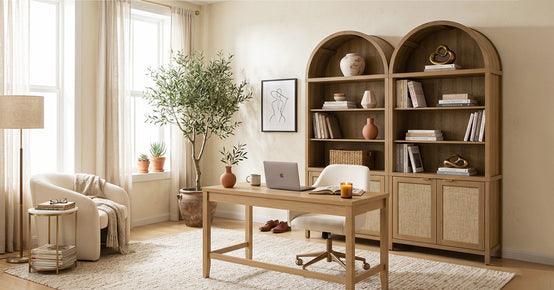
Working with a larger unit? The Helio 2-Door Arched Bookcase with Oval Cutout has open upper shelves, perfect for trailing plants, and closed lower storage that keeps the practical stuff completely hidden.
18. Lean Art Against the Back Panel

Don't hang it. Lean a small print or photo directly on the shelf, angled slightly against the books behind it.
Adds depth. Feels collected rather than arranged. Move it whenever you feel like it — which a nail hole won't let you do.
19. Find One Good Sculptural Piece

One piece with genuinely interesting form. A twisted ceramic. An abstract metal figure. Something hand-carved with real weight and presence.
Gives the eye a landing spot. Makes everything around it look more considered. Doesn't need to come from a design store — market finds, and independent makers usually beat anything bought new.
20. Try Candles

Taper candles in simple holders add height and quiet elegance that's hard to get from anything else. A small tray with a pillar candle creates a grounded corner.
Don't even have to light them. The visual presence is the point. (If you do light them — keep them away from books, which on a bookshelf is essentially everywhere.)
21. Add Something With a Story

A vintage globe. An old clock with an unusual face. A brass compass. Something from somewhere you've actually been.
Objects that suggest curiosity or history make a shelf feel inhabited rather than just styled. These are also the things guests ask about. Worth something.
22. Put Clutter in Pretty Boxes

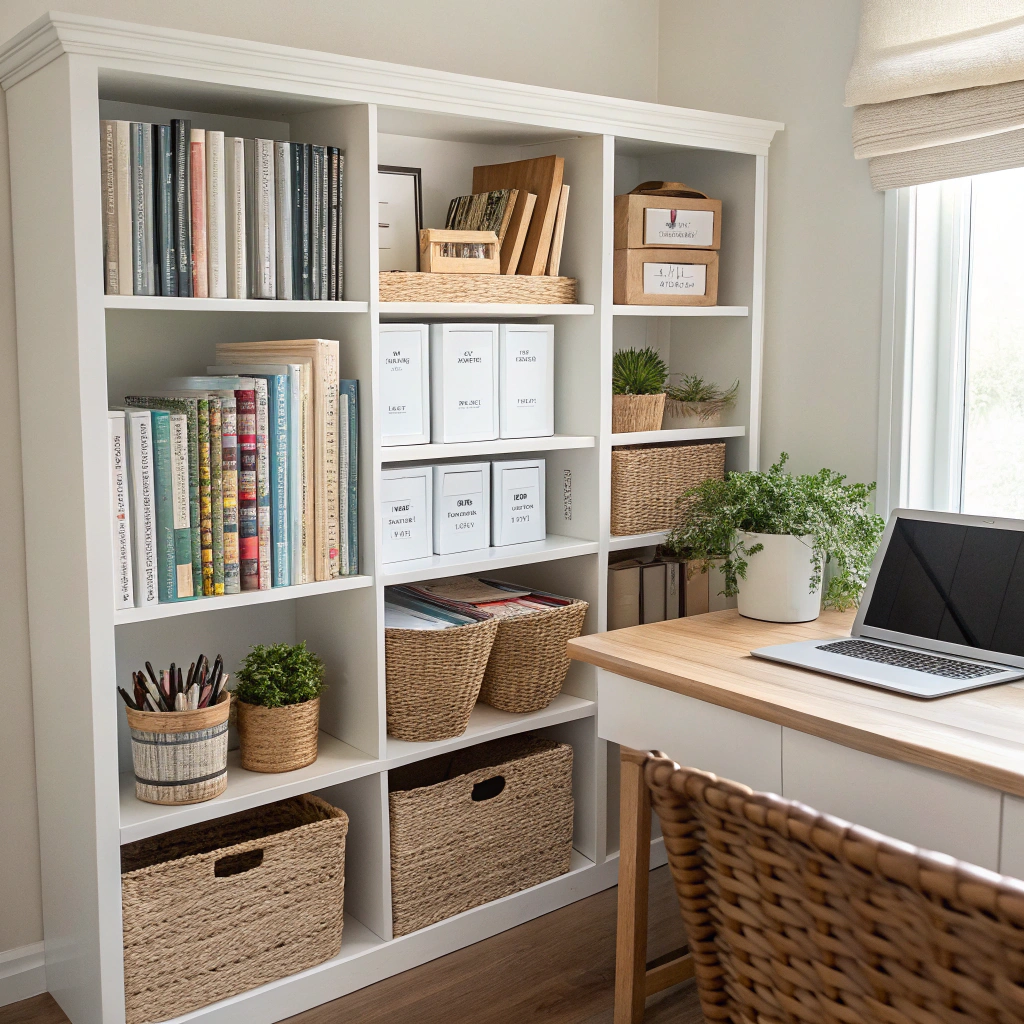
Remote controls, cables, spare batteries, stationery — all of it can live on a shelf if it's inside a good-looking container: lacquered boxes, woven baskets, linen-lined trays.
Functional and decorative at the same time. Some of the most useful things you can put on a bookshelf.
23. Ceramics Over Generic Decor

Hand-thrown stoneware. Earthenware jugs. Ceramic mugs with unusual profiles. The imperfect, irregular quality of handmade pieces is immediately apparent from mass-produced decor.
Two or three genuine ceramic pieces do more for warmth and texture than a shelf full of store-bought items. One good thing beats five average things every single time.
24. Keep One Personal Object There

A shelf styled only with things that "look right" ends up feeling like a hotel lobby. Curated, yes. Cold, also yes.
A photo you actually like. A book that changed something for you. An object with a real story. These make the shelf unmistakably yours. Don't edit them out for the sake of consistency.
TEXTURE & MATERIALS
25. Three Materials Per Shelf, Minimum

Wood, metal, ceramic. Glass, rattan, stone. Any combination. The point is variety — three surfaces catch light differently, and together they create depth that a single material never achieves.
One material: flat. Two: better. Three: looks like someone actually thought about it.
26. Add a Basket

If a shelf feels off and you can't figure out why, put a basket on it. Rattan, seagrass, woven wool.
Woven surfaces bring warmth, texture, and hidden storage all at once. They also carry a relaxed, natural quality that softens the rigid lines of a bookcase in a way that ceramics and metal can't. Put one on the bottom shelf. It'll look like it was always there.
27. Some Books Are Better for Display Than Others

Not all books read the same. Hardbacks with cloth spines, vintage hardcovers, journals with fabric bindings — these have a tactile richness that modern paperbacks lack entirely.
Group four or five of them together. They read as a deliberate choice. Small difference. Big visual impact.
28. One Marble Piece

A marble bookend. A small tray. A paperweight. Just one.
Marble adds weight, cool elegance, and natural veining that catches light differently at different times of day. It also makes everything around it look slightly more considered — an unfair amount of work for one small object.
29. Matte Against Glossy

Matte ceramic vase next to a glossy lacquered box. Rough book spine next to a smooth glass candleholder.
The contrast between dull and reflective surfaces catches the eye without requiring any change to the colors or forms. Easy detail. Disproportionate effect.
30. One Soft Textile

A folded linen throw. A fabric-covered notebook. A piece of velvet ribbon around a stack of books—a small woven pouch.
Hard surfaces run most bookshelves — books, ceramics, metal, wood. One soft textile changes the whole temperature of the display. It's the most underused move on this list.
ROOM BY ROOM
31. Living Room: Think Gallery, Not Library

In a living room, the bookshelf has the same job as a gallery wall — to show things worth looking at. Lean framed prints against the back. Display art books cover-out. Put your most interesting objects at eye level.
The difference between gallery and clutter is editing. Be ruthless. Not everything that fits should stay.
32. Living Room: Try a Bar Tray

A small tray, a decanter, two glasses, maybe a plant cutting in a thin vase. Part of the bookshelf becomes a drinks corner that looks entirely deliberate.
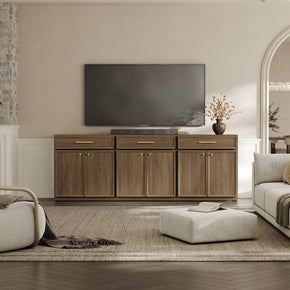
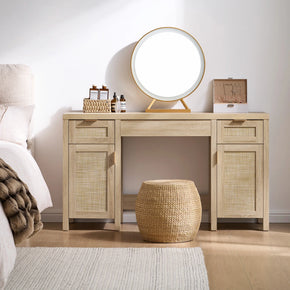
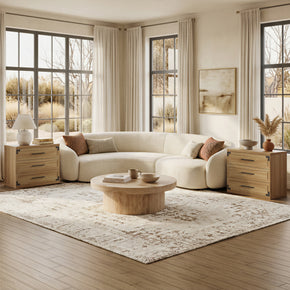
Works especially well alongside a console table — the Savanna Console Table with 3 drawers keeps the surface clear for display while the drawers handle anything you'd rather not see. Between the two pieces, a proper living room corner takes shape.
33. Bedroom: Strip It Back

Bedroom shelves should feel calm. Only the books you're currently reading. One small plant. Soft, neutral palette. Nothing creates visual noise when you're trying to wind down.
Everything that doesn't belong in a sleeping space goes somewhere else. The shelf gets edited down until what remains is restful. That's it.
34. Bedroom: Sort the Lighting Out

A small leaning lamp or clip-on reading light next to the shelf makes the corner feel intentional — not just a place where books happen to be stored.
Warm light at night genuinely does good things for a bookshelf. Colors get richer. Objects become more interesting. The area becomes somewhere you'd actually want to spend time near.
35. Home Office: Organize by Project

In a workspace, functions lead. Sort by current project or subject. What you use daily sits at eye level. What you reference occasionally goes higher or lower.
Labeled baskets handle supplies. The desk stays clear. A well-organized bookcase is usually where a tidy workspace actually starts.
36. Home Office: One Plant Is Enough

Research shows that a plant in a workspace measurably improves focus and lowers stress. You don't need a shelf full of them.
One. Snake plant, ZZ plant, a succulent. Low maintenance. Real effect on how the space feels to work in.
37. Kitchen: Cookbooks Are Decor Too

Good cookbooks have beautiful covers and spines worth looking at. A small open shelf dedicated to them is both practical and genuinely good-looking.
Stack two or three horizontally as a platform. Stand the rest upright. Add a ceramic jar or small plant nearby. Done.
38. Kids' Room: Low, Bright, Accessible

Practicality completely overrides aesthetics here. Low shelves so kids reach things themselves—bright bins so sorting is fast and obvious. Picture books face out for younger children who navigate by cover.
When tidying up is easy enough to do on their own, kids actually do it. That's the whole goal.
BOOKCASE TYPES & PAIRINGS
39. Work the Top Shelf

The top shelf of a tall bookcase is the most visible part of the unit from across the room. Most people use it for overflow storage. Don't.
Use it for something dramatic — a tall vase, a sculptural object, a trailing plant that falls downward from tier to tier. The Willow 75-inch Tall Bookshelf has multiple open tiers that make this an easy statement piece: a statement piece at the top, books in the middle, and baskets at the bottom. Each tier gets a different job.
40. Consider Doors on the Lower Half

Open shelving looks great when it's styled. When it's not, it looks chaotic. If keeping it tidy isn't realistic, a bookcase with closed lower doors is the smarter call — display on top, hidden storage below.
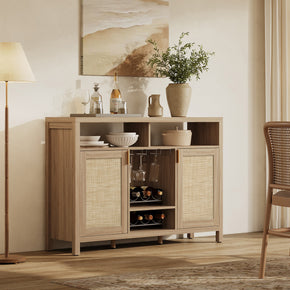
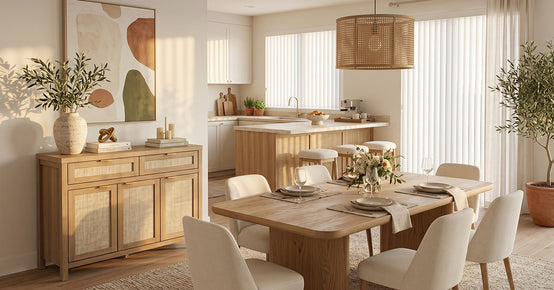
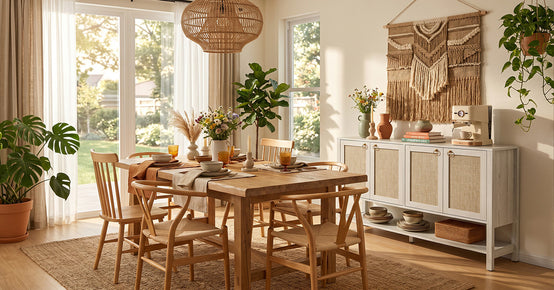
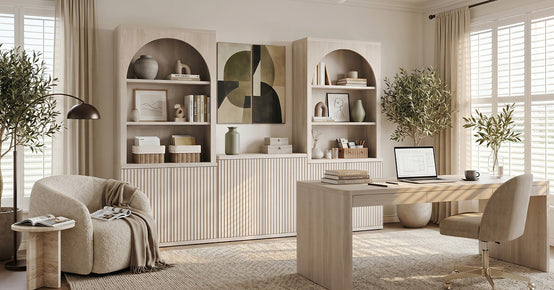
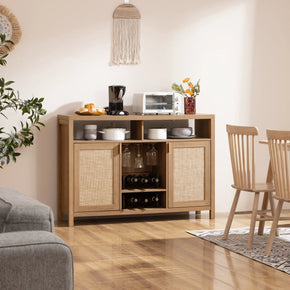
Or anchor open shelving above a sideboard for the same result. The Helio Decorative Sideboard Cabinet has enough decorative detail to hold its own beneath styled open shelving — the combination reads as one considered display wall, not two unrelated pieces.
41. Pair It With a Console Table

A slim console table in front of or beside a bookcase creates a layered display zone. The two pieces together feel more substantial than either does alone.
Keep the console surface clear or use it for a lamp and a single plant. Let the bookshelf carry the rest of the display.
42. Anchor Open Shelving With a Sideboard Below

Open shelving above a sideboard — in the living room, dining room, or hallway — creates a cohesive wall unit. Different tiers of storage and display without anything feeling disconnected.
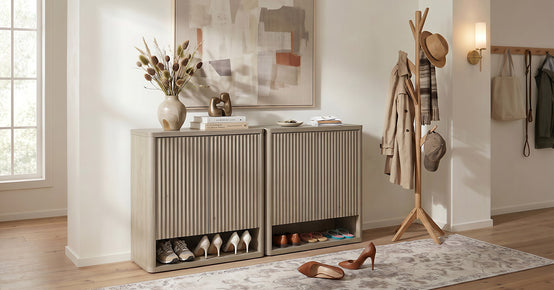
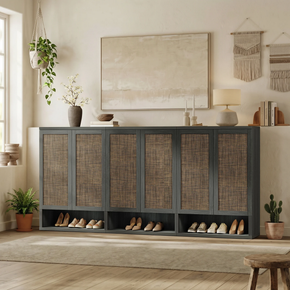
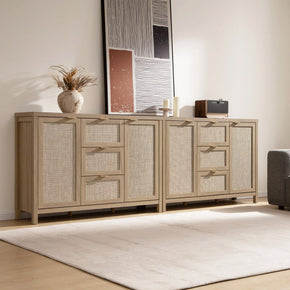
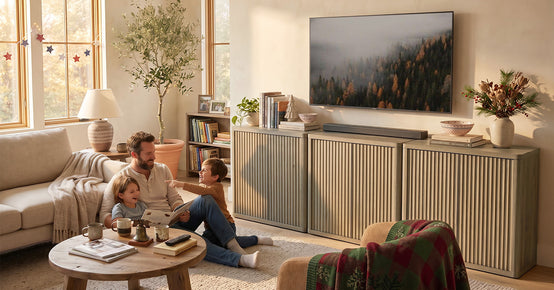
The key is choosing pieces that feel related. The Stria Sideboard with 2 Doors has a simple modern profile that sits quietly beneath open shelving — doesn't compete with what's above it, which is exactly what you want from the lower piece.
43. Go Modular

Modular shelving systems — add to, reconfigure, take apart — make sense when your space or taste is still evolving. Nothing's permanent.
Start with one unit. Add another when you're ready. In rented homes where drilling isn't an option, modular is often the only realistic choice anyway.
44. Built-Ins Need Both Sides to Match

When a bookcase is built in — flanking a fireplace, framing a doorway, running an entire wall — symmetry becomes genuinely important. Style each side to mirror the other in broad strokes.
Similar heights. Similar proportions. Similar tones. Details can vary. What you're avoiding is one side that looks finished and one that got forgotten.
45. Add a Light Source

LED strip inside the bookcase. Clip spotlight on a shelf. Small leaning lamp beside the unit—any of these.
Warm light after dark turns a bookshelf from storage into a room feature. One of the highest-impact, lowest-cost changes available. Try it.
46. Swap Things Out Seasonally

The best bookshelves shift. Not a full redecoration — just two or three accent objects changing with the season.
Autumn: warm amber tones, heavier textiles. Spring: lighter linens, fresh greens. The core stays. The seasonal layer rotates. An hour of work. Keeps the whole thing from going invisible.
Mistakes That Make Shelves Look Worse Than They Should
Filling every inch
Doesn't look full. Looks chaotic. Can't pick out individual objects from across the room? There are too many of them. Remove things before adding anything new.
Ignoring scale
Small objects on a large shelf vanish. Oversized pieces on a narrow shelf crowd it. Hold things up in context before committing. Trust your instincts if something looks too big or too small.
The shelf is disconnected from the room.
A heavily rustic shelf in a sleek modern room looks out of place regardless of how it's styled. Let the room's existing materials and tones guide the choices. The shelf should look like it came from the room, not landed in it.
Only books, nothing else
A shelf with nothing but books — however organized — lacks variety. One plant. One ceramic. One lean print. Doesn't need to be much. Just something that isn't a spine.
Never changing anything
A shelf that looks identical for three years becomes invisible. You genuinely stop seeing it. Two or three swapped objects, a couple of times a year,keep it from fading into the background.
Keeping Your Bookcase in Good Shape
Styling is enjoyable. Maintenance is what makes it last.
Wooden bookcases need more care than most people give them — especially near windows or in rooms with temperature changes. For deep cleaning, conditioning, and handling water rings or sticky residues, Parachute Home's wood furniture cleaning guide covers everything from basic dusting to stain removal without getting overly technical.
For organizing — not just styling — Extra Space Storage's bookshelf organization guide covers 14 sorting methods (color, genre, size, TBR pile) with real pros and cons for each. Worth reading before committing to any system.
And for smaller or tighter spaces, Taskrabbit's bookshelf guideoffers 13 practical storage ideas — baskets, floating shelves, horizontal stacking — that scale to any-size unit.
FAQs
How do you keep a bookshelf from looking cluttered?
Take everything off first. That's the move most people skip. Put back less than you think you need, use odd-number groups, and leave deliberate gaps between sections. Still feels busy? Take two things off before adding anything new. Editing is the skill. The rest is just an arrangement.
Does it have to be symmetrical?
No. Symmetry suits formal rooms — particularly built-ins flanking a fireplace. Asymmetry feels more relaxed and personal, which suits most modern spaces better. The room style tells you which way to go.
What kinds of accessories actually work?
Short answer: plants, leaned art, handmade ceramics, candles, decorative boxes, and one piece with an interesting sculptural form. These work with almost every room style and budget.
What doesn't: anything too polished, too obviously bought-to-fill-a-gap, or that looks like it came out of a display home. It shows.
What if the shelf is small?
Restraint. Three to five objects max. Vary the heights. Don't fill every tier. A small shelf with four considered objects and some breathing room beats a crammed one every time. Small shelves actually reward editing more than large ones do.
Best way to display cookbooks?
Stack two or three horizontally as a base platform. Stand the rest upright. Add one supporting object — a ceramic jar, a wooden board, a small plant. Takes ten minutes. Looks planned.
How often should I change things around?
Seasonally. Four times a year. You're not redecorating — just swapping two or three accent objects. Keeps the shelf from becoming part of the background, which happens faster than you'd think.
Final Thoughts
Styling a bookshelf has no real downside. It's reversible. Mostly free. The results are visible from across the room every day.
Clear it completely. Put the books back first. Add one object. Step back. Add another. Stop when adding more stops, making it better — most shelves reach that point sooner than expected.
Forty-six ideas are a lot. Use what fits. Leave what doesn't. The best version of your shelf is the one that looks like it belongs to you.
Final Thoughts
Styling a bookshelf is one of the very few home projects with no real downside. It's reversible. Mostly free. Visible from across the room every day.
Start by clearing the shelf completely. Put the books back first. Then add objects one at a time, stepping back after each addition. When adding more stops, making it better — that's when you stop. Most shelves hit that point earlier than you'd expect.
These 46 ideas are here when you need them. Use the ones that fit your space and your taste. The best version of your bookshelf is the one that looks like yours.
Resources
1. Parachute Home — How to Clean Wood Furniture —https://parachutehome.com/blogs/posts/cleaning-wood-furniture
2. Taskrabbit — How to Organize a Bookshelf: 13 Ways —https://www.taskrabbit.com/blog/how-to-organize-a-bookshelf/
3. Homes and Gardens — Organize Bookshelves Without Throwing Away Books —https://www.homesandgardens.com/solved/ways-to-organize-bookshelves-without-throwing-away-a-single-one
4. The Homes I Have Made — How to Style Bookshelves (Real Stuff Edition) —https://thehomesihavemade.com/how-to-style-bookshelves/
5. Granite Gold — Wood Furniture Care: Dos & Don'ts —https://granitegold.com/blogs/blog/how-to-care-for-wood-furniture-dos-donts-cleaning-guide
6. BiblioLifestyle — Bookshelf Organization Ideas That Actually Work —https://bibliolifestyle.com/bookshelf-organization/
7. Page Traveler — 10 Ways to Organize Your Bookcase —https://pagetraveller.com/bookshelf-styling-ways-to-organise-your-bookcase/
8. Room for Tuesday — Designer-Approved Bookshelf Styling Tips —https://roomfortuesday.com/how-to-style-a-bookshelf-easy-designer-approved-tips-for-a-curated-look/


Looking for something else?

20 Small Media Room Ideas for a Cozy, Space-Smart Setup
LEARN MORE
18 Jewelry Storage Ideas for a Tangle-Free Collection
LEARN MORE
10 Coffee Table Alternatives That Work Better in Small Living Rooms
LEARN MORE
15 Home Theater Furniture Ideas That Make a Room Work
LEARN MORELooking for something else?

Open vs Closed Floor Plan: Which Layout Suits Your Home?
LEARN MORE
Whitewashed Wood Furniture: Getting the Finish Right at Home
LEARN MORE
18 Accent Table Decor Ideas That Work in Real Rooms
LEARN MORE


Further reading

How to Choose a Dresser for Sweaters, Denim, and Bulky Clothes

Adjustable vs. Fixed Bookcase Shelves: Which Is Better for Real Storage?


