




How to Furnish a Room: 11 Simple Steps That Actually Work
You bought the apartment. Or signed the lease. Or finally cleared out the spare bedroom that's been a junk room since 2021. Whatever brought you here — congrats, you're now staring at four empty walls, Googling how to furnish a room at midnight with thirteen Pinterest tabs open. Same. I did exactly that in 2014, in a 540-square-foot studio I couldn't really afford, and made every rookie mistake there is. The section that didn't fit through the door. The rug was so small it looked like a postage stamp on the floor. The "matching set" from one Target run that aged into a hotel lobby in six weeks flat.
Eleven moves later, I've finally figured out the order that actually works — for any room, any budget, any size. Below are the 11 steps. Skip them at your own risk. (And maybe measure your doorway before reading further.)
1. Set the mood

My friend Lena texted me last March, panicking. She'd been in her new place six weeks and couldn't pick a sofa. "Should I go boho or modern?" she wrote. Wrong question. The right one is what you want the room to feel like at 9 PM on a Tuesday when nothing has gone right and you just want to collapse on something soft. That's the actual brief.
Cozy? Calm? Bright? Slightly weird in a way people comment on? Mine — and this hasn't shifted since around 2019 — is warm, lived-in, and a little chaotic on purpose. Doesn't matter what label that maps to. The feeling becomes the filter. Every fabric, color, finish, every random impulse buy you almost made at 1 AM, runs through it. Pick the feeling first. The look comes after, in that order, every time.
2. Get inspired (and build a quick mood board)

Pinterest. Yes, still, in 2026, I'm not embarrassed about it. The thing about Pinterest is the algorithm gets weirdly smart once you've fed it enough — start typing something vague like "cozy reading nook," "small living room layout," or "warm minimalist bedroom," and just save 30, 40, maybe 50 images without thinking too hard.
Then leave it alone. Three days minimum. Long enough that you forget what you saved.
When you come back, the patterns are right there, embarrassingly obvious. Okay, I keep saving rooms with curved sofas. Okay, every photo has the same warm wood tone. Okay, vintage Persian-style area rugs keep showing up. That's your mood board; you didn't even have to make one. Don't try to name your style, though — the second you label it, you'll start rejecting pieces that would've worked because they don't fit. Just keep the pattern in your head as a quiet filter. That's enough.
3. Be realistic about how you actually live

This is where everyone lies to themselves. Not on purpose — they imagine the version of life they wish was happening, then design for that fictional person. Look. I get it. I did the same for years.
Two big dogs that shed? Cream bouclé sofa is out. No exceptions. Toddler with juice boxes? Performance fabric, period. Working from home four days a week? You need a real desk, not the folding card table you dragged out of your parents' garage in December 2019 and called "temporary." (Spoiler: lasted four years. My back still hates me.) Pets, kids, partners, the friend who shows up Friday with a bottle of red — they all change what pieces of furniture work. Real life beats aspirational fantasy. Every time.
4. Measure your space and draft a floor plan

Tape measure. Right now. Go grab it. I'll wait.
This is the unsexy step that saves you the most money — somewhere around $3,000 across the years for me, easy. Walk the room and write everything down: every wall length, ceiling height, every window (width and height — both matter), every door (width and which way it swings), where the outlets sit, and where the radiator hides. Then sketch a floor plan. Phone notes are fine. Graph paper's fine. The back of a Trader Joe's receipt is fine. The point is forcing yourself to think about furniture arrangement in two dimensions before money leaves your account. Mark the room layout to scale.
The painter's tape trick is the move. Lay actual blue tape on the floor in the dimensions of the piece. Walk around it. Sit where you'd sit. You'll know in 90 seconds if it works. Saves returns. Saves your sanity.
5. Set a realistic furnishing budget

My budget for my second apartment was $4,200. I know that because I wrote it on the back of an envelope and then ignored it within three weeks. Spent $1,847 on a couch (it was nice, fair). Then, I panicked about the rest of the room. Ended up with an $89 IKEA TARVA dresser I painted black on a Sunday, and a mattress from a clearance sale at Mattress Firm that I deeply regret to this day.
Money first, shopping second. ALWAYS in that order. Decide on your number. Then split it 70/30 or 80/20 between must-haves and nice-to-haves. Bed, sofa, dining table, basic lighting plan, storage furniture — those are must-haves. Accent chairs, side tables, art, throw pillows — nice-to-haves. Spend more on what your body actually touches every day, the mattress, sofa, and desk chair if you work from home. Save on the stuff that changes with trends — table lamps, art prints, ceramics. Nobody can tell that the $34 ceramic vase came from Marshalls.
And don't sleep on secondhand furniture. Marketplace, OfferUp, Goodwill, estate sales, the local Buy Nothing group — full of solid-wood pieces that'll outlast new for half the price. Renter-friendly decorating budgets stretch FAR if you're willing to wait. Three saved searches, checked three times a week, that's the whole secret. Good budget-friendly furniture goes within hours sometimes, so when you see something, jump.
6. Pick your color palette

I learned the 60-30-10 rule from a designer named Marisa I sat next to at a friend's wedding in 2019. She was three glasses of pinot in and explaining color theory at our table like it was a stand-up routine. "Three colors," she kept saying, "three. Maybe five if you're feeling adventurous. Not seven, never seven, that's how rooms turn into a Yankee Candle." Best dinner conversation I've had at a wedding, honestly.
Here's how it works. 60% dominant color (walls, biggest furniture). 30% secondary (upholstery, curtains, area rug). 10% accent (pillows, art, ceramics, the small stuff that changes). Designers have used this for decades — it's not really even a trick, it's just math, basically.
If picking a color palette from scratch makes your eyes glaze over — and same — just steal one from a piece of art you already own. Or a fabric you love. Or a vintage rug. The artist already did the work of picking colors that look good together. You're paying a smaller invoice. Best interior design basics shortcut going.
7. Choose your anchor piece

Buy the biggest piece first. Non-negotiable. Living room? Sofa. Bedroom? Bed. Dining room? Table. Office? Desk. The largest piece of furniture in the room sets the scale and tone for everything else. Pick the wrong sofa, and you'll feel it every time you walk in.
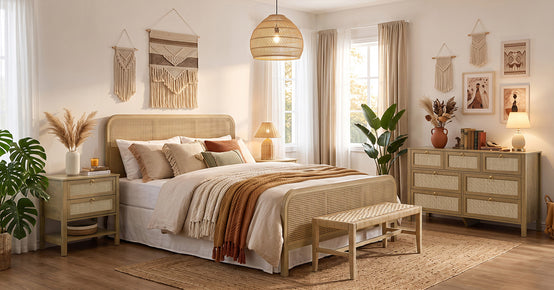
Spend extra time here. Test in person if at all possible — you can't tell how a cushion squishes from a photo. Read the one-star reviews specifically. That's where the truth lives. ("Foam compressed in three weeks, photos are deceiving." Believe them.) Measure twice. For bedroom anchors specifically, browsing a complete bedroom furniture range helps you compare scale and proportion side by side before you commit. The biggest piece is also the most expensive thing to return. Don't ask me how I know.
8. Layer in your secondary furniture

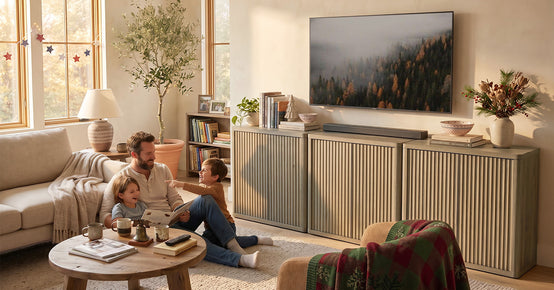
Once the anchor's locked in, the rest gets way easier. Now you add the supporting cast — a coffee table, side tables, accent chairs, a console behind the sofa, and a sideboard against the dining wall. Match the anchor in scale and feel. Not necessarily finish (matchy-matchy is a generic-looking trap).
A few rules I had to look up about 14 times before they stuck: coffee tables sit within two inches of the sofa's seat height and run about two-thirds of the sofa's length. Side tables should reach the chair next to them. Console behind a sofa? Never taller than the sofa back. Pin them to your forehead.
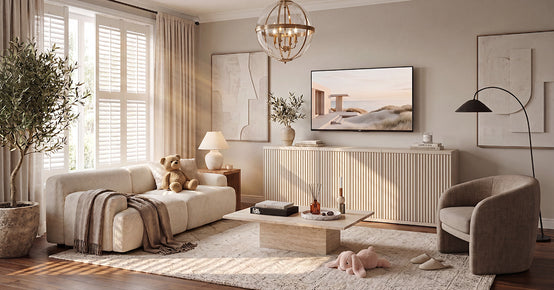
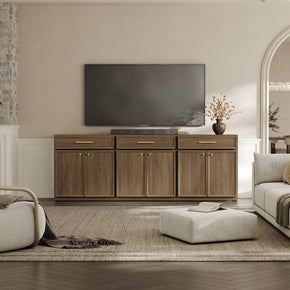
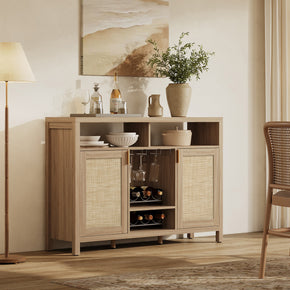
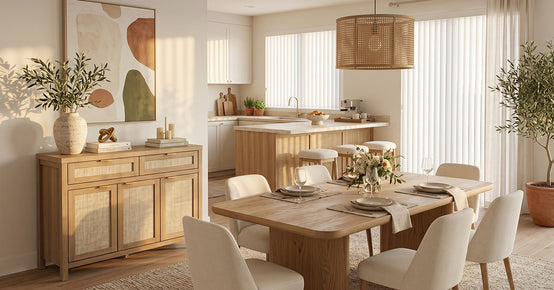
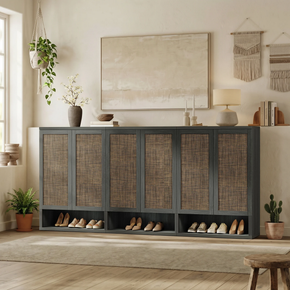
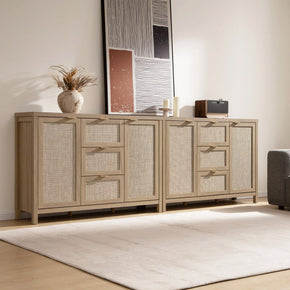
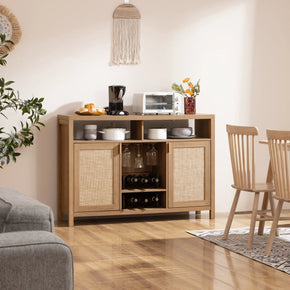
In open-plan living-and-dining setups, a sideboard like the Stria Sideboard with 2 Doors handles three jobs at once — hides clutter, gives you a serving surface when guests show up unannounced, and adds a clean horizontal anchor. Triple duty, one piece.
9. Plan smart storage early

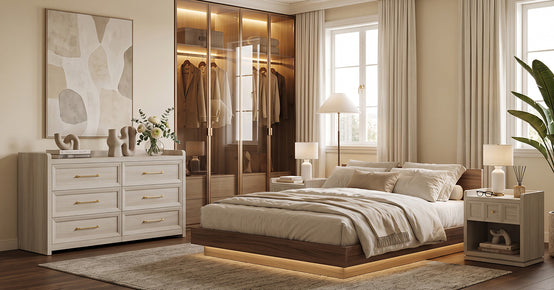
Storage is the boring step nobody plans for, and it's the one that quietly separates rooms that look intentional from rooms that always look slightly chaotic — even when you've technically cleaned. Build storage furniture into the budget early, not as an afterthought. Open shelving is gorgeous for one week, then real life happens, and it looks like a yard sale. Browse modern dressers built for daily use before you commit — drawer count, depth, and weight capacity matter more than the finish.
Pick a hard-working dresser
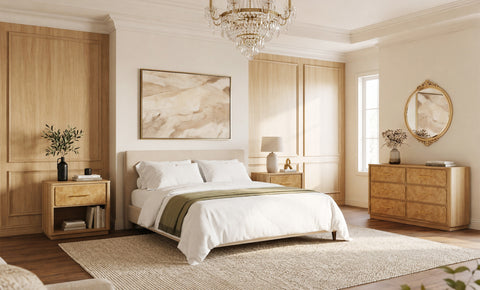
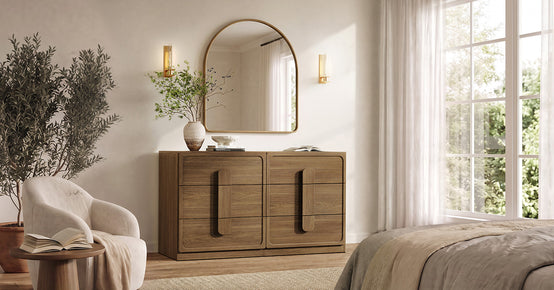
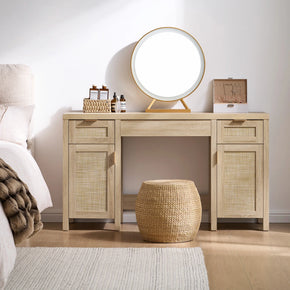
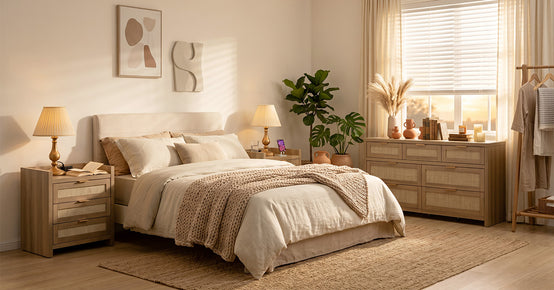
Closets rarely cut it alone. A dresser handles folded clothes, smaller items, and the off-season pile that lives in the back of your sweater drawer for half the year. Aim for at least six drawers per adult sharing the bedroom. The Savanna 6-Drawer Dresser gives you that capacity in a 56-inch footprint that fits along most bedroom walls without dominating them.
Get bedside basics right
Nightstands have one job: hold a lamp, a book, water, and a phone. Two of equal height work better than one — symmetry calms the eye. If your charging cords are sprawling across the floor like tripwires (mine were, 2022, deeply embarrassing), a nightstand with a built-in charging station sorts it without adding more visible wires.
Use vertical space when floor space runs out
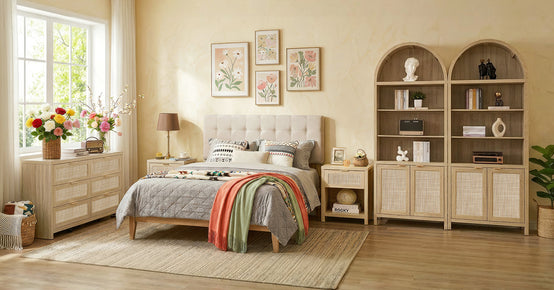
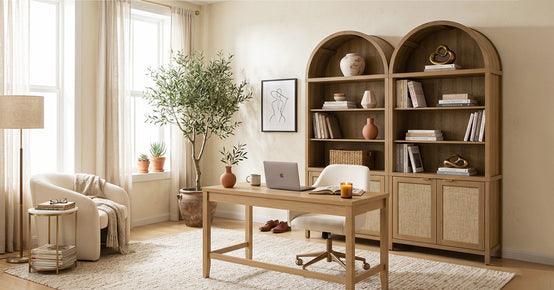
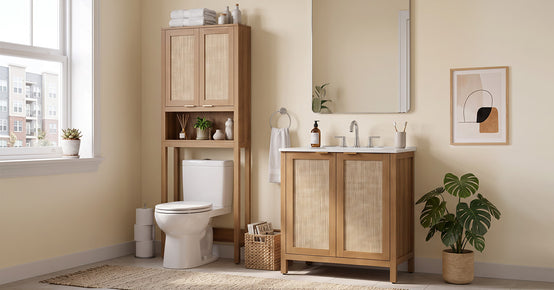
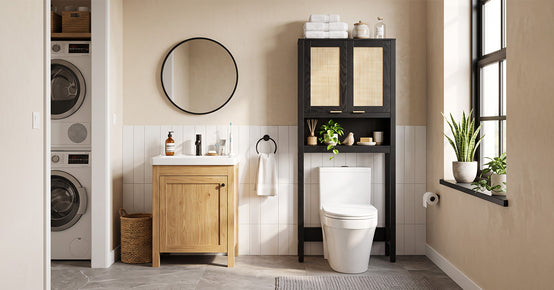
Floor space disappears faster than you think — especially in apartments or any small living room layout. When that happens, build up. Tall, narrow bookcases store more than low sprawling ones, and they pull your eye upward (which makes ceilings read as taller). The Savanna Arched Bookcase stands over 7 feet tall and pulls real visual height into smaller rooms. Multifunctional furniture that's actually beautiful — rare combo.
10. Choose rugs, curtains, and textiles

This is the step where the room actually starts to look like a real room, not a furniture showroom. Up until now? All infrastructure. Now it gets soft.
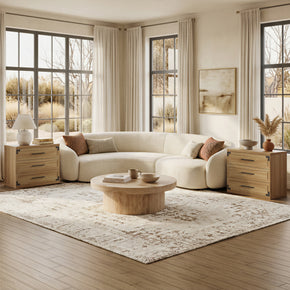
Area rugs first. Most living rooms need 8x10 minimum, and yes, I know that feels enormous when you're shopping online, just buy it anyway. The rule that fixes 90% of beginner mistakes — at minimum, the front legs of every seating piece sit on the rug. A rug floating in the middle of a furniture group looks like it is drowning. Genuinely sad to look at.
Curtains while we're here: floor-length, always. Mid-window curtains look like the curtain shrank in the dryer, I'm begging you. Layer pillows, throws, bedding in the colors you locked in at step 6 — repetition is what reads as intentional instead of accidental. For exact spacing rules on living room furniture down to the inch, expert living room layout guidelines cover everything designers actually use. Helpful when you're standing in your living room with a tape measure, feeling unhinged.
11. Light the room and accessorize last

Lighting's the thing nobody plans for, and everybody gets wrong. One ceiling light is not lighting. It's just a single sad bulb pretending. Your room will read like an interrogation scene every single night.
You need three layers. Ambient — the overhead — fills the space. Task — reading lamp by the chair, desk lamp on the desk, pendant over the kitchen island — for actual activities. Accent — table lamps, sconces, picture lights — set the mood. Use bulbs in the 2700K-3000K range at home. Anything cooler reads like a dental office, and nobody wants to relax at the dentist.
Then accessorize, last. Wall decor. Plants — real if you can keep them alive, fake if you can't, no judgment from me, I've personally killed seven fiddle-leaf figs since 2018, and I'm not proud about it. Books you've actually read, NOT decorative book bundles from Amazon, please, people can tell. Ceramics. Candles that smell like something specific. Framed photos of people you actually love. Home accessories should be collected over months, not bought in one Tuesday-night Amazon haul. The slow build is the whole point.
Final Thoughts: furnish slowly, live honestly
The thing nobody told me in 2014: you don't have to finish in 30 days. Or 60. Or six months. The best rooms I've ever been in were built over the years. A vintage rug from a Sunday estate sale. A dresser was refinished in a garage on a Saturday. A side table picked up at a thrift store and sanded down with $9 of supplies from Home Depot. Layered. Not assembled.
If you're sourcing the spine of your room — the foundation furniture that everything else hangs on — browse modern Sicotas furniture for dressers, nightstands, sideboards, and bookcases built to actually live with. Then fill in the personal stuff over time. Measure twice. Buy in order. Let the room evolve. The room rewards patience. Promise.
FAQs
What do you need to furnish a room?
Five things, that's actually the whole list. The big anchor piece (sofa, bed, dining table, or desk, depending on the room). Supporting seating. Surface space — coffee table, side tables, console, whatever. Layered lighting (more on that in a minute). And storage, the boring step everyone forgets. After those five, an area rug, window treatments, and a small handful of decor items finish the job.
What should you buy first when furnishing a room?
Largest piece. Always. Whatever the biggest thing in the room is going to be — that's first. Sofa for living rooms, bed for bedrooms, dining table for dining rooms, desk for offices. Pick wrong and the rest of the room just kind of orbits the mistake forever. Spend extra time here, read the one-star reviews, do the painter's tape thing.
How do you furnish a room on a budget?
Spend on the essentials, save on the decor, mix new with secondhand, and you'll be fine. Marketplace, Goodwill, and estate sales are gold mines if you're patient enough to wait. Skip matching sets, please; they look generic the second they arrive. And whatever you do, don't try to finish the entire room in one shopping trip. The patient route always wins.
What are the 7 rules of interior design?
Balance, proportion, scale, rhythm, contrast, emphasis, and harmony. Don't bother memorizing them. When a room feels off — and you'll know — one of these seven is what's missing. That's the entire reason the rules exist. Designers use them as a diagnostic, not a checklist. You can do the same.
How do you furnish a small room?
Multifunctional pieces. Vertical instead of horizontal. Light colors plus a mirror or two to bounce light around. Edit ruthlessly, and I mean ruthlessly. A few well-sized pieces beats a bunch of tiny ones every single time in any small living room layout. Counterintuitive, but true once you've tried it.
How long does it take to furnish a room?
Two to six months for the foundation pieces, way longer for the soft layers and home accessories. Don't rush. Rooms that come together in two weeks usually look like they came together in two weeks — there's no shortcut for the lived-in feel. Friends will compliment a slow-built room. They quietly tolerate a fast one.
What does furnishing a room include?
Furniture, area rugs, lighting, window treatments, and the soft goods — bedding, pillows, throws. Doesn't include built-ins, paint, or flooring (that's renovation). Quick rule of thumb: if you can carry it out when you move, it counts as furnishing. If you can't, it doesn't.
How much does it cost to furnish a room?
Wide range. A budget bedroom can come together for $1,200 to $2,500 if you mix new essentials with thoughtful secondhand finds. Mid-range living room runs $3,500 to $8,000. Designer-level with vintage pieces and custom upholstery climbs past $20K fast. The three biggest variables, every time: the sofa, the bed, the rug.
Sources
- Emily Henderson, How to Design a Room: The 8 Steps You Need to Know to Create Your Dream Space, Style by Emily Henderson, 2025.
- Amelia Mularz, A Room-by-Room Guide to Furnishing Your New Home From Scratch, Architectural Digest, 2023.
- Meghan Shouse, 99 Designer-Approved Living Room Decorating Ideas for Every Budget and Style, House Beautiful, December 2025.
- Morgan Goldberg, 12 Simple Steps to Design Your Perfect Living Room, Havenly, November 2024.
- IKEA Editorial Team, How to Furnish a Living Room, IKEA, 2024.
- Bob Vila Editors, 26 Inspiring Ways to Repurpose a Spare Bedroom? Everything You Need to Know About This Design Tip, Bob Vila, 2022.
- Apartment Therapy Editors, 75 Small Living Room Ideas That Maximize Both Space and Style, Apartment Therapy, 2025.
- Laura Gaskill, How to Decorate a Small Living Room, Houzz, 2023.


Looking for something else?

Furniture Materials Guide: Picking the Right Material Room by Room
LEARN MORE
How to Mix Wood Tones Without Making a Room Look Mismatched
LEARN MORE
18 College Apartment Furniture Ideas That Save Space and Money
LEARN MORE
Types of Entertainment Centers: 11 Designs and How to Pick One
LEARN MORELooking for something else?

Curio Cabinet Decor Ideas: How to Style a Display Cabinet Without the Clutter
LEARN MORE
Curved Furniture: How to Style, Measure, and Buy It in 2026
LEARN MORE
What Is Rattan Furniture? A Buyer Guide to Types and Care
LEARN MORE


Further reading

How to Choose a Nightstand for a CPAP Machine

How to Choose a Shoe Cabinet for Men's Sizes, High-Tops, and Bulky Shoes


