



10 Simple Ways to Style Modern Coastal Furniture at Home
Modern coastal furniture borrows from the sea without announcing it. Warm timber, linen, woven texture and clean shapes do the work that anchors, shells and rope used to do.
One practical warning before the ideas. Coastal rooms run on daylight, and daylight fades furniture, since light damage builds up and cannot be reversed. Worth planning around rather than ignoring.
These 10 ways suit beach houses and suburban homes equally. Apartments and rentals too. Palette and material carry this look, not your address.
Modern Coastal Furniture, Defined
Inspiration, Not a Theme
The look draws on seaside color, natural materials, and relaxed comfort. It does not fill the room with nautical signs. It suggests the coast rather than spelling it out.
Clean Lines Meeting Soft Materials
Streamlined shapes keep a room current. Linen, timber, rattan, and woven fiber keep those shapes from turning cold. That tension is the whole style in one sentence.
It Works Nowhere Near a Beach
Put warm neutrals, natural texture, and slim furniture profiles in a city apartment, and the room still reads coastal, exactly as it would on the waterfront—no ocean view required.
Modern Coastal vs Classic Coastal Furniture
|
Element |
Modern Coastal |
Classic Coastal |
|
Color |
Warm white, oat and sand, with muted blue or sage |
Crisp white with navy or bright blue, sharp contrast |
|
Shapes |
Cleaner profiles, gentle curves, slimmer frames |
Cottage shapes, slipcovers, turned legs |
|
Finishes |
Matte, warm timber, brushed metal |
Whitewash, wicker, painted surfaces |
|
Decor |
Edited and texture-led |
More decorative, often nautical motifs |
|
Mood |
Calm, refined, current |
Casual, charming, more literal |
Both share natural materials, light color, and easy comfort. The difference is how literal the room gets.
10 Simple Ways to Style Modern Coastal Furniture
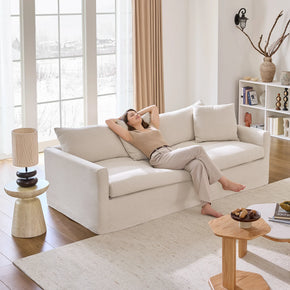
1. Anchor the Room With a Warm Neutral Sofa

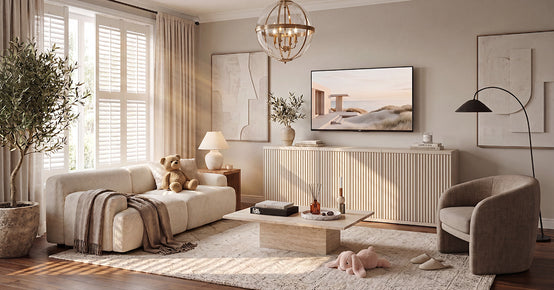
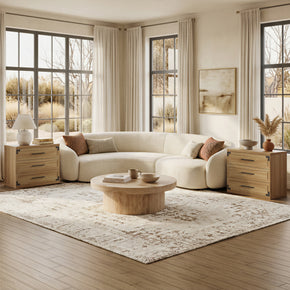
The sofa sets the tone before any accessory does. Skip stark white and go for oat, cream, sand, or soft grey;a down-filled three-seater sofa in a textured weave adds the relaxed depth this style needs.
Let the cushions carry the coastal color instead. Muted blue, sage, caramel, a bit of terracotta. A few, not a whole scheme.
2. Choose Wood With Visible Grain

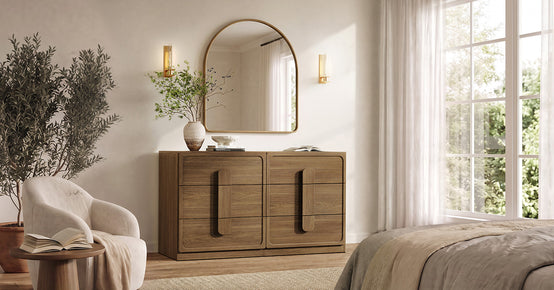
Timber stops a pale room from feeling like a waiting area. Oak, ash, acacia and walnut all work, and the grain itself counts as texture.
Resist matching every finish. Two or three compatible wood tones look collected. One tone everywhere looks like a catalog page.
3. Add a Timber Coffee Table With Soft Edges

Straight architecture needs something to push against. A round fluted coffee table brings a curve and a low-sheen finish into the middle of the room, which is exactly where the eye lands first.
Style it with fewer, larger things. One tray, one ceramic piece, a stack of books. Not eight small objects.
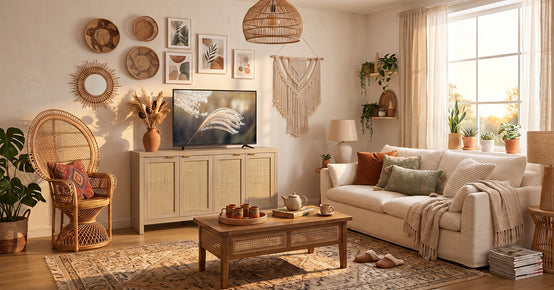
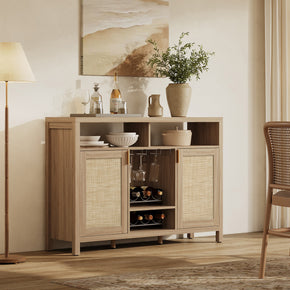
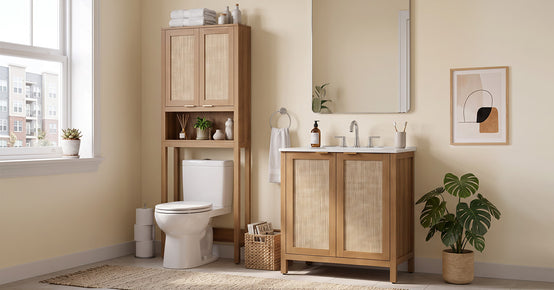
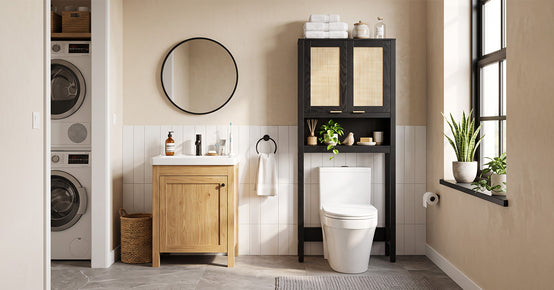
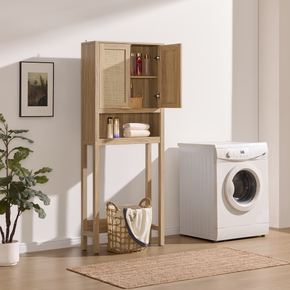
4. Use Rattan and Cane Sparingly

Woven material carries coastal character faster than almost anything else, which makes it easy to reach for again and again.
The problem is repetition without variation, not quantity. Five pieces in the same weave, the same tone, and the same scale flatten a room because nothing distinguishes one from the next. The eye stops registering any of them as texture.
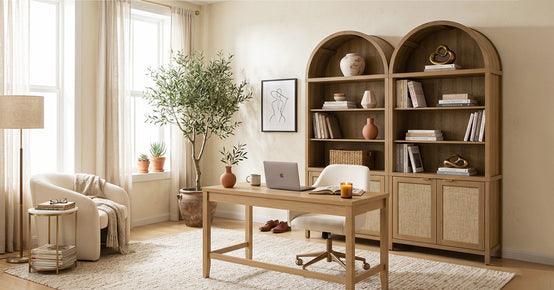
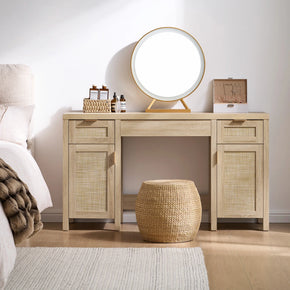
Contrast is what keeps it working. Cane against a solid painted front, a fine weave beside a coarse one, or rattan set against smooth stone all read as deliberate. Variation in scale does the same job as variation in material.
Negative space matters as much. Woven surfaces are visually busy, and they need plain areas nearby to stand out. A room with no quiet surfaces gives the texture nothing to work with.
Woven-heavy rooms can be excellent when that is the intent. Traditional rattan interiors and Pacific and Southeast Asian design both build entire rooms from the material and hold together, because the weaves, scales, and tones vary throughout.
The version that fails is the accidental one. Buying woven pieces individually over time, each one appealing on its own, is how a room ends up uniform without anyone deciding it should be.
Rattan grows as a climbing palm. That is why it curves without cracking, and why it shows up in coastal furniture again and again.
5. Add One Sculptural Piece

Keep every shape simple, and a room full of modern coastal furniture goes flat. Add a curved accent chair, or an oval side table, or a sculptural floor lamp. The eye needs somewhere to stop.
One is enough. Two start competing.
6. Build the Dining Area From Mixed Materials

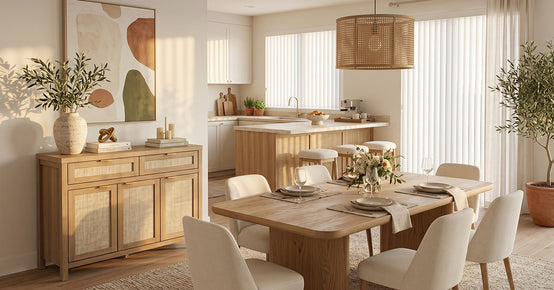
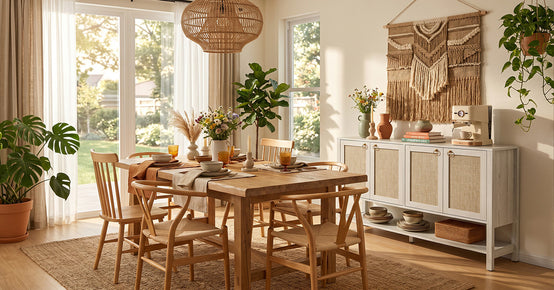
Nothing dates a coastal room faster than the predictable white dining set. A solid wood dining set with rattan chairs gives you grain and weave in one purchase, which beats six identical chairs.
One bowl on the table, or some greenery, or a single vase. That is the centerpiece.
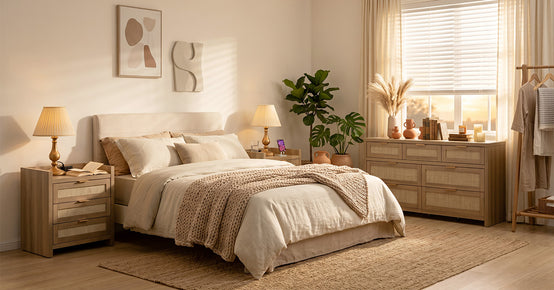
7. Let the Bed Set the Coastal Mood

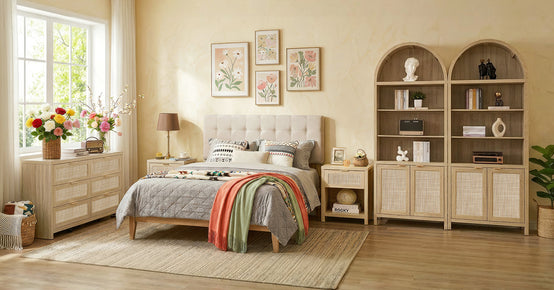
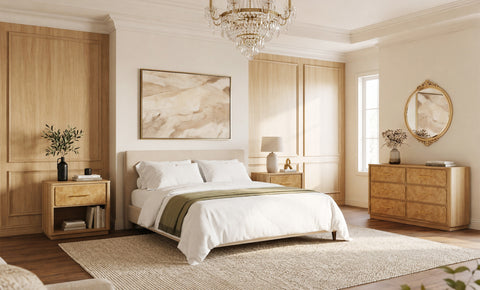
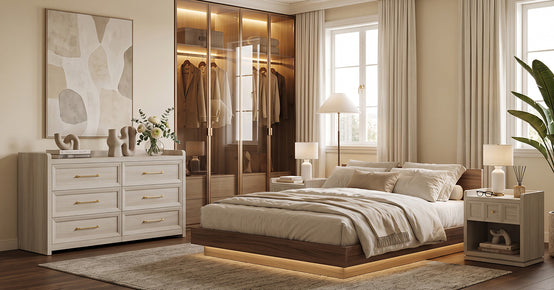
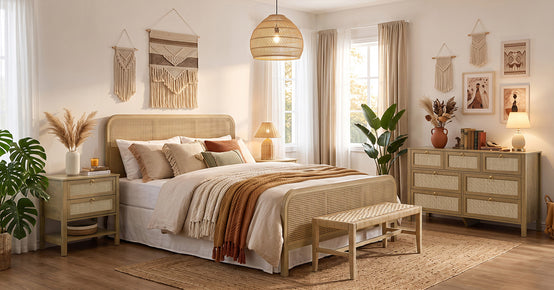
Bedrooms need the least work here. A simple queen bed frame in natural timber with an understated headboard does more than any amount of coastal bedding, because the frame is the shape you see from the doorway.
Layer linen or cotton bedding in warm white, oat or sand on top. Muted blue if you want the reference.
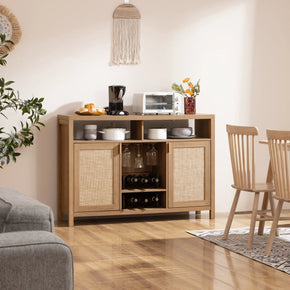
8. Use Low Storage to Keep the Room Edited

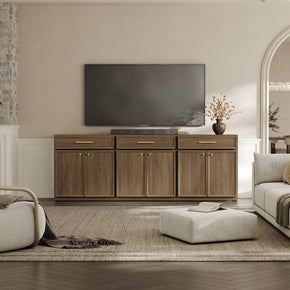
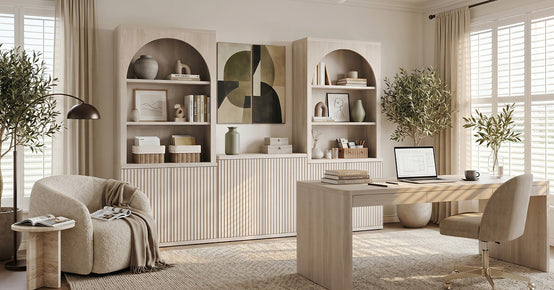
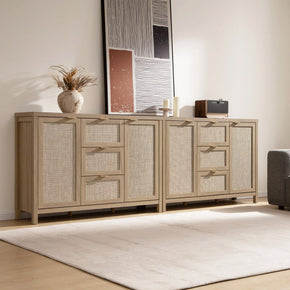
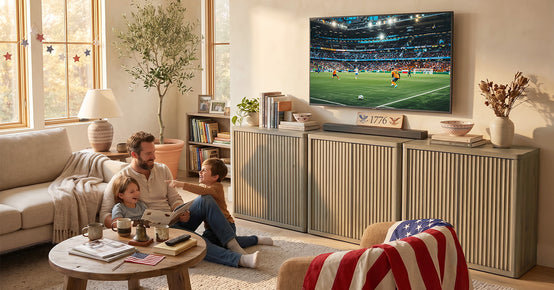
Clutter kills this style faster than the wrong color. Low horizontal sideboards keep the sightline open across the room and swallow the cables, remotes, and household stuff that would otherwise sit on display.
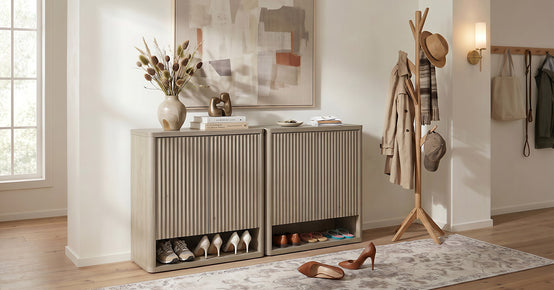
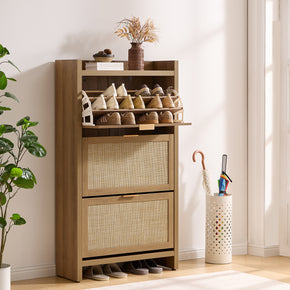
Ribbed, fluted, or cane fronts add texture through construction rather than ornaments.
9. Ground Everything With Woven Rugs and Soft Textiles

Modern furniture standing on a bare floor feels cold. Roll out a jute, sisal, or flatweave rug and that changes at once, with the natural fiber doing the coastal work instead of a motif.
Keep patterns quiet—washed stripes, tonal texture, small-scale weaves. Anchors and sailboats belong on actual boats.
10. Break It Up With Vintage and Personal Pieces

Buy the whole room from one collection, and it looks like a showroom. Add one older chair. An inherited lamp, a handmade ceramic. Suddenly it looks like somebody actually lives there.
The easiest way there is to dodge the generic coastal look, and secondhand usually costs less than new anyway.
The Modern Coastal Color Palette
- Warm white and cream for walls, large upholstery and painted furniture
- Sand, oat, beige and taupe to add warmth a stark scheme lacks
- Muted blue and slate to reference water without going nautical
- Sage and soft olive, which sit beautifully against warm timber
- Terracotta, caramel and rust used sparingly as a modern alternative to blue
- Black or deep brown in hardware, frames and lighting for definition
A common rule of thumb splits a room about 70 percent calm base tones and 30 percent color and pattern. Designers use it as a habit to check themselves, not a measurement anyone takes.
Nobody calculates visual area. People sort the room into what it is made of and what sits on top.
The base is the fixed, large stuff. Walls, floor, curtains, the sofa, the rug, and any big case piece. Those set the calm register.
The remainder is where color and pattern live. Cushions, throws, art, lamps, ceramics, books, and plants carry it without committing you to anything.
A worked example. White walls, oak floor, a linen sofa and a wool rug in a natural tone give you the base. Two patterned cushions, a rust throw, one large print and a stack of ceramics give you the rest. Nothing there needed measuring.
The ratio bends for the room. A small bedroom takes less pattern before it feels busy. A large open space can carry more without registering as loud. Rooms with strong daylight tolerate deeper color than north-facing ones.
Use it as a check, not a target. Stand in the doorway and ask whether the room reads calm with accents or busy throughout. That answer is more reliable than any percentage.
Materials That Make the Look
|
Material |
Where It Works |
Watch Out For |
|
Oak, ash, acacia, walnut |
Tables, beds, sideboards, storage |
Matching every piece to one tone |
|
Linen and cotton |
Sofas, dining chairs, bedding, curtains |
Fading in direct sun |
|
Rattan and cane |
One chair or cabinet front, not more |
Damp rooms and harsh light |
|
Jute and sisal |
Rugs, baskets, small accessories |
Rough underfoot in bedrooms |
|
Stone and ceramic |
Tabletops, lamp bases, vessels |
Weight and chipping |
|
Brushed metal |
Hardware, legs, lighting |
High-gloss chrome, which reads dated |
Modern Coastal Furniture Room by Room
Living Room
Neutral sofa and a timber coffee table: one woven or curved accent chair, a textured rug, a low sideboard. Hang sheers instead of heavy drapes, and put out two ceramic pieces rather than twelve.
Bedroom

Keep it quiet. Timber bed frame options in a warm tone, matching-but-not-identical bedside tables, linen bedding and one woven rug will carry the whole room.
Dining Room
A wood table with grain you can see. Chairs that do not all match, a sculptural pendant overhead, and a sideboard for the plates—soft lighting rather than shiny fittings.
Entryway
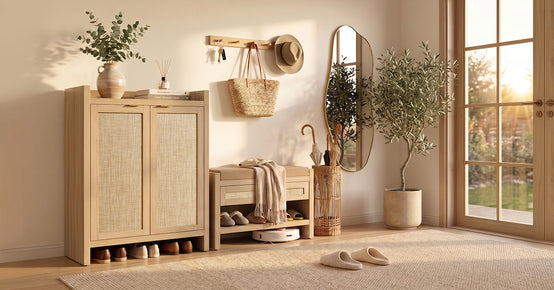
Slim timber console. A woven basket tucked underneath, a round mirror above, and one ceramic lamp. That is the entire formula, and it fits a hallway three feet wide.
A Bright Coastal Room Is Hard on Furniture
Guides on this subject all tell you to maximize natural light. Almost none of them mention what that light does to your furniture over five years.
Sunlight Fades Wood and Fabric
A ten-year fade test on wood finishes run by the National Park Service found that visible light coming through UV-filtered windows still caused significant damage to certain stains. Filtering the UV alone does not solve it.
Conservation guidance is blunt about the mechanism. Both UV and visible light cause fading; the damage accumulates, and nothing brings the color back.
Practical fixes are simple. Sheer curtains on the worst-hit window, furniture pulled slightly out of the direct beam, and rotating cushions and rugs so they age evenly.
Damp Air Is the Other Problem
Coastal and humid homes swing between wet and dry. Timber joints and woven fiber take the strain.
Museum practice offers a reference point, not a household target.AMNH's conservation guidance recommends 40 to 60 percent relative humidity for museum environments holding hygroscopic objects. It addresses collections, not furniture.
The number matters less than the steadiness. The same guidance asks that swings stay under 5 percent within any 24 hours. Rapid change makes the different materials in one object move against each other, producing cracking or delamination.
Sensitivity varies by material. AMNH notes tighter control for more sensitive objects depending on composition, condition, and history, and lower humidity for objects with metal components to inhibit oxidation. A wooden piece with metal hardware pulls in two directions.
Home conditions are not museum conditions, and they don't need to be. AMNH also warns that controlling humidity at building or room level is expensive and can cause structural damage when done badly.
Manufacturer care guidance governs your piece. Where a maker specifies a range for a finish or a construction, that figure outranks anything borrowed from conservation practice.
Measure before acting. A cheap hygrometer tells you what your room actually does across a week, and that reading is worth more than a target range.
Damp that hangs around brings a second problem, because mold needs moisture to grow. Run a dehumidifier in a coastal living room, and it protects the sofa as much as the walls.
Rattan Is the Exception Worth Knowing
The awkward part is this. Rattan is the signature coastal material and the one that copes worst with a sun-drenched or damp room. It comes from climbing palms, and the natural fiber dries out under strong light then swells again in damp air.
Keep it indoors and back from the hottest glass. On an exposed balcony, synthetic weave is the honest answer.
Buy Timber You Can Trace
Natural material is the point of this style, so sourcing matters. Certification schemes audit how a forest is managed, and rattan supply has its own sustainability guidance. Neither one is proof by itself. Both beat a blank spec sheet.
Coastal Furniture Trends Worth Following in 2026
- Warmer wood tones replacing uniformly bleached and whitewashed timber
- Sculptural and organic forms, meaning curved sofas, rounded tables and architectural chairs
- Deeper coastal color, with moody blue, chocolate, rust and charcoal turning up as accents
- Texture built into the surface itself, from ribbed timber through plaster finishes to grasscloth
- Woven material used in small doses rather than filling a room
- Vintage and handmade pieces mixed in, instead of one brand throughout
Mistakes That Date a Coastal Room
- Buying everything in white, which reads flat without timber and texture
- Letting blue become the only coastal cue in the room
- Overusing rattan until the room tips into tropical or boho
- Shopping for accessories before the sofa, bed or table is decided
- Adding anchors, ropes, shells and beach signs, which date a room instantly
- Matching every piece from one collection so the room looks staged
- Ignoring anchoring on tall storage, since safety agencies recommend securing tall furniture to the wall
Choosing Coastal Furniture That Lasts
Anchor pieces come first: sofa, bed, dining table, coffee table, sideboard. Decor comes after, always.
Check the scale against your actual room and leave clear walkways. Check frame construction, upholstery durability, joinery and drawer hardware while you are at it.
Pick finishes you can restyle later. Natural wood and neutral upholstery survive a change of mind. Trend-led colors never do.
Final Takeaway
Material and shape build modern coastal furniture. Beach references do not do it. Warm neutrals, honest timber, linen, a little woven texture, and clean silhouettes with one curve thrown in to soften them.
Buy the anchor pieces first. Add texture slowly. Keep the light off your best fabrics. That last part is the bit nobody tells you.
FAQs
What is modern coastal style?
Modern coastal style is a relaxed contemporary look. It runs on clean furniture shapes, warm neutrals, natural wood, linen, woven fiber, and tactile finishes. The seaside comes through in color and material instead of nautical decor, which sets it apart from older beach-house decorating.
What are the best coastal furniture brands?
No single brand wins for everyone. Construction quality matters most, along with materials, warranty, delivery in your area, and your budget. First, decide whether you want classic, luxury, or modern coastal furniture, because most brands specialize in one direction.
What are the coastal interior design trends for 2026?
Published trend lists are designer predictions rather than measured demand, and the coastal ones rarely cite anything. These hold up better as durable choices.
Warm and mid-tone woods sit better with coastal light than gray-washed finishes do. Mixing timber tones reads as collected rather than matched, and it survives a change of taste better than one finish throughout.
Texture does more than pattern in rooms with strong daylight. Woven material works in small doses and turns costume-like across a whole room. Vintage mixed with new gives a space age that a single delivery cannot.
Literal nautical motifs are the element most likely to date, and that has been true for longer than any one year's forecast.
What is a coastal style?
Coastal style borrows from seaside settings: light colors, casual furniture, natural materials, airy layouts, and relaxed textures. It covers a lot of ground, from traditional beach cottages right through to the restrained modern version described here.
What is classic coastal style?
Classic coastal is the more traditional interpretation. Crisp white with navy or ocean blue, slipcovered sofas, whitewashed wood, wicker and stripes, plus beach-house references you can spot immediately. More decorative and more literal than modern coastal, and it suits cottage architecture beautifully.
What is the difference between beach and coastal decor?
Beach decor is the more literal of the two. It leans on motifs, such as shells, anchors, driftwood, and signage. Coastal decor covers more ground and can be far more refined, using color, texture, furniture, and natural materials to suggest the shoreline without naming it.
How do I make my home look coastal?
Start with a warm, light palette, then use natural wood furniture as your anchors. Layer in linen and woven texture after that. Keep windows as clear as you practically can, work muted coastal color through cushions and art, and hold any direct beach reference to one or two pieces.
Can you mix coastal and modern decor?
Yes, and that mix is basically what modern coastal furniture already is. Pair relaxed materials like linen, timber, and rattan with clean silhouettes, sculptural lighting, matte finishes, and restrained accessories. The materials bring the warmth while the shapes keep it current.
Sources
- National Park Service – Reducing Visible and Ultraviolet Light Damage to Interior Wood Finishes
- Canadian Conservation Institute – Ultraviolet Filters and Light Damage to Materials
- American Museum of Natural History – Impact of Temperature and Relative Humidity on Collections
- US Environmental Protection Agency – Mold and Moisture in the Home
- WWF Forests Forward – Forest Stewardship Council Certification Explained
- Encyclopedia Britannica – Calamus, the Rattan Palm Genus
- Food and Agriculture Organization of the United Nations – Sustainable Supply and Management of Rattan Resources
- US Consumer Product Safety Commission – Anchor It, Furniture Tip-Over Prevention


Looking for something else?
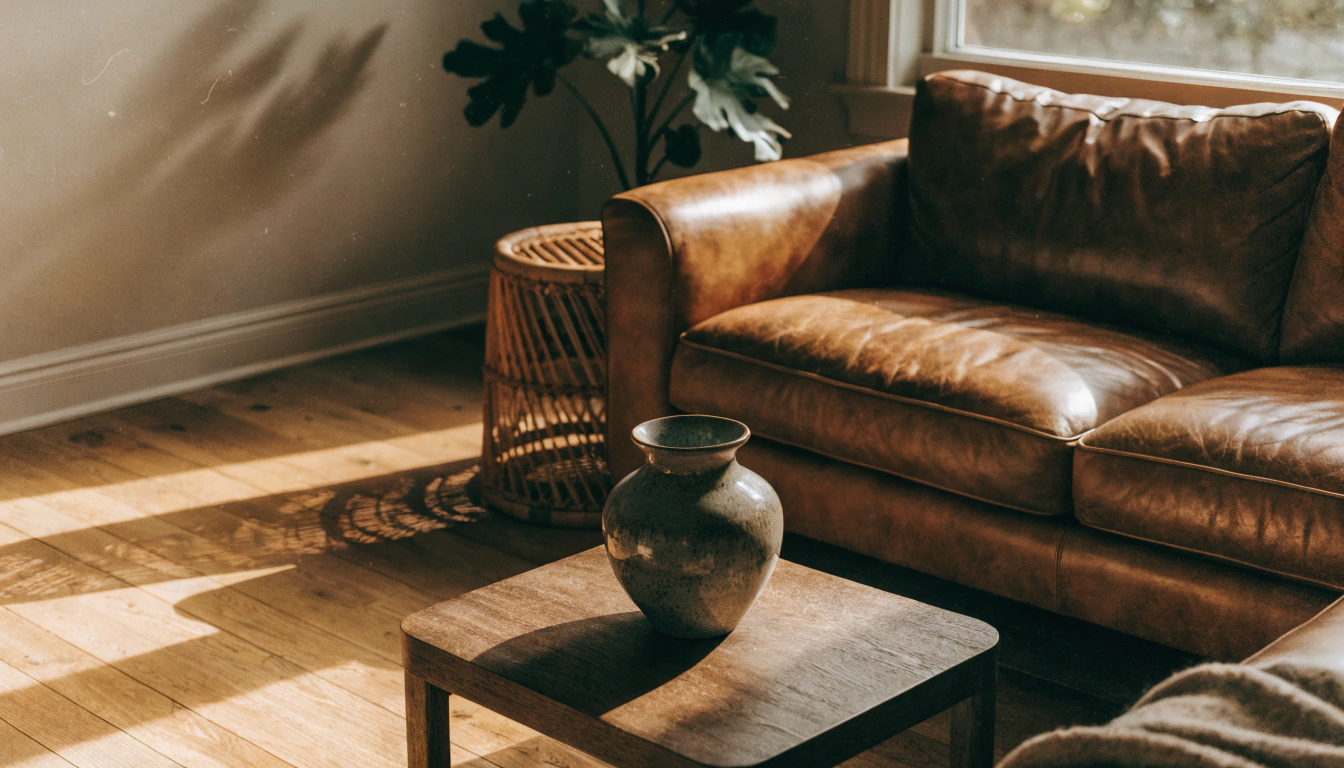
Types of Leather Furniture: A Simple Guide to Grades and Finishes
LEARN MORE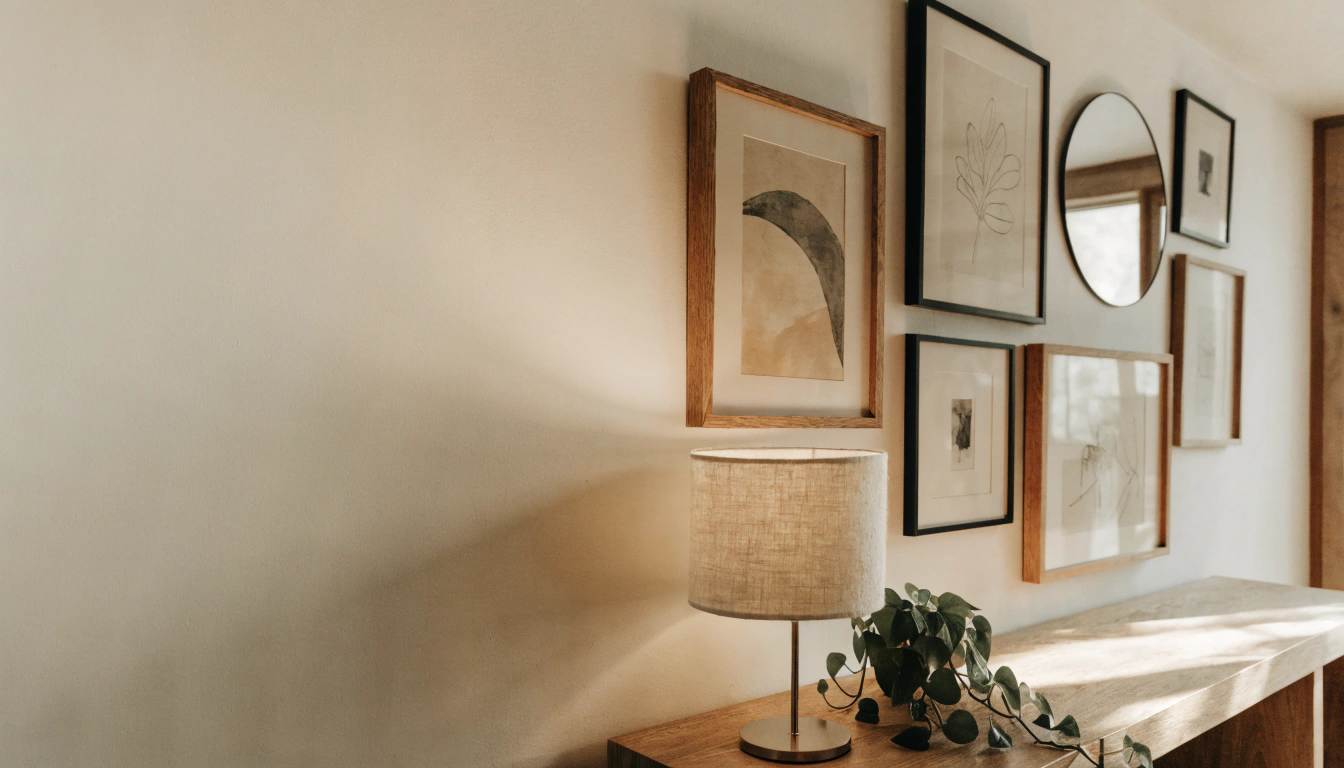
How to Create a Gallery Wall (2026 Step-by-Step Guide)
LEARN MORE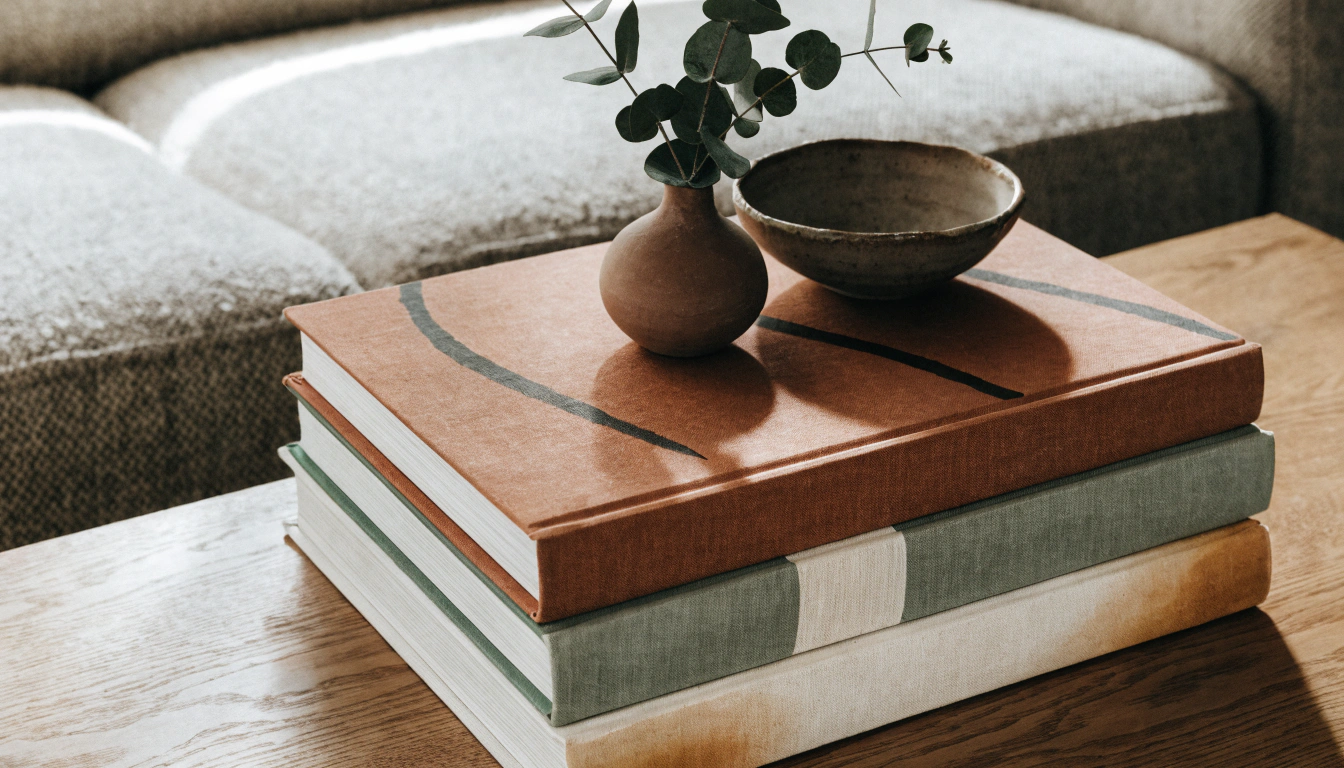
How to Choose & Style Coffee Table Books Like a Designer
LEARN MORE
How to Decorate Your Front Door for Christmas (2026)
LEARN MORELooking for something else?
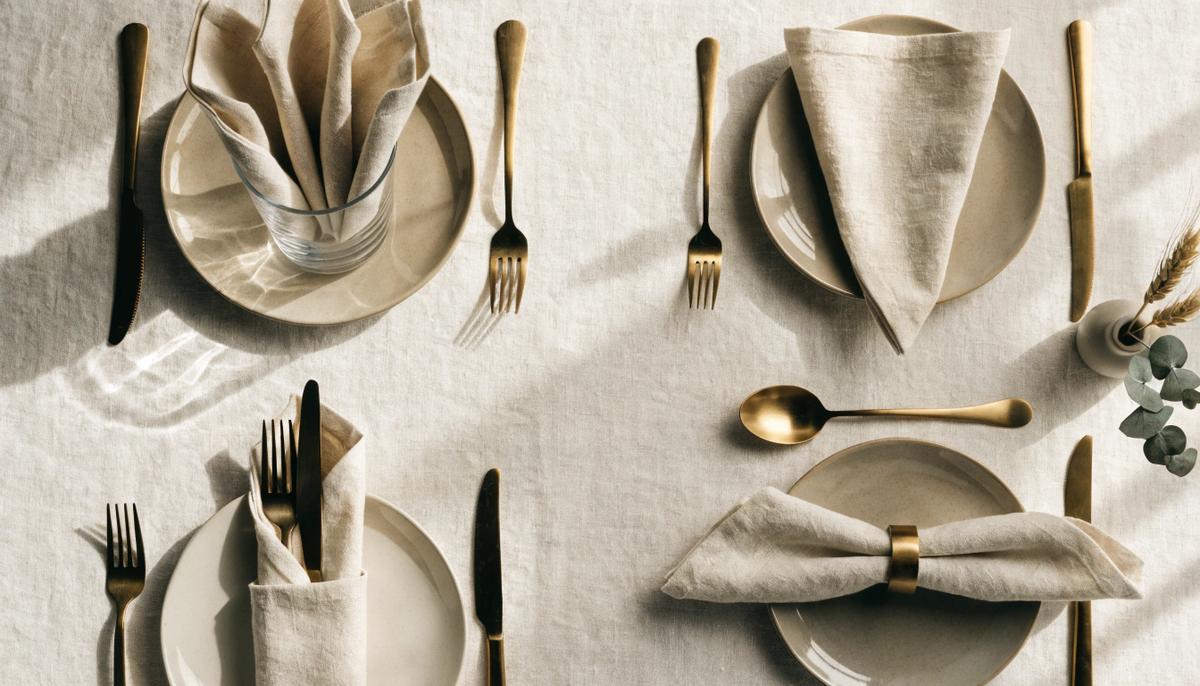
How to Fold Napkins: 10 Easy Ways to Dress Up Any Table
LEARN MORE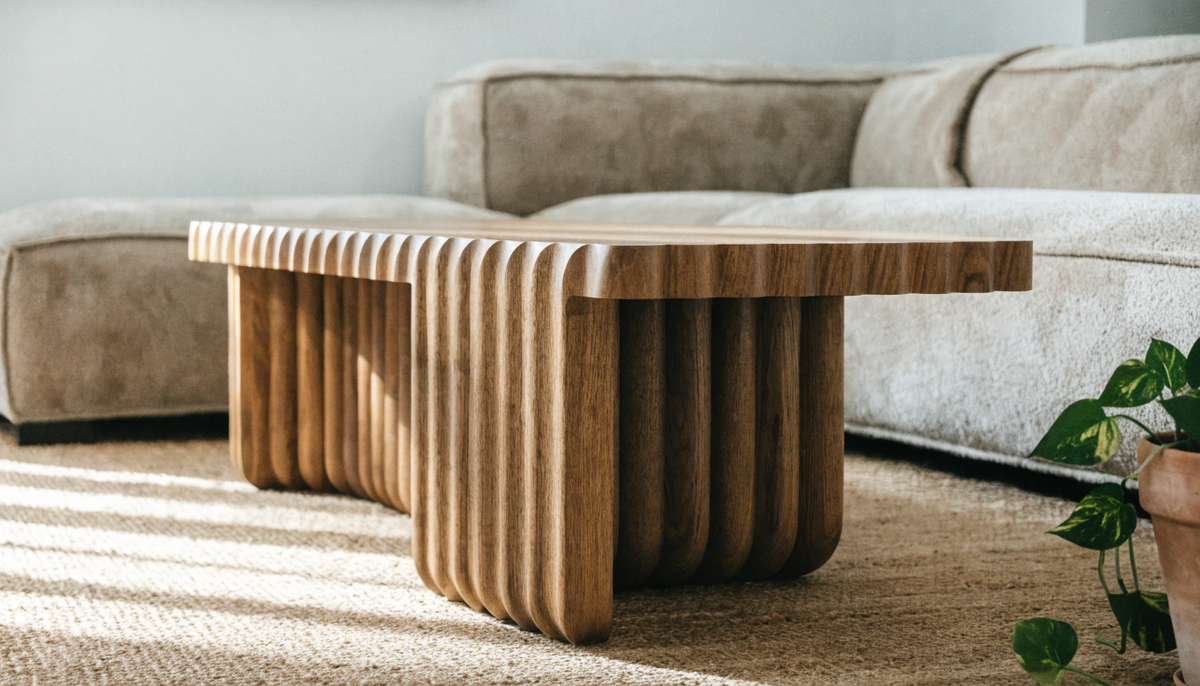
How to Choose a Coffee Table: The Complete Buying Guide
LEARN MORE
Burl Wood Furniture: The Complete Buying Guide
LEARN MORE


Further reading

16 Bedroom Bench Ideas That Actually Fit Your Room

21 Room Divider Ideas to Split a Space Without Building a Wall


