



Furniture Distance From a Fireplace: How Far Is Safe?
Furniture distance from a fireplace answers two questions with one number. Keep anything that can burn at least 3 feet from heat sources.The U.S. Fire Administration gives that message for fireplaces, wood stoves and space heaters alike.
That is fire-prevention guidance about what you place near a working heat source. It is not an installation specification. Listed appliances carry tested clearances that vary by model, direction, and whether shielding is fitted.
Those can sit above or below three feet. Your manual and local code decide, and the stricter one wins. Below is how to measure, what changes by fireplace type, and how to lay out a room without giving up the fire.
The Short Answer

Keep sofas, chairs, rugs, curtains, and anything else that burns at least 3 feet from the fire. That is the general baseline from fire authorities.
Two things override it. The manufacturer instructions for your specific appliance, and the building or fire code adopted where you live. Both can require more.
Treat that figure as a starting point, not a floor. The number that governs your setup comes from the appliance, not from an article.
Listed gas and electric units carry clearances established by testing. Those appear in the installation instructions and on the appliance label, and they are model-specific.
Listing can go either way against a general figure. Some tested models permit less clearance than a generic number suggests. Others require more. You can't predict either outcome from the category.
General figures cover the cases where no listing applies. An unlisted appliance, a missing manual, or an undocumented installation all fall back on the code minimum.
Where two requirements differ, follow the stricter one that applies to your situation.
Manufacturer instructions and local code both bind, and local amendments can exceed both.
Keep the manual and photograph the rating label. Clearance questions come up years later, when the model number on that plate is the only record left.
Ask the building department or a licensed installer when the documentation is gone. Guessing at clearance around a heat source is not the place to save a phone call.
Why Three Feet Is the Baseline
The number is not decorative. It answers three separate risks.
Sparks and Flying Embers

An open fire throws embers. A log shifts. A pocket of sap pops. Something lands on the floor. Upholstery, wool rugs, and woven baskets all catch.
A sturdy screen helps a great deal. It does not replace distance.
Radiant Heat You Cannot See
Heat travels outward from the opening without touching anything. Fire authorities note that heat sources placed too close to combustibles are a leading cause of home heating fire deaths.
That is the risk the 3-foot rule was written for.
Heat Damage to the Furniture Itself
Even below ignition, heat does slow damage. Leather dries and cracks. Wood shrinks. Joints loosen. Fabric fades on one side only.
People usually notice this a year later and blame the product.
Check These Before You Measure Anything
Generic advice from a blog, this one included, sits below your appliance paperwork in the order of authority.
Read the Appliance Manual First

Every tested fireplace and stove has a clearance-to-combustibles diagram. It often gives different numbers for the front, sides, rear, and top.
Front clearance is usually the largest number. That is the direction your sofa sits in.
Find the Make and Model

No manual? Look for a metal data plate on the back or inside the appliance body. It carries the model number. Often the clearance figures too.
Renting? Ask the landlord or letting agent for the paperwork before you turn anything on.
Check Local Fire and Building Codes
Requirements vary by area, appliance type, and installation. Local codes can be stricter than the manufacturer's.
Ask a Hearth Professional When Unsure
Unknown appliance. Old installation. Altered firebox. A rental with no records. All four are worth a paid inspection rather than a guess.
Fireplace Type Changes the Safe Distance
One number cannot cover every heat source. The differences matter.
Open Wood-Burning Fireplaces
The highest ember risk of any type. Keep the 3-foot zone in front genuinely clear, fit a proper spark screen, and respect the hearth extension your installation requires.
Freestanding Wood Stoves

A stove radiates from every side, not just the front. The flue pipe gets hot too. Clearances vary widely by model and by whether heat shielding is fitted.
The manual and the data plate determine this. Some models call for considerably more than 3 feet at the front.
Gas Fireplaces
Sealed direct-vent units behave differently from open gas log sets. A sealed glass front still gets extremely hot.
Follow the listed clearances. Do not assume gas means safe.
Electric Fireplaces
No embers, but most models push real heat through a vent at the top or front. Blocking that vent with a sofa back or a throw is the actual hazard.
Check what the manual says about the heater outlet.
Decorative or Sealed-Off Fireplaces
A decommissioned fireplace is a different case, and decommissioned means documented, not just unused.
Visual disuse proves nothing. A capped chimney, a sealed firebox, or a previous owner saying it hasn't been lit in years can all be consistent with a gas line still live behind the surround.
Get it verified by someone qualified. A certified chimney professional, a licensed gas fitter where a gas line exists, or your building department can confirm the appliance's condition and venting.
Fuel supply is the first thing to settle. A qualified person must properly disconnect and cap a gas line, and leaving a decorative log set in place does not decommission an appliance.
Electrical, venting and structure follow. Blowers, igniters and lighting need isolating. A capped flue changes how the chimney breathes and can trap moisture. Sealing a firebox affects other appliances that share the same chimney.
Get the outcome in writing. A dated report naming what was disconnected, capped or sealed is what a future buyer, an insurer or an inspector will ask for, and memory does not survive a house sale.
Treat it as live until you hold that document. Clearance rules keep applying in the meantime, which is the safe way to be wrong.
How to Measure Fireplace Clearance Correctly
Most people measure from the wrong place. Four rules fix it.
Start at the Opening, Not the Mantel

Where you measure from decides whether the number means anything, and the origin is set by the appliance rather than by a general rule.
The manual carries a clearance diagram showing the reference surface and the direction each dimension runs. That diagram is the instruction. An open fireplace, an insert, a freestanding stove and a vented heater do not share one origin.
Directions differ within a single appliance. Side, back, top, and front clearances are often different, and a stove that needs little at the back may need considerably more at the front.
Shielding changes the figures again. Listed heat shields and approved wall protection reduce some clearances, and the reduction depends on the shield and the appliance it was tested with.
Do not measure to whatever is easiest to reach. A mantel edge, a decorative surround, or the face of the chimney breast may sit well forward of the heat source, and using one as your origin gives a reading that flatters the layout without describing it.
The USFA three-foot message works differently. It applies to combustible items near a working heat source rather than to construction, and it is measured from the heat source itself.
Ask a certified installer or your building department when the manual is missing. An unlisted or undocumented appliance is not a case for estimating.
Measure Recliners Fully Extended

A recliner travels a foot or more when the footrest goes up. Measure it open. That is the position people actually sit in.
Swivel chairs, rocking chairs and sofa beds all need the same treatment.
Count Throws, Cushions and Pet Beds
A compliant sofa becomes non-compliant the moment a blanket hangs off the front edge. Fire authorities count anything that can burn, not just the furniture frame.
Dog beds are the one people forget. They always end up closest to the fire.
Keep Vents and Access Clear
Air inlets, heat outlets, fan intakes, and service panels all need room. A sofa pushed against a stove alcove can choke the appliance and trap heat.
Sofa Distance From a Fireplace
The sofa is the piece everyone worries about. Rightly so. It is large, soft, and usually points straight at the fire.
The Safety Minimum
Whatever the strictest applicable instruction says, with 3 feet as the general baseline. Measure to the nearest part of the sofa, including a footstool pushed up against it.
The Comfortable Distance

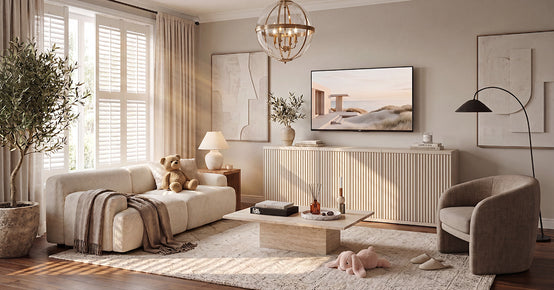
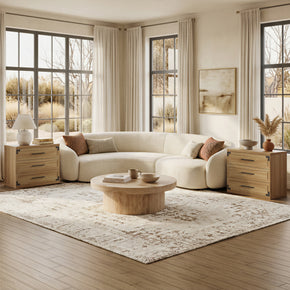
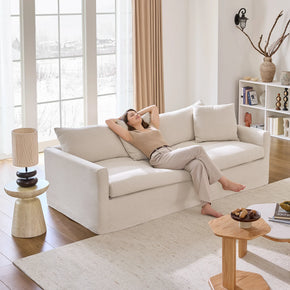
Comfort usually asks for more than safety does. Many people find 8 to 10 feet gives a good relationship with the hearth without roasting—a deep-seat piece such as this down-filled three-seat sofa takes up real depth. Measure the finished footprint, not the wall space.
Sit there with the fire lit before you commit. Your shins will tell you.
Can a Sofa Go in Front of a Fireplace?
Only if the fireplace is decorative and permanently unused, with a working fire, it blocks the heat, hides the feature, and parks upholstery in the ember path.
Turn it 90 degrees along an adjacent wall instead.
Layouts That Work Around a Fireplace
Four arrangements cover most rooms.
Symmetrical
Sofa facing the hearth, matching chairs on each side. Formal and calm. It needs a wide room to avoid crowding the clearance zone.
L-Shaped

Sofa at 90 degrees to the fireplace with a chair completing the L. The practical answer for narrow rooms and for rooms where a screen sits nearby.
Two Facing Sofas
The hearth sits at one end of a seating corridor. Great for conversation. Poor for television. Keep both sofas outside the clearance zone.
Corner Fireplace
Angle a small seating group across the corner. Keep a clear diagonal route through the room. Corner arrangements eat floor space fast.
Small Living Rooms

Remove a piece rather than shrink the clearance. One chair fewer, or a smaller table, and the room still works. Browsing the full furniture range by footprint rather than by looks is the shortcut when floor space is the constraint.
Rugs, Tables and Everything Else
Small items sit closest to the fire. They get the least thought.
Coffee Table Placement

Keep the table outside the clearance zone, then leave roughly 16 to 18 inches between it and the sofa so people can walk past. Comparing coffee table sizes before you buy is easier than discovering the footprint is wrong after delivery.
Rugs and the Hearth
A rug burns. Keep it clear of the hearth and off any required hearth extension. Low pile sheds less than a deep shag.
Size it so the front legs of the seats sit on it, then check the gap at the fire end again.
Firewood and Fire Tools

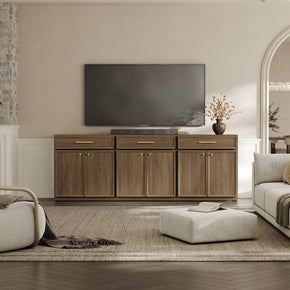
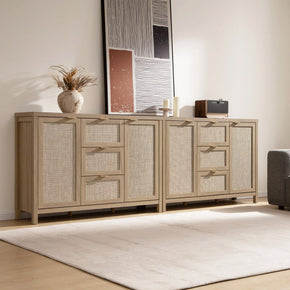
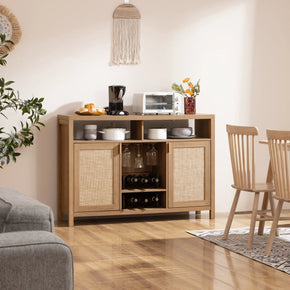
Stacking logs beside the fire looks lovely, and stores fuel inside the danger zone. Keep wood, kindling, newspaper and matches well back. A four-door console with closed storage on the opposite wall keeps everything tidy and out of the ember path.
Curtains and Floor Lamps
Curtains move. Measure the full drop and allow for fabric that drafts toward the fire. Lamp shades and cords drift too.
Fireplace and TV in the Same Room
Two focal points on one wall is the most common living room problem.
TV Above the Fireplace
Common and rarely comfortable. The viewing angle strains your neck. Rising heat is unkind to electronics. Only do it if the fireplace manufacturer allows it.
Anything mounted or standing tall in a family room should also be secured against tipping.
TV Beside the Fireplace

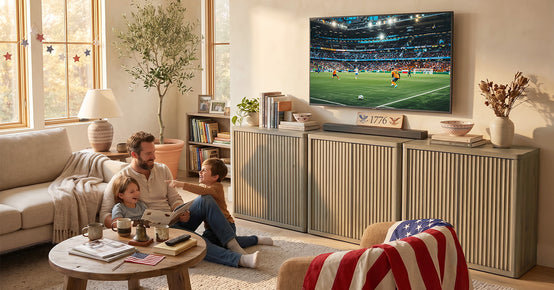
Putting the screen in the alcove and keeping the fireplace centered on the wall lowers the TV toward seated eye level. It also stops the two features competing for the same focal point.
Measure the alcove before choosing anything. Measure the width at the narrowest point, since old openings are rarely square. Depth including whatever the cables need behind the unit—height to any obstruction above.
Console width is not the number that decides fit. Add cable depth at the back and a working gap at each side, then compare that total against the narrowest measurement rather than the widest.
Ventilation matters more in an alcove than in an open space. An enclosed recess traps heat from a receiver, a console or a streaming box, and manufacturers specify airflow around their equipment for a reason.
Check where the power actually is. Alcoves often have no outlet, and running an extension cord to a permanent installation is not the answer.
Fireplace clearance still governs the placement. A media console is combustible and sits close to the hearth, and the appliance manual and local code set the distance, not the shape of the recess.
The Terra TV Stand with Storage, 55 Inches Wide is one option once you have those measurements.
TV on an Adjacent Wall

The cleanest fix. Pair it with the L-shaped seating layout and one group serves both the fire and the screen. A low media console on that wall keeps the fireplace wall clear entirely.
Mistakes That Cause Real Problems
Treating 3 feet as universal is the big one. It is a general minimum, and plenty of stoves require more at the front.
Measuring from the mantel rather than the opening comes second. That one error can cost you a foot.
Blocking the hearth with a sofa is the most visible mistake. It hides the fire, traps heat, and makes tending the fire awkward.
Recliners and throws catch careful people out. The room was measured correctly. Then someone hung a blanket over the arm.
Blocking the exit route matters more than anything aesthetic. Keep the path to the door clear and keep cords out of walkways.
Overcrowding a small room is the last one. Take a piece out instead of shaving the clearance.
Plan It Before You Move Anything
Heavy furniture makes trial and error expensive. Do it on paper first.
Write down every clearance from the manual. Note which direction each one applies to.
Mark the no-furniture zone on the floor with painter tape. See how it immediately changes the room's feel.
Cut paper templates for the sofa, chairs, and table, and shuffle those around instead of the real thing.
Then light the fire and sit in each seat for half an hour. Compliance and comfort are not the same thing.
Final Takeaway
Start with the strictest number that applies to your appliance. Add distance for comfort on top of it; never take distance away for looks.
Measure from the opening. Count everything soft. Check the recliner open.
A room that respects the clearance still has plenty of good layouts left. A room that ignores it looks fine until it doesn't.
FAQs
How close should furniture be to a fireplace?
Keep anything that can burn at least 3 feet from the fireplace as a general baseline. Your appliance manual or local code may require more, and the stricter figure always applies.
What is the biggest mistake in placement of furniture?
Ignoring required clearance and blocking the walkway. Both beat any styling error. A few more that matter:
- Measuring from the mantel instead of the firebox opening
- Forgetting the recliner extends
- Letting throws and pet beds drift into the zone
- Pushing every piece against the walls
How far should wood be from a fireplace?
Firewood, kindling, and newspaper all burn. The same 3-foot baseline applies to them. Store fuel across the room rather than beside the hearth. Wooden furniture and trim follow the clearances in the appliance manual.
What is the 4-inch rule?
There is no universal 4-inch rule for furniture near a fireplace. The phrase comes from unrelated building and design contexts. Do not use it to set fire clearance. Use the manual and the 3-foot baseline instead.
How close can furniture be to a wood-burning stove?
Check the stove data plate and manual, because clearances vary widely by model and shielding. Use 3 feet only as a starting point. Many stoves need more at the front, near the loading door and around the flue pipe.
Can I put a sofa in front of a fireplace?
Only when the fireplace is decorative and permanently out of use, in front of a working fire, it blocks heat, hides the focal point, and puts upholstery where embers land.
How to hide a fireplace with furniture?
Only hide one that has been inspected and taken permanently out of service. Safe options for a dead fireplace:
- A decorative fireplace cover or fire screen
- A large piece of art leaned across the opening
- A freestanding plant or basket to one side
- Painting the surround to match the wall
Never block a working appliance, its vents, or its access panels.
Sources
- U.S. Fire Administration – Heating Fire Safety
- National Fire Protection Association – Safety With Heating Equipment
- American Red Cross – Home Heating Safety
- Office of the Illinois State Fire Marshal – Space Heater Safety
- Missouri Department of Public Safety – Home Heating Safety
- Anchor It! – Preventing Furniture and TV Tip-Overs
- Apartment Therapy – How to Space Furniture Correctly in Every Room


Looking for something else?
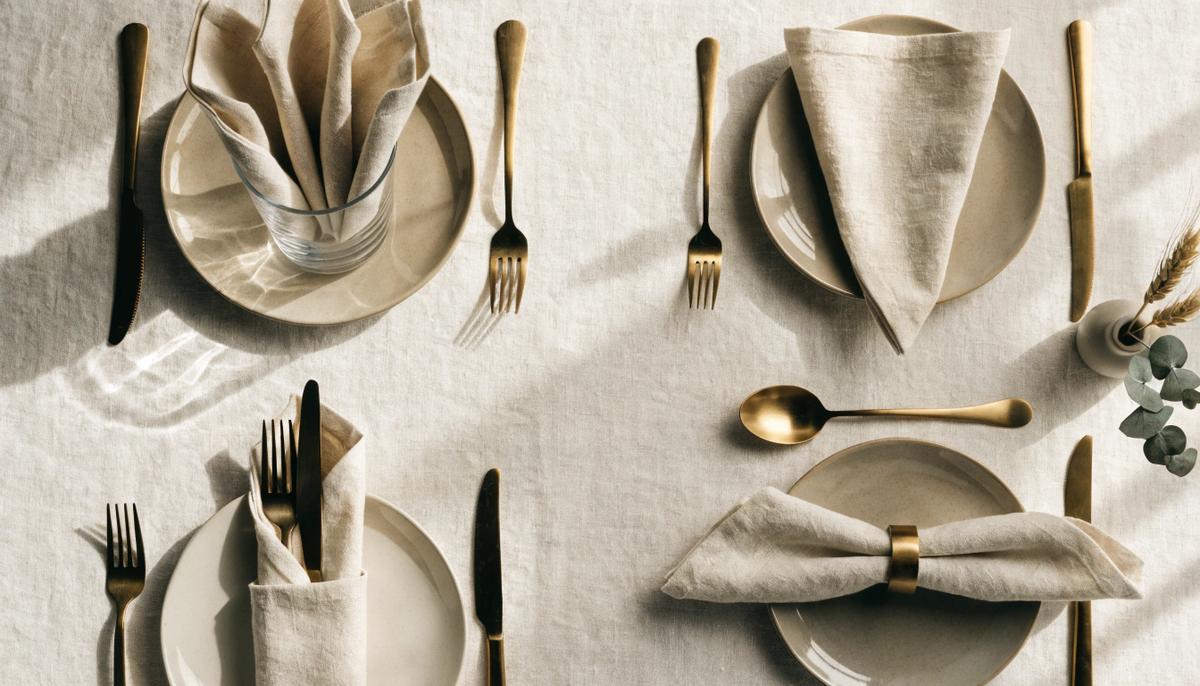
How to Fold Napkins: 10 Easy Ways to Dress Up Any Table
LEARN MORE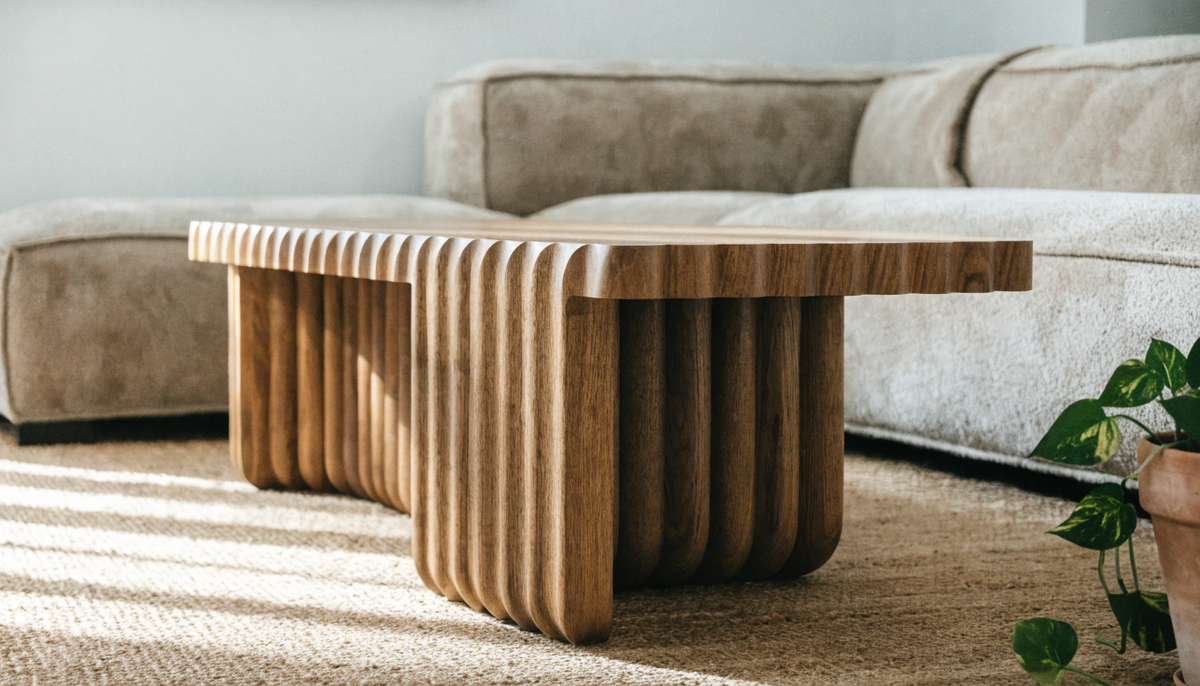
How to Choose a Coffee Table: The Complete Buying Guide
LEARN MORE
Burl Wood Furniture: The Complete Buying Guide
LEARN MORE
What Is a Hope Chest? Meaning, History, and Modern Uses
LEARN MORELooking for something else?

What Is a Foyer? Meaning, Purpose and Design Guide
LEARN MORE
GREENGUARD Gold Certified Furniture: What It Really Means for Your Home
LEARN MORE
How to Clean a Mirror Without Streaks: Simple Step-by-Step Guide
LEARN MORE


Further reading
Furniture Distance From a Fireplace: How Far Is Safe?

How to Clean Wood Furniture and Keep the Finish Intact


