



21 Hallway Mirror Ideas to Brighten a Dark, Narrow Space
Hallway mirror ideas fix three things at once. A dark corridor gets brighter, a narrow one looks wider, and a blank wall finally has something worth looking at.
Most hallways have no window at all. A mirror steals light from wherever it can find some. Free brightness.
Below are 21 ideas grouped by hallway type. You also get sizing and hanging numbers. The safety section at the end covers things no other guide on this topic bothers with.
Why Mirrors Work So Well in Hallways
Corridors are the hardest rooms in a house to light. They sit in the middle of the plan, often with no window at all.
A mirror redirects light rather than adding any. It reflects a portion of what reaches it back into the room, and some is lost at every bounce.
The gain is real but modest. A mirror opposite a window puts daylight onto surfaces the window does not reach directly, and a lighter room reads as brighter than the meter says it is.
What it reflects decides what you get. A mirror facing a window returns sky and view. A mirror facing a dark wall returns a dark wall at twice the apparent distance. Stand where you will actually stand and check the reflection before fixing anything.
Perceived depth works the same way. The apparent extension is real, and it depends on reading the reflection as continuous space rather than a mirrored surface.
Angle and height matter more than size. A mirror set perpendicular to a window catches light across the day rather than at one hour. Centering on eye level from the usual viewing position beats centering on the wall.
Floor space depends on the mounting. Wall-mounted takes none. A leaning mirror needs its base set out from the wall, and in a corridor that base is the narrowest point.
Watch for glare. A mirror facing a lamp puts the bulb in someone's eyeline, and a mirror opposite a bright window can throw a hotspot onto a screen or a seat.
Then there is the practical bit. A last look before you leave. Everyone uses it.
21 Hallway Mirror Ideas
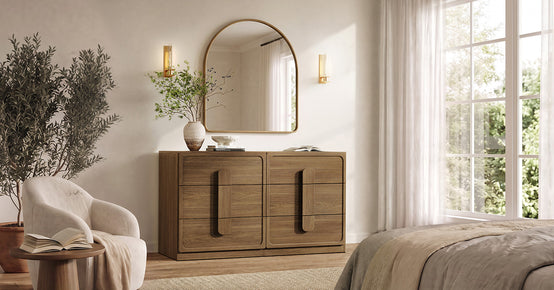
1. Hang One Above a Console Table

The classic pairing, and still the best. Size the mirror at roughly two-thirds the width of the piece below. Leave 6 to 8 inches between the console top and the bottom of the frame.
A console table with open lower shelves hands you a surface for keys and somewhere to put everything else.
2. Choose a Tall Mirror for a Narrow Hallway

Work with the shape you have. A slim vertical mirror echoes the corridor and pulls the eye up, not across.
Somewhere around 18 to 24 inches wide works. Height between 36 and 48 inches.
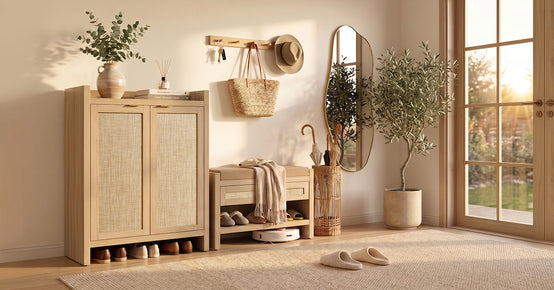
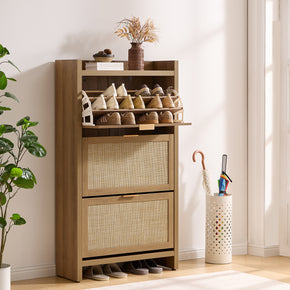
Keep whatever sits below it just as slim. A tall shoe cabinet with a narrow footprint swallows a lot and still leaves the walkway alone.
3. Add a Full-Length Mirror

Practical and dramatic. The floor-to-eye reflection reads almost like a doorway into another room. Short halls feel longer straight away.
4. Soften the Space With an Arch

An arched top breaks up all the straight lines a hallway is made of. Doors, skirting, floorboards. The curve does the softening while the tall body keeps the vertical emphasis.
5. Use a Round Mirror Above a Low Piece

Round shapes suit anything below eye level. Above a bench or a low cabinet, a circle balances the horizontal line underneath. Curves against straight edges.
6. Fake a Window

Windowpane mirrors with glazing bars read as an extra window from a distance. They only work if there is real light to reflect, so put one opposite a lamp or a doorway.
7. Build a Mirror Gallery Wall

Mix shapes and sizes, but keep one thing constant. One frame finish, or one color family. Lay the arrangement out on the floor first.
8. Repeat Matching Mirrors Along a Long Wall

Space three or four identical mirrors 12 to 16 inches apart, and a long corridor picks up a rhythm. The effect feels more like a triptych than separate pieces.
9. Put a Statement Mirror at the Far End

A mirror at the end of a hallway stops the sightline with depth instead of a blank wall. Go oversized here, and pick something sculptural.
10. Flank It With Wall Sconces

Set sconces at eye level or just above. That lights the face instead of the top of your head, and the mirror pushes it back down the corridor.
11. Float a Shelf Underneath

Where a console will not fit, a slim floating shelf still gives you somewhere for keys and a small tray. It keeps the floor completely clear.
12. Pair It With a Bench

Give people somewhere to sit while they deal with shoes and a corridor becomes a proper arrival zone.
A cushioned shoe bench with storage underneath does two jobs. You sit on it, and the mess goes inside it.
13. Try an Organic or Wavy Shape

Irregular silhouettes read as wall art that happens to reflect. Good in a plain hallway that needs one interesting thing. Just one, though.
14. Add Character With a Vintage Frame

Foxed antique glass. A carved frame. A distressed gilt finish. Older mirrors bring warmth that new ones take years to earn.
15. Warm It Up With Wood

Oak, walnut or a limewashed frame ties the mirror to flooring, baskets and other natural materials—the easiest choice in a hallway that already has timber in it.
16. Go Gold or Antique Brass

Warm metals lift a dim corridor in a way that chrome cannot. Match the finish to your door handles or light fittings and the whole hall looks planned.
17. Keep It Clean and Frameless

Frameless mirrors disappear into the wall and make a tight space feel less busy. Best where the hallway is already narrow, and you want no extra visual weight.
18. Run It Floor to Ceiling

A full-height panel maximizes reflected light and perceived width. This one needs professional fixing. Not a picture hook.
19. Add Depth With Beveled Glass

A beveled edge catches light along its angle and throws a soft line of brightness. Detail without a heavy frame. Subtle, but it shows.
20. Turn an Alcove Into a Feature

A recess in a hallway wall is wasted space until you fit it out. Mirror the back, then slot storage underneath. Shoe cabinets and storage benches sized for entrywaysare often shallow enough to fit inside an alcove without projecting.
21. Use Color on the Frame

A painted frame in deep green, ochre, or navy adds personality to a neutral hall. Pull the shade from a rug or a nearby room so it looks deliberate.
Choosing the Right Mirror Shape and Size
Match the mirror to the shape of the space. Not to whatever looked good in a photo.
|
Hallway type |
Best shape |
Typical size |
Why |
|
Narrow |
Tall rectangle or arch |
18 to 24 in wide, 36 to 48 in tall |
Emphasizes height, keeps the walkway clear |
|
Standard entry |
Rectangle or round |
24 to 36 in wide |
Scale to about two thirds of the console below |
|
Long corridor |
Oversized or a repeated series |
36 to 48 in wide |
Breaks up a blank stretch of wall |
|
End of hallway |
Statement shape or full length |
24 to 40 in wide |
Terminates the sightline with depth |
|
Low ceiling |
Horizontal rectangle |
Wider than it is tall |
Counters the compressed height |
|
High ceiling |
Full length or tall arch |
24 to 30 in wide, 60 in plus |
Uses the vertical space you have |
Where to Hang a Hallway Mirror
Hanging height depends on what the mirror is for and who uses it. There is no single number, and the one that circulates comes from a different problem.
The 57-inch figure is a gallery convention for centering artwork on an average standing sightline. It is a habit rather than a standard, and institutions vary. Art is looked at. A mirror has to show someone something, so the reasoning differs.
Purpose sets the height. A dressing mirror needs to show the body, so position it by what appears in the glass rather than by a measurement. A mirror hung to bounce light is placed for what it reflects. A decorative mirror answers to the wall composition.
The people using it decide the rest. A household of tall adults and one of short adults do not share a sightline. Children need a lower position to see themselves. A seated user needs the glass to start low enough to work from a chair.
Furniture below governs where it can go. A mirror over a console or dresser wants a consistent gap above the piece, and that gap usually matters more visually than the height off the floor.
Test it before you drill. Hold the mirror up, have the people who will use it stand where they stand, and check what each of them sees. Tape marks the position while you decide.
Above furniture, bring the bottom edge down to 6 or 8 inches off the surface. Closer and it looks stacked. Further and the two pieces stop reading as one composition.
Then check what it faces. A mirror doubles whatever is opposite it, so a blank wall or a utility door gets doubled too.
Light quality counts as much as position. Warm bulbs between 2700K and 3000K suit a hallway.
The Department of Energy explains how to read the box. For a last-look mirror, check the color rendering index too. Look for 90 or above so skin tones come out right.
Safety Checks Before You Drill
Four checks. None of them appear in the usual hallway mirror roundups.
Mirrors Near Doors Have Rules
Glass in certain positions counts as a hazardous location, and two separate rule sets decide what that means for you.
The federal safety standard for architectural glazing covers a specific list: doors, storm and combination doors, sliding patio doors, and bathtub and shower doors and enclosures. Glazing in products outside that list falls outside the standard.
A mirror hung on a wall is not on the list. The rule defines the word mirror, though defining a term and regulating a product are different things. A mirrored door or a mirrored shower enclosure is covered, since the door is the regulated product.
Building codes define hazardous locations in a home. They set safety glazing requirements for glass in and near doors, near walking surfaces, close to floors, adjacent to stairs and landings, and in wet areas. Requirements vary by jurisdiction and edition.
The federal rule also notes that state safety glazing legislation was already widespread and inconsistent when it was written. Your local requirements govern.
Get a professional opinion for anything near a door, a stair, or a tub. A glazier or your building department can confirm whether a location is hazardous and what glass is required. People often guess from a category list and install annealed glass where tempered glass belongs.
A big mirror beside a door deserves a second thought.
Do Not Block the Way Out
A tall leaning mirror in a corridor narrows the exit path. The US Fire Administration asks people to keep doors and windows clear, and a hallway is usually the route everyone takes.
Leave Room to Walk
Deep frames and leaning mirrors eat width, and a leaning mirror takes more floor than its frame suggests.
The Access Board's accessible routes guide sets 36 inches as a continuous clear minimum, reducible to 32 inches at points such as doorways for no more than 24 inches. This requirement applies to public accommodations and commercial facilities, not as a general benchmark.
Which rules reach your home depends on the dwelling. Single-family houses are generally outside the ADA. Multifamily buildings have Fair Housing Act obligations for covered units, and some state and local codes go further. Verify rather than assume.
Egress applies regardless. Residential code requires a continuous unobstructed path to the exit door, and a mirror narrowing a corridor on that path is a code question. Local requirements govern.
Where you borrow the figure, keep what makes it meaningful. The clearance cannot be reduced by protruding objects, which means the mirror counts against the width rather than sitting outside it.
Measure the gap the mirror leaves, not the corridor. A leaning mirror needs its base set out from the wall, and that base is the narrowest point someone has to pass.
Anchor the Furniture Below
The console or cabinet under the mirror needs securing too, especially with children about. CPSC recorded 234 tip-over deaths from clothing storage units between 2000 and 2022. Fix the mirror to a stud, or use fixings rated for its actual weight.
Hallway Mirror Mistakes to Avoid
Going too small is the most common. An undersized mirror over a wide console looks stranded. Size up when unsure.
Reflecting clutter is the next. Stand where guests will stand and look at the mirror before you commit to a hook position.
Too many competing shapes turn a gallery wall into noise. Repeat one finish, and it holds together.
Wood-framed mirrors also move with the seasons. Indoor timber settles near 6 to 8 percent moisture content, so a frame fitted tight into an alcove can bind in a damp month.
Hallway Mirror Styles Worth Considering

Mirror trend lists are designer predictions rather than measured demand, and they rarely cite anything. These choices hold up on their own reasoning.
Oversized arches read as architecture rather than decor, which is what makes them work in a corridor. A tall soft-topped shape draws the eye up in a space that is otherwise all horizontal.
Organic and asymmetric shapes function as wall art with a reflective surface. They suit a hallway with nowhere else to hang anything.
Warm metals and cool metals both remain available, and the choice follows what is already in the space. Aged brass and bronze sit with warm wood tones. Chrome and nickel sit with cooler palettes and read as quieter.
Texture in the frame adds depth where a hallway has none. Fluted, scalloped, and carved profiles catch light along their length, which does more in a narrow space than a flat frame does.
Multifunction earns its place in a small entry. A mirror with a shelf or hooks built in replaces two objects with one, and that matters where every surface has to work.
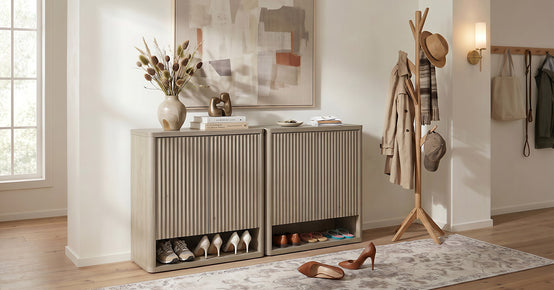
Slim shoe cabinets in the Cas range sit alongside them without crowding the walkway.
Final Takeaway

The best hallway mirror is not the prettiest one in the shop. It is the one scaled to your wall, hung at the right height, facing something worth doubling.
Sort the reflection first. Then the shape. Then the frame finish.
A tidy surface underneath does more than any styling trick, and a three-drawer console table for an entryway keeps the clutter out of shot.
FAQs
What hallway mirror style is trending?
Oversized arched mirrors lead, followed by organic asymmetric shapes and textured frames such as fluted, scalloped or bobbin. Aged brass and bronze have pushed cooler chrome out of most ranges.
What are the best mirrors for a hallway?
Wall-mounted mirrors with a shallow frame suit most hallways, because they take nothing off the walkway. Arched and tall rectangular shapes work well in narrow corridors. Round mirrors sit well over low furniture. Full-length designs belong at the end of a hall.
What shape mirror works best in a hallway?
Match the shape to the space:
- Tall vertical or arched for narrow corridors
- Round or oval above a console or bench
- Horizontal rectangle where ceilings are low
- Oversized or full-length at the end of a hallway
How do you style a mirror in a hallway?
Put a console, shelf, or bench underneath. Add a lamp or a pair of sconces for warmth. Then add one tall object, such as a vase, and one flat detail, like a tray. Three pieces is plenty in a corridor.
What are the mirror trends for 2026?
Curved and asymmetric silhouettes. Bigger proportions. Tactile frames with carving or fluting, warm metal finishes, and multifunctional designs with built-in shelves or hooks for small entryways.
Is a mirror in a hallway a good idea?
Yes, nearly always. Hallways tend to be the darkest and narrowest part of a home, and a mirror adds light and depth without using any floor space. The one condition is placement. Point it at something worth reflecting.
Should a hallway mirror be framed or frameless?
Framed mirrors bring warmth, texture and a finish you can echo elsewhere in the hall. Frameless suits tight or very modern corridors, where you want the reflection and nothing else fighting for attention.
What type of mirror is best for a narrow hallway?
A shallow wall-mounted one in a tall vertical or arched shape. Avoid deep frames and leaning floor mirrors, both of which reduce walking width. Hang it to reflect a light source rather than the opposite wall.
Sources
- Electronic Code of Federal Regulations – 16 CFR Part 1201: Safety Standard for Architectural Glazing Materials
- U.S. Access Board – Guide to the ADA Standards, Chapter 4: Accessible Routes
- U.S. Fire Administration, FEMA – Home Fire Escape Plans
- U.S. Department of Energy – Purchasing Energy-Efficient Light Bulbs
- Anchor It!, U.S. Consumer Product Safety Commission – CPSC Adopts Final Consumer Product Safety Standard to Prevent Tip-overs of Dressers and Other Clothing Storage Units
- USDA Forest Products Laboratory – Wood Handbook, Chapter 4: Moisture Relations and Physical Properties of Wood


Looking for something else?
How to Fold Napkins: 10 Easy Ways to Dress Up Any Table
LEARN MORE
How to Choose a Coffee Table: The Complete Buying Guide
LEARN MORE
Burl Wood Furniture: The Complete Buying Guide
LEARN MORE
What Is a Hope Chest? Meaning, History, and Modern Uses
LEARN MORELooking for something else?

What Is a Foyer? Meaning, Purpose and Design Guide
LEARN MORE
GREENGUARD Gold Certified Furniture: What It Really Means for Your Home
LEARN MORE
How to Clean a Mirror Without Streaks: Simple Step-by-Step Guide
LEARN MORE


Further reading

Furniture Distance From a Fireplace: How Far Is Safe?

How to Clean Wood Furniture and Keep the Finish Intact


