The category name is not the answer. Drawer count is a weak capacity proxy. Bulky clothing fit is controlled by usable drawer height, width, extension, bottom support, and the way each garment is folded. This guide turns that idea into a fit test you can complete before ordering, using the objects, room, and routine you already have.
The practical rule is simple: measure the item in use, identify the furniture's smallest usable opening or clearance, and keep a written list of any specification the product page does not publish. A good-looking staged photo can suggest scale. It cannot prove capacity, load, airflow, water resistance, or compatibility.

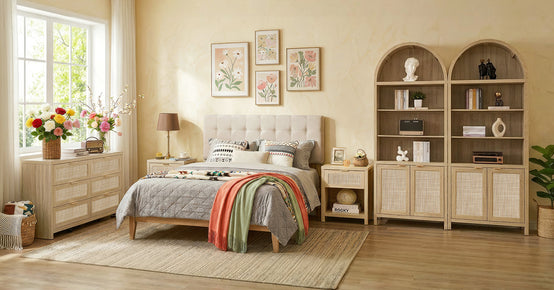
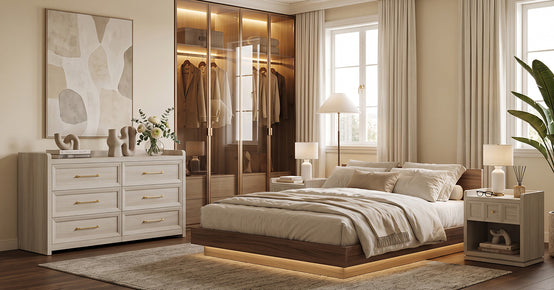
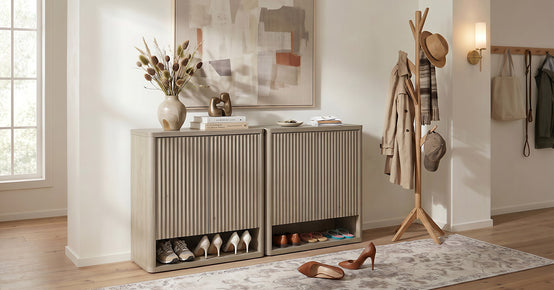
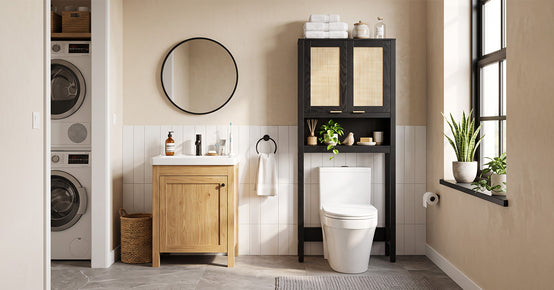
Figure 1. A styled room view establishes the product's visual scale and surrounding context. Official image of Savanna 6 Drawer Dresser, 56.85 Inch Wide from SICOTAS. Use the image to identify questions about scale, access, materials, and configuration; confirm decisive measurements and limitations on the current product page.
Quick Answer: How to Choose the Right Dresser
Choose by the limiting measurement. For dresser for bulky clothes, the limiting measurement is rarely the product's headline width or advertised count. It is the smallest usable dimension after doors, drawers, rails, cables, textiles, flooring, or the stored item itself enters the picture.
Make a one-page fit sheet before browsing. Record the five measurements below, photograph the room or item beside a tape measure, and compare those notes with the product drawing. If one critical value is missing, pause. A support reply is cheaper than a return and more useful than an assumption.
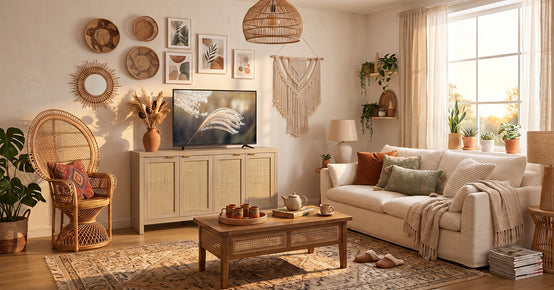
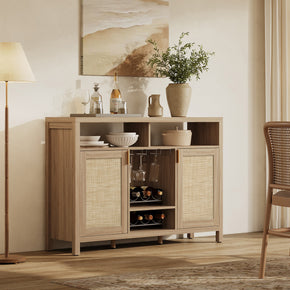
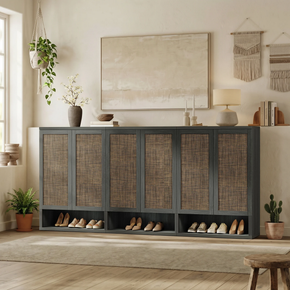
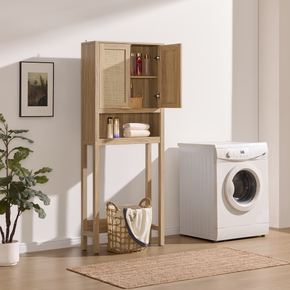
Figure 2. A second lifestyle view gives another angle for judging visible scale, top-surface use, and access around the unit. Official image of Savanna 6 Drawer Dresser, 56.85 Inch Wide from SICOTAS. Use the image to identify questions about scale, access, materials, and configuration; confirm decisive measurements and limitations on the current product page.
The Decision Starts With What You Actually Use
Furniture is normally photographed empty, closed, dry, and perfectly aligned. Homes are none of those things. The decision should be based on the occupied state: drawers open, cords connected, footwear wet, equipment warm, plants watered, or game boxes gripped by hand. That is the state that creates daily friction.
For this article, the core test is: Drawer count is a weak capacity proxy. Bulky clothing fit is controlled by usable drawer height, width, extension, bottom support, and the way each garment is folded. Write down the routine that repeats most often, then design the storage around that moment. Occasional edge cases still matter, but they should not force every day into an awkward setup.

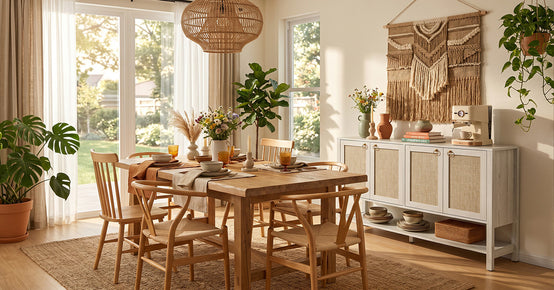
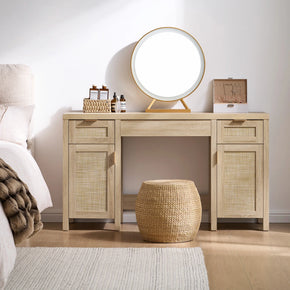
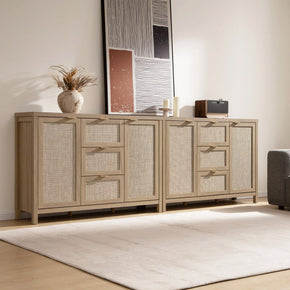
Figure 3. The product in another real-room composition helps test whether the proposed routine still leaves practical access. Official image of Savanna 6 Drawer Dresser, 56.85 Inch Wide from SICOTAS. Use the image to identify questions about scale, access, materials, and configuration; confirm decisive measurements and limitations on the current product page.
Build a Real-World Measurement Sheet
|
Measurement
|
How to check it
|
|
Garment stack height
|
Fold five representative sweaters or jeans as you actually store them, then measure the stack without compressing it.
|
|
Usable drawer height
|
Use the interior height below the drawer above—not the height of the decorative front.
|
|
Interior width and depth
|
Check whether stacks can sit side by side without catching on the drawer box or hardware.
|
|
Extension
|
Confirm how much of the back of a loaded drawer remains hidden when opened.
|
|
Loaded-drawer evidence
|
Look for a published rating, bottom construction, and glide details; do not infer strength from exterior weight.
|
Use internal or usable measurements whenever the decision concerns storage. Exterior width and depth include panels, backs, doors, trim, and unused voids. For access questions, measure the furniture in its active state. For load questions, use the object's heaviest normal condition and compare it with a published rating.

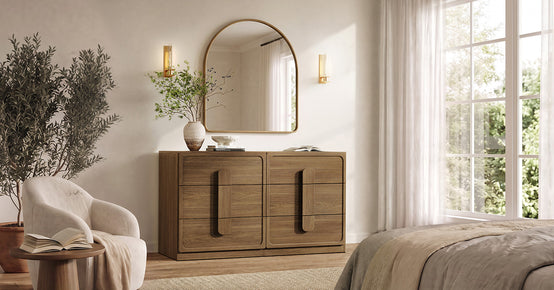
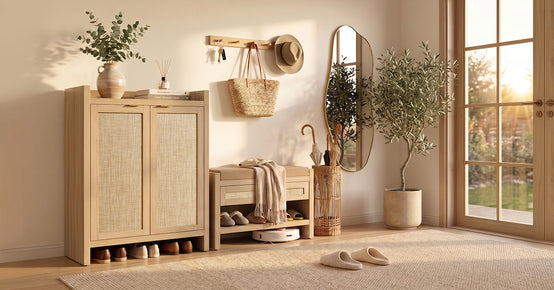
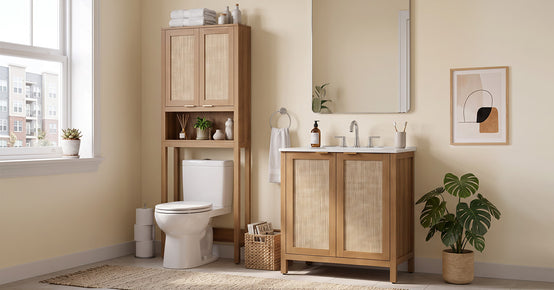
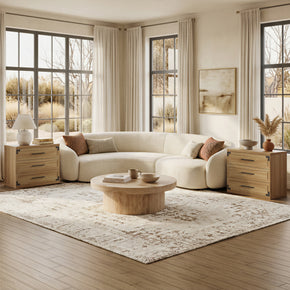
Figure 4. A product feature or dimension view supports the measurement worksheet and points to details that require written confirmation. Official image of Savanna 6 Drawer Dresser, 56.85 Inch Wide from SICOTAS. Use the image to identify questions about scale, access, materials, and configuration; confirm decisive measurements and limitations on the current product page.
Turn Every Requirement Into a Pass or Fail Gate
A shortlist becomes useful only when every important requirement has a visible result. Write Pass, Fail, or Unknown beside each item. Unknown is not a softer version of Pass: it means the product page, manual, or support reply has not yet supplied enough evidence. This prevents attractive styling, a sale price, or an easy headline dimension from overruling the requirement that actually controls daily use.
Gate 1: Garment stack height
Fold five representative sweaters or jeans as you actually store them, then measure the stack without compressing it. Record the number, the source of that number, and the condition in which it was measured. Then compare it with the product's usable space rather than its exterior silhouette. Add a practical margin for fingers, cords, textiles, moving parts, flooring changes, or normal loading. A fit that works only at the exact theoretical limit is vulnerable to installation tolerances and everyday variation.
Gate 2: Usable drawer height
Use the interior height below the drawer above—not the height of the decorative front. Record the number, the source of that number, and the condition in which it was measured. Then compare it with the product's usable space rather than its exterior silhouette. Add a practical margin for fingers, cords, textiles, moving parts, flooring changes, or normal loading. A fit that works only at the exact theoretical limit is vulnerable to installation tolerances and everyday variation.
Gate 3: Interior width and depth
Check whether stacks can sit side by side without catching on the drawer box or hardware. Record the number, the source of that number, and the condition in which it was measured. Then compare it with the product's usable space rather than its exterior silhouette. Add a practical margin for fingers, cords, textiles, moving parts, flooring changes, or normal loading. A fit that works only at the exact theoretical limit is vulnerable to installation tolerances and everyday variation.
Gate 4: Extension
Confirm how much of the back of a loaded drawer remains hidden when opened. Record the number, the source of that number, and the condition in which it was measured. Then compare it with the product's usable space rather than its exterior silhouette. Add a practical margin for fingers, cords, textiles, moving parts, flooring changes, or normal loading. A fit that works only at the exact theoretical limit is vulnerable to installation tolerances and everyday variation.
Gate 5: Loaded-drawer evidence
Look for a published rating, bottom construction, and glide details; do not infer strength from exterior weight. Record the number, the source of that number, and the condition in which it was measured. Then compare it with the product's usable space rather than its exterior silhouette. Add a practical margin for fingers, cords, textiles, moving parts, flooring changes, or normal loading. A fit that works only at the exact theoretical limit is vulnerable to installation tolerances and everyday variation.

Figure 5. A second room-scale view shows how placement changes the way the furniture is read and used. Official image of Savanna 6 Drawer Dresser, 56.85 Inch Wide from SICOTAS. Use the image to identify questions about scale, access, materials, and configuration; confirm decisive measurements and limitations on the current product page.
Build the Shortlist in Three Stages
Stage one removes obvious mismatches. Use the room envelope, access route, and the object's largest operating dimension to eliminate products that cannot physically work. Do this before comparing finishes or promotional prices; otherwise time is spent rationalizing a model that has already failed the basic fit test.
Stage two checks the routine. Open every door, drawer, lid, or cable path on paper. Place the user's body, chair, robot vacuum, wet footwear, appliance, or stored object in the same diagram. The question is not merely whether the furniture fits while closed, but whether the person can complete the repeated task without moving another object first.
Stage three verifies evidence. Match each surviving option against published interior dimensions, load limits, installation instructions, care limits, and equipment-manufacturer guidance where relevant. If two products both pass, choose on finish, price, delivery, and style. Those preferences matter, but only after the functional risks have been removed.

Figure 6. An alternate arrangement provides a visual check on footprint, grouping, and surrounding circulation. Official image of Savanna 6 Drawer Dresser, 56.85 Inch Wide from SICOTAS. Use the image to identify questions about scale, access, materials, and configuration; confirm decisive measurements and limitations on the current product page.
Who Each Layout Is For and Where It Breaks Down
Mostly sweaters
This situation usually benefits from fewer, taller drawers. The reason is operational: it protects the measurement or access condition most likely to create friction. The trade-off is equally important: deep stacks can hide lower garments; use dividers or two short stacks. Treat that warning as a screening question, not a footnote after purchase.
Mostly denim
This situation usually benefits from wide drawers with verified support. The reason is operational: it protects the measurement or access condition most likely to create friction. The trade-off is equally important: a drawer that feels fine empty may flex or bind when loaded. Treat that warning as a screening question, not a footnote after purchase.
Mixed wardrobe
This situation usually benefits from mixed-height drawers. The reason is operational: it protects the measurement or access condition most likely to create friction. The trade-off is equally important: assign bulky pieces to the deepest tier and smaller items to shallow tiers. Treat that warning as a screening question, not a footnote after purchase.

Figure 7. This configuration view helps the reader compare single-unit and expanded storage possibilities without treating styling as proof of fit. Official image of Savanna 6 Drawer Dresser, 56.85 Inch Wide from SICOTAS. Use the image to identify questions about scale, access, materials, and configuration; confirm decisive measurements and limitations on the current product page.
Read the Product Page as Evidence, Not as a Promise
A product page can confirm only what it actually publishes. Exterior dimensions, a feature name, or a staged image may establish a useful starting point, but they do not automatically prove interior capacity, loaded stability, ventilation, water tolerance, cable clearance, repeated assembly, or compatibility with another product. When a required value is missing, ask for the exact measurement or instruction in writing and save the reply with the shortlist.
Images are most useful for identifying questions. They can reveal a center support, recessed back, door hinge, raised lip, drawer rail, baseboard gap, or cable opening that the headline dimensions overlook. Use the image to locate the potential constraint; use a drawing, specification, or support confirmation to decide whether the constraint passes.

Figure 8. A closer product view highlights finish, construction, or a functional detail that should be verified against the written specifications. Official image of Savanna 6 Drawer Dresser, 56.85 Inch Wide from SICOTAS. Use the image to identify questions about scale, access, materials, and configuration; confirm decisive measurements and limitations on the current product page.
Compare the Trade-Offs, Not Just the Feature List
|
Your situation
|
Prioritize
|
Watch out for
|
|
Mostly sweaters
|
Fewer, taller drawers
|
Deep stacks can hide lower garments; use dividers or two short stacks.
|
|
Mostly denim
|
Wide drawers with verified support
|
A drawer that feels fine empty may flex or bind when loaded.
|
|
Mixed wardrobe
|
Mixed-height drawers
|
Assign bulky pieces to the deepest tier and smaller items to shallow tiers.
|
A feature becomes valuable only when it solves a measured constraint. Adjustable shelves help when the adjustment range matches the objects. Tall legs help when the lowest rail remains high enough. Ventilation openings help when they meet the appliance maker's instructions. A long feature list without those links is marketing, not fit evidence.
Four Buying Mistakes That Create Avoidable Returns
-
Counting drawers before inventorying clothes.
-
Using exterior dimensions as interior capacity.
-
Buying very deep drawers without planning visibility.
-
Ignoring the weight of a full denim drawer.
The common pattern is substitution: buyers replace an unknown usable measurement with an easier exterior number, replace a load rating with visual sturdiness, or replace a manufacturer clearance with a rule of thumb. Do not fill a missing specification with confidence. Mark it as an open question.
SICOTAS Dresser Fit Check

Figure 9. A clean product view is used for the final fit check. Official image of Savanna 6 Drawer Dresser, 56.85 Inch Wide from SICOTAS. Use the image to identify questions about scale, access, materials, and configuration; confirm decisive measurements and limitations on the current product page.
Start with the
SICOTAS dresser collection to compare the current assortment, then use the
Savanna 6 Drawer Dresser, 56.85 Inch Wide as a specification-reading example. It is not presented as a universal match for this use case. Confirm every missing dimension, load rating, clearance, material limitation, and installation requirement before purchase. For broader storage and furniture options, return to
SICOTAS.
|
Published evidence
|
Current detail
|
|
Overall size
|
56.85 in. W × 31.34 in. H × 17.72 in. D
|
|
Main drawer interior
|
26.81 in. W × 8.59 in. H × 15.75 in. D
|
|
Product weight
|
112 lb
|
|
Published hardware
|
Metal roller glides with drawer safety stops
|
|
What still needs checking
|
Per-drawer load rating, packed carton dimensions, and model-specific wall anchoring details
|
This comparison is intentionally limited. The listed model may illustrate how to read a product page, but it should be recommended for the article's use case only when the decisive measurements and instructions are documented. That boundary keeps the buying guide useful and the commercial mention credible.
A Five-Minute Pre-Purchase Test
-
Garment stack height: Fold five representative sweaters or jeans as you actually store them, then measure the stack without compressing it.
-
Usable drawer height: Use the interior height below the drawer above—not the height of the decorative front.
-
Interior width and depth: Check whether stacks can sit side by side without catching on the drawer box or hardware.
-
Extension: Confirm how much of the back of a loaded drawer remains hidden when opened.
-
Loaded-drawer evidence: Look for a published rating, bottom construction, and glide details; do not infer strength from exterior weight.
Finish by drawing the footprint on the floor or wall with painter's tape. Add the door, drawer, lid, chair, robot, cable, or body position that appears during use. If the active footprint still preserves circulation and every critical specification is verified, the shortlist is ready for a product-level comparison.
Buying Checklist
-
I measured the room, approach path, and the item in its normal operating or loaded state.
-
I compared usable interior dimensions or true clearances, not exterior numbers alone.
-
I found a published load rating, care limit, ventilation instruction, or installation rule where the use case depends on it.
-
I accounted for doors, drawers, lids, cords, rugs, baseboards, rails, hinges, and hand access.
-
I marked missing evidence and asked SICOTAS support or the equipment maker before treating the fit as confirmed.
-
I reviewed anchoring, leveling, floor protection, and assembly for the exact model and wall or floor type.
Find a Dresser That Fits the Routine
Use the measurement sheet above, then
compare the current SICOTAS dresser collection by the specifications that control your use case. Shortlist only the models that publish enough evidence to pass the test, and confirm any remaining dimension or limitation before ordering.
The Final Decision Should Survive a Real-Room Rehearsal
Before ordering a dresser, recreate the critical routine at full scale. Mark the furniture footprint and every moving zone with painter's tape, then place the object or a cardboard proxy where it will be used. Walk the route, reach the controls, open the moving parts, and repeat the task from the position you will actually occupy. A two-minute rehearsal often exposes a conflict that is invisible in a product photo.
Approve the purchase only when four conditions are true: the furniture fits the room and delivery route; the stored item or equipment fits in its normal operating state; the product evidence confirms the decisive limits; and the routine remains comfortable after doors, drawers, cords, rugs, and body movement are included. If one condition remains Unknown, the next action is to obtain evidence or choose an alternative—not to guess.
FAQs
What drawer depth is best for sweaters?
Start with the physical constraint, not the product label. In practice, fold five representative sweaters or jeans as you actually store them, then measure the stack without compressing it. For a mostly sweaters setup, prioritize fewer, taller drawers; deep stacks can hide lower garments; use dividers or two short stacks. If the decisive measurement is absent from the product page, request it before treating the fit as confirmed.
Are deep dresser drawers better for jeans?
There is no reliable universal number because rooms, objects, and furniture geometry vary. First, use the interior height below the drawer above—not the height of the decorative front. The mostly denim case usually favors wide drawers with verified support, although a drawer that feels fine empty may flex or bind when loaded. Use the written product specification—not a staged image—as the final check.
How many sweaters fit in a dresser drawer?
The answer comes from the smallest usable clearance or opening in the complete setup. To find it, check whether stacks can sit side by side without catching on the drawer box or hardware. This is why mixed-height drawers can work for mixed wardrobe, while assign bulky pieces to the deepest tier and smaller items to shallow tiers. Measure the active or loaded state and keep an unresolved value off the 'confirmed' list.
Is a six-drawer dresser enough for bulky clothes?
Treat this as a fit test rather than a style preference. A useful test is to confirm how much of the back of a loaded drawer remains hidden when opened. In the mostly sweaters scenario, fewer, taller drawers is normally the better priority, but deep stacks can hide lower garments; use dividers or two short stacks. Painter's tape or a cardboard mock-up can expose that conflict before delivery.
How can I stop sweaters from disappearing at the bottom?
An exterior dimension answers only part of this question. You still need to look for a published rating, bottom construction, and glide details; do not infer strength from exterior weight. For mostly denim, the practical choice is often wide drawers with verified support; however, a drawer that feels fine empty may flex or bind when loaded. Ask for the missing interior dimension, load limit, clearance, or care restriction instead of estimating it.
What should I check about drawer bottoms and glides?
Choose the model whose usable dimensions and limitations are documented before purchase. That means you should fold five representative sweaters or jeans as you actually store them, then measure the stack without compressing it. The mixed wardrobe use case points toward mixed-height drawers, with one important warning: assign bulky pieces to the deepest tier and smaller items to shallow tiers. Keep that warning in the shortlist notes so it is not lost when comparing finishes or prices.
Should bulky clothes be stored in a dresser or wardrobe?
Measure the item in use—not only while closed, empty, or dry. Specifically, use the interior height below the drawer above—not the height of the decorative front. For mostly sweaters, fewer, taller drawers usually preserves the routine, although deep stacks can hide lower garments; use dividers or two short stacks. Test the route for hands, doors, drawers, cables, or cleaning equipment as well as the static footprint.
Do drawer dividers reduce usable space?
Use a representative load and a worst-case daily scenario before ordering. Begin by checking that you can check whether stacks can sit side by side without catching on the drawer box or hardware. A mostly denim setup tends to need wide drawers with verified support, yet a drawer that feels fine empty may flex or bind when loaded. Confirm the result against the current product drawing and the exact manufacturer's instructions where powered equipment is involved.