




18 Accent Table Decor Ideas That Work in Real Rooms
Accent table decor ideas usually fall apart for one reason. The table stops being useful. You still need a spot for a mug at the end of the day. And a phone. And the glasses you take off before bed. Below are 18 ways to decorate a side or end table without losing that spot.
Scale rules are in here too, plus shape-by-shape tweaks and a few safety checks I have never seen another guide bother with. Worth reading the standard measurements designers use for living room furniture first. Scale fixes most styling problems on its own.
Style the Table Before You Add Anything
Four decisions made in advance will save you from a crowded surface later.
Decide What the Table Has to Do
Ask what actually happens beside that seat. A lamp? A drink? Remotes and a book? A table beside a sofa has a different job than one in a hallway corner.
Decor comes after that answer, never before.
Match the Decor to the Size and Shape

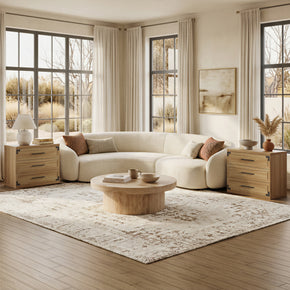
A narrow round table takes two small items and nothing more. A wide surface takes a lamp, a book stack, and a tray and still looks half empty. A wider two-drawer side table gives you room to build a real vignette instead of cramming one in.
Leave Real Clear Space, and Let the Table Decide How Much
A third is the figure that circulates, and it makes a reasonable starting guess. It is a habit designers fell into, not a standard anyone established. The table sets the actual number for you.
Bare surface is what makes a styled table read as styled rather than cluttered. It also leaves somewhere for a mug to land. Cover the whole top and the table stops working.
Function moves the figure first. A nightstand that holds a book, a glass, and a phone every night needs more clear space than a hallway console nobody touches. A side table next to the seat people actually use needs the most.
The lamp takes up its own footprint before anything else. A wide drum shade on a small round table can leave a third clear and still have nowhere to set anything down. Measure the base and the shade overhang.
Reach matters as much as area. Clear space pushed to the back does a person in a wheelchair or anyone with limited reach no good. Keep the open part at the front edge where a hand naturally lands.
Households change the answer again. Young children, a cat that walks across everything, or a table near a doorway all argue for less on top and more room to absorb bumps.
Pick One Anchor Object First
Pick the tallest or heaviest thing first. Lamp. Big vase. A plant. Some sculptural form. Everything else gets arranged around it.
18 Accent Table Decor Ideas
Treat these as starting points, not instructions. The arrangements photograph well because the room behind them was already measured, lit, and wired for it. Yours has different constraints.
Measure before you commit. A console that looks right in a photo is sitting under a specific ceiling height against a specific wall length. Depth is the dimension people forget, and it decides whether a walkway still works.
Plants need the light the spot actually gets, not the light the photo suggests. A corner six feet from a north-facing window is low light, no matter how bright the room feels. Check the species before the styling.
Cable routing takes longer than styling. Lamps, speakers, and a television all need a path to an outlet that does not cross a walkway. Sorting that out after the piece is placed usually means moving it again.
Open flame changes the rules. Candles near dried grasses, paper shades, or loose textiles are a risk no arrangement is worth. Keep them apart, or use flameless ones and skip the question.
Some of these take five minutes. Others take an afternoon plus a trip to the hardware store. Which one you get depends on what is already in the room.
1. Anchor the Table With a Lamp

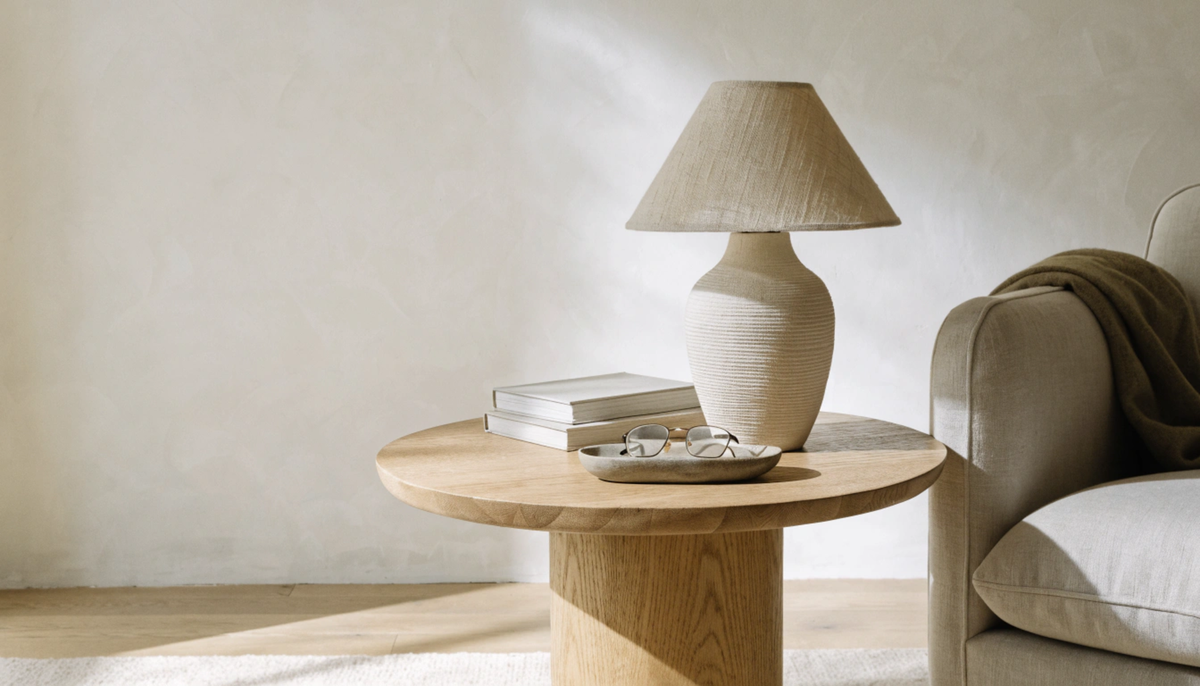
A lamp earns its place on a side table faster than anything else: height, warmth, and light from one object.
Scale matters more than style. A wide shade swallows a small table. A tiny lamp beside a large sofa disappears. The bottom of the shade wants to land near eye level once you sit down.
No outlet in that corner? Cordless rechargeable lamps fix it. They have improved a lot, and they let you put light exactly where the room needs it.
2. Add a Vase With Fresh or Faux Stems

Flowers bring color and softness to a hard wooden surface. Faux stems work just as well if the corner gets no light.
Keep arrangements low so they don't block the sightline. Tall branches are better in a corner than beside a sofa.
3. Bring In a Small Potted Plant

Greenery fixes a table that feels flat or overly neutral. A trailing pothos softens a square edge. A small snake plant adds a vertical line.
The planter counts as much as the plant. Terracotta reads rustic. Glazed ceramic reads modern. A woven basket cover softens everything around it.
Check the drainage before it goes on wood. A saucer inside a decorative pot helps. Calling it safe overstates what it does. The saucer catches overflow it can hold and lets anything more pass through, and water trapped underneath sits against the finish where nobody looks.
Line the decorative pot itself with something waterproof. Cachepots are often unglazed or seamed, and they seep slowly enough that the damage shows up before the leak does.
Raise the saucer on small feet or cork pads. Continuous contact between a wet saucer and a finished surface is what leaves rings. A few millimeters of air breaks that contact.
Lift the whole arrangement every couple of weeks and look at the surface underneath. Condensation, a dull patch, or a lifted edge means the setup is failing. Empty standing water rather than leaving it to evaporate.
The manufacturer's finish care instructions govern all of this. Waterborne finishes, oiled wood and engineered panels each tolerate moisture differently, and edge swelling on a veneered panel does not come back out.
4. Use a Tray to Group Small Things

A tray turns three unrelated objects into one deliberate group. It also makes the whole table easier to clear when you need the surface.
Round tray on a square table. Small rectangular tray on a long one. Never a tray that covers the entire top.
Two or three items inside is plenty. A candle and a matchbox. A small vase and a dish. The tray does the grouping work for you.
5. Hide Everyday Clutter in a Lidded Box

Remotes, chargers, keys, hair ties. Drop them in a lidded box, and they stay handy without sitting out on show. That is functional decor doing its job.
Wood, marble, leather, lacquer, woven fiber. Any of them add texture while the box does real work.
6. Stack Two or Three Books for Height

The oldest trick on the list. Books lift a small object to a better height and add a horizontal line under it.
Choose books you actually care about: art, travel, cooking, a battered vintage hardback. Filler books look like filler.
Two or three is the sweet spot. Take the jackets off if the covers clash with the room, since the cloth underneath often looks better anyway.
7. Add Candles for Warmth

One large jar candle reads as a single object. Two or three tapers at different heights read as a group—both work.
Read the safety section further down before you light anything on a small table.
8. Display One Sculptural Object

Some tables need shape rather than quantity: a carved wood form, a stone bowl, a ceramic vessel, a linked wooden chain.
One strong object on a beautiful table beats five small ones.
Look for something with weight and an interesting outline. Matte finishes read calmer than shiny ones on a small surface.
9. Build a Group of Three

The classic formula. One tall item, one medium, one low. A lamp, a short stack of books, a small dish.
Vary the shape and material too. Three ceramic objects of similar height look like a set, not a composition.
Pull the group toward one side of the table instead of centering it. Slight asymmetry always reads more relaxed.
10. Try the 3-5-7 Rule on Bigger Surfaces

Odd numbers tend to look more relaxed than even ones. Three items suit a small table. Five or seven only work when there is real space between them.
A stack of books with an object on top counts as one group, not four things.
11. Mix Materials Instead of Colors

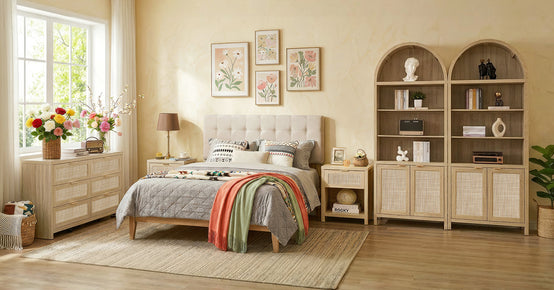
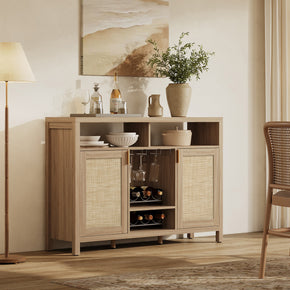
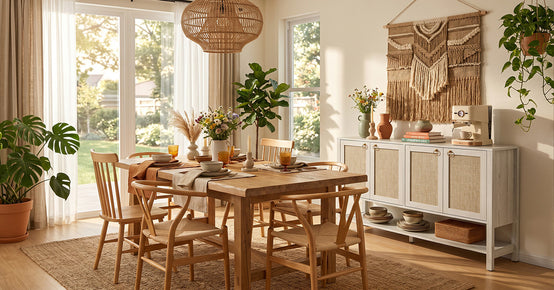
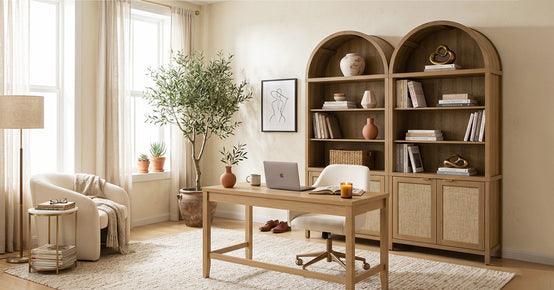
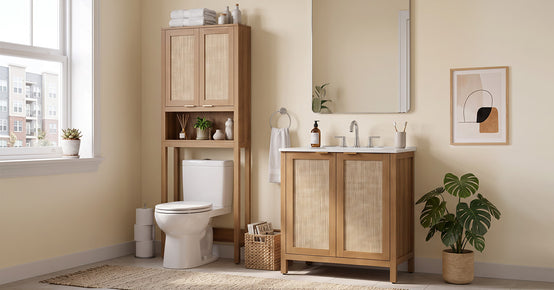
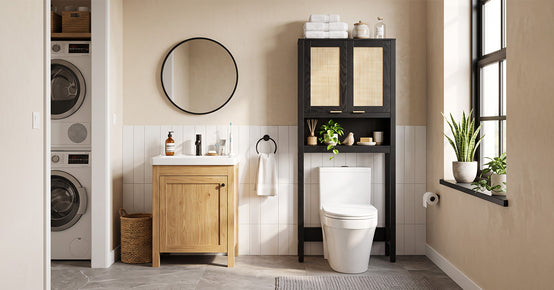
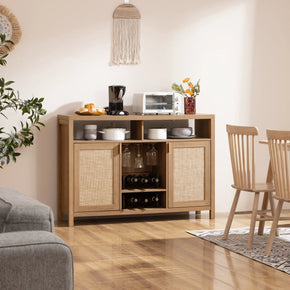
Texture contrast adds depth even when the palette stays neutral. Wood with glass. Ceramic with brass. Stone with something woven. Pieces from the rattan-front furniture rangeadd that texture to the table itself. The objects on top can then stay simple.
Two or three materials per table. More than that starts to feel busy.
12. Tuck a Basket on the Lower Shelf

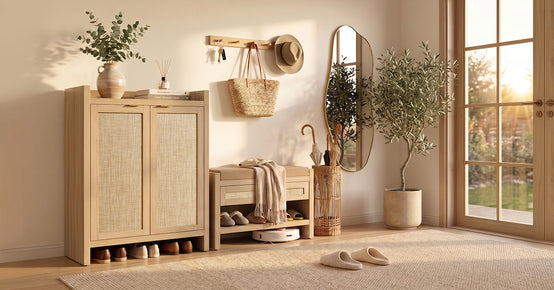
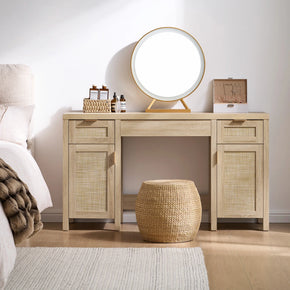
Tables with a second tier are storage in disguise. A small basket down there swallows magazines, remotes, or a folded throw.A rattan-front table with an open shelf handles this better than a solid cabinet, since you can see what is in there.
Size the basket to the shelf, not the room. A basket that overhangs the edge makes the whole table look overloaded.
13. Display One Personal Object

A shell from a trip. Handmade pottery. A small framed photo. An inherited brass box. This is what stops a room from reading like a showroom.
One or two at a time. A whole collection on one small table becomes a pile.
Rotate them instead of displaying everything at once. The piece you notice again is the one that has been away for a while.
14. Style a Tiny Table With Just Two Items

Very small tables have a simple formula. One tall thing plus one low thing. Lamp and dish. Vase and book. Plant and candle.
Then stop. Leave the rest for a glass of water.
15. Turn It Into a Reading Station
Beside an armchair, style for the activity. A lamp with a warm bulb. One or two books. A coaster and a small dish for glasses.
Skip anything decorative that blocks you putting a cup down.
A shallow drawer earns its keep here. Reading glasses, a pen and a bookmark live better out of sight than stacked on the top.
16. Swap the Nightstand for an Accent Table

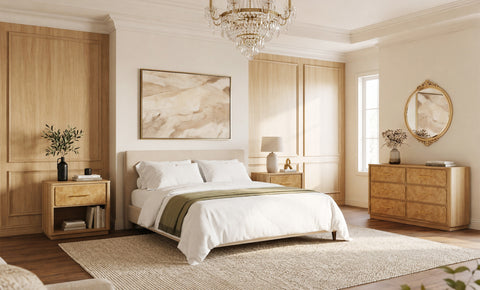
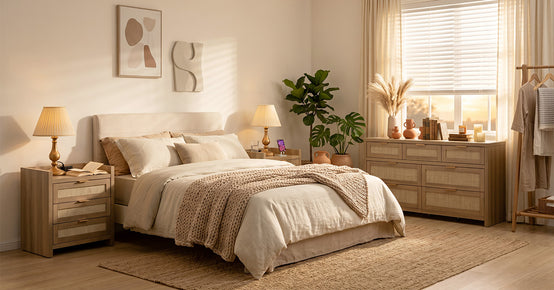
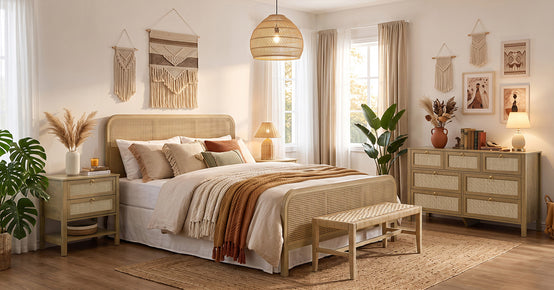
In a tight bedroom, a side table often beats a dedicated nightstand. Keep the top minimal—a compact lamp, a book, a water glass, a small tray. A three-drawer bedside table handles the rest out of sight.
17. Swap One Seasonal Piece

Keep the lamp, the tray, and the books all year. Change one thing with the season.
Blossom in spring. Greenery in summer. Dried stems or branches in autumn. A candle and something evergreen in winter. One swap, whole new feel.
18. Let a Statement Piece Stay Almost Bare

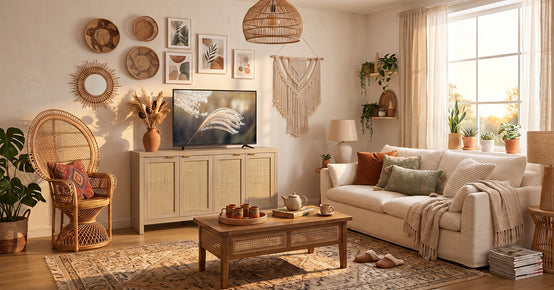
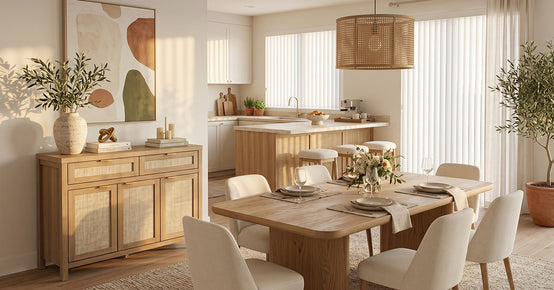
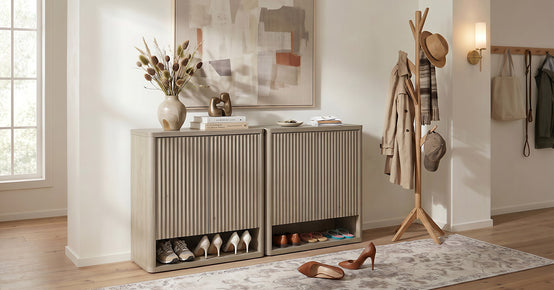
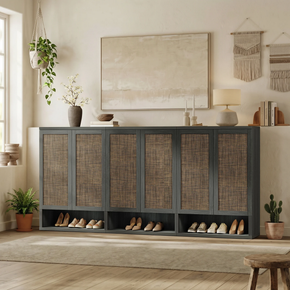
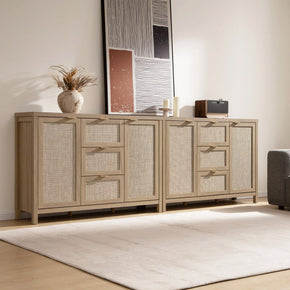
If the furniture is the interesting part, decor only gets in the way. Carved legs, fluted fronts, stone tops, woven panels. An accent storage cabinet with rattan doors is doing plenty on its own. One small object on top is enough.
Accent Table Decor Ideas by Table Shape
The same principles need small adjustments depending on what you are working with.
Round Accent Tables

Arrange objects in a loose triangle rather than a line. Rows look wrong on a circle.
Fewer items too. Round tables usually have less usable area than they appear to, because the corners you would use on a square top simply do not exist.
Square and Rectangular Tables
One centered group works. So does an offset vignette with a clear corner left open. Use that open corner as the drop zone.
Narrow Chairside Tables
Function first, decoration second. A coaster, a small container, maybe one low object. These tables exist to hold a drink within arm reach of a recliner.
Nesting Tables
Style the largest table lightly and leave the smaller ones almost empty. Anything heavy defeats the point. You need to pull them out in a second.
Styling by Interior Style
The formula stays the same across every look. What changes is the material list.
Modern rooms want simple silhouettes and a short palette: stone, metal, glass, one or two objects, plenty of bare surface.
Farmhouse leans on pottery, worn wood, small baskets and natural stems. Go light on the distressed finishes, or it tips into theme-park territory.
Coastal likes pale woods, woven texture, white ceramics and clear glass. Blue and green work better as accents than as the whole scheme.
Boho lets you get away with the most: sculptural pottery, plants, stacked books, mixed textures. Layering is the whole point here.
Traditional rooms suit lamps, framed photographs, brass, decorative boxes, and classic ceramics. Symmetry is welcome, not a problem.
The Practical Checks Most Styling Guides Skip
Every article on this topic recommends candles and plants. Almost none of them mention what follows.
Candles Need Twelve Inches of Clear Space

Fire safety guidance is consistent. Keep a lit candle twelve inches clear of anything that burns. Place the holder on something solid that isn't already covered in stuff.
Picture a small accent table with a candle, a stack of paper books, and a dried arrangement. That breaks both rules at once.
Trim the wick back to a quarter inch. Blow it out when you walk out of the room. Flameless candles solve the problem entirely on a crowded table.
Check What the Table Can Actually Hold
Slim accent tables have real weight limits, especially glass tops and pieces with thin metal legs. A heavy stone lamp base plus a stack of hardbacks adds up faster than people expect.
Push down on the corner before you load it. If it wobbles, tighten the fixings first.
Plan the Lamp Cord and the Glare
Find the outlet before you decide where the lamp goes. A cord stretched across a walkway trips people, and it looks bad from every angle.
Check the glare too. See the bulb from your seat? The shade may be too short, or the table too tall.
Pick a Plant That Suits the Light
Indoor light is far dimmer than it looks. Extension guidance notes that even low-light plants struggle more than ten feet from an average window.
Measure the distance honestly. Dark corner? Go for a tolerant plant, or buy a good faux one and stop feeling bad about it.
Save the Tabletop From Marks
Water rings mark wood. So does candle wax, and so does the condensation under a plant saucer. Tray under the plant. Coaster under the glass. Felt pad under the lamp base.
Tiny habits. They save the tabletop you spent time choosing.
Wax is the nastiest of the three. Let it go hard, then lift it off with a plastic scraper. Pulling at soft wax takes the finish with it.
A Ten-Minute Accent Table Styling Routine

A repeatable sequence for when you are staring at an empty surface.
Clear the table completely first. Remove everything, including the things you assume will stay.
Put the anchor object back—usually the lamp, sometimes a large vase.
Add the horizontal element next. A stack of books or a tray, placed slightly off center.
Set one small object on or beside that stack: a candle, a bowl, a personal piece.
Step back to the doorway and look. If your eye catches on something, remove it rather than adding more.
Then put back only the everyday items you genuinely use there: a coaster, a dish, a remote box.
Photograph the result on your phone. A photo flattens the scene and shows you the imbalance your eye keeps forgiving in person.
Accent Table Decorating Mistakes to Avoid
Too many small objects is the most common one. Five tiny things create visual noise where two larger pieces would read as calm.
Everything at the same height comes second. Without a tall, a medium, and a low element, the arrangement flattens out.
Covering the whole surface is the practical failure. A table you cannot put a mug on has stopped being furniture.
Scale gets ignored constantly. An oversized lamp on a slim table, or a doll-sized vase beside a large sectional. Both look like accidents.
Styling in isolation is subtler. If the colors and materials share nothing with the rug, the art, or the sofa, the table floats.
Following the rules too rigidly is the last one. Odd numbers and the rule of three are starting points. Plenty of beautiful tables hold two objects, or one.
Accent and End Table Trends Worth Knowing
Broad directions rather than short-lived fads. The ideas above should still hold in three years.
Sculptural Shapes
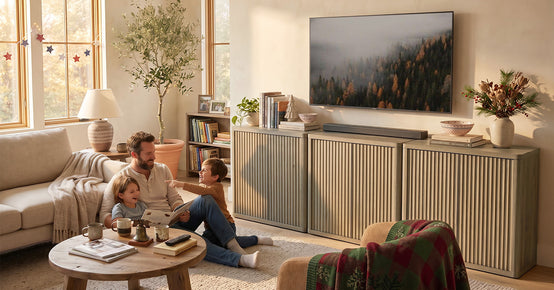
Pedestal bases, rounded corners, fluted and reeded fronts, chunky organic silhouettes. The table itself is increasingly the decorative object.
Natural and Tactile Materials

Several material directions are worth knowing. Visible wood grain, travertine and stone tops cover the hard surfaces. Rattan panels and textured ceramics cover the woven and glazed end. Calling any of them a market shift is a separate claim, and it needs different evidence.
One of them has a number attached. The2026 Designer Trends Survey from 1stDibs, released in November 2025, found 27 percent of designers naming wicker and rattan among their trends for 2026. Curvy and irregular shapes led at 43 percent.
Read that carefully. The survey reports what designers expect rather than what sold, and it describes rattan as maintaining its appeal rather than climbing. Persistence and momentum are different findings.
The other four materials carry no comparable figure, and neither does the idea that any of them is displacing high-gloss. Treat them as options with different strengths, not as a direction the market has settled on.
Pick on how the surface behaves in your room. Travertine and stone read heavy, cool, and permanent. Rattan brings light through a panel and lightens a large piece. Textured ceramic sits somewhere between.
The newest arrivals lean heavily in that direction.
Warmer Wood Tones
Walnut, amber oak and medium browns are appearing alongside the pale oak that dominated for years. Mixing two tones in one room is now normal, not risky.
Storage Built In
Drawers, lower shelves, lift tops and charging ports. Side tables are quietly absorbing jobs that used to need a separate piece of furniture.
Fewer, Larger Objects
The clearest shift in styling. One substantial vase instead of six small trinkets. Restraint reads as expensive.
Final Takeaway
Good accent table styling comes down to three things—function, proportion, and restraint.
Start with one anchor object. Add one or two pieces at different heights. Mix a couple of materials. Then stop while there is still empty surface left.
A side table that holds your coffee and looks good doing it beats a perfectly styled one you cannot use.
FAQs
What should you put on an accent table?
Pair one functional item with one or two decorative ones. Common combinations that work on almost any table:
- Lamp, short stack of books, small dish
- Vase with stems, tray, candle
- Potted plant, decorative box, coaster
- One sculptural object and nothing else
How do you make a table look attractive?
Pick one anchor object, vary the heights of everything around it, mix two or three materials, repeat a color already in the room, and leave part of the surface clear. Every item should earn its place either visually or practically.
What are the latest trends in accent and end tables?
Sculptural and pedestal shapes, fluted or reeded detailing, stone and travertine tops, warmer wood tones, rattan and woven texture, built-in storage or charging, and simpler tabletop styling using fewer but larger objects.
What are some good table decorations?
Plenty of options work depending on the surface and the room:
- Table lamps and small lanterns
- Vases with fresh, dried or faux stems
- Small potted plants in a good planter
- Trays, bowls, catchall dishes
- Books, decorative boxes and baskets
- Candles, candle holders, sculptural objects and framed photos
What is the main purpose of an accent table?
An accent table gives you a small usable surface where you need one, while adding style to the room. Depending on placement, it can hold lighting, drinks, books, storage, or bedside essentials.
What is another name for an accent table?
Side table, end table, occasional table, and chairside table all describe the same idea. Very small console tables sometimes get grouped in too, depending on height and placement.
Sources
- Apartment Therapy – Living Room Layouts: The Ideal Measurements for Everything in the Room
- Woman & Home – How to Mix Wood Tones: 5 Rules of Thumb Designers Follow
- Decorated Life – Ottoman Coffee Table Trays and Styling
- National Fire Protection Association – Safety with Candles
- U.S. Fire Administration – Candle Fire Safety
- University of Maryland Extension – Lighting for Indoor Plants
- Penn State Extension – Low Light Houseplants


Looking for something else?

Burl Wood Furniture: The Complete Buying Guide
LEARN MORE
What Is a Hope Chest? Meaning, History, and Modern Uses
LEARN MORE
What Is a Foyer? Meaning, Purpose and Design Guide
LEARN MORE
GREENGUARD Gold Certified Furniture: What It Really Means for Your Home
LEARN MORELooking for something else?

How to Clean a Mirror Without Streaks: Simple Step-by-Step Guide
LEARN MORE
21 Above-Bed Decor Ideas for a Stylish Bedroom Wall
LEARN MORE
Furniture Materials Guide: Picking the Right Material Room by Room
LEARN MORE


Further reading

18 Decorative Storage Box Ideas That Hide Clutter Well

How to Store Comforters Without Losing Space or Loft


