




18 Jewelry Storage Ideas for a Tangle-Free Collection
Most jewelry storage ideas solve the wrong problem. Tidy is easy. Keeping every piece findable, wearable, and undamaged is the hard part.
Chains knot together. Earrings lose their partners. Rings vanish into a drawer.
Below are 18 ways to organize necklaces, rings, earrings, bracelets, and watches. You also get the part almost nobody covers. Which storage materials quietly damage jewelry.
GIA notes that a diamond can scratch other gems and even the metal of a setting. That is why a shared compartment is a bad idea.
Sort Your Jewelry Before You Buy Any Organizer
Buying a box first is how people end up with two clutter problems. Tip everything out and sort it before you shop.
Split the collection into groups:
- Necklaces and long chains
- Rings
- Earrings, kept in pairs
- Bracelets and watches
- Fine, heirloom or special-occasion pieces
Then split again by how often you wear things. Daily pieces need fast access. Rarely worn ones can go somewhere more protected.
Repair, donate or bin anything broken now. Do not give it drawer space.
18 Jewelry Storage Ideas That Actually Work
Mix three or four of these. One container rarely suits a whole collection.
1. Start With a Compartmentalized Jewelry Box

The classic answer, and still the best one for a medium collection. Look for separate sections and ring rolls rather than one big open cavity.
Soft lining matters more than the outside finish.
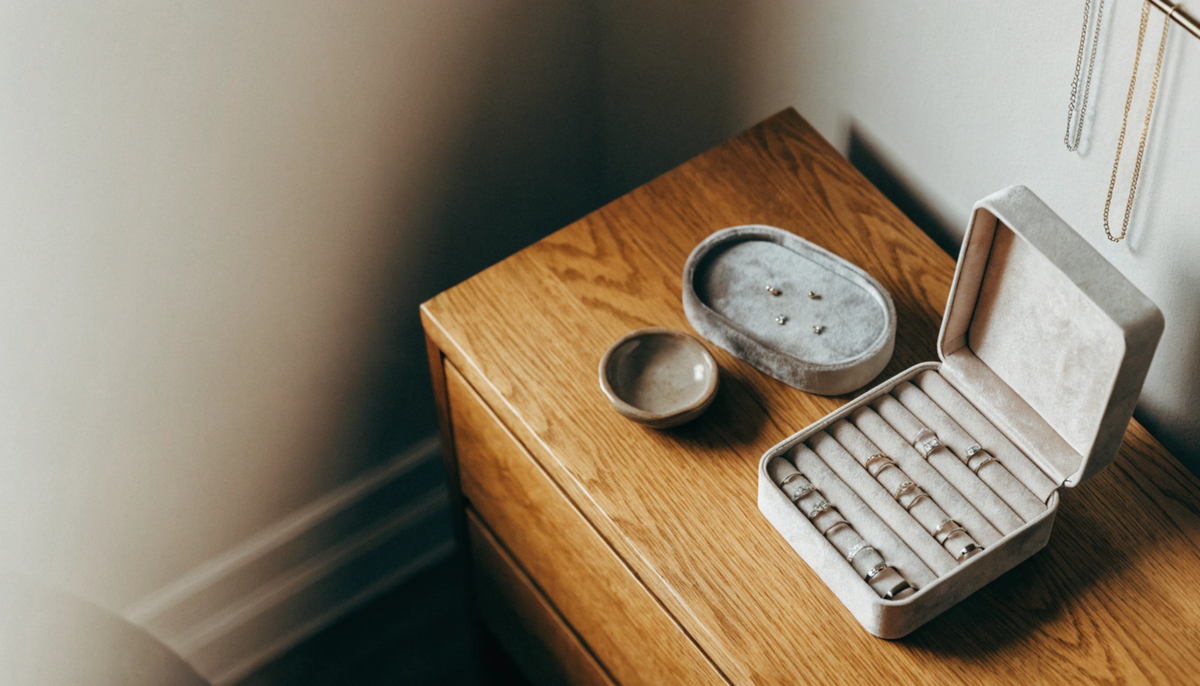
2. Line a Drawer With Velvet Trays

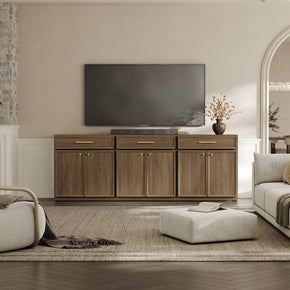
Shallow divided trays turn an ordinary drawer into jewelry storage and keep your surfaces clear. Everything is visible the moment you open it. Deep drawers give you room to stack a second tray later, which is why dressers with deep drawers work better for this than shallow ones.
3. Stack Trays Vertically

Instead of spreading across the dresser, build upward. Use one layer for studs, one for rings, and one for bracelets.
Expandable systems grow with the collection.
4. Give Every Necklace Its Own Hook

Tangles happen when chains share a space. One hook per necklace keeps it in place.
Leave a few inches between hooks so pendants do not swing into each other.
5. Build a Vanity Zone

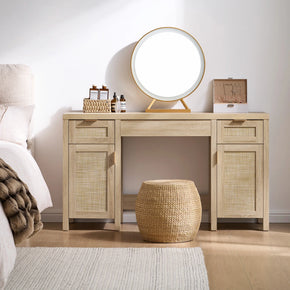
Keeping jewelry where you get ready saves a trip across the room every morning. Use a drawer for everyday pieces and a small top stand for what you are wearing this week. A makeup vanity with a cabinet under the drawer gives you both without crowding the surface.
6. Use a Wall-Mounted Organizer

Wall space costs nothing. A panel with pegs, small shelves and earring slots holds a lot in almost no depth.
Good for narrow bedrooms where the dresser is already full.
7. Set Up an Earring Stand

Rows keep pairs together and let you see every design at once. Group studs, hoops, and drops separately.
Space the rows so long earrings do not hook onto their neighbors.
8. Keep a Catchall Tray by the Bed

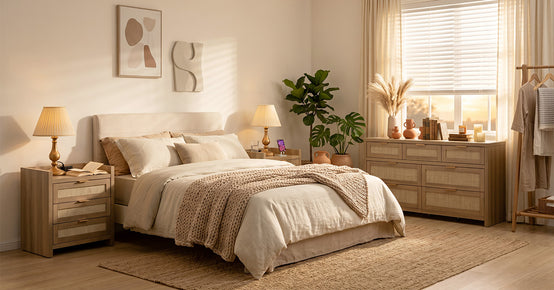
Rings and a watch come off last thing at night, and they need a landing spot that is not the edge of the sink. A small lined dish on the nightstand solves it, and a three-drawer nightstand with black pulls adds closed storage underneath for everything else.
This is for daily pieces only. Not the whole collection.
9. Choose a Stand That Doubles as Decor

A sculptural stand turns frequently worn bracelets and short chains into part of the room.
Keep light-sensitive stones and silver out of open display, though.
10. Hang an Organizer in the Closet

Clear pockets on a hanging panel use dead rail space and keep everything visible. Renters love these because you don't have to drill.
11. Use the Inside of a Wardrobe Door

The back of a door is the most wasted surface in most bedrooms. A slim organizer with hooks and shallow trays fits there easily. Check clearance first so the door still shuts.
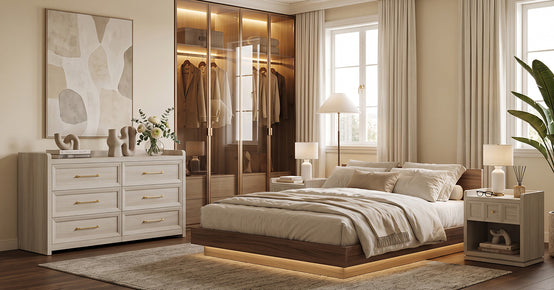
Pairing the two helps as well. A vanity and wardrobe set that puts getting-ready space beside closet storage keeps the whole routine in one corner.
12. Split a Big Collection Across Many Drawers

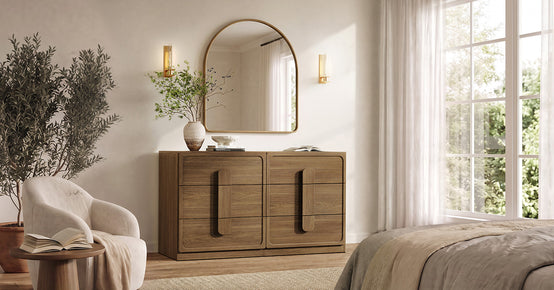
Large collections fail when they share one container. Give each category its own drawer instead. A nine-drawer chest with push-to-open fronts lets you dedicate one drawer to chains, one to rings, and one to watches without buying a wall of organizers.
13. Try Clear Acrylic Drawers

If you forget what you cannot see, visibility is the whole system. Clear drawers show the collection while still keeping dust off.
Position them away from a sunny window. Acrylic does nothing to block light.
14. Add a Rotating or Tiered Organizer

A spinning or stacked organizer fits several categories into a tiny footprint. Handy on a small vanity where floor space is fixed.
Check that it turns smoothly when loaded. Cheaply made bases stick once there is weight on them.
15. Make a Picture Frame Earring Holder

Fit an old frame with mesh, cork or fabric and hang it on the wall. It costs next to nothing and works as art.
Best for lightweight earrings rather than heavy pieces.
16. Build a Simple Necklace Rail

A length of timber and a row of hooks, cut to fit your wall. You get exactly the spacing you want. No shop-bought rack will give you that.
17. Keep a Packed Travel Case

Keep a small case permanently stocked so packing is not a decision. Look for a necklace strap, ring slots and snap pouches.
Fill any gap with a scarf so nothing rattles in transit.
18. Store Fine Pieces Separately

Heirlooms and fine jewelry should not live with costume pieces. Use lined, divided, closed storage, and consider a safe for anything valuable.
Protection beats convenience here. Something you cannot replace has no business sitting out on a stand, gathering dust and sun.
Should You Hang Jewelry or Lay It Flat?
Neither wins outright. It depends on the piece.
Long chains do better hanging. Gravity keeps them straight and stops knots from forming.
Fine chains, pendants with heavy stones, and delicate vintage pieces are better lying flat in their own compartment. Hanging makes them carry their own weight all year, and thin links stretch.
Rings and earrings belong in divided trays either way. Ring rolls hold shape better than a bowl.
Most collections need both methods. Do not force one system onto everything.
What Materials Are Safe for Jewelry Storage?
Most storage advice stops before this part. It is also where jewelry gets wrecked.
Soft linings come first. Velvet, felt, and smooth fabric stop pieces rubbing against a hard surface. Dividers matter just as much, since separation is what prevents scratching.
Hardness explains why. The Mohs scale sorts minerals by what scratches what.
GIA points out that nothing except a diamond scratches a diamond. Drop a loose diamond ring into a compartment with opal or pearl, and it leaves marks on both.
Ceramic and metal trinket dishes look lovely and scratch soft stones. Use them for a watch or a plain band, not for pearls.
Two materials cause tarnish on their own. The Canadian Conservation Institute warns against storing metal in wood and wood-pulp products. Both give off sulfur compounds and organic acids. Rubber bands do it too.
That does not mean a wooden dresser is off limits. It means the jewelry should sit in a lined tray or box inside it rather than on bare timber.
Dry air helps too. Conservation guidance holds metals at low relative humidity. Tarnish moves faster as humidity climbs. A silica gel sachet in a closed box handles it.
How to Choose the Right Jewelry Organizer

There is no one best organizer. Work through four questions instead.
- How big is the collection? Small suits one box. Medium suits drawer trays. Large needs several zones.
- What do you own most of? A necklace-heavy collection needs hooks. Rings and studs need shallow divided trays.
- Do you need to see it? Hidden storage fails for people who forget what they own.
- Where is the free space? Drawer, wall, closet, door, or vertical tabletop.
Space usually decides it. In a small bedroom, the getting-ready surface has to earn its footprint. Vanity tables sized for compact rooms hand you drawer storage and a mirror spot in one piece.
Jewelry Storage Mistakes to Avoid
Tipping everything into one drawer is the classic. Chains knot, studs scatter, and softer stones get scratched by harder ones.
Overfilling a divided organizer defeats the point. Cram two rings into one slot, and you may as well have no slots.
Zip-top plastic bags trap moisture and speed up tarnish. Swap them for a tarnish-resistant pouch.
Park the whole collection on open display in a sunny spot and stones fade while silver goes dull.
One safety point gets overlooked with tall storage. Dressers and chests tip over. The Consumer Product Safety Commission recorded 234 deaths from clothing storage unit tip-overs between January 2000 and April 2022. Anchor anything tall to the wall.
Final Takeaway
Good jewelry storage does four things. It separates pieces so they cannot rub or tangle. It keeps daily jewelry within reach. It protects delicate items properly. And it fits the room you actually have.
Combine systems without guilt. Necklaces on hooks. Rings in rolls. Studs in a tray, everyday pieces in a dish by the bed, and the fine jewelry behind a door.
FAQs
What is the best way to store a lot of jewelry?
Split a big collection by type instead of forcing it into one container. Stackable trays hold rings and earrings; hooks or a rail hold necklaces. A lined box holds the fine pieces. Once every category has a home, the system keeps working as the collection grows.
What are some good storage ideas for jewelry?
Options that hold up:
- A jewelry box with proper compartments and ring rolls
- Velvet drawer trays, stacked when space runs short
- Individual necklace hooks, or a rail on the wall
- An earring stand plus a small catchall dish
What are some DIY ideas for jewelry storage?
Fit an old picture frame with mesh or fabric, and you have an earring holder. Turn a timber offcut with hooks into a necklace rail. Small boxes divide an existing drawer. Keep every surface smooth. Skip rubber bands too, because rubber gives off sulfur that tarnishes silver.
Is it better to hang or lay jewelry flat?
Long chains usually do better hung. Hanging keeps them straight and stops knots. Fine chains, delicate vintage pieces, and heavy pendants belong flat in their own compartment, where thin links don't carry weight all year. Rings and earrings work in divided trays either way.
What material is best for storing jewelry?
Soft linings that will not abrade a surface. Velvet, felt or smooth fabric, with individual compartments to keep pieces apart. Do not store metal straight onto bare wood or in rubber. Both give off sulphur compounds that cause tarnish. Anti-tarnish pouches suit silver.
How to store jewelry you do not wear?
Clean each piece, then store it separately in a lined pouch or a divided box away from light and moisture. Keep the container closed and store it somewhere with stable, dry air, rather than in a bathroom or an attic. Keep anything valuable in a safe rather than on open display.
What is the best jewelry organizer?
The one that matches your collection size, your jewelry types, your space, and how much you need to see. A necklace-heavy collection needs hooks. A ring and stud collection needs shallow divided trays. Most people end up combining two or three systems rather than finding one perfect box.
Sources
- Gemological Institute of America – Diamond Care and Cleaning Guide
- GIA 4Cs – More Than the Mohs Scale: Understanding Gem Durability
- Canadian Conservation Institute – Storage of Metals, CCI Notes 9/2
- Canadian Conservation Institute – Silver: Care and Tarnish Removal, CCI Notes 9/7
- U.S. Consumer Product Safety Commission – CPSC Adopts Final Consumer Product Safety Standard to Prevent Tip-overs of Dressers and Other Clothing Storage Units
- USDA Forest Products Laboratory – Wood Handbook, Chapter 4: Moisture Relations and Physical Properties of Wood
- U.S. Department of Energy – Purchasing Energy-Efficient Light Bulbs


Looking for something else?

Burl Wood Furniture: The Complete Buying Guide
LEARN MORE
What Is a Hope Chest? Meaning, History, and Modern Uses
LEARN MORE
What Is a Foyer? Meaning, Purpose and Design Guide
LEARN MORE
GREENGUARD Gold Certified Furniture: What It Really Means for Your Home
LEARN MORELooking for something else?

How to Clean a Mirror Without Streaks: Simple Step-by-Step Guide
LEARN MORE
21 Above-Bed Decor Ideas for a Stylish Bedroom Wall
LEARN MORE
Furniture Materials Guide: Picking the Right Material Room by Room
LEARN MORE


Further reading

18 Decorative Storage Box Ideas That Hide Clutter Well

How to Store Comforters Without Losing Space or Loft


