



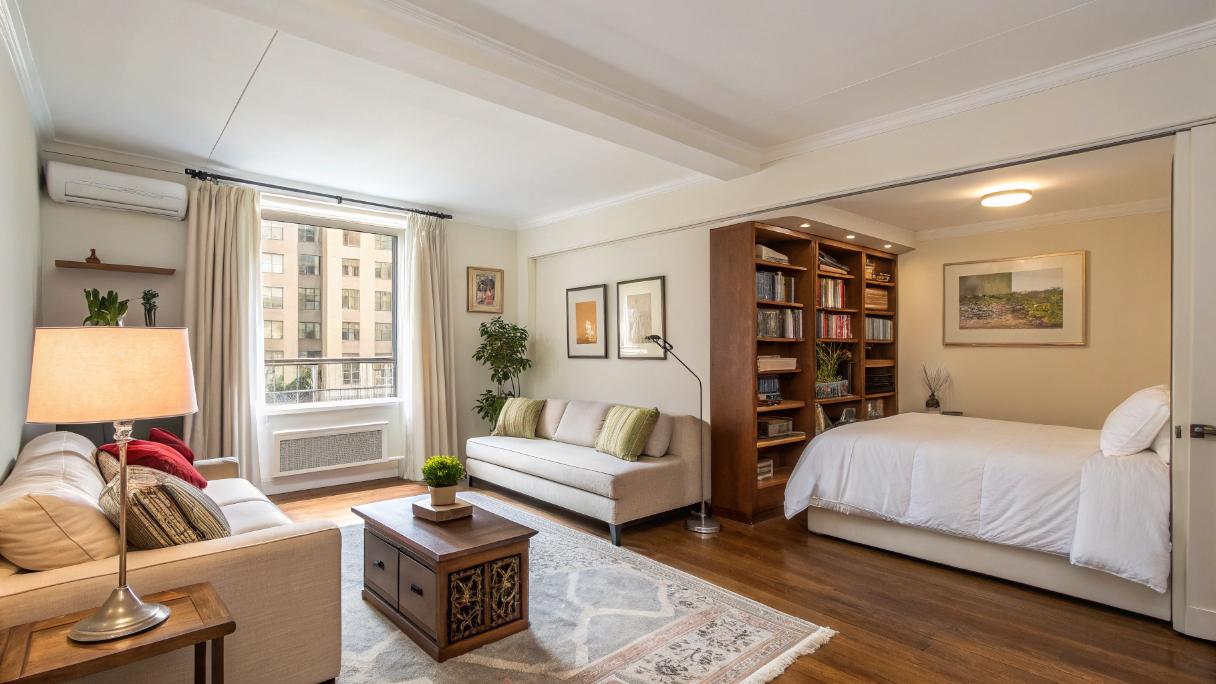

15 Half Living Room Half Bedroom Ideas for a Stylish Dual-Purpose Space

Real estate math is brutal. In a studio apartment or compact flat, you don't get to have a living room and a bedroom — you get one room that needs to act like both. And in larger homes, there's often a living room sitting mostly empty, while everyone needs a guest space or a home office setup that can double as a sleeping space.
The half-living room, half-bedroom isn't a compromise. When done well, it's genuinely smarter than two rooms, each doingonly one thing.
What makes the difference between a room that looks like a bed got shoved into a living room and one that looks intentional: layout decisions, a few specific furniture choices, and some basic zoning techniques. These 15 ideas cover it all.
Why This Layout Works Better Than People Expect
The resistance usually sounds like,"I don't want my bedroom to be my living room." Fair. But the actual objection isn't about the space being combined — it's about the space looking combined. A bed is obviously sitting in a living room. Sheets are visible in the morning—no sense of separation.
All of those are design failures, not layout failures. Living Spaces notes that with clever furniture choices and a smart layout, a living room can transition into a comfortable bedroom setup without sacrificing the space's overall feel. The keyword is 'transition.' The room should shift, not compromise.
The ideas below work because they either hide the sleep function during the day, visually separate the two zones, or do both.
1. Sofa Bed — the Cleanest Starting Point

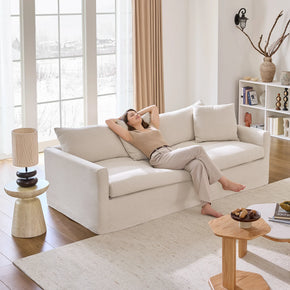
A sofa bed is the most natural first choice because it doesn't ask you to change anything else about the room. The room looks like a living room all day. At night, you pull the mechanism, and it becomes a bed.
Modern sofa beds are genuinely comfortable in a way older versions weren't. The mechanisms are smoother. The mattresses are thicker. Some fold out in under thirty seconds. If the room is used as a sleeping space every night rather than occasionally, investing in a quality model matters — a thin pull-out mattress used daily becomes a problem fairly fast.
For occasional guest sleeping, even a mid-range sofa bed handles the job perfectly well.
2. Murphy Bed (Wall Bed) for Full Day-Time Floor Space

The Murphy bed is the most radical space solution on this list. It folds completely into the wall. During the day, the room is purely a living room — no visual trace of a sleeping area at all. At night, one pull and the bed drops out.
The obvious limitation: installation. A proper Murphy bed requires wall mounting, which means either a contractor or significant DIY confidence. For renters, that's usually off the table. For homeowners who want a genuine dual-purpose room for the long term, it's worth the cost by a significant margin.
Some Murphy bed systems include a fold-out desk or sofa on the cabinet face, which means the wall piece does three jobs rather than one.
3. A Daybed That Reads as a Sofa

A daybed is structurally a bed — but styled correctly, it reads as a sofa during the day. Add enough cushions and throw pillows across the back, and the sleeping function disappears visually.
The advantage over a sofa bed: simpler. No mechanism to pull out, no mattress to fold away. You make it look like a sofa in the morning by repositioning pillows. You turn it into a sleeping surface at night by removing them.
The limitation: it's usually a twin or full-size. Fine for one person, tight for two.
4. Curtains as a Room Divider — Start Here if Budget Is Tight

Curtains are the cheapest and most flexible room divider option available. The Inside suggests curtains as especially effective in studio flats because they offer genuine privacy without permanent structural changes — and they're removable, which matters for renters.
A ceiling track with clip rings is a straightforward DIY installation. The curtain slides open during the day so the room feels unobstructed. It closes in the evening, creating a clear visual boundary between the sleeping zone and the rest of the space.
Color and fabric choice matter here more than most people expect. A heavy velvet curtain does something completely different from a sheer linen one. Velvet absorbs sound and creates a genuine enclosure. Sheer linen filters light while maintaining an airy, open quality. Pick based on how much actual separation the room needs.
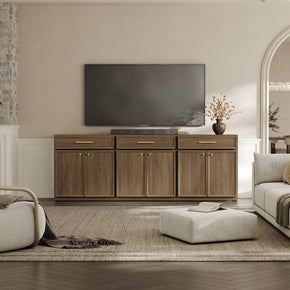
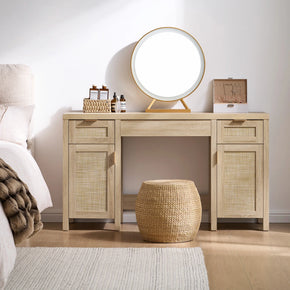
A slim console behind the sofa on the living room side marks the zone naturally without any construction. The Savanna Console Table with 3 Drawers holds lamps, books, and small items while acting as a soft visual boundary between sitting and sleeping areas — three drawers for actual storage, clean proportions that don't crowd the space.
5. Folding Screen for Moveable Privacy

A folding screen — sometimes called a room divider panel — is probably the most underused option on this list. You set it up when you need separation and fold it away when you don't—total flexibility.
The Japanese shoji screen a wood frame with translucent panels) is a classic example. It looks architectural, lets light through, and doesn't visually close off the room. Modern versions come in bamboo, rattan, woven fabric, or metal mesh. Any of them can work depending on the room's style.
The main downside: it doesn't stay put in the same way a curtain track does. But in a room where you genuinely want to switch between open and divided, that flexibility is a feature.
6. A Bookshelf as the Divider

Books, plants, lamps, baskets — a well-stocked bookshelf between the sleeping and living zones looks like a design feature rather than a partition.
Height determines how much separation it creates. Below 4 feet and it's mostly visual. Around 5 to 6 feet it creates a real sense of enclosure. Full ceiling height makes it feel genuinely like two separate rooms.
The practical advantage over curtains and screens: the bookshelf holds things. Storage on both sides. Display space. Something to look at. It's doing multiple jobs at once, which is what every piece in a dual-purpose room should do.
A tall bookshelf with real height reads as architectural rather than decorative. The Willow 75-Inch Tall Bookshelf works as a room divider in an open-plan space — it's 75 inches tall, holds books and display items across multiple shelves, and creates genuine visual separation between a sleeping zone and a living area without requiring any installation.
7. Sliding Door Partition

Sliding doors offer more privacy than curtains and a cleaner finished look than folding screens. A barn-style door on a wall track, a frosted glass panel, or a set of wooden sliding panels — all of these close off a sleeping zone properly when needed and slide away entirely when not.
Installation is more involved than hanging a curtain. But for homeowners who want a semi-permanent solution that looks built-in, sliding doors are the best middle ground between a curtain and an actual wall.
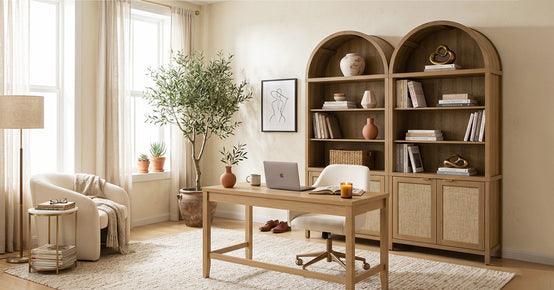
A bookcase with closed cabinet doors positioned near the sliding door serves as both storage and part of the room's dividing architecture. The Savanna Arched Bookcase with 2 Doors holds closed storage at the base for items that shouldn't be visible during the day — bedding, extra pillows, guest essentials — and open shelves above for display.
8. Two Rugs — One Zone Each

No curtain, no bookshelf, no divider of any kind. Just two rugs.
A rug under the sofa and coffee table marks the living zone. A separate rug beside or under the bed marks the sleeping zone. The two areas feel distinct,yet there is no physical separation between them. It's not as strong as a visual divider, but it's immediate, inexpensive, and works in any room layout.
Works best in rooms where permanent separation isn't the goal — where the two zones coexist openly, and the separation is more visual suggestion than actual privacy.
9. Layer the Lighting Differently in Each Zone

One overhead light treating the whole room the same way is the fastest route to a room that feels like neither a proper living room nor a proper bedroom.
Two lighting schemes are separately controlled. Brighter ambient or floor lighting in the living zone — suitable for reading, socializing, and moving around. Softer, warmer lighting near the bed — a bedside lamp or two sconces, ideally on a dimmer. The bed zone doesn't need to be lit at all during the day.
This one change does more for the dual-purpose room than most people expect. The ability to make the sleeping side dim and warm at 9 pm while the living side stays at normal brightness makes the room feel like it has two modes rather than one confused one.
10. Storage Ottoman for Hidden Bedding

Bedding sitting out is what makes a living room look like a bedroom—sheets draped over a sofa arm. Pillows were piled next to the coffee table. None of it says living room.
A large storage ottoman solves this completely. Duvet, pillows, sheet set — all of it fits inside. During the day, the ottoman is a coffee table, footrest, or extra seating. At night, everything comes back out in about two minutes.
The practical tip: put the ottoman between the sofa and the coffee table, within easy reach of the sleeping surface. If getting the bedding out requires crossing the room, it won't get put away consistently.
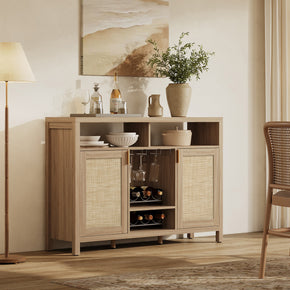
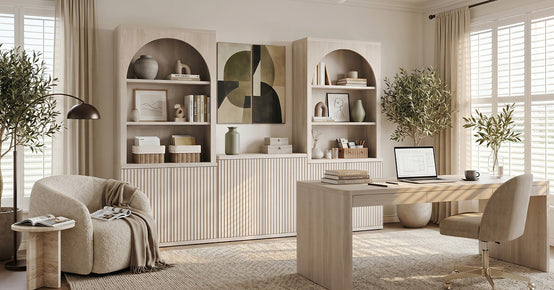
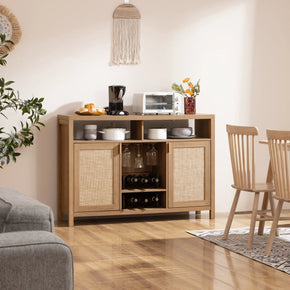
A closed sideboard near the main seating area adds another layer of discreet storage for items that don't belong in the ottoman. The Stria Sideboard Cabinet with 2 Doors keeps what needs to stay hidden behind doors — books, chargers, trays, anything that would otherwise drift onto surfaces — while reading cleanly as a living room piece.
11. Sleeper Sectional for Rooms With More Floor Space

If the room has space for it, a sleeper sectional is probably the most comfortable sleeping-in-a-living-room option. It functions as full sofa seating all day — generous, usable, a proper place to sit. At night, a section of it pulls out into a bed.
The catch: it's large. A sectional that also sleeps needs a room that can comfortably accommodate its footprint in both dimensions. In a compact studio, it usually takes up too much floor space. In a genuinely spacious living room, it's often the best call.
12. Trundle Bed Under the Main Surface

A trundle bed rolls out from under a daybed, sofa, or platform bed. During the day, it's completely hidden — no visible sleeping surface at all. At night, it rolls out to provide a sleeping area that otherwise takes up zero floor space.
Most useful for guest setups rather than everyday sleeping. The trundle mattress is usually thinner than a standard bed, which is fine for occasional use and less comfortable for regular nightly sleep.
For households that rarely need a second sleeping surface but want it available, a daybed with a trundle is often the most space-efficient permanent setup.
13. Add a Home Office Zone While You're at It

If the room is serving as both a bedroom and a living room, it might as well handle the office, too. A small desk near the window, a wall-mounted floating desk, or a desk that folds against the wall when not in use — any of these can be added into a dual-purpose room without the space feeling overwhelmed, as long as the desk has closed storage for supplies.
Open desks with visible papers, cables, and office items make the room feel like it doesn't know what it is. Closed storage keeps it contained. When the desk is clear, it reads as a surface. When the office supplies are hidden, the room resets.
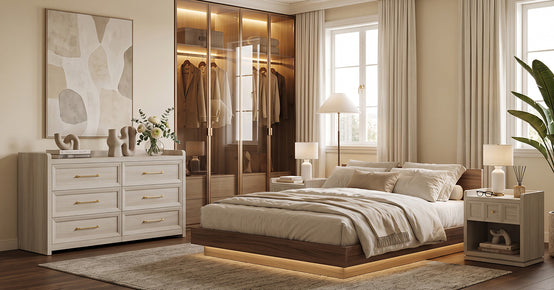
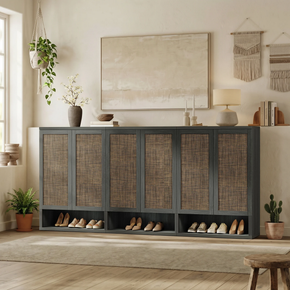
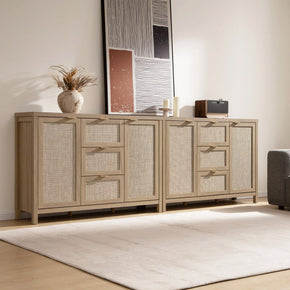
A sideboard near the desk area handles document storage, office supplies, and anything that needs to stay off the desktop. The Savanna Sideboard with 3 Drawers and 2 Doors keeps the workspace organized behind closed doors — three drawers and two cabinet doors for mixed storage, a surface clean enough to keep the room looking like a living space during the day.
14. Reset the Room Every Morning — It Takes Less Than Five Minutes

This isn't a furniture idea. It's a habit idea. And it matters more than most of the furniture choices on this list.
A dual-purpose room that doesn't get reset in the morning becomes a permanent bedroom within a week. The sheets stay out. The pillows don't get rearranged. The ottoman stays open. And then the room just looks like a messy bedroom rather than a thoughtfully designed dual-purpose space.
The reset only works if the system is quick. Bedding goes in the ottoman in under a minute. Cushions go back on the sofa. Ottoman closes. That's it. If the system requires more than five minutes, it won't happen consistently — design the storage to make it easy.
A dedicated storage piece in the living area keeps surfaces clear and the room looking put-together. The Helio Decorative Sideboard Cabinet handles visible storage with style — decorative display on top, closed cabinet storage below for whatever needs to stay out of sight.
15. Go Minimalist — Less Always Works Better Here

More furniture in a dual-purpose room doesn't mean more function. It usually means more confusion. Every single-purpose piece that can't do two jobs is competing with the room's ability to transition.
The standard rule: if you wouldn't need it in a hotel room, you probably don't need it here. Nightstand with storage — yes. Three decorative side tables — probably not. A large lamp that only looks nice — reconsider. A lamp with USB charging built in — yes.
The fewer pieces in the room, the cleaner the transition from living space to sleeping space looks. Restraint in a dual-purpose room is always the right decision, and it's almost always the harder one to make.
Mistakes That Make the Room Feel Like It Gave Up
- The bed is too large for the remaining floor space — walkways disappear, and the room feels like all bed.
- No zone separation at all — one rug, one lighting scheme, nothing marking sleeping from living
- Only one overhead light — makes both zones feel the same at all times
- Visible bedding during the day — this single issue does more damage to the dual-purpose room than anything else
- Too much furniture for the square footage — every piece should do two things or earn its place with storage
- Matching the bed zone decor too closely to the living zone — a slight visual distinction helps the room feel intentional
The Short Version
A half living room, half bedroom works when the sleeping function is hidden during the day, zones are clearly marked (even just with different rugs and different lighting), and the storage system is fast enough to actually be used every morning.
Start with the sleeping surface — that's the piece that drives every other decision. Then add one zone separator and one storage solution. The rest follows.
FAQs
How to divide a living room and bedroom?
Curtains on a ceiling track are the cheapest and most flexible option. A bookshelf between zones adds storage alongside the separation. Sliding doors give more privacy with a more finished look. Two different rugs create visual separation between zones without any physical object between them. The right choice depends on how much actual privacy is needed day-to-day.
What is the 3 4 5 rule in interior design?
It's not a single universal rule — different designers use this phrase to describe different proportion guidelines. In room styling, it's sometimes used to balance furniture spacing, distribute visual weight, or group decor elements. In a dual-purpose room, think of it as a reminder to keep the layout, walking paths, and furniture groupings visually balanced rather than strictly following math.
What is a second living room called?
Depending on how it's used: a family room, den, sitting room, lounge, media room, keeping room, or bonus room. In older British homes, a parlor. None of these names is strictly defined — the terms vary by region, home style, and whoever is doing the naming.
What is the 60-30-10 rule for bedroom design?
60% of the room is in the main color — usually walls and large furniture. 30% in a secondary color — bedding, curtains, upholstery. 10% in an accent color — cushions, lamps, small accessories. In a half-living room, half-bedroom, applying this across the whole space rather than separately for each zone keeps the room feeling cohesive rather than split.
What is the 2/3 rule for living rooms?
A proportion guideline: key furniture pieces should relate in size. A coffee table is typically around two-thirds the length of the sofa it sits in front of. Artwork above a sofa tends to look right when it's roughly two-thirds the sofa width. Applied to a dual-purpose room, it's a reminder to keep furniture scaled to the space rather than cramming in full-size pieces that overwhelm the floor.
What is the cheapest partition option?
Curtains. A basic ceiling track and a length of fabric cost far less than a folding screen, bookshelf, or anything structural. Renter-friendly, moveable, and can be changed out seasonally. The downside is that curtains provide less acoustic separation than hard dividers, which matters for some uses more than others.
What is the 3-5-7 rule of decorating?
It means using odd-numbered groupings in decor arrangements — three items on a shelf, five objects in a vignette, seven styling elements across a surface. Odd numbers read more naturally to the eye than even numbers. In a dual-purpose room, apply it lightly: the rule is most useful for preventing a shelf or console surface from looking randomly assembled.
What is a Japanese room divider called?
A shoji screen. Traditional shoji screens have a wood or bamboo frame with translucent paper or fabric panels. They filter light rather than blocking it, which makes them useful in rooms where maintaining natural light is important. Modern versions use rice paper, frosted film, or fabric in the panels and come in a wide range of sizes and price points.
Sources
- Living Spaces — 13 Ways to Turn a Living Room Into a Bedroom— Sofa beds, sleeper sectionals, daybeds, storage ottomans, rugs, curtains, and room dividers for dual-purpose living rooms.
- BGC Now — Creative Way of Turning Living Room into a Bedroom— Room dividers, curtains, sliding doors, and wall partitions for modern living room-to-bedroom conversions.
- AMC Furniture — How to Turn a Living Room into a Bedroom— Sofa beds, Murphy beds, ottoman storage, and zoning techniques for UK small-home living room conversions.
- Coohom — Half Bedroom Half Living Room: Creating the Perfect Dual-Purpose Space— Layout planning, furniture selection, lighting, decor, and organization tips for combined living and sleeping spaces.
- The Inside — How to Divide a Living Room Into a Bedroom— Curtains, folding screens, bookshelf dividers, wallpaper zoning, and studio apartment separation ideas.
- Apartment Therapy — Studio Apartment Divider Ideas— Practical studio apartment room divider ideas and small-space layout solutions for open-plan living areas.


Looking for something else?

Furniture Materials Guide: Picking the Right Material Room by Room
LEARN MORE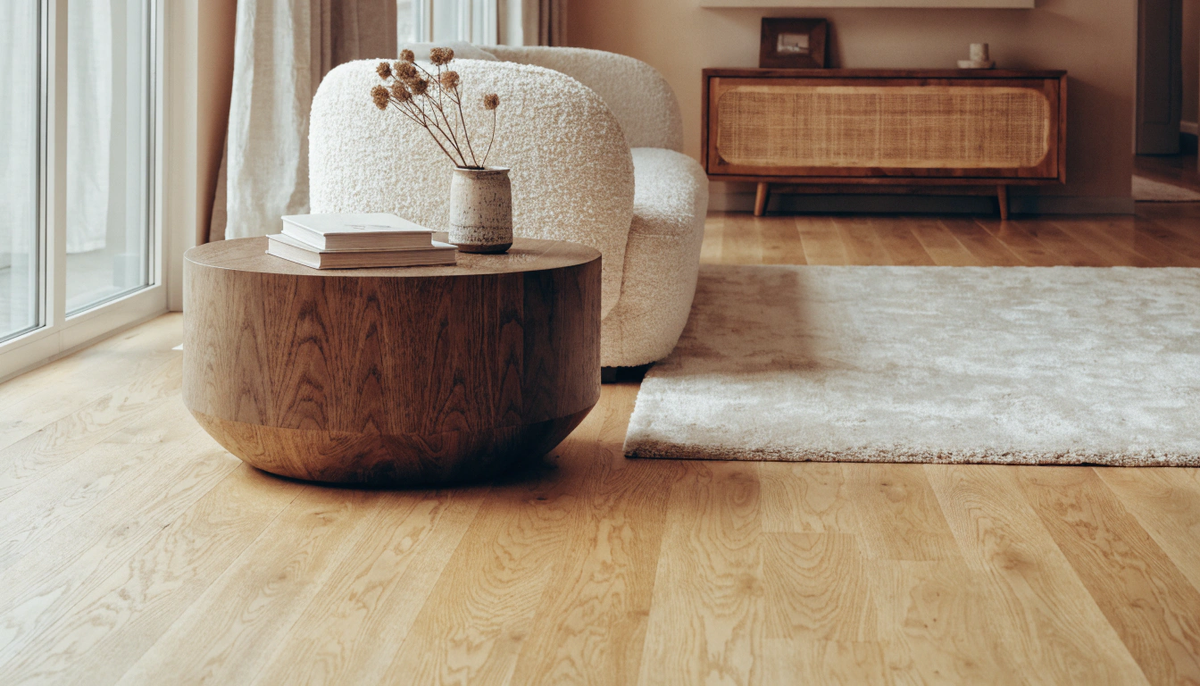
How to Mix Wood Tones Without Making a Room Look Mismatched
LEARN MORE
18 College Apartment Furniture Ideas That Save Space and Money
LEARN MORE
Types of Entertainment Centers: 11 Designs and How to Pick One
LEARN MORELooking for something else?

Curio Cabinet Decor Ideas: How to Style a Display Cabinet Without the Clutter
LEARN MORE
Curved Furniture: How to Style, Measure, and Buy It in 2026
LEARN MORE
What Is Rattan Furniture? A Buyer Guide to Types and Care
LEARN MORE


Further reading

How to Choose a Nightstand for a CPAP Machine

How to Choose a Shoe Cabinet for Men's Sizes, High-Tops, and Bulky Shoes


