




Flip, Hinged, Sliding, or Slatted: Which Shoe Cabinet Door Type Fits Your Entryway?
The Short Answer: Match the Door to the Hallway
Most of us shop by pair count and price — then get home and find the real problem: the door swings eighteen inches into the hallway, or the tall boots won't fit and end up piled on top. Get the door type right and the cabinet actually works in your space.
Hallway under 36 inches? Sliding or flip-down. Sliders have zero swing; flip-down bins pull forward a touch. Wide entryway? Hinged doors open the widest and swallow tall boots whole. One more thing: damp or smelly shoes are a different problem. A sealed box turns into an odor trap fast — that needs moving air. Heads-up: SICOTAS sells hinged cabinets plus one flip-down bench. I'll flag everything that isn't SICOTAS.

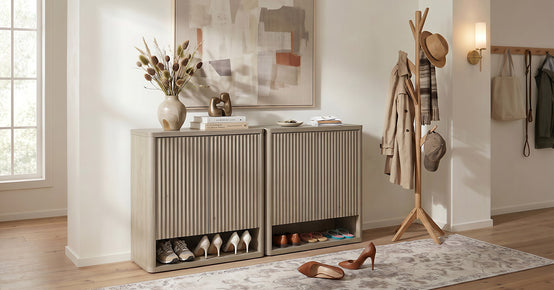
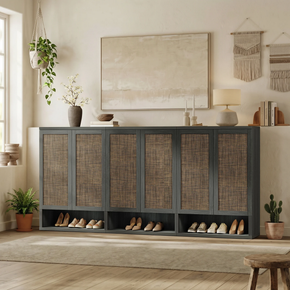
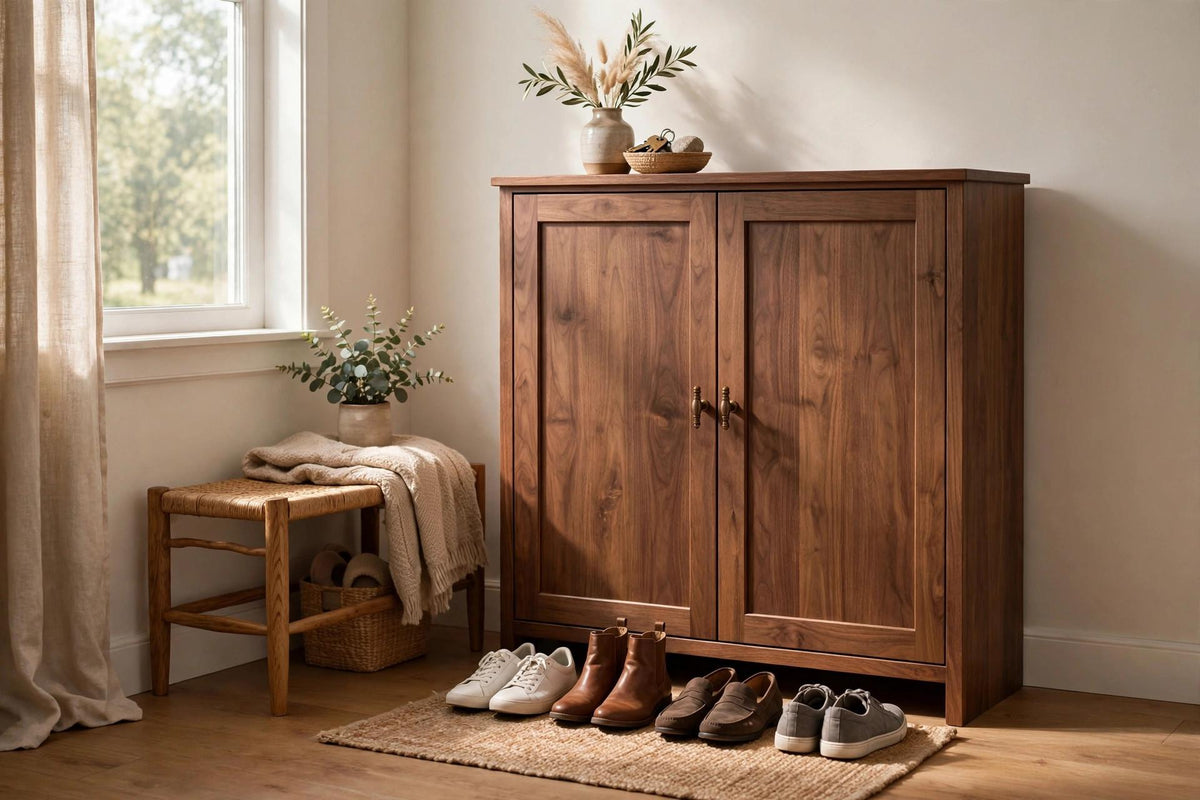
A closed shoe cabinet in the entryway. The door type decides how much room you lose every time you open it.
Opening Envelope: How Much Room Each Door Type Steals When Open
Every door needs elbow room. Nobody measures it. A standard hinged door swings about 18 inches out — nearly half the walking path in a 40-inch hall. Under 36 inches, it can block foot traffic outright. One buyer nailed it: hinged doors are impractical where people keep coming through a narrow hallway. Fair.
Sliders? Zero floor space. The panel glides sideways, so the opening envelope is just the cabinet's depth. Flip-downs land in the middle — forward and down about the bin's depth while open. Slatted or louvered doors still ride on hinges: same 18-inch arc. The slats change the airflow, not the swing.

Tape out the full swing arc of a hinged door before you buy. Measure from the hinge through the widest point of the open door.
Do the tape test — run a line 18 inches out from the cabinet's spot, then walk through like it's a normal Tuesday.
Shoulders catch it? Bag snags it? Hinged doors are off the list.
Few things prevent returns like a roll of tape.
Hinged Doors: The Full-Access Classic
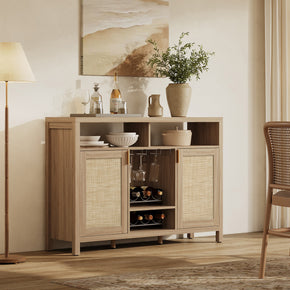
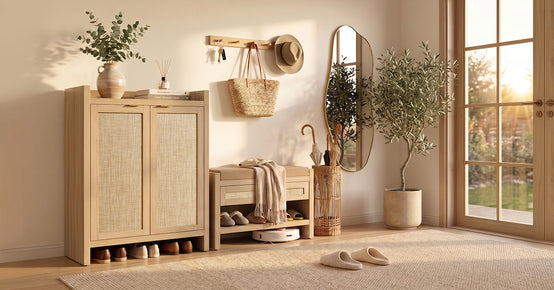
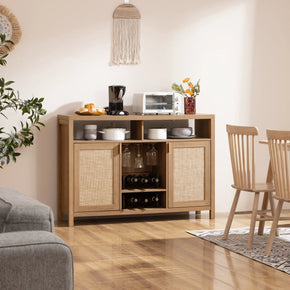
A hinged door swings flat and lays the whole shelf bare. Boots and high-tops stand upright, every pair visible — no fishing into a slot. Tall footwear? Nothing beats hinged doors. The Savanna Shoe Cabinet (24 pairs) keeps 24 pairs behind 2 woven rattan doors, with 6 adjustable shelves inside a 41-inch-tall, 14.8-inch-deep box.
The catch is the swing. You lose about 18 inches of clear floor, and a 47.2-inch-wide unit like the Cas Shoe Cabinet with 3 Doors sweeps a broad arc with both doors open. Without soft-close hardware, they're the noisiest of the four. Clunk.
Go hinged when the entryway can swallow the swing and the house wears bulky footwear. But if that hallway doubles as the only route to the front door? Skip it.
Flip-Down (Tilt-Out) Doors: The Slim Hallway Winner

A tilt-out compartment pulled open. Shoes rest at an angle on the bin's shelves, so the cabinet itself stays slim.
A tilt-out door pivots forward off a top hinge — everything opens at an angle, never sideways. So a flip-down cabinet can sit under 10 inches deep and still hold real shoes. Three to five tilt compartments typically hold 12 to 20 pairs.
Flip-Bin Depth: What Actually Fits Inside
Can tilt bins handle big shoes? Mostly. IKEA Hemnes owners fit six pairs of size-13 shoes in 9.5-inch-deep tilt drawers, and a 7.1-inch-deep flip cabinet is the ultra-slim benchmark. Walking boots go in sideways — though one owner found size-11 boots pushed the middle divider up. Usually the dividers set the limit, not the depth.
Tall boots need a trick: pull the center shelf out of one compartment and stand the boots upright. You lose a few pairs, but the boots fit. The Savanna Flip-Down Shoe Bench for Entryway uses the same tilt-out mechanism, with a seat on top for putting shoes on.
Anchoring and Durability
Slim tilt cabinets lean — they're top-light. The IKEA Hemnes is the best-documented tilt cabinet online. And owners all tell the same story — the unit pulls away from the wall because anchors weren't in the box. Anchor into a wall stud, and check whether tall baseboards stop the bottom sitting flush — some buyers needed leg extenders. Wet shoes warp wood — let footwear dry first.
On durability, relax. Four to five years of daily use with tilt doors still running smooth is normal. Kids handle the pull-down fronts easily.
Sliding Doors: Zero Swing, Half the Access at a Time

Sliding panels glide sideways in their own track. Nothing swings into the hallway, which is why they suit narrow apartments.
The sliding door is for hallways too narrow for anything else. No arc, no forward pull — the panel slides sideways, so the opening envelope is just the cabinet's depth. Under 36 inches wide, guides default to sliding.
The annoying part: you only see half the cabinet at a time. The panel always covers part of the interior, so finding the right pair takes longer. Tracks collect dust and grit. A gritty track makes the door feel cheap fast — vacuum the channel monthly.
Sliding panels need sideways room too — a panel can't slide past the cabinet's edge, which gets awkward between a doorway and a corner. Sliding and slatted fronts matter as mechanisms, but the SICOTAS lineup is hinged and flip-down only. The lineup table below covers what you can actually buy.
Slatted and Louvered Doors: Built-In Airflow

Angled slats let air drift through a closed door. This is the simplest fix for shoes that arrive home damp or smelly.
A slatted or louvered door is usually just a hinged door with angled vents. The swing doesn't change — but air drifts through all day instead of sitting still. Trapped moisture degrades shoe materials and feeds odor. And airless closed cabinets turning into odor traps? That's the top complaint from tilt and hinged owners alike.
Sweaty shoes, windowless entryway? Ventilation beats raw capacity every time. A charcoal packet helps any closed cabinet, but slats work passively all day. Two trade-offs. Slats collect dust in the grooves — and shoe shadows show through the vents.
Know this: SICOTAS doesn't sell a louvered shoe cabinet, so treat slatted fronts as a market-wide option. Closest in the lineup: the Savanna's woven rattan doors, whose weave lets some air through. And one rule for every closed door: wet or muddy boots never go straight in — dry them on an open mat first.
Cleaning: Which Door Type Is Easiest to Maintain

Open the cabinet fully and wipe the shelves monthly. Pull-out bins and removable shelves make this a two-minute job.
Easiest to clean? Flip-down bins, no contest. Each bin pulls open and exposes everything, so a damp cloth gets it all in seconds. Hinged cabinets with adjustable shelves run a close second — lift the shelves out, wipe, done. The Terra 3-Door Shoe Cabinet runs 38.98 inches tall and 14.17 inches deep.
Sliders add one chore: the track. Grit settles in the channel, so vacuum it monthly. Slatted fronts add another: dust lands on every louver, and wiping twenty slats takes longer than one flat door.
Two habits keep any shoe cabinet from smelling. Shoes go in dry. Shelves get wiped monthly. Wood plus damp footwear warps over time — no door type outruns that.
Kids, Pets, and Busy Entryways

A child pulling down a tilt-out bin. The bins come to the child, so there is no reaching into a dark cabinet.
Kids do best with predictable doors, and tilt-out bins win that round. The bin drops toward the child with the shoes right there — no heavy door at head height. Kids operate tilt doors solo within days. A flip-down bench goes one better: sit down to put shoes on, stand up to go. Morning routine, solved.

Closed doors keep shoes away from curious pets. Muddy boots wait on the mat until they are dry.
Pets shuffle the priority list. A leather-chewing dog needs shoes behind a latching door, and all four types qualify as long as the cabinet closes fully. Hinged doors with a magnetic catch stay shut best against a nosing dog. The mud rule doesn't change: muddy boots still wait on the mat — no door type fixes what wet, dirty footwear does inside.
Busy entryway? Watch the swing one more time. A hinged door at toddler head height, in the front-door path on a rushed morning, is an accident waiting to happen. Sliding or flip-down takes that risk off the table.
The Verified Lineup: SICOTAS Shoe Cabinets Compared
Every unit below was verified on sicotas.com: hinged-door cabinets plus one flip-down bench. No sliding or louvered models are sold. The mechanism comparison above covers the whole market; this table shows what SICOTAS actually stocks.
|
Product
|
Size (H x W x D)
|
Doors
|
Capacity
|
Notes
|
|
41 in H x 32.4 in W x 14.8 in D
|
2 woven rattan, hinged
|
24 pairs
|
76 lb; 6 adjustable shelves; weave lets air move
|
|
|
40.94 in H x 47.24 in W x 14.76 in D
|
3, hinged
|
30 pairs
|
Tall family pick
|
|
|
38.98 in H x 45.59 in W x 14.17 in D
|
3, hinged
|
Family size
|
77 lb; adjustable shelves
|
|
|
38.97 in H x 31.49 in W x 14.17 in D
|
2, hinged
|
Couples size
|
54 lb; narrower footprint
|
|
|
44.5 in H x 47.2 in W x 14.5 in D
|
3, hinged
|
Family size
|
110.9 lb; sturdiest build
|
|
|
Bench height
|
Tilt-out (flip-down)
|
Everyday pairs
|
Bench plus tilt bins; doubles as seating
|
If airflow beats maximum pairs, the woven rattan Savanna is the standout: the only fronts in the lineup that breathe. For the narrowest footprint with easy kid access, the flip-down bench is SICOTAS's only tilt-out.
The Decision Table: Which Door Type Fits Your Entryway?

Compare the same four questions for every door type: swing, depth, airflow, and who uses it.
|
Door type
|
Opening envelope
|
Depth and shoe fit
|
Airflow
|
Best for
|
|
Hinged
|
About 18 in swing arc into the hallway
|
Full-depth shelves; tall boots stand upright
|
Sealed; add charcoal or air it out
|
Wide entryways, bulky footwear
|
|
Flip-down (tilt-out)
|
Pulls forward about bin depth; no side swing
|
Slim cabinets; big shoes fit sideways; tall boots need one shelf removed
|
Sealed; bins open wide for quick airing
|
Narrow halls, kids, seating need
|
|
Sliding
|
Zero; panel moves inside its own track
|
Full depth, but only half visible at a time
|
Sealed; vents rare on sliders
|
Hallways under 36 in wide
|
|
Slatted / louvered
|
Same 18 in arc as hinged (usually hinged)
|
Full-depth shelves, like hinged
|
Passive airflow through the vents
|
Damp or smelly shoes, humid entryways
|
Cheat sheet: hallway width picks the door. Shoe size picks the depth. Dampness picks the ventilation. Two doors both work? Decide by cleaning — the door you'll actually wipe is the door that lasts.
How to Measure Before You Buy
-
Start with the hallway at its narrowest. Under 36 inches, rule out hinged doors first.
-
Tape an 18-inch arc from the cabinet's spot and walk through like you live there. Shoulders clip it? Hinged doors are out.
-
Line up your longest shoe and your tallest boot. Tilt bins take length but cap height; hinged shelves take both.
-
Check the baseboards. Tall ones stop slim cabinets sitting flush — leg extenders fix that.
-
And plan the anchor before you buy. Tall or slim units must fix to a wall stud behind the spot.
The Bottom Line
The best shoe cabinet door is the one your hallway can open and your shoes can breathe behind. Measure the swing, be honest about the boots, dry damp shoes first — then browse the SICOTAS shoe storage collection.

The right door type disappears into daily life. The entryway just works.
FAQs
Which shoe cabinet door type is best for a narrow hallway?
Sliding, full stop. Zero swing — which is why guides recommend them under 36 inches wide. Flip-downs come second, pulling forward at an angle. Hinged doors need about 18 inches of clear floor, so rule those out first. Don't fall in love with one first.
How much clearance does a hinged shoe cabinet door need to open?
About 18 inches out from the cabinet front. Tape it and walk through like normal: if shoulders or a bag catch the tape, a hinged door will block traffic daily. Sliding needs zero clearance; tilt-out bins need roughly the bin's depth while open.
Do tilt-out (flip-down) shoe cabinets fit boots?
Low and walking boots usually fit sideways — owners report size-11 boots fitting, though very tall boots can push the middle divider up. For knee-highs, pull the center shelf from one compartment. If the household mostly wears tall boots, a hinged cabinet with adjustable shelves like the Savanna Shoe Cabinet fits them upright. No contest there.
Are slatted or louvered doors better for ventilation and odor?
For airflow, yes. Angled vents let air drift through continuously, keeping moisture off shoe materials and curbing odor — the best closed-door pick for sweaty shoes or humid entryways. A charcoal packet helps any sealed cabinet; the closest SICOTAS option is the woven rattan Savanna Shoe Cabinet.
Sliding vs. flip-down shoe cabinet doors: which holds more pairs?
Honestly? Depth and shelving decide that, not the door alone. Three to five tilt-out compartments typically hold 12 to 20 pairs, and sliding cabinets use the same full-depth shelving as hinged ones. Compare interior volume and shelf spacing on the specific units you're considering.
Can I store wet or muddy shoes in a closed shoe cabinet?
No — not in any door type. Period. Wet shoes warp wood interiors, trap moisture that degrades shoe materials, and turn the cabinet into an odor trap. Dry muddy boots on an open mat first; that keeps a wooden cabinet smelling fine for years.
Do flip-down shoe cabinet doors break easily with daily use?
Not with normal use. Owners report 4 to 5 years of daily operation with tilt doors still running smooth. Anchor to a wall stud so the unit can't rock, and don't overload the bins past rated weight. Kids handle tilt doors easily — the bins come down to them.
Do I need to anchor a shoe cabinet to the wall?
Yes, for tall or slim units. Top-light tilt-out cabinets lean or pull from the wall, and anchors are sometimes not in the box. Fix to a stud with rated hardware — drywall anchors fail in old or thin walls. Tall baseboards can stop a flush fit; leg extenders help.


Looking for something else?

20 Small Media Room Ideas for a Cozy, Space-Smart Setup
LEARN MORE
18 Jewelry Storage Ideas for a Tangle-Free Collection
LEARN MORE
10 Coffee Table Alternatives That Work Better in Small Living Rooms
LEARN MORE
15 Home Theater Furniture Ideas That Make a Room Work
LEARN MORELooking for something else?

Open vs Closed Floor Plan: Which Layout Suits Your Home?
LEARN MORE
Whitewashed Wood Furniture: Getting the Finish Right at Home
LEARN MORE
18 Accent Table Decor Ideas That Work in Real Rooms
LEARN MORE


Further reading

How to Choose a Dresser for Sweaters, Denim, and Bulky Clothes
The category name is not the answer. Drawer count is a weak capacity proxy. Bulky clothing fit is controlled by usable drawer height, width, extension, bottom support, and the way each garment is ...

Adjustable vs. Fixed Bookcase Shelves: Which Is Better for Real Storage?
The Short Answer
Neither wins outright — the best bookcase usually has both. Fixed shelves make the case rigid: at least one shelf locked into the sides (ideally near the middle) stops the who...

One-Drawer vs. Two-Drawer Nightstands: Which Is More Useful?
One drawer or two — sounds like a coin flip till you've lived with the wrong one. Two months in, that single drawer has quietly become a junk drawer. Or the bottom drawer of your two-drawer unit h...


