




Best Furniture for Small Spaces: Bedroom, Entryway, and Living Room Picks

I moved into a 540-square-foot apartment three years ago and made every mistake possible in the first six months. I bought a nightstand with open shelves because it photographed well online. It looked like a clutter display within two weeks. I skipped a proper dresser because the room felt too small for one, and spent an entire year living out of a laundry basket on the floor. And I bought a TV stand with open shelves because it was cheap, only to spend 18 months staring at a tangle of stacked remotes every time I sat on the couch.
The actual problem wasn’t the apartment. It was the furniture pieces that didn’t store anything, didn’t earn their square footage, and quietly made every room feel chaotic. The fix wasn’t dramatic. Four pieces. All of them are purpose-built for storage. That’s it.
The four categories below — dresser, nightstand, shoe cabinet, TV stand — are not exciting to shop for. But they solve the everyday clutter that makes compact homes feel unmanageable. Get those right, and the whole place starts working. Sicotas Furniture covers all four with over 200 modern pieces built specifically for tight layouts.
Why Every Piece Has to Pull Double Duty

In a bigger home, a bench is just a bench. A shelf holds books. Nothing needs to do more than one thing. That changes the moment floor space gets genuinely tight.
Compact rooms need furniture that stores something, saves space, or both — ideally at the same time. A dresser that handles clothing and works as a styling surface. A nightstand with enough drawers to cover bedside storage and extra overflow from the wardrobe. A shoe cabinet that solves the entryway and keeps the walls looking clean. Every piece has to justify its footprint.
There’s also the part people underestimate until they’ve lived it: visual noise. A room packed with open shelving, visible cables, shoe piles, and surfaces covered in objects feels chaotic even when the floor plan technically isn’t that bad. Drawers and cabinet fronts do something real — they quiet the room down. In a tight space, that visual calm is worth more than most people realize until they experience it firsthand.
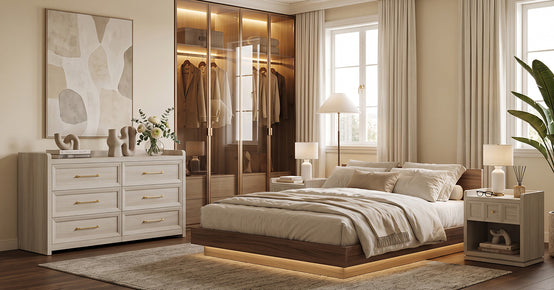
1. Dressers — Probably the Most Useful Bedroom Piece You’re Overlooking

Ask someone what the most important piece of bedroom furniture is, and you’ll get “the bed” nine times out of ten. Fair enough. But the bed doesn’t determine whether the room feels organized. The dresser does.
Without one, clothes end up on the chair. Accessories spread across every flat surface. Small everyday items pile up until the room just looks lived-in in the wrong way. Add a well-sized dresser, and all of that gets a home. The room stops looking like it’s losing the fight.
Wide and Low vs. Modular and Expandable

This is the first real decision to make, and it’s worth getting right before you worry about finish or handle style.
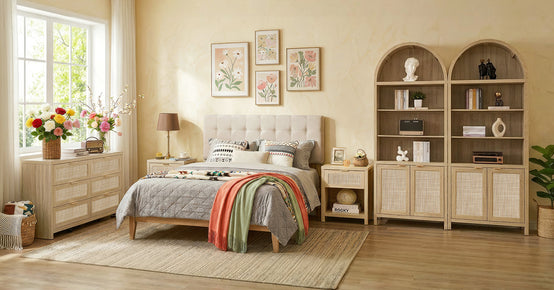
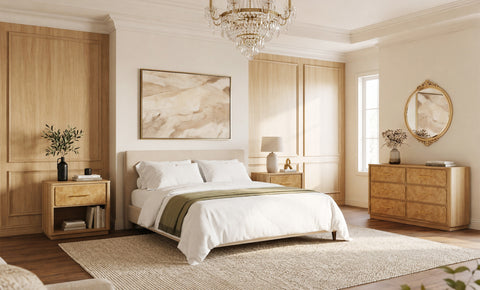
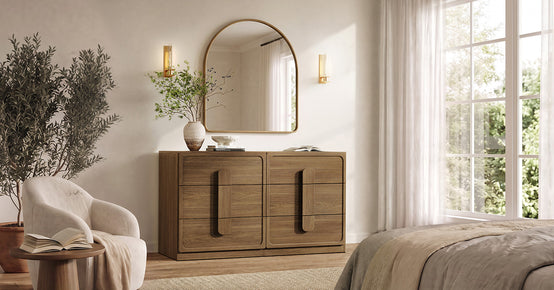
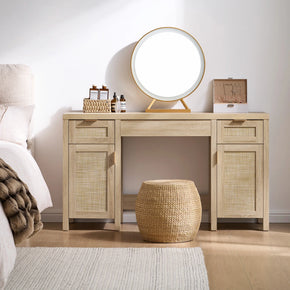
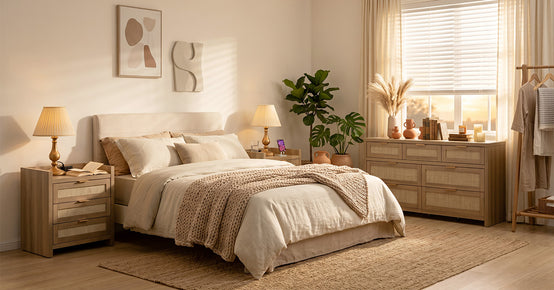
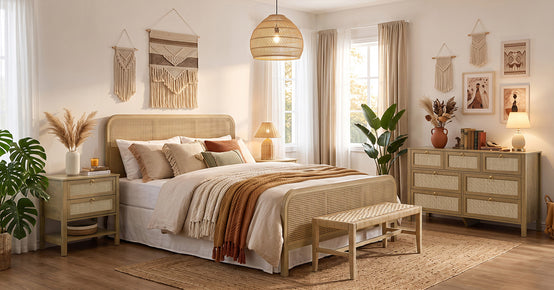
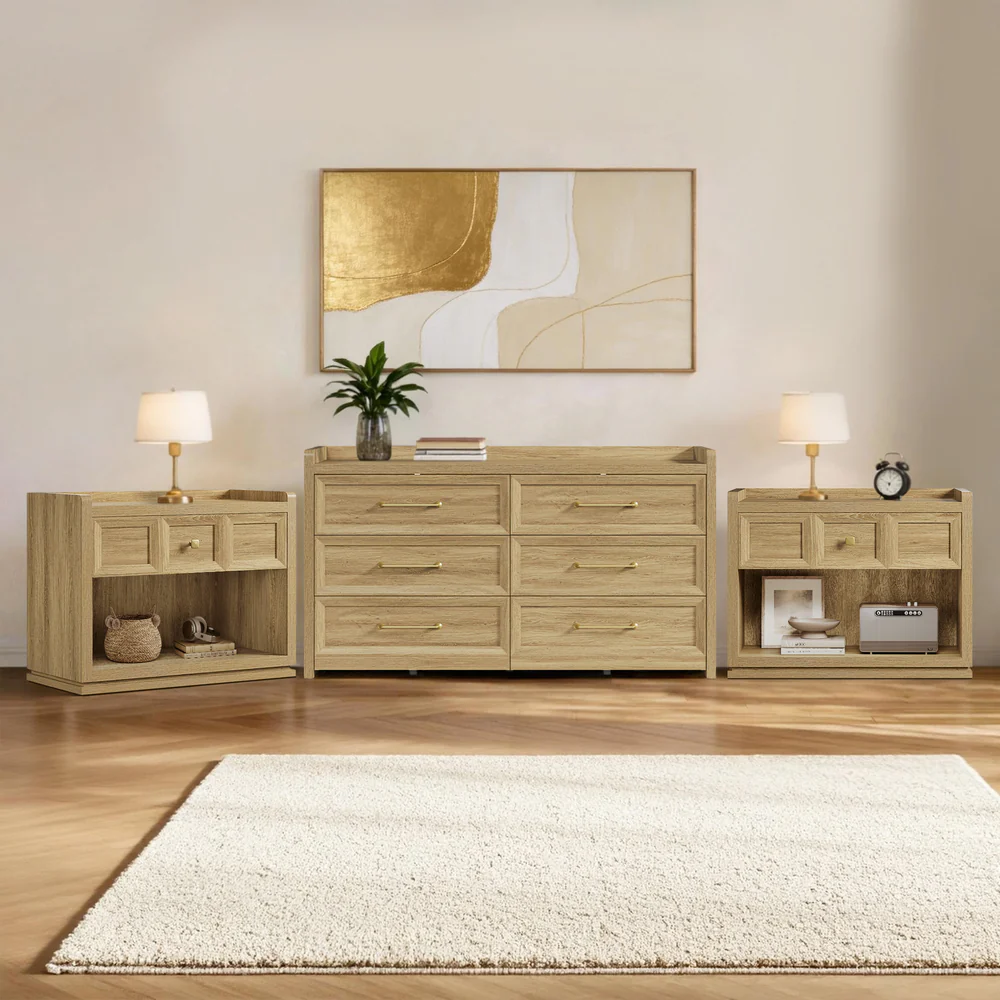
If the bedroom has a long open wall — the kind that runs uninterrupted without a door or window breaking it up — a horizontal dresser tends to work best. The Terra 6-Drawer Horizontal Dresser spreads storage across that wall without going tall. Six drawers arranged side by side means the top surface stays accessible and flat — good for a lamp, a small tray, a plant — without turning into a visual dumping ground.
If the room needs flexibility — a shared bedroom, a growing household, or a layout that might change — a modular option earns its keep differently. The Crescent Modular 9-Drawer Dresser lets you start with what you need and expand later. Nine drawers across a configurationmeans more per-drawer capacity and a setup that, rather than one you’d need to replace. The silhouette also sits cleanly in a tight room because the modular format avoids the visual bulk of an oversized single unit.
Dresser Style Comparison
|
Dresser Style |
Best Room Fit |
Drawer Design |
Key Advantage |
|
Terra 6-Drawer Horizontal |
Wide rooms, long open walls |
Side-by-side, shallower |
More top surface; easier to style |
|
Crescent Modular 9-Drawer |
Flexible or shared spaces |
Stacked, configurable |
Expandable; bigger per-drawer capacity |
|
Savanna 7-Drawer Tall |
Narrow rooms, vertical walls |
Stacked, small footprint |
Holds the most, least floor area |
A few things worth checking before you order: make sure each drawer opens fully without hitting the bed frame, the wall, or the door — this sounds obvious, but it’s the most common setup regret I hear. Leave at least 24 inches between the dresser face and the nearest furniture opposite it. And check drawer depth, not just drawer count. Four deep drawers hold significantly more than six shallow ones and stay more organized over time.
One layout trick worth knowing: in some room configurations, a compact dresser positioned right beside the bed works as both a dresser and a nightstand. You get a surface at the right height plus drawer storage, all in the same footprint instead of two pieces. It’s not always possible, but when it works, it eliminates an entire piece from the floor plan.
2. Nightstands — The Piece That Gets the Least Thought and Causes the Most Mess

People spend real time on the dresser, maybe a weekend on the bed. Then the nightstand gets grabbed last, almost as an afterthought — whatever seems fine at the end of the shopping session. In a small bedroom, that decision shows every single morning.
The nightstand in a compact room isn’t a decoration. It’s doing real storage work. There may not be space for a bedside cart, a floating shelf, and a full chest of drawers all at once. The nightstand has to cover bedside needs and anything else that doesn’t fit elsewhere. Picking an open-shelf version because it photographs well is a mistake that becomes obvious within about two weeks.
Drawers vs. Open Shelves — The Honest Answer
 Open nightstand shelves look great in styled photos. They look considerably less great after a normal week. Books pile up. Chargers tangle. A glass of water, a pair of glasses, some receipts — it all accumulates. The surface you were going to keep minimal becomes a shelf, which is exactly the problem you were trying to solve.
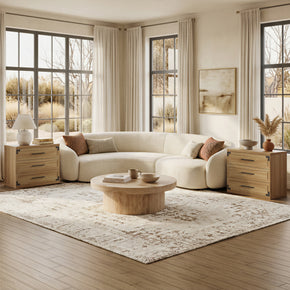
Drawers fix that. The Helio Nightstand 31-Inch Wideoffers wide drawer storage on a scale that suits larger beds — a set of two covers both sides while keeping the surface genuinely clear. Not “cleared for a photo” clear. Actually clear. At 31 inches wide, there’s enough top surface for a lamp and a book without it feeling cluttered, and the drawer depth handles everything that would otherwise live on top of or around the nightstand.
House Beautiful has pointed out that a nightstand with deep drawers can function as the primary storage piece in a tight bedroom — doing the job a small dresser would do in a bigger room. Worth knowing that the option exists before you assume you need both.
Before you order any nightstand: check that the height sits within 2 to 3 inches of your mattress top (reaching up or bending down to grab your phone every morning gets old fast), confirm the width leaves a usable walkway beside the bed, and check whether built-in charging is included — it’s genuinely useful in daily use, not just a spec on a listing.
3. Shoe Cabinets — Small Investment, Surprisingly Large Impact

Nobody puts shoe cabinets on a mood board. Not a glamorous category. And yet it might be the single purchase that makes the most visible daily difference in a small home.
Two pairs of shoes by the door become four. Then eight. The entry starts looking like a storage problem every time you walk in — which is every day. And since the entry is the first thing anyone sees, that feeling follows you into the rest of the house, whether you consciously notice it or not. Fix the shoes, and the whole place feels more put together. It’s one of those rare fixes where the benefit shows up immediately.
Closed Doors Are the Whole Point

The feature that matters most in an entry shoe cabinet isn’t capacity or shelf adjustability. It’s whether the doors close.
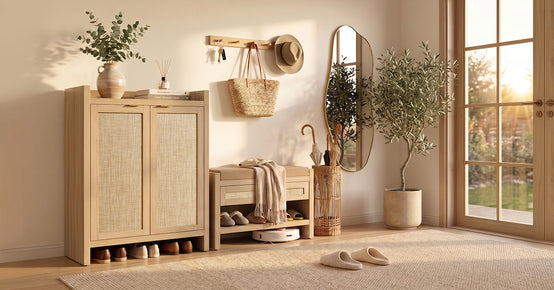
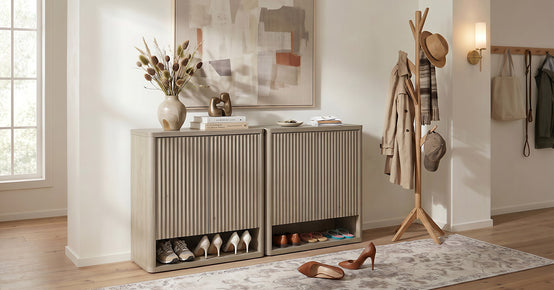
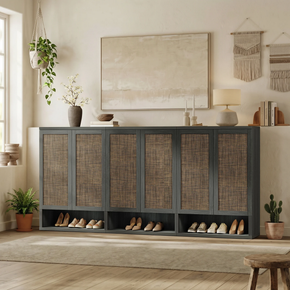
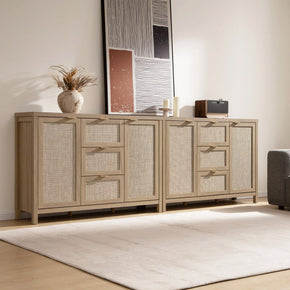
Open shoe racks keep the mess visible. You can organize it neatly, sort by color if you want — but the pile is always there. Closed-door cabinets like the Cas Black Shoe Cabinet put everything behind a flat front. The entry wall stays clean. You stop seeing the pile the moment you close the door. That’s the whole fix, and it happens immediately.
A few things to check before ordering: depth matters more than most people think — most narrow entries need a cabinet under 12 inches deep to keep walkways and door swings clear. Know your wall width before browsing (standard cabinet widths range from 28 to 48 inches). Flip-up doors need overhead clearance, swing-out doors need frontal clearance. And fixed shelves almost always cause problems with boots or platform shoes at some point, so adjustable shelving is worth prioritizing.
The ripple effect is real. Once shoes are off the floor at the door, the living room and bedroom stay noticeably cleaner, too. It’s one of those purchases where the benefit shows up in rooms you weren’t even trying to fix.
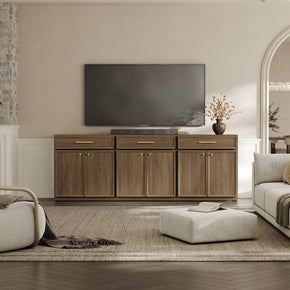
4. TV Stands — The Living Room Piece That Sets the Tone for the Whole Room

The TV stand is usually the largest piece in a small living room. That gives it more power over how the space feels than most people account for when shopping. Too wide, and the room tilts toward cramped. Too open, and visible clutter builds daily and becomes basically impossible to manage.
The best TV stand for a small living room isn’t the one with the most shelf space. It’s the one that stores what you actually need while keeping the front face visually clean. There’s a lot of stuff that lives near a TV — streaming devices, remotes, game controllers, cables, power strips — and all of it looks messy when it’s visible.
Why Closed Storage Changes the Whole Room

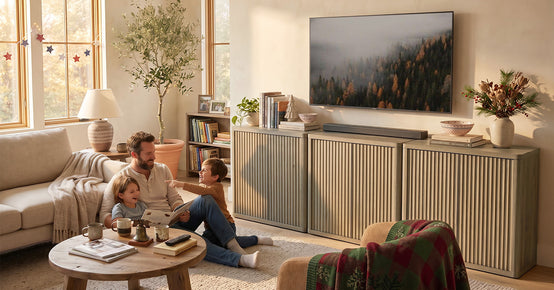
Two TV stands can have identical footprints but feel completely different. One with open shelves shows everything — every cord, every device, every random thing that gets stacked there over time. One with cabinet doors shows nothing. The room reads as calm instead of cluttered.
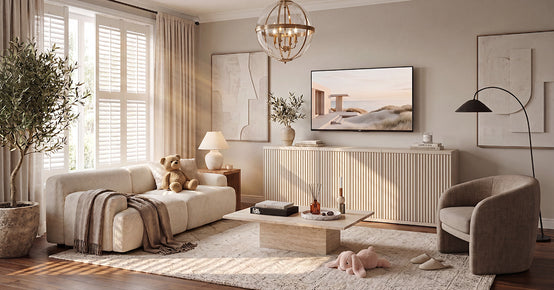
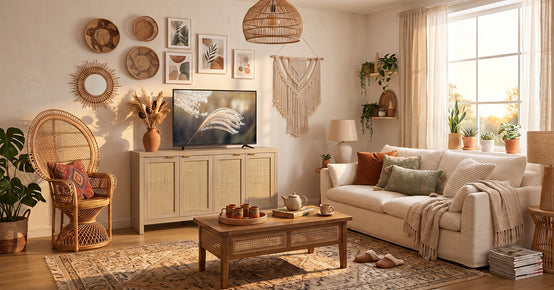
That’s not an aesthetic preference. In a small living room, the difference between those two options is whether the space feels manageable. The Stria TV Stand with 2 Doors handles this well — two cabinet doors cover the lower section completely, the profile stays proportional with TVs for rooms up to the width of the TV, and the clean-line silhouette doesn’t add visual bulk the way bulkier media units do. Closed storage also solves the cable problem: built-in cutouts in the back panel keep cords routed and out of sight, a detail that’s usually overlooked until everything’s set up and you realize the cord situation is its own project. Orsizing: try to stay within 6 to 8 inches of the TV's width on each side, so the screen reads as oversized. Anything over 20 inches deep can crowd a small room, so measure from the wall to your walking path before committing. And confirm the TV height puts the screen at eye level from your main seating spot, because a stand that’s too low creates both a comfort and posture problem you’ll notice every night.
Mistakes That Are Easy to Avoid With a Little Prep
Buying from a photo without measuring first. A piece looks trim and minimal in a styled listing shot, then arrives and takes up 40 percent of the room. Before anything else, check assembled dimensions — height, width, and depth — against your wall space, door clearance, and the walking room around everything already in the room. The listing image is never a reliable scale reference. Ever.
Choosing furniture that only does one job. A nightstand with no drawers. A TV stand with open shelves and nowhere to manage cables. An entry bench with nothing underneath. Every piece in a small home needs to solve more than one problem, or it’s just occupying floor space without earning it.
Forgetting about visual weight. Two dressers with identical dimensions can feel completely different in a room. Bulky profiles, heavy hardware, and ornate details make an item appear larger even when the physical measurements are the same. Clean silhouettes and closed fronts help a compact room feel open even when it’s fully furnished — that’s a practical call, not just a stylistic one.
On maintenance: once wood and wood-finish pieces are in place, a basic routine keeps them looking right for years. The Spruce’s guide to cleaning wood furniture covers what to use, what to avoid, and how to handle surface marks before they turn into something harder to fix.
Wrapping Up
Small spaces don’t need less furniture. They need furniture that actually works — pieces that do something real instead of just filling a corner.
A dresser that contains the bedroom chaos. A nightstand that keeps the surface clear. A shoe cabinet that makes the entryway look intentional. A TV stand that manages the living room instead of adding to it. Those four pieces, done right, change how the whole home feels. Not dramatically. Just consistently, every single day.
None of them needs to be expensive or elaborate. They just need to do the job — closed storage, proportions that fit the room, surfaces that stay manageable. If the wood tone decision is still open, Architectural Digest’s breakdown of furniture wood types is a clear, non-technical read on the difference between solid wood, veneer, and engineered options — useful context before committing to the same finish across a whole room.
FAQs
What type of furniture works best in a small space?
Multi-functional pieces with real storage. Dressers with full-depth drawers. Closed-door shoe cabinets. TV stands with cabinet fronts. Nightstands that have enough drawers to handle overflow, not just a surface to put things on. The key is that every piece solves more than one problem — if it only does one thing, it’s just occupying floor space.
Is a dresser actually a good idea in a small bedroom?
Usually, more useful than people expect. Without one, clothes end up on the chair, in random bins, or stacked on surfaces that were supposed to stay clear. In the right layout, a compact dresser beside the bed can even serve as a second nightstand — surface area and drawer storage in one footprint instead of two. That’s a genuine floor plan win.
How many drawers do I need in a bedroom dresser?
For one person, six tends to do it. For two people sharing the room, eight or more works better. The more important variable is depth — four deep drawers hold significantly more than six shallow ones and stay more organized over time. When in doubt, go deeper rather than adding drawer count.
Can a nightstand replace a small dresser?
In a very tight bedroom, sometimes. A nightstand with three or more deep drawers handles lighter clothing reasonably well, especially if a wardrobe or closet takes the hanging items. Not a full replacement for most households — but when the floor plan won’t allow both, it’s a workable option worth knowing about.
What should I look for in a shoe cabinet for a narrow entryway?
Depth first — most narrow entries need under 12 inches to keep walkways and door swings clear. After that: closed doors over open racks, adjustable shelves so boots and platform shoes actually fit, and a flat-front design that keeps the wall line clean. The door type matters too — flip-up doors need overhead clearance that not every entry has.
How do I stop a TV stand from making a small room feel cramped?
Keep the width close to your TV size. Going noticeably wider than the screen reads as oversized. Closed cabinet doors significantly reduce visual noise. Keep the top surface minimal — a single decorative object, not a staging area. And make sure the depth leaves a real walking path from where you normally move through the room.
Does furniture color matter in a small room?
Less than people think. Lighter finishes and natural wood tones do tend to feel more open. But silhouette matters more than color. A slim piece in a dark finish can feel lighter than a bulky piece in white. Clean lines and closed fronts make a greater perceptual difference than shade does.
Should a dresser and nightstand match each other?
They don’t need to match exactly — they need to feel related. Same finish family, similar material, or pieces from the same collection. Exact matching looks very deliberate. Related-but-distinct looks intentional. What doesn’t work is mixing styles so varied that the room reads as visually noisy rather than layered.
What’s the biggest furniture mistake people make in small bedrooms?
Skipping the dresser because the room feels too small for one. It’s the wrong call almost every time. The room ends up with laundry on the chair, bins on the floor, and accessories covering every surface, which makes it feel smaller than it would with the missing dresser. A compact, properly sized dresser organizes more than it takes up. The room almost always looks bigger after, not smaller.
Sources
- The Spruce — “How to Clean and Care for Wood Furniture” is cited in the Common Mistakes section. Covers safe cleaning products, routine maintenance, and surface mark treatment.
- Architectural Digest — “Types of Wood Used in Furniture Making”Cited in Conclusion. Solid wood vs. veneer vs. engineered — practical context for finish decisions.
- House Beautiful — “15 Genius Tiny House Interior Design Ideas Don't let your square footage hold you back”Background for Nightstand section. Supports drawer-heavy nightstand as primary storage in compact bedrooms.
- Apartment Therapy — “Small Space Furniture Ideas”Background research on multi-functional furniture approaches in small apartment layouts.


Looking for something else?

Furniture Materials Guide: Picking the Right Material Room by Room
LEARN MORE
How to Mix Wood Tones Without Making a Room Look Mismatched
LEARN MORE
18 College Apartment Furniture Ideas That Save Space and Money
LEARN MORE
Types of Entertainment Centers: 11 Designs and How to Pick One
LEARN MORELooking for something else?

Curio Cabinet Decor Ideas: How to Style a Display Cabinet Without the Clutter
LEARN MORE
Curved Furniture: How to Style, Measure, and Buy It in 2026
LEARN MORE
What Is Rattan Furniture? A Buyer Guide to Types and Care
LEARN MORE


Further reading

How to Choose a Nightstand for a CPAP Machine

How to Choose a Shoe Cabinet for Men's Sizes, High-Tops, and Bulky Shoes


