

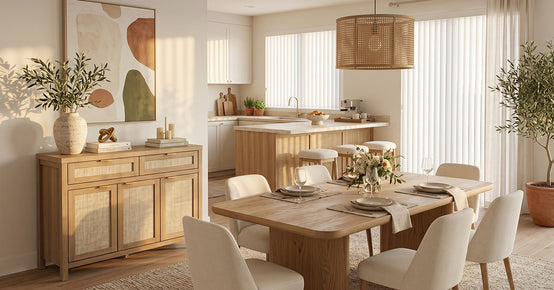
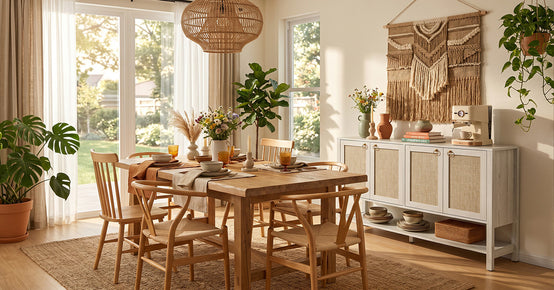



Dining Table for a Small Space: How to Choose the Right One for Small-Space Living
Hunting for a dining table for a small space—and for small-space living in general—teaches you one thing quickly: the table was never the issue. The chairs are. A 36-inch table looks perfect on your screen. Then the chairs turn up, you tug one out to sit, and your spine is pressed to the wall while your dinner balances on your knees. A table that truly works has to fit the room with the chairs pulled out and the people seated, yet still allow someone to slip past behind them. Nail that and the rest sorts itself out. Designers at Better Homes & Gardens make the same point in their small dining room guide: pick furniture that is proportionate to the room and never crowds it. The rest of this guide shows you how to measure without guessing, which sizes and shapes survive real apartments, studios, breakfast nooks, and open-plan rooms, and the seating and layout tricks that make a small dining room feel like it grew a foot overnight.
Start by Measuring Your Dining Space
Nobody likes this step. Everybody who skips it ends up paying for it. Spending ten minutes with a tape measure costs you nothing next to a return label and the joy of carrying the wrong table back down three flights of stairs. When you're choosing a dining table for a small space, that tape measure is the difference between a table that fits and one that fills the room.
Two numbers do most of the work:
-
Measure the full floor area where the table will go, then subtract the walking room on every side.
-
Leave about 36 inches around the table for pulling out chairs and squeezing past—this is where most small dining tables succeed or fail.
Measure the Table Area First

Measure the patch the table will really sit on, not the whole room. Note the walls, doorways, cabinets, radiator, and the route you take to the kitchen. The clearance breakdown over at Dimensions.com splits it neatly into two zones: 18 to 24 inches for a seated person, then another 18 to 36 inches for whoever’s walking behind that chair. Add the two together, and it’s obvious why a table that "fits" on paper can throttle a room once it’s in there.
Leave Room for Chairs to Pull Out
A chair wants roughly 24 inches of clear floor behind the table edge just to slide back far enough for a body to land in it. Push the chairs back in, and the table’s true footprint still swells by about a foot on every side that seats anyone. That bigger number is the one to measure. The bare tabletop figure flatters you, and that little flattery is responsible for more returns than every other mistake here combined.
Use Painter’s Tape Before Buying
Old decorator habit, and still nobody’s beaten it. Tape the table’s exact shape onto the floor, then tape the chairs where they’d sit pulled out. Live around the whole thing for a day. Walk the route to the kitchen with your arms full. If your hip keeps catching that tape line, the table’s too big, and no amount of falling in love with it will trim an inch off. Learning that from a roll of blue tape beats learning it from a delivery you’re stuck with.
Think About Daily Use, Not Rare Guests
Shop for the people who sit down to eat on a regular Tuesday. Just the two of you most nights? Then buy two and make it comfortable. Thanksgiving for eight rolls around once a year, and that’s the whole reason extension leaves, folding chairs, and benches exist. Size a table around the one big party you host, and you’ll quietly curse it the other 364 evenings.
What Size Dining Table Is Best for a Small Space?
Best Size for Two People
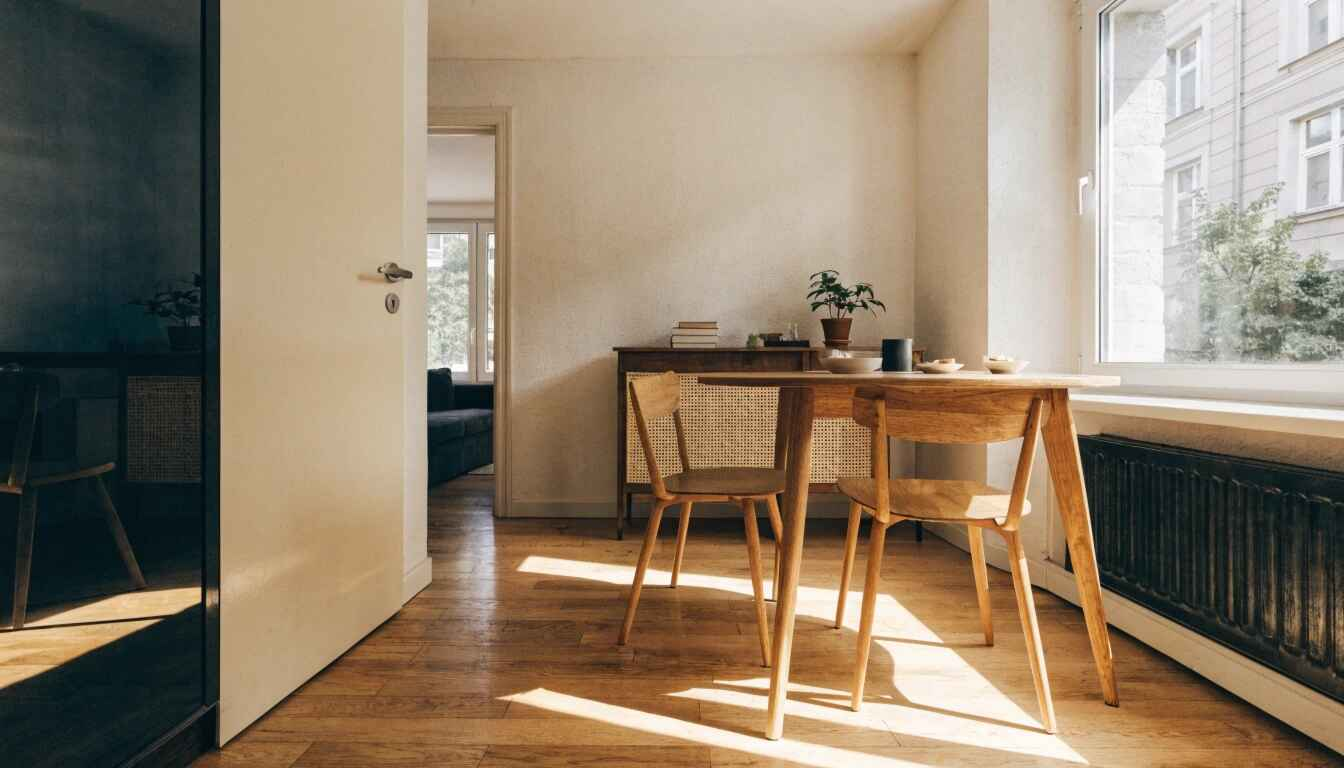
A 30- to 36-inch round or square table seats two and still leaves room for serving bowls. Bistro tables in that range duck into corners, settle under a window, or perch at the end of a galley kitchen. Living on your own? A wall-mounted drop-down shelf can be the entire dining room, and honestly, there’s nothing sad about that. It’s just clever.
Best Size for Four People
 In most small homes, the sweet spot is a 36-by-48-inch rectangle or a 42- to 48-inch round. Four seats for the daily meals, compact enough for a snug room, and roomy enough for homework, laptops, and the jigsaw puzzle that mysteriously colonizes the table for a month. If I had to recommend a single dining table size for a small apartment, this would be it.
Best Size for Occasional Guests
Extendable, drop-leaf, or gateleg, take your pick, and you’re sorted. They stay compact all week, then stretch the evening company turns up, which sure beats paying rent on a bare tabletop you ignore 51 weeks of the year. A 48-inch extendable that opens out to 70 inches, which can handle nearly any hosting needs a small home is ever going to face.
Why Bigger Is Not Always Better
A jumbo table won’t make a small dining room feel grand. It makes it feel like a showroom after the lights go off, all furniture and no floor to walk on. You get blocked walkways, scuffed chair backs, and that little sideways shuffle just to reach your own seat. The room ends up reading smaller, not bigger. Scale it down, and the very same room starts to breathe again.
Best Dining Table Shapes for Small Spaces
So, is a round or rectangular table better for a small space? For tight or square rooms, a round table usually wins—no sharp corners to bump into, and it tucks neatly into a corner or nook. For long, narrow rooms, a rectangular or oval table flows with the layout rather than fighting it. Match the table shape to the room shape, and you've solved half the puzzle before spending a dime.
Round Dining Tables

No corners waiting to bruise a hip, easy movement on every side, and everyone gets to see everyone. Round dining tables come into their own in square rooms and corner nooks. Trade the four legs for a single pedestal base, and you open up knee room, so you can squeeze in one extra chair when guests arrive. For small spaces, round is the default until the room hands you a reason to think otherwise.
Rectangular Dining Tables

Here’s your narrow-room specialist. A rectangular table sits flush against a wall, seats people on three sides, and only pulls forward when guests show up. It doubles as a desk or extra prep counter, too, which matters a lot when the dining table is the one large surface you’ve got. Long, skinny rooms practically asked for this shape by name.
Square Dining Tables
Square goes in square. A small square table fits a boxy breakfast nook or a kitchen corner with no inch wasted, and it seats four cleanly enough. Drop that same square into a narrow room, though, and it gobbles up the width you can’t afford. Check your room’s proportions before you sign up for this one.
Oval Dining Tables

The middle-ground pick, and a smart one at that. An oval hands you the soft, cornerless flow of a round table with the length of a rectangle, so it eases into longer rooms with no sharp edges to dodge. Designers grab ovals for small dining rooms over and over, and once it’s on your radar, you’ll catch them in nearly every room you walk into.
Narrow Dining Tables
Some tables come in at just 30 to 36 inches wide, and in a galley kitchen or a slim apartment dining strip, those few rescued inches decide whether the room works or doesn’t. Set a narrow dining table next to slim chairs or a tuck-under bench, and suddenly you’ve seated four people in a spot most furniture won’t even look at.
Best Types of Dining Tables for Small Spaces
Extendable Dining Tables

Compact Monday to Friday, generous when Saturday night rolls around. The newer extension mechanisms slide open in seconds and tuck the leaf away inside the table itself, so you give up no closet space at all. For a small home that still likes to throw a dinner, this is the smartest table type your budget can land. Buy one table, get two.
Drop-Leaf Dining Tables
One side folds down, sometimes both do, and the table thins to a sliver against the wall. Lift a leaf for dinner, drop it once the plates are cleared. Drop-leaf tables have been bailing out small rooms since before the light bulb, and the design was never updated because it already nails the job.
Folding Dining Tables
This is the all-in space saver. A folding table vanishes completely between meals, which is perfect for studios, renters, and any room that moonlights as a yoga mat, office, and guest room in the same week. Less polished than a fixed table, true, but far more honest about how a small home actually gets through a day.
Bistro Tables

Roughly 30 inches across and about 30 inches tall, seats two, with charm left over. Slide a bistro table up to a window, and a forgotten corner becomes the best seat in the place. Café owners figured out small-space dining a century ago. Borrowing from people who already cracked it is just good sense.
Wall-Mounted Dining Tables

A fold-down wall table takes up zero floor space the moment it’s closed. Zero. For micro apartments and the tightest kitchens, nothing else is even in the race. Hang it at standard table height, around 29 to 30 inches, add a pair of folding chairs, and dinner for two now happens in a spot where a dining room was never possible.
Pedestal Dining Tables
Not a shape, a base, and the base earns more credit than it usually gets. A center pedestal keeps the corner legs out of your knees, so chairs slide all the way under and you can sneak a fifth seat onto a four-seat table. On round tables in particular, a pedestal wins out over four legs just about every time.
Choose the Right Dining Chairs for a Small Space
The table grabs all the spotlight. The chairs are what quietly decide whether the room works. So put your real attention here.
Slim Armless Chairs
Armless chairs with slim frames slide the whole way under the tabletop, so between meals the set’s footprint shrinks down to almost nothing. Arms tack on inches all the way around and keep a chair from sliding home. In a small dining room, arms are a luxury tax, and it’s a bill you can simply decline to pay.
Stackable Chairs
Leave two chairs out, stack the other two in a closet, and your everyday footprint just got cut in half. Stackable dining chairs are the cheat code for anyone hosting once a month but living small the rest of it. A decent stacking design nests four chairs into the floor space of a single tucked-away corner.
Foldable Chairs
The modern folding chair has come a long way from card-table duty. Wood-seat and upholstered versions now hold their own at an actual dinner. Hook them flat onto the wall or slip them behind a door, and seating for six lives out of sight inside a one-bedroom apartment.
Benches and Banquettes

A bench slides fully under the table, fits three kids where two chairs would, and disappears from the walkway entirely. A banquette pushes the seating right up against the wall, so it takes up zero floor space on that side. Corner banquettes turn a dead kitchen corner into the warmest seat in the home. Restaurant booths were built around this exact idea.
Low-Profile Chairs
Open backs, low backs, slim legs. Chairs you can see straight through keep the sightlines clear across the room, and clear sightlines are most of the magic that fools a small space into reading larger. A line of tall, solid chair backs builds a wall straight through your apartment. Don’t build the wall.
Layout Ideas for a Dining Table in a Small Space
No dining room at all? Most small homes are right there with you. The editors at Apartment Therapy tracked down real families carving out dining areas from living rooms as small as 270 square feet, and the same handful of tricks turns up in every home that genuinely makes it work.
Place a Round Table in an Empty Corner
That corner now holds a tired plant and a pile of gym kit? A small round table and two chairs flip it into a breakfast nook. Corners are the most squandered real estate in any small home, and a kitty-cornered café table tucks right into a spot where a full dining set never stood a chance.
Put a Narrow Table Along a Wall
Shove a narrow rectangular table flush to the wall, seat folks on three sides, and only pull it forward on the odd night you need that fourth chair. Half the table’s clearance demand just disappeared. Add a bench on the wall side when you do pull it out, and the seating scales up in a heartbeat.
Use a Dining Table Behind the Sofa

The back of the sofa is a free wall sitting right there in plain view. Float a compact table behind it, and the sofa itself draws the boundary of your dining zone, no building required. Slim console tables work the same magic on even less depth, doing duty as a serving counter, a two-stool breakfast bar, or both inside one afternoon.
Create a Window Dining Nook
Chase the light. A small table at the brightest window beats a bigger one stuck in a gloomy corner every time. Run thin benches along the wall to keep the footprint tiny, and morning coffee in real daylight becomes one of those small luxuries even a cramped home can hand you.
Use a Rug to Define the Dining Area
In an open-plan room, a rug under the table draws the line that your missing walls won’t. The eye reads "this is the dining zone" on its own, no partition needed. Size it so the chairs stay on the rug even when pulled out, about 24 inches past the table edge on the seating sides, or the whole effect falls apart somewhere around the main course.
Add a Pendant Light Above the Table
A pendant over the table anchors the dining zone from above, the way a rug anchors it from below. Even dropped smack in the middle of a living room floor plan, a pool of light over a small table announces "meals happen here" louder than any furniture could. Renters, listen up: adhesive hooks and a plug-in pendant pull off the same effect with your deposit untouched.
Small Dining Table Ideas by Home Type
Small Apartment

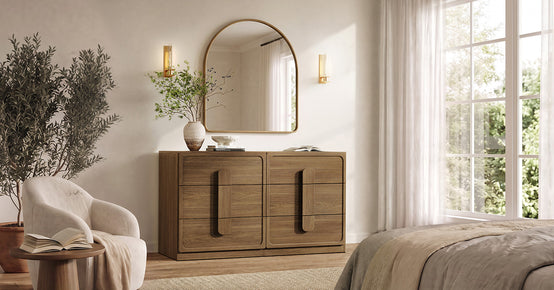
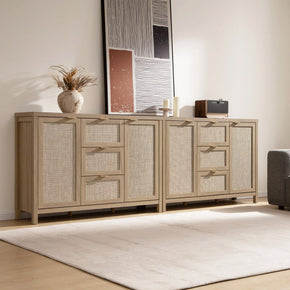
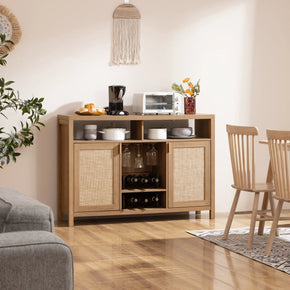
A round or bistro table, two slim chairs, and storage that actually earns its keep. Dishes and linens have no business stacking up on the table in a small apartment, so park a compact sideboard with two doors and three drawers against the closest wall and keep the tabletop clear for what it’s actually there to do: feed you.
Studio Apartment

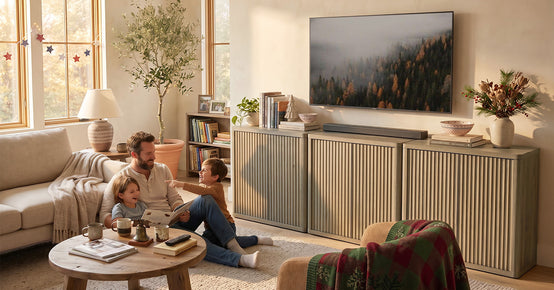
In a studio, the dining table pulls triple duty as desk, divider, and dinner spot, so a drop-leaf or folding design pays its rent the fastest. Zoning matters more than the furniture here: a low media console with storage marks the end of the living zone, and the table marks the start of the dining zone, with not a single wall in sight.
Small Kitchen

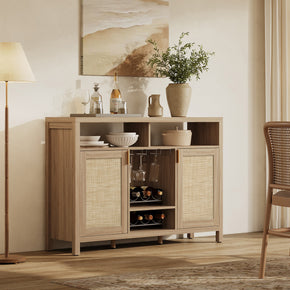
A narrow table against the wall, or a fold-down wall-mounted one, covers an eat-in kitchen, leaving inches to spare. Keep the cooking clutter off it by sliding a narrow sideboard with drawers into the dead strip beside the fridge or under the window. That way, the kitchen table stays a table instead of slowly turning into a counter overflow.
Open-Plan Living Room

Open-plan dining stands or falls on zoning—rug under the table, pendant over it, sofa back as the property line. Choosing compact living room furniture in the same wood tones as the table keeps both zones reading as one designed room rather than two rooms clumsily jammed together.
Tiny Dining Room

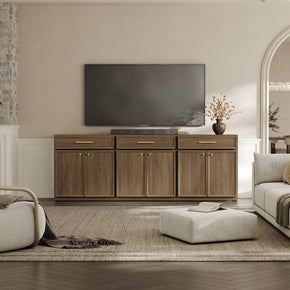
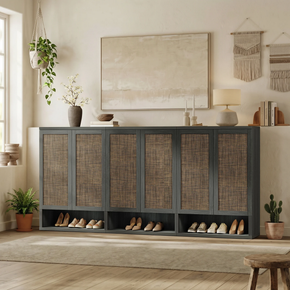
A truly tiny dining room calls for a compact oval or round table, light finishes, and one storage piece, no more. A four-door dining room buffet along the longest wall swallows the dishes, glasses, and linens, and that’s precisely what keeps a small table workable to begin with.
Materials and Finishes That Make Small Spaces Feel Bigger

Visual weight counts as real weight in a small room. Two tables with the very same footprint can feel worlds apart depending on what they're made of. That's exactly why a dining table for a small space should lean toward light woods, rattan fronts, and slim silhouettes—and it's the same thinking behind the space-saving dining tables in theSicotas space-saving furniture range, which favors those lighter materials right across the board.
Light Wood Finishes
Light oak, ash, and pale natural tones reflect daylight into the room rather than absorbing it. A light wood table reads smaller than a dark one of the same size. Physics insists they’re identical; your eyes flatly refuse to agree, and your eyes are the ones who have to live there.
Glass and Acrylic
A glass tabletop all but disappears, letting the floor stretch unbroken beneath it. That’s a genuine space trick. The catch is real, though: fingerprints, water rings, and a polish cloth working overtime. Worth it in some homes, a weekly chore sentence in others. Be straight with yourself about which one yours is.
Slim Metal Frames
Thin metal legs hold a tabletop up on practically nothing, at least to the eye. Set a hairpin-leg table beside a chunky farmhouse trestle of the same surface area, and the gap between them is striking. Slim frames belong in modern small rooms; heavy bases belong in rooms that can spare the visual bulk.
Soft Neutral Colors
Warm whites, soft beiges, gentle sage, light clay. A quiet palette lets a small dining area melt into the surrounding rooms rather than stop the eye cold at every color change. Save the loud color for napkins and a vase, the kind of thing you can swap out the week you tire of it.
Styling Tips to Make a Small Dining Area Look Bigger
Hang a Mirror Near the Dining Table

A mirror beside or behind the table doubles the light and the sense of depth for the cost of one nail. It's the oldest trick in the small-space playbook, and it's kept its spot simply by working. Angle it to grab a window if you can. The room borrows the whole view, free of charge.
Keep the Tabletop Simple
One low bowl, one small vase, or one runner. Full stop. A crowded tabletop makes a small dining table look smaller still and turns every meal into a clear-the-decks operation before anyone sits down. The quickest styling win in this whole article is just taking stuff off.
Draw the Eye Upward

Small floor, tall walls. Put them to work. Art hung a notch high, floor-to-ceiling curtains, and vertical storage like a 75-inch-tall bookshelf lifts the eye and pushes the ceiling away. Vertical storage also crams serious capacity into one slim slice of floor, which is exactly what a small dining room never has enough of.
Use One Clear Color Palette
Choose a palette and stick to it. When the table, chairs, rug, and storage all pull from a single family of tones, the eye slides along rather than snagging, and the space reads as pulled together. Six fighting colors crammed into 90 square feet feels like a flea market, and not the fun kind you tell stories about.
Choose a Statement Lightly
A pendant or a small chandelier anchors the table beautifully, but size it to your actual table, not to the catalog shot. Shoot for about half to two-thirds of the table’s width, hung 30 to 34 inches above the surface. Too big and it swamps the room; too high and you’re lighting the ceiling while dinner sits in the dark.
Common Mistakes When Choosing a Dining Table for Small Space Living
Buying before measuring. The table fits. The chairs don’t. The walkway really, truly doesn’t. Tape measure first, credit card second, in that order, no exceptions.
Bulky chairs around a compact table. People shrink the table, then surround it with thrones. The footprint barely shifts, and the room chokes anyway. Slim seating is half your space savings, plain and simple.
Ignoring the base. Corner legs, swipe knee room, and block the extra chair you’ll want sooner or later. On a small table, the base design matters every bit as much as the tabletop size, and hardly anyone thinks to check.
Buying for the guests you host twice a year. An extendable handle handles the holiday in one motion. A permanently huge table just quietly wrecks every ordinary Tuesday in between.
Overdecorating the surface. Three candlesticks, a fruit bowl, two vases, and a tray on a 36-inch table leaves you space for about one plate. Decor loses to dinner. That’s the deal.
Quick Buying Checklist
Run through this before you click buy. Two minutes here saves a return label later.
-
Measure the dining area, including walkways and door swings
-
Tape the table footprint on the floor, chairs pulled out
-
Confirm at least 24 inches behind each chair, 36 inches for walk-behind paths
-
Match the table shape to the room shape: round for square rooms, rectangular for narrow ones
-
Pick slim, armless, stackable, or folding chairs
-
Consider a bench or banquette on the wall side
-
Choose light finishes and slim bases for an airier look
-
Go extendable or drop-leaf if you host more people than you feed daily
FAQs
What type of dining table is best for a small space?
Round, oval, narrow rectangular, drop-leaf, and extendable tables lead the way. Round suits square rooms and corners, narrow rectangles suit tight rooms, and extendables handle guests without hogging space on ordinary days.
Is a round or rectangular table better for a small space?
Comes down to the room’s shape. Round wins in square rooms and corner nooks, since there are no corners to dodge. Rectangular wins in narrow rooms, where it sits flush against a wall and pulls out only when you need it.
What size dining table is best for a small apartment?
A 30-to-36-inch bistro table for two, or a 36-by-48-inch table for four, covers most small apartments. The real limit is chair clearance, around 24 inches behind each seat, not the tabletop itself.
How do you fit a dining table in a small living room?
Float a compact table behind the sofa, tuck a bistro table into a corner, or run a narrow table along a wall. Then mark the zone with a rug and a pendant light so it reads as a dining area rather than leftover furniture.
Are extendable dining tables good for small spaces?
They’re the top pick for a small home that hosts. Compact for everyday meals, extended for company, and modern leaves store right inside the table. You pay for one table and get two.
What chairs are best for a small dining table?
Slim armless chairs, stackable chairs, folding chairs, benches, and banquettes. Anything that tucks fully under the table or disappears between meals. Skip arms and tall solid backs, both of which fence in a small room.
How much space do you need around a small dining table?
Plan about 24 inches behind each chair for sitting down, and 36 inches behind a seated person, anywhere someone walks. Measure the table with the chairs pulled out, never the bare tabletop on its own.
How can I make a small dining area look bigger?
Stick to light wood or glass surfaces, slim open-backed chairs, and a mirror near the table. Then keep things calm with a single color palette, a near-empty tabletop, and vertical storage. Each trick buys a little; stacked together,r they transform the room.
The Best Small Dining Table Fits Your Real Life
The smallest table is rarely the right one. The right one seats your actual household in comfort, keeps the walkways open, matches your room's shape, and stretches for the few nights a year you ask it to. Measure the space, tape the footprint, choose slim seating, and keep the surface simple. Do that, and a dining area of 60 square feet will feed you better than a stack of formal dining rooms ever manages.
Sources
- Better Homes & Gardens – 30 Small Dining Room Ideas to Maximize Your Space
- Apartment Therapy – 20 Small Living Rooms That Make Space for a Dining Table, Too
- Dimensions.com – Dining Room Clearances: Dimensions & Drawings
- House Plans Helper – Dining Room Size
- Houzz – Small Dining Room Ideas and Designs
- Chairish – Dining Room Layout Ideas for Every Type of Space


Looking for something else?

Furniture Materials Guide: Picking the Right Material Room by Room
LEARN MORE
How to Mix Wood Tones Without Making a Room Look Mismatched
LEARN MORE
18 College Apartment Furniture Ideas That Save Space and Money
LEARN MORE
Types of Entertainment Centers: 11 Designs and How to Pick One
LEARN MORELooking for something else?

Curio Cabinet Decor Ideas: How to Style a Display Cabinet Without the Clutter
LEARN MORE
Curved Furniture: How to Style, Measure, and Buy It in 2026
LEARN MORE
What Is Rattan Furniture? A Buyer Guide to Types and Care
LEARN MORE


Further reading

How to Choose a Nightstand for a CPAP Machine
The machine is the smallest part of the problem. A CPAP sits on maybe ten inches of tabletop, and then the humidifier tub has to slide out to be filled, the tubing and power cord leave from the ba...

How to Choose a Shoe Cabinet for Men's Sizes, High-Tops, and Bulky Shoes
A cabinet can advertise room for thirty pairs and still refuse your largest shoe. The pair count on a product card was calculated with some shoe in mind, and if that shoe was an average low-profil...

How to Choose a TV Stand That Fits a Soundbar
Width is the first thing people check and the least likely thing to go wrong. A soundbar that fits the top of a TV stand can still cover the bottom of the picture, block the remote sensor, sit too...


