



How to Decorate a Dresser: 11 Stylish Bedroom Ideas

Your dresser is probably covered in stuff that doesn't belong there. Not judging — mine was too, for years. A phone charger, some loose change, three lip balms, and what I can only call 'the pile.' The dresser itself was perfectly fine. It just never got set up, so it collected whatever landed on it.
That's the whole problem. And honestly? The fix is simpler than most people expect. Decorating a dresser isn't really about buying things — it's about deciding, deliberately, what belongs on it. These 11 ideas take you from the basics all the way to repainting the piece if you want to go that far.
1. Look at the Wall First — That's Where the Real Work Happens

The number one thing I see people miss when decorating a dresser is that they style the surface without addressing the wall behind it. That blank wall is doing absolutely nothing, and it's actually where most of the visual effort needs to go first — before a single object touches the dresser top.
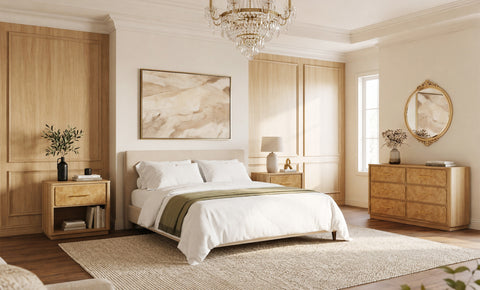
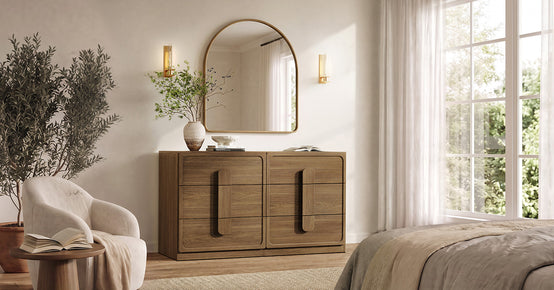
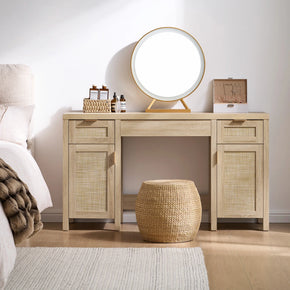
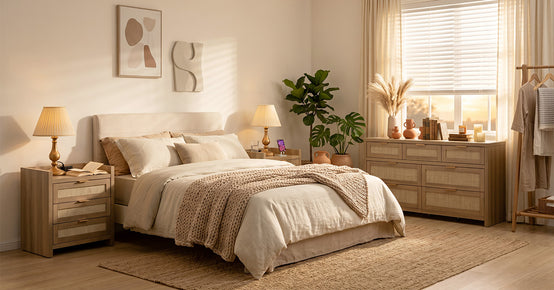
Put something up there—a mirror, a frame, a piece of art you've been meaning to hang. Round mirrors are the go-to for bedroom dressers because the curve softens all those horizontal dresser lines — but a rectangular mirror or a large print works just as well, depending on the room. Wide dresser? Hang the mirror slightly off-center to one side, not dead center, which can look a bit stiff. Tall, narrow piece — center is fine. One exception: if the dresser sits directly across from a window, you may not need a mirror at all. The light bouncing around in there is already doing the job for you.
|
💡 Hang a mirror or art 6–8 inches above the dresser top. Under 6 looks cramped; over 8 leaves a gap that makes the whole wall feel unfinished. |
2. Add a Lamp — It's Not Just About Light

A lamp on the dresser is the quickest, most reliable way to add height — and height is sort of everything when it comes to making a dresser top look styled rather than just occupied. When every object on the surface sits at the same level, the eye reads it as a shelf, not a setup. One lamp changes that immediately because it gives the arrangement a vertical anchor.
Put it off to one side — not the middle. If the mirror or art is positioned on the left, the lamp goes right. Your eye travels across naturally, left to right, and the whole thing has a kind of visual rhythm to it without you having to think too hard about why. Don't want to lose surface space? Wall sconces on either side of the mirror do the same job and free up the dresser top entirely — honestly, the smarter call in any bedroom under 150 square feet. Browse modern bedroom furniture at Sicotas if you're pulling the whole room together.
3. Get a Tray — This Is the One I Tell Everyone First

Here's the thing about trays: five objects scattered across a dresser look like clutter. Those same five objects sitting inside a tray look like a decision. Nothing about the objects changed — the tray just reframes them as a group rather than individual abandoned items. House Digest makes this point well: the tray isn't just a container, it's actually a reframing tool. The surface reads differently because of it, and that shift is weirdly significant.
Keep three to five items inside max — perfume, a ring dish, and one skincare product. Past five, and the tray becomes a contained pile, which defeats the purpose. Material matters too, more than people think: marble or stone on a wood dresser looks sharp, rattan on a painted surface feels more relaxed. It's a small thing, but it's the kind of thing people register without knowing what they're registering.
4. Stack Some Books — They Work as Risers, Not Just Decoration

I know how this sounds. Books on a dresser feel like a styled-life cliché. But hear me out — they do a job most decor items can't, and it has nothing to do with looking well-read. A stack of two or three books is a riser. Set a shorter candle or small ceramic piece on top, and it suddenly sits at a different level than everything around it. That height variation across the dresser surface is pretty much the whole secret to an arrangement that looks intentional rather than flat.

You don't need to buy anything new. Grab books from the living room or a nightstand — the cover tones just need to match the dresser's finish roughly. Warm cream and tan spines alongside wood, darker covers to ground a white or pale piece. On a wider dresser like the Cas 6-Drawer Dresser, a two or three-book stack on one side works especially well because the extra surface gives you room to create real height variation across the top.
5. Put Something Living on It — Even a Small Thing Makes a Difference

A plant does something that ceramic objects and stacked books genuinely can't replicate. Something alive on the dresser — even a small potted thing, a few stems in a vase, a cutting in a glass of water — makes the whole arrangement feel inhabited rather than arranged. It's a subtle difference, but you feel it every time you walk into the room, even if you can't quite explain what changed.
Dried stems are a real option here — not a fallback for people who can't keep plants alive. Pampas grass, dried eucalyptus, cotton stems. They last for months without needing anything from you, come in beautiful organic muted tones, and look genuinely good on most dresser finishes. The only rule: put them in an actual vase or ceramic pot rather than the plastic sleeve they come in from the store. That sleeve is where the 'fake-looking' comes from, not the stems themselves.
6. Use Art Above the Dresser — Not Just a Mirror

Here's something that doesn't get said enough: art above a dresser is often a better choice than a mirror, especially in a bedroom where you'd rather wake up looking at something beautiful than your own reflection. A single large canvas, a print, a small gallery grouping of three or four frames at slightly different heights — any of these bring personality to the space in a way a mirror alone really can't. The Spruce puts it well: a good dresser setup treats the piece as part of the room rather than an isolated surface, and art on the wall is what connects the dresser to everything else around it.
For sizing: the art or grouping should span roughly half to two-thirds the dresser's width. Narrower gets visually lost up there; wider starts competing with the furniture itself. And if you're renting or just not ready to drill holes, lean a large frame against the wall above the dresser surface and place a smaller one in front of it. It looks intentional, it moves with you, and it requires zero wall involvement.
7. Group in Threes — Yes, the Odd-Number Thing Is Real

Three candles look better than two or four. Designers say this constantly, and it sounds like one of those rules someone invented to make the profession feel more complicated — but it actually holds up in practice. Even numbers create matched pairs, and the eye stops at each one. Odd numbers leave a small unresolved quality that keeps your attention moving through the grouping rather than resting on a tidy symmetry.
Test it. Put three candles near your tray — different heights, similar tones — and see how the corner reads versus two candles or four. It takes five minutes, and you'll immediately see what I mean. Once you notice it, you naturally start applying it to other objects.
8. Stop Hiding Your Fragrance — Display It Instead

Perfume, a candle, a diffuser — most people already have these somewhere near the dresser. The difference between those items looking styled and looking messy is just grouping versus scattering. Scattered across the surface, they read as clutter regardless of how nice each piece is. Grouped near a tray, with varying heights among the pieces, they look as if a decision was made.
Vary the heights when you group them: a tall pillar candle next to a shorter diffuser bottle next to a small tea light holder creates a silhouette that reads well from across the room — which is genuinely how you see the dresser most of the time anyway, from the doorway or from the bed. One practical note: Use a plate or shallow tray under burning candles. Wax drips on a wood dresser finish are genuinely annoying to deal with, and that's the kind of lesson you only need to learn once.
9. Personal Items Are Great — Just Edit Them Down

The best-looking dresser I've personally ever set up had a chipped ceramic bowl from a flea market on it, a photo the owner actually loved, and a small brass elephant that used to belong to someone's grandmother. None of it matched. None of it was 'designed.' But it was specific in a way that bought decor just isn't, and that specificity made the whole arrangement more interesting than any catalog setup would have been.
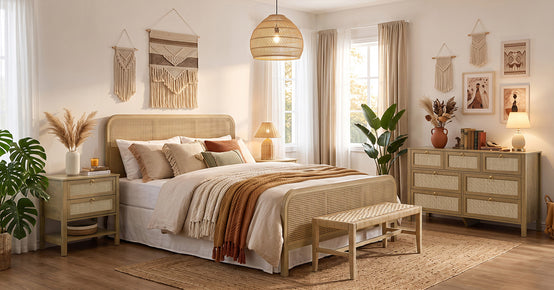
Two or three personal items is where to stop, though. More and it tips from curated into memory-box territory. Give each piece some actual breathing room rather than clustering everything together. Objects with space around them read as considered; objects crammed with no room between them read as unsorted — regardless of how meaningful each piece is. A small tray helps enormously with the smaller items. And if you want the bedroom to feel more pulled-together, adding a Savanna Nightstand with 3 Drawers alongside the dresser provides a coordinated surface for a second personal vignette without crowding the dresser top.
10. Match the Styling to Your Specific Dresser

A wide, low white dresser and a tall, dark wood chest don't get styled the same way — and trying to copy the same arrangement from one onto the other is usually why one of them ends up looking right, and the other just looks off. The dresser's proportions, finish, and surface area all shape what actually works on it.

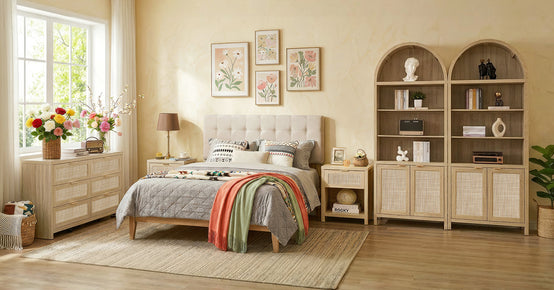
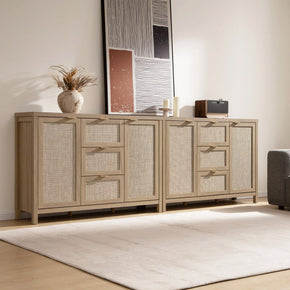
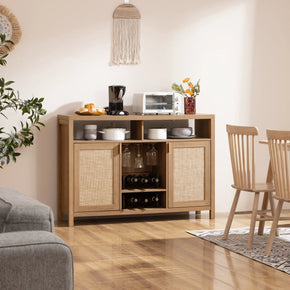
For something contemporary and minimal, like the Stria Dresser with Large Drawers, keep the top spare — two or three objects, matte or ceramic materials, nothing busy. The dresser has a strong visual presence on its own, and a cluttered surface fights it. A wider piece gives you more room to run the full setup: an anchor on the wall, a lamp to one side, a tray in the center, a couple of objects, and you'll still have open space left over.
And if you want the bedroom to feel like an actual coordinated space rather than furniture from three different places, pairing the dresser with matching nightstands does more than most people expect. The right nightstands pull the room together in a way that's hard to achieve with just a dresser.
|
Leave some space on the dresser top. Loaded-to-the-edges arrangements almost always look like more than they are. The empty areas aren't evidence of something missing — they're part of the design. |
11. Sometimes You Need to Update the Dresser Itself First

Worth saying plainly: if the dresser itself looks dated or rough, styling the top won't fix that. The piece needs attention before anything goes on it — and three options don't involve buying a new dresser.
Start with the hardware

New drawer pulls are — and I genuinely mean this — the best return on investment in home décor, maybe full stop. Around 20 minutes, a screwdriver, $20 to $40 in hardware, and the dresser read completely differently. Brass on a dark wood piece, matte black on white, ceramic knobs on something painted. The hardware shift changes the whole tone of the furniture in a way that's oddly disproportionate to how small the actual change is. The Crescent Nightstand is a good example of how well-chosen hardware elevates an entire piece — the same principle applies when you're updating your dresser.
Add a textile run.r
A runner on the dresser top does a few jobs at once: it adds texture, softens the surface, and gives everything sitting on top a more grounded, intentional look. It also covers wear and scratches on older pieces, which nobody likes to admit is partly why they're doing it, but it absolutely is. Linen, cotton, or a simple natural fiber runner works well. Keep the pattern simple enough that it doesn't compete with whatever's on top of it.
Paint it if it actually needs it.
Painting a dresser is a real weekend project — Bob Vila's furniture painting guide covers the prep in detail because, honestly, prep is where most people go wrong. The painting itself is easy. It's the cleaning, sanding with 120-grit, and priming beforehand that determines whether the finish holds up or starts peeling by month three. Two thin coats, not one thick one — that single thing is responsible for more bad DIY paint jobs than any other mistake.
- Chalk paint: No sanding needed in most cases. Beautiful matte finish. Good for a soft, vintage-leaning bedroom look.
- Furniture-grade acrylic: Harder, more durable finish — better for a dresser that gets daily handling and contact.
- Cabinet or trim enamel: Most durable of the three options. Takes a bit longer to apply well, but it holds up better over time than the others.
FAQs
How do I decorate my dresser?
Clear it off completely — yes, everything goes. Then look at the wall behind the dresser before you even think about the surface. Put a mirror or some art up there. Then: lamp to one side for height, a tray for daily items, one or two personal things if you have them, and leave the rest of the surface empty. Four objects are honestly enough for most dressers.
What looks good on top of a dresser?
A lamp, a tray, a small book stack, a plant or some dried stems, a candle, and something personal — a photo or a small object you actually care about. Group things in threes where you can. And leave blank space — a half-loaded dresser almost always looks better than one that's crammed.
What can I put on my dresser?
Useful things that look good arranged: perfume, a ring dish, and one or two skincare products—something personal: a photo, a small found object, something with a bit of history. Everything else — chargers, coins, old receipts — genuinely needs to go somewhere else.
How to revamp a dresser?
Start with the hardware. New drawer pulls take 20 minutes and change the whole feel of the piece in a way that's sort of absurdly effective for how small a change it is. Beyond that: paint it if it needs it, add a textile runner on top, or restyle the wall above with a mirror or some frames. Do one thing well rather than half-doing all four.
Can I paint over a dresser that's already painted?
Yes — clean it, sand lightly with 120-grit, apply primer, then paint. Don't skip the primer. That's almost always the reason paint peels six months later, and it's also the step that takes the least time relative to how much work it saves you later.
What kind of paint do you use on a dresser?
Chalk paint for minimal prep and a matte finish — it's forgiving and looks good on bedroom furniture. Furniture-grade acrylic or cabinet paint if you want something harder and more durable. Go satin or semi-gloss on anything that gets touched a lot — it wipes clean much better than matte and holds up longer.
Can I just paint a wooden dresser?
You can, but the prep matters more than the painting itself. Clean the wood, sand it, wipe away all the dust, and prime before painting. Skip those steps, and the paint absorbs unevenly — you end up with a patchy finish that starts peeling well before you'd expect.
What is a Dutch dresser?
Lower drawers or cabinets on the bottom, open display shelves on top. It's historically more of a kitchen or dining room piece. Still, the concept — mixing closed storage with open display — actually works really well in a bedroom too if you want somewhere to show things off without adding a separate shelf unit.
Wrap It Up
Mirror on the wall behind it. Lamp to one side. Tray for the daily stuff. One or two things that actually mean something. That's the whole formula — and every idea in this list is just a version of those four moves adjusted for a different dresser type, room size, or how far you want to take it.
Pick one idea from this list and try it this week. See how it changes how you feel walking into the room — the dresser is usually one of the first things your eyes land on in a bedroom, and it's worth taking 20 minutes to make it work with you instead of against you. And if you're also thinking about getting a better dresser to work from, browse wide dresser options at Sicotas — real sizes, real finishes, actual bedrooms in mind.
Resources
The following sources were referenced and fact-checked in writing this article. All links verified as of April 2026.
• The Spruce — 36 Dresser Decor Ideas for Every Bedroom Style — Visual guide covering lamp placement, wall art, tray use, and dresser top styling by room type and dresser shape.
• House Digest — Dresser Decor and Styling Tips — Practical coverage of tray organization, clutter control, and how to group small objects on a bedroom dresser surface.
• Bob Vila — How to Paint Furniture for Beginners — Step-by-step guide to surface prep, primer selection, paint type comparison, and getting a clean finish on wooden furniture.
• Bob Vila — How to Refinish a Dresser — Detailed walkthrough of sanding, stripping, and refinishing an old dresser — useful if the piece needs more than a fresh coat of paint.


Looking for something else?

Furniture Materials Guide: Picking the Right Material Room by Room
LEARN MORE
How to Mix Wood Tones Without Making a Room Look Mismatched
LEARN MORE
18 College Apartment Furniture Ideas That Save Space and Money
LEARN MORE
Types of Entertainment Centers: 11 Designs and How to Pick One
LEARN MORELooking for something else?

Curio Cabinet Decor Ideas: How to Style a Display Cabinet Without the Clutter
LEARN MORE
Curved Furniture: How to Style, Measure, and Buy It in 2026
LEARN MORE
What Is Rattan Furniture? A Buyer Guide to Types and Care
LEARN MORE


Further reading

How to Choose a Nightstand for a CPAP Machine

How to Choose a Shoe Cabinet for Men's Sizes, High-Tops, and Bulky Shoes


